travel-decisions
Should You Avoid Gyeongju in July and August If You Cannot Handle High Humidity Combined with Long Outdoor Walks?
Gyeongju's heritage sites sit outdoors and spread across open ground, and July-August heat plus 80% humidity makes walking between them exhausting. Here is who should skip it and who can still manage.
Quick Verdict
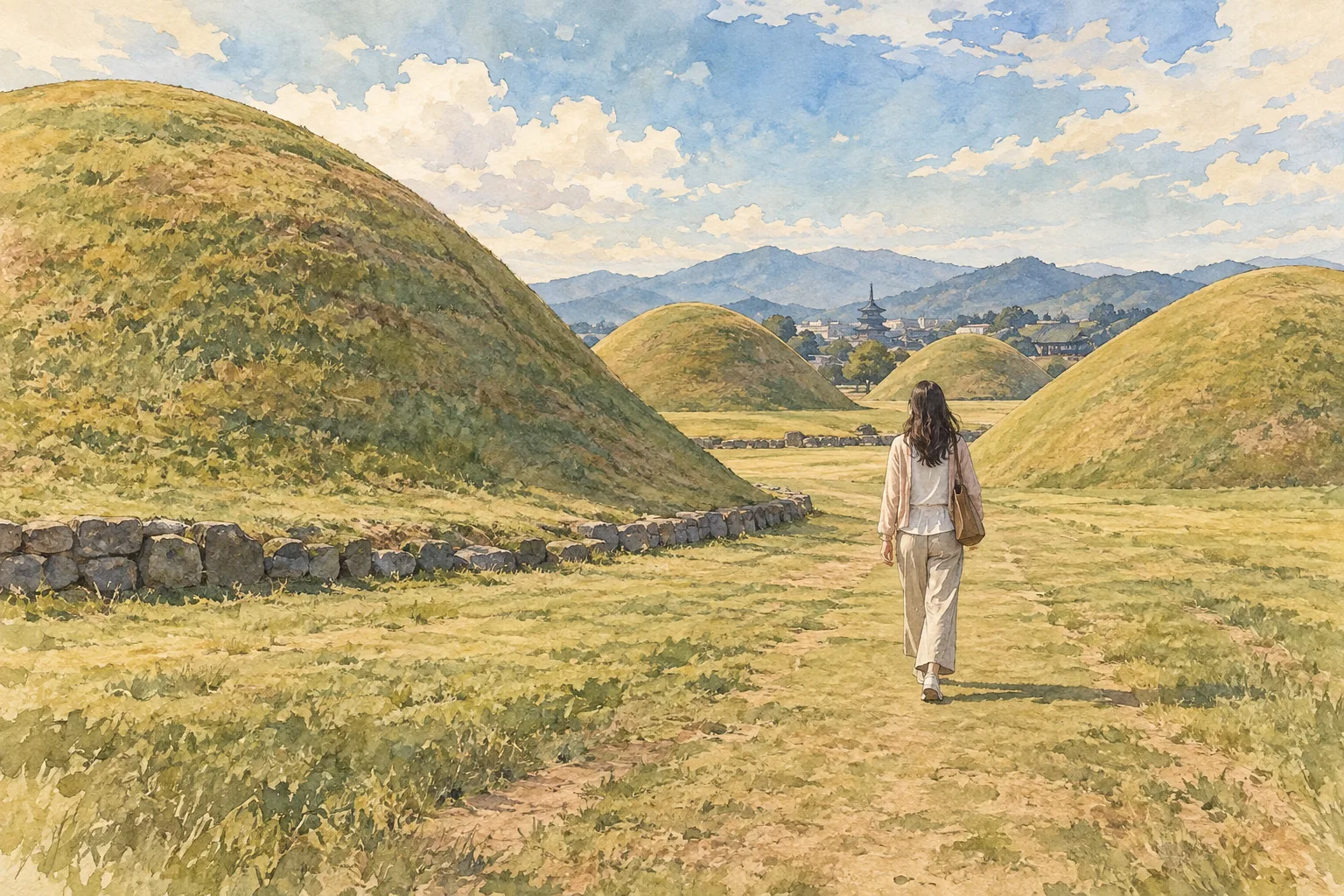
Skip Gyeongju in July and August if you cannot handle sustained outdoor walking in heat and humidity. The city's signature sites, including the Daereungwon tomb complex, Cheomseongdae, and the Donggung Palace and Anapji pond grounds, are open-air routes rather than air-conditioned galleries. If you tire easily in heat, or you are traveling with anyone who has joint pain or low stamina, that combination gets uncomfortable fast in midsummer.
Choose Gyeongju in July or August only if you are heat-tolerant, comfortable walking for hours in direct sun, and willing to build your day around indoor breaks. Choose a different month, or a very different daily rhythm, if you expected a mostly indoor, climate-controlled sightseeing pace. There is no itinerary trick that removes the outdoor walking from a Gyeongju day, so the real decision is about your heat tolerance, not your schedule.
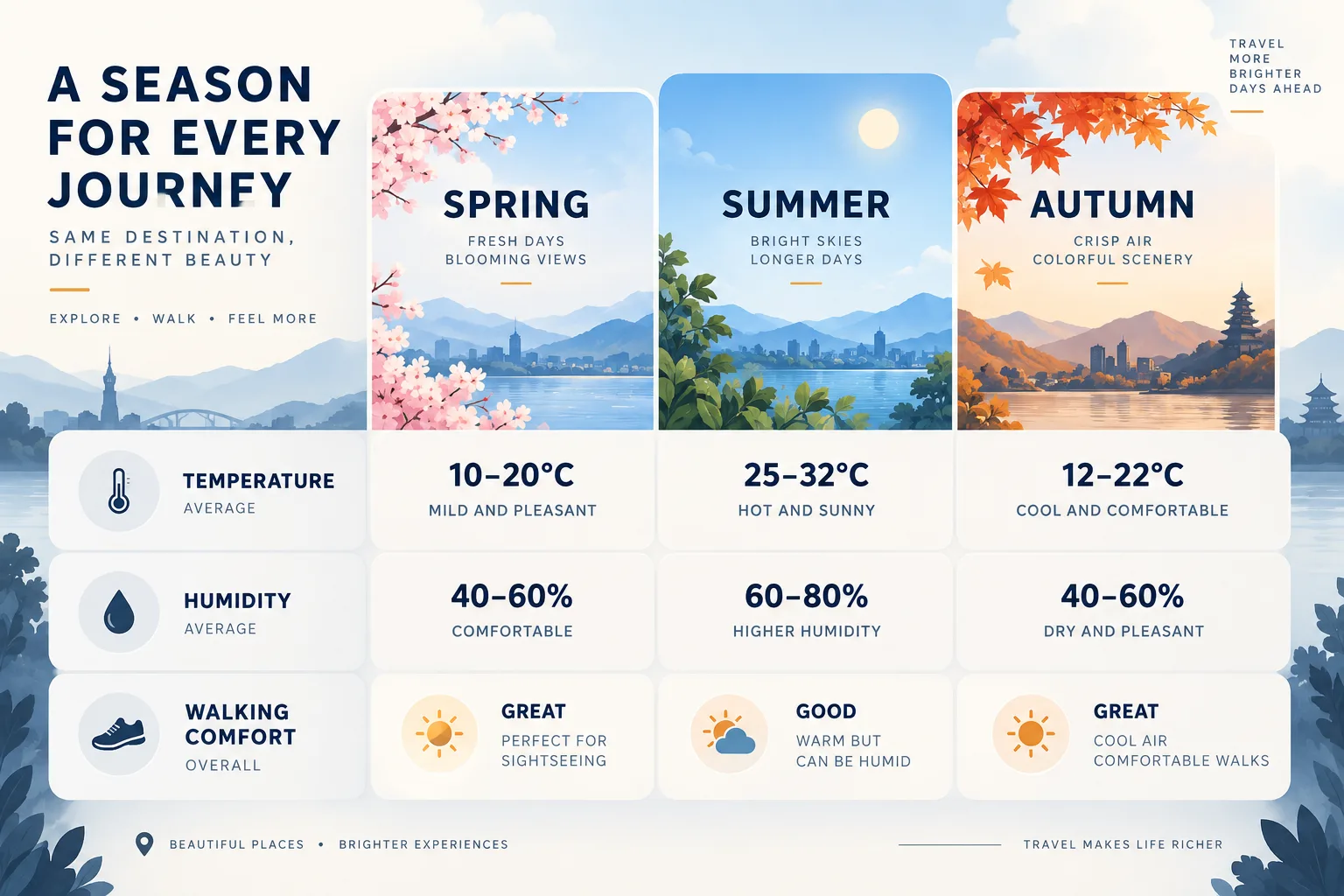 Editorial illustration: A simple comparison table graphic showing three columns labeled Spring.
Main Friction Problem
The friction is simple: Gyeongju's best-known sites sit outdoors and spread across open ground, and summer weather makes covering that ground physically draining. Weather in Gyeongju is typically at its least favorable in January, February, July, and August. July and August both bring temperatures up to 31C (88F) with thick, sticky heat that makes even short distances between ruins feel like work.
July adds a specific layer on top of the heat. The monsoon season drops around 190mm of rain in short bursts, and that rain combines with high humidity to make open-air heritage sites feel brutal at midday. Relative humidity in Gyeongju peaks in July at around 80%, the highest of any month. August keeps the same 31C heat, and reports on August's rainfall vary by source, so it is safer to plan for sudden downpours in both months rather than assume August is the drier, easier option.
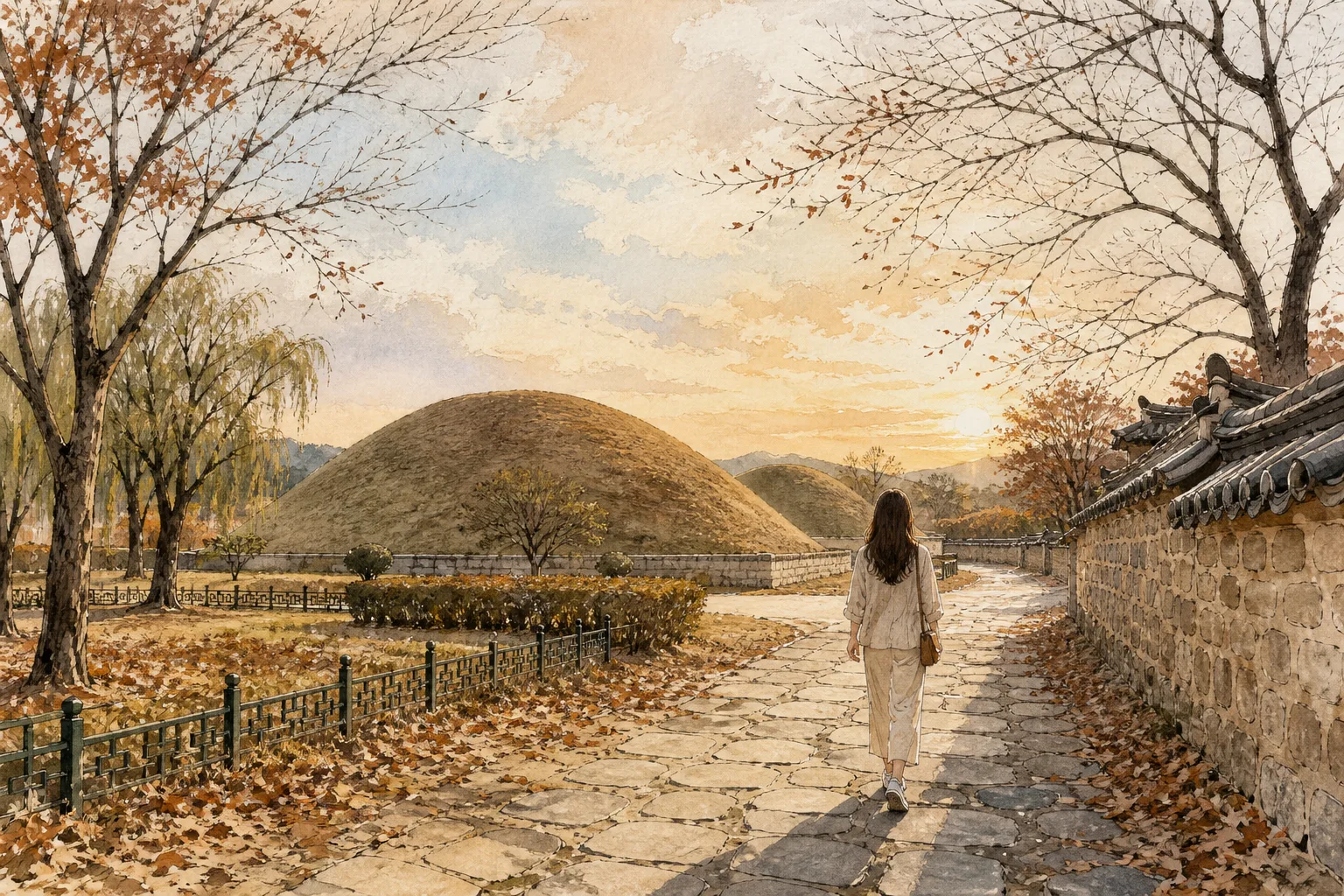
This matters more in Gyeongju than in cities built around indoor attractions. A traveler expecting a day of museum-hopping between air-conditioned stops will instead spend most of the day on open ground at Daereungwon, Cheomseongdae, or the Anapji pond paths. The Gyeongju National Museum is a documented air-conditioned option that makes a useful midday anchor, but it is one stop on a route that is otherwise built around open-air heritage sites.
Friction Table
| Variable | July-August reality | Why it matters for you |
|---|---|---|
| Daytime heat | Up to 31C (88F), sticky, both months | Short walks feel longer than the distance suggests |
| Humidity | Peaks near 80% in July | Sweat does not evaporate, so your body cools less efficiently |
| Rainfall pattern | About 190mm in July in short bursts; August reports vary by source | Sudden downpours can interrupt outdoor plans in either month |
| Outdoor walking routes | Daereungwon tombs, Cheomseongdae, Anapji pond paths | These sites are open-air, with sun and humidity exposure the whole time you walk them |
| Indoor break option | Gyeongju National Museum | A documented air-conditioned stop you can anchor a midday break around |
| Best-suited traveler | Heat-tolerant, comfortable pacing own breaks | Poor fit for low-stamina or heat-sensitive travelers |
The table above is the real decision. There is no validated scoring system for how many rows should tip you toward rescheduling; treat it as a reflection prompt rather than a formula. As a rough gut-check, if most of the rows sound uncomfortable to you, that is a signal worth taking seriously.
Who Will Feel It Most
Comfort-seeking travelers who expect a climate-controlled pace will feel this the most. If your mental model of sightseeing is museum, cafe, museum, mall, Gyeongju's summer reality of tomb field, open courtyard, pond path will not match that expectation. The mismatch is not about fitness alone, it is about how much of the day happens with no roof overhead.
Slow travelers who like to linger are also at risk, but for a different reason. Lingering outdoors in July-August heat means more total time in direct sun and humidity, not less. A slower pace only helps if it includes real indoor breaks, not just a slower walk between exposed sites.
Travelers with joint pain, older travelers, and anyone managing a chronic heat sensitivity should weigh this trip carefully rather than assume it will go as planned. Ability and medical circumstances vary widely within these groups, so the honest question is personal: how much sustained outdoor walking in heat and humidity can you handle before you need to stop and cool down, and does your itinerary give you that option. Heat and humidity add fatigue on top of walking fatigue, and the outdoor routes at Daereungwon and Cheomseongdae keep you in direct sun and humidity for most of the walk, with the Gyeongju National Museum as the main documented place to cool down along the way. If you have relevant medical concerns, check with a clinician before committing to a summer itinerary built around extended outdoor walking.
By contrast, younger, heat-acclimated travelers who already walk long days comfortably in hot climates can manage Gyeongju in summer. The friction still exists for them, it is just more tolerable.
How to Reduce the Friction
You cannot remove the heat or the outdoor layout, but you can reduce how much of the day you spend exposed to both.
- Start sightseeing at or before 8am, before the heat peaks, and treat midday as indoor time.
- Split the Daereungwon tomb complex visit into a shorter session rather than one long loop.
- Anchor your midday break at the Gyeongju National Museum or another air-conditioned stop for at least two hours.
- Carry a portable fan, cooling towel, and more water than feels necessary.
- Check the forecast daily in July and August, since rain in this region tends to arrive in short, sudden bursts rather than steady drizzle.
- Choose accommodation close to the Daereungwon or Cheomseongdae area so you are not adding extra outdoor walking just to reach your first stop of the day.
None of this turns a summer Gyeongju day into a spring one. It only keeps a hard day from becoming an unmanageable one.
Better Alternatives
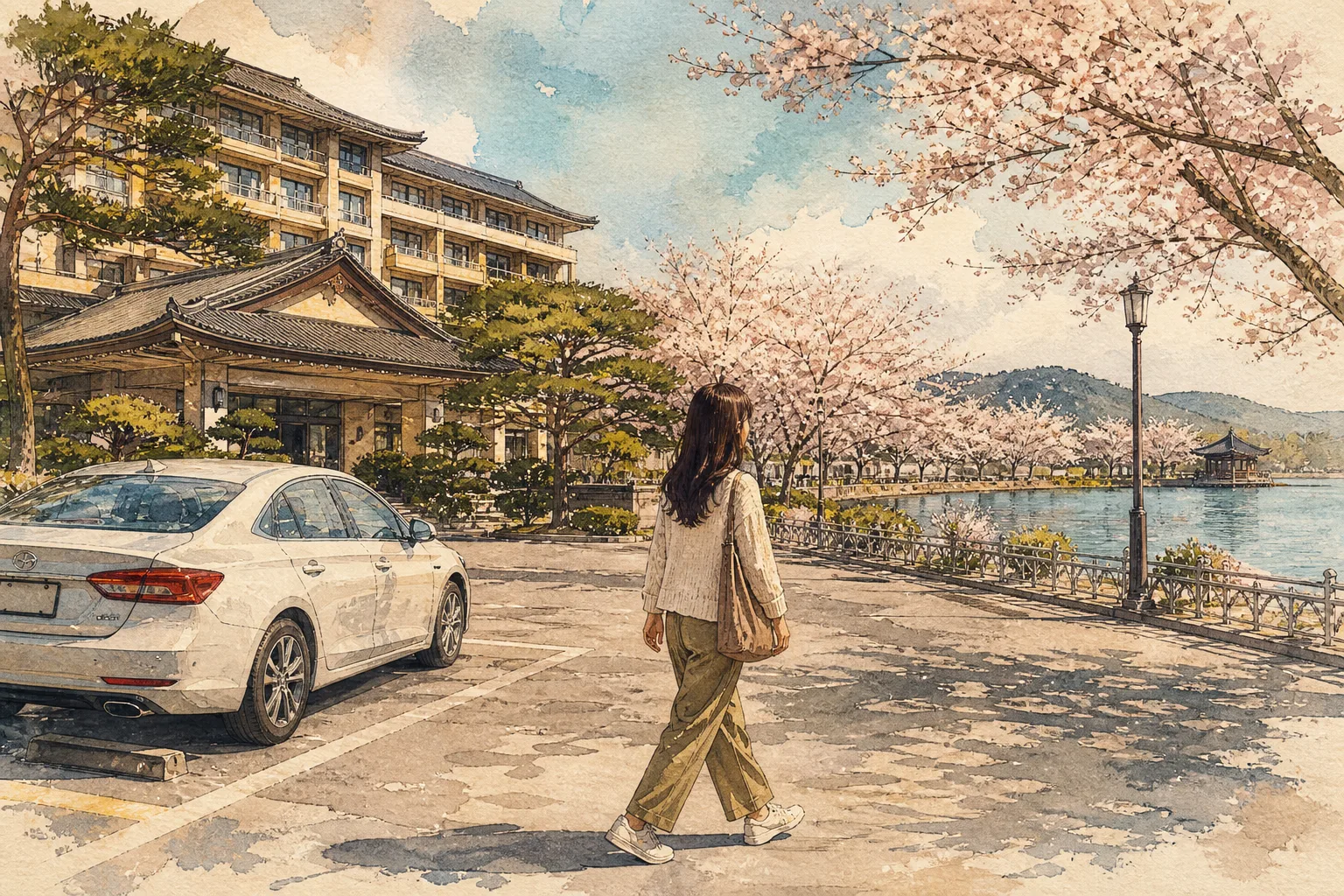
If the friction table above sounds like a bad match, the better move is a different timing window, not a different itinerary trick. Late March through April brings cherry blossom season and milder temperatures, with the same outdoor sites but a much lighter humidity load. October through early November tends to offer similar relief with autumn foliage instead of blossoms.
Both windows keep Gyeongju's core appeal intact: walkable open-air heritage sites, a compact city layout, and a slower pace than Seoul or Busan. What changes is your physical experience of covering that ground. A walk that feels draining in August humidity tends to feel far more manageable in October.
If your travel dates are fixed to July or August and cannot move, consider shortening your Gyeongju time to a half-day anchored around the Gyeongju National Museum, and pairing it with more indoor-heavy stops elsewhere in your trip. That protects the parts of the trip that do not depend on outdoor endurance.
Decision Checklist
Use this before you commit to a July or August Gyeongju visit.
- I am comfortable walking outdoors for 3+ hours total in heat above 30C (86F).
- Anyone in my group with joint pain, mobility limits, or a heat sensitivity has confirmed with a clinician (if relevant) that they can manage sustained outdoor heat exposure.
- I am willing to start sightseeing before 8am and pause during midday.
- I have accommodation within easy walking distance of Daereungwon or Cheomseongdae.
- I am prepared for sudden downpours in July or August and have a backup indoor plan, such as the Gyeongju National Museum.
- I would rather visit now than delay the trip to spring or autumn.
This checklist has no validated scoring threshold, so treat it as a reflection tool rather than a formula. If you checked most of these boxes, a summer Gyeongju trip is more likely to go smoothly. If several items gave you pause, especially around heat tolerance or medical concerns, shifting to spring or autumn will give you an easier trip for the same sights.
FAQ
Is Gyeongju walkable in August without a car? Yes, but expect the heat to shape your pace. Many sites are flat and close together, so distance is not the main problem. The problem is standing in direct sun with high humidity between stops, so plan shorter blocks with indoor or shaded breaks rather than one long continuous loop.
What is the best month to visit Gyeongju to avoid the heat? Spring (late March to April) and autumn (October to early November) are generally the more comfortable windows, based on Gyeongju's own weather patterns rather than a fixed rule. Both tend to keep daytime temperatures milder than midsummer, while the outdoor walking layout stays the same as summer.
Can I still visit Gyeongju in July or August if I plan around it? Yes, if you shift outdoor time to early morning or early evening and treat midday as indoor or rest time. This works better for travelers who are otherwise fit but heat-sensitive, and less well for travelers who already struggle with long walks in normal weather.
Are Gyeongju's main sights indoors or outdoors? Mostly outdoors. The Daereungwon tomb complex, the Cheomseongdae observatory grounds, and the Anapji pond area at Donggung Palace are all open-air walking sites. Travelers expecting an air-conditioned museum-hopping day will find the reality closer to a walking park circuit, though the Gyeongju National Museum nearby is a documented indoor, air-conditioned option.
Does it rain more in July or August in Gyeongju? Available figures describe July's monsoon rain arriving in short, heavy bursts alongside peak humidity near 80%. Reports on August rainfall vary depending on the source and year, so do not assume August is meaningfully drier. Plan for sudden downpours in either month rather than betting on one being the safer choice.