travel-decisions
Is Climbing from Bulguksa to Seokguram Grotto a Regret-Prone Choice If You Have Joint Pain or Lack Hiking Stamina?
A friction-first look at whether the Bulguksa to Seokguram Grotto route is worth it for travelers with joint pain or low hiking stamina, with a practical alternative plan.
Quick Verdict
The direct answer is: skip the hiking trail, not the destination. Seokguram Grotto is worth seeing, but the 3-kilometer hiking trail from Bulguksa is a regret risk for anyone with joint pain or low stamina. The 9-kilometer car or bus route is easier, though it is not risk-free; weather, footing near the grotto, bus timing, and getting back down still matter. Choose the trail only if you already hike comfortably and want the mountain scenery as part of the trip. Choose the car or bus route if stairs and sustained walking already worry you at home, and plan that route with the same care you would give any mountain-adjacent transit connection.
Travelers who do well on this route are steady walkers who can handle stairs, uneven ground, and a few hours of continuous movement without needing frequent seated breaks. Travelers who tend to regret it are those managing knee pain, hip pain, general fatigue, or motion sensitivity, especially if they also plan to see Bulguksa's full grounds on the same day. The mismatch is not about willpower. It is about whether the terrain and the transit logistics match your body's actual capacity that day.
 Editorial illustration: A clean simple comparison layout with two labeled columns.
Main Friction Problem
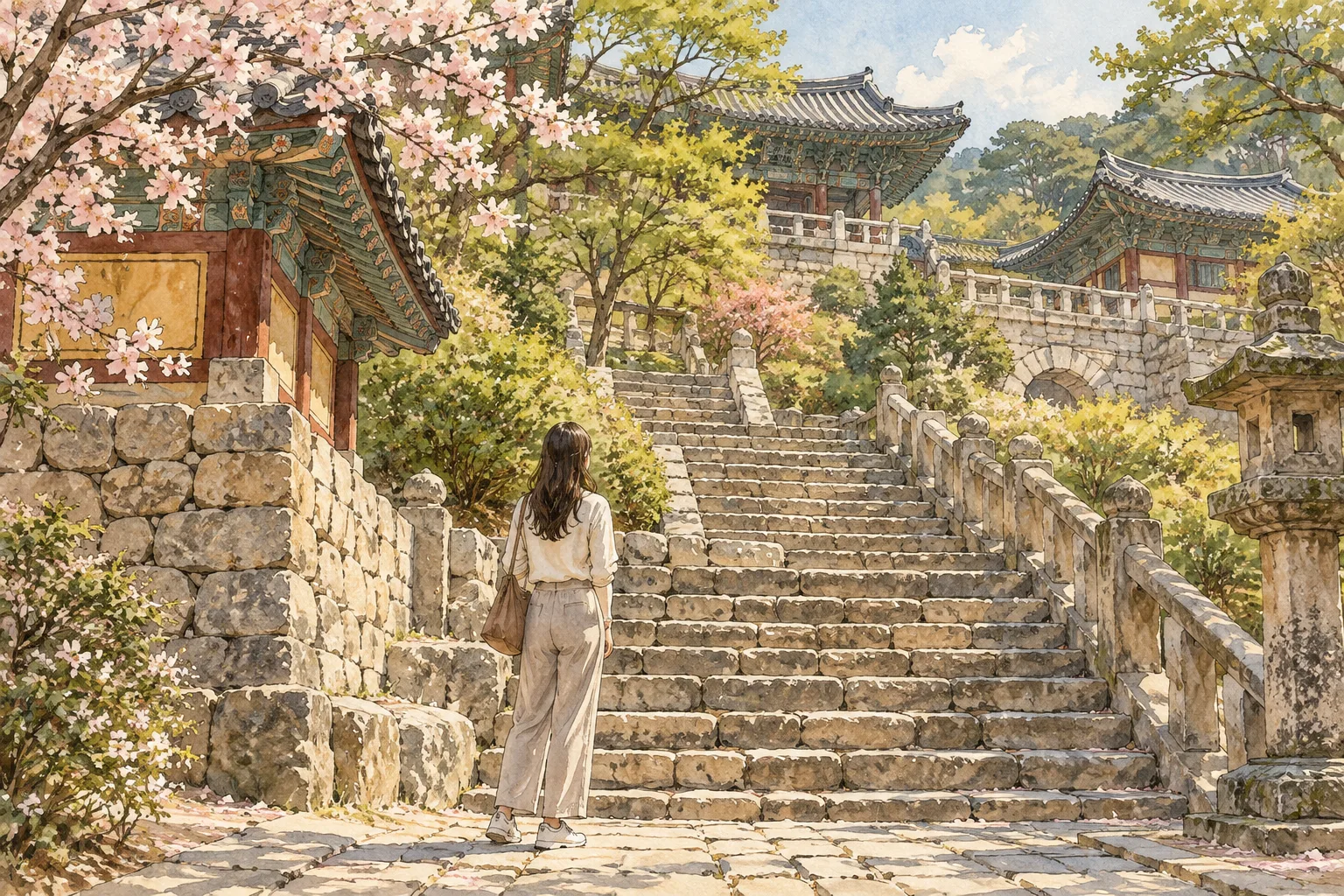
Bulguksa is not a flat courtyard you stroll through. It involves continuous outdoor movement, elevation changes, and multiple separate precincts connected by stone paths and stairs. That alone produces real walking fatigue for someone who paces themselves carefully at home. Add Seokguram Grotto on top, and the day compounds quickly.
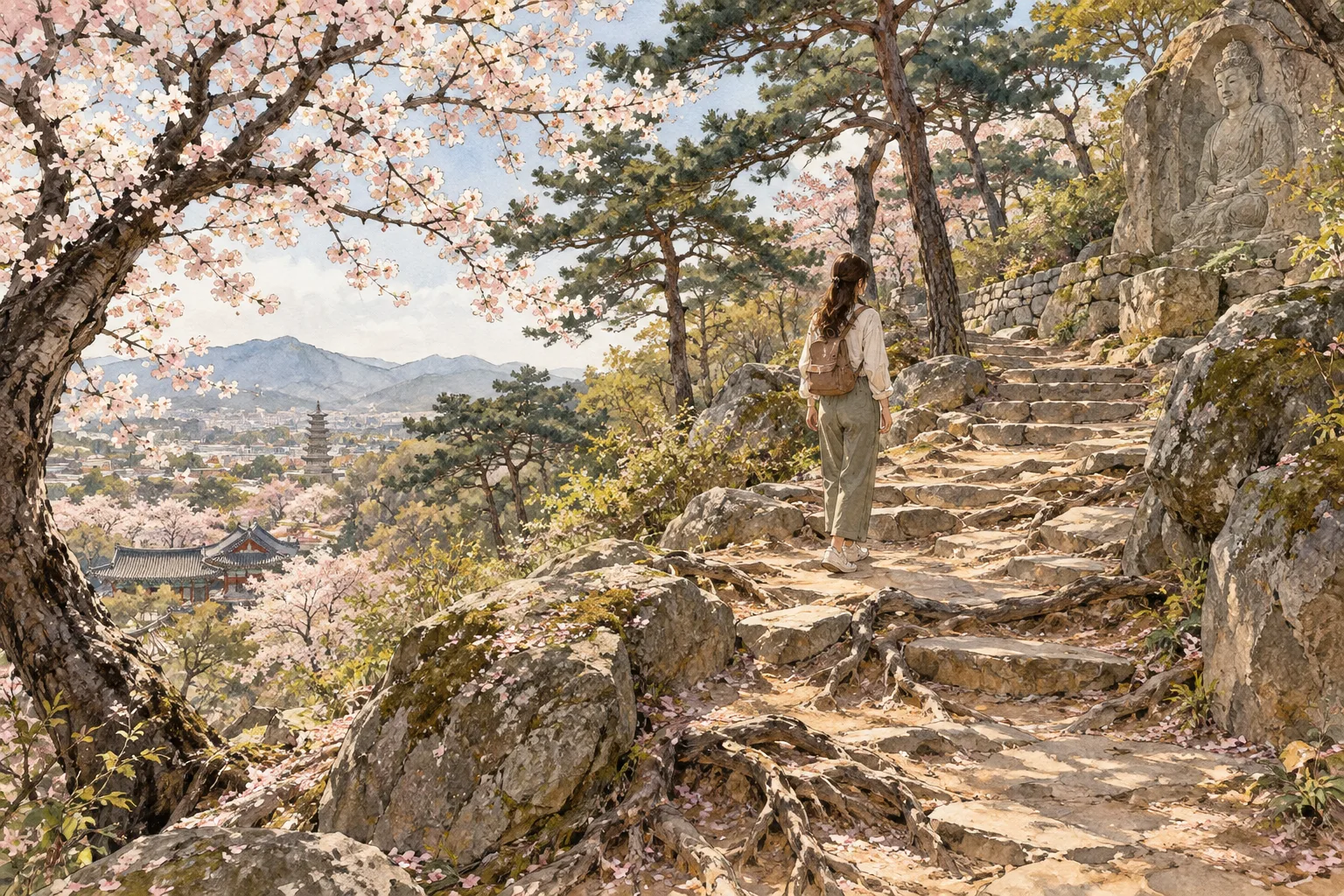
The grotto sits in a mountain setting, and reaching it requires walking from the arrival point to the grotto entrance regardless of how you get up the mountain. So even travelers who skip the hiking trail and take a car or bus still face a walk at the end, on ground that can be uneven and, depending on the day, wet or slick. The difference between the two routes is how much walking comes before that final stretch, not whether the final stretch exists at all.
The second friction point is transit and station logistics. Getting from Bulguksa to Seokguram by car or bus means coordinating a route up a mountain road, which is a different task than a simple city bus hop. Bus intervals on a mountain route can be longer than city intervals, and the return trip down is a separate logistical step you have to plan, not an automatic mirror of the ride up. If you are already managing fatigue, figuring out where to board, how long the wait and ride take, and how you get back down adds mental load on top of physical load. Travelers who underestimate this transit step often end up more drained from the logistics and the waiting than from the walking itself.
Friction Table
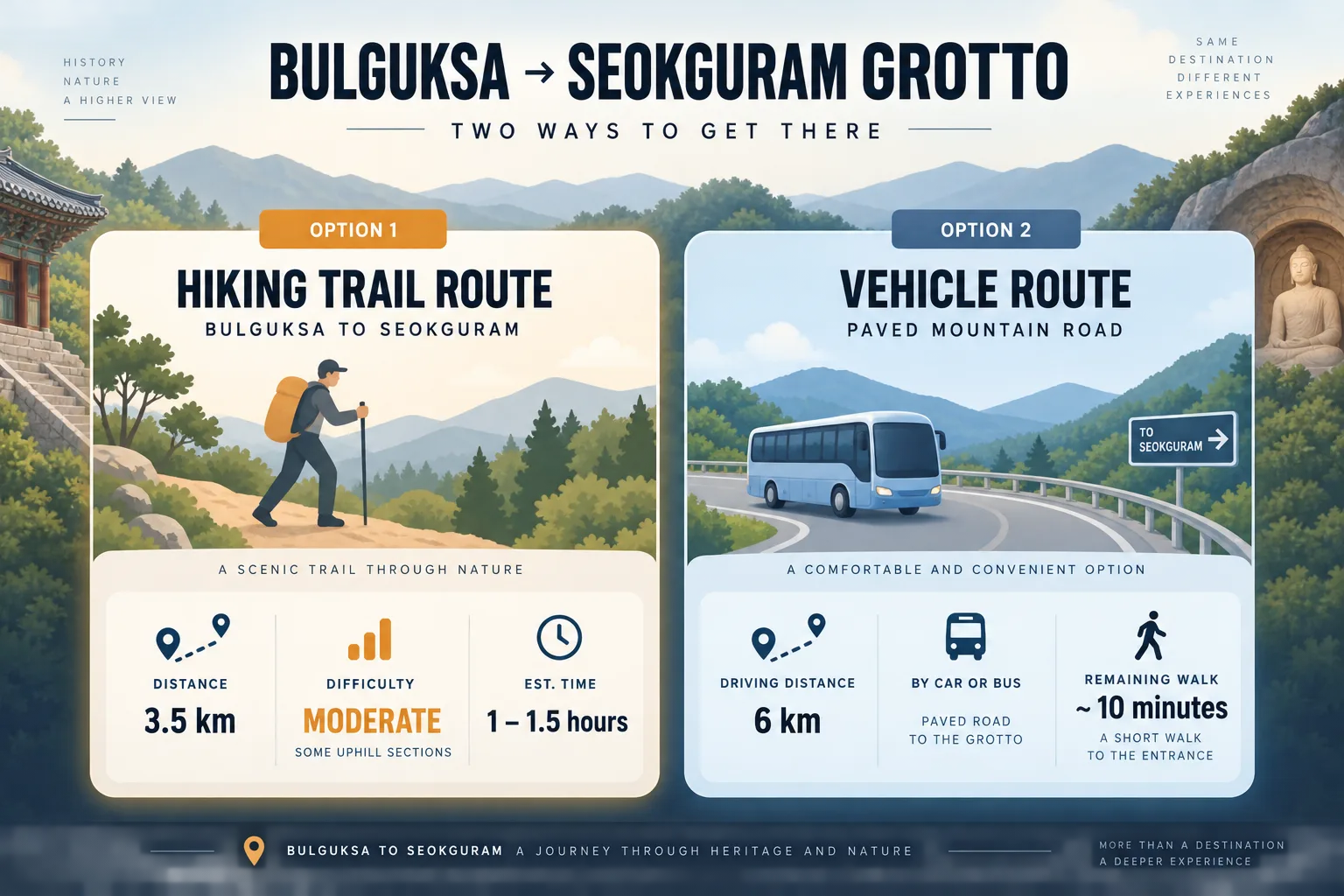
The two routes are not a minor variation on the same experience. They differ in distance, terrain, and what kind of fatigue and risk each one produces, and the car/bus route removes distance without removing every source of friction.
| Decision Variable | Hiking Trail (Bulguksa to Seokguram) | Car/Bus Route (Bulguksa to Seokguram) |
|---|---|---|
| Distance | About 3 km | About 9 km |
| Terrain | Mountain trail, uneven ground, sustained incline | Paved mountain road for most of the distance, then a walk from drop-off to the grotto entrance |
| Walking fatigue | High: continuous uphill walking on top of Bulguksa's own stairs | Lower, not zero: seated for most of the distance, but the final approach walk still exists |
| Transit complexity | None, but requires sustained stamina instead | Requires timing a bus or arranging a car, plus a separate plan for the return trip down |
| Conditions that change the day | Fatigue and joint strain worsen with heat, rain, or poor footwear | Weather and footing near the grotto, bus interval length, and return transport availability can all add delay or discomfort |
| Best fit | Confident, regular hikers without joint concerns | Travelers with joint pain, low stamina, or limited time who also plan for the approach walk and the return leg |
| Regret risk if mismatched | High: fatigue and joint strain mid-trail with no easy exit | Moderate: manageable when planned, but a missed bus, bad weather, or slick footing near the grotto can turn a quick stop into a stressful, tiring one |
The tradeoff is straightforward once it is laid out this way. The hiking trail trades a shorter map distance for a much higher physical cost. The car or bus route trades a longer distance for mostly seated travel, but it still asks something of you: a short walk on uncertain footing, a transit connection with its own timing, and a return trip you need to plan rather than assume. For joint pain or low stamina, distance on paper matters less than what your body and your itinerary actually have to absorb.
Who Will Feel It Most
Two groups feel this friction hardest. The first is travelers with existing joint pain, particularly in the knees or hips, since stairs and uneven mountain trail surfaces are exactly the kind of terrain that aggravates those conditions. Bulguksa's raised terrain and stairs already tax these joints before Seokguram enters the picture, so the hiking trail adds strain on top of strain, and even the car/bus route's final approach walk deserves respect if footing is poor.
The second group is travelers who simply lack hiking stamina, regardless of joint health. This includes people who do not walk long distances regularly, older travelers who tire faster over a multi-hour day, and anyone recovering from a recent illness or injury. For this group, the risk is not sharp pain but cumulative exhaustion that ruins the rest of the day, including a wait for a return bus or the trip back to Gyeongju or onward to Busan.
Travelers who will not feel this friction much are those who hike regularly for recreation and treat elevation changes as routine. For them, the 3-kilometer trail is a pleasant addition to the day rather than a liability, and the transit uncertainty of the car/bus route matters less because they have the alternative of walking down if a bus is delayed. The honest test is not age or fitness in general, but whether stairs, inclines, and unpredictable waits already cause you trouble in everyday life.
How to Reduce the Friction
There are concrete ways to lower both the walking fatigue and the transit complexity, even though neither route eliminates the approach walk or the conditions that can complicate it.
- Use the car or bus route instead of the hiking trail if joint pain or stamina is a concern; this converts most of the 9 kilometers into seated travel, though it does not remove the final walk to the grotto entrance.
- Check the weather forecast for the day, since rain or heat changes how manageable the remaining walk and stairs will feel, on both routes.
- Confirm the bus schedule and the return service before you arrive, so you are not stranded near the grotto waiting on an infrequent connection while already tired.
- Visit Bulguksa first, then rest before continuing to Seokguram, since Bulguksa alone already involves significant stairs and elevation change.
- Pace the Bulguksa visit deliberately, sitting when benches are available rather than pushing through the full grounds in one continuous walk.
- If stairs or uneven walking already limit you at home, treat that as your answer, and choose Bulguksa only, skipping the Seokguram approach altogether.
- Bring supportive, broken-in shoes rather than new shoes, since the uneven stone paths at Bulguksa and the footing near the grotto punish unstable footwear.
The single highest-leverage move is the first one, but it works best paired with the second and third. Swapping the hiking trail for the car or bus route removes most of the walking fatigue, and checking weather plus the return bus schedule closes the gap between "easier" and "actually manageable" for your specific day.
Better Alternatives
If joint pain or stamina makes even the car/bus version of this route feel risky, the better decision is not to force the full itinerary. Visiting Bulguksa alone, without attempting the Seokguram approach, is a legitimate choice when stairs or uneven walking make that connection unsuitable for your body. Bulguksa on its own is a complete, satisfying visit, and skipping Seokguram is not a lesser trip, just a different one.
Another alternative is separating the two sites across different parts of your Gyeongju stay rather than combining them into one demanding day. This lets you rest between the two instead of stacking Bulguksa's stairs directly against Seokguram's mountain approach and its transit timing. For travelers on a tighter schedule, prioritizing whichever site matters more to you personally, rather than trying to complete both out of obligation, avoids the classic regret pattern of pushing through fatigue and an uncertain bus wait to check a box.
If your main goal is the atmosphere of Gyeongju rather than a specific landmark, consider whether a lower-effort part of the city might deliver more satisfaction per unit of walking than forcing this particular route. The decision should be based on what your body can handle that day and what the day's weather and transit actually allow, not on what a guidebook lists as essential.
Decision Checklist
Before committing to the full Bulguksa-to-Seokguram day, run through these checks.
- Do stairs or uneven ground already cause discomfort in your daily life? If yes, skip the hiking trail entirely.
- Can you commit to a car or bus connection instead of walking the 3-kilometer trail?
- Have you checked the weather for the day, since rain or heat changes how the remaining approach walk feels?
- Have you confirmed the bus schedule, including the return service down the mountain, so transit does not strand you?
- Are you planning to see all of Bulguksa's precincts the same day, or will you pace it with rest breaks?
- Is Seokguram Grotto a personal priority for you, or is it on your list mainly because guidebooks call it essential?
- Do you have a fallback plan (Bulguksa only) if you feel too tired partway through the day?
If you answered "skip the trail," confirmed the car/bus connection, and checked weather and return timing, the day is realistically manageable, though not effortless. If you are unsure on more than two of these, or you have not checked the return bus, treat that as a signal to simplify the plan before you arrive.
FAQ
Can I skip the Seokguram Grotto hike and still see it? Yes. Most visitors reach Seokguram Grotto by car or bus on the paved mountain road rather than the hiking trail, so skipping the trail does not mean skipping the site. It does not mean a walk-free visit either; you still walk from the drop-off point to the grotto entrance.
Is Bulguksa Temple itself hard to walk if I have joint pain? Bulguksa involves continuous outdoor movement, elevation changes, and multiple precincts, so it is moderately demanding even before you consider Seokguram, and stairs are unavoidable in several sections.
How far is Seokguram Grotto from Bulguksa Temple? It is about 3 kilometers by the hiking trail and about 9 kilometers by car, which is why the two routes feel so different in effort even though they connect the same two sites.
Is the car or bus route to Seokguram Grotto always the easy option? It is easier than the trail, not effortless. Weather, footing near the grotto, how often the connecting bus runs, and how you get back down all affect how the upper visit actually goes, so check current conditions and your return option before you commit to the day.
What is the biggest mistake low-stamina travelers make at Bulguksa and Seokguram? The most common mistake is treating the hiking trail as the default option because it looks shorter on a map, when the car or bus route is the realistic choice for anyone managing joint pain or limited stamina. The second mistake is assuming that route needs no planning at all.
Should I visit Bulguksa and Seokguram on the same day if I tire easily? You can, but budget recovery time between the two, since Bulguksa alone already involves sustained walking and stairs before you even start toward Seokguram.