travel-decisions
Should You Hike Gyeongju's Sacred Namsan Mountain If You Have Poor Knees and No Proper Hiking Boots?
A decision guide for travelers with joint issues or no hiking boots weighing Namsan Mountain in Gyeongju. Who should go, who should skip it, and safer alternatives.
Strong Opening
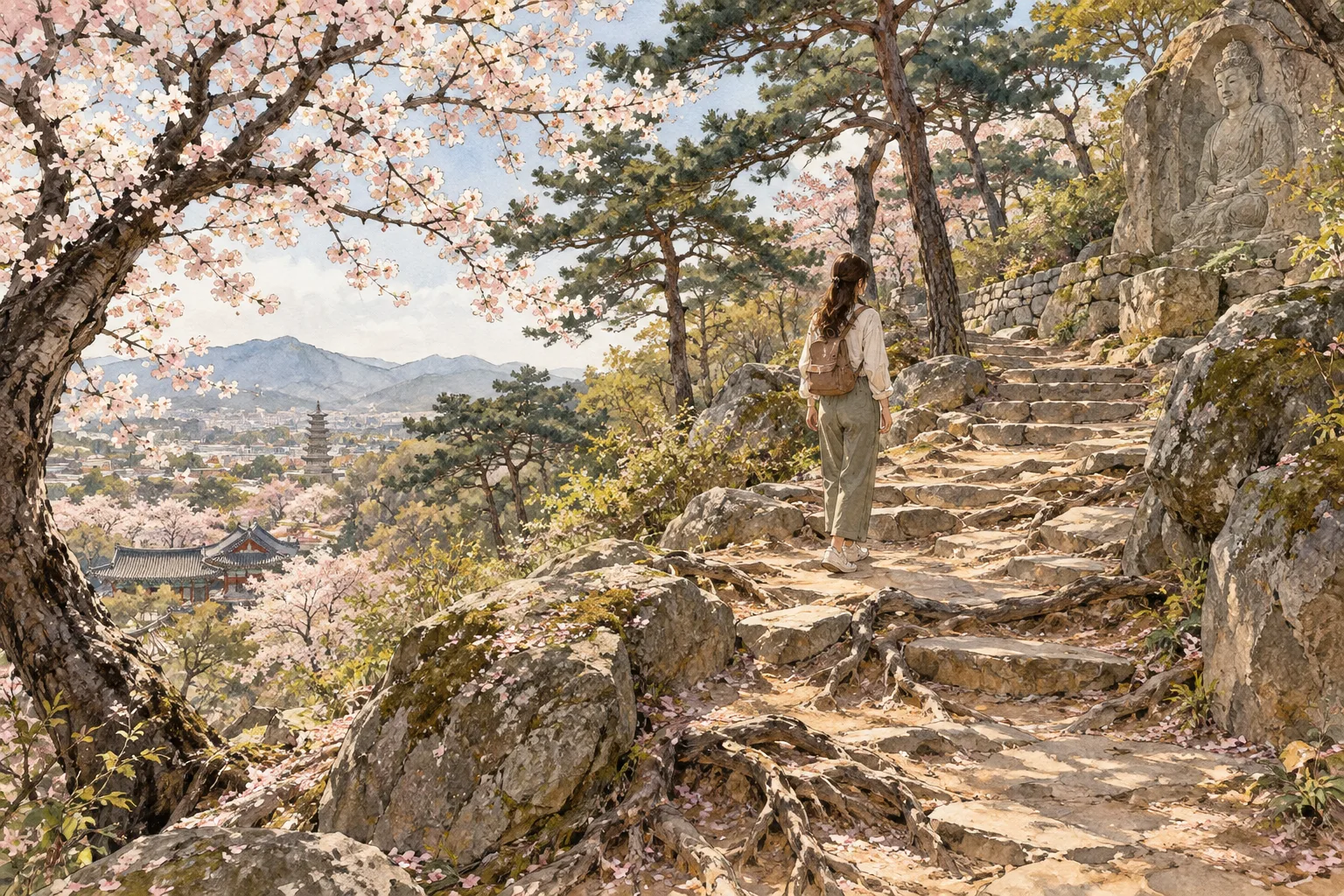
Namsan Mountain is not a paved viewpoint walk. It is a real hike over stone, roots, and steps, scattered with Silla-era carvings and temple ruins that make it one of Gyeongju's most photographed outdoor museums. That reputation pulls in travelers who came for a cultural stroll, not a mountain trail.
If you have poor knees or no proper hiking boots, that mismatch matters. Uneven terrain is a documented feature of Namsan's routes, and poor footwear is a known factor that can turn a cultural walk into a harder situation than planned, especially combined with heat, rain, wind, or a late start. This is not a guarantee of injury, but it is a real enough risk that it deserves a plan, not a shrug.
This guide sorts out who should still go, who should skip it, and what to do instead.
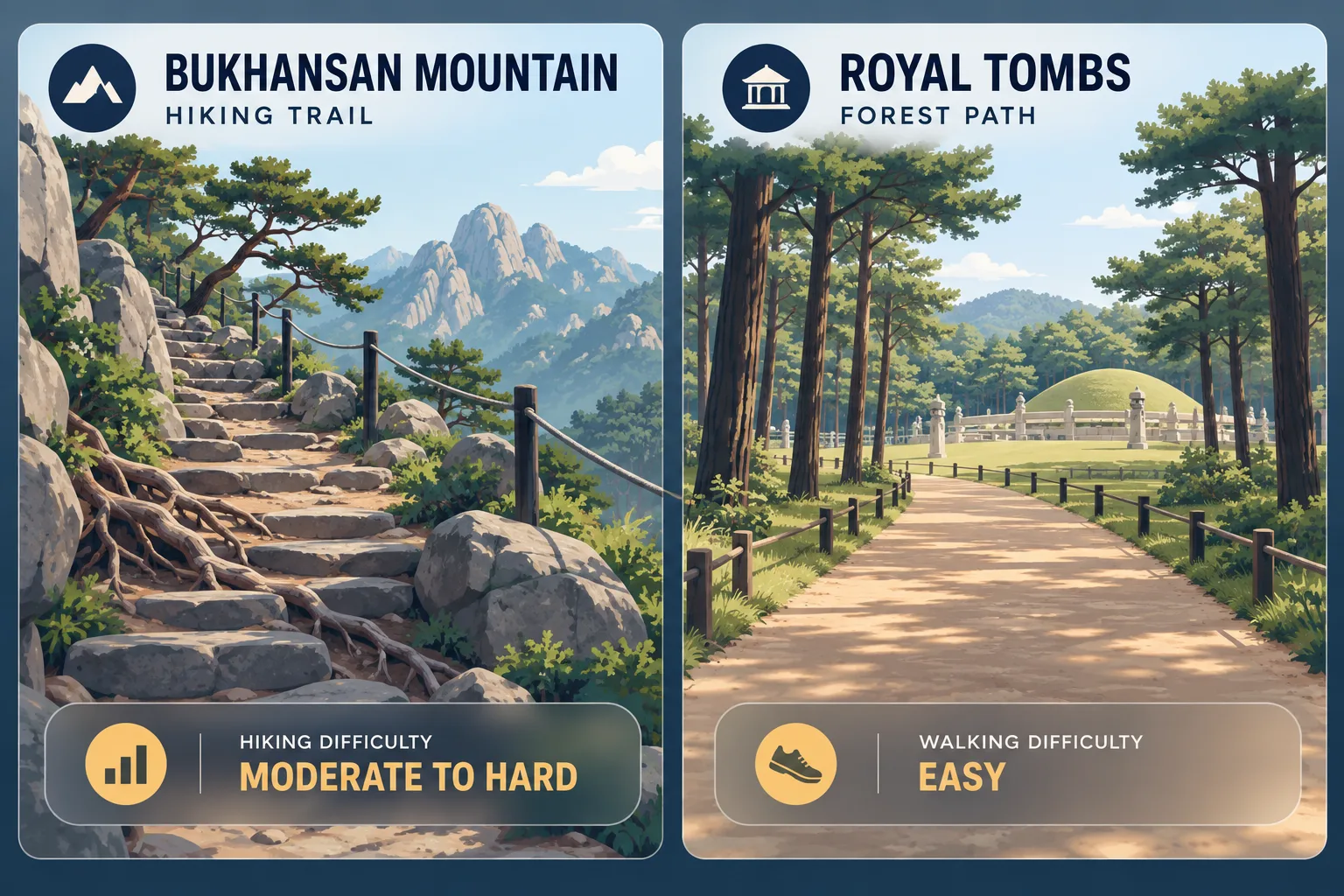 Editorial illustration: A simple side-by-side comparison layout with two labeled columns.
Quick Verdict
Skip the full Namsan hike if you have poor knees and no proper hiking boots, unless you can fix the footwear problem or scale down to a short, flat section. That is the safer default, not a hard medical rule.
Go for it if you have no history of joint trouble on stairs or uneven ground, you have grippy shoes, and you can start early with time to spare. Lean toward skipping it, or swapping in a flatter alternative, if your knees already react to stairs at home, if your only footwear is sandals or thin sneakers, or if your schedule leaves no buffer for a slow, cautious pace. If you have a diagnosed knee or joint condition, defer to your own clinician's guidance over any general advice here.
Who Will Probably Love It
Fit, unhurried hikers get the most out of Namsan. If you regularly walk or hike at home without knee trouble, the mountain's mix of stone steps, forest paths, and rock-carved Buddhas is likely to feel rewarding rather than punishing.
Travelers who enjoy self-paced outdoor time also do well here. Namsan rewards people who like stopping often to look closely at carvings and ruins, since the terrain naturally forces a slower rhythm anyway. Budget-conscious travelers benefit too, since the hike itself costs nothing beyond your own transport and time.
Adventure-minded visitors who packed real trail shoes, even lightweight ones with decent tread, will likely find Namsan is one of the few places in Gyeongju that feels like an active outdoor day rather than a heritage walk.
Who Might Regret It
Travelers with existing knee, hip, or ankle issues are the clearest wrong fit for a full route. Uneven stone, roots, and elevation change are a documented part of Namsan's trails, and that combination is generally harder on joints than flat ground, whatever the direction of travel. Once you are partway up a route, there is often no quick paved shortcut back down, so plan the turnaround before you start rather than after your knees start complaining.
Anyone without grippy footwear also faces added risk. Smooth-soled sneakers, sandals, or dress shoes are known to lose traction on wet stone and loose gravel, and Namsan's documented terrain is rarely flat or consistently dry. Combine both factors, questionable knees and questionable shoes, and the disappointment risk shifts from "tired" toward "hurting or stuck partway up," even if that outcome is not guaranteed for every hiker.
Groups on a tight one-day Gyeongju itinerary tend to regret it for a different reason. They start Namsan expecting a quick add-on, then find the terrain eats far more time than a museum stop would, which pushes back the rest of the day's plans.
Mistake / Consequence Table
| Decision variable | Risk if you proceed anyway | Better-fit choice |
|---|---|---|
| Poor knees, standard mountain route | Uneven terrain and elevation change may aggravate existing joint sensitivity | Three Royal Tombs and pine forest walk instead |
| No hiking boots, wet or dewy trail | Reduced traction on stone steps and roots raises slip risk | Wait for a dry midday window, or pick a flatter path |
| Tight one-day schedule | Namsan often runs longer than expected, squeezing later plans | Reserve Namsan for a day with no fixed afternoon plan |
| Solo hiker, late start | Fading light plus fatigue on uneven ground, with less help nearby | Start early, or choose a route with more foot traffic |
| Budget-only footwear (sandals, thin sneakers) | Lower grip on loose gravel and rock | Use grippier shoes if available, or skip the mountain route |
Hidden Friction Points
Walking fatigue on Namsan is different from city fatigue. Cobblestones in a historic district wear down your feet gradually. Namsan's elevation change, uneven stone, and root-crossed paths work your knees and ankles more directly, and that kind of fatigue can build faster than flat-ground walking if you already carry joint sensitivity.
Safety risk on Namsan is not mainly about crime. The documented pattern is that poor footwear, combined with conditions like heat, rain, ice, wind, or a late start, can escalate what looks like a cultural walk into a genuinely difficult situation. No single factor is dramatic on its own, but they can stack, and a hiker who ignores several at once takes on more risk than the terrain alone would suggest.
The other hidden friction is pacing mismatch. Namsan can look short on a map, but uneven ground and steps generally slow hikers down more than flat distance implies. Travelers who plan Namsan like a 45-minute museum visit are the ones most likely to end up rushing, and rushing is when both knee strain and slips become more likely.
How to Make It Easier
Small adjustments reduce a meaningful amount of the risk here. None of them require abandoning the idea of visiting Namsan entirely.
- Choose a documented, shorter route that matches your actual fitness level and comfort with elevation, rather than the longest or most scenic-sounding option.
- Carry or wear the grippiest footwear you have; hikers are generally advised to prioritize traction, since smooth soles are a known contributor to slips on this kind of terrain.
- Pack a light weather layer, since conditions and footing can both shift once you gain elevation under tree cover.
- Start earlier in the day so you are not rushing the descent as light fades or fatigue builds.
- Set a turnaround point in advance based on how your knees feel, not on how far the trail continues.
- Hike with at least one other person if your knees or footwear are already a known weak point.
- If you have a diagnosed joint condition, check with your own clinician before treating any Namsan route as routine.
Better Alternatives
If your knees or footwear rule out the mountain routes, you are not stuck skipping Namsan's history entirely. The Three Royal Tombs and pine forest area is a documented easier option that delivers a genuinely meaningful heritage walk without uneven mountain terrain.
This alternative fits a specific set of situations well: a late arrival that leaves less daylight, unsuitable footwear you cannot fix quickly, joint concerns that make stairs feel risky, or a group where even one person needs flatter ground. It offers the same Silla-era atmosphere in a lower-friction package, which makes it a practical choice rather than a consolation prize.
Choosing this alternative is not settling. It is matching the destination to the traveler instead of forcing the traveler to match the destination.
Self-Checklist
Run through this before you commit to a full Namsan hike.
- My knees have no recent history of pain on stairs or long descents at home.
- I have grippy, closed-toe shoes with real tread, not sandals or smooth-soled sneakers.
- I can start the hike early enough to avoid rushing the descent.
- My schedule has no fixed plan immediately after, in case the hike runs long.
- I have checked the weather for rain, heat, or wind that could affect footing.
- I am hiking with someone else, or the route is popular enough that help is likely nearby.
- I have a clear flatter alternative in mind if I decide to turn back.
- If I have a diagnosed joint condition, I have checked with my own clinician rather than relying on general advice.
If more than one or two boxes are unchecked, the Three Royal Tombs and pine forest walk is the safer default for this trip.
FAQ
Can I hike Namsan Mountain in Gyeongju with just sneakers? Regular sneakers can hold up on short, well-maintained sections in dry weather, but they generally have less grip than trail shoes on the stone, roots, and loose gravel that make up most Namsan routes. If rain or morning dew is likely, treat that as a reason to lower your grip margin further. If boots are not an option, choose a shorter, flatter route, or the Three Royal Tombs walk instead.
Is Namsan Mountain hard on the knees? Namsan routes generally involve elevation change, uneven stone steps, and roots, which is a harder surface than a flat city walk regardless of joint history. If stairs or downhill walking already bother your knees at home, it is reasonable to expect Namsan to feel at least as demanding. This is a precaution, not a medical claim. If you have a diagnosed knee or joint condition, follow your own clinician's guidance on hiking uneven terrain rather than this article's general advice.
What is the easiest alternative to hiking Namsan in Gyeongju? The Three Royal Tombs and pine forest area is the documented easier substitute. It offers a heritage walk on flatter, shaded ground, and it is specifically suited to travelers with joint issues, no hiking footwear, a late arrival, or a group that wants to avoid uneven mountain terrain.
How long does it take to hike Namsan Mountain? There is no single answer, since Namsan has multiple trailheads and routes of different lengths rather than one fixed path. Build in more time than a flat walk of the same distance would take, and plan for breaks, since uneven terrain slows most hikers down more than the raw distance suggests.
Is Namsan Mountain safe to hike alone? Route choice and preparation matter more than solo status. The documented risk factors are poor footwear combined with heat, rain, ice, wind, or a late start, any of which can turn a cultural walk into a harder situation than expected. If you have poor knees or no proper shoes, treat that as extra reason to pick an easier route or bring a companion, rather than relying on general trail luck.