travel-decisions
Should You Skip Gyeongju in Peak Season If You Hate Crowds?
A direct verdict on visiting Gyeongju during peak cherry blossom season if crowds, heat, and queues wear you down, plus how to make the trip work if you go anyway.
Strong Opening
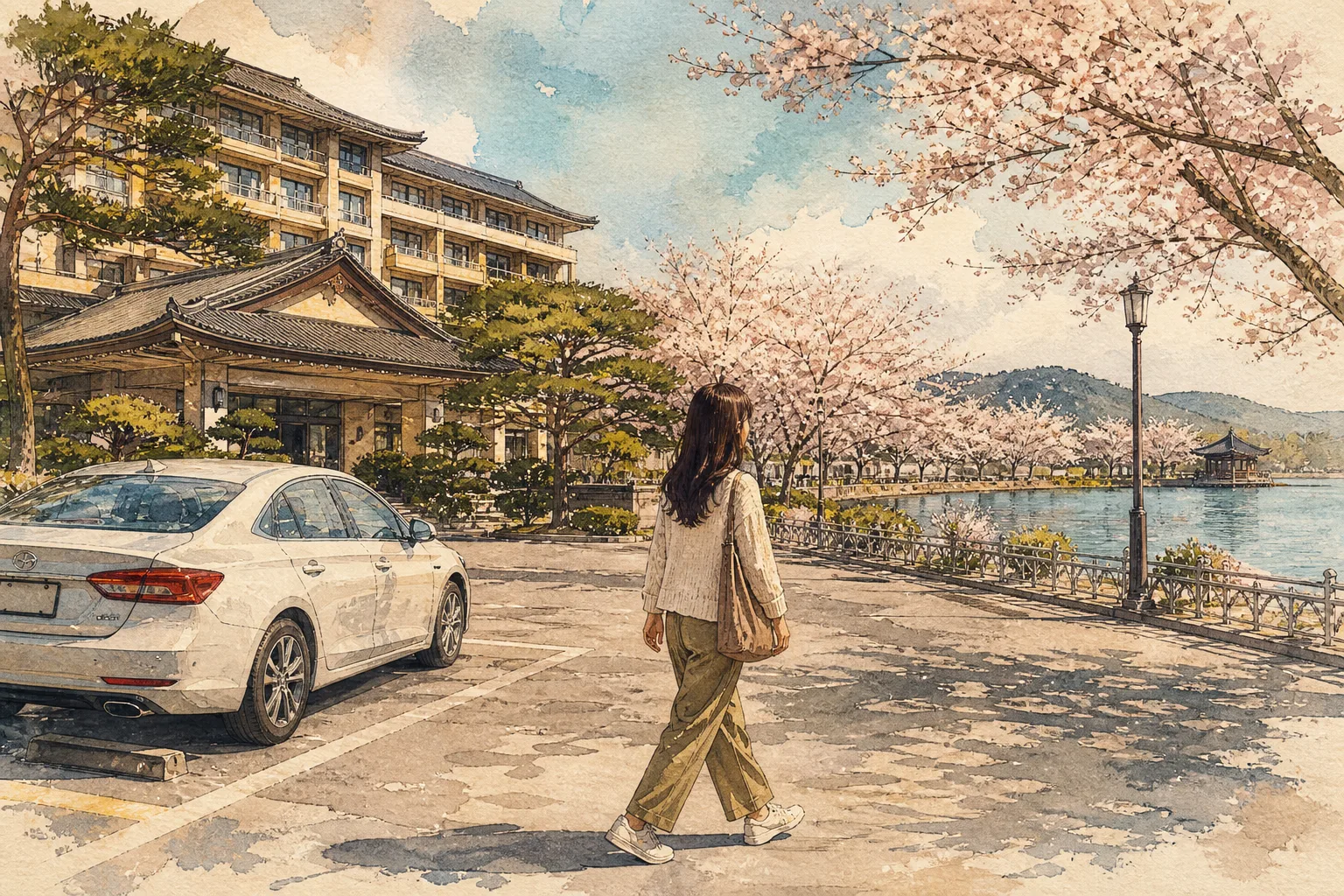
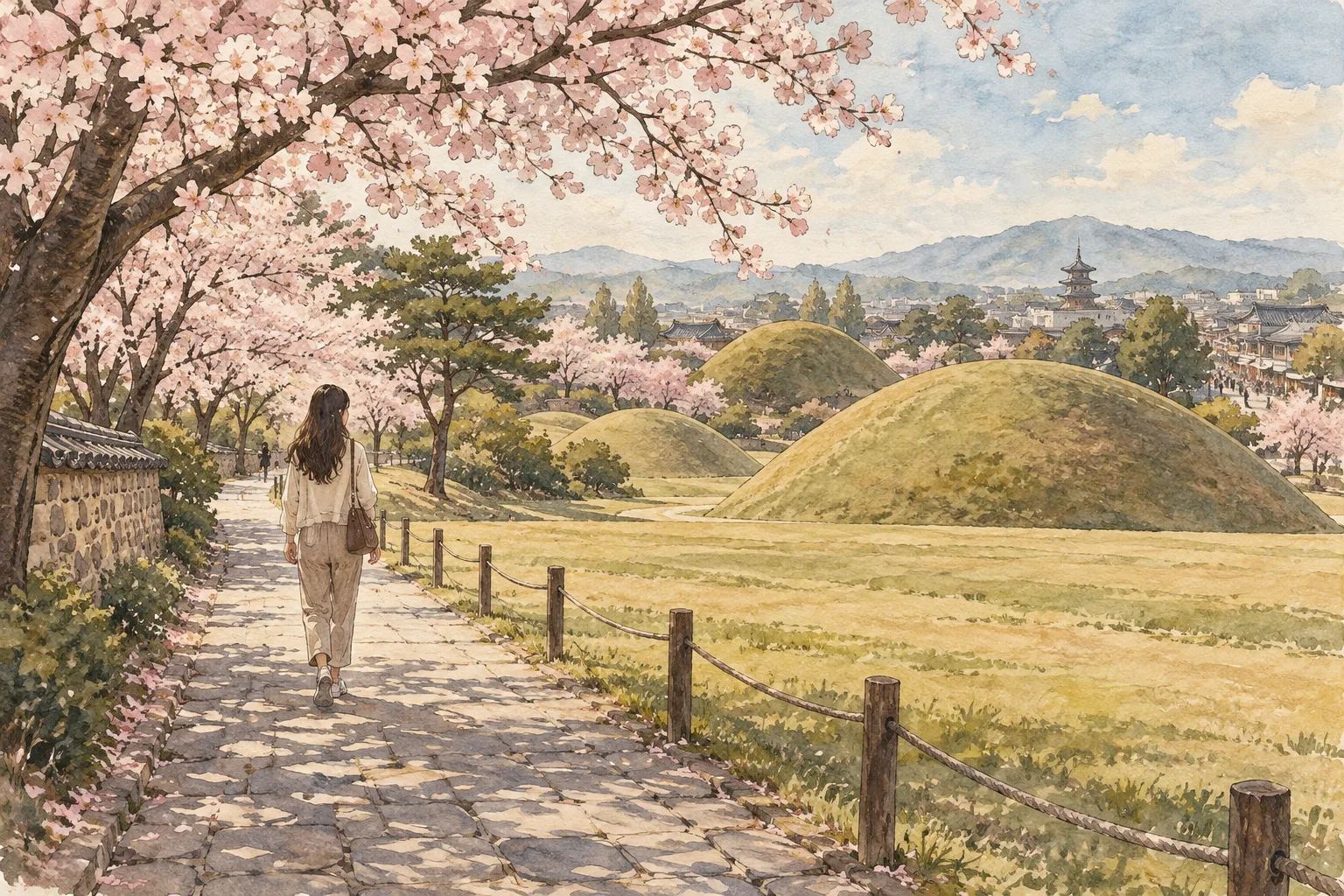
Gyeongju in peak season is not one crowd problem. It is several small, avoidable ones stacked together: a packed main street, a slow queue at one temple, a hot afternoon with nowhere shaded to sit. Travelers who hate crowds usually imagine the whole city jammed, when in reality the congestion clusters in a handful of predictable spots and hours.
That distinction matters because it changes the decision. Skipping Gyeongju entirely trades away one of Korea's most rewarding low-rise, tomb-dotted cityscapes to avoid a problem that a route change can mostly solve. The real question is not "crowded city, yes or no." It is whether you can accept a few hours of density in exchange for the rest of a fairly calm trip.
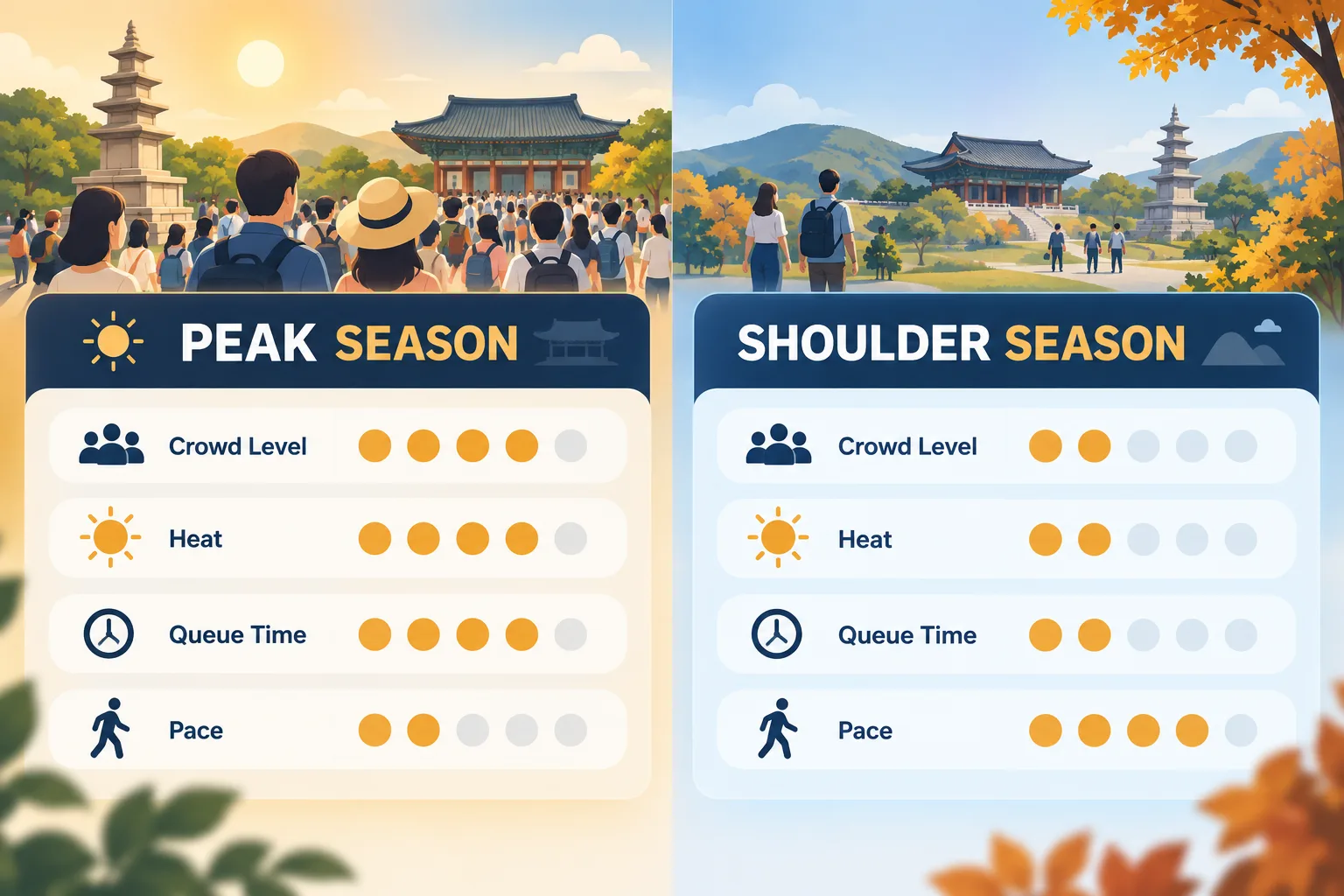 Editorial illustration: A simple two-column comparison layout on a clean background.
Quick Verdict
Do not skip Gyeongju outright just because it is peak season. Skip the specific crowd triggers instead: midday Hwangnidan-gil, weekend Daereungwon, and the narrow window when blossoms hit full bloom citywide.
This trip works well for travelers who can shift their schedule and accept a two-tier city: one loud, packed core and a much quieter periphery. It does not work for travelers who need every part of a trip to feel unhurried, or who cannot tolerate any queue at all, or who are traveling with someone who overheats or tires quickly in dense foot traffic.
If you are the second type, either target the earliest days of bloom based on that year's forecast, or treat Gyeongju as a half-day stop instead of a full multi-day anchor.
Who Will Probably Love It
Gyeongju peak season suits travelers who plan around crowds instead of hoping crowds will not happen. If you are comfortable front-loading your day, arriving at Daereungwon right at its 9am opening and saving errands or cafe time for later, the congestion barely touches your trip.
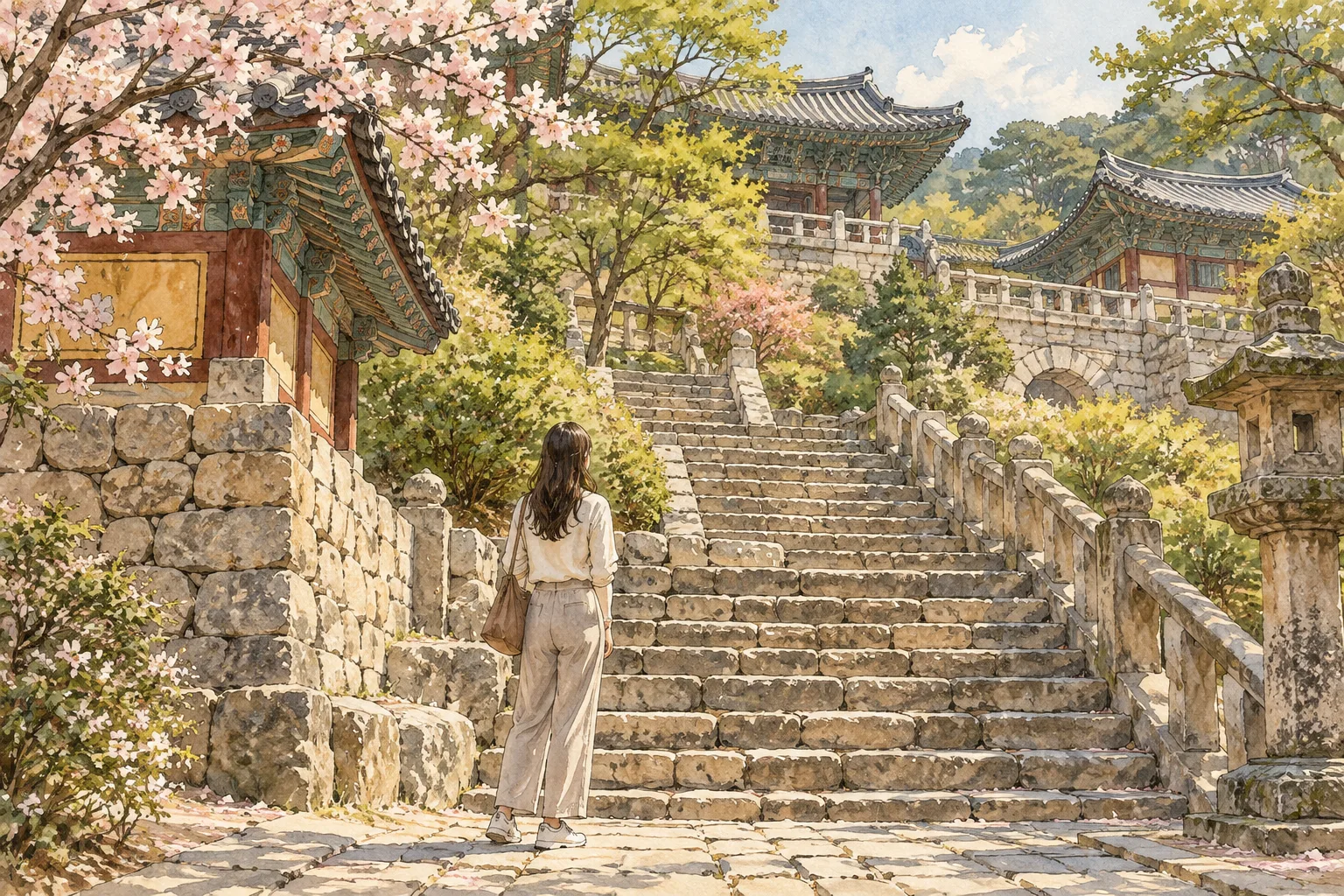
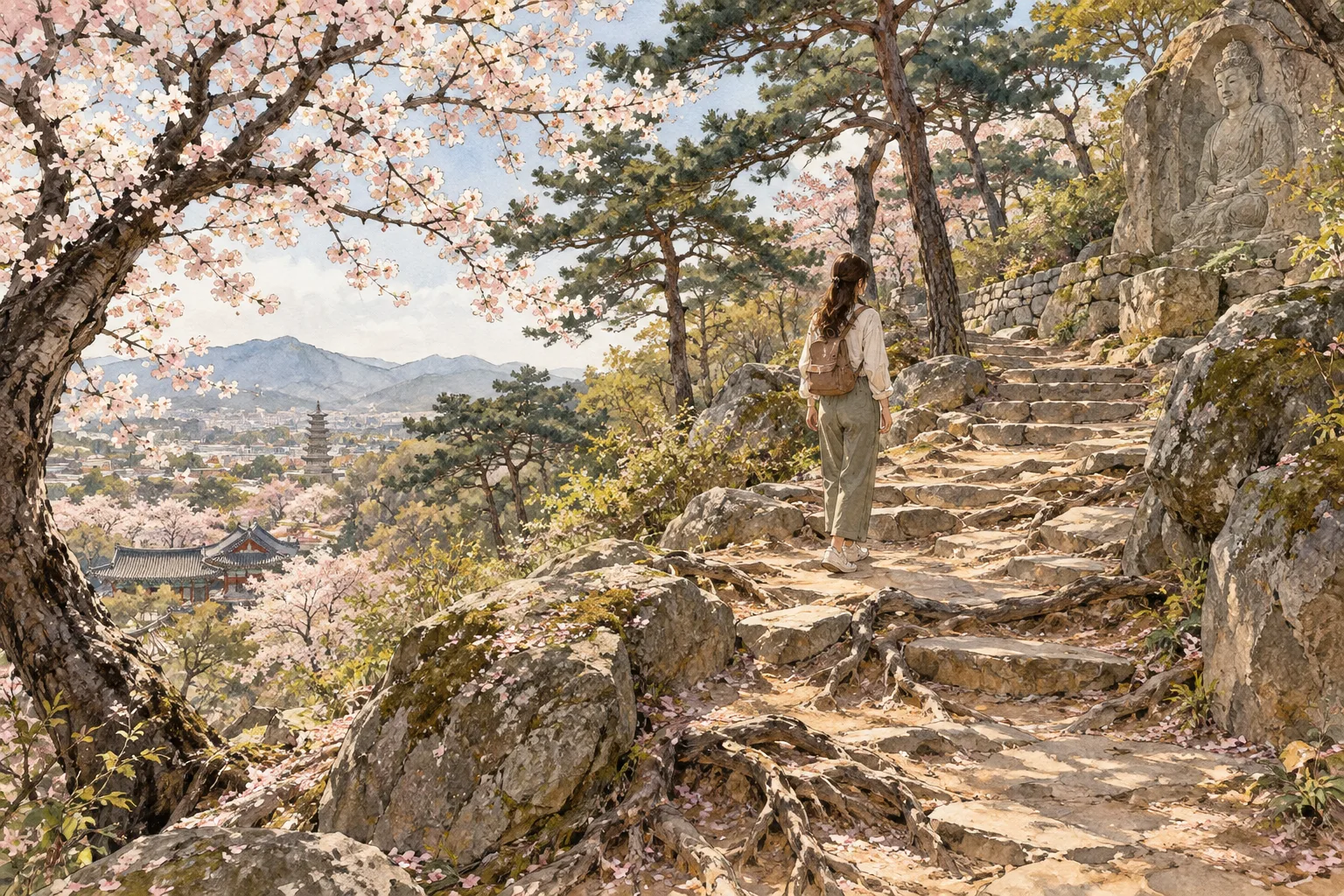
It also suits atmosphere-led travelers who care more about blossoms, tomb mounds, and quiet stone paths than checking off every headline attraction. Gyeongju has enough secondary sites, like Oreung and the calmer north embankment of Donggung Palace and Wolji Pond, that a flexible traveler can build an entire satisfying day without touching the most congested blocks.
Weekday travelers have the clearest advantage. Locals treat spring weekends as picnic days, which means weekday afternoons are measurably calmer than a Saturday in the same week.
Who Might Regret It
Travelers who assume Gyeongju is a small, easy town they can wander loosely are the ones most likely to regret a peak-season visit. The city's most photogenic pockets, especially Hwangnidan-gil, can fill completely during busy stretches, with lines waiting outside shops and restaurants that would otherwise take five minutes.
Anyone traveling with young kids, older relatives, or a companion with low heat tolerance should treat peak season as a real constraint, not a minor inconvenience. Midday sun combined with a slow-moving crowd is a specific kind of fatigue that compounds fast, and it rarely improves once it starts.
The disappointment risk is specific: arriving at Wolji Pond expecting a calm reflection shot and instead finding packed railings, or reaching a popular restaurant near Hwangnidan-gil and waiting well past your planned meal window. Travelers who booked around a guessed bloom date and landed in the wrong week face a second risk: either missing the blossoms entirely or hitting the single most crowded days of the year by accident.
Mistake / Consequence Table
| Decision variable | If you ignore it | If you plan around it |
|---|---|---|
| Visiting Daereungwon at midday on a weekend | Dense crowds, slow walking pace, long photo waits | Same tombs at Oreung nearby, similar scenery, far fewer people |
| Fixing travel dates off a generic "peak week" guess | Bloom timing shifts by year, so you may miss the blossoms or hit the single most crowded days by chance | Check that year's official bloom forecast about two to three weeks out, then book once early-bud reports confirm timing |
| Wandering Hwangnidan-gil at lunch | Lines outside shops and restaurants, wasted time | Visit early morning or shift meals to off-peak hours |
| Treating the whole day as unstructured | Fatigue compounds with heat and queue time | Front-load calm sites early, save flexible time for later in the day |
| Skipping the festival grounds assuming overcrowding | Missing a genuinely spacious, well-managed event | The festival venue is large enough to absorb visitor numbers without feeling packed |
Hidden Friction Points
Crowds concentrate, they do not spread evenly. Hwangnidan-gil and Daereungwon absorb a disproportionate share of visitors, while sites a short walk away, like Oreung, stay comparatively open. Most crowd frustration in Gyeongju comes from visiting the same two or three places everyone else visits at the same time everyone else visits them.
Heat becomes a real factor once cherry blossom season moves past its early weeks and into warmer spring afternoons. Combined with slow-moving crowds, heat turns a pleasant walk into a draining one, especially for anyone without ready access to shade or water breaks.
Queues show up less as a single bottleneck and more as friction scattered across the day: a wait for a popular restaurant, a slow shuffle through a packed lane, a line for a photo spot. None of these individually ruins a day, but stacked together they eat the buffer time a traveler needs to feel unhurried.
Fatigue is the compounding cost of the other three. A traveler who starts the day already managing crowds, heat, and small waits has less patience left for the parts of Gyeongju that are genuinely calm. This is why timing choices early in the day matter more than any single site choice.
How to Make It Easier
You can absorb most of Gyeongju's peak-season friction with scheduling, not sacrifice. None of the fixes below require skipping a major site; they just shift when and how you see it.
- Walk Hwangnidan-gil before 9am while the street is quiet, then arrive at Daereungwon right at its 9am opening, when both crowds and heat are still lowest.
- Swap one busy tomb visit for Oreung if you want the same mood with a fraction of the foot traffic.
- Pick weekday afternoons over weekend afternoons whenever your schedule allows; locals treat weekends as picnic time.
- Do not lock in dates around a remembered "peak week" from a past year or a single article. Check that year's official cherry blossom forecast and recent local bloom reports about two to three weeks before you travel, then aim for the earliest days buds open rather than full bloom.
- At Donggung Palace and Wolji Pond, walk toward the north embankment or the perimeter path instead of staying at the crowded railings.
- Build in slack time between activities so a 20-minute queue does not collapse your afternoon plan.
- Carry water and plan at least one shaded rest stop for midday, especially if traveling with kids or older relatives.
Better Alternatives
If your dates cannot move and you genuinely cannot tolerate any crowd exposure, a full multi-day Gyeongju itinerary during the single most crowded week of blossom season is the wrong plan. Two better paths exist depending on what you actually want from the trip.
First, shorten the visit. Treat Gyeongju as a focused half-day or one-day trip built entirely around off-peak hours and quieter alternative sites, rather than a multi-day stay that forces you into the crowded core repeatedly.
Second, shift the timing within the season. Traveling in the earliest days of bud opening, or a week or two after full bloom passes, keeps most of the scenery while dropping much of the density. Check that year's forecast rather than a fixed calendar date, since the window moves depending on how warm the spring runs.
Self-Checklist
Use this before you finalize a peak-season Gyeongju trip.
- Can I walk Hwangnidan-gil before 9am and arrive at Daereungwon right at its 9am opening on at least one day?
- Am I willing to swap Daereungwon for Oreung if the queue looks bad on arrival?
- Does my itinerary include at least one weekday, not only weekend days?
- Have I checked that year's official bloom forecast and recent local bloom reports, rather than assuming a fixed date from a past trip or article?
- Do I have a shaded rest stop planned for midday?
- Am I traveling with anyone (kids, older relatives, heat-sensitive companion) who needs extra buffer time?
- Have I left slack time between activities instead of a tightly packed schedule?
If you answered no to three or more of these, consider adjusting your dates once the current-year forecast is out, or shortening the Gyeongju portion of your trip.
FAQ
Is Gyeongju really that crowded in peak season? Yes, in specific pockets. Hwangnidan-gil and the Daereungwon tomb complex can fill completely during cherry blossom season, with lines outside popular shops and restaurants. The crowding is concentrated, not citywide, so it is avoidable with the right route.
What is the least crowded time to see Gyeongju's cherry blossoms? Early morning on weekdays is consistently the calmest window, and arriving right as the first buds open beats the crowds that show up once blossoms hit full bloom. The exact first-bud date shifts every year with weather, so check that year's official bloom forecast and recent local bloom reports in the two to three weeks before your trip instead of fixing a date in advance.
Should I skip Gyeongju entirely if I hate crowds? No, skipping is rarely necessary. Skip only the single most congested week and the single most congested block of hours; the rest of Gyeongju, including alternative tomb sites and the pond's quieter edges, stays manageable even in peak season.
Is the Gyeongju Cherry Blossom Festival worth it for a crowd-sensitive traveler? It is more tolerable than the reader might expect. The festival grounds are spacious enough that large visitor numbers do not translate into the same packed feeling as the narrow lanes of Hwangnidan-gil.
How do I find out when the cherry blossoms will actually peak this year? Do not rely on a single generic date from a past year's article. Check the current year's official Korea cherry blossom forecast, Gyeongju city tourism updates, and recent visitor or local bloom reports about one to two weeks out, since bud timing moves earlier or later depending on that year's temperatures.
What is a good alternative to the busiest Gyeongju sights? Oreung, the Five Royal Tombs, offers similar tomb-mound scenery and blossoms with a fraction of the foot traffic of Daereungwon. It is a straightforward swap for travelers who want the same mood without the same density.