travel-decisions
Is the Astronomical Clock Area Too Claustrophobic for Travelers Seeking Authentic Czech Culture?
The Astronomical Clock square gets crushed by crowds on a predictable hourly cycle. Here is who should skip it, who should push through, and how to see it without the regret.
Strong Opening
The Astronomical Clock area is not a mistake to visit. It is a mistake to over-invest in.
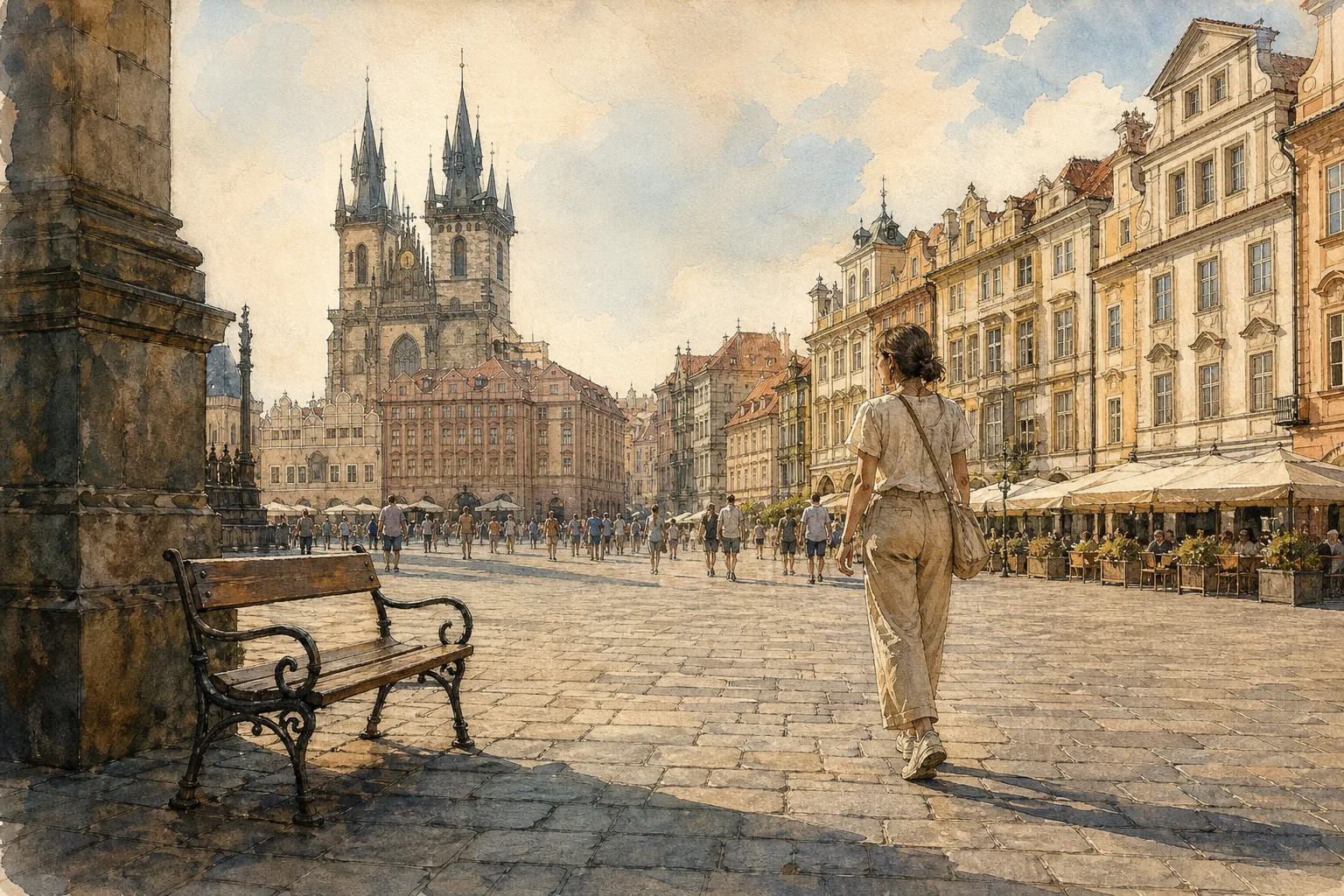
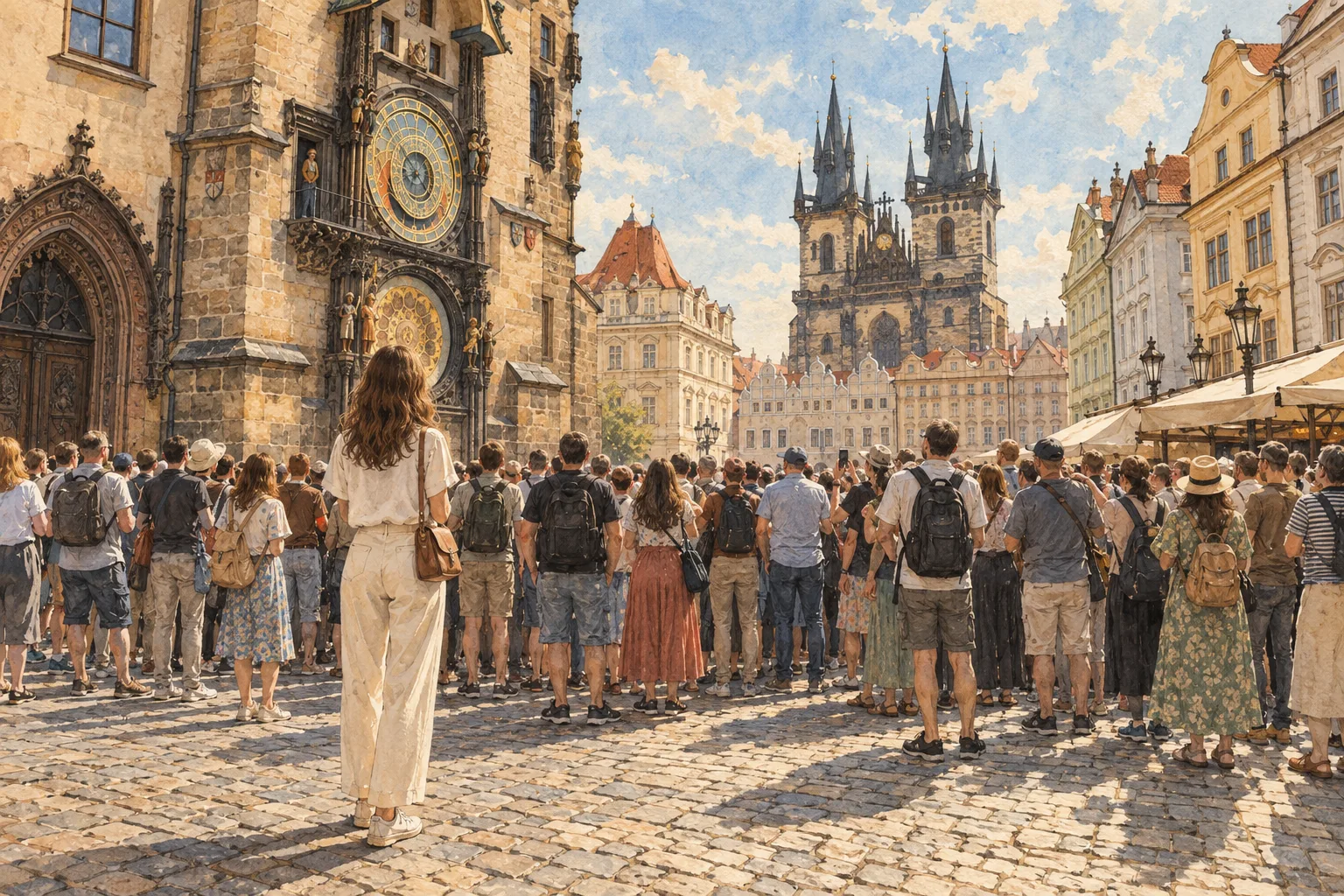
Old Town Square and Charles Bridge both suffer from severe overtourism, and the clock sits at the center of that congestion. The square does not stay crowded at a flat, constant level all day. It runs on a predictable hourly cycle, filling up before each performance and thinning out in between, which means the "claustrophobic" feeling many travelers report is really a timing problem, not a permanent condition. Get the timing wrong and you stand shoulder to shoulder for several minutes to watch a performance that lasts under a minute. Get it right and the same square can feel almost calm.
The real decision is not "should I see the clock." It is "how much of my limited Prague time should this specific square get, and when."
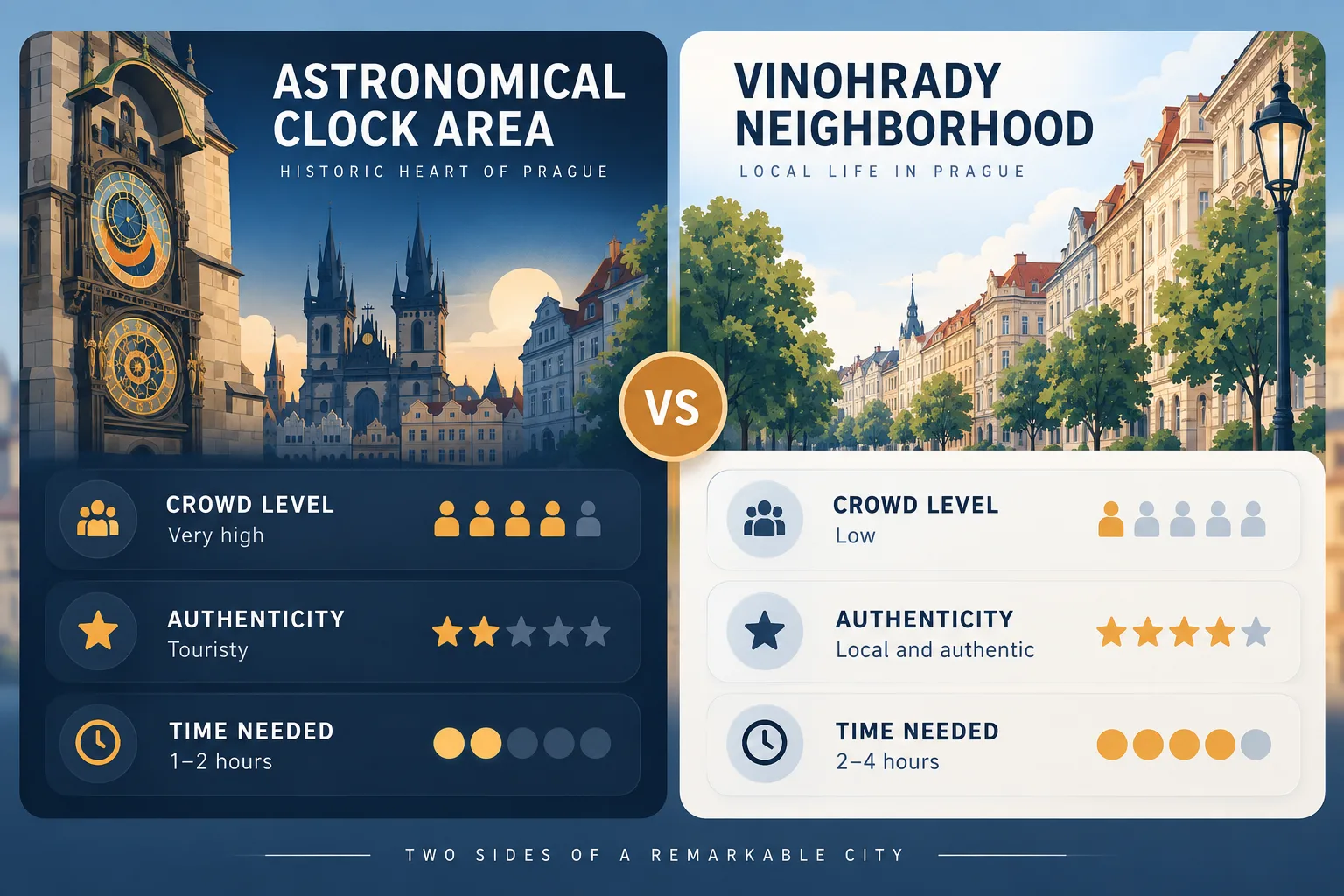 Editorial illustration: A clean simple comparison layout with two columns.
Quick Verdict
Go for ten to fifteen minutes, early, and move on. Do not build your Prague day around the hourly show.
Choose this option if:
- You want to see the clock and understand why it is historically significant, without needing it to be a highlight of the trip.
- You can visit in the early morning, before crowds build.
- You are willing to treat the square as a quick stop, not a place to sit and soak in atmosphere.
Skip or minimize this option if:
- You are visiting specifically to feel close to "real" Czech daily life, not to see a landmark.
- You have low tolerance for dense, pressing crowds, especially in a square with limited space to step back.
- Your trip is short and you would rather spend that time in a neighborhood where nothing is scheduled around a tourist show.
Who Will Probably Love It
Travelers who want the clock as a checklist item, not an experience, tend to leave satisfied. If you arrive early, look at the mechanism, maybe climb the tower for the view, and leave before the crowd peaks, the visit works fine. It takes ten to fifteen minutes and gives you the photo and the context.
First-time visitors to Prague who have never seen a functioning medieval astronomical clock also tend to find it genuinely interesting, at least once. The mechanical detail is real history, not a recreation. That novelty carries the visit even through a moderate crowd.
Who Might Regret It
Slow travelers and atmosphere-first travelers are the most likely to walk away disappointed. They come to a square expecting to soak in mood and instead get pressed shoulder to shoulder waiting for a performance that is over in under a minute. That mismatch between the imagined scene and the real one is the core regret pattern here.
Solo travelers hoping for a quiet, reflective moment near a historic landmark run into the same problem. There is no comfortable spot to stand back and just look. The dense crowd forces constant small movements, checking bags, and negotiating space, which is the opposite of the slow, absorbing experience many people picture when they imagine "authentic Czech culture."
The specific disappointment risk is this: travelers expect an intimate, old-world square and instead find a viewing pen. The clock performance itself is brief, a short sequence of moving figures lasting well under a minute, and it does not match the buildup of standing in a packed crowd beforehand. When the payoff is that short and the wait is that long, regret follows.
Mistake / Consequence Table
| Decision variable | If you optimize for the clock show | If you optimize for authenticity |
|---|---|---|
| Time of day | Midday or afternoon, hourly show | Early morning, before groups arrive |
| Time spent in area | Roughly 10 minutes of crowd buildup for a sub-minute performance | 10-15 minutes, then move on |
| Where you eat nearby | Trdelnik stalls at the square, marketed as a Czech classic | A neighborhood restaurant meal tied to actual Czech daily eating habits |
| Where you base your day | Old Town Square as the anchor | Vinohrady or Karlin as the anchor, clock as a side stop |
| What you feel afterward | Crowd fatigue, a blink-and-miss-it show | A calmer sense of having seen real neighborhood life |
The pattern across every row is the same tradeoff: proximity to the landmark costs you crowd density, and distance from the landmark buys you authenticity. Neither choice is wrong. The mistake is expecting both from the same short window in the same square.
Hidden Friction Points
Crowds are the most obvious friction, but the specific shape of the crowd is what catches people off guard. It is not evenly distributed all day. It spikes sharply in the minutes before each hourly show and drops noticeably right after, so a traveler who wanders in at the wrong moment can misjudge the entire square as permanently overwhelming when it actually cycles.
Expectation mismatch is the quieter friction point, and it shows up twice. First, travelers picture the square from photos taken in empty early-morning light, then arrive to dense foot traffic and street performers competing for attention, which is a very different scene. Second, the payoff itself is small: after minutes of crowd-building, the animated performance runs for well under a minute, so the anticipation-to-reward ratio is badly out of balance for anyone expecting a show to match the wait.
A related friction point sits inside the food experience. Trdelnik sold heavily around the square is marketed to tourists as a Czech classic, but its origins are more commonly traced to Hungarian and Slovak baking traditions, and it is not a pastry most Czechs eat regularly. Travelers who buy it there and call it "authentic Czech food" are eating a tourist product, which quietly reinforces the sense that the whole area is staged rather than lived-in.
How to Make It Easier
- Go early. Arriving in the early morning is the single most effective way to avoid the worst of the crowd, since the square has not yet filled with the day's tour groups.
- Treat the hourly show as optional. The clock face itself can be viewed up close during quiet hours. Since the performance lasts under a minute, skipping it removes almost all of the crowd pressure while costing you almost nothing.
- Separate landmark time from culture time. Budget a short, deliberate visit to the clock, then plan your actual "feel of Prague" time somewhere else on the same day.
- Skip the square food stalls. If you want a food moment that reflects real Czech eating habits, look for it in a neighborhood restaurant instead of a tourist-stall pastry.
- Set a time limit before you arrive. Deciding in advance that you will spend 15 minutes, not an hour, prevents the slow drift into standing in a thickening crowd waiting for "just one more" show cycle.
Better Alternatives
If your goal is authentic Czech culture rather than a landmark checklist, Vinohrady is the more direct answer. It gives travelers real residential streets and historic architecture without a schedule-driven tourist crowd built around it. The experience there is centered on local daily life instead of a performance you have to fight for space to see.
Karlin offers a similar shift, particularly for food. Prague's more authentic modern dining scene sits largely outside the historic tourist core, concentrated in neighborhoods like Vinohrady and Karlin rather than around Old Town Square. Redirecting even half a day toward one of these neighborhoods trades a landmark checklist item for local restaurants and streets without a tourist-schedule crowd built around them.
This does not mean abandoning the Old Town entirely. It means sequencing it correctly: landmark first, briefly, then neighborhood time for the parts of the trip you will actually remember fondly.
Self-Checklist
Use this before you plan your Prague day around the clock:
- I have set a firm time limit (10-15 minutes) for the Astronomical Clock visit.
- I am planning to arrive early morning, not midday or afternoon.
- I do not need to see the hourly show specifically; the clock face itself is enough.
- I have blocked separate time for a non-landmark neighborhood like Vinohrady or Karlin.
- I am not planning to treat a square food stall as my "authentic Czech meal."
- I have accepted that Old Town Square will feel like a landmark stop, not a slow, atmospheric one.
If you checked all six, the clock area will likely feel manageable. If several are unchecked, you are at higher risk of the crowd-fatigue and expectation-mismatch regret described above.
FAQ
Is the Astronomical Clock actually worth seeing at all? Yes, but only briefly. The clock mechanism and the tower view are genuinely worth ten to fifteen minutes on a quiet visit. The regret comes from treating the surrounding square as a place to linger, not from seeing the clock itself.
What is the best time to visit to avoid the worst crowds? Early morning, before the first tourist groups arrive, is the reliable window. The square empties out noticeably compared to the buildup that starts an hour or two before midday and continues through the afternoon hourly shows.
Does skipping the hourly show mean missing the real experience? No. The performance itself lasts under a minute, so waiting in a packed crowd for several minutes to watch it is a poor trade. Many travelers get more satisfaction from viewing the clock face up close during a quiet hour than from fighting for a sightline during the show.
Where should I go instead if I want authentic Czech culture, not just landmarks? Vinohrady is the most direct answer. It offers real residential streets, local cafes, and historic architecture without a tourist crowd built around a schedule.
Is trdelnik near the clock an authentic Czech food experience? Treat it as a tourist-stall pastry, not a cultural landmark either way. The ice-cream-filled version sold around the square is a modern tourist adaptation, and the pastry's roots are widely linked to Hungarian and Slovak baking traditions rather than Czech ones. If you want a food experience that is actually tied to Czech daily life, look for it in a neighborhood restaurant, not a square vendor stall.