travel-decisions
Is Prague Worth It If You Want to Enjoy It More Comfortably?
A traveler-fit breakdown of whether Prague suits comfort-focused, relaxed-pace visitors, or whether the cobblestones, crowds, and hotel gaps make it a poor match.
Quick Verdict
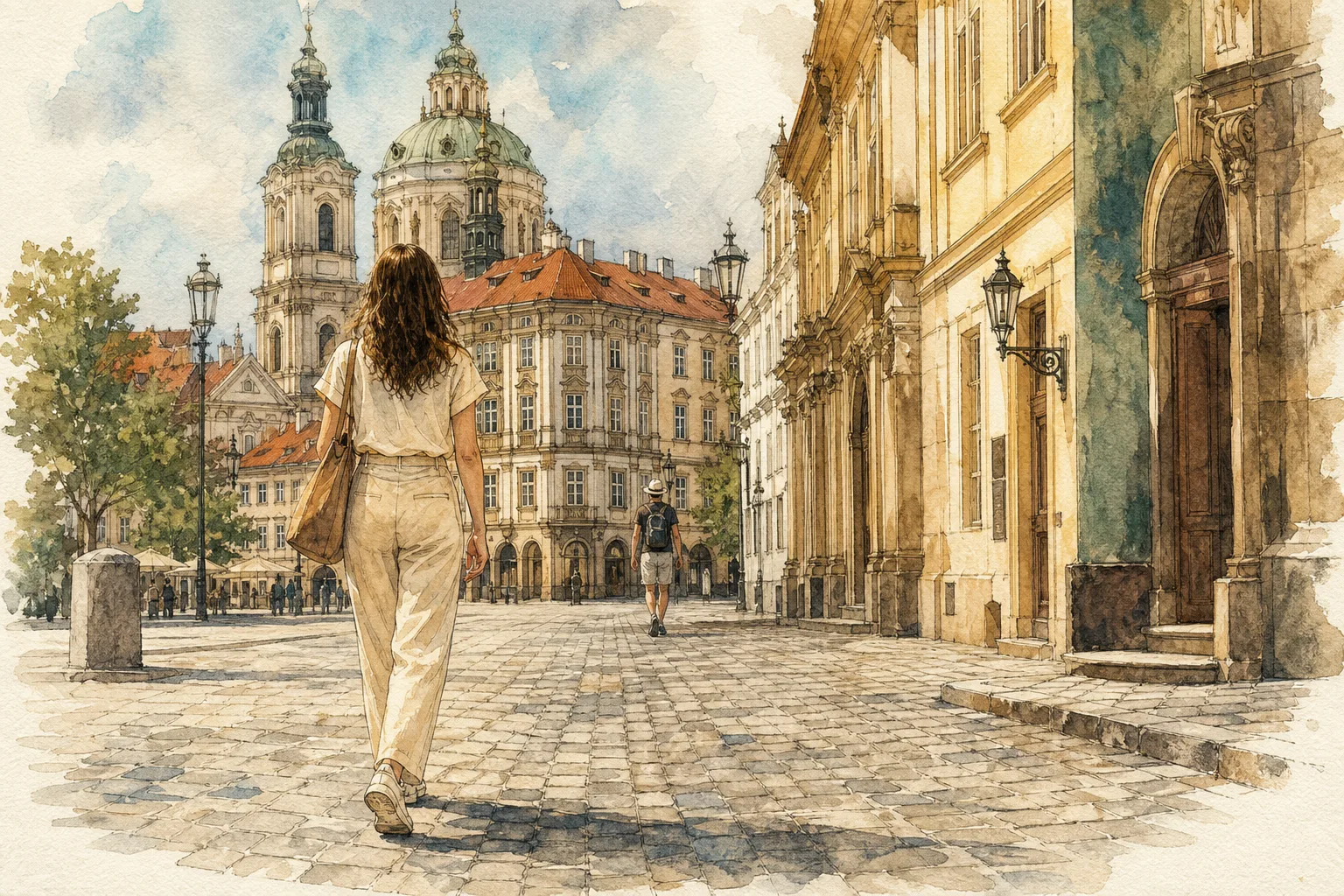
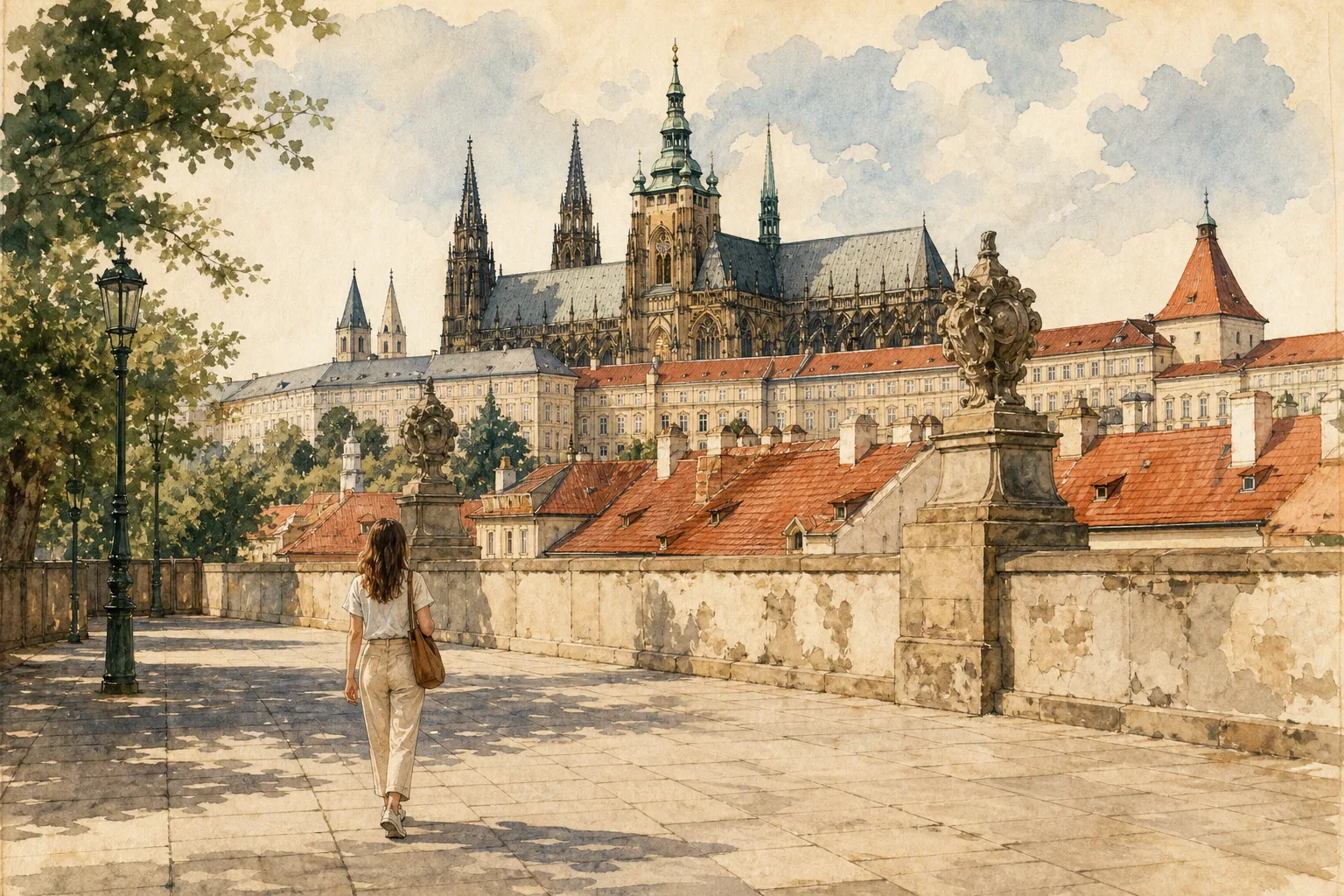
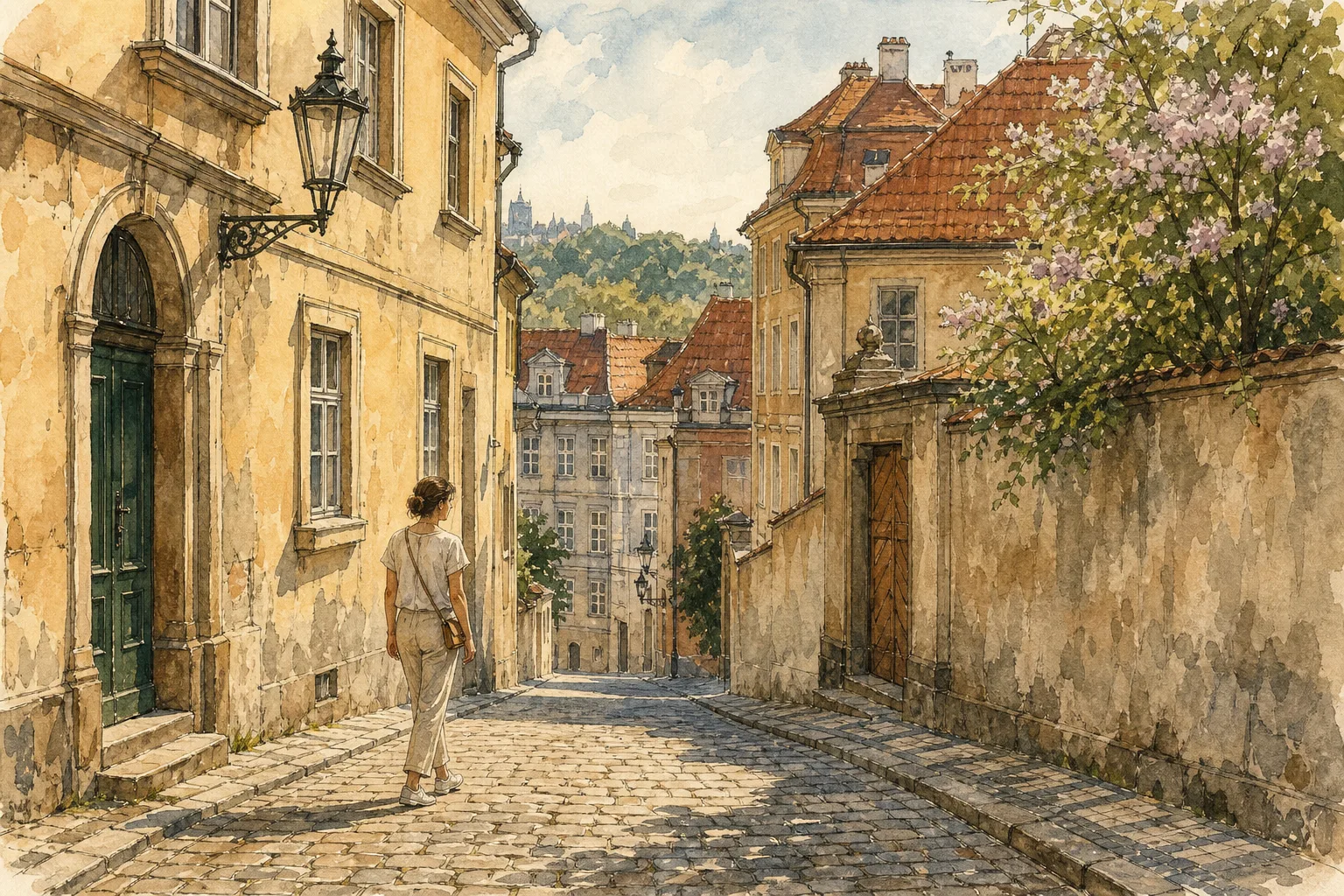
Prague is worth it for comfort-focused travelers, but only if you plan around its friction points instead of walking into them. The city has real, earned atmosphere: quiet courtyards, riverside benches, unhurried cafes, and architecture that does not require a ticket or a queue to enjoy. That atmosphere is what makes it a strong fit for people who value mood and pace over checklist efficiency.
Choose Prague if you want a city where slowing down is genuinely rewarded, where a good neighborhood can feel calmer than a resort, and where a couple can build a day around two or three unhurried stops instead of six rushed ones.
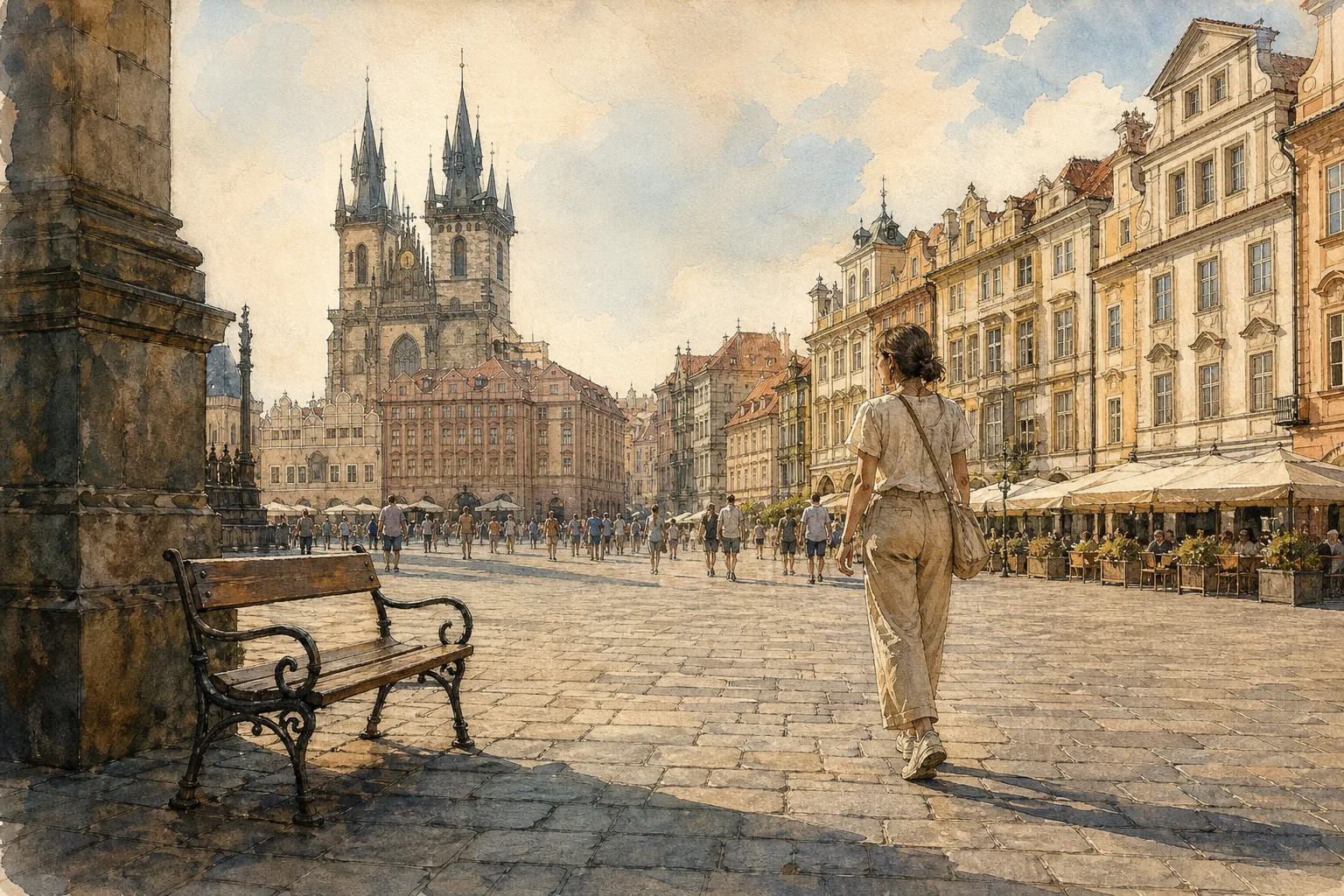
Do not choose Prague, or at least do not choose the version most itineraries describe, if your idea of comfort means minimal walking, predictable modern hotel amenities everywhere, and a historic core that feels uncrowded. The Old Town to Castle corridor is dense with visitors for most of the day, some historic hotel buildings trade charm for missing elevators or air conditioning, and the most photogenic streets are rarely the calmest ones.
The honest fit rule: strong fit if you are willing to trade some conveniences for atmosphere and are comfortable adjusting your route around crowds. Weak fit if you need guaranteed modern comfort and low walking effort everywhere you stay and eat.
 Where the comfort fit actually comes from
Traveler Type Table
The comfort question in Prague is not really about the city as a whole. It is about which parts of it you choose to spend time in, and whether your hotel and pace match your actual tolerance for walking, noise, and crowd density.
| Traveler type | What comfort means to them | Where Prague delivers | Where Prague creates friction |
|---|---|---|---|
| Comfort-focused travelers | Quiet rooms, reliable amenities, low physical strain | Vinohrady and quieter Mala Strana streets, tram access | Historic hotel conversions without elevators or central air conditioning |
| Couples | Unhurried shared moments, good food without overpaying | Riverside walks, neighborhood cafes, evening strolls | Overpriced Old Town restaurants marketed as romantic |
| Relaxed-pace travelers | Fewer stops per day, room to wander without a schedule | Compact core means less transit time between sights | The Royal Route's crowd bottlenecks can eat an entire slow afternoon |
The real decision variable is not "is Prague nice." It is whether you are willing to base yourself slightly outside the postcard core and accept a longer look at fewer places, in exchange for lower crowd pressure and often lower prices. Vinohrady dining and specialty coffee run 20 to 30 percent cheaper than Old Town, which is a comfort dividend as much as a financial one: less crowding, more relaxed service, more residential quiet.
Best for First-Time Visitors
First-time visitors chasing comfort tend to make one predictable mistake: booking a hotel inside or immediately beside Old Town Square because it looks convenient on a map. It is convenient for sightseeing and inconvenient for actually resting. Noise carries late into the evening, and some of the most character-filled buildings are historic conversions that were never retrofitted with elevators or central air conditioning.
A better first-timer strategy is to treat Prague as a city with one dense, busy core and several calmer rings around it. Book a first night or two in a location a short tram ride from Old Town Square, come in early for the major landmarks before the crowd bottlenecks build up, and retreat to a quieter neighborhood in the afternoon. This suits comfort-focused travelers and couples equally well, since it front-loads the "must-see" pressure and leaves the rest of the trip genuinely relaxed. Relaxed-pace travelers benefit most from this pattern because it removes the temptation to cram landmarks into every single day.
Best for Couples
Couples optimizing for atmosphere over efficiency are arguably Prague's best-fit traveler type, provided the itinerary protects unhurried time rather than filling it. The city offers a rare mix: genuinely romantic settings that do not require a reservation or a fee, like a riverside bench at golden hour or a quiet lane in Mala Strana after the day-trip crowds thin out.
The friction for couples is almost always about money spent without a comfort return. A candlelit restaurant one block from Old Town Square is not automatically better than a quieter spot in Vinohrady; it is often just more expensive for a similar or lesser meal, priced for footfall rather than quality. Couples who want comfort should treat proximity to the main square as a cost to be justified, not a feature to pay for by default. Spending a bit more only makes sense when the specific hotel or restaurant has clearly upgraded amenities, not just a historic address.
Best for Slow Travelers
Slow travelers, people who would rather sit in one cafe for two hours than see two extra churches, tend to have the best experience of any traveler type in Prague, because the city's charm is largely in its texture rather than its checklist. Courtyards, tucked-away passages, and residential streets reward wandering without a destination.
The catch is that slow travel in Prague only works if you deliberately step outside the tourist corridor. The direct route from Old Town Square to Prague Castle covers roughly 2 to 2.5 kilometers, but during peak hours it can take up to two hours on foot because of crowd bottlenecks, not distance. That is the opposite of slow travel; it is standing in a moving line while calling it sightseeing. A genuinely slow-paced day skips that corridor at peak times, or does it early, and spends the freed-up hours in a neighborhood where wandering is actually possible.
Best for Low-Stress Travelers
Low-stress travelers want predictability: transit that works the way they expect, no surprise fines, no scrambling for stairs when a knee or a stroller makes elevators important. Prague can deliver this, but a few specifics matter.
Public transit is straightforward and affordable, a 24-hour pass costs 150 CZK in paper form or 140 CZK electronically, but tickets must be validated or activated immediately. An unvalidated paper ticket or an inactive mobile ticket carries an on-the-spot fine of about 1,500 CZK, which is a disproportionate stress event for a low-stress trip. Buy and validate correctly the first time and this stops being a risk at all.
Two other planning notes matter for low-stress travelers this year: shared rental e-scooters are banned citywide starting January 1, 2026, so do not plan around them, and the Petrin Funicular is closed for upgrades until September 2026, and Metro stations Pankrac (Line C) and Ceskomoravska (Line B) have temporary closures. None of these are dealbreakers, but a low-stress traveler should check current routing before assuming a specific line or ride will be running.
Common Mismatches
Some travelers arrive expecting a version of Prague that does not quite match what is actually there, and the resulting disappointment is usually about mismatched expectations rather than a flaw in the city itself.
- Expecting a quiet, storybook old town and getting a dense, photo-crowded corridor for most of daylight hours. The storybook feeling exists, but it lives a few streets away from the famous square, not on it.
- Booking a historic 4-star or 5-star hotel for the character and being surprised that it lacks central air conditioning or elevator access. This is common in converted historic buildings and is not a service failure, it is a structural reality of the building.
- Assuming a higher price automatically buys more comfort. Five-star properties in Old Town and Mala Strana commonly run from 190 euros to over 280 euros a night, but the premium reflects location and history, not guaranteed modern amenities.
- Trying to walk the entire historic core in one day, including the Castle, and underestimating the terrain. The descent from the Castle into Mala Strana is a genuinely steep half-kilometer downhill stretch that takes about ten minutes but is hard on knees and ankles after a full day of walking.
- Assuming a trendy-sounding neighborhood will feel distinct, when in practice several central areas marketed as "up and coming" read as generically international rather than specifically Prague.
Final Match Recommendation
Choose Prague if you are a comfort-focused traveler, a couple, or a relaxed-pace traveler who is willing to base part of your stay outside the immediate Old Town core, accept that the most famous corridor will be crowded regardless of hotel budget, and pick accommodations for verified modern comfort rather than historic address alone. Under those conditions, Prague delivers atmosphere and ease in roughly equal measure, which is the actual definition of a comfortable trip for this traveler profile.
Do not choose Prague, or at minimum reconsider the itinerary, if your comfort requirements include minimal walking on uneven ground, guaranteed elevator access wherever you stay, or a low-crowd experience of the most iconic sights during normal hours. Those specific expectations are structurally difficult to meet in the historic center no matter the season or budget.
The dividing line is not spending power. It is whether you are willing to let go of the postcard center as your base of operations and treat it instead as a place you visit on your terms, early or off-peak, then leave for somewhere quieter to actually rest.
FAQ
Is Prague worth it for a comfort-focused couple on a short trip? Yes, if the trip is planned around two or three unhurried anchors rather than a packed sightseeing list, and the hotel is chosen for verified comfort rather than proximity to Old Town Square.
How many days does a relaxed-pace traveler need in Prague? Three to four days is usually enough to see the major landmarks at an unhurried pace and still have time to sit in neighborhood cafes without feeling rushed. Fewer days tends to force the crowded, high-stress version of the same itinerary.
Should I avoid Old Town entirely if I want comfort? Not entirely. Visit it early in the day or in the evening when crowds thin, but avoid basing your hotel there if quiet nights and modern amenities matter more to you than a landmark view from your window.
Is Prague more comfortable in a particular season? The article's context is peak season, late spring through summer, when the city is at its liveliest but also its most crowded. Travelers most sensitive to crowd fatigue should expect that trade-off and plan indoor or off-peak time accordingly, since a different season would change transit and walking-comfort conditions covered here.
Does a higher hotel budget guarantee a more comfortable stay in Prague? No. Budget correlates with location and historic character more than with modern comfort features. Confirm specifics like air conditioning and elevator access directly rather than assuming a five-star rate covers them.