travel-decisions
Is Prague Worth It If You Care More About Atmosphere Than Landmarks?
A decision-focused look at whether Prague fits atmosphere-first travelers, photography-led wanderers, and slow travelers, or whether the landmark pressure and crowds will wear you down.
Quick Verdict
Prague is worth it for atmosphere-first travelers, but not for the reasons most guides lead with.
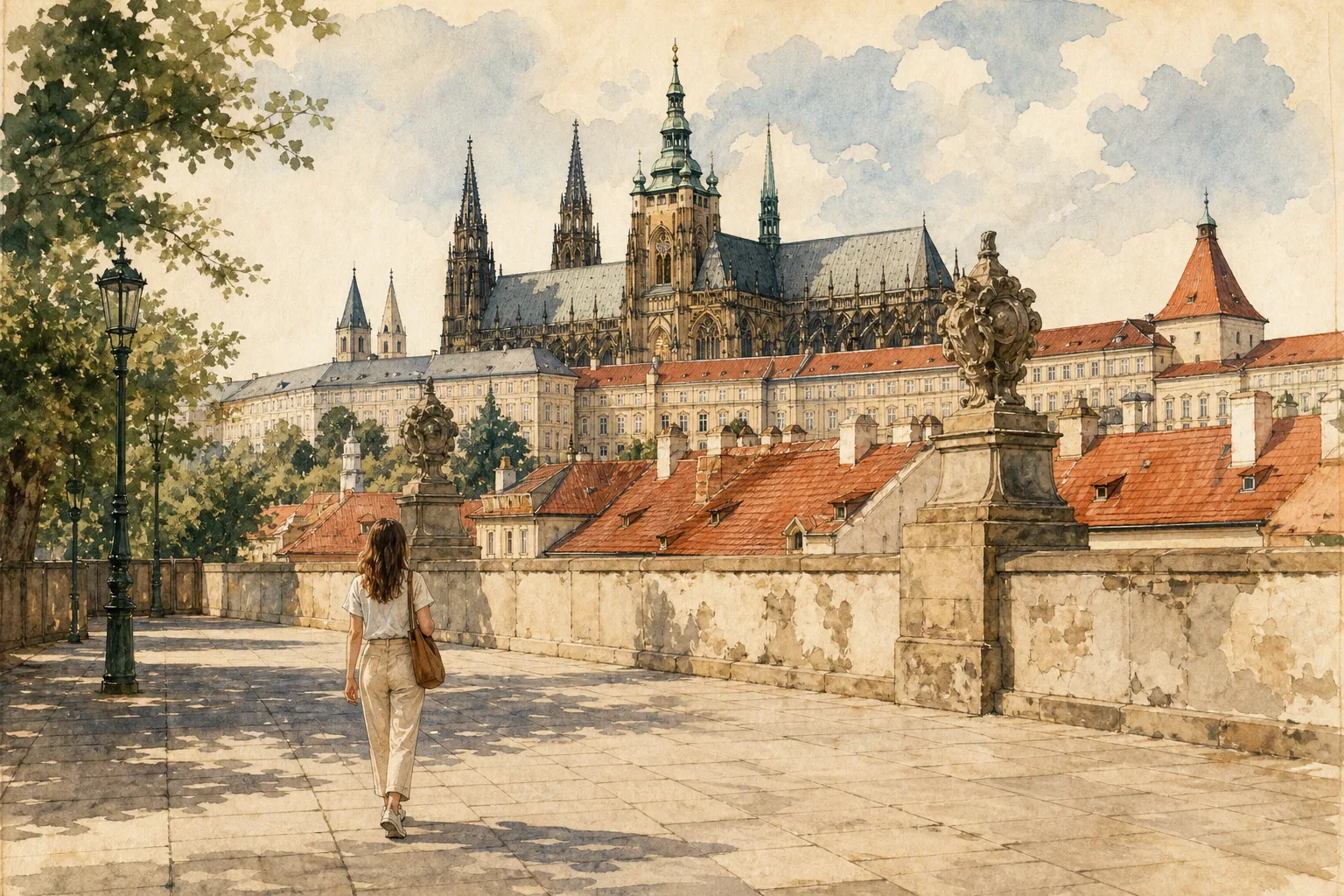
The city's postcard core, the Charles Bridge, the Astronomical Clock, the Castle silhouette, is genuinely dense with visual interest, but it is also the most crowded, most photographed, and least atmospheric part of Prague once you have seen it once. The real payoff for someone who cares about mood over landmarks sits one or two streets back from that core, in places like Vinohrady, ikov, and the quieter stretches of the Lesser Town, where the city stops performing for tourists and just goes about its day.
Choose Prague if: you are comfortable spending long stretches of a day just walking, sitting in a cafe, or photographing light on a building rather than moving between named sights; you can tolerate a short, dense burst of landmark crowding in exchange for neighborhoods that reward slower attention; and you are not measuring the trip's value by how many named attractions you covered.
Skip or shorten Prague if: your sense of a successful trip depends on checking off a list of major sights; you have limited walking stamina and cannot break up long days with rest (Prague's core is built on cobblestones and hills, and its best-known walk alone runs 4.5 kilometers); or you are traveling on a tight schedule where "wandering time" would register as wasted time rather than the point of the trip.
The direct fit test: strong fit if your idea of a good travel day includes unstructured time with no destination in mind. Weak fit if you feel restless unless you are actively moving toward a named sight.
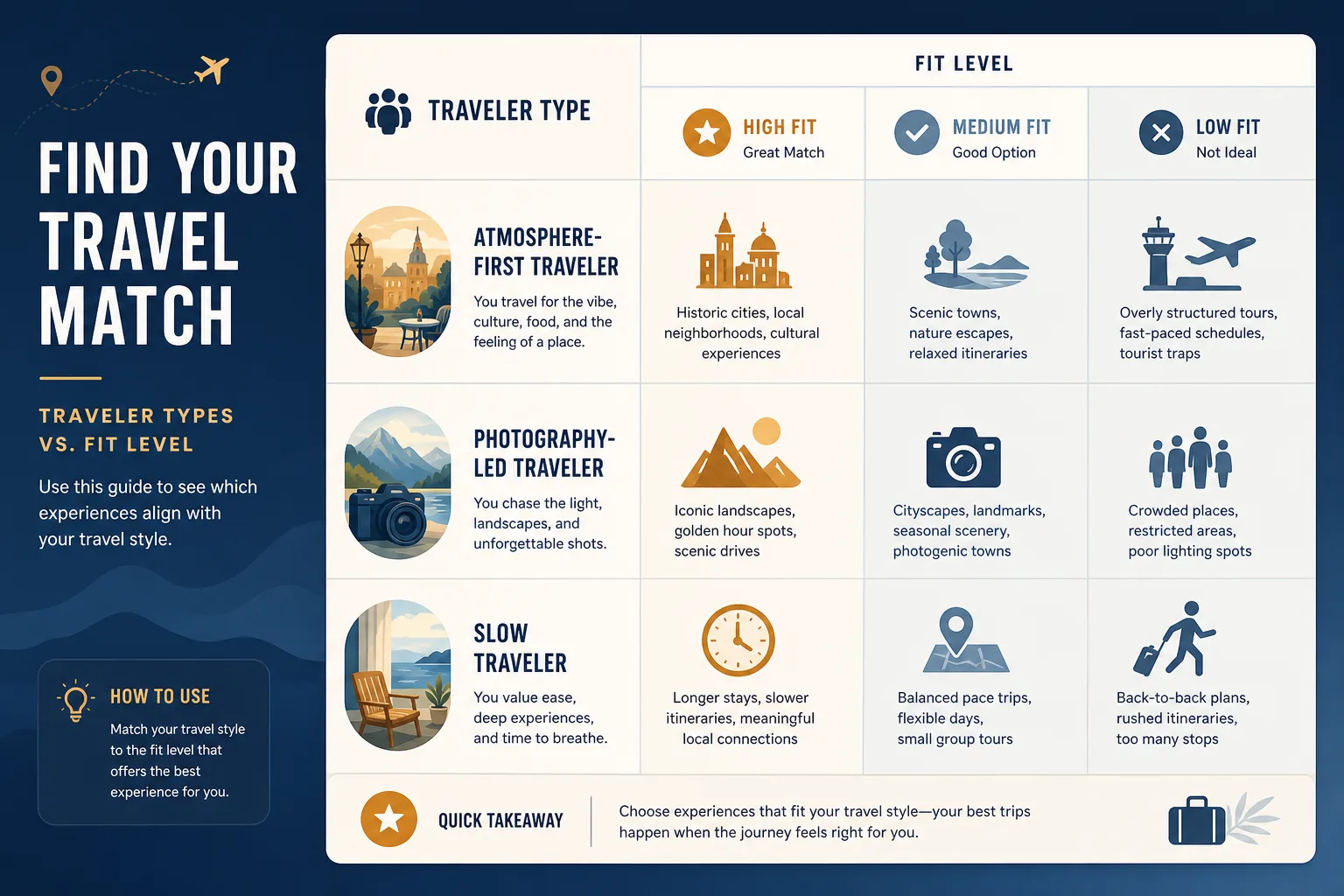 Editorial illustration: A simple decision table or comparison chart layout showing three traveler type rows (atmosphere-first.
Traveler Type Table
Atmosphere and landmarks are not opposites in Prague, they are just distributed differently across the city and across the day. The table below breaks down where the real tradeoffs sit for the three traveler types this decision matters most for.
| Traveler type | What they actually want from Prague | Where it delivers | Where it falls short | Net fit |
|---|---|---|---|---|
| Atmosphere-first travelers | Streets and neighborhoods that feel lived-in, not staged for tourism | Vinohrand, ikov, quieter Lesser Town lanes, local markets | The historic core during midday, which is dense with tour groups | Strong |
| Photography-led travelers | Light, texture, and compositions that do not require fighting a crowd for the frame | Early morning or evening in the core, side streets anywhere, market days | Midday at the Charles Bridge or Astronomical Clock, where crowd density ruins most compositions | Strong with schedule discipline |
| Slow travelers | Long, unstructured blocks of time with no fixed itinerary | Almost anywhere outside the core, especially neighborhoods built around daily life rather than sightseeing | Short trips of one to two days, which push slow travelers back into checklist mode out of a sense of obligation | Strong only with enough days |
The pattern across all three: Prague's fit depends less on the city itself and more on whether you can resist letting the landmark-dense core define your whole visit. The city gives atmosphere-first travelers what they want, but only if they treat the famous sights as optional rather than mandatory.
Best for First-Time Visitors
First-time visitors to Prague face a specific version of this decision: you have never seen the Castle or the bridge in person, so there is a real pull to prioritize them even if landmarks are not usually your travel priority.
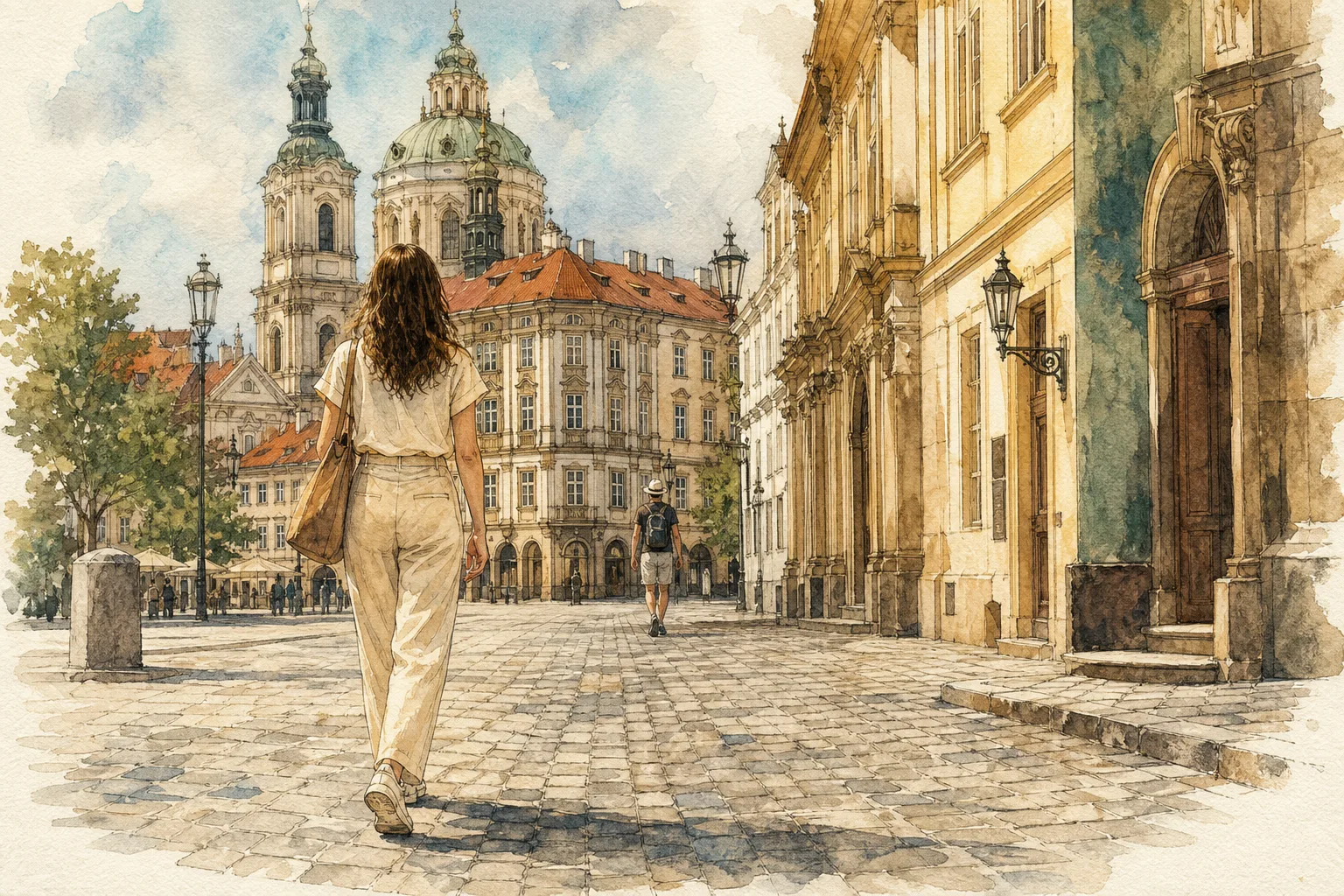
For atmosphere-first travelers on a first visit, the workable approach is to see the core once, early in the trip, and deliberately not return to it. Walk the Royal Route from the Powder Tower toward the Castle in the early morning, when the crowds are thinner and the light is better for noticing the buildings rather than the people between you and them. That walk is about 4.5 kilometers and roughly 90 minutes of pure walking, so it is a real commitment, not a quick detour. Once it is done, resist the pull to keep returning to the same streets for a second look. Spend the rest of the trip in neighborhoods that were not built for tourists.
For photography-led first-timers, the core is worth photographing exactly once, ideally at opening hours or near closing light, and then the rest of the visual work should happen in neighborhoods where you are not competing with fifty other phones for the same angle.
For slow travelers visiting for the first time, the temptation to "make sure you saw everything" is strongest on a first trip. The honest fix is accepting that you will not see everything, and that this is fine, because the atmosphere you came for is not in the list of things you missed.
Best for Couples
Couples traveling to Prague for atmosphere rather than landmarks tend to do best when they treat the trip as a shared pace-setting exercise rather than a shared checklist.
Atmosphere-first couples benefit from picking one or two neighborhoods to return to more than once, building a sense of familiarity rather than novelty. A cafe you visit twice teaches you more about Prague's mood than five landmarks seen once each.
Photography-led couples should decide in advance who is documenting and who is present, or split the difference by agreeing on a few deliberate photo stops rather than photographing continuously. Prague's side streets offer enough visual material that this does not have to happen at the crowded core.
Slow-traveling couples get the most out of Prague when they build in unscheduled blocks, an afternoon with literally nothing planned, rather than a loosely paced but still itemized itinerary. The friction point for couples specifically is disagreement about pace: one partner wanting to see named sights, the other wanting to sit in a park. Naming this tension before the trip, and agreeing to split some days rather than negotiate every hour, avoids most of the tension in practice.
Best for Slow Travelers
Slow travelers are the group Prague suits most naturally, provided the trip length matches the mindset.
A two-day trip does not give a slow traveler enough runway to let go of the checklist instinct; the days end up feeling too short to justify "wasting" time on aimless walking, so the schedule fills up with landmarks anyway. Three to four days changes this. By day two, the pressure to see everything has usually faded, and the neighborhoods start to feel navigable rather than novel.
Atmosphere-first slow travelers should weight their itinerary toward residential and market-adjacent areas. Vinohrady's Jiho z Podbrad square runs a farmers' market from Wednesday through Saturday, and mornings there give a much better read on daily Prague life than any hour spent in the historic core.
Photography-led slow travelers benefit from the same slower pace because it allows for return visits to the same street at different times of day, which produces better images than a single rushed pass. Slow travel and photography are naturally compatible in Prague because neither depends on covering ground quickly.
Best for Niche Interests
Craft Beer and Local Pub Culture
Travelers interested in Prague craft beer neighborhoods should look beyond the tourist-heavy Old Town and give Vinohrady and Zizkov an evening. Their pub culture feels tied to ordinary neighborhood routines rather than a sightseeing circuit, so the payoff is less about chasing a famous venue and more about settling into a local room for a slower drink. This niche suits atmosphere-first travelers who want nightlife with texture but do not need a loud, organized pub crawl.
Specialty Coffee and Cafe Time
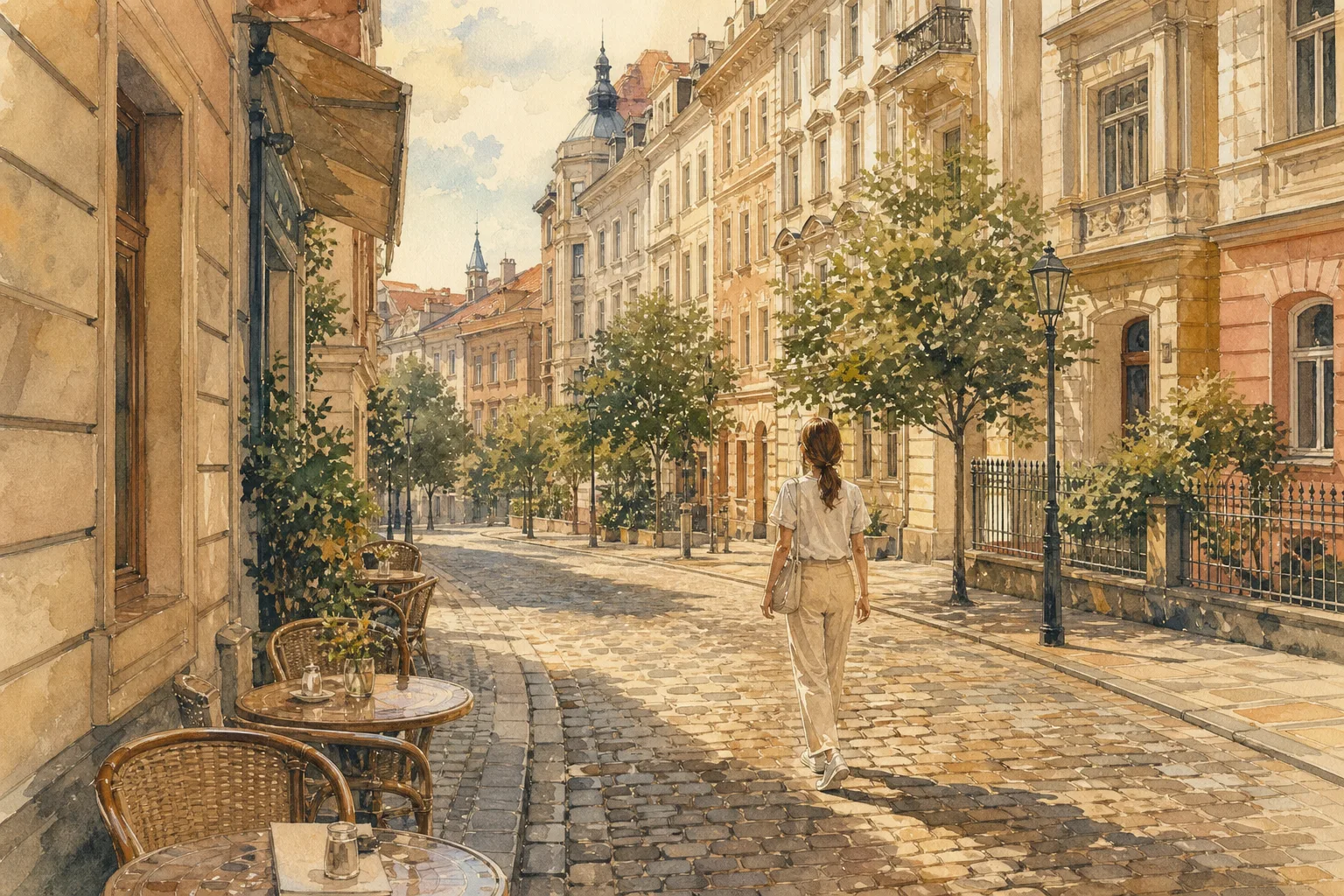
The Prague specialty coffee scene gives unstructured daytime wandering a useful rhythm, especially in Vinohrady and the streets leading toward Zizkov. Cafes in these residential areas work well as pauses between walks rather than destinations that require a cross-city itinerary, which keeps the day focused on neighborhood feel. This is a strong fit for travelers who notice interior mood, street life, and the change of pace between morning coffee and an afternoon walk.
Best for Low-Stress Travelers
Low-stress travelers, meaning those who want an easy trip without heavy logistics, will find Prague mostly cooperative, with a few specific friction points worth planning around in advance.
Transit is simple once set up correctly. Buying tickets digitally through the PID Litacka app is cheaper than paper as of January 1, 2026, at 36 CZK for 30 minutes and 46 CZK for 90 minutes, but tickets must be activated in the app before boarding, and paper tickets need physical stamping in a yellow validator. Fare evasion fines run 1,500 CZK, so this is not a step worth skipping to save a minute.
The uphill walk to the Castle via Nerudova Street is one of Prague's more physically demanding tourist routes. Low-stress and low-stamina travelers can skip it entirely by taking Tram 22 or the historic Tram 42 directly to the Prazsky hrad stop, which removes the climb without removing the destination.
Atmosphere-first low-stress travelers do well in Prague specifically because wandering does not require booking anything in advance. There is very little that needs a reservation to be enjoyed. The one caution: Prague 1 has designated no-drinking zones with fines up to 10,000 CZK for open containers, and organized pub crawls are banned between 10 PM and 6 AM in that district, so travelers expecting a loose nightlife scene in the historic core specifically should adjust that expectation.
Common Mismatches
Some travelers arrive expecting Prague to deliver on atmosphere and leave disappointed, not because the city failed to deliver, but because they misjudged what would produce the feeling they wanted.
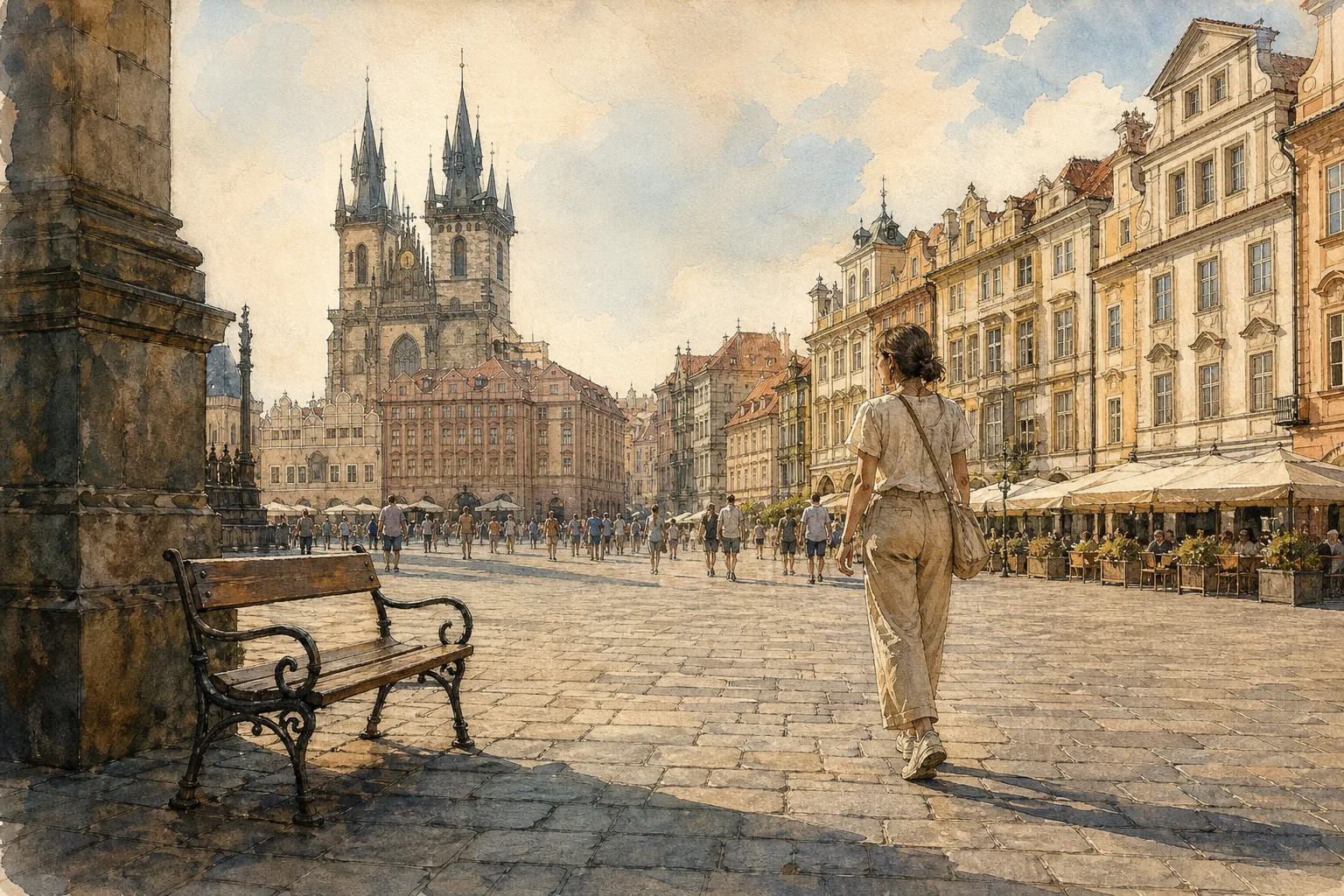
The landmark-adjacent disappointment. Travelers who expect the historic core itself to feel atmospheric, quiet, and moody, the way it looks in photographs, are usually disappointed. The core during daytime hours is dense with tour groups, and the mood that shows up in well-composed photos is rarely the mood you experience standing there at 2 PM in July. This is an expectation mismatch, not a city failure: the atmosphere exists in Prague, just not concentrated in the same physical space as the landmarks.
The overplanned itinerary that leaves no slack. Atmosphere-first travelers who build a detailed hour-by-hour itinerary undermine their own goal. Atmosphere is found by accident, in a cafe you did not plan to stop at or a street you turned down because it looked interesting. A schedule with no slack removes the exact mechanism that produces the feeling being sought.
The short-trip regret pattern. Travelers who visit for one or two days often report feeling like they "didn't really get" Prague, even after seeing everything on their list. This usually traces back to trip length, not the city. Prague's slower rewards need enough days to surface, and a short trip forces landmark-checking as the default mode simply because there is no time to do anything else.
The photography-led frustration with crowd timing. Photographers expecting to capture the classic views without crowd interference, but visiting only during standard daytime hours, run into consistent frustration. This is a scheduling mismatch: the same locations that disappoint at noon can work well at dawn or near dusk.
Final Match Recommendation
Prague is worth it for atmosphere-first, photography-led, and slow travelers, with one condition attached to each.
Choose Prague if you can give the trip at least three days, you are willing to treat the famous landmarks as a one-time detour rather than the spine of your itinerary, and you have the walking stamina (or the willingness to use trams strategically) to move through a hilly, cobblestoned city without exhausting yourself early in the trip.
Do not choose Prague, or shorten your visit significantly, if you are traveling on a one-to-two-day layover-style schedule where landmark-checking will dominate regardless of your intentions, you have limited walking stamina and no interest in adjusting your route to accommodate it, or your travel satisfaction depends heavily on covering a fixed list of sights rather than the texture of a place.
The strong-fit case rests on one simple mechanic: Prague's atmosphere lives in its neighborhoods, not its monuments, and the city is compact enough that reaching those neighborhoods does not cost you much time or money. The weak-fit case rests on the opposite mechanic: if you cannot resist the landmark pull, or cannot afford the days it takes to get past it, Prague will read as crowded and rushed rather than atmospheric, regardless of how the trip is planned.
FAQ
Is Prague worth visiting if I do not care about seeing the major landmarks? Yes, for most atmosphere-first travelers. Prague's landmarks are concentrated in a small, walkable core, which means you can spend most of your time in residential and mixed-use neighborhoods that were never built for tourism, and still be a short tram ride from anything you decide you want to see after all.
How many days in Prague are enough if I want mood over sightseeing? Three to four days lets you settle into a slower rhythm without wasting a trip on a city you are only half exploring. Two days tends to pull you back into landmark-checking mode because it feels wasteful not to, which works against the atmosphere-first approach.
Will I feel pressure to see Prague Castle and the Astronomical Clock even if I do not want to? Some pressure is likely, mostly from other travelers, guidebooks, and the sheer visibility of these sights in the historic core. The way to reduce it is to plan your days around neighborhoods rather than a checklist, so the landmarks become optional detours instead of the spine of your trip.
Is Prague better for atmosphere-first travelers than other European cities? It compares well because its old core is compact and its residential neighborhoods sit close enough to reach on foot or by a short tram ride, so you get mood-rich streets without a long commute out of the tourist zone. Cities with more sprawling layouts often require more transit time to reach the equivalent quieter areas.
What is the biggest risk of visiting Prague for atmosphere rather than landmarks? The biggest risk is timing your visit or your daily walks through the historic core during peak crowd hours, which flattens the mood you came for into a queue-and-photo experience. The fix is scheduling landmark-adjacent walking earlier or later in the day and spending midday hours in quieter neighborhoods.
Checklist: is Prague the right atmosphere-first choice for your trip?
- You can commit at least three days to the city
- You are comfortable with unstructured wandering time and will not feel it as "wasted"
- You can handle cobblestones, hills, and moderate walking, or are willing to use trams strategically
- You are willing to treat the historic core as a one-time visit, not a daily route
- Your trip satisfaction does not depend on a fixed list of named sights
- You can schedule landmark-adjacent walks around crowd-heavy hours
If most of these are true, Prague is a strong match. If more than two are false, consider a shorter visit or a different city with a less landmark-dominant reputation.