travel-decisions
Can Introverts Enjoy Prague? How to Navigate the City If High-Density Crowds Drain Your Energy
A decision-focused guide for introverts weighing a Prague trip: where the crowd pressure hits hardest, who thrives there, who should pick a different city, and how to structure the visit around your energy limits.
By Trip Persona Editorial Team. Published July 26, 2026, last updated July 26, 2026.
Quick Verdict
Prague can genuinely work for introverts, but not by accident. The historic core between Charles Bridge and Old Town Square turns into a dense, shoulder-to-shoulder corridor for most of the daylight hours in peak season, and no amount of positive thinking changes that. What changes the outcome is whether you are willing to restructure the trip around it.
Choose Prague if you are a slow traveler who does not need to see everything, you are comfortable front-loading sightseeing into early mornings, and you would rather sit in a quiet residential cafe for two hours than push through a crowd to check off a landmark. Solo travelers often do especially well here, since there is no group to negotiate pacing with.
Skip Prague, or at least delay it, if your only available travel window is peak summer, your itinerary already has the big five landmarks stacked back to back, or you associate "seeing Prague" with the postcard shot from the bridge at noon. That specific expectation is where this city creates the most disappointment for crowd-sensitive travelers. If that describes you, the alternatives section below names two cities that deliver the same mood with far less crowd pressure.
Strong fit: you can shift your schedule, you value atmosphere over checklist completion, and you are visiting outside the tightest three months of peak season.
Weak fit: you have three days, a fixed landmark list, and no flexibility on when you walk through the center.
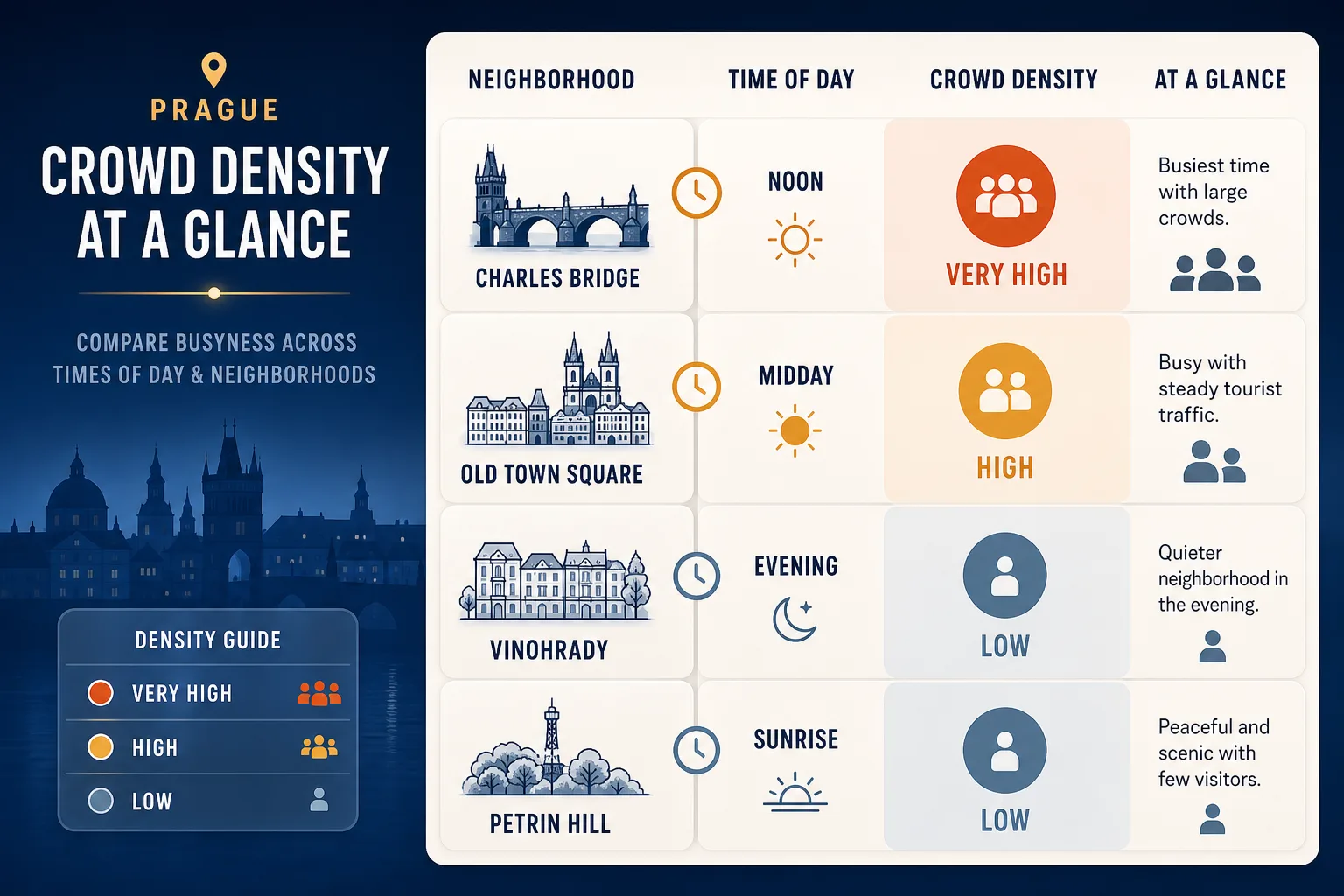 Editorial illustration: A simple table-style graphic comparing Prague crowd density across times of day and neighborhoods: Charles Bridge at noon marked very high.
Traveler Type Table
The real decision variables are not "is Prague crowded" (yes, in specific places) but when you go, how you move through the day, and what you are optimizing for. Here is how that plays out for the three traveler types this guide is written for.
| Traveler type | Main risk in Prague | What actually works | Tradeoff to accept |
|---|---|---|---|
| Introverts (sensory-sensitive) | Old Town Square and Charles Bridge midday crowd density, noise, and unpredictable tour-group stops | Visit landmarks at opening time or after 7pm; build the day around one quiet anchor (a park, a cafe, a smaller museum) | You will see the icons in filtered light, not full midday sun, and you sacrifice some spontaneity for a fixed early schedule |
| Slow travelers | Feeling pressured to match a fast-paced itinerary because everyone around you is moving in tour-group bursts | Base in Vinohrady or Zizkov instead of the Old Town; treat 3-4 days as normal, not rushed | You lose the convenience of stepping out of a central hotel directly into the sights |
| Solo travelers | No one to signal "let's leave" when a space gets overwhelming, so you may push through discomfort longer than you would with company | Set your own hard stop time for crowded areas in advance; exit is easier alone, not harder, once you give yourself permission | You do more logistics planning solo, since there is no shared decision-making to divide the mental load |
The underlying pattern: Prague's crowd problem is concentrated in a small geographic footprint and a predictable daily window. It is not the whole city, and it is not the whole day. That concentration is exactly what makes it manageable for the right traveler and exactly what trips up the wrong expectations.
Not sure which traveler type actually describes you? Take the travel personality quiz before you plan the itinerary, not after.
Best for First-Time Visitors
A first-time visitor to Prague who is also introverted faces a specific tension: you want to see the landmarks because you have never seen them, but the landmarks are also the crowd epicenter. The fix is sequencing, not avoidance.
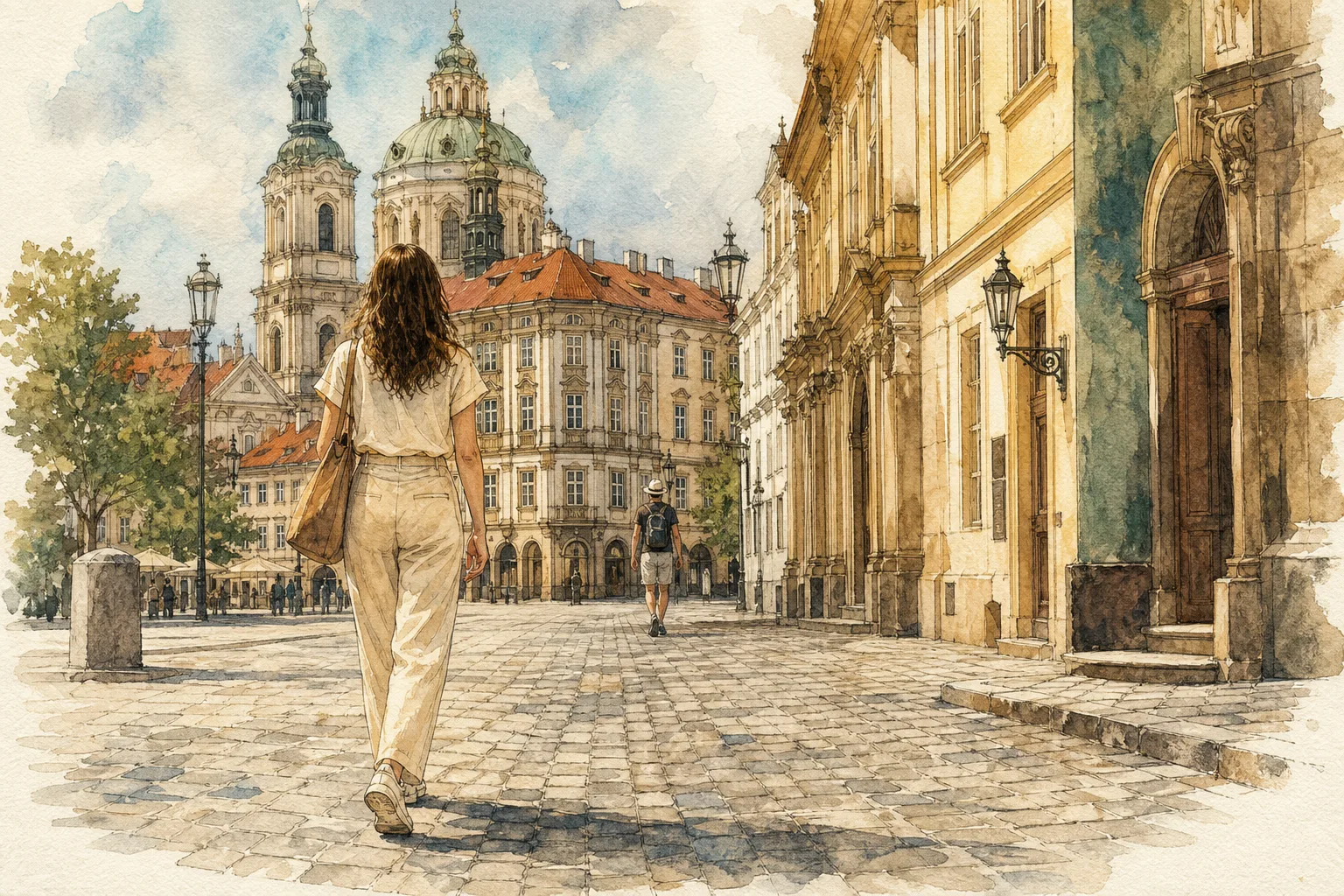
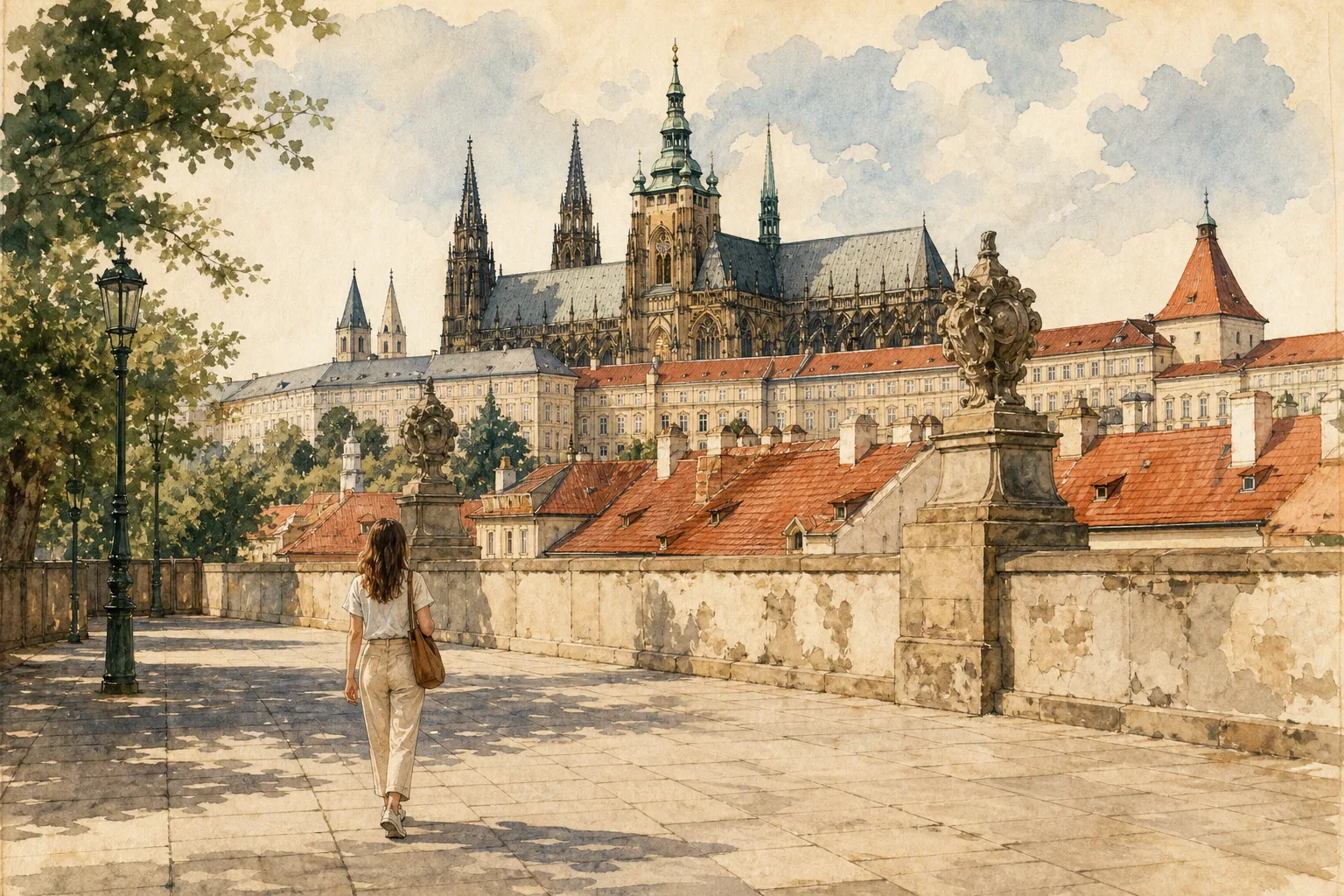
Go to Prague Castle, Charles Bridge, and the Astronomical Clock in the first two hours after opening, before the day-tripper buses and cruise groups arrive. This is not a minor optimization; the difference between 8am and 1pm at these three spots is the difference between a walkable street and a slow shuffle through a crowd.
Slow travelers on a first visit should resist the urge to "do the center" in one long push. Split it: landmarks in the morning, a quiet neighborhood in the afternoon, and a low-key dinner away from the tourist-menu restaurants near the bridge. Solo first-timers have an advantage here because there is no group consensus needed to leave early or change plans mid-day.
The mismatch to avoid: treating your first Prague trip like a landmark checklist tour crammed into 48 hours. That schedule forces you into the crowd during its worst hours because there is no slack to shift timing. If a 48-hour landmark sprint is genuinely your only option, Prague is a weak fit for that specific trip shape, and a smaller, less landmark-dense city will serve you better.
Best for Couples
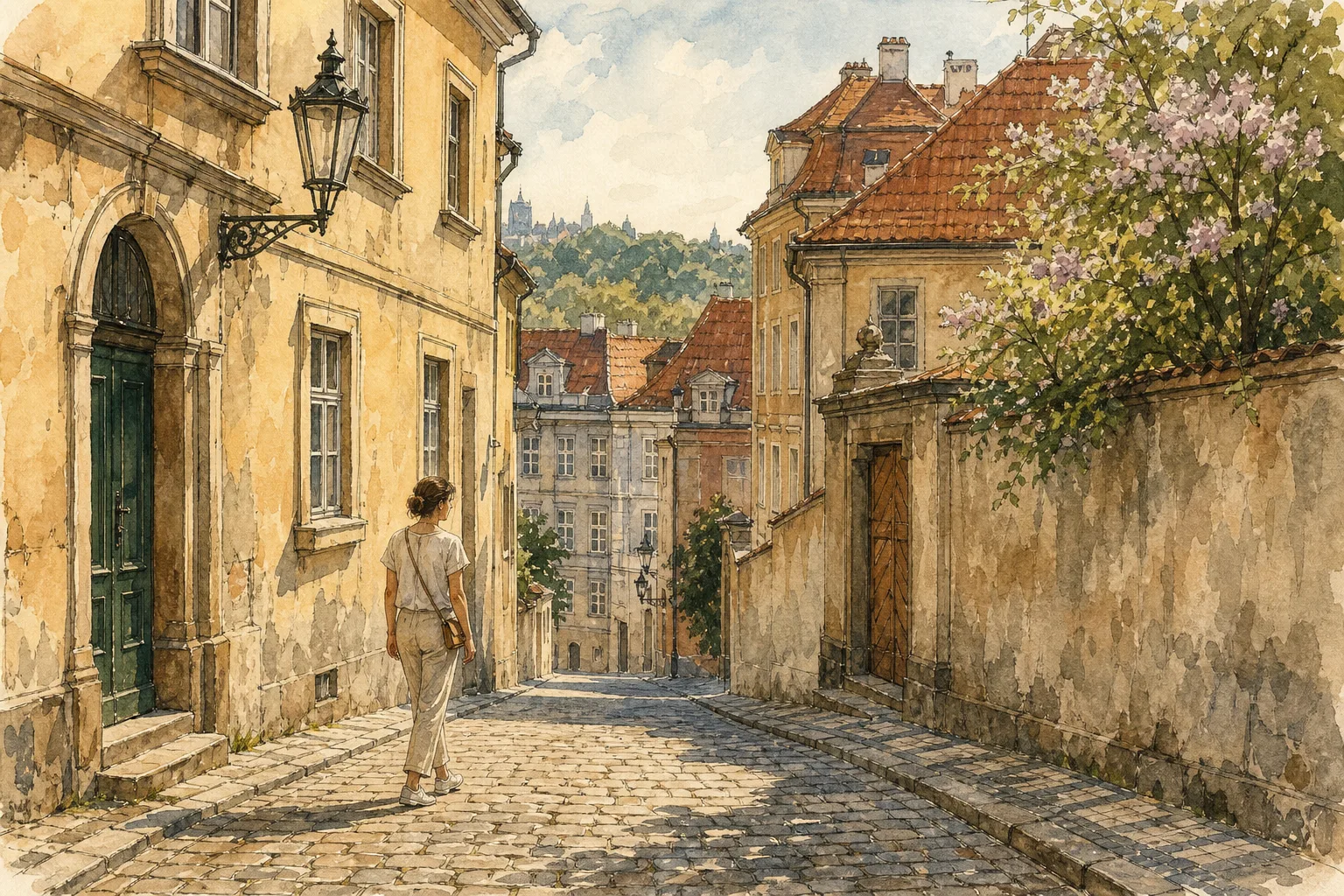
Couples traveling together, where one or both partners are introverted, do well in Prague specifically because the city rewards a slower, wandering pace over a landmark-sprint. A pair walking without a fixed itinerary through Mala Strana or Vinohrady in the evening gets a genuinely calm, atmospheric experience that matches what people picture when they imagine Prague.
The friction shows up when one partner is more extroverted and wants the busy market squares, live crowds, and central nightlife, while the other needs a quiet exit option. The practical answer is not compromise in the moment, it is planning in advance: agree on one or two "high-energy" blocks (a busy square, a lively bar street) and balance them with adjacent "low-energy" blocks (a courtyard cafe, a park bench, an early return to the room) built into the same day.
Solo travelers do not face this negotiation, which is one reason solo Prague trips often report less friction than couple trips here, not more. If you are traveling as a couple, the decision point is whether you can agree on that alternating rhythm before you land, not after the first overwhelming afternoon.
Best for Slow Travelers
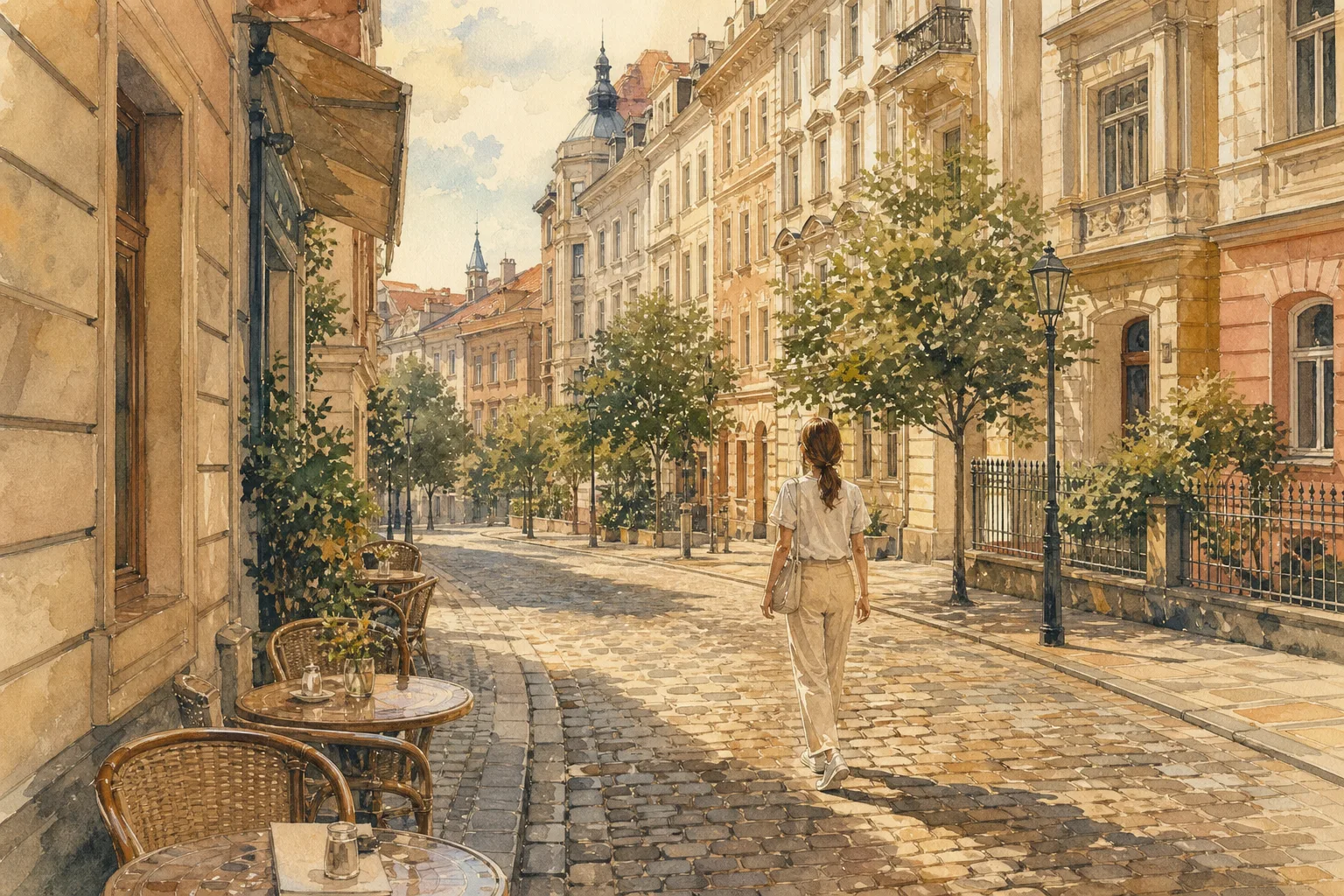
This is where Prague performs best. A slow traveler who is content to spend an afternoon in one park, one cafe, or one neighborhood without needing to "cover ground" will find that Prague has far more quiet texture than its highlight reel suggests. Vinohrady's tree-lined streets, Riegrovy Sady park, and the smaller Vysehrad complex all offer the atmosphere Prague is known for without the density of the Old Town.
Introverted slow travelers specifically benefit from Prague's tram network, which makes it easy to retreat from a crowded area to a residential one in ten to fifteen minutes without a taxi or a long walk. That short recovery loop, crowded space to quiet space and back, is the core mechanic that makes multi-day Prague trips sustainable for sensory-sensitive travelers.
Solo slow travelers get the added benefit of not having to justify a slow pace to a travel companion who wants to keep moving. A day with one museum, one long lunch, and one park is a complete, satisfying day here, not a wasted one.
The tradeoff: slow travel in Prague means you likely will not see everything the guidebooks list, and you have to be at peace with that before you arrive.
Best for Low-Stress Travelers
If your priority is an easy, low-friction trip rather than an exhaustive one, Prague can deliver that, but the low-stress version of this city looks different from the default tourist version. It means booking a hotel outside the absolute center, choosing a 3-4 day trip length instead of a rushed 2-day stop, and accepting that you will not see the Charles Bridge photo-empty except at dawn.
Low-stress introverted travelers do best when they pre-decide their "no-go" hours for the busiest sites (roughly 10am to 6pm at the top three landmarks) rather than deciding in the moment while already standing in a crowd. Deciding in advance removes the in-the-moment stress of feeling pressured to push through discomfort just because you are already there.
Solo low-stress travelers benefit most from this approach since a fixed personal rule ("landmarks before 9am, naps or quiet time from 1-3pm") requires no group buy-in. Slow travelers folding low-stress principles into a longer stay get the most payoff, since a longer trip absorbs a few "recovery" days without feeling like wasted time.
Common Mismatches
The most common regret pattern is arriving with a landmark-heavy 2-day itinerary during July or August and expecting to feel the calm, atmospheric Prague from photos and films. That version of Prague exists, but not at Charles Bridge at 2pm in August. The gap between the marketed image and the peak-season reality is the single biggest source of disappointment for crowd-sensitive travelers.
A second mismatch: travelers who assume that because Prague is "smaller" or "less famous" than Paris or Rome, it will be less crowded. Per square foot, the historic core can feel just as dense, because the medieval street layout concentrates foot traffic into narrow lanes rather than spreading it across wide boulevards.
A third mismatch is choosing a central Old Town hotel for convenience without accounting for the noise and density that comes with it. What looks like a five-minute walk to everything also means five minutes back into the crowd every time you want to return, with no quiet buffer zone.
Who tends to misjudge this city:
- First-time visitors who plan a tight 2-day stop and stack all major sights into daylight hours
- Travelers who booked based on off-season promotional photos and did not check actual peak-season month
- Anyone expecting the entire city to feel like the postcard version of the bridge and square, rather than a mix of dense tourist zones and calm residential ones
- Groups where only one member is crowd-sensitive and no one planned for a quiet exit option
If Prague Still Sounds Like a Weak Fit
Some travelers will read the sections above and correctly conclude that even a well-planned Prague trip is more restructuring than they want to do. If your trip is fixed to peak summer, you have a hard 2-3 day cap, and you know from past trips that crowd density alone (not just noise or heat) drains you fast, it is reasonable to pick a different city rather than force this one to work.
Two concrete substitutes:
- Ljubljana, Slovenia. A similar look and mood, a fairytale old town wrapped around a river, a hilltop castle, pastel facades, but at a small fraction of Prague's visitor volume. You get the same atmosphere-first walkability without needing to out-schedule tour buses. The tradeoff: fewer world-class sights to fill a longer trip, so it suits a 2-4 day stay better than a week.
- Cesky Krumlov, off-season. If the specific pull is the medieval-town aesthetic rather than a big-city trip, Cesky Krumlov delivers it in miniature, but only outside July and August. In peak summer its tiny center gets proportionally more crowded per square foot than Prague's, which makes it a worse choice for crowd-sensitive travelers exactly when most people try to visit. Shoulder-season (April-May, September-October) is when it actually delivers the quiet version.
Neither city replaces Prague's specific landmarks, but both replace the feeling most crowd-sensitive travelers are actually chasing: an old-world atmosphere without a crowd tax attached to every view.
Final Match Recommendation
Choose Prague if you can control your schedule enough to front-load landmarks into early mornings or evenings, you are traveling solo or with a partner who will agree to alternating high-energy and low-energy blocks, and you are visiting in a shoulder season or willing to work around peak-season crowds with a real plan rather than good intentions. Slow travelers who value atmosphere over checklist completion are the strongest match of all.
Do not choose Prague, or at least not on a tight 2-day layover-style visit, if your trip is fixed to peak summer with no flexibility, your itinerary already has the top landmarks stacked into a single afternoon, and you have no tolerance for adjusting plans once you see how dense the center actually is at midday. In that case, Ljubljana or an off-season Cesky Krumlov trip will cost you less energy for a similar payoff.
The deciding question is not "am I an introvert" but "can I restructure this specific trip around a predictable crowd pattern." If the answer is yes, Prague has enough quiet texture, in its parks, its residential neighborhoods, and its early mornings, to reward that effort. If the answer is no, the mismatch will show up on day one, not gradually, and a different city is the better use of your time and money.
Once you have decided on Prague, use the hotel location checklist to pick a base in a quiet neighborhood instead of the crowded historic core.
FAQ
Is Prague too crowded for an introvert to enjoy? The historic core (Charles Bridge, Old Town Square, Astronomical Clock) gets very crowded from roughly 10am to 6pm, especially May through August. Outside that window and outside that half-square-mile, Prague is genuinely calm. The city is a strong fit if you are willing to shift your schedule and your map, not just your mindset.
What is the least crowded time of year to visit Prague as a sensitive traveler? Late autumn (November) and January through early March have the thinnest crowds, though winter days are short and cold. If you need warm-weather travel, late May before school holidays start, or early September after they end, gives you milder crowds with still-decent weather.
Can you have a good solo trip to Prague if you get overwhelmed by tour groups? Yes, and solo travel often makes this easier, not harder, because you control the pace without negotiating with a companion. The key is building the day around low-density anchors (neighborhood cafes, quiet parks, smaller museums) and treating the major landmarks as optional early-morning stops rather than the spine of the trip.
How many days in Prague is right for someone who gets sensory overload easily? Three to four days is usually the sweet spot. Two days forces you into peak-hour sightseeing to fit everything in. Five or more days without a recovery rhythm can backfire if you keep pushing through crowded blocks daily instead of alternating with quiet ones.
What should I pick instead of Prague if I know crowds will wreck the trip? Ljubljana is the closest substitute: a similar fairytale-old-town look and river setting, but a fraction of the visitor volume, so the calm version of the trip does not require you to out-schedule anyone. Cesky Krumlov works too, but only in shoulder season, since in peak summer its tiny center gets proportionally more crowded than Prague's.
Does Prague have quiet neighborhoods away from the tourist crowds? Yes. Vinohrady, Zizkov, and parts of Karlin are residential, walkable, and largely free of tour groups, with their own cafes and parks. They sit a short tram ride from the center, which makes them a practical base rather than just a nice idea.