travel-decisions
Is Prague in December Worth It If You Have Low Tolerance for Freezing Winds and Dense Crowds
A friction-first look at Prague's December Christmas markets: real temperatures, daylight hours, and crowd density, so cold-sensitive and crowd-averse travelers can decide honestly.
Quick Verdict
Prague in December is worth it if you can tolerate several hours outdoors near or below freezing, don't mind shuffling shoulder-to-shoulder through market crowds, and are choosing the trip specifically for Christmas market atmosphere rather than easy sightseeing.
It is a poor fit if you get physically uncomfortable in cold wind within half an hour, if crowd density genuinely stresses you rather than just annoys you, or if you were hoping for a relaxed, spread-out walking trip with long daylight for photos.
Choose December Prague if:
- The Christmas markets themselves are the point of the trip, not a bonus
- You have real cold-weather gear and don't mind wearing all of it, all day
- You can build in warm indoor breaks every 60 to 90 minutes
- You're comfortable adjusting plans around crowd peaks rather than fighting them
Skip December Prague if:
- You have a medical or comfort sensitivity to cold wind (joint pain, Raynaud's, respiratory sensitivity)
- Crowd density in tight medieval streets makes you anxious rather than just impatient
- You want long, unhurried outdoor days with natural light
- Budget is a hard constraint, since December is the most expensive month in the city
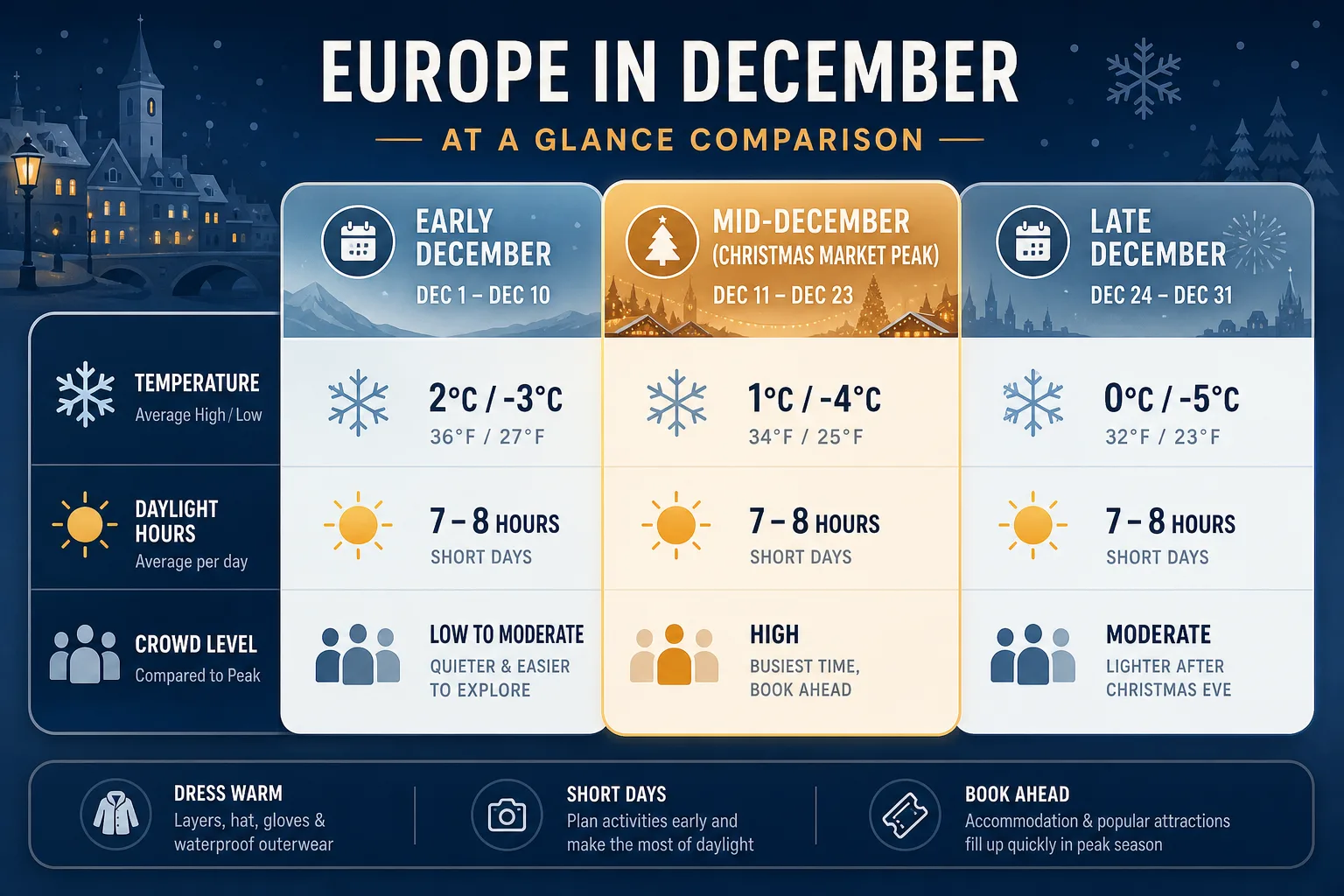 Editorial illustration: A clean comparison table graphic with columns for temperature.
Main Friction Problem
The honest tension in a December Prague trip is that the thing you're going for, the Christmas markets, is also the thing that produces the two frictions you're least equipped to handle: cold and crowding. These aren't separate problems you can plan around independently. They compound.
Weather and season. December highs sit at 1C to 3C (34F to 38F), with nights falling to -2C to -3C (27F to 28F). That's cold enough that exposed skin, especially hands and face, starts to hurt within 20 to 30 minutes without proper gloves and a wind-blocking layer. Prague's river valley setting also means wind, particularly around the Vltava and across open squares, cuts through insulated clothing faster than the temperature alone suggests.
Crowds. The flagship markets at Old Town Square and Wenceslas Square run from November 28, 2026 to January 6, 2027, and they draw both tourists and locals in heavy numbers, especially evenings and weekends. Medieval streets in the Old Town were not built for modern foot traffic volume, so density gets physical: you will be bumped, funneled, and slowed in ways that amplify how cold you feel because you're standing still more than walking.
Physical comfort. Cold and crowding each drain stamina on their own; together they drain it faster. Standing in a slow-moving market queue at -2C is a different experience than briskly walking at the same temperature. Add cobblestones, some icy underfoot, and physical comfort becomes the limiting factor on how long you can actually enjoy being outside, regardless of what your itinerary says you should be doing.
Daylight hours. With only 8 to 8.5 hours of daylight (sunrise around 8am, sunset around 4pm), there is a narrow window for comfortable outdoor sightseeing before dark. Much of the market experience happens after sunset by design, since the lights are part of the appeal, but that means your coldest hours and your most crowded hours overlap directly with your only real sightseeing window.
Friction Table
Not all of December behaves the same way. Here's how the friction actually shifts across the window that most travelers are choosing between.
| Window | Temperature reality | Crowd level | Daylight | Cost | Best fit |
|---|---|---|---|---|---|
| Late Nov to early Dec (markets open, before peak) | Cold, 1-3C days, wind on bridges | Moderate, manageable on weekdays | 8-8.5 hrs | High, but slightly below peak | Travelers wanting markets with less density |
| Mid-Dec (2 weeks before Christmas) | Coldest stretch, -2 to -3C nights | Peak, weekend evenings very dense | 8 hrs, shortest of the year | Highest, $272-346/night avg | Market-motivated travelers only |
| Dec 24-26 (Christmas itself) | Same cold, less street activity | Lower, many stalls close Dec 24-25 | 8 hrs | High | Quieter but limited market access |
| Dec 27-Jan 6 (post-Christmas, still open) | Same cold, wind persists | Drops noticeably after New Year's Eve | 8-8.5 hrs, slowly lengthening | Still elevated but easing | Best cold/crowd tradeoff within December |
The pattern worth noting: temperature barely changes across the month, but crowd density swings a lot, and the last week of the market run (Dec 27 to Jan 6) is consistently the most livable combination if you're set on going in December at all.
Who Will Feel It Most
Cold-sensitive travelers will feel this trip most acutely during any activity that involves standing still outdoors: market browsing, queuing for mulled wine, waiting for a photo spot on Charles Bridge. Walking briskly is more tolerable than standing, so a trip built around constant market-stall stops is objectively harder on cold sensitivity than a trip built around walking tours.
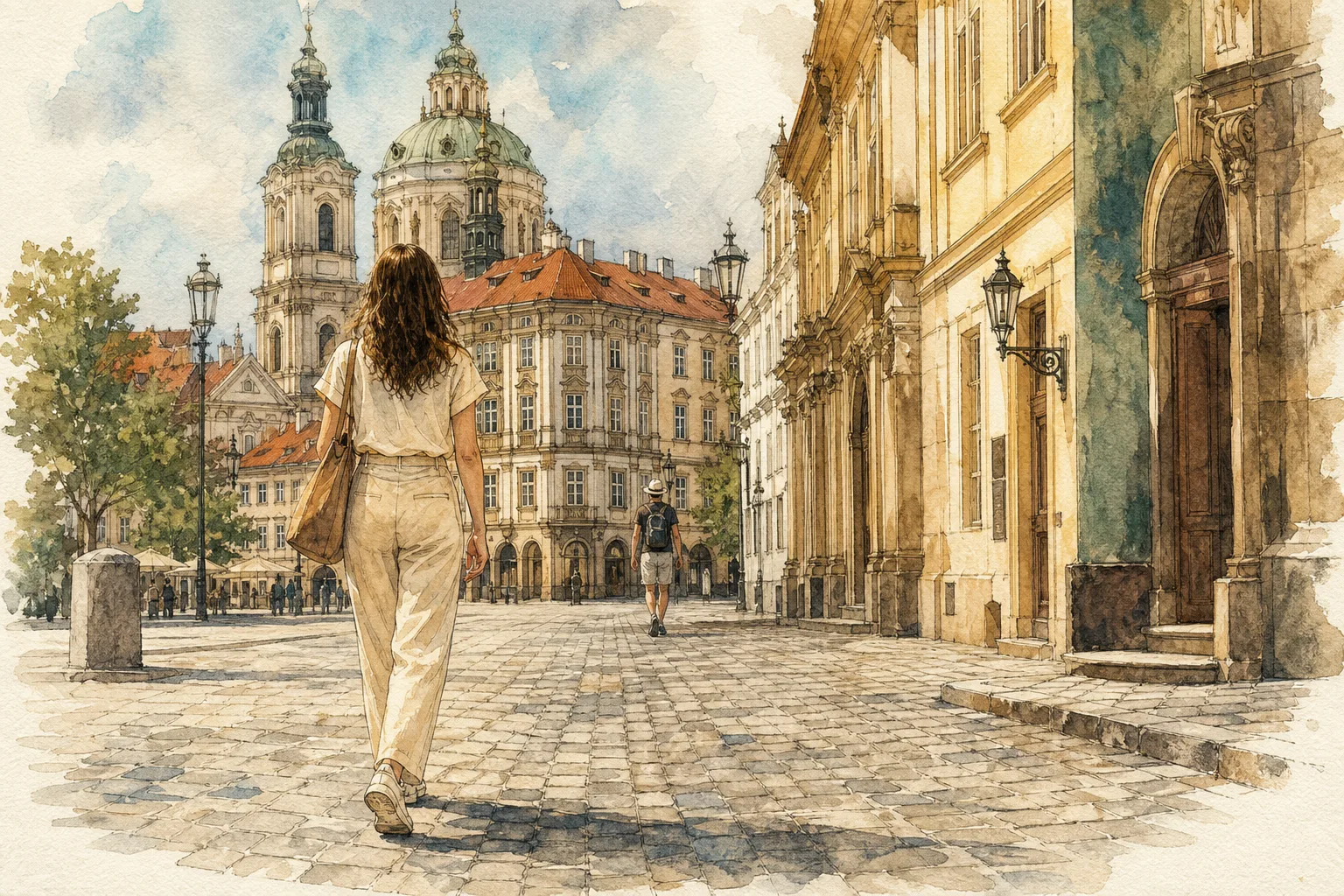
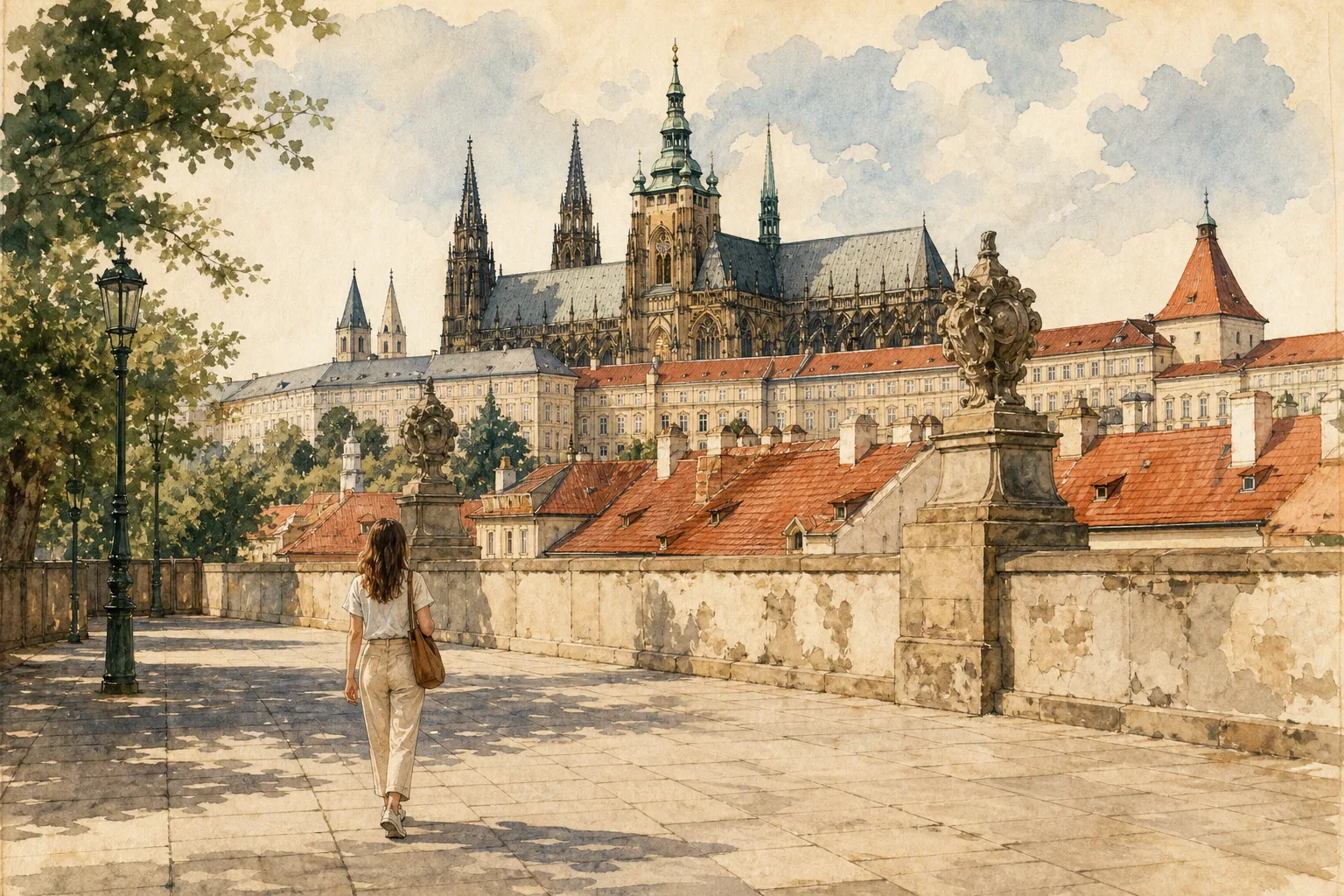
Crowd-averse travelers will feel it most in the Old Town core between Old Town Square and Wenceslas Square during evening hours, and on Charles Bridge at any time of day. The 505-meter bridge crossing has zero wind shelter and, during peak market weeks, can also be genuinely packed shoulder-to-shoulder, which is the single worst overlap of both frictions in the city.
Who should still go: travelers whose primary goal is the specific atmosphere of a European Christmas market, who have invested in proper cold-weather gear, and who are willing to structure the day around short outdoor bursts with warm-up breaks rather than continuous sightseeing.
Who should reconsider: travelers who associate "Prague trip" primarily with castle views, long photo walks, or a slower, uncrowded old-town wander. December actively works against all three of those goals, and a different season will serve them better without the wind and crowd penalty.
How to Reduce the Friction
You can't remove the cold or the crowds, but you can reduce how much they cost you.
- Layer for wind, not just cold. A windproof outer shell matters more than an extra sweater, particularly for the Charles Bridge crossing and any time in open squares.
- Time your market visits for weekday mornings. Crowd density builds through the afternoon and peaks on weekend evenings; an hour after opening on a Tuesday is a different experience than Saturday night.
- Use Peace Square (Namesti Miru) in Vinohrady as a decompression stop. This quieter local market, open from late November through Christmas Eve, gives you market atmosphere without the flagship-square crush.
- Skip the Nerudova Street climb to the castle. Tram 22 runs directly from Malostranske namesti to the Prazsky hrad stop, saving both the uphill effort and extended cold exposure of the walking route, which otherwise takes 4 to 5 hours round trip from the Powder Tower over 4.5 km.
- Buy transit tickets through the PID Litacka app, where a 30-minute ticket is 36 CZK versus 39 CZK on paper, so you can hop on and off transit to warm up without treating each ride as a wasted purchase.
- Build in indoor resets every 60 to 90 minutes. Cafes, churches, and museums aren't just sightseeing stops in December, they're functional warm-up breaks that extend how long you can stay outside overall.
- Don't plan on the Petrin funicular. It's closed for reconstruction until at least spring 2026, so if Petrin Hill was part of your plan, budget extra walking time or drop it.
- Don't count on rental scooters as a warm-up dodge. Shared electric scooters are banned across Prague as of January 1, 2026, so transit or walking are the only options for short hops.
Better Alternatives
If the friction table above sounds like more than you want to manage, the good news is that Prague itself isn't the problem, December specifically is.
Late December, after Christmas (Dec 27 to Jan 6): Same markets, same cold, but noticeably thinner crowds once the Christmas rush passes and before New Year's Eve crowds build again. This is the best within-December option if the markets are non-negotiable.
January (shoulder season): Hotel rates average $64 to $160 per night versus $272 to $346 in December, roughly a 90% drop, and crowds are dramatically lower. You lose the markets, but you gain space, quiet, and a much cheaper trip. Good fit for travelers whose real goal is the castle, the bridge, and the Old Town itself, not the market stalls.
Late spring (May): Longer daylight, milder temperatures, and none of the wind-chill problem, at the cost of a livelier crowd than January but nowhere near December's market density. This is the strongest match for cold-sensitive travelers who still want an active, photo-friendly walking trip.
A different Christmas market city with less density: If the market experience itself is what you want but Prague's crowd volume specifically is the deal-breaker, a smaller regional market city will give a comparable atmosphere with substantially less foot traffic, though Prague's markets are larger and more elaborate than most alternatives.
Decision Checklist
Run through this before you book:
- Can you comfortably stand outside in near-freezing wind for 20 to 30 minutes without needing to warm up immediately after
- Do you own or can you get a genuinely windproof outer layer, insulated gloves, and warm waterproof footwear for cobblestones
- Are you comfortable in dense, slow-moving pedestrian crowds in narrow medieval streets
- Is your trip's main goal specifically the Christmas market atmosphere, not general sightseeing or photography
- Are you okay with only 8 to 8.5 hours of daylight limiting your outdoor sightseeing window
- Have you budgeted for December's peak hotel pricing, roughly $272 to $346 per night on average
- Would you accept a schedule built around short outdoor bursts and frequent indoor warm-up breaks, rather than long continuous walking days
- Have you checked that key routes you want, like the Petrin funicular, aren't closed for the season
If you checked most of these boxes comfortably, December Prague will likely deliver what you're picturing. If more than two or three gave you pause, a January or spring trip will get you a version of Prague you'll actually enjoy more.
FAQ
Is Prague too cold to enjoy in December? It is genuinely cold, not just chilly. Daytime highs run 1C to 3C with nights dropping to -2C to -3C, and wind off the river adds a sharper bite, especially crossing the 505-meter Charles Bridge, which has no shelter. If you get uncomfortable below freezing after 30 to 40 minutes outside, plan short outdoor stretches rather than all-day walking.
How crowded are the Christmas markets really? The main markets at Old Town Square and Wenceslas Square run November 28, 2026 through January 6, 2027, and stay dense on weekend evenings and the week before Christmas. Weekday mornings before 10am and the quieter Peace Square market in Vinohrady are the two realistic ways to avoid the worst congestion.
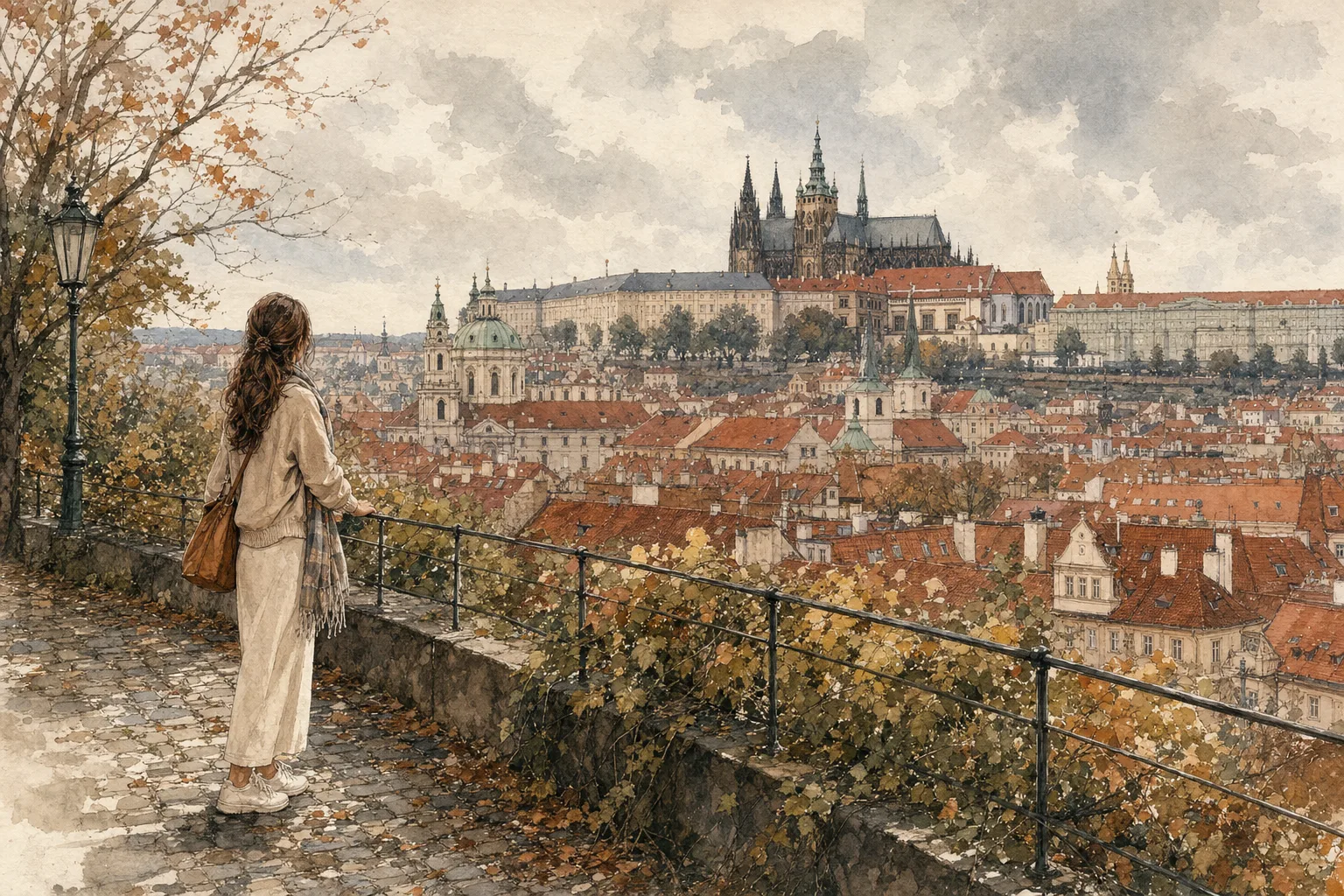
Is December a good time to visit Prague Castle? The castle grounds are manageable, but the 4.5 km walking route from the Powder Tower with sightseeing takes 4 to 5 hours, which is a long cold exposure. Taking tram 22 from Malostranske namesti directly to the Prazsky hrad stop skips the steep Nerudova Street climb and cuts your time in the wind.
Are there cheaper or less crowded alternatives to December in Prague? Yes. January rates average $64 to $160 per night versus $272 to $346 in December, roughly a 90% jump, and crowds thin out substantially after New Year. If you want market atmosphere without the peak crush, the final days before January 6 or a shoulder-season spring trip are both more comfortable trades.
Does Prague's short daylight in December make sightseeing harder? Yes, meaningfully. You get only 8 to 8.5 hours of daylight, with sunrise around 8am and sunset around 4pm, so outdoor sightseeing has to be compressed into a shorter window than most travelers expect, and much of the market experience shifts to after-dark hours in the cold.