travel-decisions
Is Gyeongju Safe and Stress-Free for Solo Female Travelers Who Plan to Walk Alone to See the Illuminated Tombs at Night?
A traveler-fit breakdown of whether Gyeongju's illuminated tomb walks work for solo female travelers, based on lighting cutoff times, hotel location, and real walking routes.
Quick Verdict
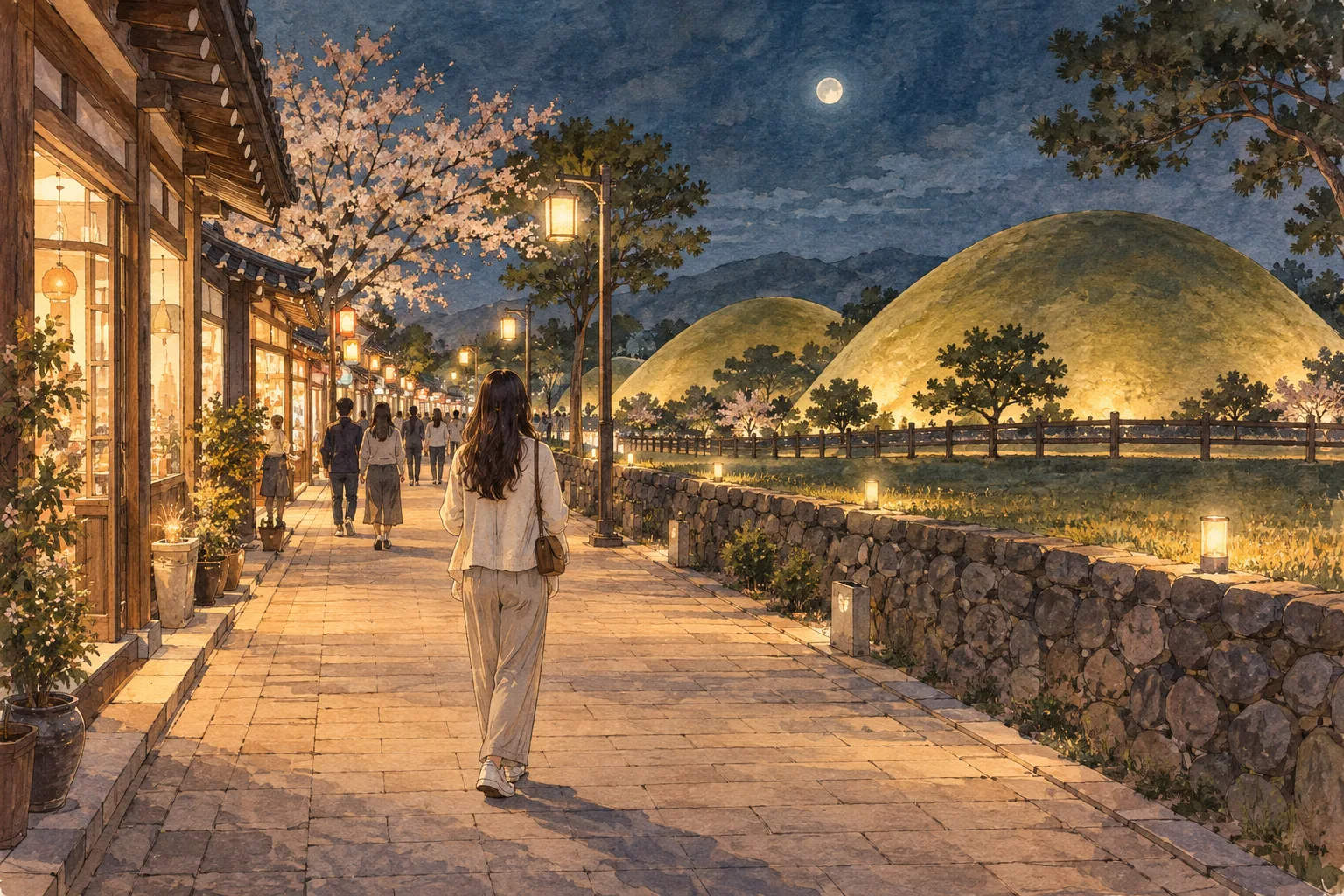
Gyeongju's illuminated tomb walk is a strong fit for solo female travelers who base themselves in Hwangridan-gil. The core route between Daereungwon, Cheomseongdae, Donggung Palace, and Woljeonggyo Bridge stays lit and populated right up until the sites shut their lights off at 10 PM. That combination of short distances, foot traffic, and a hard lighting cutoff makes the walk predictable rather than risky.
It is a weaker fit if you plan to stay outside that central area to save money, or if you expect to linger past closing time without a plan for the walk back. A traveler who books a budget hotel a long walk from Hwangridan-gil, then tries to stretch the evening past 10 PM, is the one who ends up on a dark, quiet street with no clear route home. The site itself is not the problem; the gap between where you sleep and where the lights are is.
So the real question is not "is Gyeongju safe," it is "does your hotel and your timing match the lit route." Get those two right and the walk is one of the calmer solo experiences in Korea.
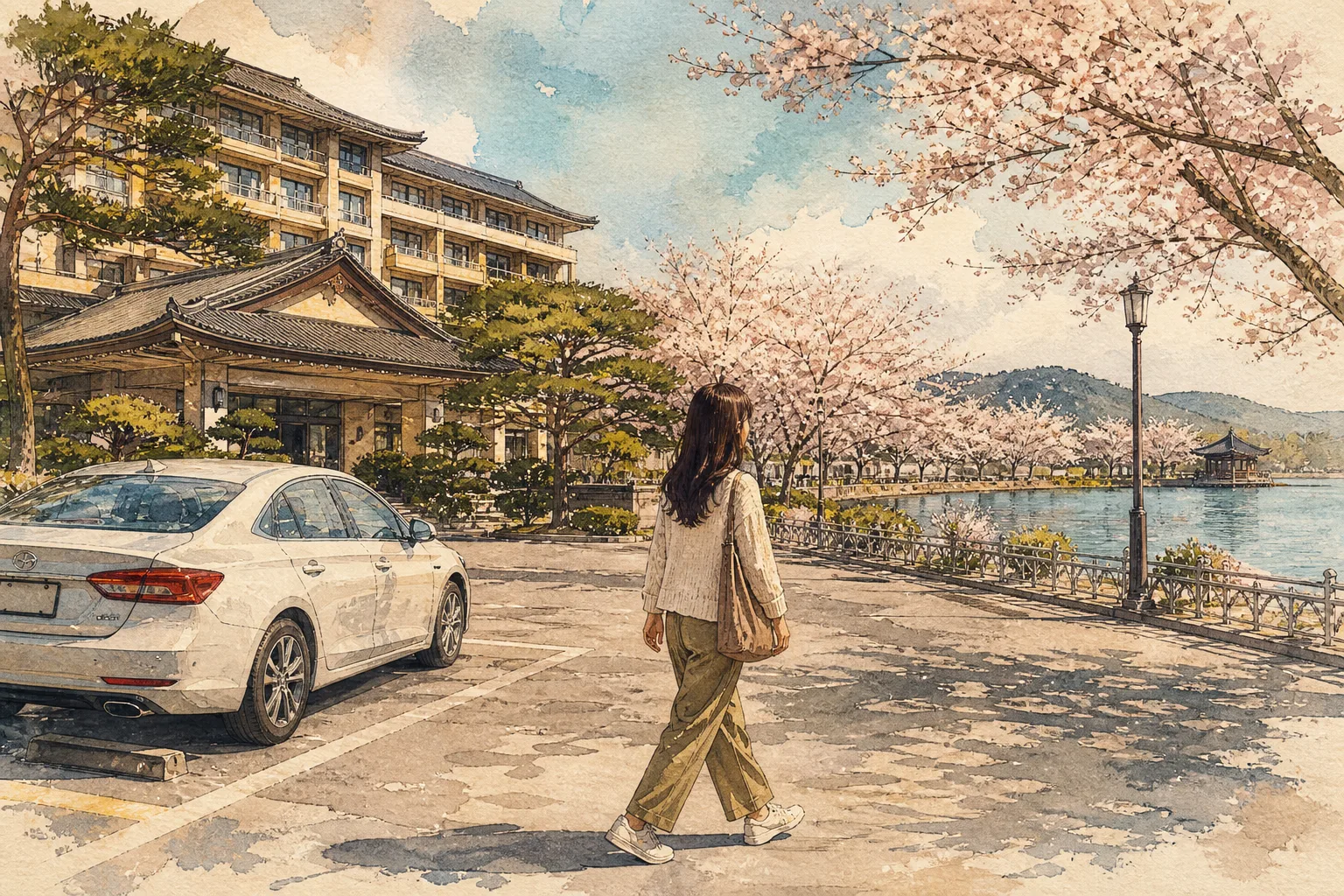
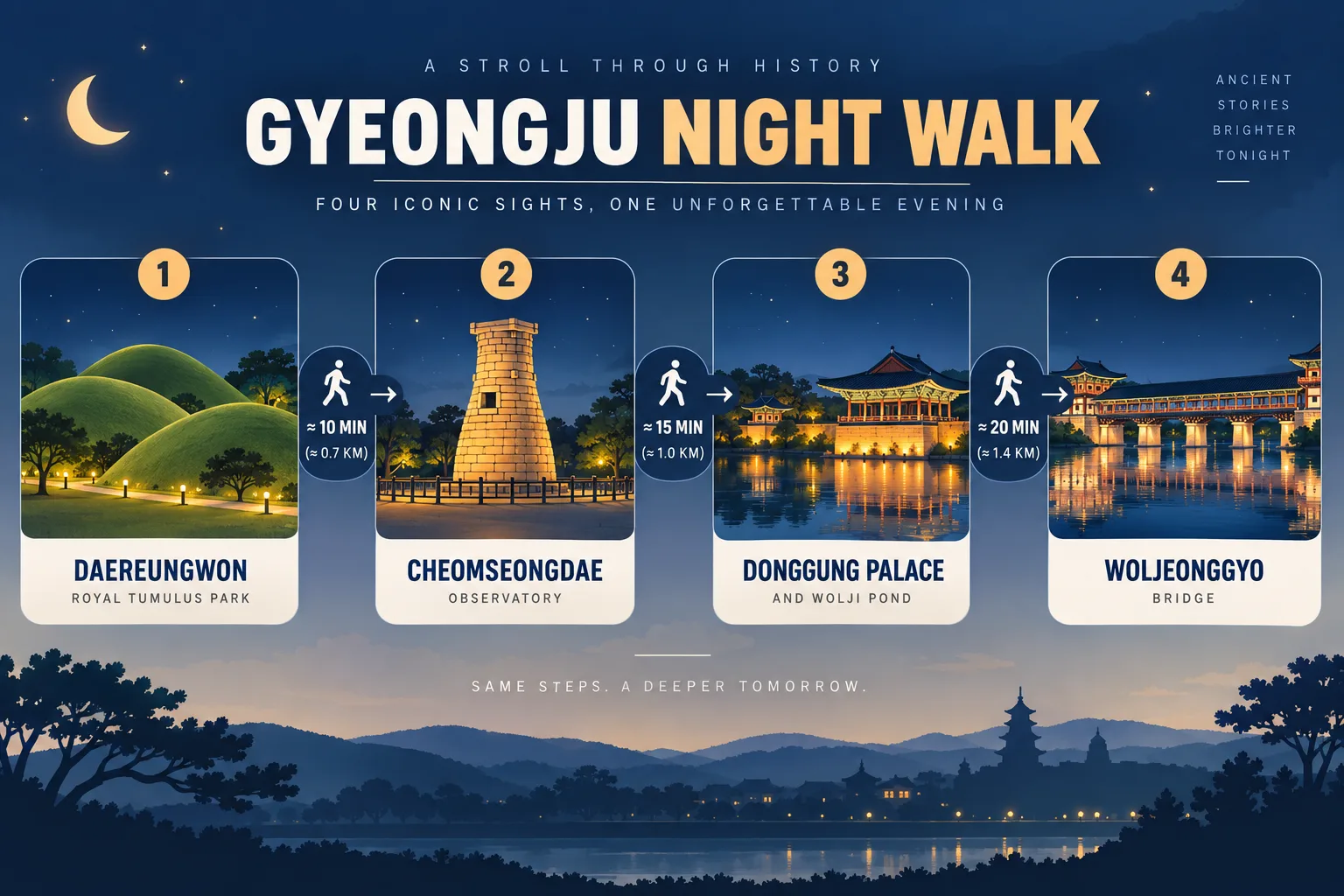 Editorial illustration: A simple decision-table style graphic showing four Gyeongju night-walk landmarks in sequence: Daereungwon.
Traveler Type Table
The safety and stress level of this walk depends less on who you are and more on three concrete choices: where you sleep, how you get between sites, and whether you finish before the 10 PM cutoff. Below is how those choices play out.
| Decision variable | Comfortable setup | Risk-adding setup |
|---|---|---|
| Hotel location | In or adjacent to Hwangridan-gil (Hwangnam-dong) | Budget stay far from the tomb park, requiring a longer walk back |
| Transport to the sites | Taxi from Gyeongju Station (15 min, 12,000-15,000 KRW) | Waiting on infrequent buses (routes 50, 51, 60, 61, 70, 700) with unreliable ETAs |
| Timing | Arriving before 9 PM, done walking by 10 PM lights-off | Arriving late or lingering past the lighting cutoff |
| Route between sites | Daereungwon to Cheomseongdae to Donggung Palace to Woljeonggyo, all under 1.2 km each leg | Detouring into unlit side streets or park edges to find shortcuts |
| Mobility around the sites | Walking the whole loop on foot | Trying to rent a bike or scooter, which is banned inside Daereungwon and Donggung Palace |
The pattern across every row is the same: staying inside the well-trafficked, well-lit loop keeps this an easy, low-stress evening. Straying from it, either by location, timing, or transport choice, is what introduces friction.
Best for First-Time Visitors
A first-time visitor to Gyeongju who has never seen the tombs illuminated is exactly who this walk was built for. The route is short, self-contained, and does not require navigating a large or confusing city center. You can walk from Daereungwon's rear gate to Cheomseongdae in about 10 minutes, then continue to Donggung Palace and Wolji Pond in another 13 to 20 minutes, all without leaving well-populated streets.
The one adjustment a first-timer should make is booking Hwangridan-gil before arrival, not after. Because prices shift by season and availability tightens fast in that specific neighborhood, a first-time visitor who waits to book once in Korea risks getting pushed into a cheaper, farther-out hotel by default. That single booking decision does more to control your safety and stress level than anything you do once you're walking.
Best for Couples
Couples get more flexibility here than solo travelers do, since two people walking together lowers perceived risk on any street, lit or not. That said, the same lighting-cutoff and hotel-location logic still applies if one partner wants to explore solo for even part of the evening, which is common when one person wants photos and the other wants to head back early. Treat the Hwangridan-gil base as the default plan regardless of group size, since it removes the need to negotiate a compromise route later.
Couples on a slower trip also benefit from doing the walk over two shorter visits, arriving right after sunset one night to catch fewer crowds and later hours another night. This spreads out the walking load without changing the safety calculation, since both visits stay inside the same lit route.
Best for Slow Travelers
A slow traveler who wants to absorb the atmosphere rather than rush through it will find Gyeongju's night walk well suited to that pace. The distances are short enough (roughly 1 km or less between each major stop) that you can move slowly, stop often, and still finish comfortably before the 10 PM lighting cutoff. There is no need to sprint between sites to "see everything," which is the mismatch that creates stress for other traveler types.
The tradeoff for a slow traveler is discipline around the clock. Because the appeal here is unhurried wandering, it is easy to lose track of time near Wolji Pond or Woljeonggyo Bridge and realize lights-off is closer than expected. Set a soft personal cutoff of 9:30 PM to start heading back, which still leaves room to wander without cutting it close.
Best for Low-Stress Travelers
If your priority is a predictable, businesslike evening with minimal decision-making, this walk delivers that more reliably than most nighttime activities in a new city. The route is fixed, the lighting schedule is fixed, and the safest hotel zone is a single, well-known neighborhood. There is very little ambiguity to manage once you've made the hotel-location decision correctly.
The main low-stress move is picking transport in advance rather than improvising. A taxi from Gyeongju Station is a known cost and a known 15-minute trip, which removes the uncertainty of waiting on an infrequent bus with an unreliable arrival estimate. For a traveler who wants to avoid stress rather than embrace spontaneity, that one choice removes most of the evening's unpredictability.
Common Mismatches
The clearest mismatch is a traveler who books based on hotel price alone and ends up outside the Hwangridan-gil area. Saving $20-30 a night by staying farther out sounds reasonable until it means a 20-30 minute walk back through quieter streets after the lights shut off at 10 PM. That gap between the deal and the location is where most disappointment and discomfort actually originates, not from Gyeongju itself.
A second mismatch is the traveler who arrives expecting to linger past closing and photograph the tombs late into the night. The lighting cutoff is fixed at 10 PM across Daereungwon, Cheomseongdae, Donggung Palace, and Woljeonggyo Bridge, so plans built around a late, quiet, empty-park photo session will simply not happen. Anyone chasing that specific vibe should plan for golden hour or right after sunset instead, when the sites are lit but not yet closing.
A third, smaller mismatch is relying on a rental bike or scooter to cover the route faster. Both are banned inside Daereungwon and Donggung Palace, and the public Tasila bike-share system is hard to register for as a short-term visitor. Travelers who assume they'll just "grab a bike" waste planning time better spent confirming a walking route or taxi plan.
Final Match Recommendation
Choose this experience if you're a solo female traveler willing to base yourself in or near Hwangridan-gil and finish your walk before the 10 PM lighting cutoff. Under those conditions, the route is short, well-lit, and consistently populated, which is about as favorable as a solo night walk gets in any city. First-timers, slow travelers, and low-stress planners all fit this pattern well.
Skip it, or at least rethink your hotel booking, if you're planning to save money by staying farther from the tomb park, or if you want a late, empty, unhurried photo session past closing hours. Those two goals work against the safety setup this walk depends on. The fix in both cases is the same: book inside Hwangridan-gil, and plan your visit to wrap up before the lights go off.
Before you book, confirm:
- Hotel is in or immediately adjacent to Hwangridan-gil (Hwangnam-dong)
- You have a transport plan (taxi fare in hand or bus route confirmed) rather than assuming one on arrival
- Your walk starts early enough to finish the loop before the 10 PM lighting cutoff
- You are not relying on bike or scooter rental to move between sites
FAQ
Is it safe for a solo female traveler to walk alone in Gyeongju at night? Within the Hwangridan-gil and Daereungwon core, yes, it is one of Korea's more comfortable areas for a solo night walk, because paths stay lit and populated until the 10 PM lighting cutoff. Outside that core, especially on quieter park edges or unlit side streets, the comfort level drops and caution is warranted like in any unfamiliar city.
What time do the illuminated tombs and palace sites turn off their lights? Daereungwon, Cheomseongdae, Donggung Palace, and Woljeonggyo Bridge all turn their lights off at 10:00 PM. Plan to arrive at least an hour before that to walk the full route without rushing in the dark toward the end.
Where should a solo female traveler stay in Gyeongju for a safer night walk? Book a hotel in or immediately adjacent to Hwangridan-gil (Hwangnam-dong). This keeps the walk to the illuminated sites short, well-lit, and populated the entire way, rather than requiring a longer walk from a cheaper but more isolated area.
How do I get from Gyeongju Station to the illuminated tombs at night? A taxi takes about 15 minutes and costs 12,000 to 15,000 KRW (9 to 11 USD), which is the most predictable option after dark. Local buses (routes 50, 51, 60, 61, 70, or 700) cost about 1,500 KRW but run infrequently and their real-time ETAs are not always reliable, so they are a weaker choice for a solo traveler on a tight lighting-cutoff schedule.
Can I rent a bike or scooter to get around the illuminated sites faster? Not inside the sites themselves. Rental bicycles and e-scooters are prohibited inside Daereungwon and Donggung Palace, and the public Tasila bike system often requires a local phone number to register, which makes it impractical for most short-term international visitors. Walking or taxis remain the realistic options.
What is the biggest mismatch risk for solo female travelers visiting Gyeongju? The biggest risk is choosing a cheaper hotel outside Hwangridan-gil and underestimating the walk back after the 10 PM lighting cutoff. That combination turns a comfortable evening into a longer walk through darker, less populated streets.