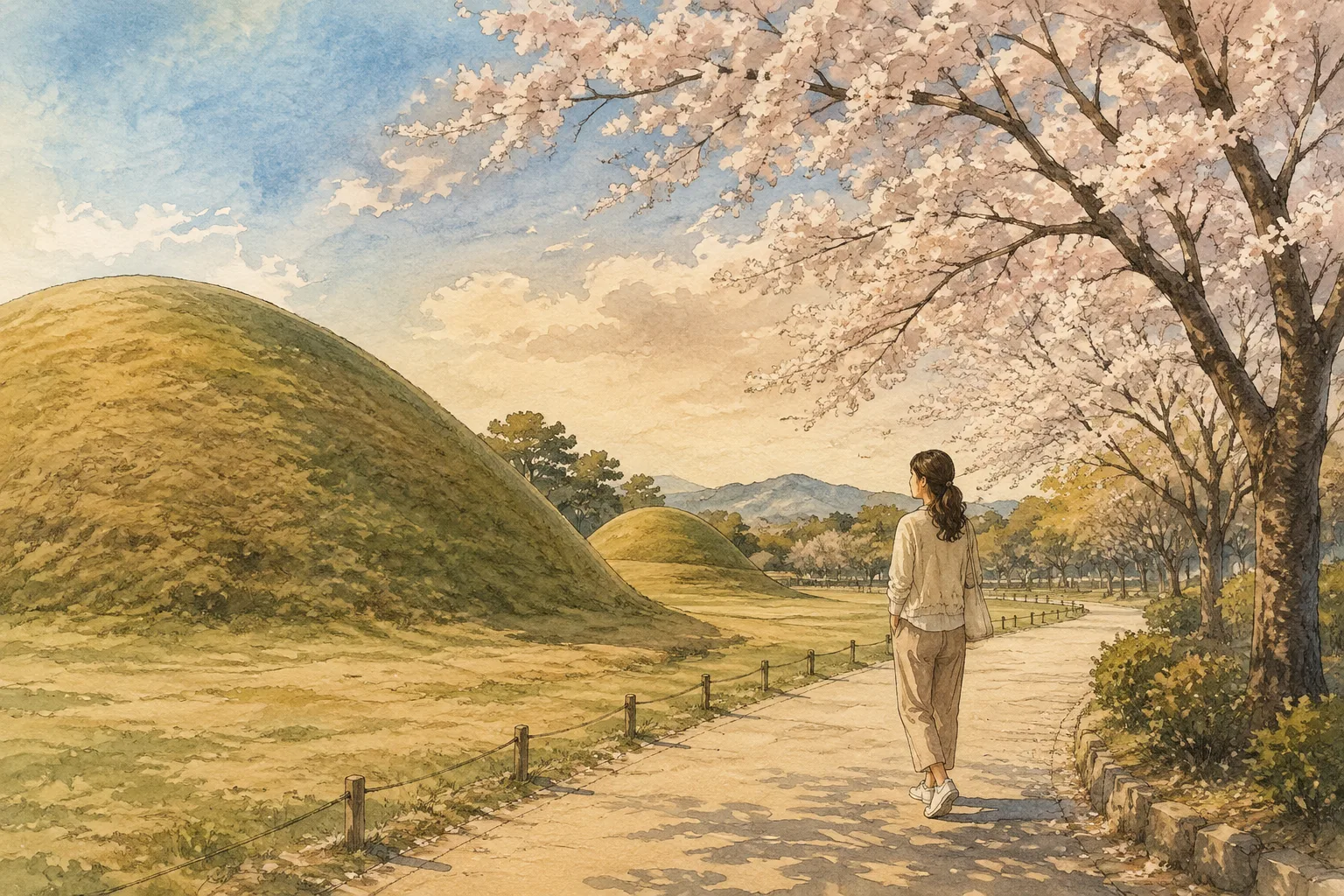
travel-decisions
Is Gyeongju a Good Fit for Tea Lovers and Slow-Travel Seekers Who Want to Avoid the Instagram Hype?
A traveler-fit breakdown of Gyeongju for tea drinkers, slow travelers, and culture purists, plus who ends up disappointed by the crowds and the photo spots.
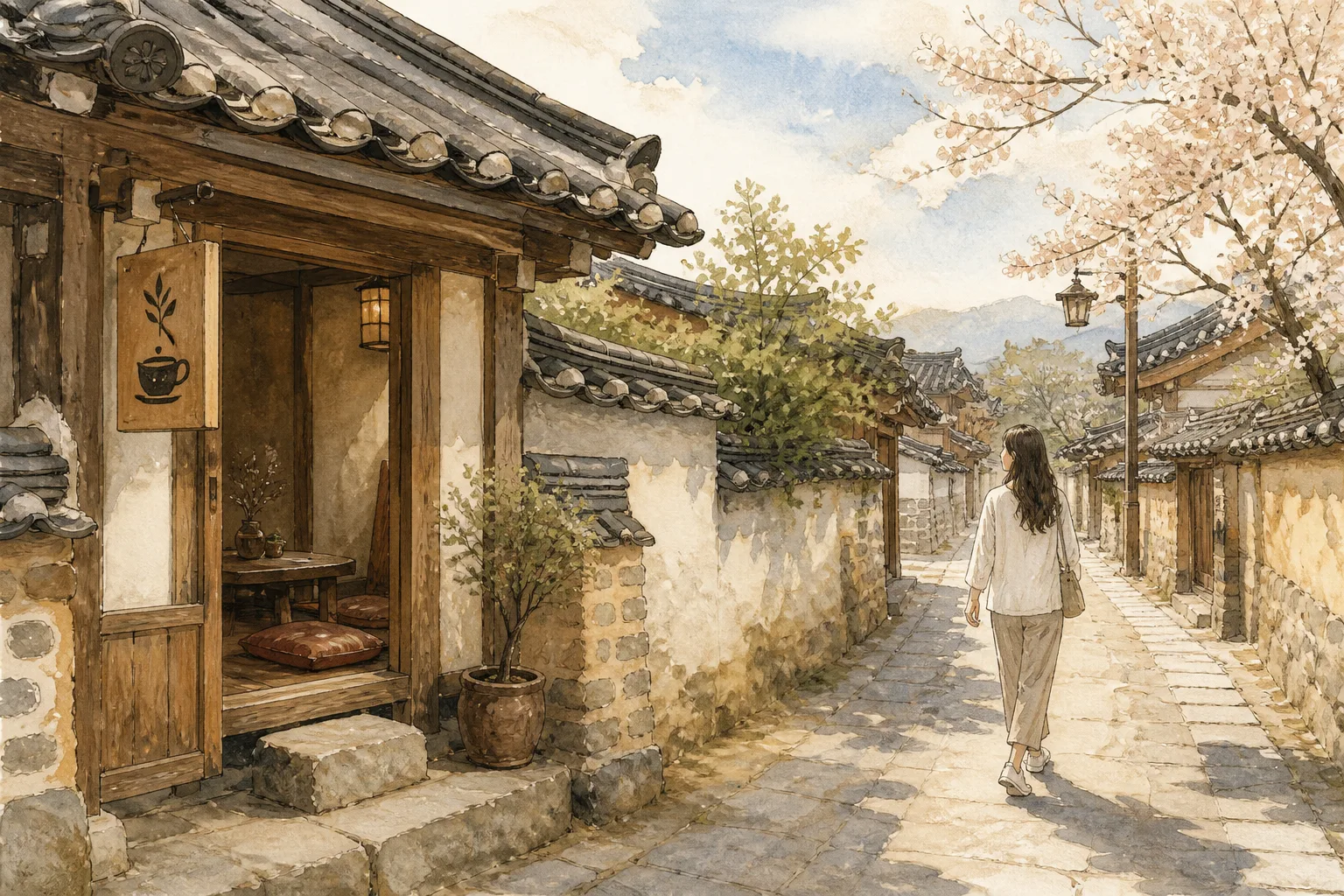
Quick Verdict
Gyeongju is a strong fit if you want quiet tea rituals, temple-adjacent walking paths, and unhurried mornings. It is a weak fit if you want a dense, fast-paced photo checklist packed into a single day.
Choose Gyeongju when your idea of a good trip is sitting on floor cushions with tea for an hour, then walking slowly between low, tiled-roof buildings without checking a clock. Skip it, or at least rethink the pacing, if you are the type who wants ten landmarks confirmed by lunchtime. The city's best moments happen in the gaps between sights, not at the sights themselves.
The direct answer: strong fit if you value atmosphere and ritual over volume, weak fit if you need constant visual stimulation to feel like a trip is working.
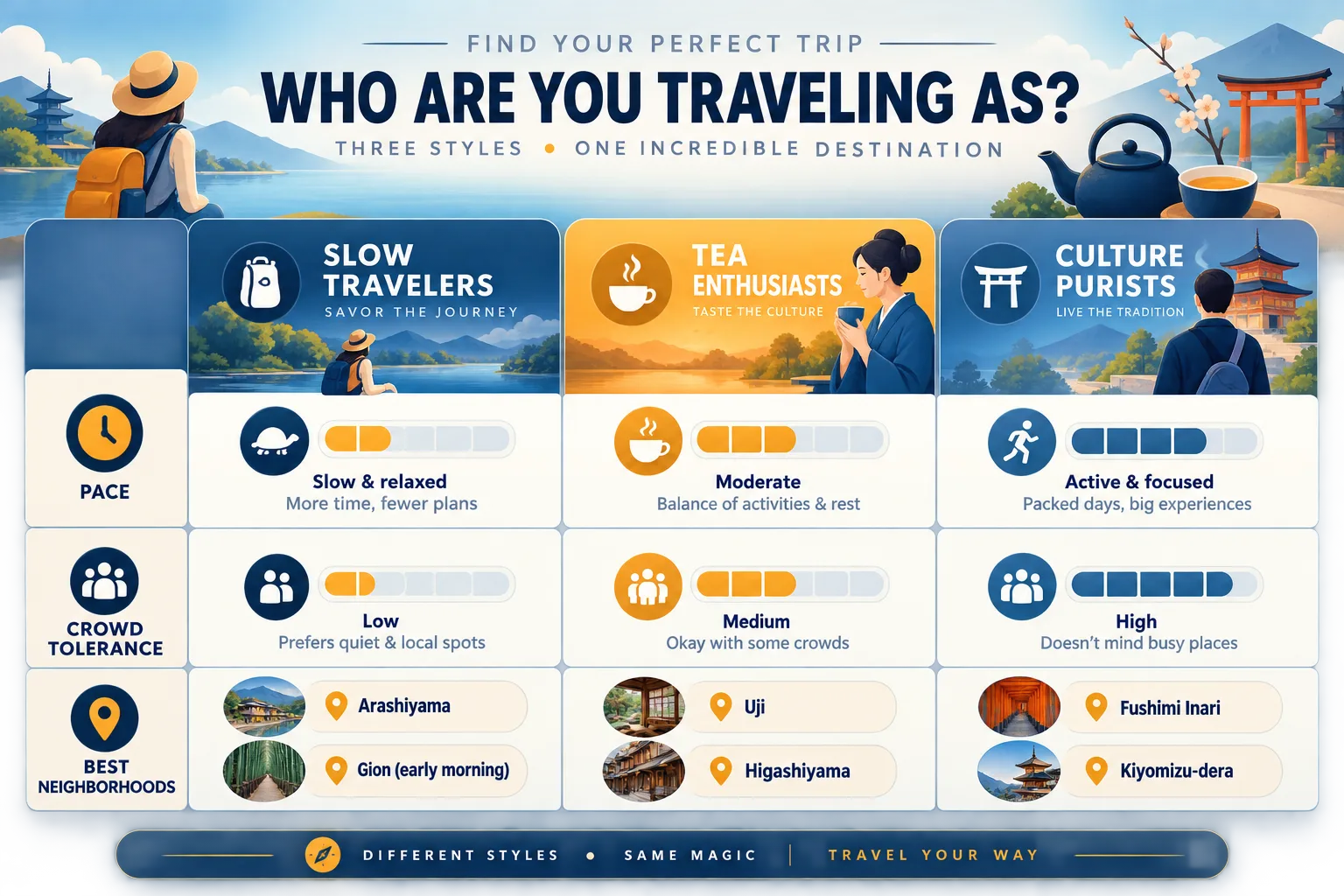 Editorial illustration: A simple comparison table graphic with three columns labeled Slow Travelers.
Traveler Type Table
Gyeongju does not reward every traveler equally. The real decision variables are pace tolerance, crowd sensitivity, and how much you care about ritual versus checklist completion. Below is how three traveler types actually experience the city, based on behavior rather than age or group labels.
| Traveler type | Real decision variable | Where it plays out | Tradeoff |
|---|---|---|---|
| Slow travelers | Willingness to spend 60-90 minutes in one spot | Tea houses, Namsan trails, riverside walks | Gain depth, lose ground covered per day |
| Tea enthusiasts | Tolerance for floor seating and unhurried service | Bichkkuli (Hwangnidan-gil), Ilsangchabansa (Jjoksaem-gil) | Gain authenticity, lose fast turnover and menu variety |
| Culture purists | Sensitivity to staged versus lived-in heritage sites | Gyochon Village, Yangdong Folk Village | Gain a working village feel, lose polished visitor infrastructure |
The pattern across all three: Gyeongju pays off when you slow down enough to notice details, and it underdelivers when you try to speed through it like a bigger city.
Best for First-Time Visitors
A first-time visitor who wants a soft introduction to Korean tea culture will do well here, as long as expectations are set correctly. Gyeongju does not have Seoul's density of options, and that is the point. One or two well-chosen tea houses will teach you more about pacing than five rushed stops elsewhere.
Slow travelers benefit most on a first visit because the low-key layout matches a first-timer's need to get oriented without pressure. Tea enthusiasts should expect a smaller, more intimate scene than Seoul's specialty tea districts, with fewer menu options but more direct contact with the ritual itself. Culture purists get a genuine payoff here, since sites like Gyochon Village retain a lived-in quality that larger, more restored heritage sites often lose.
The tradeoff for a first-timer is that Gyeongju rewards patience over spectacle, so arriving with a checklist mindset will undercut the experience before it starts.
Best for Couples
Couples who like quiet, low-pressure shared time will find Gyeongju easy to plan around. A short walk from Hwangnidan-gil to Gyochon Traditional Village takes about 10 minutes, which makes it simple to string together a tea stop and a village walk without a rigid schedule.
Slow-traveling couples get the most value from unstructured stretches, like sitting in a tea house for an hour with no fixed itinerary. Tea-enthusiast couples should plan around shared floor seating, since some tea houses, including Bichkkuli, require removing shoes and sitting on cushions rather than at tables. Culture-purist couples benefit from splitting sightseeing and quiet time evenly, pairing a temple walk with an unhurried tea break instead of stacking multiple sights back to back.
The main risk for couples is mismatched pace: if one partner wants fast sightseeing and the other wants slow ritual, Gyeongju will expose that gap quickly.
Best for Slow Travelers
This is the traveler type Gyeongju is built for. The Hwangryongsa Temple Maru Trail, a 1.5 km timber and stamped-earth path running from Bunhwangsa Temple past the Gyeongju National Museum to Woljeonggyo Bridge, is designed for a wandering pace rather than a destination-to-destination sprint.
Slow travelers can treat a single afternoon as one loop: a tea stop, a stretch of the Maru Trail, and a slow walk back through Gyochon Village. Tea enthusiasts within this group will appreciate that nothing in Gyeongju rushes you out of a seat. Culture purists get long, quiet stretches on Namsan's 468-meter trail network, where admission is free and crowds thin out fast once you're off the main paths.
The tradeoff is coverage: a slow traveler will see fewer named sights per day than a fast-paced visitor, but the depth of each stop is higher.
Best for Low-Stress Travelers
Gyeongju's compact core removes a lot of the logistical stress that larger cities create. Most of the historic center is walkable in 5 to 10 minute stretches, so there is little need for complex transit planning once you're based near Hwangnidan-gil or Gyochon.
Slow travelers benefit because low-stress and slow-paced goals overlap almost completely here. Tea enthusiasts get a low-stress bonus too, since a tea house visit doubles as a built-in rest stop between walking segments. Culture purists should note that the one genuine logistics point is Yangdong Folk Village, located roughly 16 to 19 km northeast of the city center, which needs a bus or taxi rather than a walk.
The exception to low-stress: arriving via Gyeongju Station, which sits 10 to 12 km outside the historical center, means budgeting a short transfer time before the slow part of the trip even begins.
Common Mismatches
Some travelers assume Gyeongju will feel like a smaller, cuter version of Seoul's palace district, and that assumption creates disappointment. The core tomb parks and Cheomseongdae Observatory do get crowded, particularly on weekends and during cherry blossom season, so anyone expecting guaranteed quiet at the headline sights will be misled.
Photo-first travelers who want a dense, fast-paced itinerary often misread Gyeongju as a quick day-trip box to check. A single day from Seoul or Busan only allows for one or two tea stops and skips the slower rhythm that justifies the trip. Travelers who dislike floor seating should also reconsider some tea house visits, since spots like Bichkkuli require removing shoes and sitting on cushions rather than at standard tables.
A second mismatch involves cultural etiquette. In Gyochon and Yangdong villages, signs prohibit entering residential courtyard buildings without permission, and visitors are asked not to photograph residents without consent. Travelers expecting an open-access, fully staged heritage park may find these lived-in boundaries frustrating rather than charming.
The disappointment risk is specific: it is not that Gyeongju lacks beauty, it is that the beauty is paced slowly and the crowds cluster unevenly, which punishes anyone trying to rush through it.
Final Match Recommendation
Choose Gyeongju if you are a slow traveler, tea enthusiast, or culture purist who wants ritual and atmosphere over a landmark checklist. The city's short walking distances between key spots, quiet tea houses, and free-to-access Namsan trails all support a deliberately unhurried trip.
Do not choose Gyeongju, or at least reframe your itinerary, if you need constant visual novelty or want to avoid all crowds entirely. The headline sights will be busy at peak times regardless of traveler type, and a rushed one-day visit will miss most of what makes the tea and temple experience worthwhile.
Strong fit: you can sit still for an hour without feeling like you're wasting the trip. Weak fit: you measure a good day by how many sights you checked off.
FAQ
Is Gyeongju too crowded for a quiet tea-focused trip? The core photo zones like Daereungwon and Cheomseongdae get crowded, especially on weekends and during cherry blossom season. Side streets, Namsan trails, and smaller tea houses stay much quieter, so the crowding depends entirely on where you choose to spend your time.
Do I need a car to enjoy Gyeongju as a slow traveler? No. The historic core, including Hwangnidan-gil, Gyochon Village, and Cheomseongdae, is walkable within short 5 to 10 minute stretches. A car or bus only becomes useful if you want to reach Yangdong Folk Village, which sits well outside the center.
How much time should tea enthusiasts budget in Gyeongju? Two to three full days lets you rotate between a couple of tea houses, the Namsan trails, and the walking paths without rushing. A single day trip from Seoul or Busan will only allow one or two tea stops and skips the slow pacing that makes the city worthwhile.
Is Gyeongju a good fit for someone who wants Instagram-worthy photos above all else? It can work for photos at Donggung Palace and the Cheomseongdae night lighting, but the traveler type this city rewards most is someone who values atmosphere and quiet ritual over chasing a checklist of photo spots. If photo volume is the main goal, the crowded core may feel more stressful than scenic.
Are Gyeongju's tea houses tourist traps or genuinely traditional? Smaller tea houses on side streets, like the seated floor-cushion setup at Bichkkuli on Hwangnidan-gil, function closer to traditional tea rooms than the larger cafes on the main strip. Expect simple, unhurried service rather than a curated cafe experience built for photos.