travel-decisions
Is Gyeongju a Good Fit for Solo Remote Workers Who Prefer Cozy Book Cafes to Lively Co-working Spaces?
A decision guide for solo remote workers deciding between Gyeongju's cafe-based work culture and city-based coworking hubs, with real friction points and traveler fit.
Quick Verdict
Gyeongju is a strong fit for a solo remote worker who wants a slow, low-stimulation base and is willing to build a workday around a handful of cafes instead of a dedicated desk. It is a weak fit for anyone who needs a guaranteed workspace on demand, works past early evening hours regularly, or gets frustrated re-locating mid-afternoon when a cafe fills up.
Choose Gyeongju if: you are a solo digital nomad or slow traveler who treats a trip as a long stay rather than a checklist, you do not mind ordering the same drink twice to justify a table for four hours, and your work does not require late-night connectivity or a stable desk during weekend crowds.
Skip Gyeongju if: you need a dedicated coworking membership, predictable seating regardless of the day, video calls after 9 or 10 PM, or a city where solo dining after dark is effortless in English.
There is no dedicated coworking space in the city center. That single fact should drive most of the decision below.
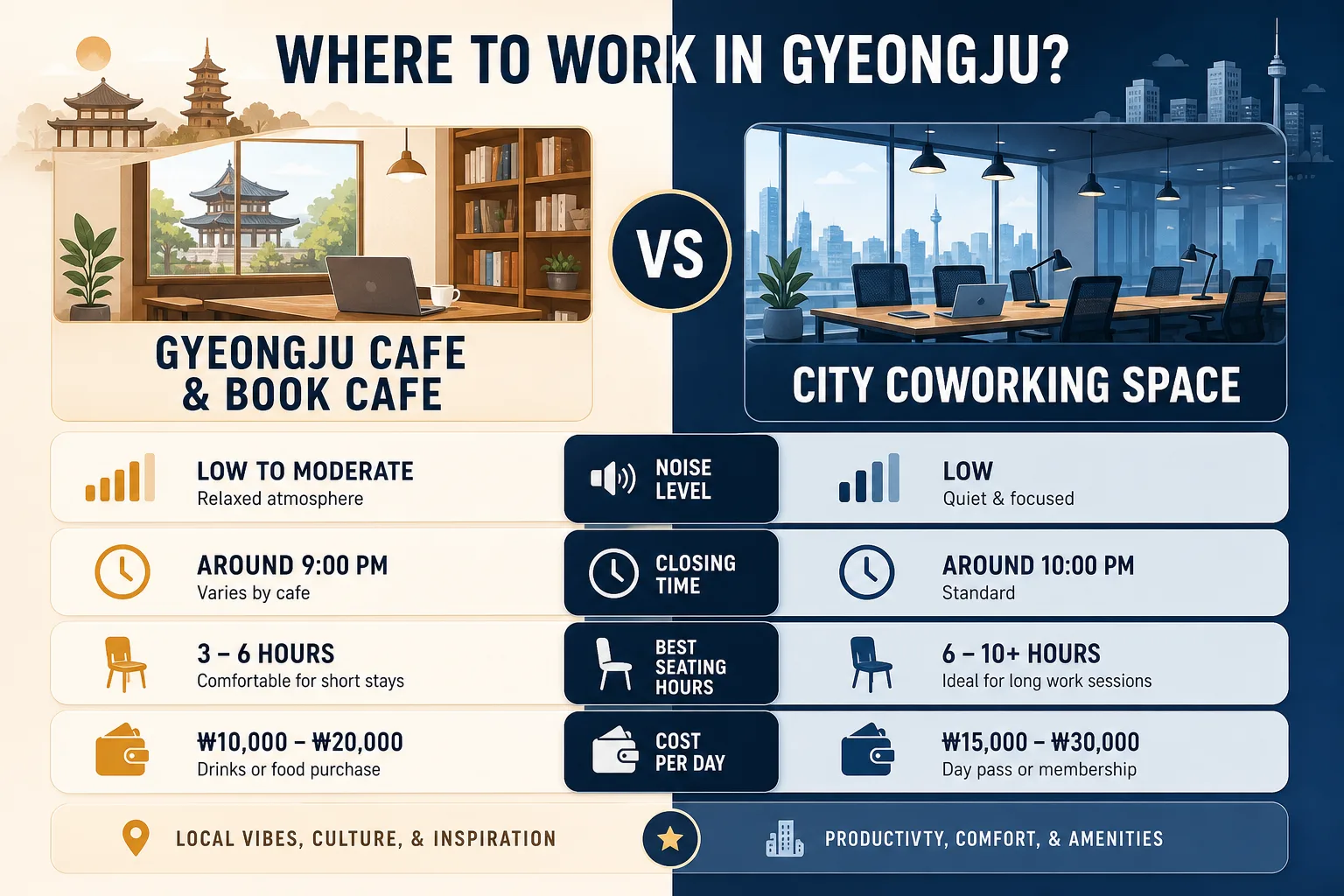 Editorial illustration: A simple side-by-side decision layout comparing two work environments.
Traveler Type Table
The real variable is not "is Gyeongju nice" (it is), but whether your work pattern can tolerate a cafe-dependent, early-closing, weekday-favoring rhythm.
| Decision variable | Solo digital nomad | Introverted traveler | Slow traveler |
|---|---|---|---|
| Need for a dedicated desk | High friction: no coworking space exists in the city center | Low friction: cafe seating suits low-interaction work | Low friction: pace already assumes settling in, not sprinting |
| Weekend crowd tolerance | Medium risk: weekend cafe crowding near Hwangridan-gil disrupts long work blocks | High risk if noise-sensitive: weekend foot traffic raises ambient noise | Low risk: slow travelers can shift work to weekdays and sightsee weekends |
| Evening work hours | High friction: cafes and many small restaurants close early | Neutral: introverts often prefer daytime hours anyway | Low friction: slow travel rarely depends on late-night work sessions |
| Solo dining without Korean | Medium friction: workable near tourist areas, harder elsewhere | Medium friction: ordering alone is fine, but menu navigation takes longer | Low friction: extra time to figure out a menu fits a slower schedule |
| Backup workspace if a cafe is full | High friction: Silla Millennium Library only open Tuesday to Friday, 10 AM to 6 PM | Medium friction: fewer alternatives means more walking to find a seat | Low friction: an unplanned walk to find another cafe fits the travel style |
The pattern is consistent: Gyeongju rewards travelers who do not need infrastructure certainty, and penalizes travelers who do.
Best for First-Time Visitors
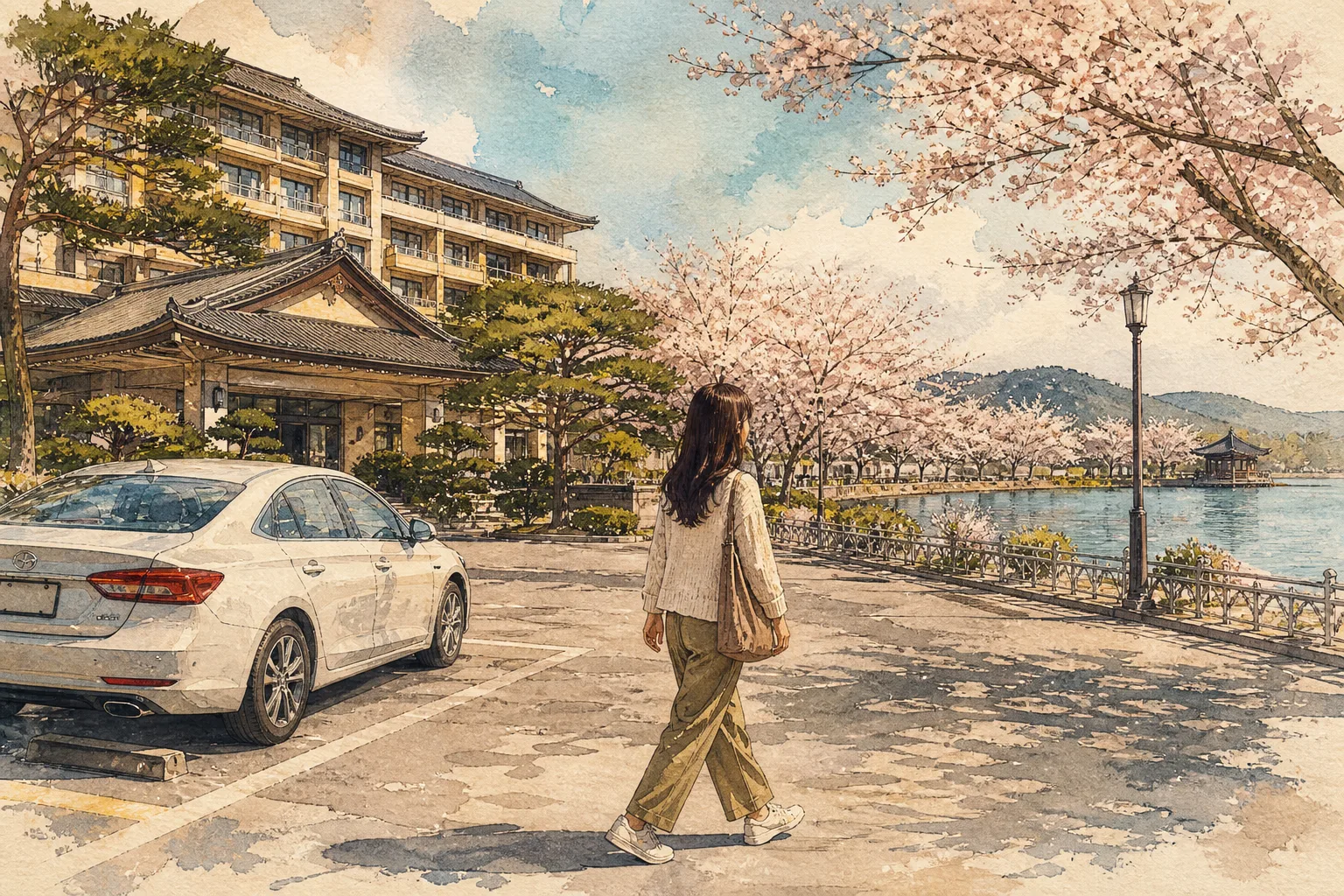
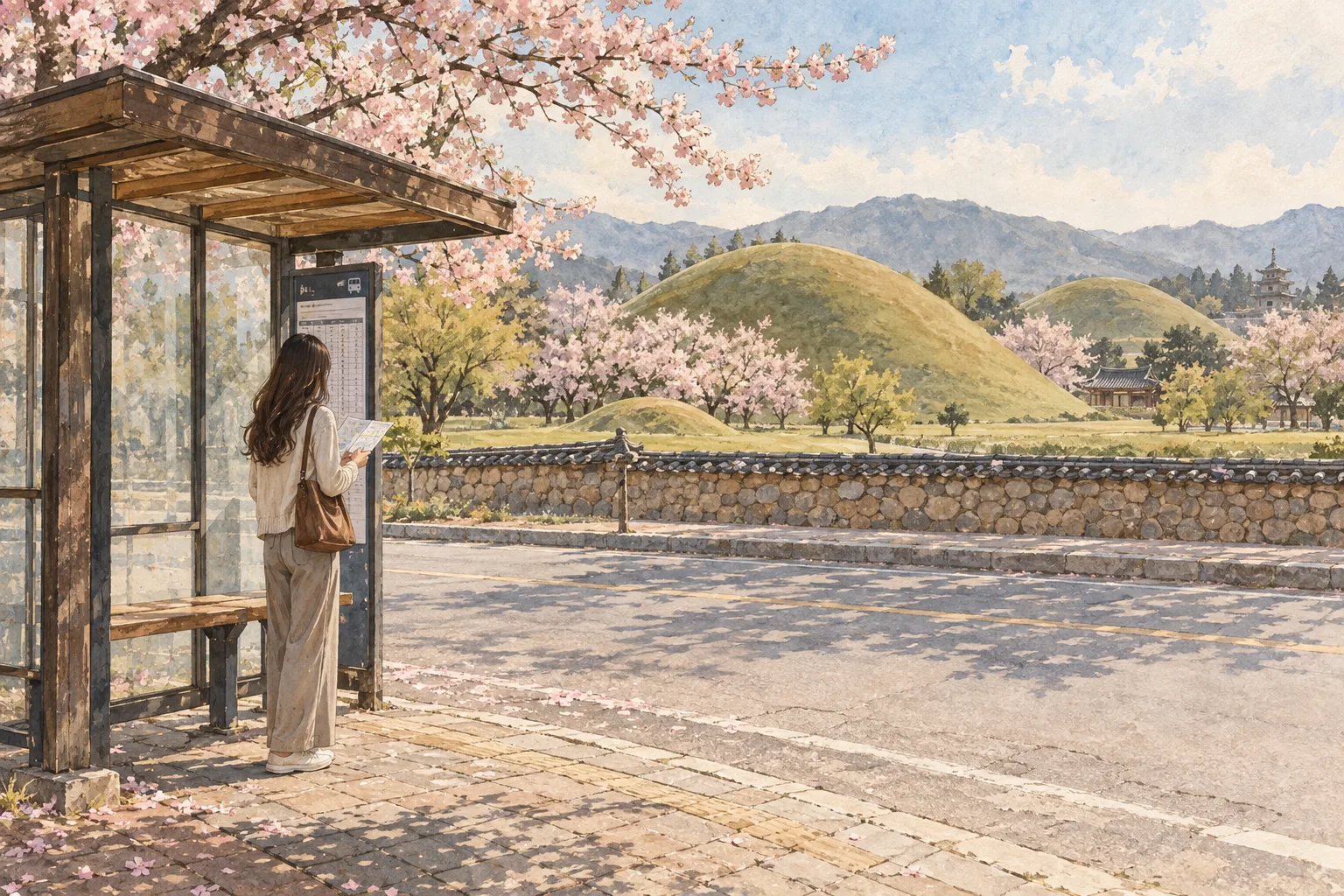
A first-time visitor to Gyeongju who is also a remote worker faces a learning curve that has nothing to do with sightseeing and everything to do with logistics. The historic core, where most cafes worth working from are concentrated, sits about 10 kilometers from Gyeongju Station, requiring a 30 to 40 minute bus ride or a 20 minute taxi. A first-timer who books a hotel near the station without checking this distance will lose real work hours to commuting before ever opening a laptop.
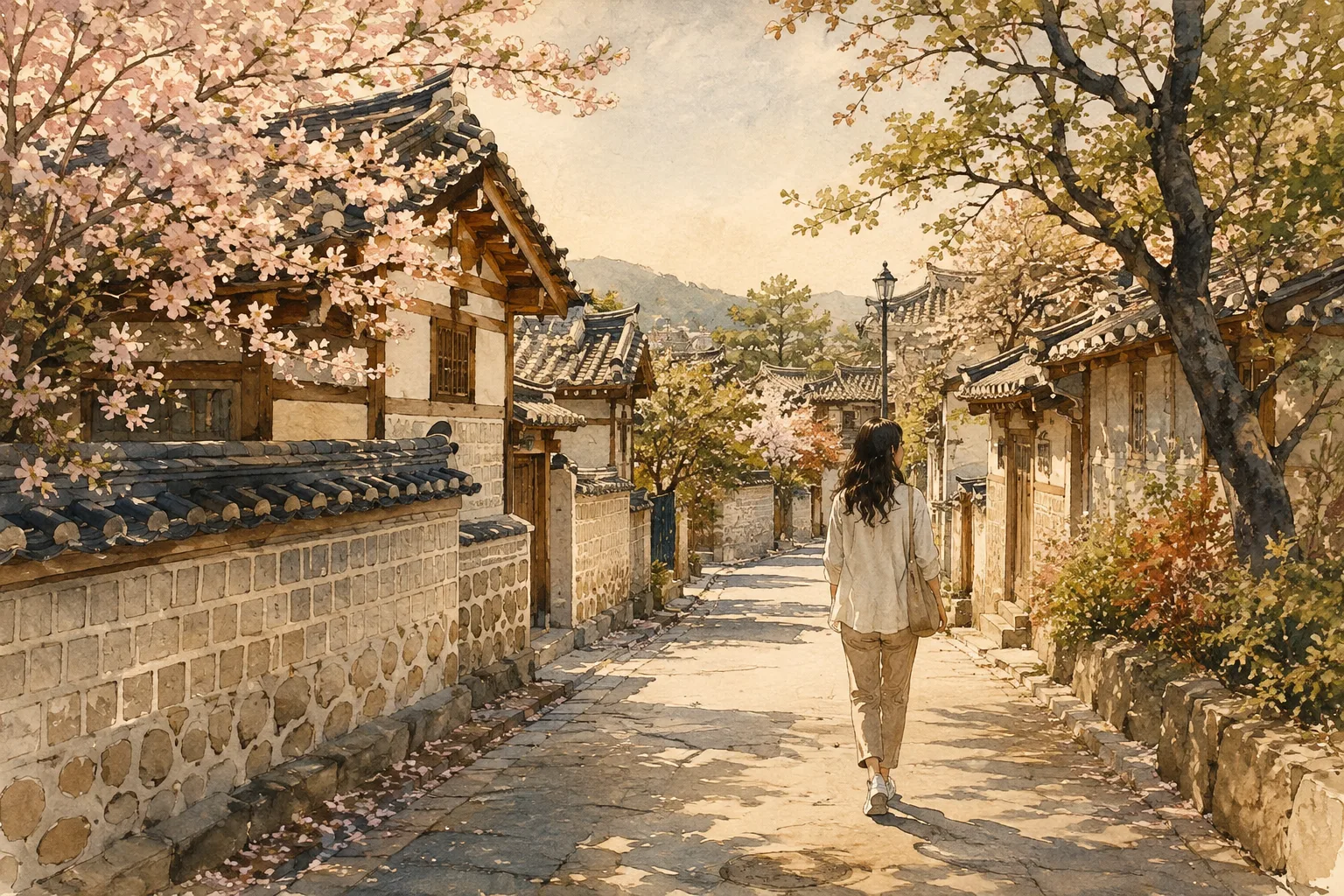
Solo digital nomads visiting for the first time should treat their first one or two days as reconnaissance: walk Hwangridan-gil, note which cafes have outlets and long-stay-friendly seating, and only then settle into a routine. Introverted travelers new to the city will likely appreciate that Gyeongju's pace is slower than Seoul or Busan from day one, with less pressure to explain oneself in busy shared spaces. Slow travelers arriving for the first time are the best-positioned group here, since their itinerary already assumes a settling-in period rather than immediate productivity.
Best for Couples
This is where Gyeongju's cafe-based work model shows its limits for a specific traveler type: a couple where one or both partners need to work remotely. A single cafe table can comfortably host one laptop and one quiet worker; two adults trying to hold a table for a full workday is a different proposition, especially on weekends when Hwangridan-gil cafes fill quickly.
Solo digital nomads traveling as a couple should plan to split up during work hours rather than share one table, which changes the trip's rhythm more than expected. Introverted travelers in a couple may actually prefer this arrangement, since it builds in solo time without requiring an explanation. Slow travelers as a couple tend to handle this best, because their schedule already has slack for one partner to sightsee alone while the other finishes a work block, then reconvene for dinner. Couples who expected to work side by side at one table for a full day, as they might in a city coworking space, will find that expectation does not hold here.
Best for Slow Travelers
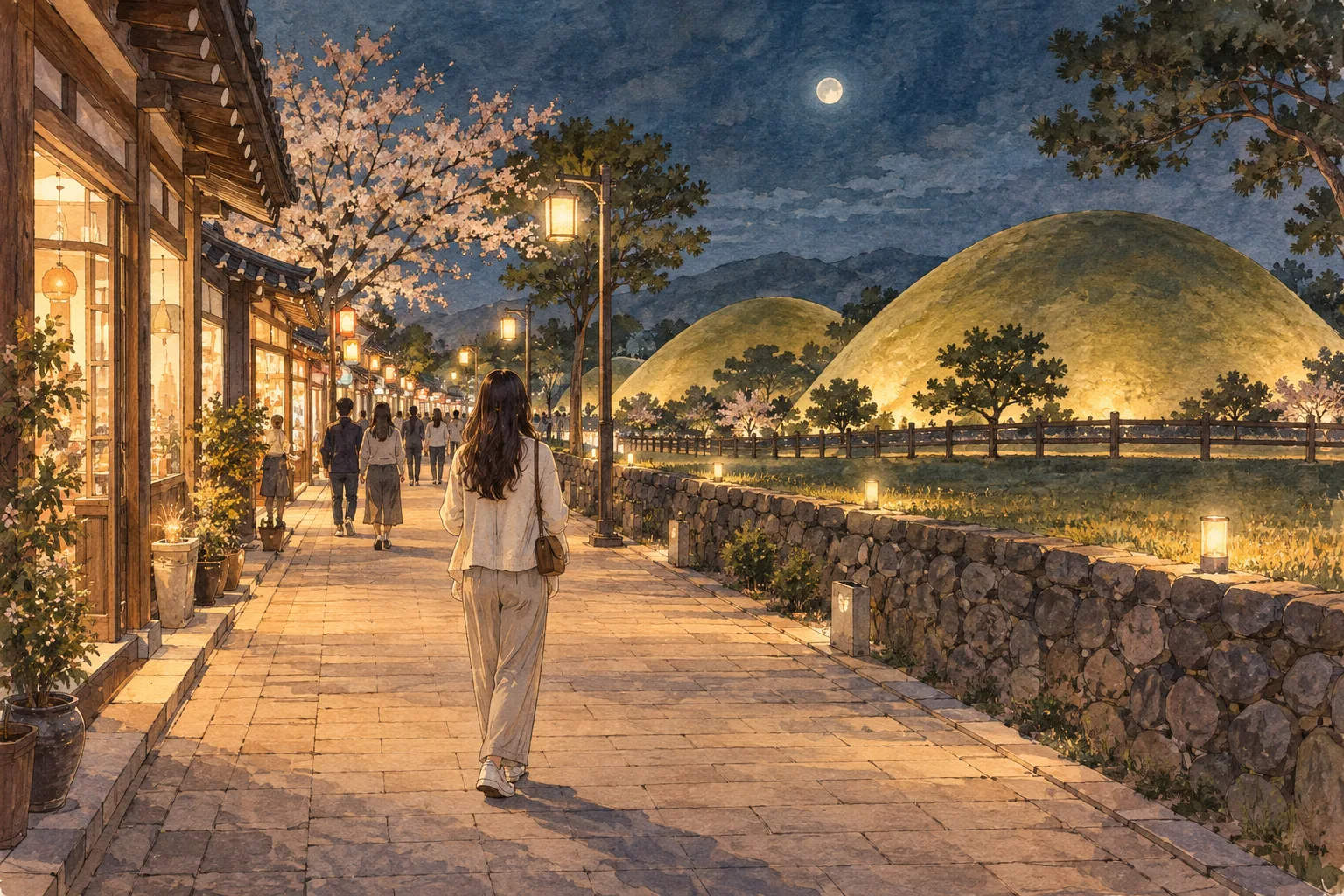
This is the traveler type Gyeongju is genuinely built for. A slow traveler is not trying to maximize sights per day, which means the absence of a dedicated coworking space is a minor inconvenience rather than a scheduling crisis. The 3-kilometer, 2 to 3 hour walking loop connecting Daereungwon, Cheomseongdae Observatory, and Woljeonggyo Bridge fits naturally into a slow traveler's afternoon after a morning work block, and does not require rushing.
Solo digital nomads who identify as slow travelers get the most out of Gyeongju because they can treat a week or more here as a base, cycling through two or three preferred cafes without needing everything the first day. Introverted travelers benefit from the same slower rhythm, since there is less social pressure to fill every hour with activity. Slow travelers overall should note that weekday visits to Daereungwon and Hwangridan-gil are meaningfully calmer than weekend ones, and structuring work around that pattern, working weekday mornings, sightseeing weekday afternoons, and treating weekends as either rest or travel days, gets the most value from the city.
Best for Low-Stress Travelers
A low-stress traveler wants a trip that runs on autopilot: predictable costs, minimal decision fatigue, no scrambling. Gyeongju partially delivers this and partially works against it. On the cost side, it delivers: budget accommodation runs 26,000 to 50,000 per night, mid-range hotels 50,000 to 130,000, which is easy to plan around without surprises. Free entry to the Daereungwon outdoor park (since May 2023) removes another cost decision, and the 3,000 KRW ticket for Cheonmachong's interior is a small, known expense rather than an unpredictable one.
Where it works against a low-stress traveler is workspace certainty. Solo digital nomads who define low-stress as "I know where I will work every day" will find Gyeongju's cafe-dependent model adds a small daily decision (which cafe, is it full, is it loud) that a coworking membership would remove. Introverted travelers who find comfort in routine may actually experience this as manageable once they identify two or three reliable spots. Slow travelers who define low-stress as "nothing needs to happen on a schedule" will find Gyeongju's early closing times and weekday-versus-weekend crowd pattern easy to work around, since they are not fighting a tight itinerary in the first place.
Common Mismatches
Certain traveler patterns consistently regret choosing Gyeongju as a remote work base, and it is worth naming them directly.
- The video-call-heavy worker. Anyone with regular calls scheduled past early evening will struggle, since cafes and many small restaurants close early and options thin out fast after dark.
- The coworking-community seeker. Remote workers who chose past destinations partly for the social scaffolding of a coworking space (community events, shared lunch tables, informal networking) will find nothing equivalent here. Gyeongju's work culture is solitary by default.
- The one-cafe loyalist with a tight schedule. A worker who identifies a single favorite cafe and assumes it will always have a seat is set up for disappointment on a weekend or during cherry blossom or autumn foliage season, when Hwangridan-gil area cafes fill quickly.
- The traveler who booked near the old downtown station. The historic downtown station closed permanently in December 2021; travelers unaware of this and expecting a short walk from Gyeongju Station into the historic core are surprised by the actual 10-kilometer distance and the bus or taxi ride required.
- The solo diner expecting Seoul-level English signage. Solo dining in Gyeongju outside the main tourist strip involves more menu-reading effort than a first-time visitor to Korea might expect from a smaller city.
The disappointment risk in each case is not that Gyeongju is a bad destination, it is that the traveler brought infrastructure expectations from a larger city and did not adjust for a smaller one.
Final Match Recommendation
Choose Gyeongju as a remote work base if you are a solo digital nomad, introverted traveler, or slow traveler whose work does not depend on guaranteed desk space, late-evening hours, or a coworking community, and who is comfortable treating two or three cafes plus occasional library access as sufficient infrastructure. The tradeoff is real: you give up workspace certainty and evening flexibility, and you get a genuinely calmer, less crowded, more atmospheric place to spend the parts of the day you are not working.
Do not choose Gyeongju if your work requires predictable seating regardless of day or season, regular calls after early evening, or a fallback workspace on short notice. In those cases, a city with actual coworking infrastructure, even a busier one, will cost you less in accumulated friction than Gyeongju's quieter but thinner setup will.
The clearest signal either way: if you have worked comfortably from a single laptop-friendly cafe for a full day before without needing a backup plan, Gyeongju will suit you. If that scenario already sounds stressful, it will be more so here than in a larger city.
FAQ
Does Gyeongju have any coworking spaces at all? No major commercial coworking spaces currently operate in Gyeongju. The closest formal alternative is the Silla Millennium Library inside the Gyeongju National Museum, open Tuesday through Friday from 10:00 AM to 6:00 PM. Outside those hours and days, cafes are the only practical option.
Are Gyeongju cafes actually quiet enough to work in on weekdays? Weekdays, especially Monday through Thursday, are noticeably calmer than weekends. Hwangridan-gil and the areas near Daereungwon see heavy crowds on weekends and during cherry blossom and autumn foliage season, which spills into nearby cafes. A weekday morning session is a very different experience from a Saturday afternoon one.
Can a solo remote worker get by without speaking Korean in Gyeongju? Basic ordering is manageable with translation apps and point-and-order menus, which most cafes near tourist areas have adopted. Solo dining outside the main tourist strip is where the language barrier becomes more noticeable, since smaller local restaurants often lack English menus or staff.
How long should a remote worker plan to stay in Gyeongju to make it worthwhile? Given the 30 to 40 minute bus ride or 20 minute taxi from the train station to the historic core, and the adjustment period for finding reliable cafe spots, a stay shorter than four or five nights spends a disproportionate share of time on logistics rather than settled work.
Is Gyeongju better than Busan for a solo remote worker who dislikes noise? Gyeongju is quieter and more compact, but Busan has actual coworking spaces, later closing hours, and more backup options if one cafe does not work out. A worker who values quiet atmosphere over infrastructure redundancy will prefer Gyeongju; a worker who wants a dependable desk regardless of day or weather will prefer Busan.