city-matchups
Prague vs Budapest for Travelers Trying to Avoid Budget Regret
A direct verdict on Prague vs Budapest for travelers who care about value, not just the lowest sticker price. Covers hotel value, transit friction, and crowd-driven cost inflation.

Quick Verdict
If you are choosing between Prague and Budapest specifically to avoid budget regret, not just to find the cheapest flight, pick Prague.
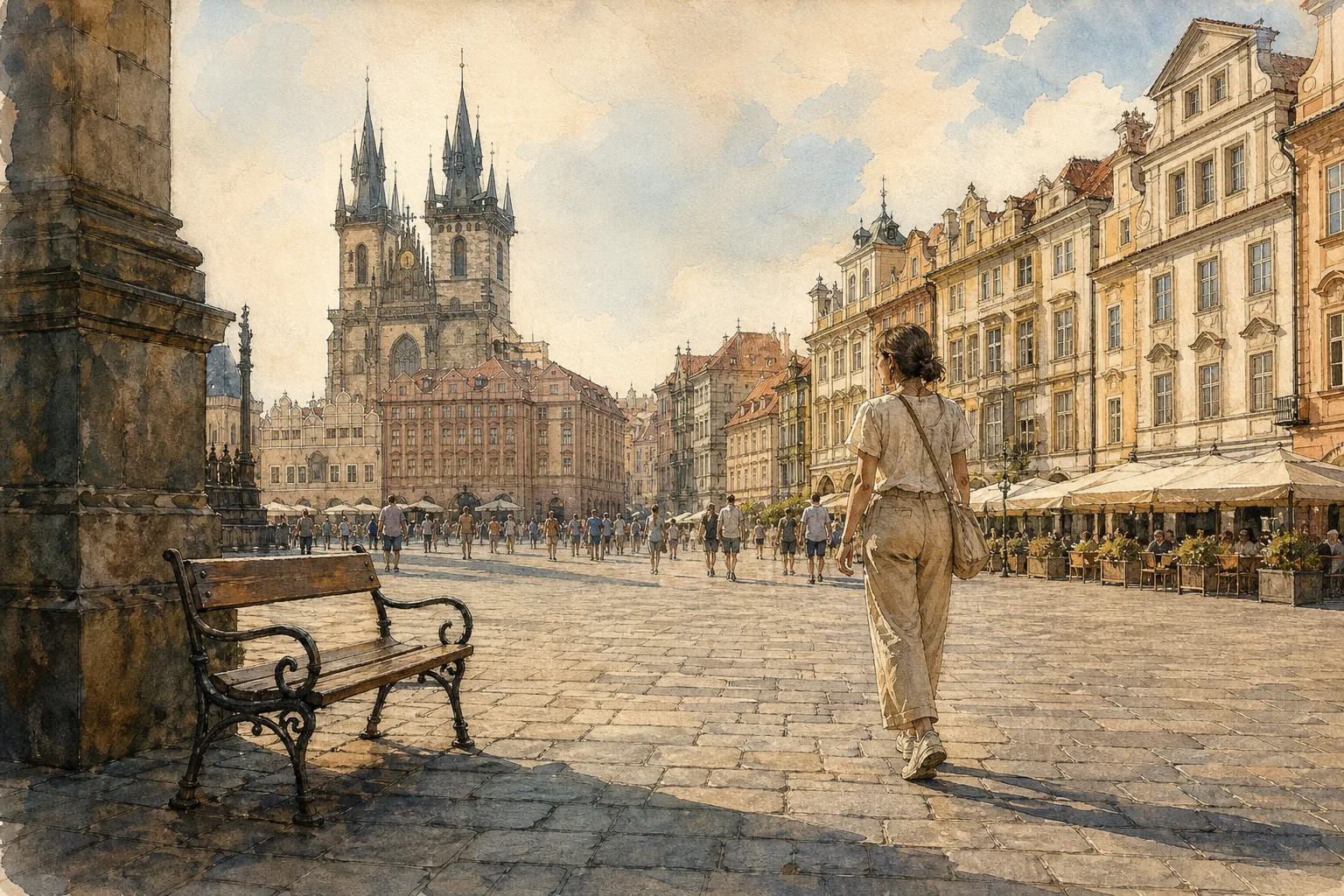
Prague's compact, walkable historic core means a mid-price hotel a few tram stops from the center still delivers a genuinely central experience. That predictability is what protects you from the classic budget-regret pattern: booking cheap, then quietly spending the savings back on taxis, extra transit tickets, and wasted time.
Choose Prague if:
- You want your hotel choice to matter less because more of the city is walkable
- You are a first-time visitor who does not want to plan around two separate riverbanks
- You value predictable per-night costs (tourist tax, transit tickets) over hunting for the single cheapest deal
Choose Budapest instead if:
- Thermal baths, nightlife density, and food-and-drink value are the actual point of your trip, not general sightseeing
- You are comfortable planning transit across Buda and Pest and treating that as part of the experience, not friction
- You are traveling with more time than money and can absorb slower days without it costing you a rebooked taxi
Neither city is a bad choice. The regret comes from picking one for the wrong reason, then discovering the tradeoff on day two.
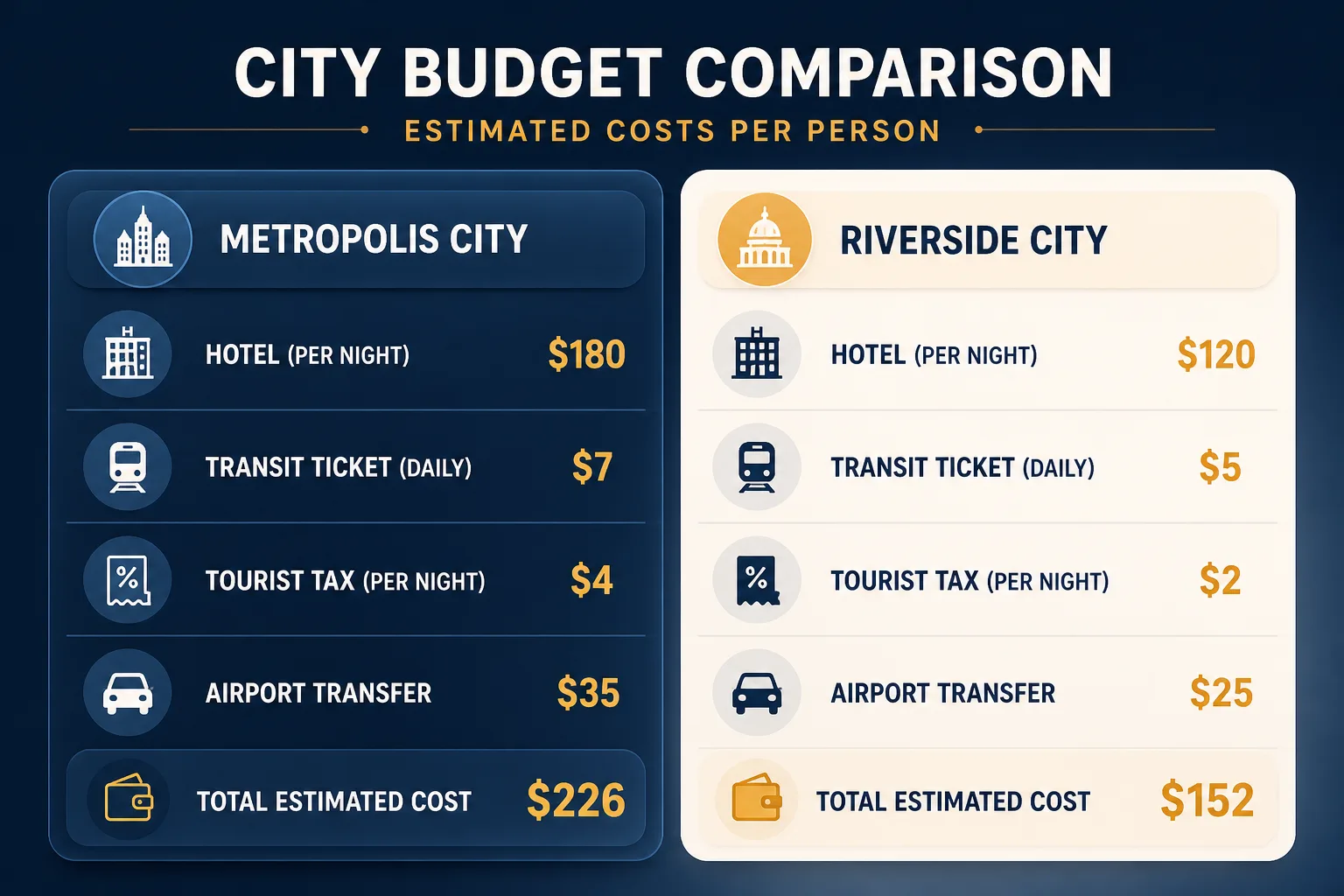 Editorial illustration: A simple side-by-side decision table layout showing two labeled columns for city budget line items such as hotel cost.
Main Friction Problem
Budget regret rarely comes from the big-ticket items like flights. It comes from a string of smaller decisions that quietly add up: a hotel that looked fine on a map but wasn't, a transit ticket you didn't realize you needed, a neighborhood that got more expensive the week you arrived. Prague and Budapest create this friction differently.
Budget pressure shows up first in how each city's ticketing and taxes stack. Prague's short-term transport tickets rose on January 1, 2026, with a 30-minute paper ticket now costing 39 CZK versus 36 CZK through the app, plus a 50 CZK (about EUR 2) per person, per night accommodation tax for your first 60 nights. Budapest's flat fares are simple, but its 100E Airport Express bus costs 2,500 HUF and is not covered by any standard pass or the Budapest Card, which surprises travelers who assumed one transit card covered everything.
Hotel value depends on geography more than price. Prague's historic core is small enough that a hotel outside the most expensive blocks is still a short tram ride from everything. Budapest splits into Buda (hillier, quieter, Castle side) and Pest (flatter, busier, most restaurants and nightlife), and a cheap hotel on the wrong side of the river can cost you 20 to 30 minutes each way, every day, in a city where walking between the two halves takes about 30 to 35 minutes on its own.
Crowd-linked price inflation hits both cities in the same season. Peak travel months push up short-term accommodation prices near the main squares and landmarks in both Prague and Budapest, and Budapest's tightening apartment-rental supply (see the Friction Table below) adds extra pressure on that city's short-term rental prices specifically.
Expectation mismatch is the quiet one. Travelers often picture Budapest as "the cheap Prague" and are surprised when a night out, a spa day, and a central-ish stay add up to a similar total. Others expect Prague to be more expensive across the board and overspend on a hotel out of caution, when a well-placed mid-range option would have done the job for less.
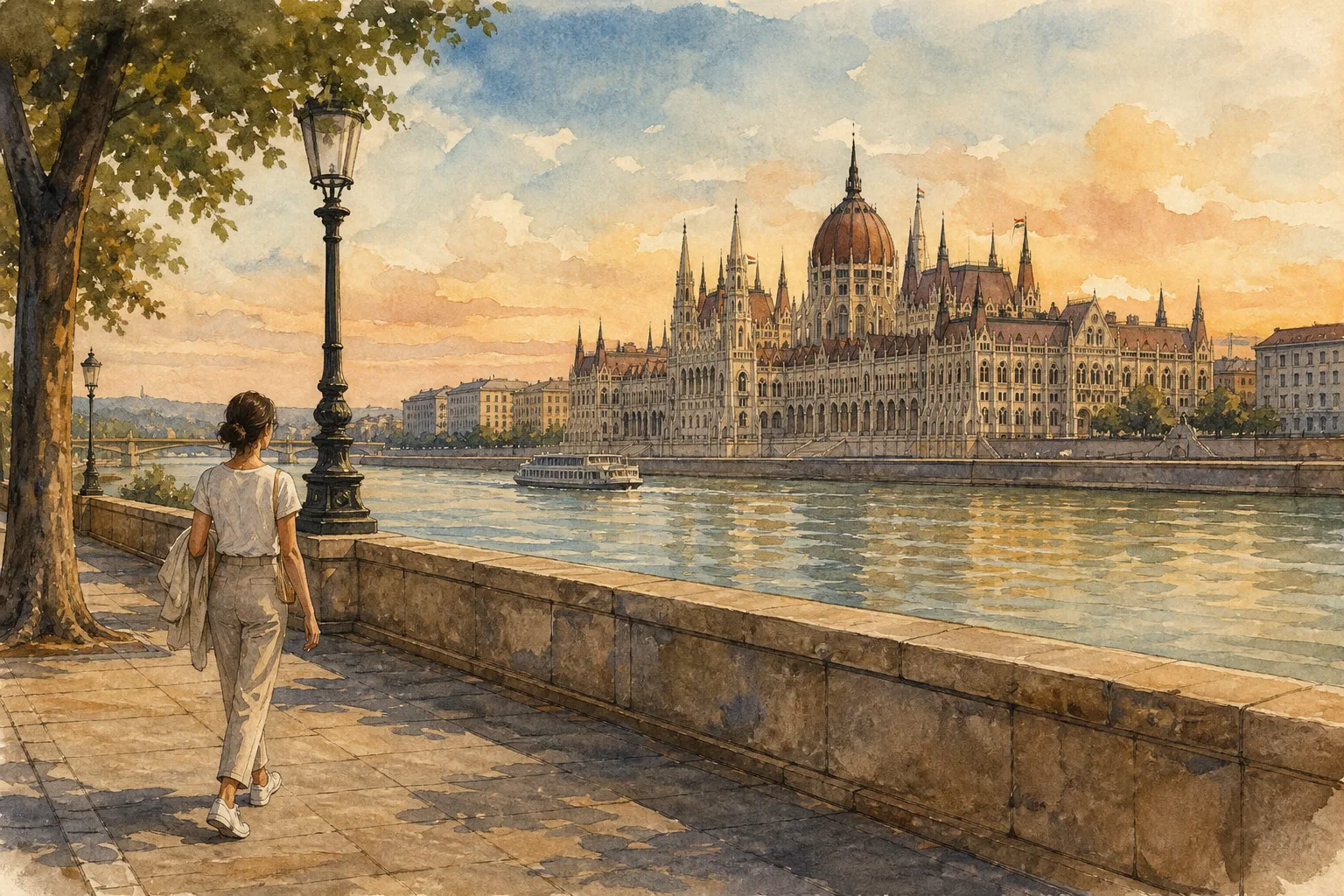
On walking and fatigue specifically: Prague rewards good tram use. The direct walk from Old Town Square to Prague Castle is 1.5 to 2 km and 30 to 45 minutes, with a steep uphill climb via Nerudova Street, but Tram 22 to the Prask hrad stop removes that climb entirely using a standard ticket. Budapest's cross-river walk from the Parliament to Buda Castle is a flatter 2.5 km, about 30 to 35 minutes over the Chain Bridge, but the paid funicular up to the Castle itself can be skipped by walking the public paths or taking Bus 16 from Dek Ferenc Square. Neither city forces you into a bad walking day, but Prague's terrain is more front-loaded (one hard climb, then flat), while Budapest's fatigue is spread across the whole day (constant back-and-forth across the river).
Friction Table
| Decision variable | Prague | Budapest |
|---|---|---|
| Hotel value if you underspend | Still often walkable to center; forgiving | Wrong riverbank costs daily transit time |
| Airport to center | No direct rail; standard ticket covers Trolleybus 59 or Bus 100 to a metro station | Direct 100E bus (2,500 HUF), not covered by passes or the Budapest Card |
| Nightly extra cost | 50 CZK (about EUR 2) per person tourist tax, first 60 nights | No equivalent flat nightly tax in this comparison; watch short-term rental pricing instead |
| Short-term ticket cost | 30-minute ticket: 39 CZK paper / 36 CZK app (since Jan 1, 2026) | Flat fare simpler, but airport bus is a separate, uncovered cost |
| Short-term rental supply | Not currently restricted at city level in this comparison | District VI rentals banned outright (Jan 1, 2026); citywide new-registration moratorium through Dec 31, 2026 |
| Crowd-driven price risk | Rises near Old Town and Castle in peak season | Rises near Parliament, Castle, and central Pest in peak season, tightened further by rental restrictions |
| Landmark walk fatigue | 1.5-2 km, steep uphill to Castle (avoidable by Tram 22) | 2.5 km, flatter but repeated river crossings (funicular avoidable by Bus 16 or public paths) |
| Nightlife cost control | Commercial pub crawls banned 10pm-6am in historic center | No equivalent restriction in this comparison |
Recommendation by traveler type
| Traveler type | Better fit | Why |
|---|---|---|
| First-time visitor, general sightseeing | Prague | Compact core reduces daily transit decisions and surprise costs |
| Budget-led, tracking every line item | Prague | Fewer moving pieces (one core area, predictable tram network) |
| Couple wanting baths, food, nightlife | Budapest | Those specific value categories are Budapest's real strength |
| Traveler comfortable planning around two districts | Budapest | Buda/Pest split rewards planning, punishes improvising |
| Traveler prone to overspending out of caution | Prague | Smaller area makes a mid-range hotel a safer bet |
Who Will Feel It Most
The traveler most exposed to budget regret in this matchup is the first-time visitor who books based on a city's reputation rather than its layout. Someone who picks Budapest because "it's supposed to be cheaper" but then books a Pest-side hotel far from the main sights, adds daily taxis to and from the airport bus stop, and layers on spa visits and dinners without a plan, will likely spend close to or more than a comparable Prague trip, without the benefit of Prague's tighter, more forgiving core.
Conversely, a traveler who picks Prague expecting everything to be more expensive and overcompensates by booking a premium hotel right on Old Town Square, then barely uses the transit system they already paid for, is also leaving value on the table. Prague's advantage is that a mid-tier hotel a few tram stops out performs almost as well as an expensive central one; that advantage disappears if you never test it.
Couples and pairs traveling together generally absorb this friction better than solo travelers, since shared taxi and hotel costs dilute the impact of a bad location call. Solo budget travelers feel hotel-location mistakes and unplanned transit costs the hardest, because there is no one to split the correction cost with.
The decision problem, stated plainly: Prague is the lower-risk choice when your priority is not overspending. Budapest is the higher-reward choice when your priority is a specific experience (baths, nightlife, food) that you are willing to plan around, not one you expect to fall into by accident.
How to Reduce the Friction
On budget pressure: Price your transit and tourist tax into your daily budget before you land, not after. In Prague, budget for the app-based ticket price (36 CZK per 30 minutes) rather than paper, and add the 50 CZK per person nightly tax to your hotel total when comparing listings. In Budapest, treat the 2,500 HUF airport bus as a fixed one-time cost on each end of the trip, separate from your daily transit budget.
On hotel value: In Prague, prioritize proximity to a tram line over proximity to Old Town Square itself; a hotel two or three stops out on a well-connected line often costs meaningfully less with only a few extra minutes added to your day. In Budapest, decide which side of the river your priorities are on (baths and Castle views lean Buda; nightlife and most restaurants lean Pest) before you book, so you are not commuting across the Chain Bridge multiple times a day out of necessity.
On crowd-linked price inflation: Book accommodation as early as your travel dates allow, especially for stays near the historic cores of either city in peak months. In Budapest, factor in that the District VI rental ban and the citywide short-term rental moratorium (through the end of 2026) mean fewer apartment-style options than in previous years, so compare hotel and rental prices directly rather than assuming apartments will be the cheaper default.
On expectation mismatch: Write down what you actually want from the trip before comparing prices. If the honest answer is "baths, food, a livelier night out," that is a Budapest answer, and the associated costs are worth it. If the honest answer is "see the major sights without overplanning," that is a Prague answer, and spending extra to chase a specific vibe elsewhere is where regret tends to start.
On walking and transit fatigue: In Prague, plan the Castle visit around Tram 22 rather than the direct uphill walk, especially later in the day when fatigue compounds. In Budapest, alternate which side of the river you commit to each day rather than crossing back and forth, and use Bus 16 or the public paths to the Castle instead of paying for the funicular on a tight budget.
Better Alternatives
If neither city's core tradeoff fits you, it is worth being honest about why before booking either one.
- If your real priority is nightlife without a river-crossing schedule, Budapest still wins over Prague on density, but consider concentrating your entire stay in Pest to avoid the Buda-side commute problem entirely, rather than treating it as a Prague-style single-core trip.
- If your real priority is minimizing all transit decisions, Prague is the better base of the two, but also consider that its recent e-scooter ban (effective January 1, 2026) removes what used to be a quick low-cost hop across the center, so lean on trams rather than assuming a scooter will be available as a backup.
- If your priority is strict, predictable nightly costs with no surprise taxes or bans to track, treat the recent regulatory changes in both cities (Prague's ticket price increase, Budapest's rental restrictions) as a sign to build in a small buffer rather than pricing your trip to the exact minimum in either city.
- If you are chasing the cheapest possible trip above all else, this comparison is not built for you. This matchup is for travelers optimizing value against regret, not travelers optimizing for the single lowest number on a booking site.
Decision Checklist
Use this before you book either city:
- I know which specific experiences I want (sightseeing vs. baths/nightlife/food) and picked the city that matches, not the one with the cheaper headline price
- I have priced in the per-night tourist tax (Prague) or airport bus fare (Budapest) rather than comparing only room rates
- I have checked which side of the river my hotel is on (Budapest) or which tram line it sits near (Prague)
- I have budgeted for app-based transit ticket prices, not assumed paper prices, if visiting Prague
- I have confirmed my accommodation type is still available given Budapest's 2026 short-term rental restrictions, if booking an apartment there
- I have a plan for the Castle visit in either city that avoids the steepest walk or the paid funicular, if I want to save both money and energy
- I have accepted that the cheaper-looking option only stays cheaper if my hotel location and transit plan actually support it
FAQ
Is Prague or Budapest cheaper overall? Budapest is usually cheaper on paper for food, drinks, and thermal baths, but Prague's compact center often lets you spend less on transit and taxis because more is walkable. The gap narrows once you account for how each city's peak-season crowding pushes up hotel prices near the center.
Which city gives better hotel value for the money? Prague generally gives more predictable hotel value because its historic center is smaller and well-served by trams, so a mid-price hotel a few stops out still feels central. In Budapest, the split between Buda and Pest means a cheap hotel can quietly cost you in daily transit time and taxi fares.
Does the Budapest short-term rental ban change the comparison? Yes. With District VI apartment rentals fully banned from January 1, 2026, and a citywide moratorium on new short-term rental registrations through the end of 2026, the supply of budget apartment-style stays in central Budapest is tighter than in past years, which pushes some travelers back toward hotels and can firm up prices in popular districts.
Which city is better for a first-time visitor on a tight budget? Prague is the steadier choice for a first-time visitor who wants to avoid budget regret, because its walkable core reduces daily transit decisions and surprise costs. Budapest rewards a visitor who is comfortable planning around two riverbanks and is chasing thermal baths and nightlife value specifically.
Do crowds really affect the price, or just the experience? Both. Peak-season crowding in the historic cores of Prague and Budapest drives up short-term accommodation prices near major landmarks, and it also adds walking and waiting time that erodes the value of a short trip, which is its own kind of cost.