city-matchups
Budapest vs Vienna for Atmosphere-First Travelers
A direct comparison of Budapest and Vienna for travelers who prioritize mood and atmosphere over checklist sightseeing, with clear guidance on who should pick each city.
Quick Verdict
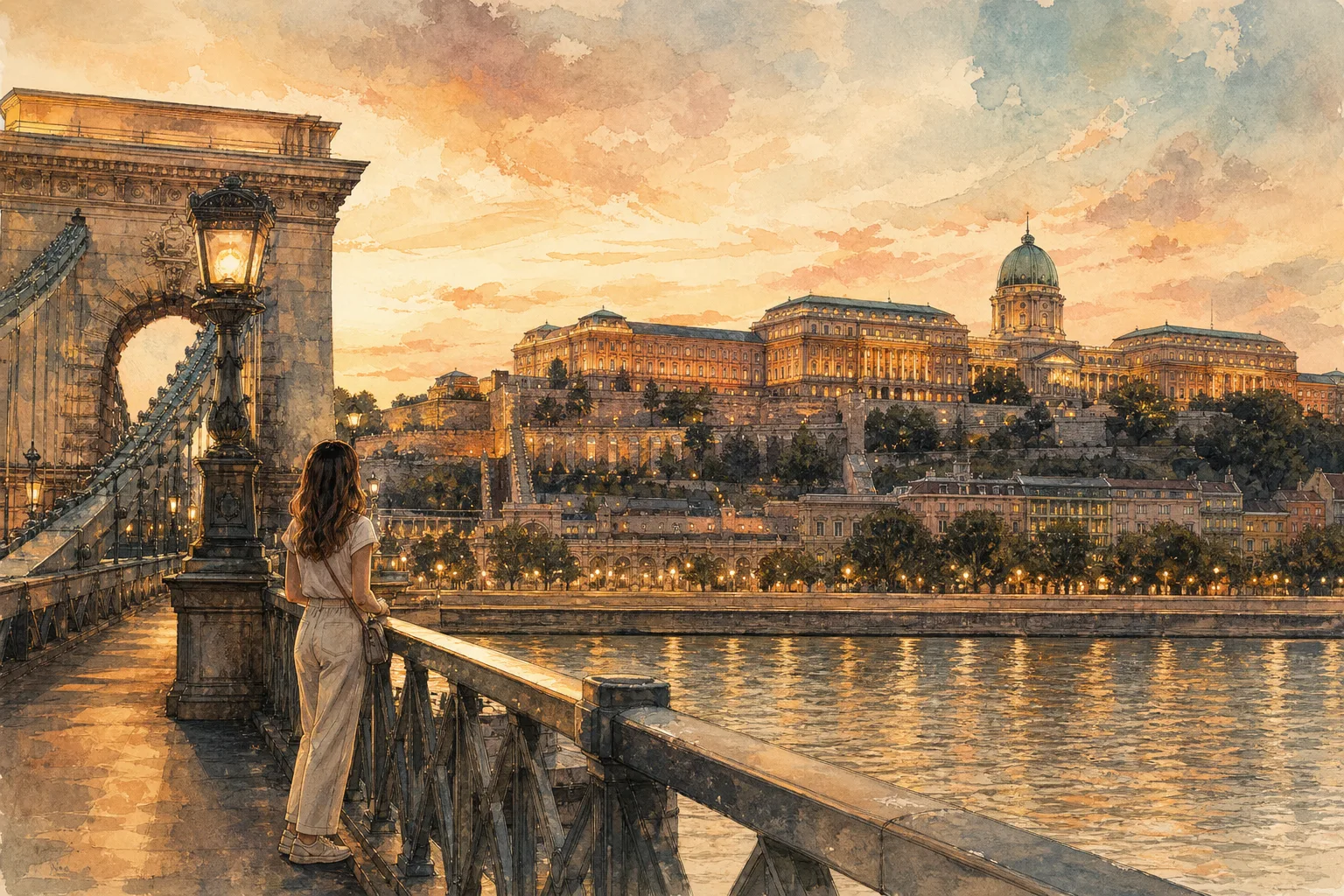
If mood matters more than monument count, choose Budapest. Its texture comes from contrast: grand riverside facades next to worn, sometimes crumbling buildings, ruin bars in half-renovated courtyards, and a Danube that looks different at every hour. That inconsistency is exactly what atmosphere-first travelers respond to. Vienna is a genuinely good city, but its version of atmosphere is calm, symmetrical, and orderly, which is a different feeling than what most people mean when they say they want "mood."
Choose Budapest if you want a city that feels a little unresolved and photograph-ready without trying. Choose Vienna instead if what you actually want is ease and predictability with some elegance on the side, not texture or grit.
Do not choose Budapest if uneven pavement, some visible wear, and a less polished evening scene outside the center will bother you. Do not choose Vienna if you will feel bored or flat without visual contrast, because its consistency is also its limitation for this specific decision.
This is a real A-vs-B call, not a tie. The rest of this guide breaks down exactly which traveler type each city serves and where the mismatch risk actually shows up.
 Editorial illustration: A clean simple comparison table layout on a flat surface.
Traveler Type Table
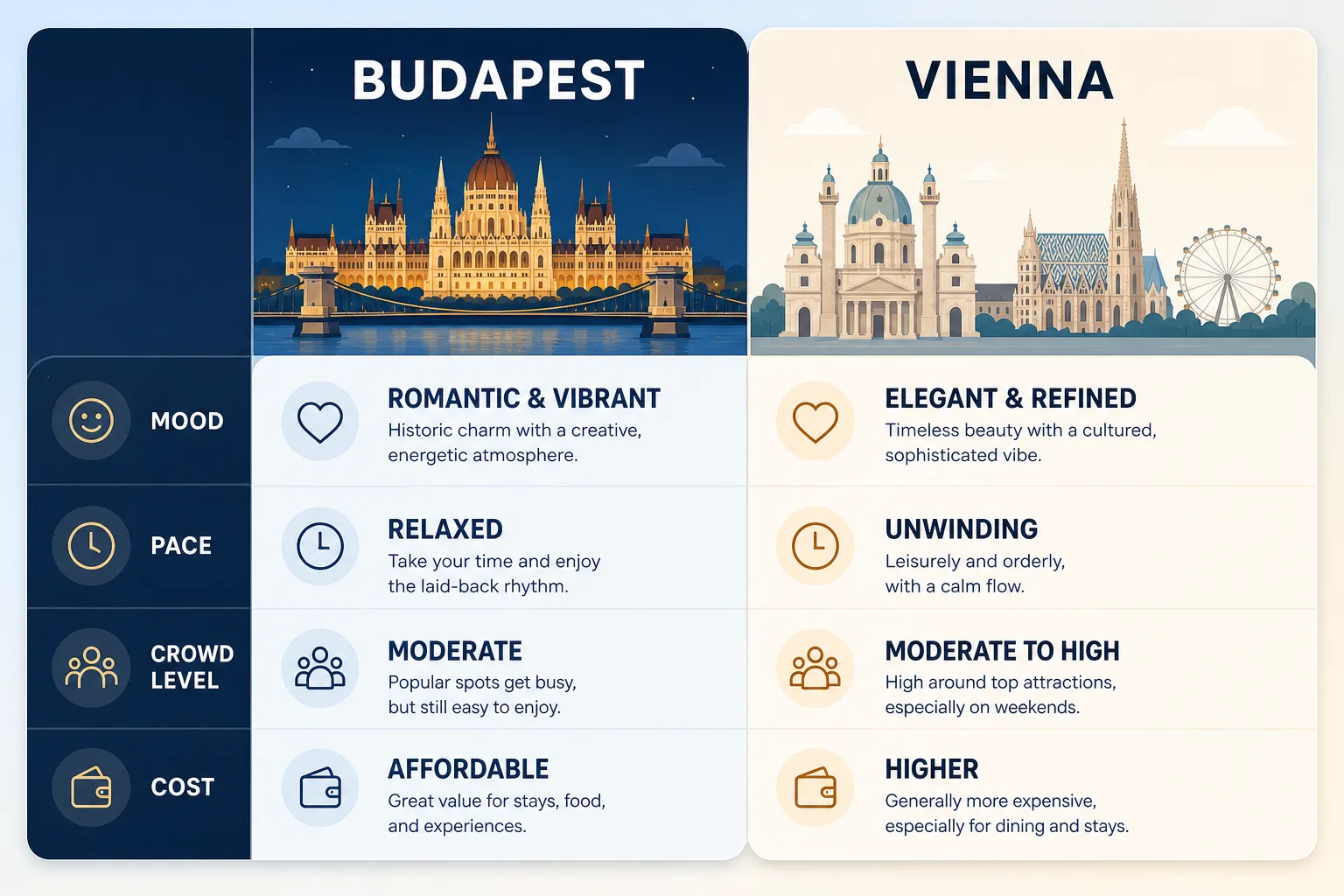
The decision is not "which city has more to do." Both cities have enough sights to fill several days. The real variables are pace, visual contrast, crowd pressure, and what a night out actually feels like.
| Decision variable | Budapest | Vienna |
|---|---|---|
| Atmosphere style | Textured, contrast-driven, some grit | Polished, symmetrical, orderly |
| Pace | Looser, easier to wander without a plan | More structured, scheduled-feeling |
| Photography payoff | Strong at dusk/night along the Danube and Chain Bridge | Strong for architecture, weaker for mood variety |
| Crowd pressure | Lower outside a few hotspots | Steadier crowd flow around central sights |
| Evening feel | Ruin bars, riverside walks, some areas go quiet fast | Consistent cafe and wine-bar culture citywide |
| Typical budget-tier lodging | $56 to $80/night | $75 to $120/night |
| Typical mid-range lodging | $80 to $150/night | Comparable or higher for equivalent polish |
| Best transit app | BudapestGO | WienMobil |
For atmosphere-first travelers, Budapest wins on the variable that matters most: visual and emotional contrast. For photography-led travelers, Budapest again has the edge because of the Danube's night lighting and the layered look of Buda Castle against the water. For couples, the answer splits by what kind of trip they want: Budapest for a moodier, less scripted few days together, Vienna for a calmer trip where neither person has to manage much friction.
Best for First-Time Visitors
A first-time visitor who has not been to either city yet should ask one question before booking: do you want the trip to feel a little surprising, or do you want it to feel smooth?
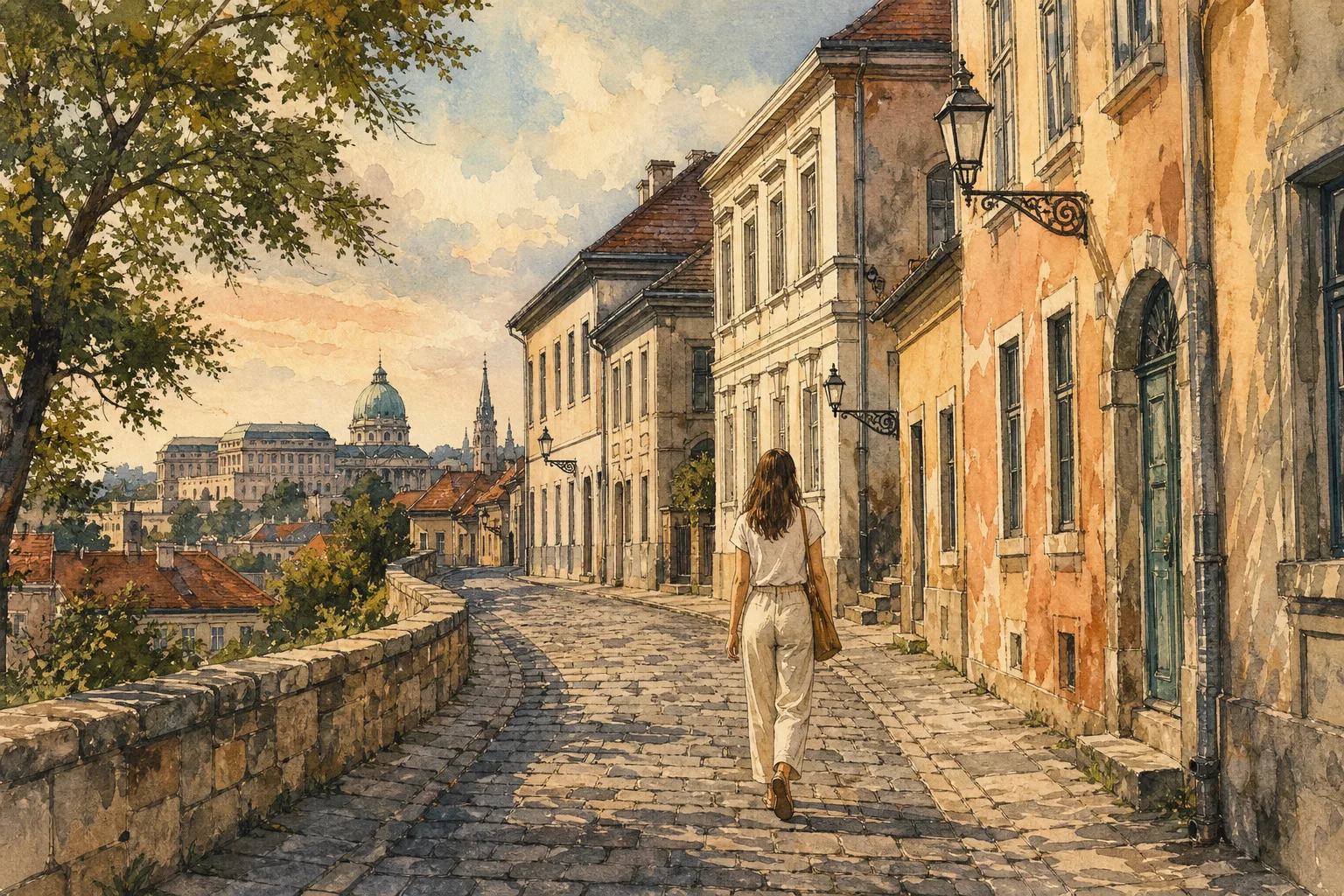
Atmosphere-first travelers on their first visit tend to underestimate how much Budapest's rougher edges are part of the appeal, not a flaw. The Castle District, the Danube embankments, and the ruin bar districts all carry a used, lived-in quality that a first-timer expecting a spotless European capital might initially read as neglect. It is not. It is the texture that makes the city feel specific rather than generic.
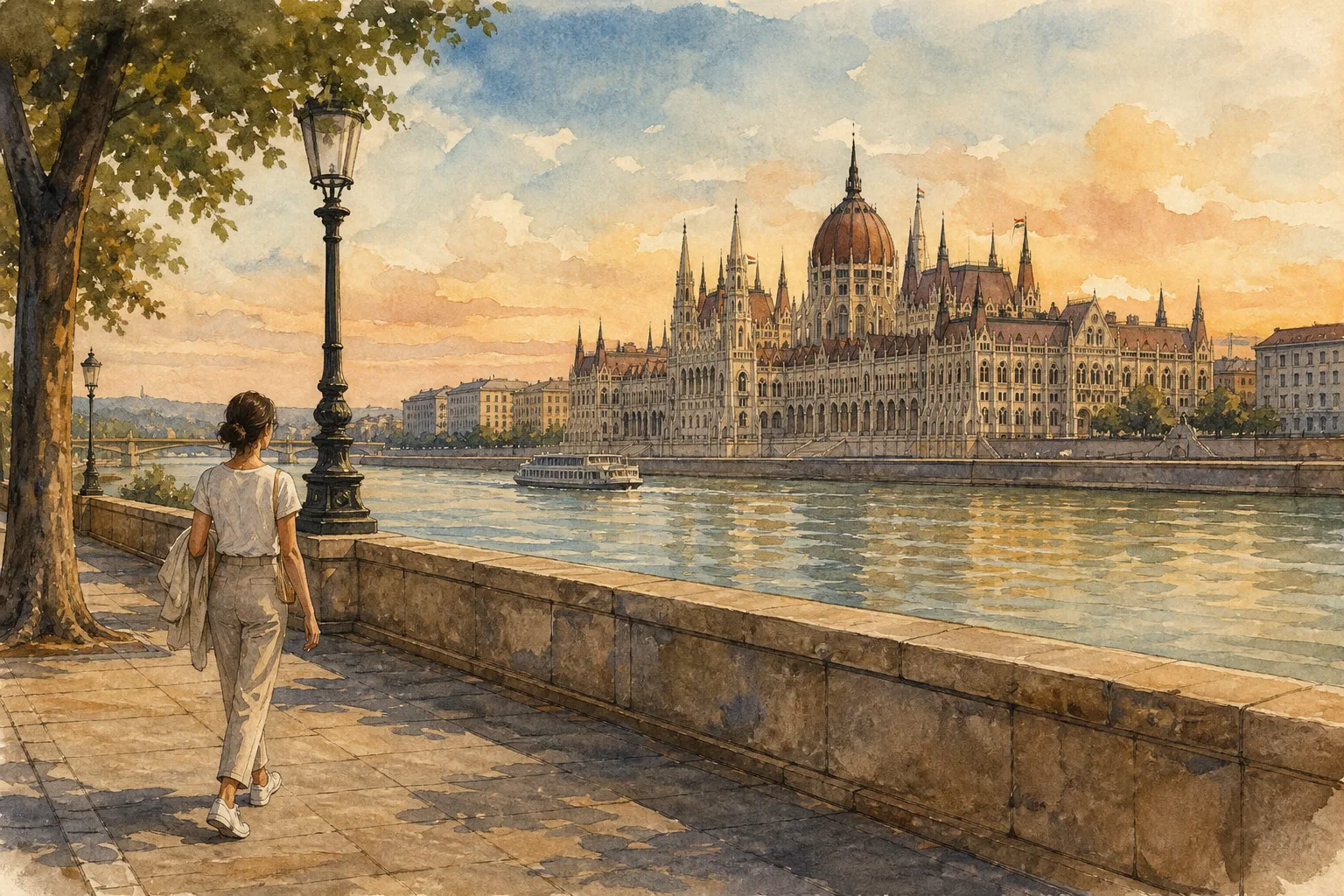
Photography-led first-timers should lean Budapest almost without exception. The walk from the Hungarian Parliament Building to the Chain Bridge is flat and takes about 11 to 15 minutes, an easy stretch that delivers river views, parliament silhouettes, and bridge lighting in one short walk. Vienna rewards photography too, but its scenes read more like postcard architecture than atmosphere, which is a narrower payoff for someone shooting for mood rather than grandeur.
Couples on a first visit together should decide based on what kind of shared memory they want more: a slightly imperfect, atmospheric city that feels like an adventure, or a smooth, easy one that removes friction from the trip. First-timers who default to "Vienna is safer, let's not overthink it" often end up wishing they had picked the moodier option instead, especially if the whole reason for the trip was atmosphere in the first place.
Best for Couples
Couples split into two real patterns here, and the mismatch usually comes from picking the wrong one.
Couples who want a romantic, slightly imperfect city to explore together, where a wrong turn might lead to a better view or a stranger courtyard bar, should choose Budapest. The Chain Bridge at dusk, the walk up from Clark Adam Square to the Castle District (steep, 10 to 15 minutes, but worth the effort), and the ruin bar scene all give couples shared, specific moments rather than a checklist of sights seen side by side.
Couples who want an easy, low-friction few days where neither person has to navigate uncertainty should choose Vienna. The walk from St. Stephen's Cathedral to Hofburg Palace is flat, under a kilometer, and takes 10 to 12 minutes, and from Hofburg it is another 5 minutes to the MuseumsQuartier. Everything connects cleanly, which removes decision fatigue from the day. That predictability is genuinely valuable for couples who see travel time together as limited and do not want to spend it negotiating logistics.
The mismatch to avoid: a couple who wants atmosphere but picks Vienna because it "sounds classier" will likely come home saying the trip was pleasant but forgettable. A couple who wants ease but picks Budapest because it "sounds more romantic" may spend part of the trip mildly stressed by rougher streets or less predictable service, undercutting the romance they were chasing.
Best for Slow Travelers
Slow travelers who like to sit with a place rather than move through it fast should lean Budapest. Its atmosphere rewards unstructured time: sitting by the Danube as the light changes, wandering into the Castle District's quieter streets, or lingering in a ruin bar courtyard with no fixed plan. The city's texture reveals itself slowly rather than all at once, which fits a slower pace naturally.
Vienna also supports slow travel, but its version of slow is more like a cafe culture ritual, coffee, a pastry, people-watching, than atmospheric wandering. That is a legitimate form of slow travel, just a different one. A slow traveler who wants mood and texture from unstructured time will get more of it in Budapest. A slow traveler who wants a ritualized, orderly kind of slowness, same cafe, same neighborhood, predictable rhythm, will get more of it in Vienna.
One practical note for slow travelers in Budapest: District I, the Castle District, becomes sleepy and nearly empty after sunset. That is atmospheric during golden hour and early evening but can feel too quiet for a slow traveler hoping to linger there late into the night. Plan slow evenings closer to the Danube embankment or the ruin bar districts instead.
Best for Low-Stress Travelers
This is where the recommendation flips. A traveler who identifies as atmosphere-first but is also genuinely low-stress, meaning they get worn down by uneven pavement, unclear signage, or unpredictable service, should weight Vienna more heavily than the general verdict suggests.
Vienna's transit is simple to navigate through the WienMobil app, and as of January 1, 2026 a single ticket costs 3.20 euros at station machines or 3.00 euros booked in advance, with no more 48-hour or 72-hour passes available. Budapest's BudapestGO app is similarly simple, with single tickets around 1.25 euros, but the city's rougher pavement and hillier Castle District routes add more physical friction to the day.
A low-stress atmosphere-first traveler is a real, common profile: someone who wants mood but does not want to work for it. For that specific combination, Vienna is often the better real-world choice even though Budapest wins on pure atmosphere, because a stressful day undercuts the ability to actually notice and enjoy atmosphere. Photography-led travelers in this category should still lean Budapest for the Danube shots but should plan lighter walking days to avoid the steep Castle District climb wearing them down before evening.
Common Mismatches
Most regret in this decision comes from choosing based on the word "atmosphere" without defining which kind of atmosphere is actually wanted.
- Choosing Budapest expecting nonstop moody scenery, then feeling let down by ordinary commercial streets between the Danube, the Castle District, and the ruin bar areas. The atmosphere is real but concentrated in specific zones, not citywide.
- Choosing Vienna expecting an old-world romantic mood, then experiencing it as clean and pleasant but emotionally flat compared to expectations built from photos of the palaces alone.
- Underestimating the Castle District's steep climb (10 to 15 minutes uphill from Clark Adam Square) and arriving tired right when the views and photo opportunities matter most.
- Booking a short trip that splits days evenly between both cities using the roughly 2.5-hour train connection, then feeling like neither city was experienced properly. A rushed half-and-half trip dilutes the atmosphere payoff in both places.
- Assuming Vienna is meaningfully more expensive and skipping it for budget reasons, when Vienna's budget-tier lodging (about 75 to 120 dollars a night) is close to Budapest's mid-range tier (80 to 150 dollars), meaning cost alone should rarely be the deciding factor for this specific comparison.
- Expecting Budapest's Castle District to stay lively at night. It becomes quiet and sleepy after sunset, so travelers hoping for evening atmosphere there specifically should relocate closer to the river or the ruin bar districts after dark.
Final Match Recommendation
Choose Budapest if you are an atmosphere-first or photography-led traveler who wants contrast, texture, and a city that rewards wandering without a fixed plan. Couples chasing a romantic, slightly imperfect shared experience should also lean Budapest. This is the stronger match for the core decision this article is built around.
Choose Vienna if you are, in practice, more low-stress than atmosphere-first, meaning you want ease and predictability more than mood and texture, even if atmosphere is part of what draws you to travel generally. Vienna is also the better fit for couples who want a calmer trip with minimal logistical friction.
Do not choose Budapest if uneven streets, a steep climb to the Castle District, or a quieter late-night Castle District will frustrate you more than the atmosphere payoff is worth. Do not choose Vienna if you know from past trips that you get bored without visual contrast and textured, imperfect surroundings, because Vienna's consistency, while polished, will likely underdeliver on the specific feeling you are looking for.
If none of this resolves the decision cleanly, the honest answer is that atmosphere-first travelers should default to Budapest, and only override that default if low-stress planning matters more to you in practice than the mood you say you want.
FAQ
Is Budapest or Vienna better for atmosphere over landmarks? Budapest is the stronger pick for atmosphere-first travelers. Its riverside lighting, worn textures in the Castle District, and less formal pace reward travelers who want to feel a place rather than check off sights. Vienna's atmosphere is real but more curated and orderly, which suits a calmer, lower-friction kind of mood rather than a moody or textured one.
Which city is better for photography-led travelers? Budapest, mainly because of the Danube and Chain Bridge lit up at night and the layered, slightly worn look of Buda Castle and the river embankments. Vienna photographs well too, but its scenes are more symmetrical and palace-like, which some photography-led travelers find visually flatter after the first few frames.
Is Vienna too formal or expensive for a mood-focused trip? Vienna is not expensive in a way that breaks a trip, but its polish can read as formal rather than atmospheric. Budget accommodation there runs roughly 70 to 110 euros a night, close to Budapest's mid-range hotel pricing, so travelers are often paying Vienna prices for a more reserved, orderly mood rather than the textured one they may actually want.
Can couples split time between Budapest and Vienna in one short trip? Yes, and the train connection makes it realistic: direct trains run nearly hourly and take between 2 hours 25 minutes and 2 hours 50 minutes each way. The tradeoff is pace. A short trip that splits days evenly tends to dilute the atmosphere payoff in both cities rather than giving couples a full sense of either one.
What is the biggest regret risk when choosing based on atmosphere alone? The most common regret is picking Budapest expecting nonstop moody scenery and getting ordinary daytime commercial streets between the highlight areas, or picking Vienna expecting a romantic old-world mood and getting a more businesslike, scheduled-feeling city. Reading the traveler-type breakdown above before booking reduces this mismatch.