city-matchups
Gyeongju Day Trip vs. Overnight Stay: Is a Rushed Excursion from Busan a Bad Decision?
A direct verdict on whether to see Gyeongju as a day trip from Busan or book one night there, based on transit time, walking load, and what you actually get to see.
Quick Verdict
If you have only one day in Korea to spare for Gyeongju, a day trip from Busan works, but only if you accept seeing the historic core well and Bulguksa Temple in a rush, while skipping Seokguram Grotto and the National Museum.
If you want to see Gyeongju properly, without sprinting between sights and checking a train departure board every hour, book one night. For most travelers reading this, that is the better call.
Choose the day trip if: you are already committed to a Busan-based itinerary, you have exactly one free day, and you are fine treating Gyeongju as a highlights sampler rather than a full visit.
Choose the overnight stay if: you tire on long walking days, you want Seokguram Grotto and Bulguksa Temple on the same visit without racing transit windows, or you are traveling slowly and would rather move through Gyeongju at a normal pace than manage a return-train deadline all afternoon.
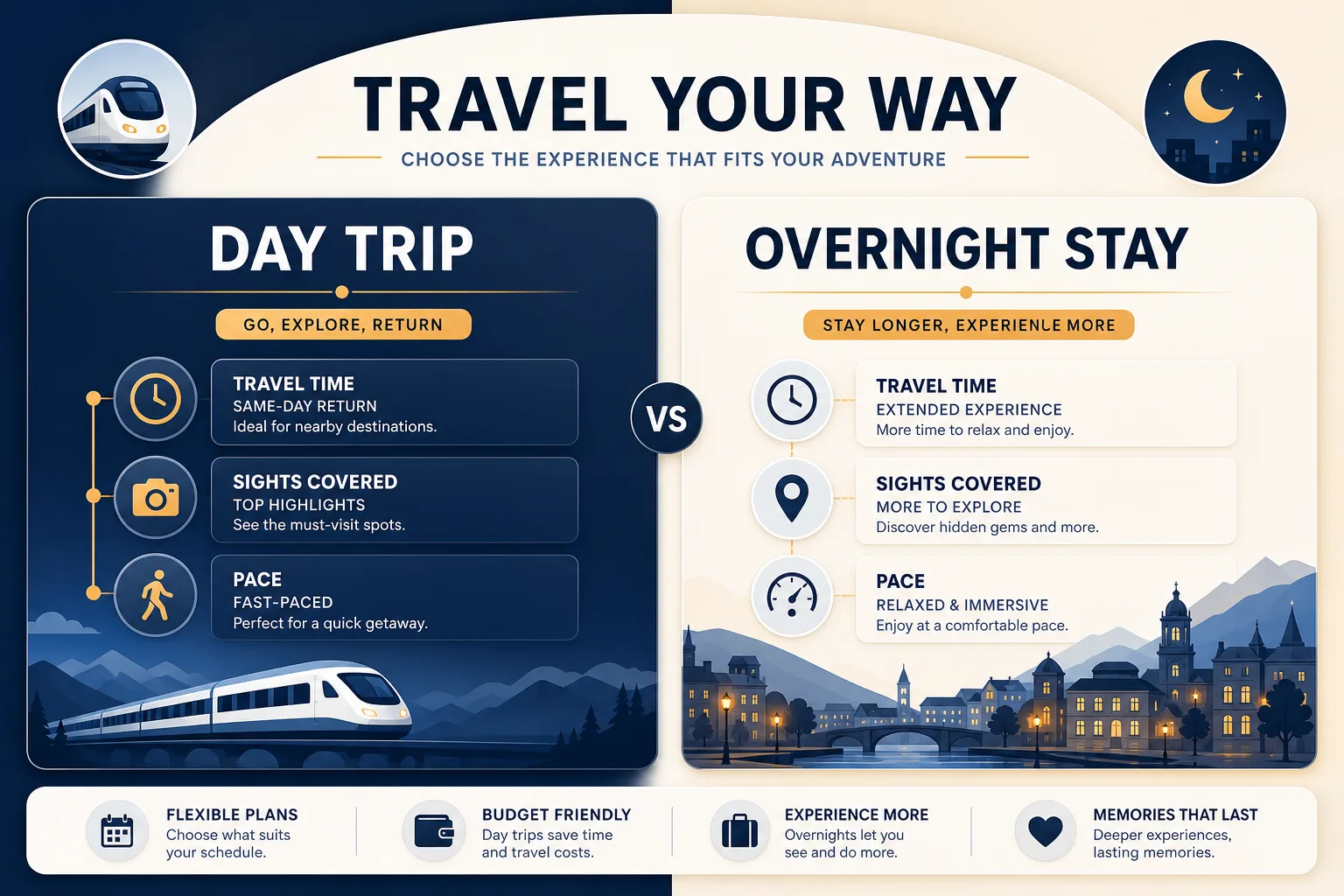 Editorial illustration: A simple two-column comparison layout on a clean surface.
At a Glance Table
The real decision is not "which city is better." It is how much walking, transit switching, and clock-watching you are willing to absorb in exchange for sleeping back in Busan that night.
| Decision variable | Day Trip from Busan | Overnight Stay in Gyeongju |
|---|---|---|
| Total transit time (round trip) | KTX: about 1 hour on trains alone, plus station transfers both ways. Bus: 1.5 to 3 hours round trip. | Same outbound trip, but no return-trip clock pressure the same day. |
| Realistic sights covered | Cheomseongdae, Daereungwon, Donggung Palace and Wolji Pond, Bulguksa Temple | All of the above, plus Seokguram Grotto and the Gyeongju National Museum at a relaxed pace |
| Walking load | High and rushed; little buffer for rest stops | Moderate, spread across two days with breaks |
| Time pressure | Constant; must track the last convenient bus or KTX back | Minimal; no same-day return deadline |
| Extra cost | Zero hotel cost, but higher stress cost | One night of lodging, offset by not overpaying for a rushed return ticket |
| Best for | first_timer travelers with only one spare day | slow_traveler and low_stamina travelers, or anyone wanting Seokguram Grotto included |
The tradeoff in one line: a day trip saves one hotel night, an overnight stay saves your legs and your schedule.
Choose A (Day Trip) If
Pick the day trip if your Korea itinerary is genuinely built around Busan and Gyeongju is a side excursion, not a destination in its own right. It suits travelers who:
- Have exactly one free day and cannot rearrange other bookings
- Are comfortable treating Gyeongju as a highlights tour rather than a full exploration
- Do not mind skipping Seokguram Grotto, since reaching it requires a further 15-minute taxi or an hourly bus from Bulguksa
- Are reasonably fit and can handle a full day of walking without a mid-afternoon rest
- Want to keep their Busan hotel booking intact instead of managing a second check-in and check-out
A day trip is also the right call if you have already toured Gyeongju before and just want to revisit one or two favorite spots, like Donggung Palace at night, without committing to a full overnight stay.
Choose B (Overnight Stay) If
Book one night in Gyeongju if you want the visit to feel unhurried rather than checked off. It suits travelers who:
- Get tired on long walking days and need a break between the historic core and Bulguksa Temple
- Want Seokguram Grotto included, since it needs its own transit leg and closes earlier in the day
- Would rather explore Donggung Palace and Daereungwon at night, both open until 10:00 PM with last entry at 9:30 PM, without worrying about catching a train back
- Are traveling at a slower pace generally and prefer soaking in one place over covering ground
- Want to avoid the risk of missing a return KTX, since Friday and Sunday evening trains back to Busan often sell out two to three weeks in advance
One night is enough for nearly everyone in this group. You do not need two or three nights in Gyeongju unless you are specifically chasing extra day trips out of the city itself.
Who Might Regret the Day Trip
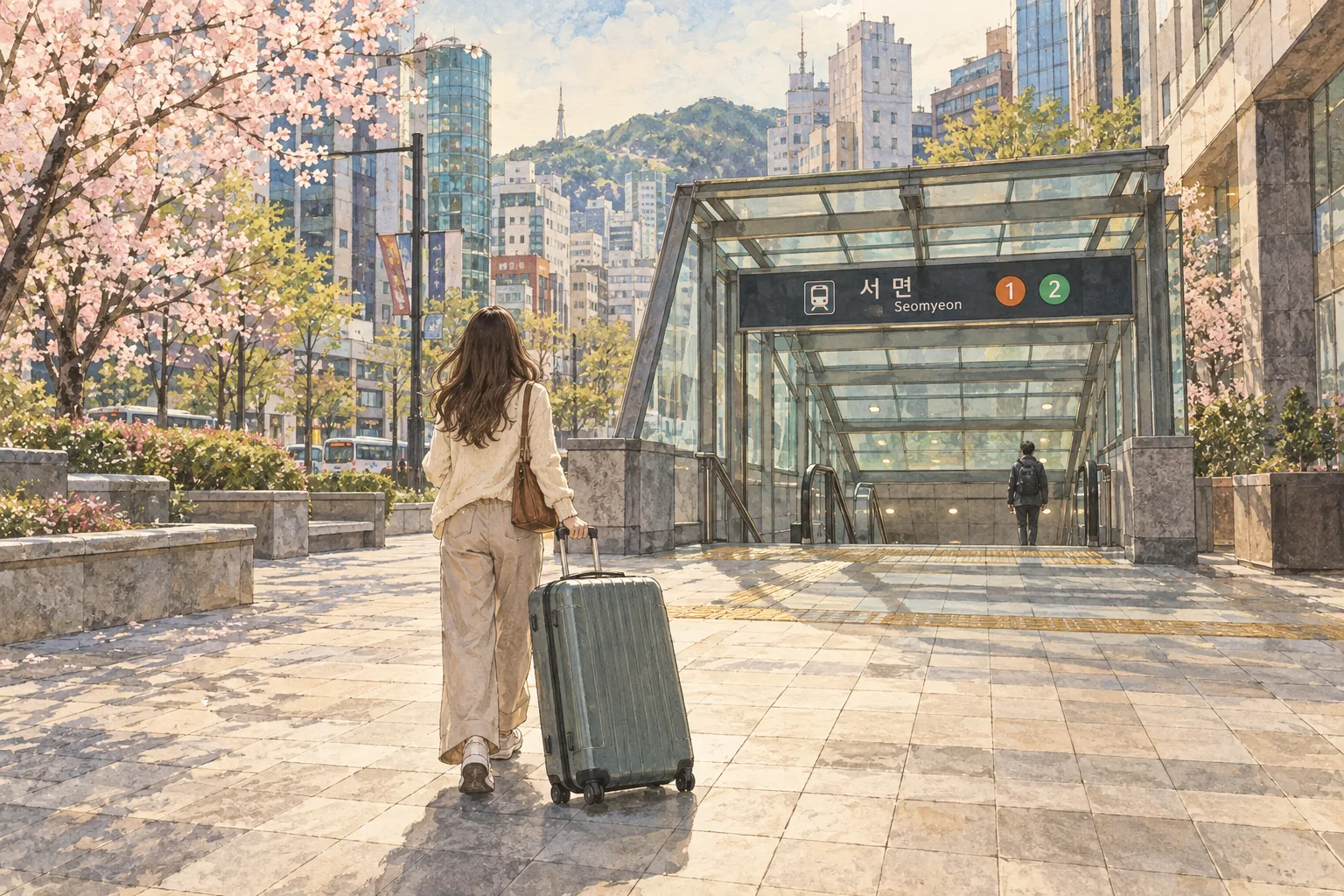
The day trip creates regret for a specific pattern: travelers who underestimate how spread out Gyeongju's sights actually are. Singyeongju KTX Station sits 7 to 10 kilometers from downtown, so the 27-to-34-minute train ride is only part of the journey. Add the taxi or bus transfer, the walk between Cheomseongdae and Donggung Palace, and the separate bus ride out to Bulguksa Temple, and a "quick" day trip fills up fast.
You are likely to regret the day trip if you also try to squeeze in Seokguram Grotto. Getting there from Bulguksa requires a 15-minute taxi, a hike, or a local bus that runs only once per hour. Missing that bus can cost you the grotto entirely, or force a rushed, sweaty walk that undercuts the rest of the day. Travelers who plan a day trip and then discover this connection on the ground often describe feeling like they saw Gyeongju through a car window rather than experiencing it.
The other regret pattern is arriving back at Singyeongju Station with little buffer, only to find the next available KTX seat is pricier or later than expected, especially on a Friday or Sunday evening.
Who Might Regret the Overnight Stay
An overnight stay is not automatically the better choice for everyone. It creates regret for a different pattern: travelers who are trying to minimize logistics, not maximize sightseeing depth.
You are likely to regret booking a night in Gyeongju if your trip is otherwise tightly scheduled and losing a Busan hotel night creates a domino effect of rebookings and lost deposits. It also backfires if you are a highly efficient sightseer who genuinely can complete Cheomseongdae, Daereungwon, Donggung Palace, and Bulguksa Temple in one focused day without minding the pace, and you have no interest in Seokguram Grotto or the National Museum.
Budget-focused travelers sometimes regret the overnight stay if they book a hotel far from Hwangridan-gil to save money, then lose the exact convenience that justified staying overnight in the first place: being able to walk to dinner, walk to the illuminated palace at night, and walk back without a taxi. If you go overnight, the payoff depends on picking a hotel within easy walking distance of the historic core, not just the cheapest room in town.
Key Friction Comparison
Transit and station friction. The single biggest planning trap is treating Singyeongju Station as if it were in downtown Gyeongju. It is not; it sits 7 to 10 kilometers away, adding a 20-minute taxi (about 15,000) or a 25-to-35-minute bus ride on top of the 27-to-34-minute KTX leg. The express or intercity bus direct to the Gyeongju terminal (50 minutes to 1.5 hours, 6,000 to 8,000) sometimes ends up more convenient overall for day-trippers, even though the train itself is faster, because it skips one transfer. Overnight travelers absorb this friction once, on arrival, and do not have to face it again under time pressure.
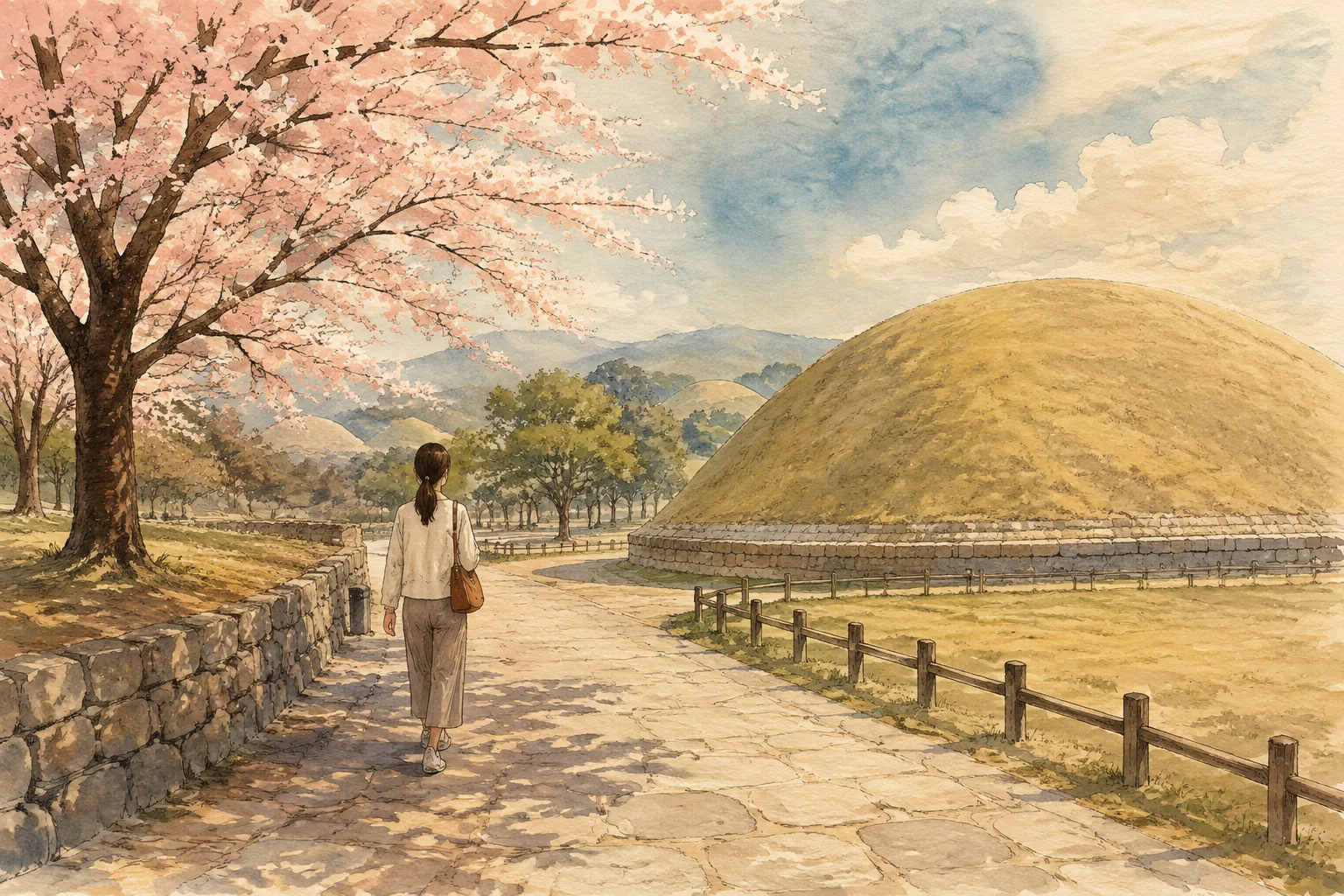
Walking fatigue. The core walk from Hwangridan-gil to Daereungwon is short, about 500 meters and 5 to 7 minutes. Cheomseongdae to Donggung Palace and Wolji Pond is longer, roughly 1.5 kilometers and 15 to 20 minutes. Individually these are easy. Stacked together with a bus ride out to Bulguksa Temple (30 to 45 minutes each way on local Bus 10 or 11) and no real rest stop, a day trip becomes a genuinely tiring day, especially for older travelers or anyone with joint or foot concerns. An overnight stay lets you split this walking load across two days instead of front-loading all of it before a return train.
Time pressure. This is the friction that actually decides the verdict. On a day trip, every stop competes with the mental math of "what time is my train or bus back." That pressure gets worse if you also attempt Seokguram Grotto, since Bulguksa closes around 6:00 PM and the connecting bus to Seokguram runs only hourly. An overnight stay removes this pressure entirely for day one and shifts it to a single, calmer departure on day two.
Final Recommendation
For the traveler this article is written for, someone time-pressed but wary of switching hotels too often, the overnight stay is the better default choice, not the day trip.
Choose the overnight stay if you want to see Gyeongju's core sights plus Bulguksa Temple and Seokguram Grotto without racing transit windows, if long walking days wear you down, or if you would simply rather experience one place well than check off a list under a ticking clock. One extra hotel night is a small cost against a meaningfully calmer, more complete visit.
Choose the day trip only if your itinerary genuinely cannot absorb another hotel night, you are content skipping Seokguram Grotto and the National Museum, and you are fit enough to handle a full day of walking and transfers without needing a break. In that narrow case, a day trip is a reasonable, not a bad, decision. It is simply the more compressed version of the same visit.
If you are unsure which category you fall into, the deciding question is this: does missing Seokguram Grotto and moving at a rushed pace bother you? If yes, book the night. If no, the day trip will serve you fine.
FAQ
Is Gyeongju worth a day trip from Busan? Yes, for a first look. A day trip covers Cheomseongdae, Daereungwon, Donggung Palace and Wolji Pond, and Bulguksa Temple if you start early and accept a tight schedule. It is not enough time for Seokguram Grotto plus the museum plus a relaxed pace.
How long does it take to get from Busan to Gyeongju? By KTX from Busan Station to Singyeongju Station, the ride itself is 27 to 34 minutes, but Singyeongju Station sits 7 to 10 kilometers outside downtown Gyeongju, so add a 20-minute taxi or a 25-to-35-minute bus. By express or intercity bus direct to the Gyeongju terminal, plan on 50 minutes to 1.5 hours door to door.
Is one night in Gyeongju enough? Yes for most travelers. One night lets you see the historic core at a walking pace on day one, sleep near Hwangridan-gil, and use day two for Bulguksa Temple and Seokguram Grotto without racing a return train.
What is the biggest mistake people make with a Gyeongju day trip? Underestimating the distance between Singyeongju Station and the actual sights, then trying to also fit in Seokguram Grotto, which needs its own 15-minute taxi or infrequent bus connection from Bulguksa. That combination is what turns a day trip into a stressful sprint.
Do I need to book a Gyeongju hotel in advance? Book it as soon as you decide on an overnight stay, and buy your return KTX ticket early too. Friday and Sunday evening KTX tickets back to Busan regularly sell out two to three weeks ahead.