where-to-stay
Hyeopjae vs Seongsan: Where to Base in Jeju to Avoid Wasted Commute Hours?
Hyeopjae or Seongsan for your Jeju base? Compare hotel location risk, transit times, and traveler fit so you don't burn your trip on the road.
Quick Answer
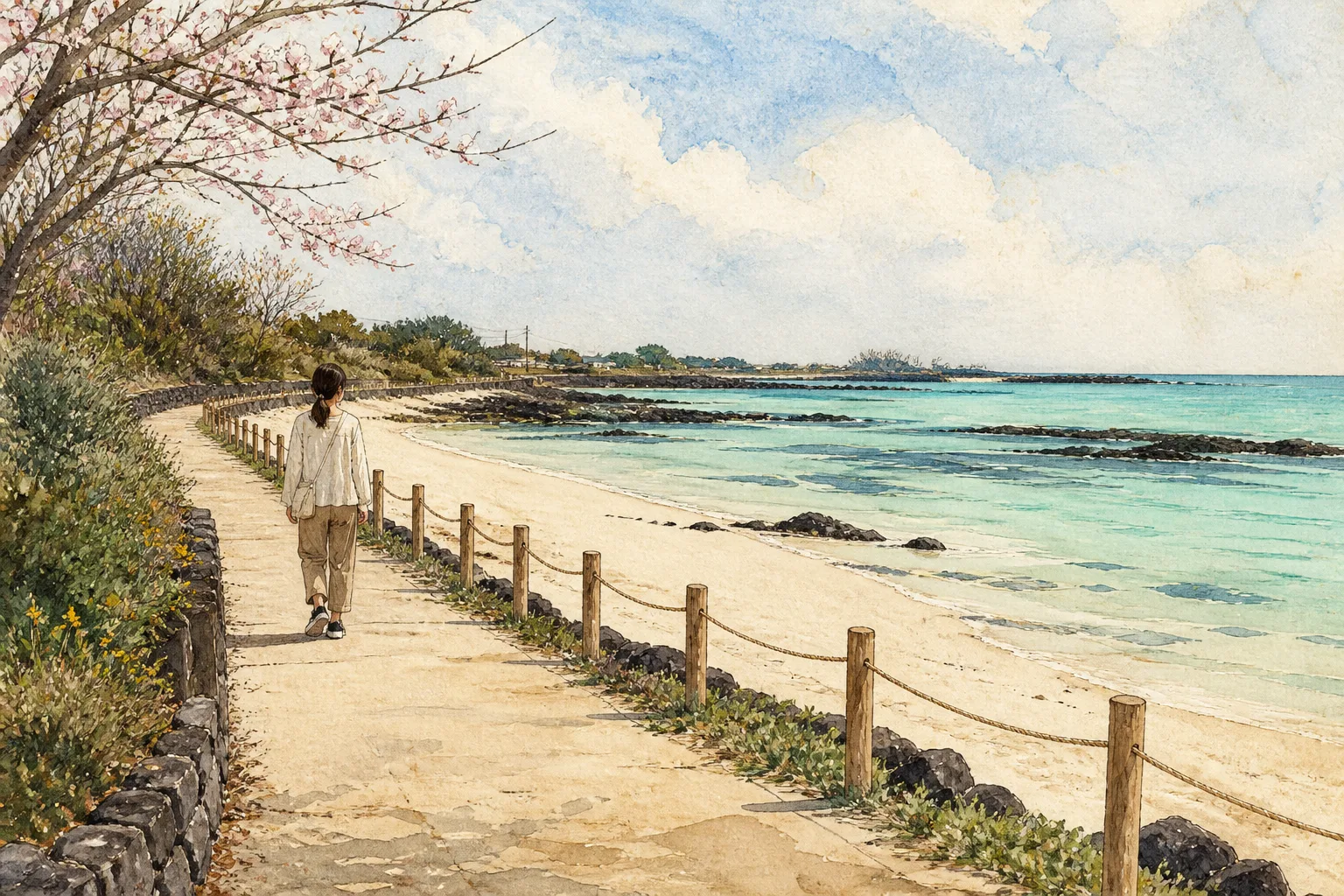
Base in Hyeopjae if your Jeju trip is built around the west coast: Hallim Park, calm beach time, sunset walks, and a shorter, cheaper airport transfer. Base in Seongsan if your trip is built around the east coast: Seongsan Ilchulbong at sunrise, a day trip to Udo Island, and the volcanic-crater landmark shots that make it onto most Jeju bucket lists.
The mistake to avoid is picking a base on hype (a viral beach photo, a hotel deal) without checking which coast your actual must-see list sits on. Jeju has no train or subway, so once you commit to a base, every day trip to the other side of the island is a 2-to-3-hour public transit ride each way, or a long rental car drive. That is not a minor inconvenience; it is a day of your trip.
- Choose Hyeopjae if: your priority list leans toward west-coast beaches, Hallim Park, and a lower-cost, shorter airport transfer, and you are fine treating Seongsan Ilchulbong as at most one dedicated day trip.
- Choose Seongsan if: Seongsan Ilchulbong and Udo Island are non-negotiable, you want to be near them without a cross-island trek, and you are fine with a longer airport transfer to get there.
- Do not choose either casually if: you have strong must-dos on both coasts and fewer than 4-5 nights total. In that case, the base decision matters more than the hotel itself.
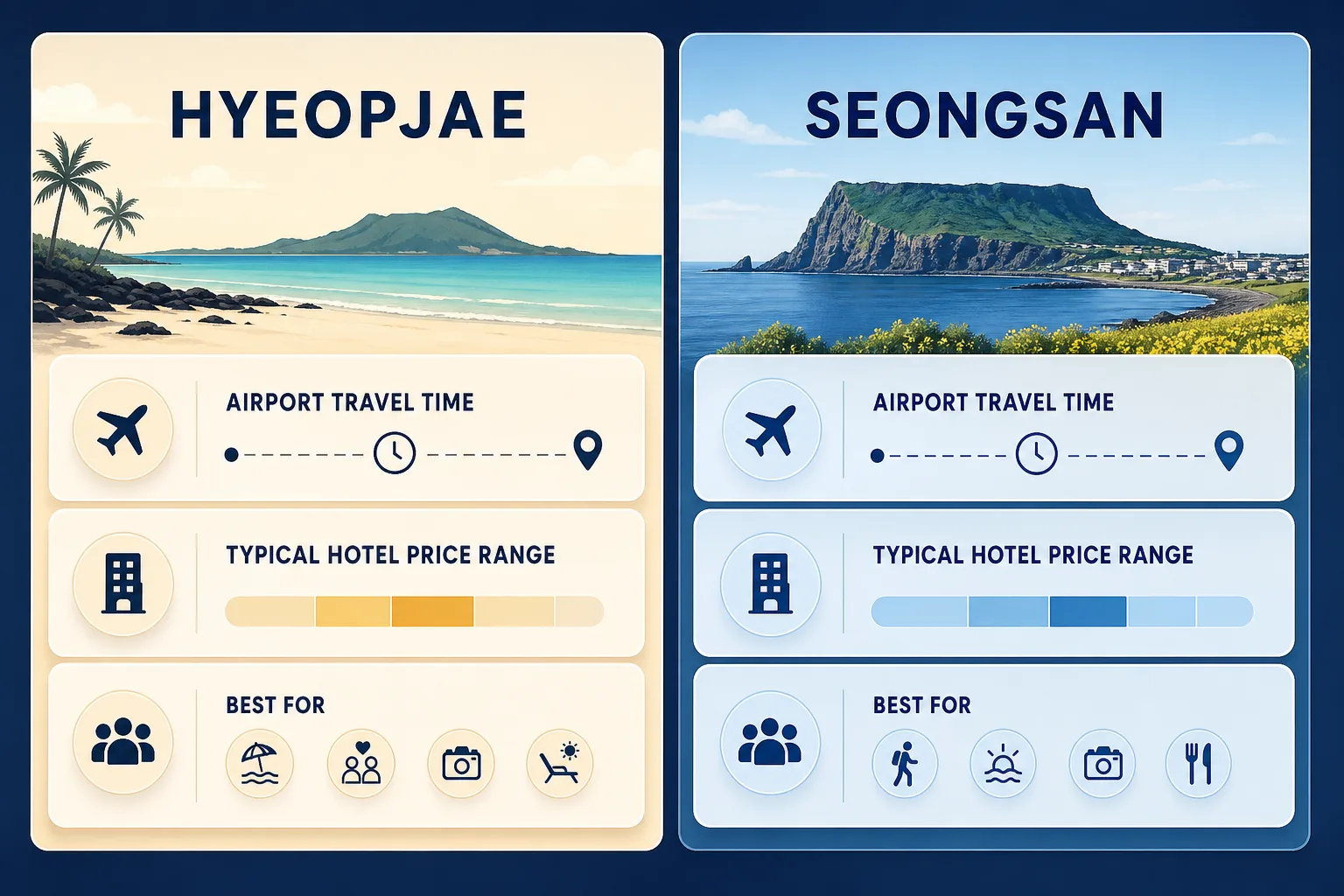 Editorial illustration: A simple two-column comparison layout on a flat surface or board.
Hotel Location Risk Summary
The core risk in Jeju is not "bad neighborhood," the way it might be in a city. It is coast mismatch: booking a hotel on one side of the island while your highlight list lives on the other side.
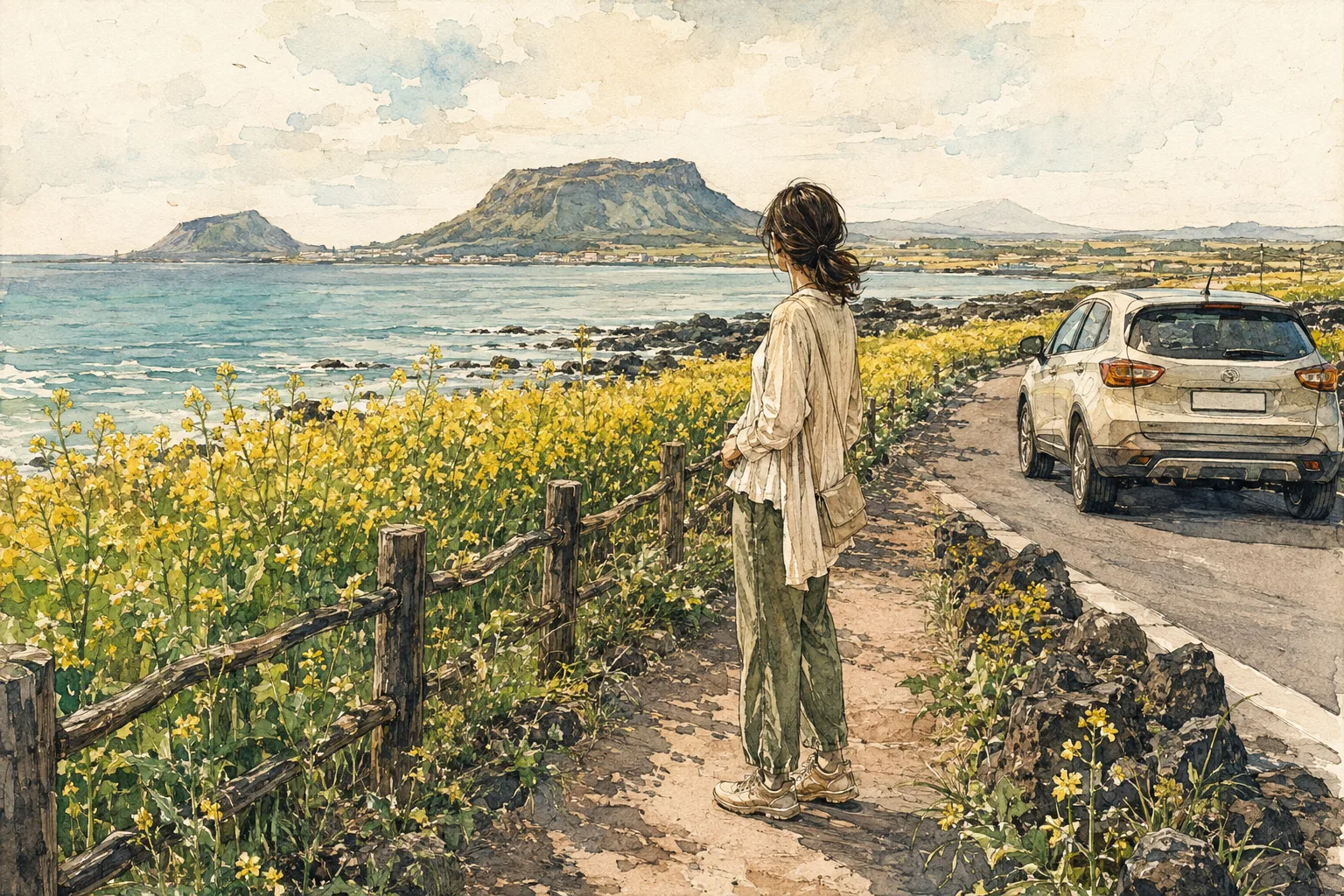
Because Jeju has no train or subway network, travel between coasts depends entirely on rental cars, taxis, or public buses. Crossing from Hyeopjae to Seongsan by public transit takes 2 to 3 hours each way. That number should shape your booking decision more than star ratings or pool photos.
Walking and local transit practicality differ sharply once you are on the ground:
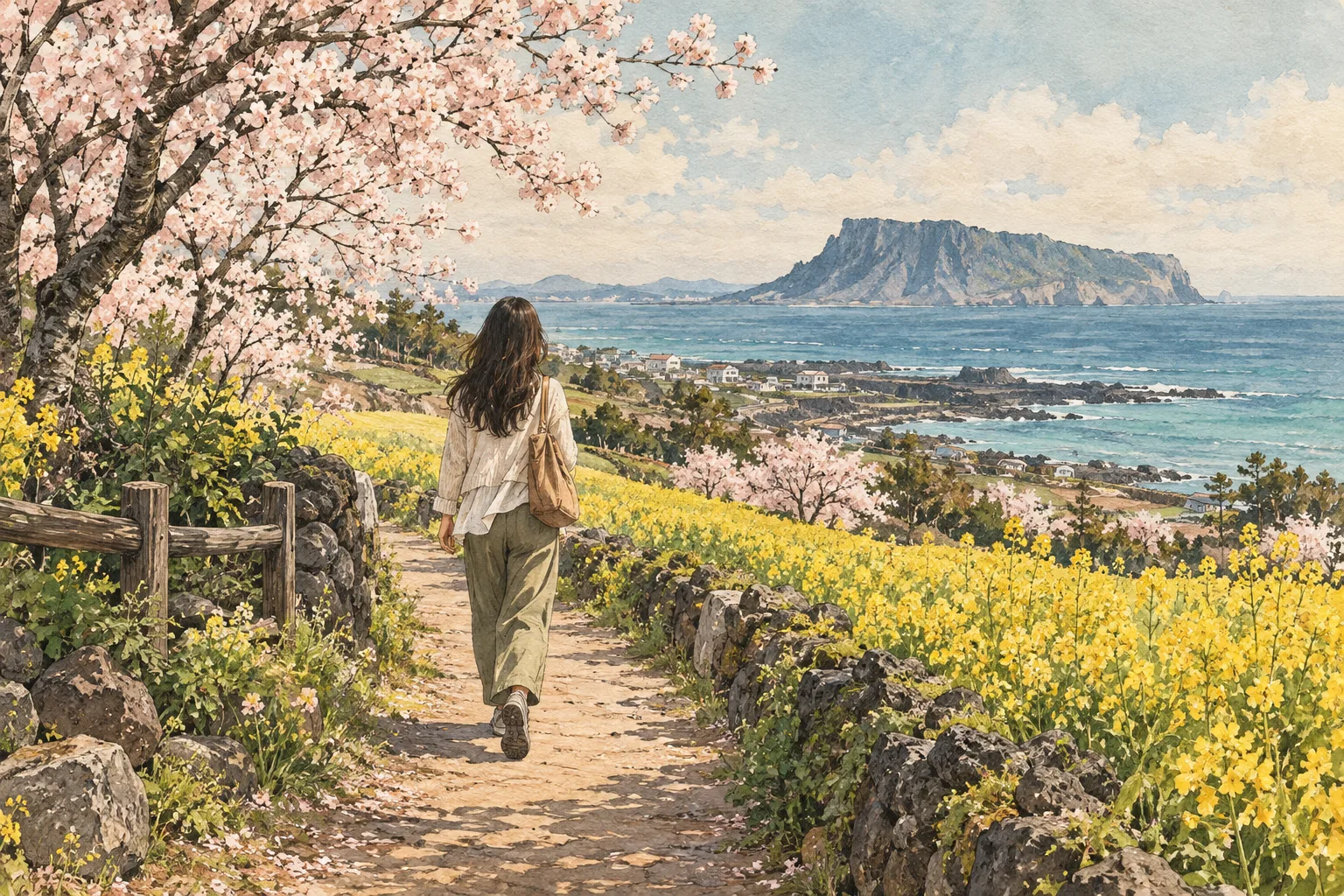
- Hyeopjae: Hyeopjae Beach and Geumneung Beach are a 5-to-10-minute walk apart along a coastal walkway, and Hallim Park is less than a 5-minute walk across the street from Hyeopjae Beach. This is a base where you can leave the car (or bus schedule) behind for half a day and still cover your main sights on foot.
- Seongsan: The area is built around one dominant landmark, Seongsan Ilchulbong, reachable from the airport by an express bus in about 90 minutes. Once there, the town itself is walkable, but Udo Island requires a ferry from Seongsanpo Port Terminal, and foreign travelers need physical passports plus a completed passenger declaration form to board.
The regret pattern to watch for: travelers who book Hyeopjae for the beach photos, then discover mid-trip that Seongsan Ilchulbong (which they assumed was "close") is actually a multi-hour transit trip away. Check a map distance in kilometers, not just the word "Jeju," before you book.
Best Areas at a Glance
| Factor | Hyeopjae (west coast) | Seongsan (east coast) |
|---|---|---|
| Airport taxi time | 30-40 minutes (~29 km) | Not separately documented; express bus is the benchmark |
| Airport transit time | ~52 min bus to Hallim, plus a transfer or short taxi | ~90 minutes on express bus 111 or 112 |
| Airport transit cost | Bus fare plus transfer leg | 3,000 flat on express bus |
| Airport taxi cost | 30,000-37,000 | Not documented here; budget for a longer distance than Hyeopjae |
| Typical hotel price | 50,000-130,000/night (cheaper weekdays) | Not documented here; expect landmark-area pricing |
| Signature nearby sight | Hallim Park, under 5 min walk | Seongsan Ilchulbong, 30-50 min climb, 5,000 |
| Day-trip add-on | Cross-island trip needed for Seongsan | Udo Island, 15-min ferry, 8,900-10,500 round trip |
| Walkability of core area | High (beach-to-beach and to Hallim Park on foot) | Moderate (town is walkable; Udo requires a ferry) |
| Best suited to | Beach-first, budget-conscious, flexible itineraries | Landmark-first, sunrise photography, Udo day trip |
The tradeoff in one line: Hyeopjae wins on cost and walkable convenience for a beach-centered stay; Seongsan wins on proximity to Jeju's most photographed single landmark and its easiest offshore add-on.
Best Area by Traveler Type
Active sightseers who want to pack multiple sights into each day without long dead time in transit should weight this heavily toward whichever coast holds most of their list. An active sightseer basing in Seongsan can realistically do Ilchulbong at sunrise and Udo Island by ferry in the same one or two days, all within a short radius. An active sightseer basing in Hyeopjae can chain Hyeopjae Beach, Geumneung Beach, and Hallim Park in a single unhurried morning, entirely on foot. The mismatch to avoid: an active sightseer who bases in Hyeopjae but tries to also "fit in" Seongsan Ilchulbong and Udo on the same multi-day trip without a dedicated day for it. The 2-to-3-hour transit time each way turns what looks like one bullet point on an itinerary into most of a day.
Photographers need to think about which shot matters more. Seongsan Ilchulbong's crater and coastal cliffs are a landmark shot that is hard to replicate elsewhere on the island, and it rewards an early climb (30-50 minutes, stairs only) before crowds build. Hyeopjae offers something different: repeatable, low-effort beach and sunset compositions, plus Hallim Park's cultivated garden and cave scenery within a five-minute walk. A photographer chasing one specific landmark image should base near it (Seongsan) rather than gamble on a rushed day trip. A photographer who wants flexible, low-fatigue shooting across several days is better served by Hyeopjae's walkable cluster.
Areas to Be Careful With
The most common wrong-fit pattern is booking based on a single photo or recommendation without checking coast alignment. A few specific disappointment risks to watch for:
- Booking Hyeopjae, then trying to "squeeze in" Seongsan Ilchulbong as a half-day trip. The transit time alone (2-3 hours each way by public transport) makes this unrealistic without a rental car, and even with a car it is a genuine cross-island drive, not a short detour.
- Booking Seongsan expecting Hyeopjae-style walkable beach mornings. Seongsan's core appeal is the landmark climb and the Udo ferry, not a walkable multi-beach cluster. Travelers who want to wander between several beaches on foot will find Seongsan's layout less suited to that.
- Underestimating the Udo ferry logistics. Foreign travelers need a physical passport and a completed passenger declaration form to board, and ferries run on a fixed schedule (every 30 minutes, roughly 8:00 AM to 5:00 or 5:30 PM). Arriving without ID or outside the schedule window can cost an entire planned day.
- Assuming any Jeju bus route is quick. Public buses now accept contactless foreign cards and mobile pay as of August 2025, which makes boarding easier, but ease of payment does not shorten ride length. A convenient tap-to-pay bus can still be a 2-to-3-hour ride if it is crossing the island.
Budget vs Convenience Tradeoff
Hyeopjae is the lower-cost, higher-convenience choice for a west-coast-focused trip: documented hotel rates of 50,000-130,000 per night, a shorter and cheaper airport transfer (30,000-37,000 by taxi, or a sub-hour bus ride to Hallim), and a walkable cluster of sights that reduces the need for paid transit once you arrive.
Seongsan trades some of that cost efficiency for landmark proximity. The airport express bus is cheap in isolation (3,000), but the area's appeal is built around Ilchulbong admission (5,000) and the Udo ferry (8,900-10,500 round trip), so per-day costs can stack even though base transit is affordable. The real "cost" of Seongsan versus Hyeopjae is less about nightly hotel rate and more about what you spend in time and money reaching it if you guess wrong.
The practical rule: if your budget is tight and your itinerary is beach-and-park focused, Hyeopjae reduces both cost and friction. If your itinerary hinges on one or two specific landmarks (Ilchulbong, Udo), basing near them in Seongsan is worth paying slightly more for, because the alternative, a long day trip from the other coast, costs you both money (transit fares or car rental) and hours you cannot get back.
Hotel Location Checklist
Before booking either coast, confirm these:
- I have listed my must-see sights and checked which coast (west/Hyeopjae side or east/Seongsan side) most of them are actually on.
- I have measured the distance in kilometers or minutes between my chosen hotel and my top 2-3 sights, not just relied on the general name "Jeju."
- I have accepted that any cross-island day trip will cost 2-3 hours each way by public transit, and I have either budgeted a full day for it or ruled it out.
- I have checked whether my hotel is within a short walk of at least one major sight (Hyeopjae/Geumneung Beach and Hallim Park qualify; confirm the equivalent for a Seongsan hotel).
- I have decided in advance whether I am renting a car, since that changes the math on cross-island trips more than any other single choice.
- If I plan to visit Udo Island, I have confirmed I will carry a physical passport and know the ferry schedule window.
- I have checked my hotel's nightly rate against the weekday/weekend pattern (Hyeopjae rates are documented as cheaper on weekdays) to avoid a weekend price surprise.
- I have confirmed my trip length supports a split stay (5+ nights) if I truly need both coasts, rather than assuming I can day-trip everything from one base.
Final Recommendation
Choose Hyeopjae if you are a first-timer who wants a calm, walkable, budget-friendly base built around beach time and Hallim Park, and you are willing to treat Seongsan Ilchulbong as an optional, dedicated day trip rather than a quick add-on.
Choose Seongsan if Seongsan Ilchulbong and Udo Island are the reason you are visiting Jeju at all, and you would rather pay slightly more and travel a bit further from the airport to avoid the 2-to-3-hour cross-island trip on the days that matter most to your itinerary.
Do not choose either coast by default if your must-see list is genuinely split across both and your trip is short. In that case, the honest options are: pick the coast with the majority of your priorities and accept one long day trip for the rest, or extend your trip to 5 or more nights and split your stay. What you should not do is book a hotel based on price or photos alone and discover the transit math afterward.
FAQ
Can I base in Hyeopjae and still day-trip to Seongsan Ilchulbong? You can, but treat it as a full-day commitment, not a side trip. Public transit between the two coasts runs 2 to 3 hours each way, so a Hyeopjae-to-Seongsan round trip by bus can eat 4 to 6 hours before you even climb anything. With a rental car the drive is more manageable, but it is still a cross-island trip, not a quick hop. If Seongsan Ilchulbong is a must-do, plan it as one dedicated day, not an add-on to a beach day.
Is it better to split my stay between Hyeopjae and Seongsan instead of picking one? For most first-timers on a trip of 4 nights or fewer, splitting adds a packing-and-moving tax that often costs more time than it saves. If your trip is 5 nights or longer and you have clear must-dos on both coasts, a split stay (for example 2 to 3 nights per side) can beat one long cross-island commute. Under 5 nights, picking one base and accepting one long transit day for the other coast's highlights is usually the lower-friction choice.
Do I need a rental car for either Hyeopjae or Seongsan? Hyeopjae is more forgiving without a car since Geumneung Beach and Hallim Park are walkable, and city buses connect to the airport with one transfer. Seongsan is more workable without a car too, since an airport express bus reaches it directly in about 90 minutes and Udo Island is a short ferry ride away. But once you want to combine sights across either coast in one day, a rental car removes most of the waiting and transfer time that public transit adds.
Which base is better for photography-focused travel, Hyeopjae or Seongsan? Seongsan has the edge for landmark photography because Seongsan Ilchulbong's crater and sunrise views are a genuine bucket-list shot, and Udo Island adds coastal variety a short ferry away. Hyeopjae suits photographers who want calmer, repeatable beach and sunset shots without a stairs climb, and it pairs well with Hallim Park's cultivated scenery right across the street. If the crater sunrise shot matters most, base in Seongsan; if flexible daily beach light matters more, base in Hyeopjae.
Is Hyeopjae or Seongsan cheaper for hotels? Hyeopjae has clearly documented budget-to-midrange pricing, roughly 50,000 to 130,000 won per night, cheaper on weekdays. Seongsan's lodging is more geared toward travelers visiting Ilchulbong and Udo, so budget options exist but the area skews slightly more toward tourist-rate pricing given its landmark status. If minimizing nightly cost is the top priority and your itinerary is west-coast heavy, Hyeopjae is the safer budget bet.