travel-decisions
Is Jeju Worth It in Spring If You Hate Crowds And Price Pressure?
A direct verdict on whether Jeju's spring season fits crowd-averse, budget-sensitive travelers, with a friction breakdown and timing checklist.
Quick Verdict
Go to Jeju in spring only if you can shift your dates away from the two peak weeks. Choose the mid-April to early-May window, skip weekend hotel bookings, and pick one main activity per day. That combination cuts most of the crowd and price pressure without giving up the flowers.
Spring works well for travelers who can be flexible on exact dates and who want scenery over a packed checklist. It does not work well for anyone locked into late March through early April, anyone who needs weekend-only travel, or anyone who wants to hit Hallasan, Seongsan, and a long Olle Trail stretch in the same short trip.
Choose spring Jeju if:
- You can travel on weekdays or shift outside the two holiday peaks
- You are comfortable booking one or two anchor activities per day, not five
- You are traveling for scenery and pace, not for guaranteed empty landmarks
Skip or reschedule if:
- Your only available dates fall in late March to early April or the May holiday stretch
- You need weekend stays and a fixed budget ceiling
- You expect quiet, uncrowded photos at Seongsan Ilchulbong or Hallasan during peak bloom
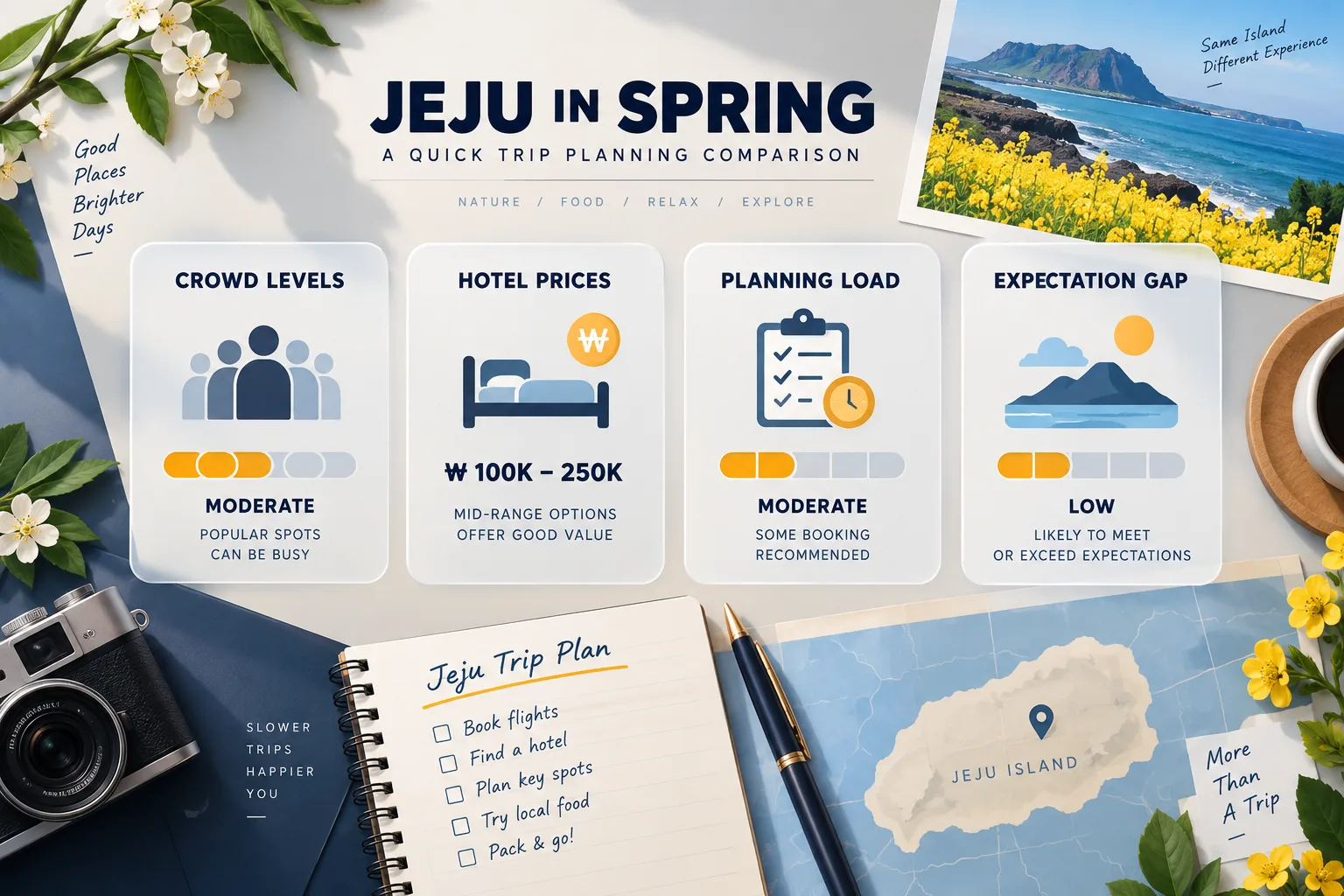 Editorial illustration: A simple flat-lay style comparison layout on a table showing four labeled cards or sections representing crowd levels.
Main Friction Problem
Spring is Jeju's most popular season, and popularity is exactly what creates the friction. The peak cherry blossom rush runs from late March into early April. May's Family Month holidays create a second wave right after it. If your trip lands in either window, expect the friction below regardless of how well you plan.
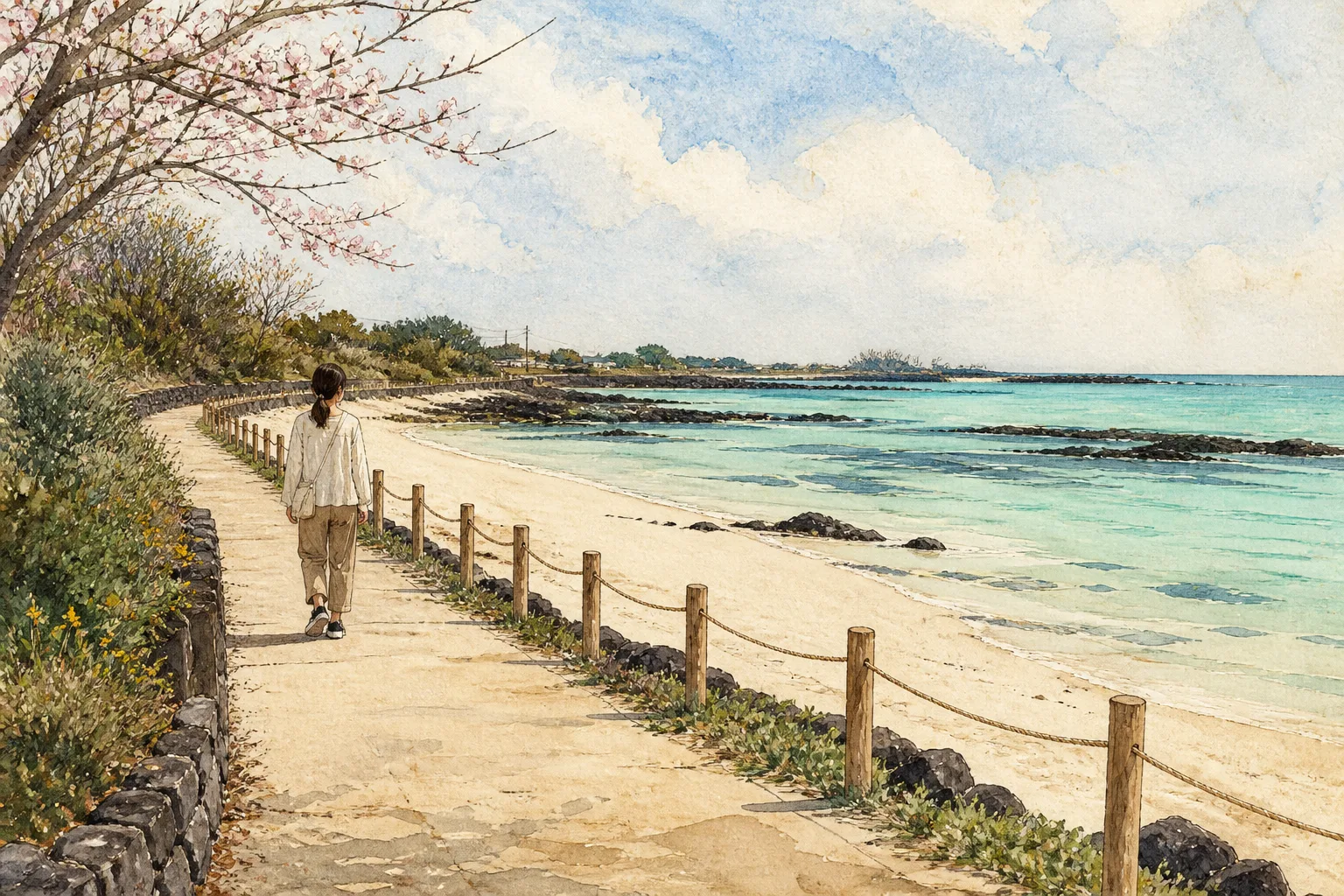
Crowds build fastest at name-recognition spots: the Seongsan Ilchulbong summit trail, cherry blossom roads, and canola fields near popular viewpoints. The coastal trail around Seongsan is free and takes 30 to 40 minutes to walk, which makes it an easy add-on for every visitor on the island that week, not just serious hikers.
Hotel price spikes follow a predictable weekly pattern that gets worse during bloom season. Average nightly rates run around $110 on the cheapest night of the week and climb to around $226 on the most expensive night, roughly double. Stack peak bloom demand on top of a Friday night and the gap widens further.
Overplanning is a self-inflicted friction point, but spring makes it worse. Hallasan's summit hike takes 8 to 10 hours round trip and requires a permit booked in advance. Add a Seongsan sunrise, a coastal Olle segment averaging 4 to 6 hours, and a canola field stop, and a short trip turns into a rushed one before it starts.
Expectation mismatch shows up when travelers picture postcard-empty blossom paths and instead get shoulder-to-shoulder viewpoints. The flowers are real. The solitude in the photos usually is not, not during the two peak weeks.
Friction Table
The table below breaks spring into three practical windows so you can match your dates to your tolerance for crowds and price.
| Window | Crowd level | Hotel price pressure | Planning load needed | Expectation match |
|---|---|---|---|---|
| Late March to early April (cherry blossom peak) | Highest | Highest, especially weekends | High: permits and reservations fill fast | Blossoms guaranteed, solitude unlikely |
| Early to mid May (Family Month holidays) | High, second peak | High on holiday dates | Medium to high: book lodging early | Fewer blossoms, still busy |
| Mid-April to early May (outside holidays) | Moderate to low | Closer to average, cheaper on weekdays | Low: more flexibility on the fly | Canola still visible, calmer trails |
Weekday travel inside that third window is the single biggest lever you have. A Tuesday stay near the average $110 rate looks very different from a Friday stay near $226, and that gap exists in any season, not just spring.
Who Will Feel It Most
Crowd-sensitive travelers feel the friction hardest during the two peak windows, especially at single-trail bottlenecks like the Seongsan summit stairs, where a slow line ahead of you directly extends your climb time. If you already avoid Golden Week or cherry blossom season in Japan for the same reason, apply that same instinct to Jeju's late March to early April window.
Budget-sensitive travelers feel the price pressure most on weekend bookings made close to the travel date. The weekday-to-weekend rate gap is large in any season, and peak bloom weekends push it further. If your trip has to include a weekend, expect to pay near the top of the range regardless of how far outside the city you stay.
Low-stress planners who dislike permit deadlines will struggle most with the Hallasan piece specifically. Reservations open at 9:00 AM KST on the first business day of the month for the following month's hikes, and the daily hiker cap is limited. Miss that morning and the summit trail is off the table for your trip.
Travelers who are flexible on exact dates and comfortable with a lighter itinerary feel almost none of this. Mid-April to early May outside the holiday stretch is close to a different trip: fewer people, closer-to-average pricing, and less pressure to lock in permits weeks ahead.
How to Reduce the Friction
For crowds: Visit high-traffic spots like Seongsan Ilchulbong early in the day rather than mid-morning, and treat the free coastal trail as your default plan instead of the summit stair climb if you specifically want fewer people around you. Both routes take roughly 30 to 40 minutes, so the coastal option is not a downgrade in time, only in elevation.
For hotel price spikes: Anchor your trip to weekday nights instead of a weekend. Downtown Jeju City lodging averages around $49 a night, and weekday rates at 3-star coastal hotels run $32 to $57, both well below the Friday peak average. Book those weekday nights first and treat weekend nights as the exception, not the default.
For overplanning: Pick one anchor activity per day rather than stacking a sunrise hike, a full Olle segment, and a drive across the island into the same 24 hours. If Hallasan's summit is a priority, build the entire day around the 8 to 10 hour round trip and plan nothing else for that date.
For expectation mismatch: Decide before you book whether you are optimizing for guaranteed blossoms or for a calmer trip, because peak spring rarely delivers both. If calm matters more, shift toward the mid-April to early-May window and accept that some blossoms will already be gone.
Better Alternatives
If your only open dates fall inside late March to early April or the May holiday stretch, consider shifting the whole trip rather than forcing it into a bad window. Early autumn on Jeju carries far less date-specific demand pressure than spring's bloom season, since there is no single flowering event pulling every traveler toward the same two-week stretch.
If you specifically want flowers without the peak crowd, mid-April to early May is the closer substitute inside spring itself. Cherry blossoms fade, but canola fields hold on longer in many areas, and the crowd pressure drops once the two named peaks pass.
If price is the dominant constraint and dates are flexible, prioritize weekday travel over season entirely. A well-timed weekday trip in a shoulder week can land closer to the $110 average rate than a weekend trip in a supposedly quieter month, because the day-of-week effect on price is consistently large.
Decision Checklist
Use this before you book anything:
- My travel dates fall outside late March to early April and outside the May holiday stretch, or I have accepted the tradeoff if they don't
- At least half my hotel nights are on weekdays, not weekends
- I have picked one anchor activity per day, not two or three
- If Hallasan is on my list, I have checked the permit release date and hiker cap before booking flights
- I know whether I am optimizing for guaranteed blossoms or for a calmer trip, not both
- I have a transit plan that does not rely on Google Maps for buses, since it is unreliable for Korean transit
- If renting a car, I have my International Driving Permit and a credit card matching my passport name ready in advance
FAQ
Is Jeju too crowded to enjoy in spring? It depends on the week. Late March through early April draws the heaviest cherry blossom crowds, and the May holiday stretch adds a second peak. Mid-April to early May, outside the holidays, is noticeably calmer at the same major sights.
How much more expensive is Jeju during peak spring weeks? Hotel rates swing hard by day of week even before season is factored in, with average nightly rates roughly double between the cheapest and most expensive nights. During peak bloom weeks, expect rates to sit at the higher end of that range, especially for weekend stays booked close to the date.
Should I skip Jeju entirely if I hate overplanning? No, but you should shrink your itinerary instead of skipping the island. Overplanning in Jeju usually comes from trying to fit Hallasan, Seongsan, and a full Olle Trail route into one short trip. Pick one anchor activity per day instead of stacking three.
Is early April or early May better for a low-stress Jeju trip? Early May after the Family Month holidays end is usually calmer than early April. Cherry blossoms will be gone by early May, but canola fields and calmer trails often make up for it if your priority is low stress over peak bloom photos.
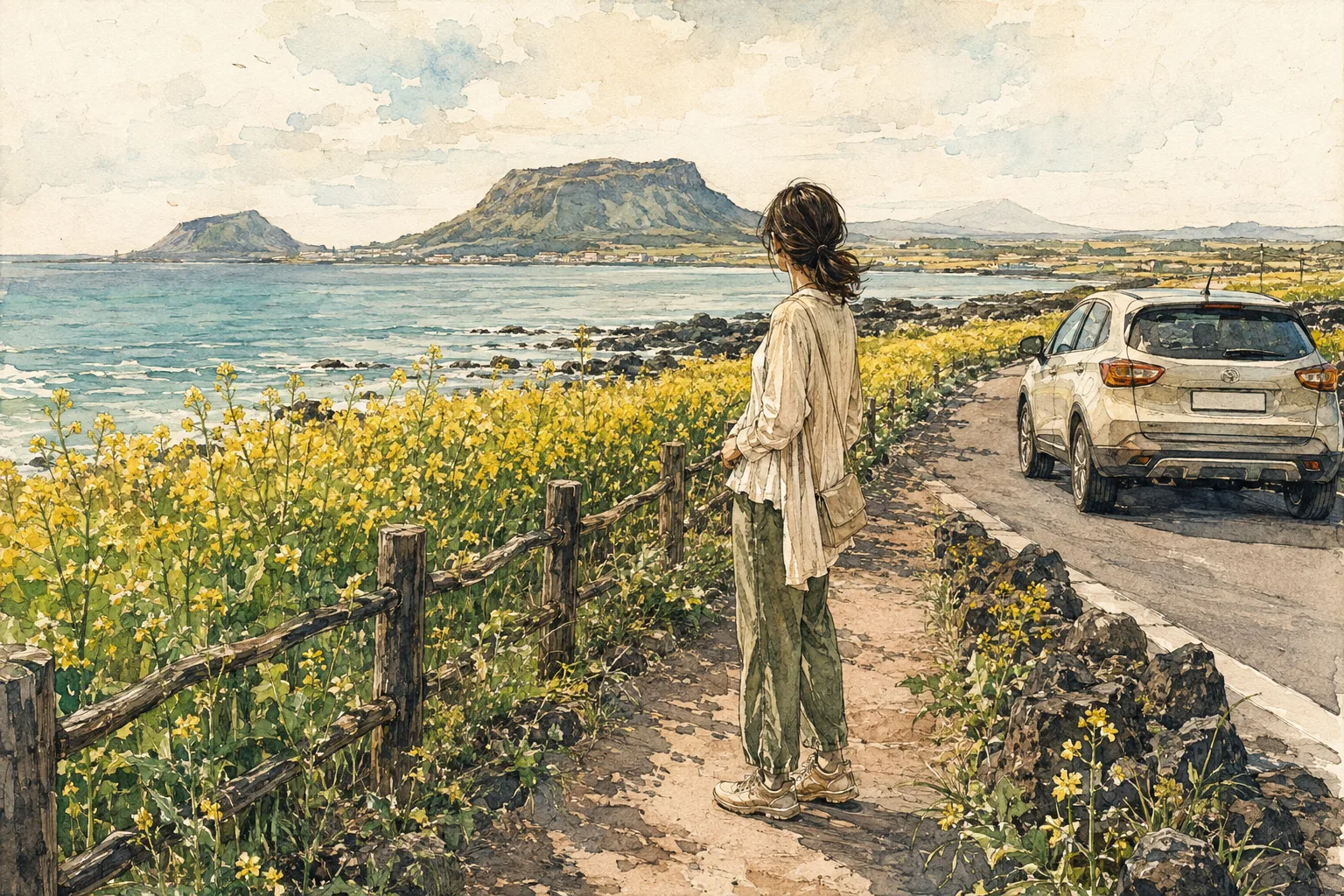
Do I need a car to avoid crowd pressure on Jeju? A car helps you avoid the worst of it because public transit options are limited outside city routes, and Google Maps does not work reliably for Korean transit. If you rent, plan for the international permit and credit card name-match requirement in advance, since sorting that out on arrival adds stress.