travel-decisions
Is Jeju Worth Choosing for a Short 2 to 3 Day Trip?
A practical decision guide on whether Jeju fits a tight 2 to 3 day trip, who regrets it, and how to cut the friction if you go.
Strong Opening
A 2 to 3 day trip to Jeju can work, but only if you stop treating it like a full-island vacation. Jeju covers 1,849 square kilometers, roughly 73 km east to west and 31 km north to south. That is too large to circle comfortably in a short trip, even with a car.
The real decision is not "is Jeju worth visiting." It is "is Jeju worth visiting on this specific timeline, with this specific itinerary." Get that mismatch wrong and you spend your trip on buses and rental car return lines instead of the coast, the trails, or the food you came for. Get it right, and a short Jeju trip can beat a rushed weekend almost anywhere else in the region.
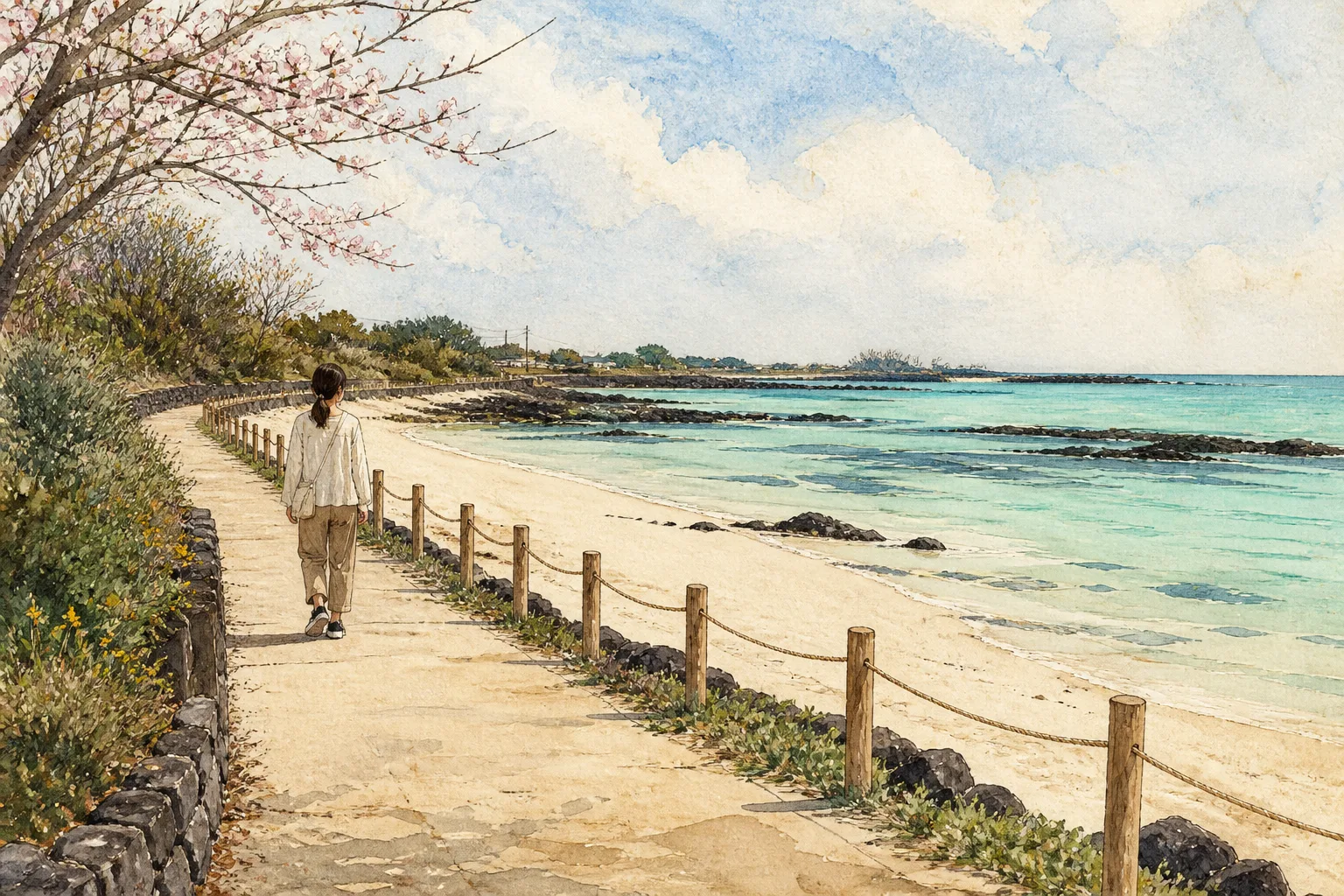
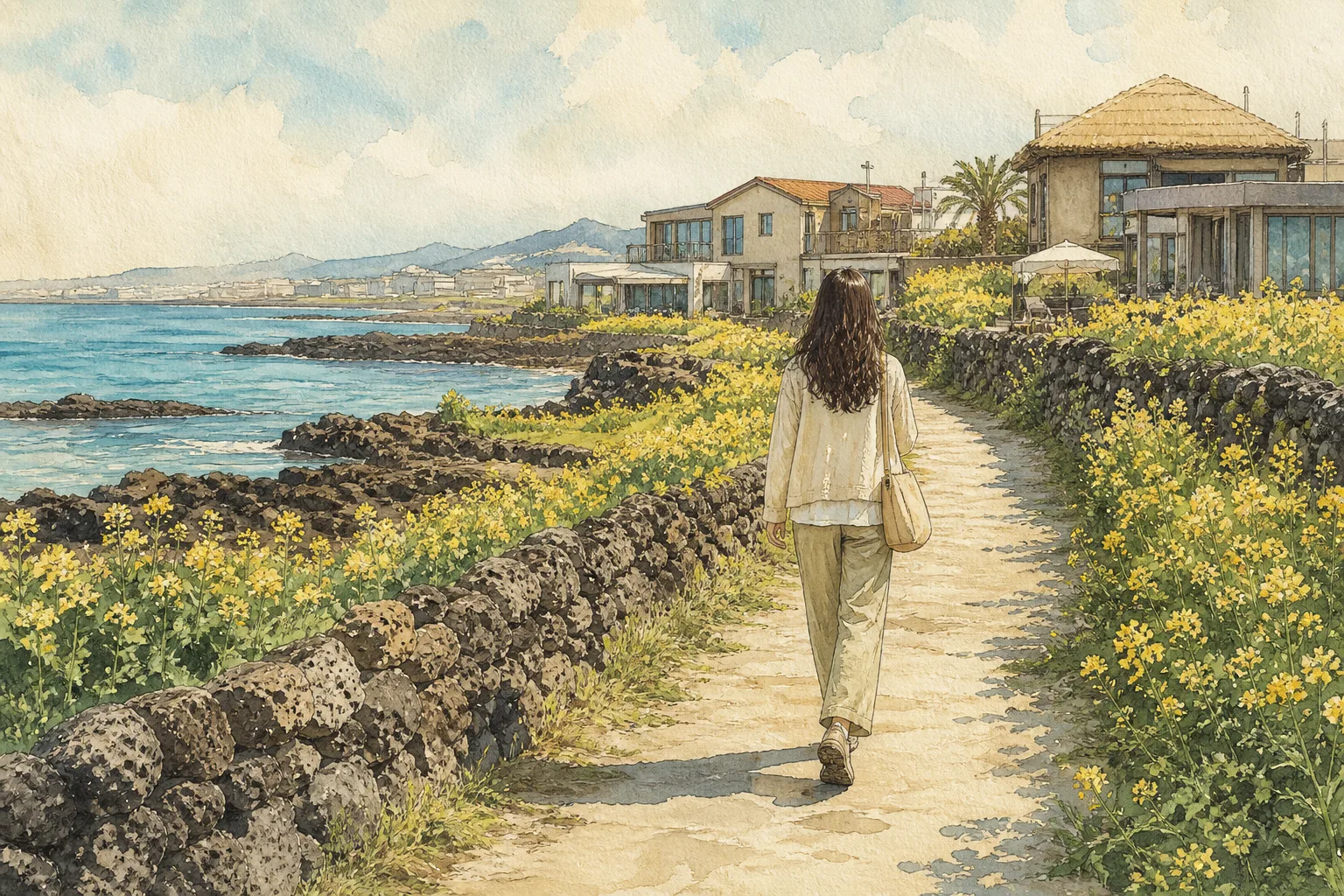
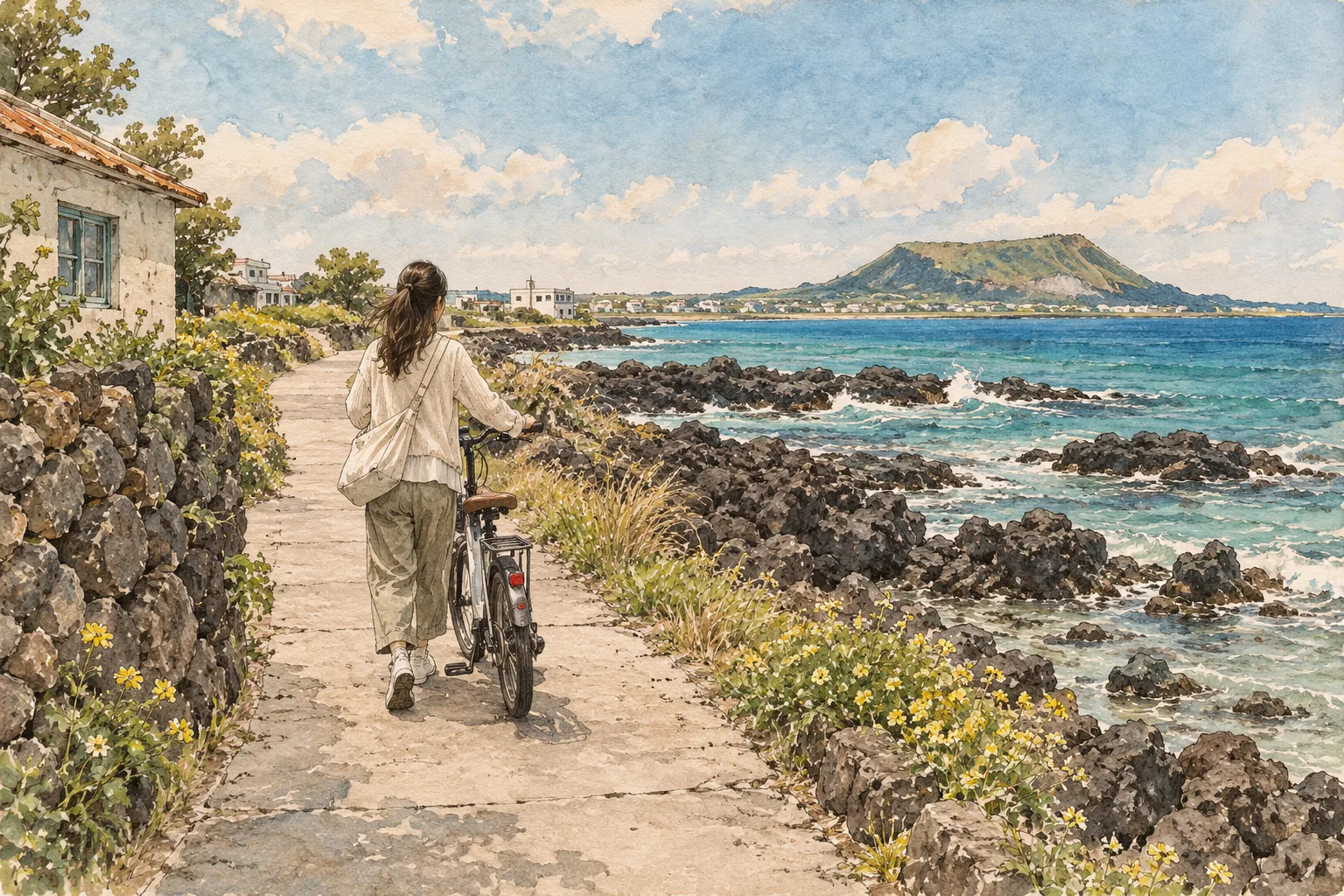
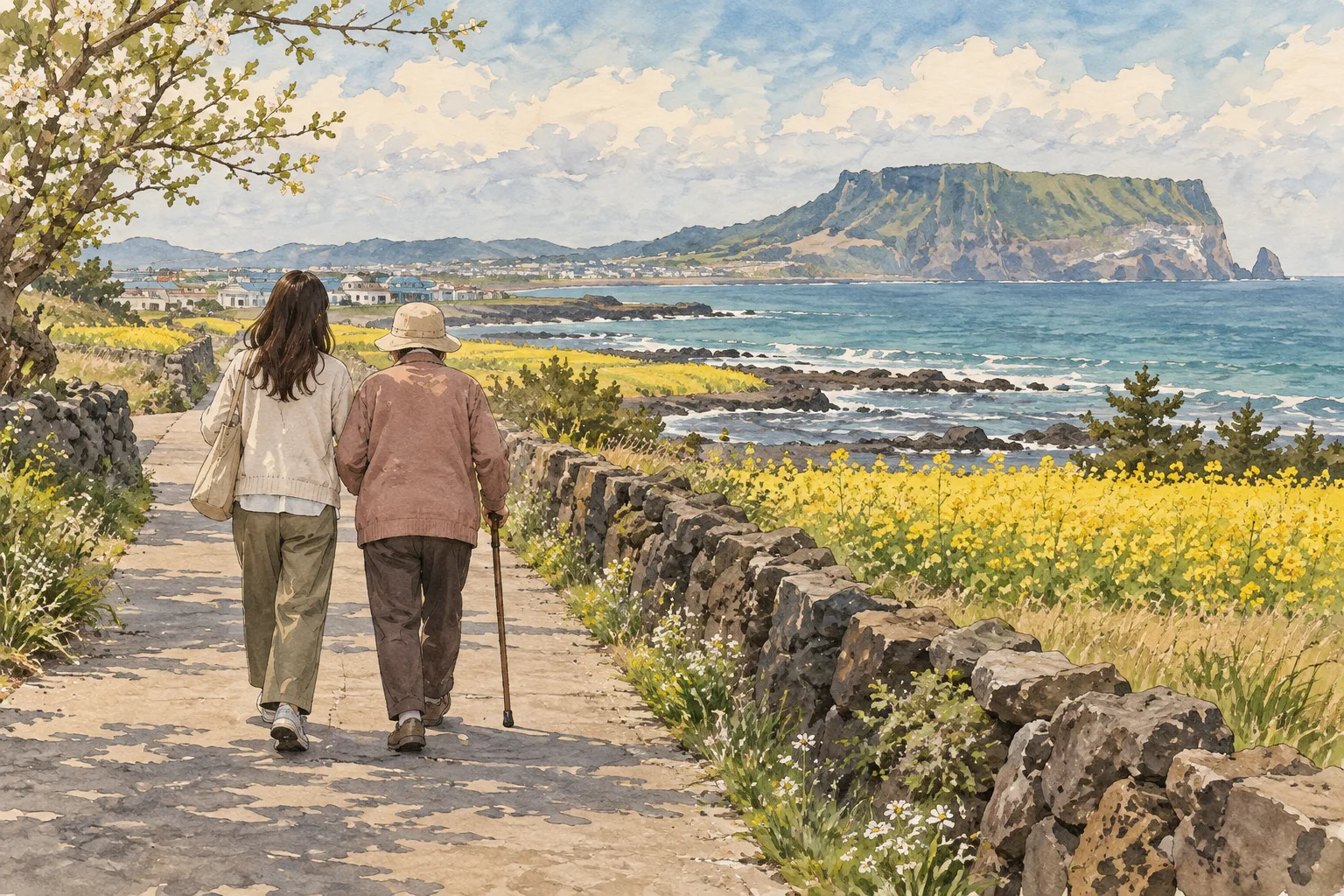
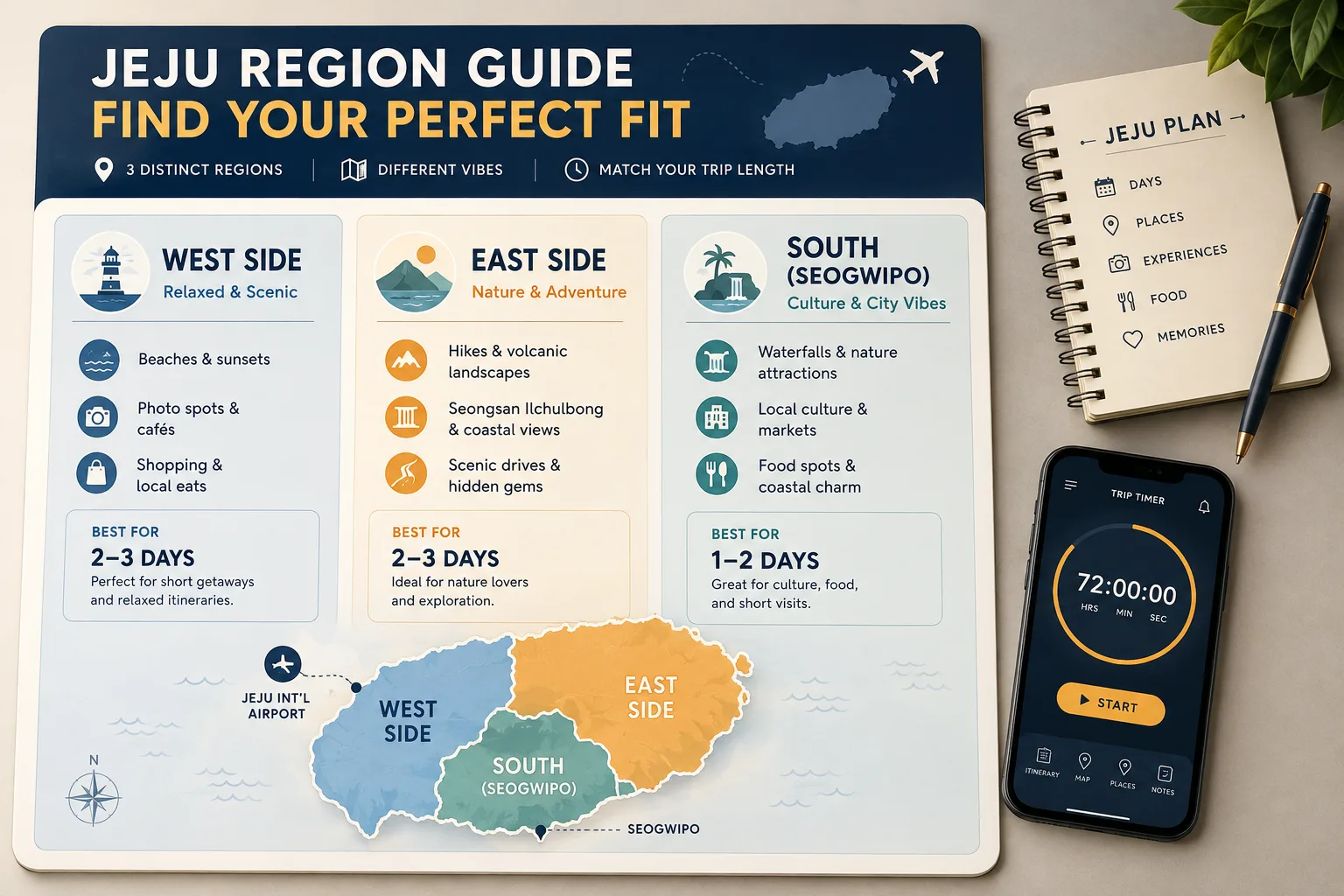 Editorial illustration: A simple comparison layout on a table or flat surface showing a Jeju map divided into east side.
Quick Verdict
Choose Jeju for a short trip if you are willing to commit to one region and skip the rest. Skip Jeju for a short trip if your plan already tries to cover the east coast, Hallasan, and Seogwipo in the same 2 to 3 days.
Jeju rewards travelers who narrow their scope early. It punishes travelers who treat it like a single city with everything nearby.
Choose it if you:
- Are comfortable picking one base region (east, west, or Seogwipo/south) and staying there
- Can rent a car or are fine building the trip around one bus corridor
- Want a slower, scenery-led pace rather than a landmark checklist
Skip it, or shorten your ambitions, if you:
- Want to see Seongsan Ilchulbong, Hallasan, and Seogwipo waterfalls in the same 2 day trip
- Are traveling with young kids or anyone with limited walking stamina and no car
- Are set on the Hallasan summit but only have 2 days total, since the permit and transit logistics leave little room for error
Who Will Probably Love It
Short-trip travelers who love Jeju tend to share one trait: they pick a lane early. A couple who decides "we are doing the east side, full stop" gets a relaxed 2 to 3 days of coastline, cafes, and one or two anchor sights, without ever feeling rushed.
First-time visitors who treat Jeju as "one region now, the rest later" also do well. They are not trying to prove they saw the whole island. They are testing whether Jeju's specific mix of volcanic coastline and slower pace suits their travel style, which a single region shows clearly enough.
Travelers who prefer a car-based, scenery-first trip over a public-transit checklist also fit well. Jeju's coastal roads reward driving between a handful of close-together stops rather than long transfers, and a 2 to 3 day trip has exactly enough time for that kind of loop if it stays local.
Who Might Regret It
The clearest regret pattern is the full-island itinerary squeezed into 2 days. Travelers who plan Seongsan in the morning, Hallasan midday, and Seogwipo by evening run into the geography Jeju actually has: getting from the far east to the far west by coastal bus takes 1.5 to 2.5 hours one way. That single transfer alone can consume half a short day.
The second regret pattern involves Hallasan on a tight clock. The summit hike requires a free permit that must be booked in advance, and rangers enforce a hard cutoff, hikers must pass the Jindallaebat Shelter by 12:30 PM to continue toward the top. A traveler who arrives in Jeju in the morning and tries to hike Hallasan that same day, or squeezes it in alongside other plans, risks missing the cutoff and losing the whole activity.
The third pattern is families or lower-stamina travelers without a car. Jeju's best stops are spread out, and without a rental car, a short trip becomes a series of long bus waits rather than a relaxed pace. Anyone who tires on long walking days should expect the Olle Trail-style stops (each course typically 15 to 16 km, 4 to 7 hours) to be off the table entirely on a 2 to 3 day visit, and should plan shorter coastal stops instead.
Mistake / Consequence Table
| Decision variable | Common mistake | Likely consequence | Better call for 2 to 3 days |
|---|---|---|---|
| Region scope | Planning east coast + west coast + Seogwipo in one trip | 1.5 to 2.5 hour transfers eat the day, every stop feels rushed | Pick one region, treat the rest as a future trip |
| Hallasan summit | Scheduling the hike without checking the permit window and cutoff time | Permit unavailable or turned back at Jindallaebat Shelter after 12:30 PM | Only attempt it if it is the trip's single anchor activity, booked in advance |
| Transport | Relying on coastal bus routes 201/202 for cross-island stops | Long one-way legs (1.5 to 2.5 hours) replace sightseeing time | Rent a car, or confine the trip to one bus corridor |
| Airport to base | Booking a Seogwipo hotel without checking transfer time | 45 to 90 minutes lost on both arrival and departure days | Choose a base close to your main region, confirm transfer time before booking |
| Walking load | Adding Olle Trail sections or multiple hikes to a 2 day plan | Walking fatigue by day two, less energy for anything else | Choose 1 to 2 shorter coastal stops instead of a full trail course |
Hidden Friction Points
Time compression. A 2 to 3 day trip does not scale down proportionally from a 5 to 7 day Jeju itinerary. It is not "do less of everything." It is "do one region well," because the geography, not the itinerary length, sets the real limit.
Walking fatigue. Jeju's signature stops are not casual strolls. Climbing Seongsan Ilchulbong is a steep staircase taking 30 to 45 minutes one way, and a full Olle Trail course runs 15 to 16 km. Stacking two or more of these on a short trip leaves little energy for anything else, and it shows up as fatigue by the second day rather than the first.
Transit inefficiency. The 1.5 to 2.5 hour one-way travel time between the far east and far west is the single biggest hidden cost on a short trip. Even the airport to Seogwipo leg (45 to 90 minutes depending on mode) adds up on both the arrival and departure day, cutting further into an already tight schedule.
Itinerary regret. This shows up after the trip, not during it, when travelers realize they saw a list of landmarks but never settled into any one place. On a 2 to 3 day trip, that regret is usually a symptom of planning by checklist instead of by region.
How to Make It Easier
Reducing friction on a short Jeju trip comes down to fewer decisions, not more planning. Each fix below targets one of the friction points above directly.
- For time compression: Pick one region before you book anything else, and build the whole itinerary inside it. Treat "see the rest of Jeju" as a separate future trip, not a stretch goal for this one.
- For walking fatigue: Choose at most one major walking commitment per day, such as Seongsan Ilchulbong or a short coastal walk, not both a hike and a full Olle course.
- For transit inefficiency: Rent a car if your license setup allows it, since drivers need a physical passport, an original physical domestic license, and an original physical International Driving Permit, plus a minimum age of 21 with 1 year of driving experience. If you cannot rent, commit to a single bus corridor rather than criss-crossing the island.
- For itinerary regret: Build in unscheduled time on at least one afternoon. A short trip with zero slack is the version most likely to feel rushed in hindsight.
Better Alternatives
If your available time is closer to a single day, a Jeju trip built around one small area, or a day trip to a nearby island such as Udo, fits the clock better than a full 2 to 3 day commitment. The core problem is the same: Jeju's stops are far enough apart that a single day forces a one-region decision anyway, so making that decision explicit from the start avoids the regret pattern above.
If your priority is seeing Hallasan's summit specifically, and your total trip is 2 days or less, consider treating this as a dedicated hiking trip rather than a general sightseeing trip. Build the whole visit around the permit window and the 12:30 PM cutoff, and accept that little else will fit around it.
If you want a full-island Jeju experience with beaches, hikes, and food across multiple regions, a 5 to 7 day trip is a better match than stretching a 2 to 3 day trip to cover the same ground. Shortening the ambition, not the destination, is usually the fix.
If your real goal is a relaxed coastal weekend without the transit math, a destination with a smaller geographic footprint or a single walkable town center will remove the regional-choice problem entirely.
Self-Checklist
Before booking a 2 to 3 day Jeju trip, confirm the following:
- I have picked one region (east, west, or Seogwipo/south) as my base for the whole trip
- My hotel is within a short transfer of that region, not a 45 to 90 minute drive away
- If I am attempting Hallasan, I have checked the permit release date and the 12:30 PM Jindallaebat Shelter cutoff
- I have a rental car arranged, with the correct physical documents, or I have committed to one bus corridor
- My daily plan includes no more than one major walking commitment (summit climb, long coastal walk, or trail course)
- I have left at least one afternoon unscheduled
- I have accepted that I will not see the whole island this trip
FAQ
Is 2 days enough to see Jeju? Two days is enough to see one region of Jeju well, such as the east side or Seogwipo, but not enough to circle the island. Trying to cover both the east and west coasts in 2 days usually means long bus or driving legs that eat the day.
Is 3 days better than 2 days for Jeju? Yes, 3 days gives you enough margin to add one full-day activity, like the Hallasan summit or a Manjanggul visit, without abandoning your base region. It still is not enough time to comfortably cover the whole island.
Do I need a rental car for a short Jeju trip? For a 2 to 3 day trip, a rental car is close to essential because the coastal bus routes take 1.5 to 2.5 hours one way between the far east and far west. Without a car, plan your itinerary around one bus corridor instead of jumping across the island.
Is Jeju worth it if I only have a weekend? It is worth it if you pick one region and one or two anchor activities instead of a checklist. It is not worth it if your weekend plan already includes Seongsan, Hallasan, and Seogwipo food streets, because that itinerary regularly fails on a 2 day clock.
What is the biggest mistake short-trip visitors make on Jeju? The most common mistake is planning a full-island loop in 2 to 3 days, which forces long transit windows and cuts every stop short. The fix is choosing one base region and treating the rest of the island as a future trip, not this one.