travel-decisions
Who Might Regret Tokyo If They Want a Calm, Low-Stimulation First Japan Trip?
Tokyo gives you range and convenience but charges you in sensory load. Here is who should skip a Tokyo base for their first Japan trip, and what to choose instead.
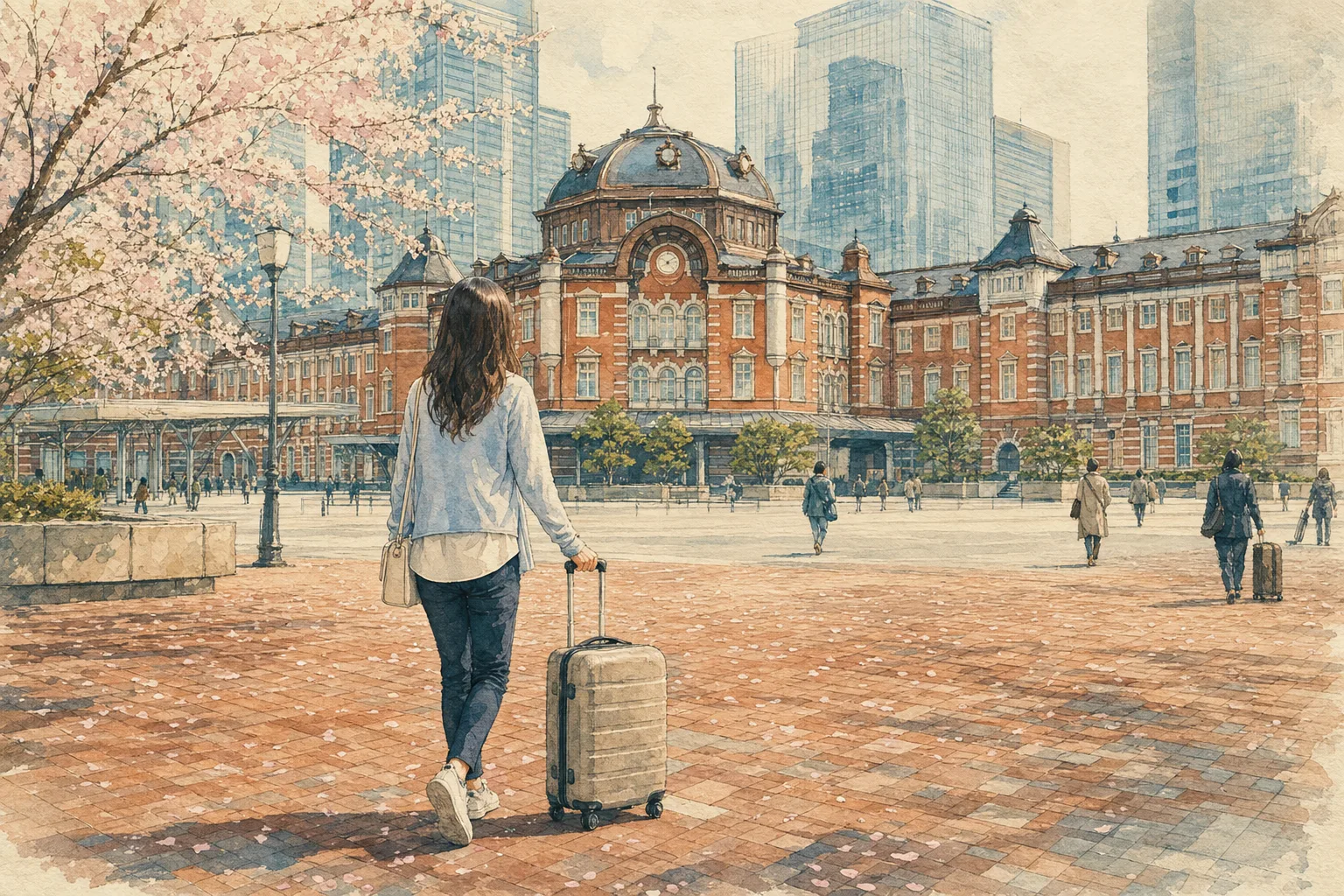
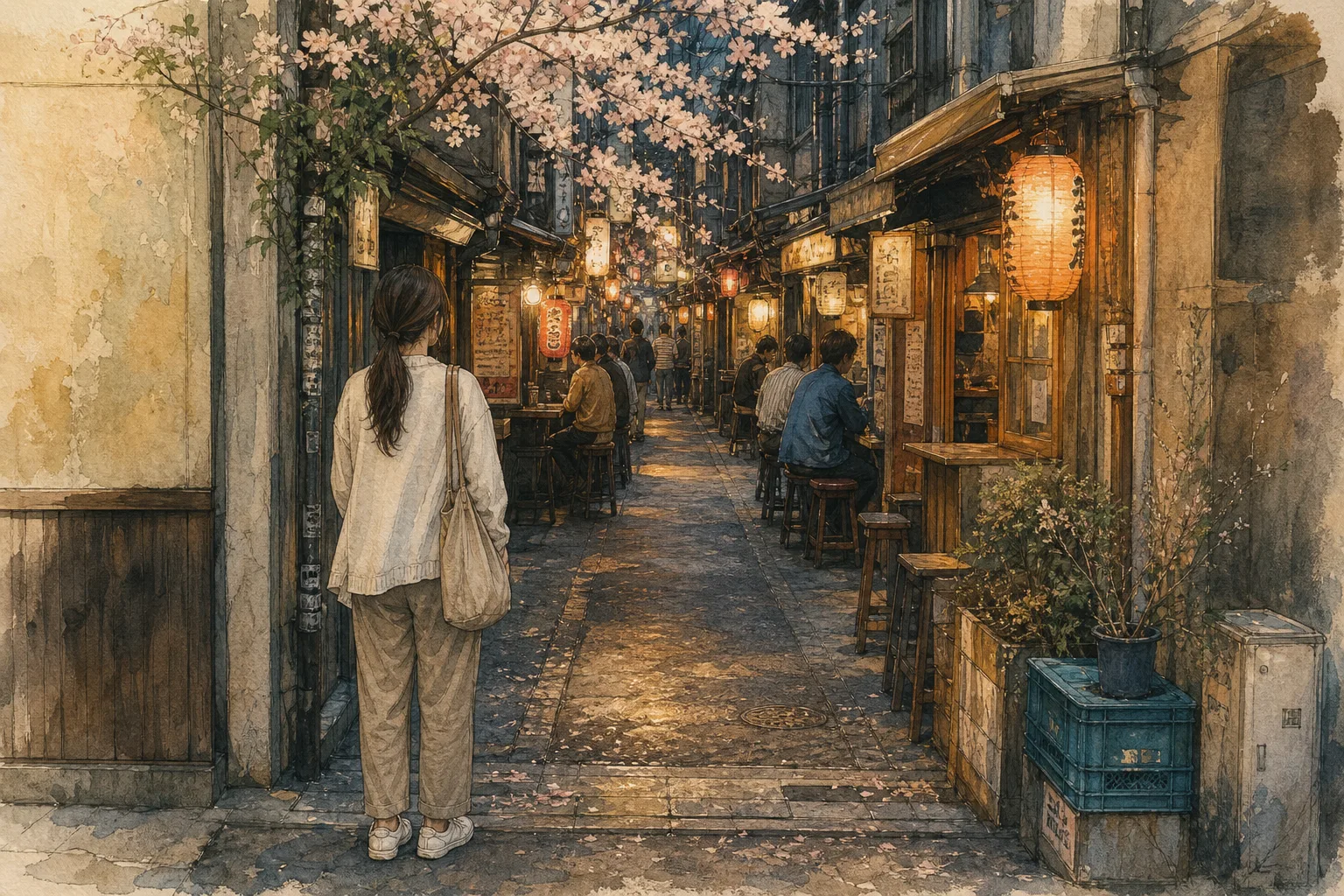
Tokyo is the default first stop for Japan, and that default quietly hurts a specific kind of traveler. If you are picturing slow mornings, one neighborhood per day, an early dinner, and a quiet walk back to the hotel, Tokyo will not give you that easily. The city is built for range and density, not for low-stimulation days. The question is not whether Tokyo is impressive. It is whether Tokyo matches the trip you actually want.
Quick Verdict
Skip a Tokyo-heavy itinerary if calm is your top priority. Use Tokyo as a two or three night entry point at most, then base yourself in Kyoto, Kanazawa, or a smaller city for the rest of the trip.
- Choose Tokyo as your main base if you want maximum variety, late-night options, and do not mind big stations and dense crowds.
- Do not choose Tokyo as your main base if you want quiet evenings, compact walking days, predictable routines, or low sensory load.
The fastest classification is this:
- Tokyo should not be your main base if you hate major stations, sleep badly with street noise, and want one neighborhood to carry most of the day.
- Tokyo can stay in the trip if you are willing to use it as a short-entry city, not the emotional center of the itinerary.
- Kyoto or Kanazawa are the safer first pick if the trip is supposed to feel restorative, not high-range.
Not sure which side you land on? The Travel Personality Quiz maps your stimulation tolerance to a recommended base city.
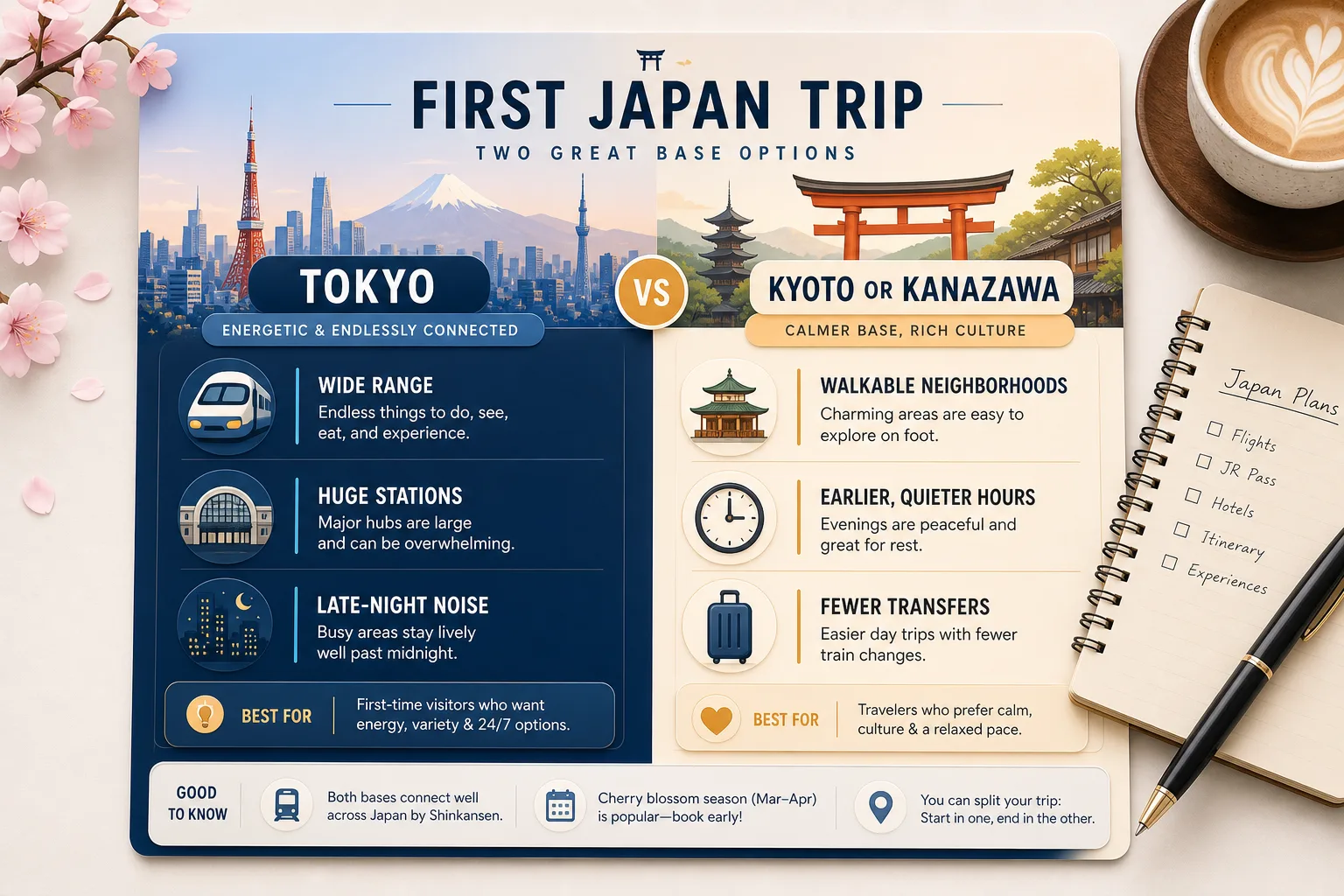 Editorial illustration: A clean side-by-side comparison layout on a flat surface for a first Japan trip: left column labeled Tokyo with short notes like wide range.
Who Will Probably Love Tokyo
Tokyo rewards a specific traveler profile. You will likely enjoy a Tokyo-centered first trip if you recognize yourself in most of these:
- You like big cities at home and use their transit without stress.
- You want to see many different things in a short trip: food, design, museums, parks, nightlife.
- You enjoy walking long distances and standing in lines for short payoffs.
- You are fine with white noise, train announcements, and crowd density into the late evening.
- You travel with a partner or group that thrives on novelty and is happy to split up.
For this reader, Tokyo's friction is the point. Density is the experience.
Who Might Regret Tokyo
The wrong-fit patterns are consistent. You will likely regret a Tokyo-heavy first trip if any of these describe you:
- You came to Japan partly to slow down or recover from a stressful period.
- You get tired in airports, malls, or large train stations at home.
- You travel with young kids, older parents, or anyone with limited stamina.
- You want to wake up in the same neighborhood for three or four days and learn it.
- You sleep badly with street noise, sirens, or thin walls.
- You picture temples, gardens, and quiet streets when you imagine Japan, not skyscrapers and crossings.
The specific disappointment is not that Tokyo is bad. It is that you spend energy on logistics that you wanted to spend on the trip itself. By day three, calm-first travelers often describe feeling like they are commuting through their own vacation.
Mistake and Consequence Table
The decision is usually not Tokyo or no Tokyo. It is how much Tokyo, and as what role in the trip.
| Choice | What You Hope For | What Actually Happens for Calm-First Travelers |
|---|---|---|
| 7 nights, Tokyo only | Deep dive into one city, easy logistics | Daily station fatigue, no recovery days, sights start to blur |
| Tokyo base with day trips | Flexibility, see a lot | Long rush-hour returns to a loud neighborhood, sleep suffers |
| Tokyo hotel in Shinjuku or Shibuya | Central, walkable to nightlife | Late-night noise, neon glare in the room, no quiet morning |
| 2 nights Tokyo, then Kyoto | Highlights without burnout | Works well; the trip's mood shifts after the Shinkansen |
| Skip Tokyo entirely on first trip | Calm, immersive Japan | Works for many; mild fear of missing out, easily fixed on trip two |
The two bottom rows are the patterns calm-first travelers report being glad they chose.
In practice, the cost turns on how many high-friction transitions you are stacking into the same day.
| Planning pattern | Typical hidden cost | Why calm-first travelers feel it so strongly |
|---|---|---|
| Hotel near a huge station plus two cross-city outings | 20 to 40 minutes of platform, exit, and crossing time before the day properly starts | The trip feels like commuting before sightseeing begins |
| Wrong station exit in Shinjuku, Tokyo, or Shibuya | Often 10 to 15 extra minutes plus one more stair or street crossing sequence | The mistake arrives when you are already mentally tired |
| Evening return during 17:30 to 20:00 rush | Dense train cars plus a noisy final walk back to the hotel | You lose the quiet recovery window that calmer cities still give you |
| Late taxi to avoid one last transfer | Higher cash cost, but often the only way to protect energy | Calm-first travelers usually regret not paying for the easier last leg |
Hidden Friction Points
These are the things that do not show up in a highlights list but determine how the trip actually feels.
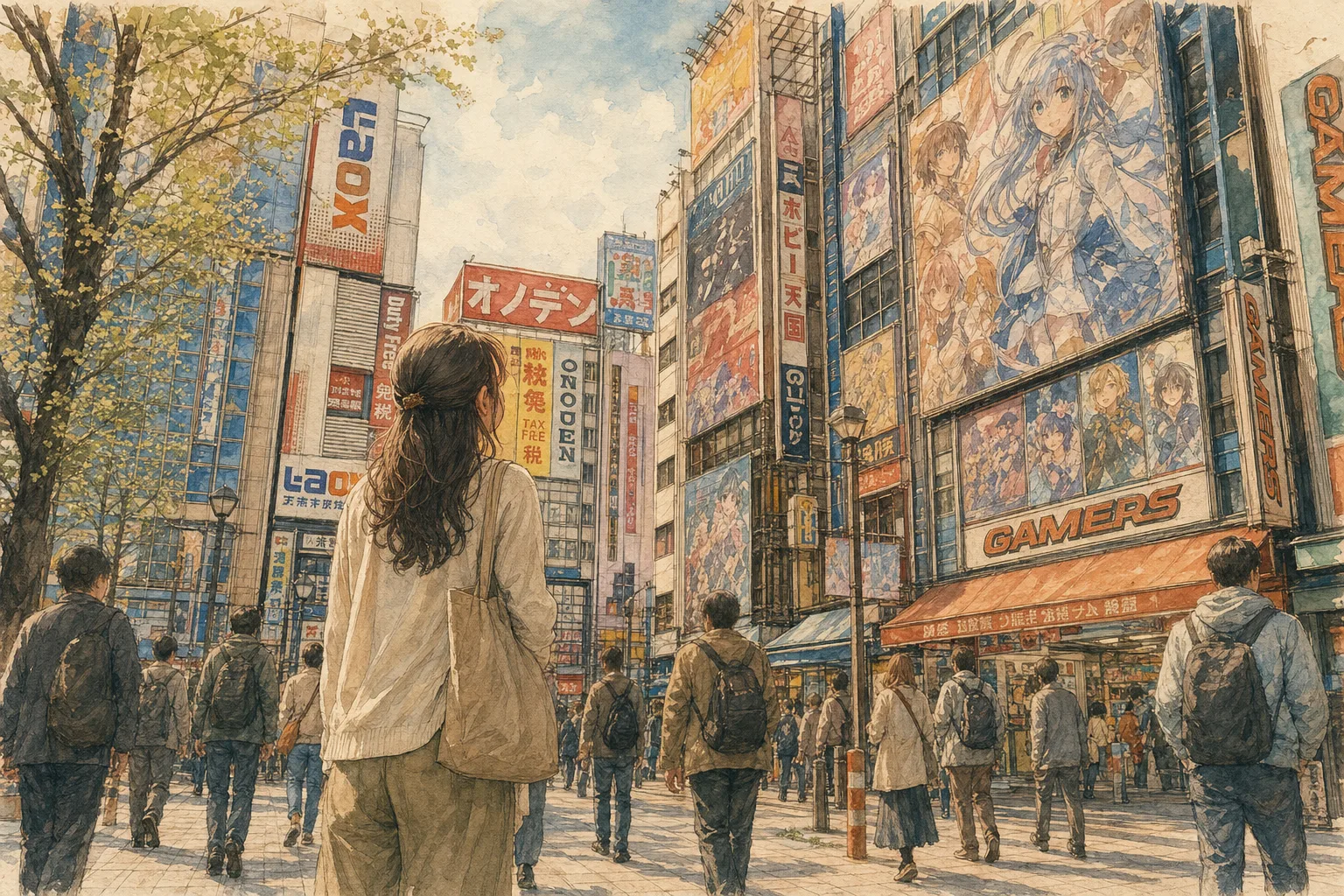
- Sensory overload: Major Tokyo districts mix screens, announcements, music, and crowds simultaneously. Even short exposures drain introverted or sensitive travelers.
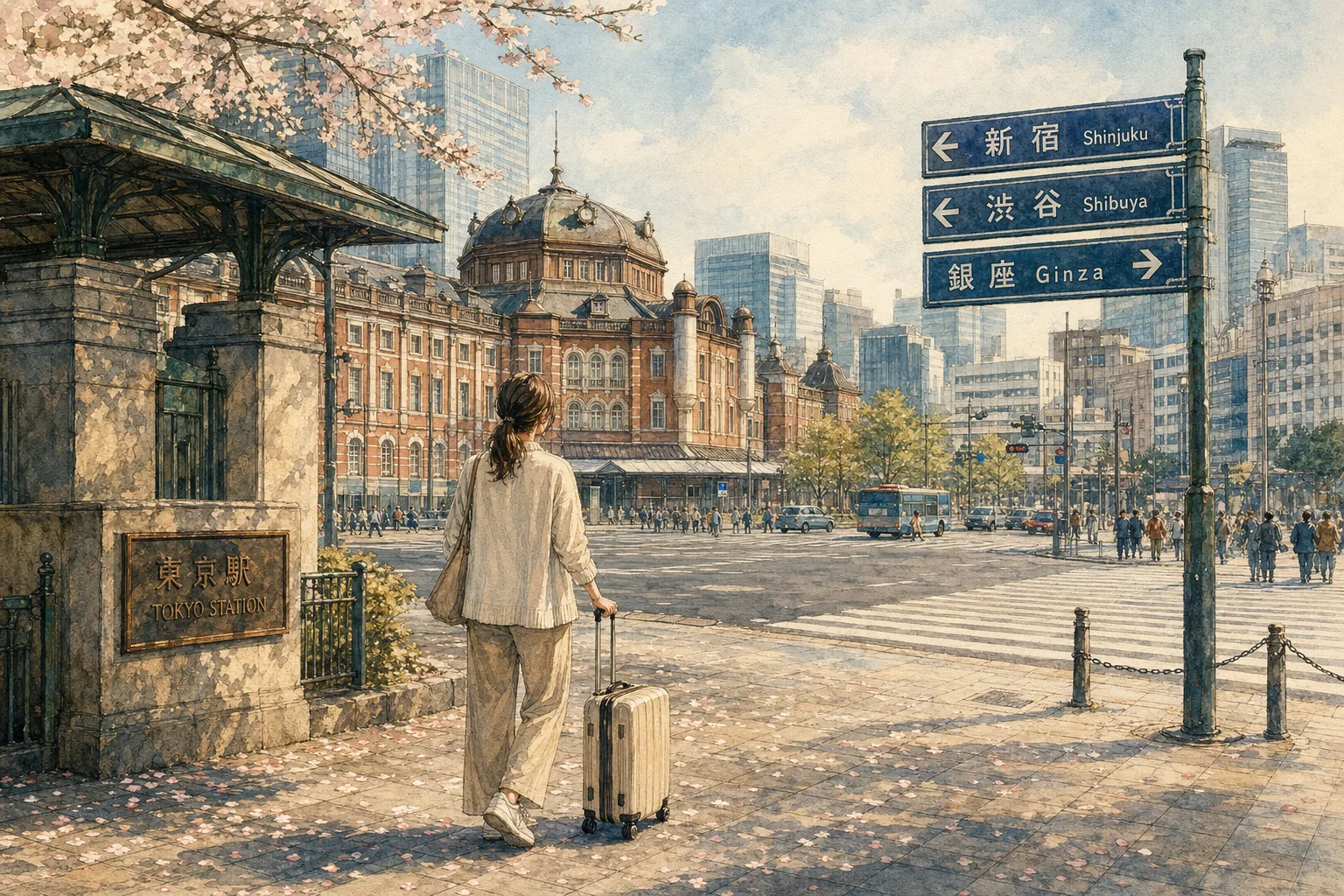
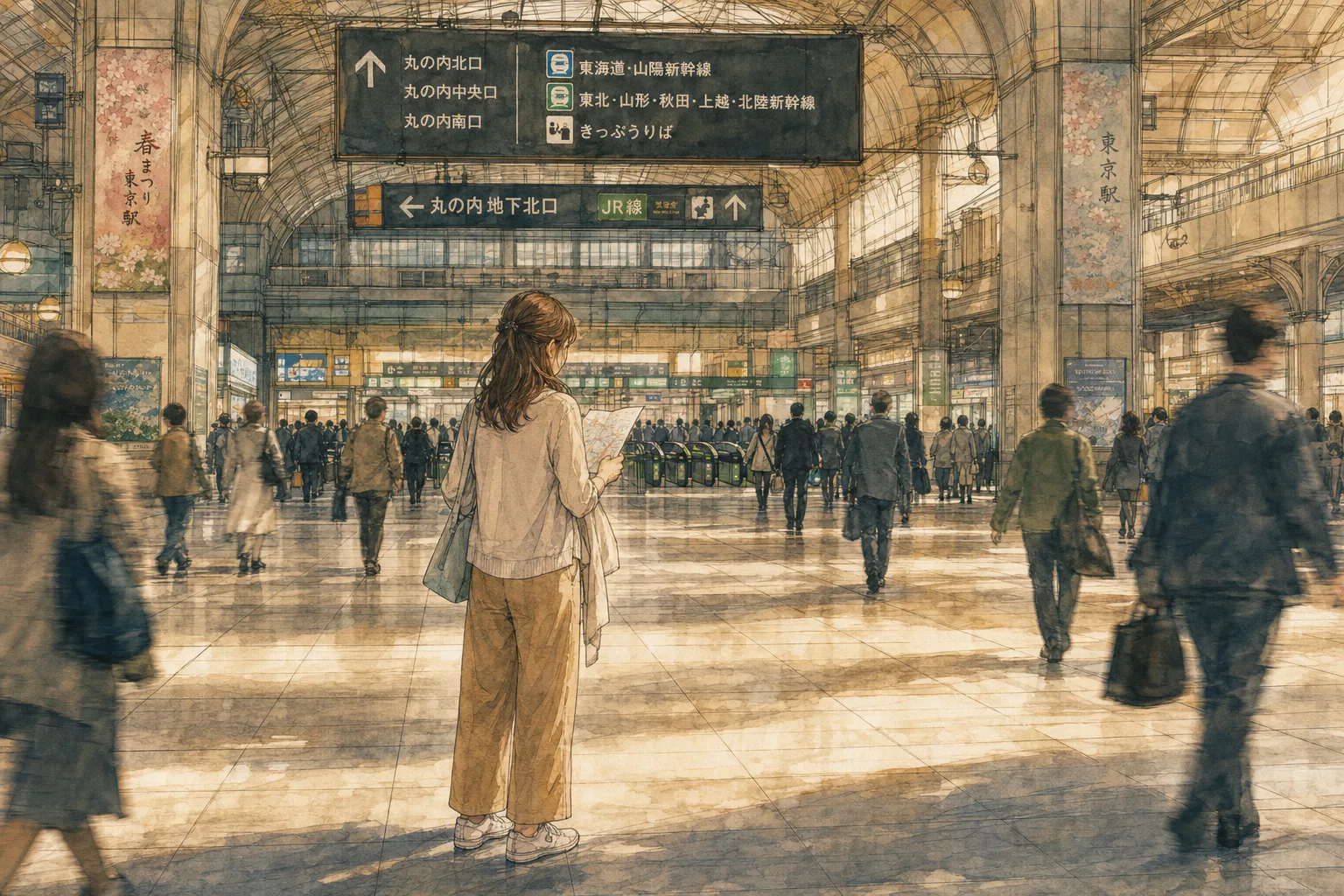
- Station stress: Shinjuku, Tokyo, and Shibuya stations are vertical mazes with dozens of exits. Picking the wrong exit can add fifteen minutes and a full flight of stairs with luggage.
- Crowd fatigue: Rush hour is real and long, roughly 7:30 to 9:30 in the morning and 17:30 to 20:00 in the evening. Weekends are not quieter in tourist zones.
- Late-night noise: Many central hotels sit above izakaya streets or convenience stores with constant door chimes. Windows are often single-pane.
- Decision load: Tokyo offers too much. Calm-first travelers often spend mental energy on what to skip, which is its own form of tiredness.
Before you book, run your candidate hotel through the Hotel Location Checklist to catch noise and station-exit issues.
If you still want Tokyo, use a lower-friction base strategy rather than a hype-based one. The Tokyo hotel guide on Where to Stay in Tokyo for a First Trip If You Want Low Station Stress is the better companion for this article than a generic neighborhood ranking.
How to Make Tokyo Easier If You Still Want It
If your itinerary already includes Tokyo, you can lower the stimulation cost with concrete moves.
- Base in Yanaka, Kagurazaka, Kiyosumi, or quieter parts of Bunkyo or Setagaya instead of Shinjuku or Shibuya.
- Book a hotel on a high floor, away from the main road, and confirm double-pane windows.
- Plan one neighborhood per day, not three. Treat transfers as the cost they are.
- Avoid rush hour. Start late, eat an early lunch out, return before 17:00 or after 20:30.
- Build in one full off-day with no sightseeing, ideally mid-trip.
- Use taxis for the last leg with luggage. The cost is small compared to the energy saved.
- Skip the giant observation decks. The view rarely justifies the queue for a tired traveler.
Better Alternatives for Calm-First Travelers
If you recognized yourself in the regret list, redirect before you book.
- Kyoto as main base: Lower buildings, smaller stations, walkable districts like Higashiyama and the Philosopher's Path, quieter evenings. Crowded at famous sights midday, calm at the edges.
- Kanazawa: Compact, beautifully scaled, easy to learn in three days. Gardens, crafts, low daily stimulation.
- Takayama or Kurashiki: Small old-town cities where one neighborhood is the whole trip. Good if you want stillness.
- Hakone or Kinosaki Onsen: Ryokan-based onsen stays for travelers whose real goal is to decompress.
- Naoshima or Setouchi islands: Slow pace, art-focused, almost no urban noise.
A common winning shape for a first trip: fly into Tokyo, sleep one or two nights, Shinkansen to Kyoto for four to five nights, optional two nights in Kanazawa or an onsen town, fly out.
Here is the comparison most calm-first readers actually need:
| Base city | Quiet nights | Daily transfers | Crowd pressure | Best for |
|---|---|---|---|---|
| Tokyo | Weak unless you book very carefully | High on most sightseeing days | High | Travelers who still want range more than calm |
| Kyoto | Better outside the peak sight clusters | Medium, often one main area per day | Medium in famous zones, lower at night | Travelers who want atmosphere and slower evenings |
| Kanazawa | Strong | Low | Low to medium | Travelers who want compact days and minimal sensory load |
If Tokyo sounds appealing only because it is the obvious airport city, compare it against Where to Stay in Kyoto on a First Trip If You Want Less Walking and Easy Temple Access. That article makes clear how much smaller the daily movement burden can feel once Tokyo stops being the main base.
Self-Checklist Before You Book
Run through this honestly. Three or more yes answers means you should not center your trip on Tokyo.
- I get tired in large train stations or airports at home.
- I want to wake up in the same neighborhood for at least three nights in a row.
- I sleep badly with street noise or bright signage.
- I am traveling with kids, older parents, or anyone with limited walking stamina.
- My mental image of Japan is mostly temples, gardens, or small streets.
- I came on this trip partly to rest, not only to see things.
- I would rather see fewer things and feel them more.
If you checked one or two boxes, two or three nights of Tokyo at the start is fine. If you checked four or more, base elsewhere and treat Tokyo as a quick stop or skip it on this trip.
FAQ
Is Tokyo really too overstimulating for a first Japan trip? Not for everyone. Tokyo is too much for travelers who want quiet nights, short walking days, and few transfers. If your ideal day is one neighborhood, two stops, and an early dinner, Tokyo will fight you. If you enjoy density and want broad range in one trip, Tokyo is fine.
Can I just stay in a quiet Tokyo neighborhood instead of skipping the city? Partly. Areas like Yanaka, Kagurazaka, or residential parts of Bunkyo are calmer than Shinjuku or Shibuya. But you still pass through huge stations to reach most sights, so the friction returns the moment you leave the hotel.
Should I do Tokyo for two nights and base elsewhere? Yes, that is the pattern that works best for calm-first travelers. Two or three nights of Tokyo for the highlights, then move your base to Kyoto, Kanazawa, or a smaller city for the rest of the trip.
Is Kyoto actually calmer than Tokyo, given how crowded it gets? Kyoto is crowded at famous sights during the day, but the city itself is lower-rise, the stations are smaller, evenings get quiet earlier, and you can structure most days around one district instead of constant cross-city movement. The stimulation load is still real, but it is materially lower than Tokyo for most calm-first travelers.
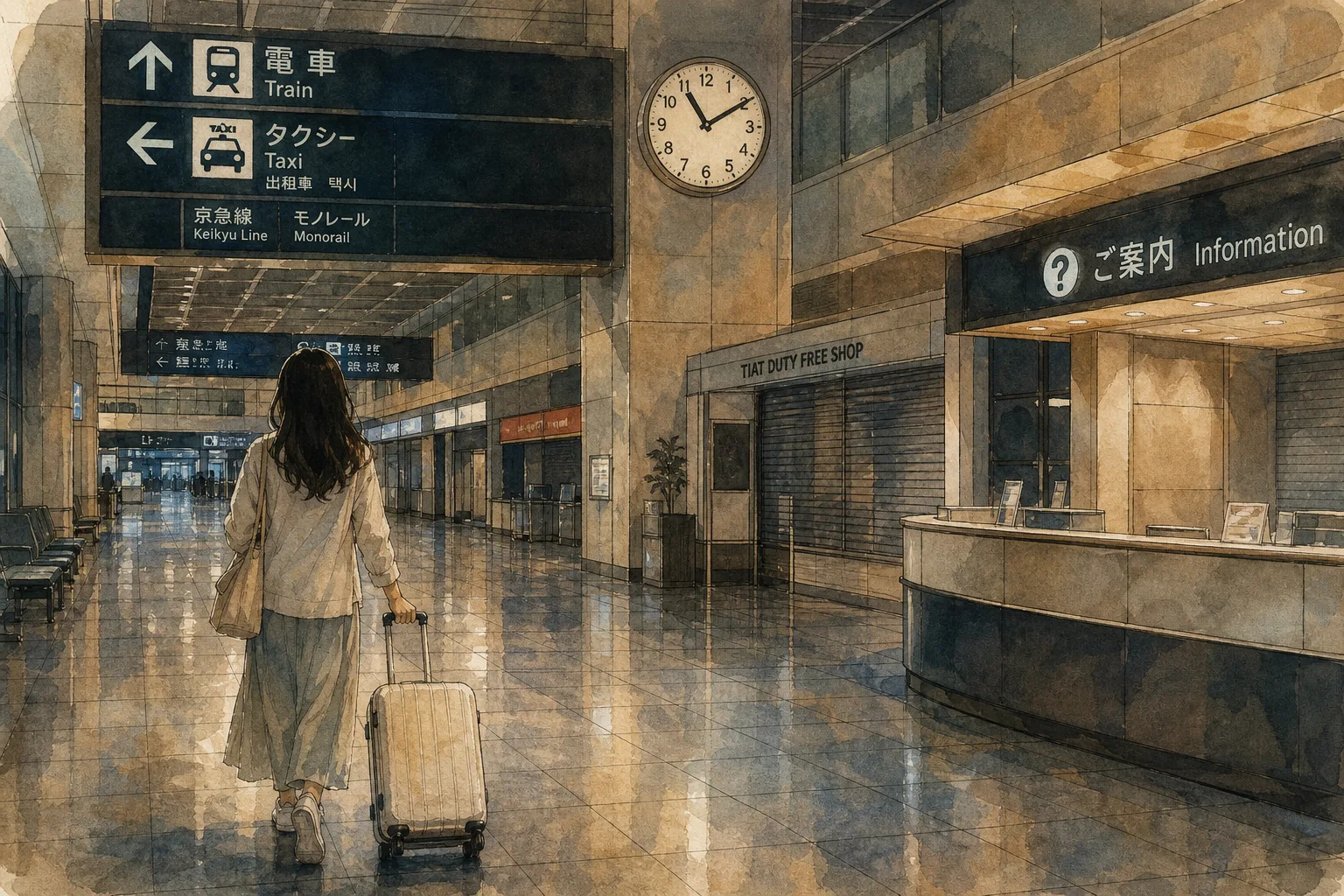
What if my flight only lands in Tokyo? Land, sleep one night near the airport or in a quiet pocket like Yanaka, then leave the city the next morning. Arrival airport logistics do not force you into a Tokyo-heavy trip. Tokyo can stay an entry point instead of becoming your full base.