travel-decisions
Who Might Regret Rome If They Want a Relaxed Italy Trip, Not Packed Landmark Days?
Rome rewards landmark-hungry travelers, but if you want a relaxed Italy trip, the crowds, walking, and itinerary pressure can backfire. Here is how to decide.
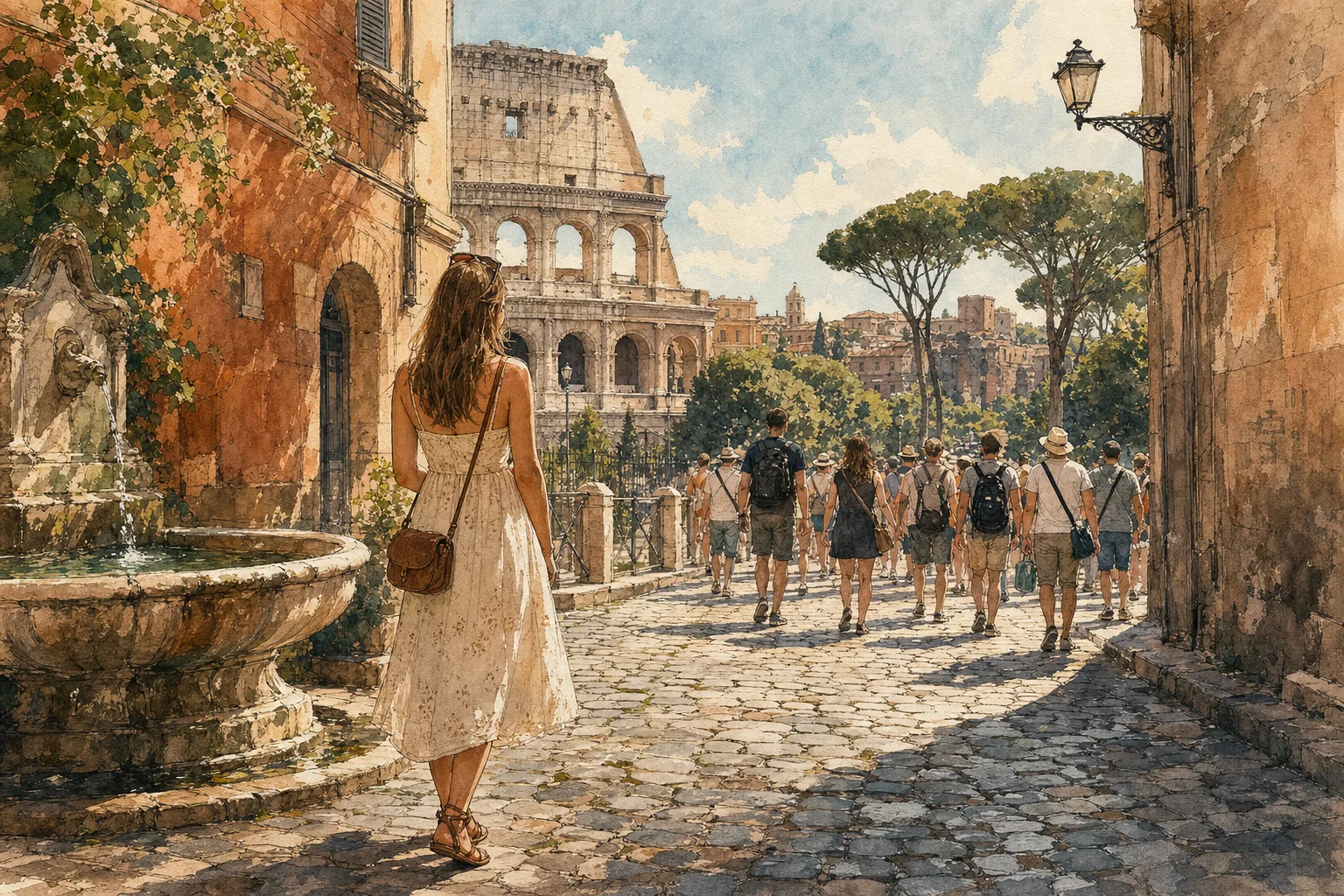
Rome is one of the most rewarding cities in Europe if you arrive ready to walk, queue, and absorb landmark after landmark. It is also one of the easiest cities in Europe to regret if you came to Italy for slow lunches, quiet piazzas, and unhurried afternoons. The mismatch is not about the city being bad. It is about the city being intense in ways that the word "Rome" on a bucket list rarely communicates.
This guide is written for travelers who suspect they want a calmer Italy trip and are not sure whether Rome belongs in it. The answer is not a flat no. It is a conditional yes, and the conditions matter.
Quick Verdict
If your idea of a great trip is two espressos, one museum, and a long dinner, Rome will fight you unless you actively redesign it. The default Rome experience is crowded, walking-heavy, and itinerary-dense. Choose Rome only if you are willing to drop most landmarks, base yourself in a quieter neighborhood, and treat the city as atmosphere rather than a checklist. If you cannot commit to that, shorten Rome to one or two nights and spend the rest of your trip in Florence, Bologna, or smaller Tuscan and Umbrian towns.
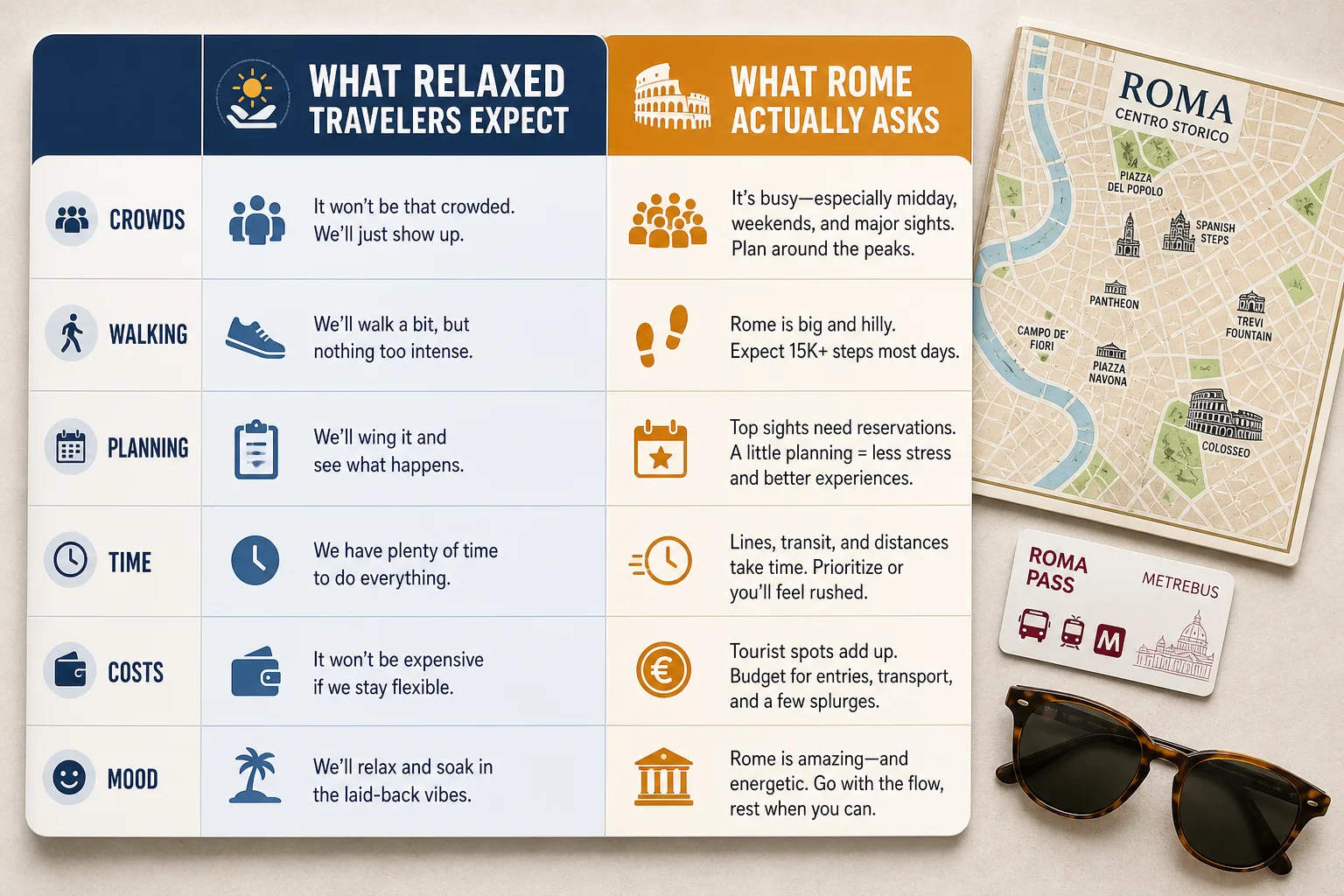 Editorial illustration: A clean overhead flat-lay style decision table on a neutral surface.
Who Will Probably Love Rome Anyway
Some relaxed travelers do thrive in Rome, but they share specific traits:
- They are happy to anchor in one neighborhood like Trastevere, Monti, or Prati and rarely cross the city.
- They are willing to skip the Colosseum interior and Vatican Museums entirely and still feel satisfied.
- They enjoy long sit-down meals and treat sightseeing as a side dish.
- They are comfortable walking 6,000 to 8,000 steps a day on uneven stone, just not 15,000.
- They travel in shoulder season rather than peak summer.
If that sounds like you, Rome can be a slow, sensory, deeply pleasant trip. The catch is that this is not how most first-time visitors plan it.
Who Might Regret Rome
You are at real risk of regretting Rome if any of these apply:
- You picture a relaxed Italy trip as cafes, light walking, and minimal logistics.
- You feel drained in dense crowds and queues.
- You have foot, knee, or back issues that make cobblestone and stairs a problem.
- You expected Rome to feel like a Tuscan village with monuments sprinkled in.
- You are doing Rome in three days and also planning to "do" the Colosseum, Vatican, Pantheon, Trevi, Forum, and Borghese.
- You assumed the metro would carry you around the historic center.
The specific disappointment risk is this: you will spend your trip moving between famous places instead of being in Italy. You will come home with photos and sore feet and the quiet suspicion that you did not actually rest.
What Relaxed Travelers Expect vs. What Rome Actually Asks
| Decision variable | What a relaxed traveler expects | What Rome actually delivers | Consequence if ignored |
|---|---|---|---|
| Daily walking | 3,000 to 5,000 easy steps | 8,000 steps for the Colosseum and Forum, 10,000 for the Vatican, on uneven stone and steep steps | Foot and back fatigue by day two, shortened evenings |
| Getting around | Quick metro or short walks | Only 3 metro lines, no direct stops at the Pantheon, Piazza Navona, Campo de' Fiori, or Trastevere | Longer walks than planned, frustration with transit |
| Ticket logistics | Walk up and enter | Colosseum standard tickets at 18 euros release 30 days out; 24 euro Full Experience tickets sell out instantly | Missed sites or last-minute paid tours |
| Crowd density | Pleasant background bustle | Sustained peak-season crowds at every named landmark | Sensory overload, rushed photos, shorter visits |
| Hotel cost | Moderate European rates | Rates projected to rise another 7 to 11 percent in 2026 after the Jubilee | Budget creep, or cheaper hotels in poorly located areas |
| Small rituals | A 2 euro coin into the Trevi at sunset | A 2 euro paid entry to the close-up basin daily, fines up to 450 euros for rule breaks | Disappointment at the gap between the romantic image and the reality |
Hidden Friction Points Most Guides Skip
Crowd pressure is the default, not the exception. It is not just the Colosseum. The Pantheon, Trevi, Piazza Navona, and Vatican area absorb sustained crowds from morning through evening for most of the year. The compact historic center concentrates that pressure. If crowds drain you, Rome drains you almost everywhere.
Walking fatigue compounds faster than you expect. A standard Colosseum and Forum visit averages 8,000 steps over uneven, unpaved ground and steep stone steps. A Vatican Museums, Sistine Chapel, and St. Peter's visit averages 10,000 steps, roughly 4 to 5 miles. If you walk from the Colosseum to the Vatican, that is another 4 kilometers on top, about 45 to 60 minutes. Doing two of these in one day breaks most travelers.
Itinerary overload is built into the city's reputation. Rome has six or seven sites that everyone tells you not to miss. Trying to honor all of them in three or four days is the single most common source of regret. The trip becomes a transit problem instead of a vacation.
Transit is not the rescue you think it is. The metro has only three lines, and Line C is still under construction at Piazza Venezia, which has rerouted buses through the center. Tourist passes cost 8.50 euros for 24 hours, 15 euros for 48 hours, and 22 euros for 72 hours, but they cannot put a station where there isn't one. You will walk.
Expectation mismatch is the quiet killer. Many travelers picture Rome as a slow, golden-light city of pasta and piazzas. That Rome exists, but it lives in the gaps between landmarks, not on the landmark route. If your plan is landmark-heavy, you will not see the Rome you came for.
How to Make Rome Easier for a Relaxed Trip
If you still want Rome in your trip, these moves reduce the regret risk:
- Pick one neighborhood and stay in it. Trastevere, Monti, or the area near Piazza Navona keep you within walking distance of atmosphere without needing transit.
- Cap landmarks at one per day. Pair each landmark morning with a long lunch and a free afternoon.
- Book the standard 18 euro Colosseum ticket exactly 30 days in advance, or skip the interior entirely and view it from outside.
- Decide in advance whether the Vatican Museums are worth a 10,000 step day. For many relaxed travelers, the answer is no.
- Go in April, early May, late September, or October to avoid peak heat and the worst crowd density.
- Use taxis for cross-city moves rather than forcing a long walk or a multi-leg bus ride.
- Build in one full day with no plans. Rome reveals itself in unstructured hours.
- Accept that the Pantheon now costs 7 euros from July 1, 2026, with name changes required at least 72 hours ahead, and that the Trevi close-up basin is a 2 euro paid timed entry. Plan around these or skip them.
Better Alternatives if Rome Is the Wrong Fit
If the friction list above made you tired just reading it, Rome may not belong in this trip. Reasonable substitutions:
- Florence for art and food at a calmer pace, with a walkable center that is smaller and less crowded outside the Duomo and Uffizi peaks.
- Bologna for serious food culture with far fewer tourists, flat arcaded streets, and a relaxed evening rhythm.
- Lucca, Orvieto, Spello, or Montepulciano for the slow Italy most relaxed travelers actually want: small towns, quiet piazzas, walkable centers, long meals.
- Lake Como or Lake Bracciano for low-stimulation days with water, light walking, and minimal landmark pressure.
- A two-base trip of Florence plus one small town, skipping Rome entirely, often produces the most "I rested" trip reports.
A common pattern that works: one or two nights in Rome for a single iconic walk, then the real trip elsewhere.
Self-Checklist Before You Book Rome
Run through this honestly. If you check three or more, reconsider Rome as your main base.
- I want fewer than 6,000 steps a day on most days.
- I feel drained, not energized, in big crowds.
- I have foot, knee, hip, or back issues that cobblestone and stairs aggravate.
- I do not want to book timed tickets 30 days in advance.
- My trip is 5 days or fewer in Italy total.
- I picture this trip as cafes and piazzas more than monuments.
- I am traveling in July or August.
- I expect the metro to take me to the famous sights.
- I want flexible mornings with no fixed entry times.
- I am traveling with someone who tires quickly.
If you checked zero to two boxes, Rome can work with the adjustments above. Three to five, shorten Rome heavily. Six or more, skip Rome on this trip and save it for a future visit when you have more days and more stamina.
FAQ
Is Rome too crowded and tiring for a relaxed Italy trip? For most travelers who define relaxed as slow mornings, short walks, and unstructured afternoons, yes. The core sights cluster in a compact zone that draws very high foot traffic, and moving between them usually means 8,000 to 10,000 steps a day on uneven stone. Rome can still work if you treat it as a neighborhood stay rather than a landmark sweep, but the default Rome itinerary is the opposite of relaxed.
How many days in Rome make sense for a slow traveler? Two to three full days is usually enough to absorb the city without burning out, as long as you commit to one major site per day at most. Going beyond four days only pays off if you intentionally drop landmarks and treat Rome as a base for sitting in cafes, wandering Trastevere, and taking quiet day trips.
Can I see Rome without doing the Colosseum and Vatican? Yes, and for relaxed travelers this is often the better trip. Both sites involve long ticket logistics, big crowds, and roughly 8,000 to 10,000 steps each over uneven ground. Skipping them in favor of the Pantheon, Piazza Navona, and slow neighborhood time produces a calmer Rome that many travelers prefer in hindsight.
Is Rome's metro enough to avoid walking fatigue? Not really. The system has only three lines and does not stop directly at the Pantheon, Piazza Navona, Campo de' Fiori, or Trastevere. You will still walk significant distances on cobblestone, and ongoing Metro C construction at Piazza Venezia has rerouted buses through the center. Plan for walking as the default, not transit.
Will Rome get more expensive in 2026? Yes. Following the Jubilee event that ended in January 2026, hotel rates are projected to rise another 7 to 11 percent in 2026 due to sustained demand. Smaller fees are creeping in too, including the 7 euro Pantheon entry starting July 1, 2026, and the 2 euro Trevi Fountain close-up basin fee.
If I want a relaxed Italy trip, where should I go instead of or in addition to Rome? Florence works as a calmer art-and-food base, Bologna offers serious food culture with far less tourist pressure, and small Tuscan or Umbrian towns like Orvieto, Lucca, and Spello deliver the slow Italy feeling Rome rarely allows. Many relaxed travelers do best with one or two nights in Rome and the rest of the trip elsewhere.