travel-decisions
Is Summer the Wrong Time for Rome? When It's Still Worth It
An honest go/no-go on visiting Rome in July and August, with who should still book, who should reschedule, and how to dodge the worst heat and crowd traps.
Strong Opening
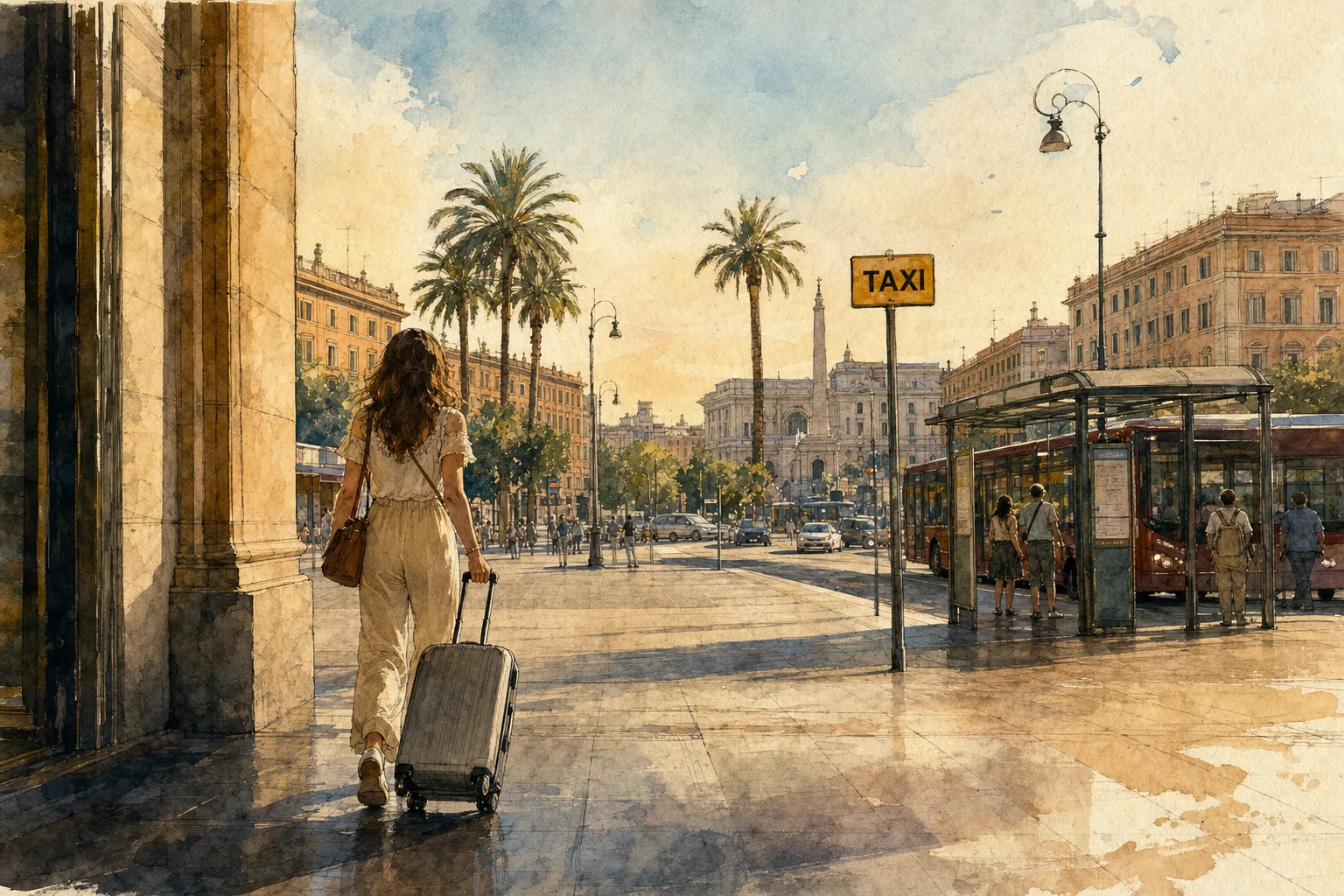
Rome in summer has a reputation problem, and most of it is earned. The pavement radiates heat well into the evening, queues snake around the Vatican walls by mid-morning, and half the city seems to vanish around Ferragosto. If you are sitting on July or August dates and quietly wondering whether you have made a mistake, that instinct is reasonable.
But "summer Rome" is not one trip. It is at least three: the early-morning version, the midday version, and the after-5 PM version. People who treat all three the same get cooked and crowded. People who plan around them get a perfectly good trip, sometimes a great one. The question is not whether Rome in summer is hard. It is whether you are the kind of traveler who can work the day around the heat, and whether your itinerary has been built for that or against it. This is a heat-management problem first and a sightseeing problem second.
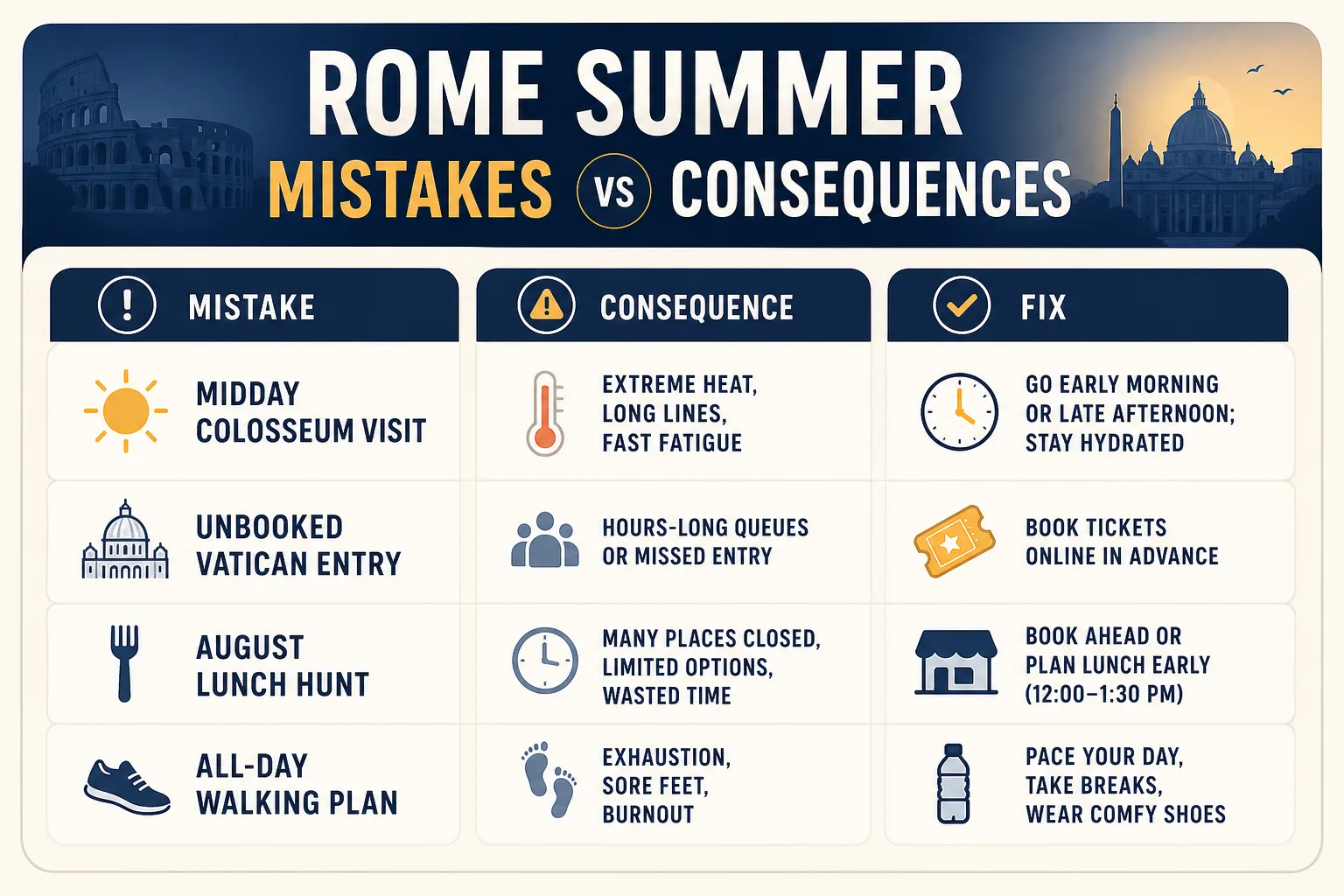 An infographic detailing common mistakes, consequences, and fixes for visiting Rome in the summer.
Quick Verdict
Go if: you have flexible energy, you are willing to wake up early, and you will pre-book every major site. Rome in summer works for travelers who treat 8 to 11 AM and 6 to 10 PM as the real sightseeing windows and accept that 1 to 4 PM is for shade, lunch, or a hotel nap.
Reschedule if: you are heat-sensitive, traveling with very young children or elderly relatives, on a tight budget that rules out a midday-cooled hotel, or you refuse to pre-book timed tickets. In that case, late September, October, or April will give you a fundamentally different city.
Worth it for: first-time visitors with locked summer dates who are willing to adapt. Not worth it for: travelers who want to wander spontaneously from sight to sight all day with no plan.
Who Will Probably Love It
Summer Rome rewards a specific type of traveler:
- Early risers who genuinely enjoy a 7 AM coffee and an empty Piazza Navona.
- Long-evening people who like dinner at 9 PM and a walk to the Trevi Fountain at 11 PM, when crowds finally thin.
- Planners who pre-book the Vatican Museums, Colosseum, and Borghese Gallery weeks ahead.
- Travelers who choose a hotel based on location and air conditioning, not just price.
- People who do not need to "see everything" and are happy with two anchor sights per day.
If three or more of those describe you, the heat is a manageable tax, not a deal-breaker.
Who Might Regret It
The mismatch pattern is consistent. Regret usually starts when travelers plan Rome as if July behaves like April. It tends to cluster around travelers who:
- Want to stroll the Forum at 2 PM because that is when they happen to be hungry.
- Did not pre-book the Vatican and planned to "see how the line looks."
- Booked a cheap room without verified air conditioning, far from the historic center.
- Packed dress shoes or new sandals for cobblestones.
- Are visiting with a partner or family member with low heat tolerance, then trying to push a full-day itinerary anyway.
The specific disappointment is rarely "Rome was bad." It is "we spent the trip exhausted, irritable, and standing in lines." That is a planning failure dressed up as a destination failure.
Not sure which side you fall on? The Travel Personality Quiz can flag whether your style maps to "structured early riser" or "spontaneous wanderer," which is the actual fault line here.
Mistake / Consequence Table
These are the decisions that quietly turn a summer Rome trip into a regret, with what they actually cost you and what to do instead.
| Mistake | Consequence | Fix |
|---|---|---|
| Visiting the Colosseum or Forum between noon and 3 PM | Direct sun on open stone, 35C+ felt temperature, rushed visit | Book the 8:30 AM opening slot or a late-afternoon slot before the 6:15 PM last entry |
| Showing up to the Vatican Museums at 10 AM without a ticket | 2 to 3 hour line in full sun | Pre-book and arrive around 8 AM or after 3 PM for 10 to 15 minute security waits |
| Buying Pantheon tickets at the door in peak season | 30 to 60 minute card-only queue for a 5 euro ticket | Pre-book online; waits drop to 10 to 20 minutes |
| Planning a 9 AM to 6 PM continuous walking day | Heat exhaustion by day two, ruined evenings | Split the day: sightsee 8 to 11 AM, rest indoors 1 to 4 PM, resume 5 PM onward |
| Booking a hotel 25+ minutes from the historic center to save money | No realistic midday return, forced to push through heat | Stay walkable to your top two sights, even if the room is smaller |
| Traveling around August 15 (Ferragosto) without checking closures | Favorite restaurants and shops shut for one to three weeks | Confirm openings the week of, save backup spots |
| Wearing new or unbroken-in shoes | Blisters by day two on cobblestones | Bring already-tested cushioned walking shoes or sport sandals |
Hidden Friction Points
A few things first-time visitors consistently underestimate:
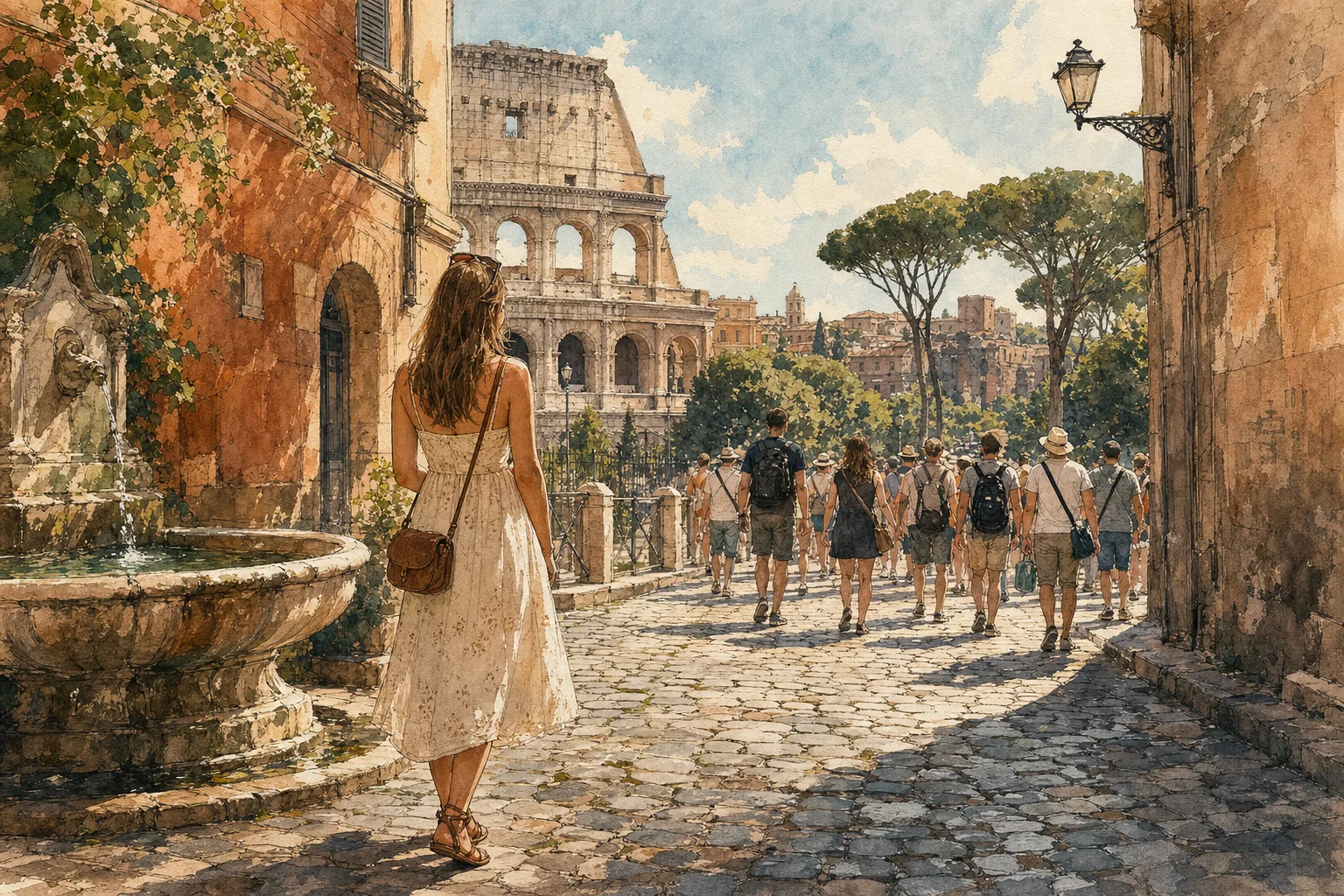
Heat that does not let up. July and August temperatures frequently reach or exceed 35C (95F) and rarely drop below 30C (86F), even overnight. Stone-heavy areas like the Roman Forum and Palatine Hill have almost no shade, and you will be standing on heated rock for an hour or more.
Timed-entry rules at the Colosseum. Entry requires named, timed-entry tickets and ID verification with a passport, national ID, or driver's license. Maximum stay inside is 75 minutes for a standard 24H ticket and 90 minutes for a Full Experience ticket. From the last Sunday of March until September 30, hours are 8:30 AM to 7:15 PM with last entry one hour before closing. Starting May 4, 2026, physical tickets for the Colosseum, Roman Forum, and Palatine Hill are sold exclusively at the ticket office in Colosseum Square, so pre-booking online is the realistic move.
The walking distances are short but the surfaces punish you. The Colosseum to the main Forum entrance is about 740 meters, roughly 9 minutes. Pantheon to Trevi Fountain is about 640 meters, around 7 minutes. Spanish Steps to Piazza del Popolo is about 860 meters, about 10 minutes. These look trivial on paper. In 35C heat, on uneven sampietrini stones, with a queue at the other end, they add up fast.
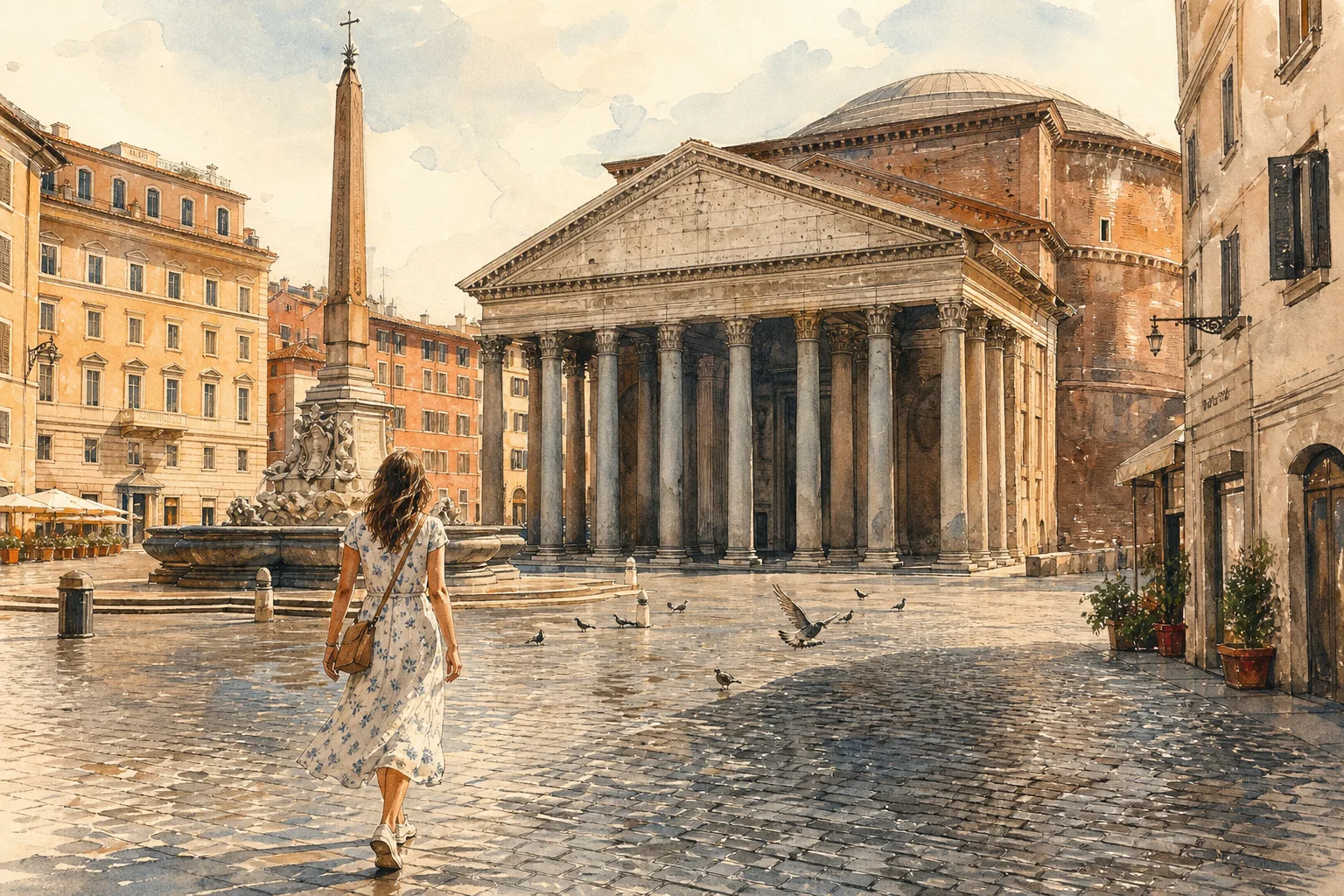
Pantheon pricing and ticket logistics. Pantheon admission is 5 euros and is scheduled to increase to 7 euros starting July 1, 2026, with entry remaining free for Rome residents and visitors under 18. On-site purchases are card-only and can take 30 to 60 minutes in peak season.
August closures. Ferragosto is real. Plan around it rather than discovering it.
How to Make It Easier
The fixes are unglamorous and they work.
- Front-load the morning. First entry slots at the Colosseum (8:30 AM) and Vatican (around 8 AM) are the single highest-leverage move. You get the sights at their coolest and emptiest.
- Pre-book everything timed. Colosseum, Roman Forum, Palatine Hill, Vatican Museums, Borghese Gallery, and Pantheon all benefit. The savings are measured in hours, not minutes.
- Build in a real midday break. Two to three hours back at the hotel between roughly 1 PM and 4 PM is not lazy, it is structural. Rome does this too: shops close, locals nap.
- Choose your hotel for location and AC. A walkable base near Monti, Centro Storico, or Trastevere makes the split-day rhythm possible. A cheap room in a far suburb does not. Confirm air conditioning is actually working, not just listed. The Hotel Location Checklist walks through the questions to ask before booking.
- Hydrate with the nasoni. Rome's public drinking fountains are free, cold, and everywhere. Carry a refillable bottle.
- Plan the evenings. Dinner at 8:30 or 9 PM, then a walk past Trevi or the Pantheon around 10 to 11 PM is when summer Rome is at its best. Treat this as a feature, not a leftover.
- Two anchor sights per day, max. One in the morning, one after 5 PM. Anything more in July or August is fighting the season.
Better Alternatives
If after reading the friction list you are quietly thinking "this sounds awful," that is useful information. Better options exist:
- Move the dates if you can. Late April to mid-May and late September through October give you long daylight, mostly comfortable temperatures, and the same sights with shorter lines. Same Rome, different difficulty setting.
- Swap to a coastal Italian base. If summer is fixed but Rome is flexible, the Amalfi Coast, Puglia, or Sicily are built for summer in a way Rome is not. Sea breeze, water access, and a slower pace.
- Pick a cooler Italian city. The Dolomites, Lake Como, or Turin run several degrees cooler and offer real shade.
- Shorten the Rome leg. If you must include Rome, two intense, well-planned days plus four days somewhere cooler often beats five exhausted days in 36C heat.
Wrong-fit travelers almost never regret moving the dates. They regret pushing through.
Self-Checklist
Before you commit, run through this. If you cannot honestly check most of these, reconsider the dates.
- I am willing to be at a sight by 8 or 8:30 AM at least three mornings.
- I have pre-booked, or am ready to pre-book, the Colosseum and Vatican Museums.
- My hotel is within a 20-minute walk of at least two of my top sights.
- My hotel has confirmed working air conditioning.
- I have accepted a 1 to 4 PM indoor break each day.
- I have already-broken-in walking shoes packed.
- I have checked which restaurants and sights close around August 10 to 20 if I am traveling then.
- I have a refillable water bottle and know what a nasone looks like.
- My itinerary has no more than two major outdoor sights per day.
- Everyone in my group has agreed to the split-day rhythm, not just me.
Eight or more checked: go. Five to seven: tighten the plan first. Four or fewer: move the trip.
FAQ
Is Rome worth visiting in summer despite the heat and crowds? Yes, if you accept a split-day rhythm: sightsee from roughly 8 AM to 11 AM and after 5 PM, rest indoors midday, and pre-book every timed-entry site. If you plan a normal 9 AM to 6 PM tourist day in July or August, you will likely regret the trip.
How hot does Rome actually get in July and August? Temperatures frequently reach or exceed 35C (95F) and rarely drop below 30C (86F). Pavement and stone amplify the heat, so the felt temperature in places like the Roman Forum is usually higher than the forecast.
Will I really save time by pre-booking Vatican and Colosseum tickets? Yes, by hours. Unreserved Vatican Museums lines can take 2 to 3 hours during peak summer mornings, while arriving around 8 AM or after 3 PM can cut security waits to 10 to 15 minutes. The Colosseum requires named, timed-entry tickets with ID, so walk-up is not a real option.
What is the August closure issue everyone mentions? Many family-run restaurants, shops, and some smaller museums close for one to three weeks around mid-August (Ferragosto). Major sights stay open, but your favorite neighborhood trattoria might not. Confirm openings the week before and have backup options saved.
Should I just go in shoulder season instead? If your dates are flexible and heat sensitivity is real, late April, May, or late September into October give you similar daylight with far more tolerable temperatures. If your dates are locked, the friction fixes above are the path forward.
Is one day in Rome enough in summer? Realistically, no. The split-day rhythm means you only get two productive sightseeing blocks per day. Two to three days is the minimum to see the headline sights without rushing through them in the worst heat.