travel-decisions
Is Vienna Too Tiring for Low-Walking Travelers?
A direct look at whether Vienna's palaces, cobblestones, and transit gaps make it a bad fit for low-walking, older, or slow travelers, and how to reduce the friction if you go.
Quick Verdict
Vienna is a strong fit for low-walking travelers who are willing to swap ambition for planning: pick fewer sights, lean on the step-free U-Bahn, and build in rest. It is a weak fit for anyone who wants to see Hofburg, Stephansplatz, Schonbrunn, and the Ringstrasse in one packed day without breaks.
The city itself is not the obstacle. The core sightseeing zone is compact, transit is mostly accessible, and slow-paced travel is easy to arrange. The obstacle is the itinerary most first-time visitors try to run: too many stops, too much walking between them, and no buffer for fatigue, stairs, or crowd bottlenecks.
Choose Vienna if:
- You are comfortable trading a long must-see list for two or three unhurried highlights per day
- You are willing to use trams and the U-Bahn instead of walking every connection
- You can accept skipping the Gloriette climb at Schonbrunn or replacing it with the Panorama Train or a bus
- You are traveling outside peak crowd months, or you are prepared for queues if you are not
Skip or rethink Vienna if:
- You need every day to include a major palace, a full museum visit, and an old-town walk with no rest gaps
- You cannot tolerate any uphill walking or extended standing in queues
- You are traveling during a period when the transit routes you need are affected by closures and you have no flexible backup plan
- Cobblestone or uneven paving in Vienna's historic core is a hard limit for you, not just a discomfort
Main Friction Problem
Vienna's friction for low-walking travelers is not a single big problem. It is four smaller ones that stack on top of each other over the course of a normal sightseeing day.
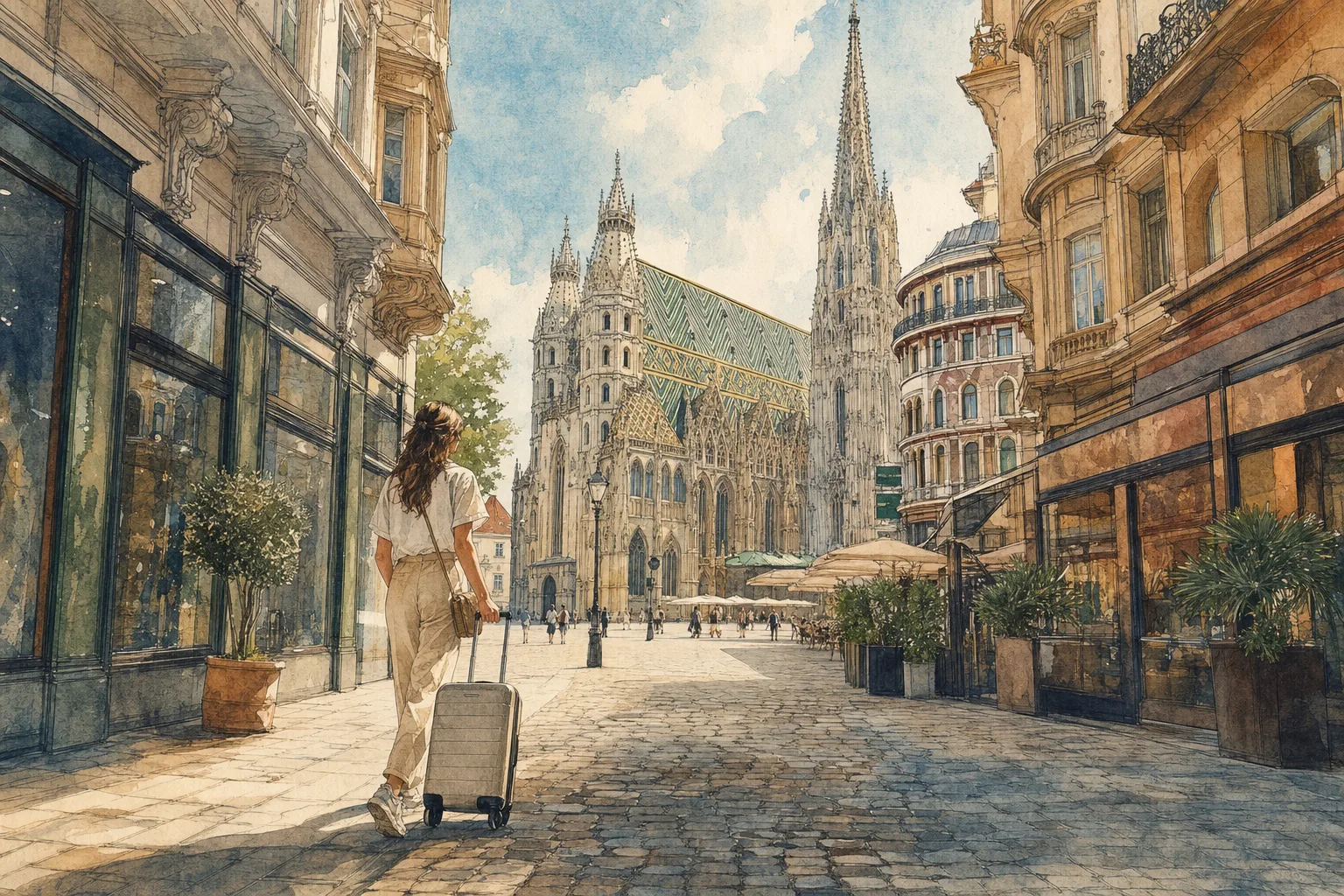
Walking fatigue. The core historic district, the Ringstrasse loop, and the museum quarter are all within a few kilometers of each other, which sounds easy until you add up the individual legs. A walk from Hofburg Palace to St. Stephen's Cathedral is about 890 meters, roughly 10 minutes. That single leg is fine. Six similar legs in a day, plus museum floors and standing in galleries, is what actually drains a low-stamina traveler.
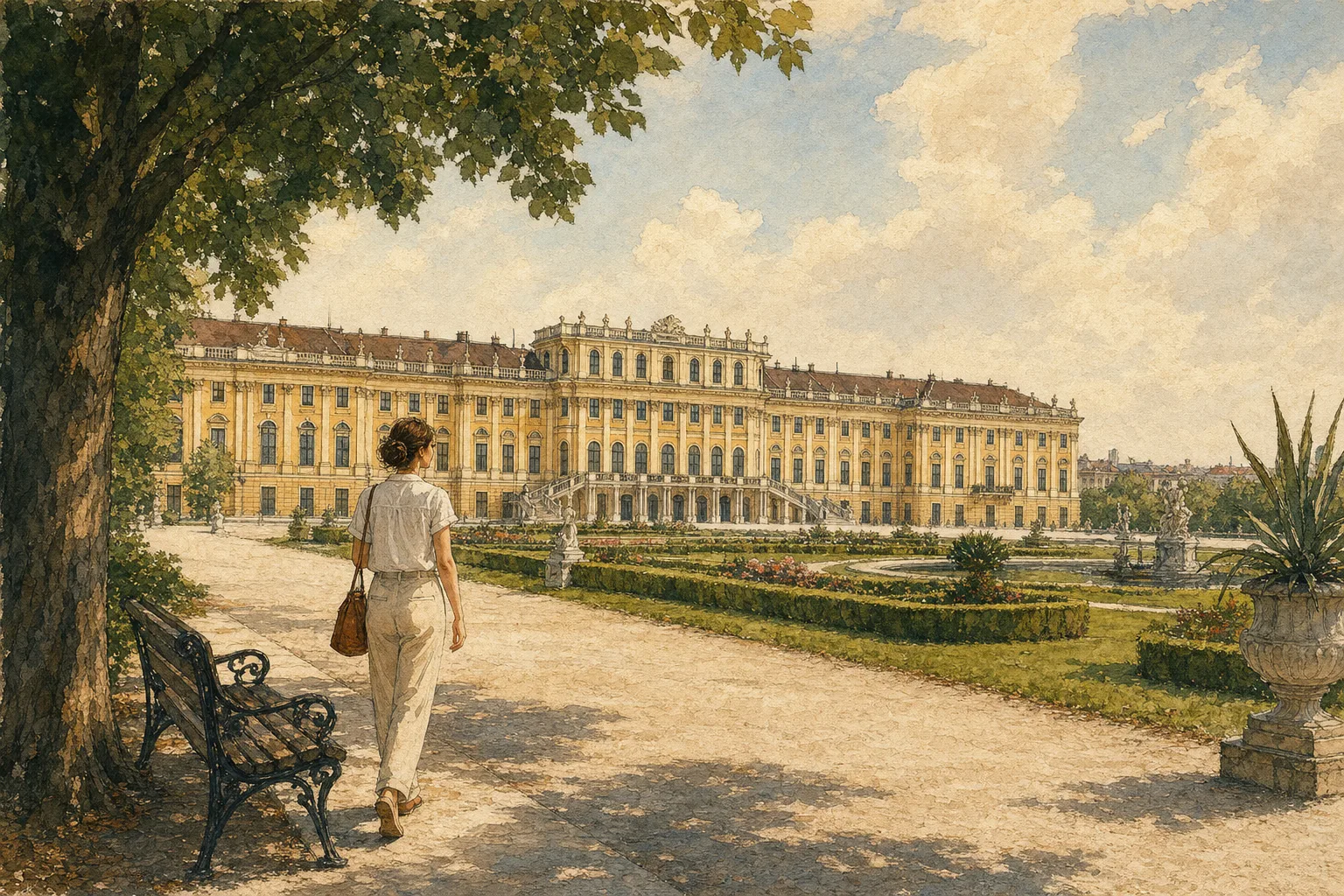
Stairs or bridges. The steepest single obstacle in Vienna sightseeing is the climb from the main Schonbrunn Palace building up to the Gloriette viewpoint: 1.5 kilometers of continuous uphill walking, about 20 to 25 minutes. There is no shortcut on foot. This is the one point in a typical Vienna itinerary where "just walk slower" does not solve the problem, because the incline itself is the issue, not the pace.
Crowd pressure. Palace entrances, cathedral doorways, and popular tram stops in peak months create queue bottlenecks. Standing in a slow-moving line is a different kind of fatigue than walking, and it is often underestimated when travelers plan a day around opening hours rather than crowd patterns.
Transit stress. Vienna's public transit is genuinely strong for low-mobility travel on paper, but 2026 has active disruptions. The S-Bahn core corridor between Hauptbahnhof and Praterstern closes entirely from September 7, 2026 through late October 2027. The U3 has a suspended segment between Hutteldorfer Strasse and Westbahnhof, and the U4 has a suspended segment between Schwedenplatz and Wien Mitte. A traveler who plans a route assuming full network availability can end up with an unplanned walk or transfer at the worst possible moment.
Friction Table
The table below breaks down what actually creates friction in a Vienna day for a low-walking traveler, versus what is manageable with planning.
| Friction point | What it actually looks like | Manageable with planning? | What removes it |
|---|---|---|---|
| Walking fatigue | Multiple 10-20 minute walks between sights add up over a day | Yes, with fewer stops per day | Cap the day at 2-3 walking legs, use trams between the rest |
| Stairs or bridges | The 1.5 km, 20-25 minute uphill climb to Schonbrunn's Gloriette | Yes, but only by avoiding the climb | Panorama Train (seasonal, wheelchair lift) or Bus 8A to Stranitzkygasse |
| Crowd pressure | Queues at palace entrances and cathedral doors in peak months | Partially | Visit outside May, September, December; go at opening time |
| Transit stress | Active U3, U4, and S-Bahn Stammstrecke disruptions through 2026-2027 | Yes, with a checked route | Check current disruption maps before fixing a route-dependent plan |
| Cobblestone paving | Uneven surfaces around Stephansplatz and parts of the old town | Partially | Choose flat-soled, stable shoes; slow down rather than reroute |
The pattern across every row is the same: Vienna's friction is rarely one blocking problem, it is an accumulation problem. Any single item on this table is tolerable. Several stacked into one unplanned day is what actually exhausts a low-walking traveler.
Who Will Feel It Most
Not every low-walking traveler experiences Vienna the same way. The friction lands hardest on specific patterns of travel, not on a single traveler profile.
Travelers who feel it most:
- Anyone trying to combine Schonbrunn's full grounds, the old town, and a museum in one day. The Gloriette climb alone consumes the stamina budget most low-walking travelers have for an entire day.
- First-time visitors following a checklist itinerary built for average-fitness travelers rather than their own pace. Generic "best of Vienna in one day" guides assume a walking capacity that does not match a low-stamina traveler.
- Travelers relying entirely on walking between sights instead of mixing in tram or U-Bahn legs, especially since Lines 1 and 2 already loop the Ringstrasse past major landmarks in 20 to 30 minutes as a seated option.
- Anyone visiting during a month with both high crowds and an active transit disruption on their planned route, since queue time and rerouted transit stress compound instead of averaging out.
Travelers who handle it comfortably:
- Slow travelers who already plan two or three anchor activities per day and treat the rest as unstructured
- Older travelers who default to transit for any distance beyond a short block, rather than walking every leg out of habit
- Anyone who has already decided in advance that skipping a sight is an acceptable outcome, rather than treating every itinerary item as mandatory
How to Reduce the Friction
Each friction point has a specific, concrete fix rather than a general "pace yourself" suggestion.
For walking fatigue: Set a hard cap of two or three walking-heavy sights per day and fill transitions with tram or U-Bahn legs instead of additional walking. Treat the 890-meter Hofburg-to-Stephansplatz walk as a reasonable single leg, not as one of many identical legs stacked in sequence.
For stairs or bridges: Skip the 1.5-kilometer uphill walk to the Gloriette entirely. Use the seasonal Panorama Train (April through October, 10:00 AM to 5:00 PM, adult fare of 16 euros, with a hydraulic wheelchair lift in the rear carriage) or take Bus 8A from Meidling train station to the Stranitzkygasse stop, which arrives near the top of the hill and bypasses the climb altogether.
For crowd pressure: Shift your visit window to January through March, Vienna's quietest and least expensive season, if your schedule allows it. If you must travel in May, September, or December, plan palace and cathedral visits for the first hour after opening rather than midday.
For transit stress: Confirm the status of your planned route in advance, since the S-Bahn Stammstrecke is closed from September 7, 2026 through late October 2027, and the U3 and U4 both have active segment suspensions. Build a backup route for any day that depends on a single transit line.
Quick reference checklist for reducing friction
- Limit each day to 2-3 walking-heavy sights, not a full checklist
- Skip the Gloriette uphill walk; use the Panorama Train or Bus 8A instead
- Check current U3, U4, and S-Bahn disruption status before finalizing routes
- Visit peak-crowd sights (Hofburg, Stephansplatz, Schonbrunn) at opening time
- Choose stable, flat-soled shoes for cobblestone sections near the cathedral
- Buy single tickets (3.00 euros online, 3.20 euros at machines) or a 24-hour pass (10.20 euros) rather than assuming older multi-day passes are still sold
Better Alternatives
If, after weighing the friction table above, Vienna still looks like more accumulated strain than you want to manage, a few adjustments change the outcome without abandoning the trip.
Shorten the trip's ambition, not the trip itself. A three-day Vienna visit built around one anchor sight per day, with transit filling every gap, removes almost all of the accumulation problem described above. This is different from cutting the trip short; it is cutting the daily sight count.
Choose a hotel inside the low-walking zone. Staying within easy reach of the U-Bahn's step-free stations, rather than in a scenic but poorly connected neighborhood, turns every sightseeing day into a series of short transit hops instead of long walks. This single decision affects nearly every friction point in the table above.
Reconsider the trip if flat, low-friction travel is a hard requirement, not a preference. Cities with less historic cobblestone paving, fewer palace-scale walking distances, and less current transit disruption will simply produce fewer accumulated friction points than Vienna does in 2026. If your walking capacity is genuinely limited rather than just a preference for a slower pace, weigh whether Vienna's specific obstacles, the Gloriette climb and the current transit gaps, are dealbreakers or manageable detours for your situation.
Split a longer Central Europe trip so Vienna is not the only stop. If Vienna is part of a larger itinerary, placing it earlier in the trip, before travel fatigue accumulates, generally produces a better experience than making it the final, most demanding leg.
Decision Checklist
Use this before booking to confirm Vienna fits your actual walking capacity, not an idealized one.
| Question | If yes | If no |
|---|---|---|
| Can I accept seeing 2-3 sights per day instead of 5-6? | Vienna fits well | Consider a shorter list or a different city |
| Am I willing to skip the Gloriette climb and use transit instead? | No issue | The Schonbrunn visit will be physically demanding |
| Can I check transit disruptions before locking in a day's route? | Route risk is manageable | Build in a backup plan or accept possible reroutes |
| Is cobblestone paving near the cathedral a discomfort or a hard limit? | Discomfort: manageable with the right shoes | Hard limit: plan around Stephansplatz's immediate area |
| Can I travel outside May, September, or December? | Lower crowd pressure, lower cost | Plan for queues and book palace tickets with timed entry |
If most answers land in the "if yes" column, Vienna is workable with the planning steps above. If several land in the "if no" column, the accumulated friction is likely to outweigh the payoff of visiting.
FAQ
Is Vienna walkable for someone who cannot manage long walking days? Yes, with adjustments. The U-Bahn's 109 stations are all step-free, so any walking leg can be replaced with transit. The risk is not the city's layout, it is an itinerary that stacks too many walking-heavy sights into one day without rest.
How far is the walk from Hofburg Palace to St. Stephen's Cathedral? About 890 meters, roughly 10 minutes, with some cobblestone paving near the cathedral. Manageable as a single leg, but it should not be one of several identical walks in the same day.
Do I have to climb to the Gloriette at Schonbrunn Palace? No. The uphill route is 1.5 kilometers and takes 20 to 25 minutes of continuous climbing. The seasonal Panorama Train and Bus 8A to Stranitzkygasse both reach the top without the climb.
Are Vienna's trams and subway accessible for slow or older travelers? Mostly yes, with all U-Bahn stations step-free and 90% of trams low-floor. The caveat is active 2026-2027 disruptions on the U3, U4, and the S-Bahn Stammstrecke, so route-dependent plans need a checked status and a backup.
When is Vienna least crowded for a low-walking traveler? January through March is the quietest and cheapest period, reducing queue time at bottleneck points. May, September, and December bring the highest crowds and hotel rates.