travel-decisions
Is Vienna Worth It If You Care More About Atmosphere Than Landmarks?
A direct answer for travelers who prioritize mood, wandering, and place-feel over checking off major sights: where Vienna delivers, where it does not, and which cities fit better if it does not.
Quick Verdict
Vienna is a strong fit if what you actually want from a trip is mood, texture, and the feeling of belonging to a street for an afternoon. It is a weak fit if your idea of a successful trip is a list of major sights checked off in order.
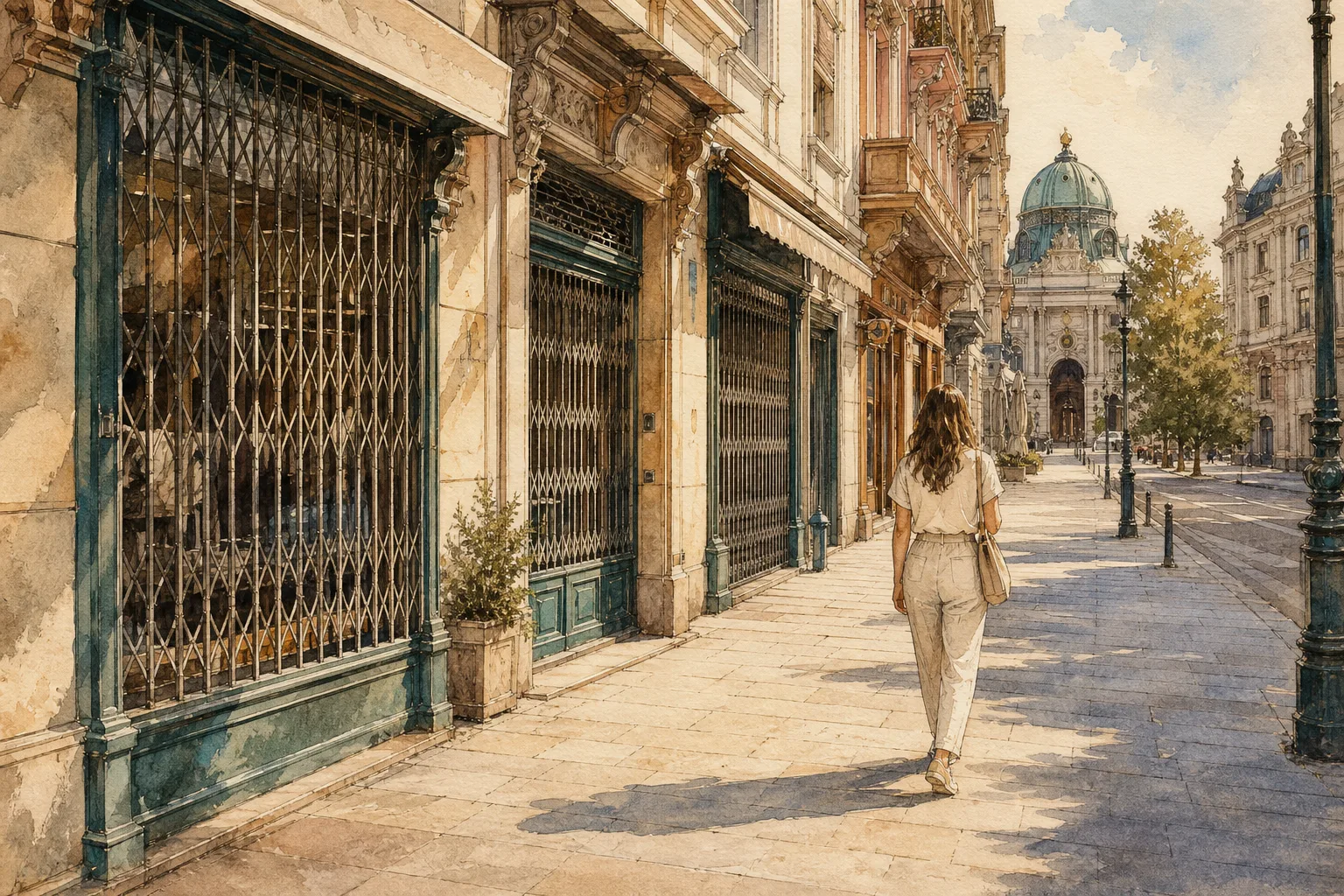
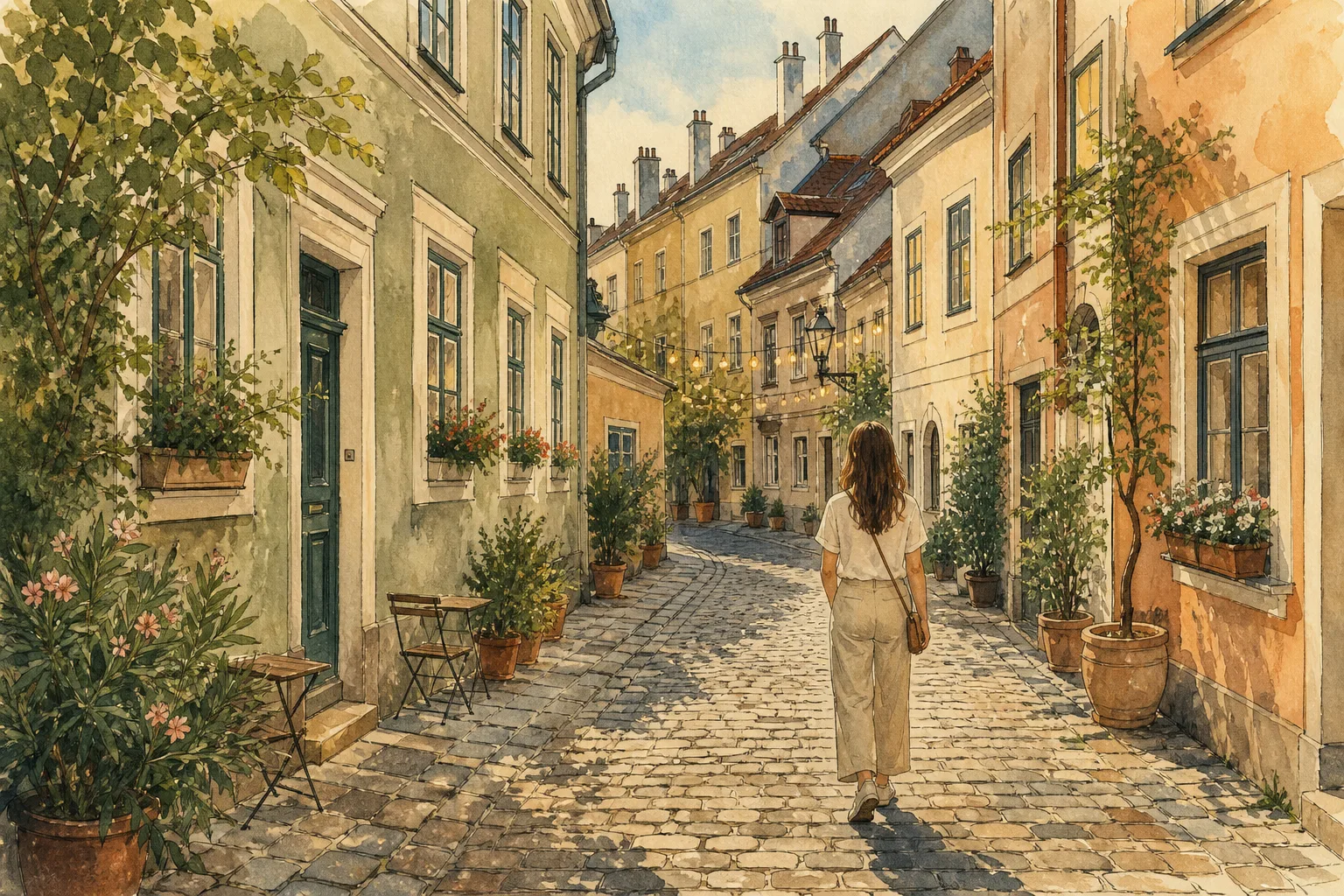
The city's landmark set (Hofburg, Schonbrunn, St. Stephen's Cathedral) is real and worth seeing once, but it is not where Vienna's atmosphere lives. That lives in pedestrian alleys like Spittelberg, in quiet residential pockets like the Servitenviertel, and in the market-and-canal rhythm of Leopoldstadt. If you care more about how a place feels than about what you photographed in front of, Vienna rewards that instinct better than most European capitals its size.
Choose Vienna for this kind of trip if:
- You would rather wander an unfamiliar street for 40 minutes than queue for a palace interior.
- You enjoy places that reward repeat visits at different times of day (a market at 9am is a different scene than at 6pm).
- You are comfortable with a loosely structured itinerary and can tolerate some unscheduled time.
Skip Vienna, or treat it as a shorter add-on, if:
- You feel unsatisfied unless you have seen the "must-see" list. Prague packs a denser, faster-to-complete landmark cluster and will likely satisfy that instinct better.
- Cost, not pacing, is your real hesitation. Budapest offers a similarly moody, low-landmark-pressure old-town feel at a noticeably lower nightly rate.
- Your trip's success metric is photos in front of recognizable landmarks rather than photos of ordinary streets and light. Florence gives you both a wandering core and a small, tightly clustered set of unmissable sights, so you are not forced to choose.
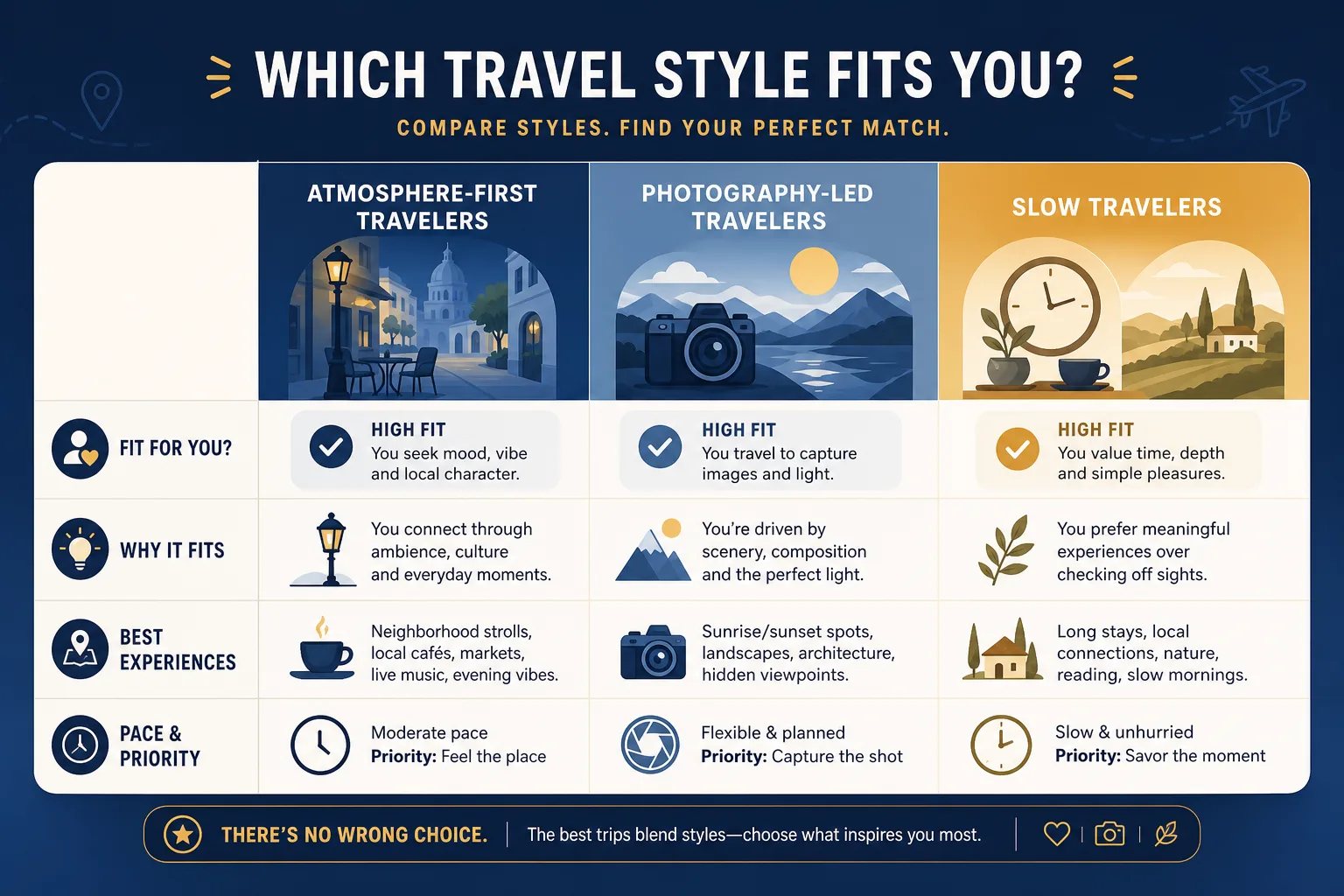 Editorial illustration: A clean simple comparison table graphic with three labeled columns for atmosphere-first travelers.
Traveler Type Table
The fit is not uniform. It depends on what you are actually optimizing for on this specific trip.
| Traveler type | Vienna fit | Where it comes from | Main tradeoff |
|---|---|---|---|
| Atmosphere-first travelers | Strong | Spittelberg's pedestrian-only cobblestone alleys and the Servitenviertel's quiet, low-traffic streets are built for slow wandering, not queuing | You will see fewer landmark interiors unless you carve out separate time for them |
| Photography-led travelers | Strong to moderate | Pastel Biedermeier facades, market stalls at Karmelitermarkt, and canal-side light in Leopoldstadt give consistent, uncrowded compositions | Some of the most photogenic residential streets are genuinely residential, so shooting has to stay low-key and respectful |
| Slow travelers | Strong | Short walking distances between distinct-feeling neighborhoods (Stephansplatz to Spittelberg is 1.7 km, about 20 minutes flat) mean you can cover a lot of atmosphere without long transit days | The upside only shows up if you resist the urge to fill the extra time with more sights |
The pattern across all three: Vienna's atmosphere is concentrated in walkable, low-landmark-density pockets, and the payoff scales with how willing you are to leave time unscheduled. If none of these three rows describe you, that is a real signal, not a planning failure, and the alternative-city guidance later in this article is the more useful next step.
Best for First-Time Visitors
A first Vienna trip built around atmosphere looks different from the standard landmark-first itinerary, and the difference matters most on day one.
Treat one full day as a "no landmark" day: start in Spittelberg, drift through the MuseumsQuartier area without necessarily entering a museum (Spittelberg sits under a 5-minute walk from MQ), then continue toward the Ringstrasse. This builds a feel for the city before any sight-specific plan kicks in, and it works for atmosphere-first, photography-led, and slow travelers alike, since none of them need a fixed schedule to get value from the day.
Where the three do split: photography-led first-timers should time Spittelberg and the Servitenviertel for early morning or early evening, when foot traffic is lightest and facade light is best, since neither area is designed around tour groups. Slow travelers should resist the common first-timer trap of trying to "cover" Vienna in three days. A first-time atmosphere-led trip works better at four days minimum, using the extra day to repeat a neighborhood rather than add a new district.
Best for Couples
Couples traveling for atmosphere over landmarks tend to do well in Vienna because the city's slow-street model suits shared, unstructured time rather than solo-optimized sightseeing.
An evening walk through Spittelberg followed by a meal in the same area gives the most value here, since the neighborhood is compact enough that dinner and wandering do not require separate transit legs. Where couples run into friction is usually photography: narrow alleys like Gutenberggasse and Schrankgasse do not have much room to spread out for a photo without blocking the path for others, so one partner shooting while the other waits is the realistic dynamic, not a shared shoot.
For couples who want both stillness and openness in one day, splitting between the Biedermeier compactness of Spittelberg in the morning and the open, river-adjacent feel of Leopoldstadt's Augarten park in the afternoon works well. The contrast itself becomes part of the atmosphere, rather than a checklist of two separate sights.
Best for Slow Travelers
This is the traveler type Vienna is arguably best matched to right now, across all three profiles this article covers.
Anchor a multi-day stay around two or three neighborhoods rather than the whole city. The Servitenviertel, centered on the 17th-century Servitenkirche, is a strong anchor because it is quiet enough to sit in without feeling like you are missing something more important nearby. Photography-led slow travelers get extra value from returning to the same street at two different times of day, since these neighborhoods change character with light and foot traffic in a way single-visit landmark stops do not.
The clearest example of place-feel over sightseeing is the walk itself: the 1.1 km, roughly 14-minute route from the Servitenviertel to the Ringstrasse near Schottenring is not a "sight," but it is the kind of transition that builds a sense of the city's layout and mood better than a transit hop would.
Best for Low-Stress Travelers
Low-stress travel and atmosphere-first travel overlap more than they conflict, but only if you actively resist over-scheduling.
Vienna's flat, compact core is the biggest asset here. Spittelberg to Stephansplatz is a flat 20-minute walk or a 3-minute U3 ride, which means you can change plans midway through a walk without a real cost in time or effort, whether you are there for mood, photos, or just to move slowly. The one caveat applies to photography-led travelers specifically: some of the calmest, most photogenic pockets are also the most residential, so the low-stress version of this trip means shooting quickly and respectfully rather than lingering for the perfect frame.
One logistics note worth building slack around: starting September 7, 2026, a 14-month modernization closure of the central S-Bahn trunk line between Vienna Central Station/St. Marx and Praterstern will affect regional trains and some airport connections. If your trip falls after that date, confirm your airport transfer method in advance rather than assuming the usual route.
Best for Niche Interests
Classical Music Beyond the Headline Concerts
Vienna classical music for atmosphere travelers works best when the performance is part of the evening rather than its only objective. Look for chamber recitals and church concerts on current programs, then leave time to walk through Spittelberg before or after; the smaller scale keeps the experience connected to the city instead of turning it into another major-sight appointment.
Coffeehouse Culture as a Slow Ritual
Vienna coffeehouse culture neighborhoods suit travelers who are comfortable letting one stop occupy part of an afternoon. Around Spittelberg, use a coffeehouse as a pause between short walks; in Leopoldstadt, it can be the anchor for a quieter neighborhood block rather than a quick caffeine stop before the next attraction.
Market and Everyday Food Culture
Karmelitermarkt gives food-focused travelers a concrete way into Leopoldstadt's daily rhythm without building the day around a formal food tour. Visit while the market is active, notice what locals are buying, and continue on foot through the surrounding streets; this version of Vienna market culture is about context and repetition, not collecting as many dishes as possible.
Common Mismatches
Atmosphere-first framing does not fit every traveler who thinks it will. The most common disappointment patterns, and where to go instead:
- The "I'll relax, but also see everything" traveler. This is the most frequent mismatch. Travelers plan an atmosphere-led trip but keep a mental list of landmarks they feel obligated to hit, which recreates the exact overplanning pressure they were trying to avoid. If this is you, a city with a shorter, denser must-see list, like Prague, will let you actually finish the checklist and relax afterward, instead of dragging it through an atmosphere-first city where it never feels done.
- The photography-led traveler expecting dramatic, empty backdrops. Spittelberg and the Servitenviertel are charming, not vast. Travelers expecting sweeping, landmark-scale backdrops may find these neighborhoods too intimate and residential for that style of shot. Florence's mix of a walkable historic core with a small number of monumental, photogenic anchors close together is a better match for that specific expectation.
- The traveler who equates "atmosphere" with "free" or "cheap." Atmosphere-first does not mean budget travel in Vienna. Mid-range hotels still run 110 to 200 euros a night in 2026, and the disappointment risk here is financial: expecting a slow, unstructured trip to also be a low-cost one. Budapest delivers a comparably moody, low-landmark-pressure old-town experience at a meaningfully lower nightly rate, and is the more direct fix if cost is the real constraint.
- The traveler relying on composer-house museums for atmosphere. Several composer-specific historical museum apartments are temporarily closed in 2026 due to early-year cultural budget cuts, for a projected period of up to two years. Travelers building their sense of "Vienna atmosphere" around these specific interiors should confirm current status before counting on them.
- The short-trip optimizer. Trying to compress an atmosphere-first Vienna trip into a rushed one or two days tends to produce the worst version of both approaches: not enough time to wander, and not enough time to see the major sights either. If your trip is genuinely capped at two days, a landmark-dense, compact city like Prague will convert that short window into a more complete-feeling trip than Vienna will.
Final Match Recommendation
Choose Vienna for an atmosphere-first trip if you can genuinely tolerate, or even want, blocks of unscheduled time, and if your travel satisfaction comes from noticing a street rather than confirming a sight. The city's compact core, short walking distances between distinctly-moody neighborhoods, and flat, easy transit (a single ticket is 3.00 to 3.20 euros in 2026) make it unusually easy to build a slow, low-landmark itinerary without feeling logistically stretched.
Do not choose Vienna for this kind of trip if you know from past trips that skipping major landmarks leaves you feeling like you wasted the visit, if cost is a harder constraint than pacing, or if your trip is capped at one or two days. Those are not planning failures, they are signals pointing to a different city: Prague for a denser, faster-completing landmark list, Budapest for atmosphere at a lower price point, or Florence for atmosphere paired with a small, tightly clustered set of unmissable sights.
If you are unsure which category you fall into, the clearest test is this: imagine a full day with no named sight on the itinerary, just neighborhoods and time. If that sounds like a relief, Vienna's atmosphere-first version is a strong match. If it sounds like a wasted day, one of the three alternative cities above will serve you better than forcing the fit in Vienna.
FAQ
Is Vienna a good fit if I do not care about museums or major sights? Yes, more than most European capitals its size. Vienna's core appeal for atmosphere-first travelers is not any single museum, it is the texture of neighborhoods like Spittelberg and the Servitenviertel, where you can walk for an hour without a checklist and still feel like the trip was full. You will pass landmarks incidentally, not because you planned around them.
What city should I pick instead if Vienna sounds like a mismatch for me? If you need a dense must-see list to feel satisfied, Prague delivers a tighter cluster of instantly recognizable landmarks within a smaller, easier-to-cover core, so a checklist trip feels complete faster. If your real complaint about Vienna would be cost, not landmark density, Budapest gives you a similarly atmospheric, low-landmark-pressure old-town feel at a noticeably lower price per night. If you want atmosphere plus a strong single-museum anchor for photography, Florence pairs a compact wandering core with a small number of unmissable sights close enough together that you do not have to choose between mood and must-sees.
How many days do I need in Vienna for an atmosphere-led trip? Three to four days is enough to settle into a slower rhythm without feeling rushed. Two days tends to pull you back into landmark-mode by default, since it is hard to resist optimizing a short trip. Five or more days works well if you want to add a day trip or simply repeat a favorite neighborhood at a different time of day.
Is Vienna expensive for a slow, low-landmark trip? It can be moderate rather than cheap. Mid-range hotels run roughly 110 to 200 euros a night in 2026, and a single transit ticket is 3.20 euros at a machine or 3.00 euros online. The emotional payoff for atmosphere-first travelers tends to come from free wandering and market visits rather than paid attractions, so your daily spend can stay lower than a landmark-heavy itinerary even at similar hotel costs. If cost is your main hesitation rather than pacing, Budapest is the more direct answer.
What is the biggest mistake atmosphere-first travelers make in Vienna? Overplanning the trip like a landmark itinerary and then feeling guilty when they deviate from it. The fix is to build in deliberately unscheduled blocks, especially in the morning or early evening, rather than filling every slot with a named sight.