travel-decisions
Is a Vienna State Opera Standing Ticket Too Exhausting and Rigid for Casual Music Lovers?
A friction-first look at Vienna State Opera standing tickets: the walking, the timing rules, the dining tradeoffs, and who should book a seat instead.
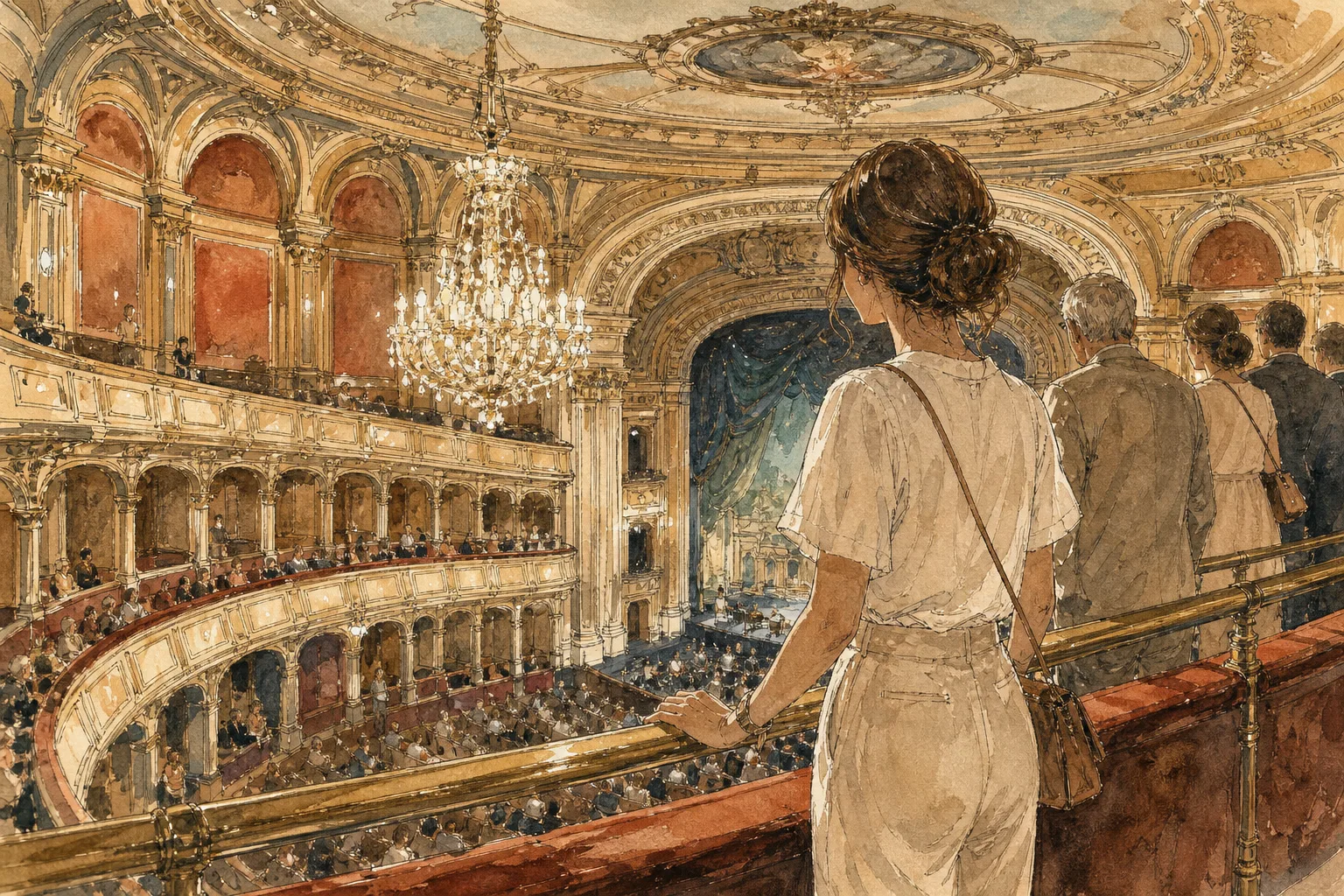
Quick Verdict
A Vienna State Opera standing ticket is a strong fit if you are healthy on your feet for two to three hours, you are traveling on a tight budget, and you care more about hearing world-class opera cheaply than about comfort. At 13 to 18 euros, it is one of the best value cultural experiences in Europe, and the standing spots are close enough to the stage that the price-to-experience ratio is hard to beat anywhere else in the city.
It is a weak fit if you have any back, knee, hip, or foot issues, if you are traveling with someone who tires easily, or if you have a tight evening schedule with dinner plans, an early train, or low tolerance for rigid rules. The opera does not bend for anyone: no seats in standing areas, no re-entry once the doors close, and a mandatory cloakroom check regardless of what you are carrying. If any of that sounds like a dealbreaker before you have even bought the ticket, it probably will be during the performance too.
The short version: standing tickets reward stamina and punctuality, and punish neither generously nor occasionally. Decide based on your actual physical tolerance for the night, not on how much you want to say you saw an opera in Vienna.
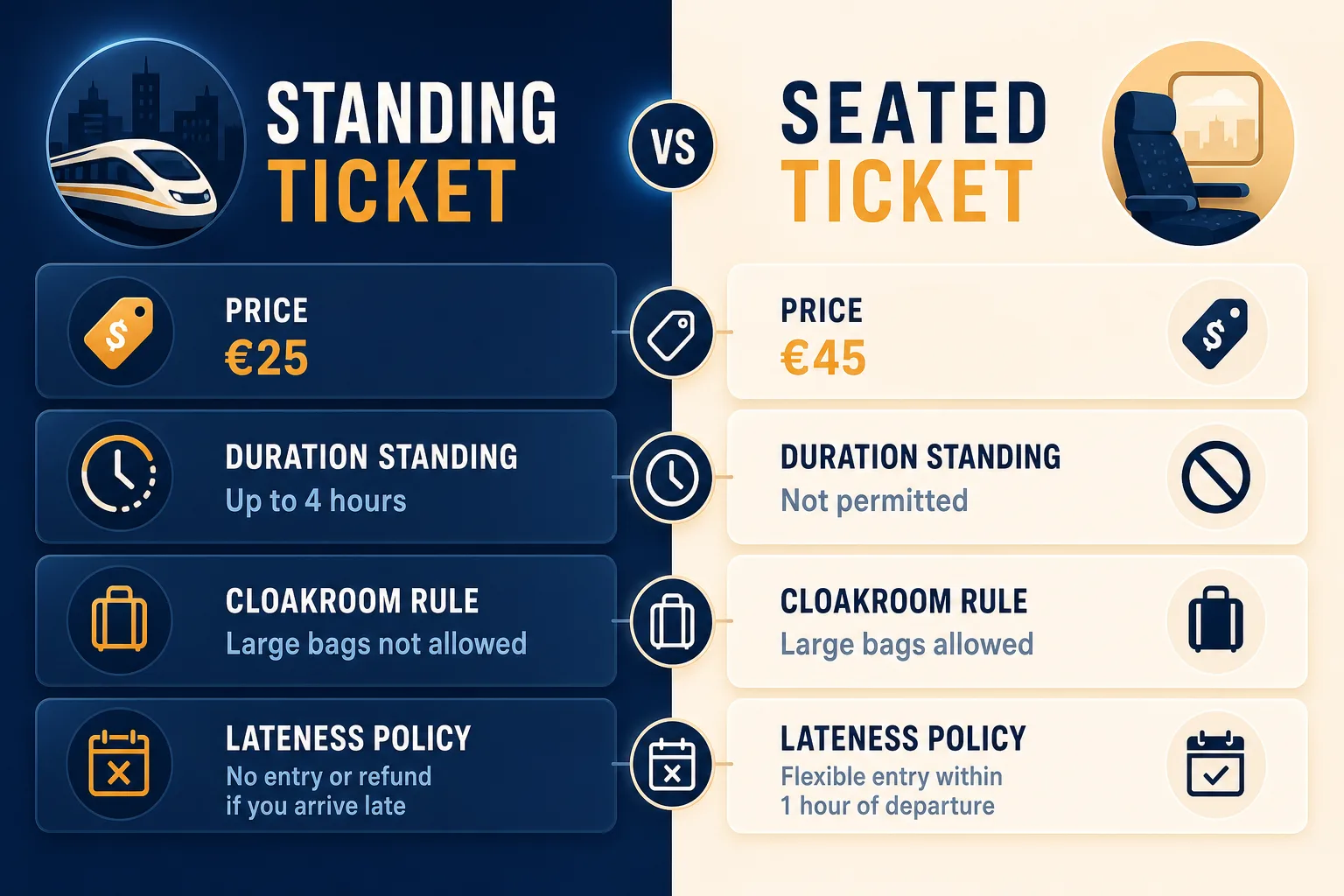 Standing versus seated: the real tradeoffs before you buy.
Main Friction Problem
The appeal of a standing ticket is obvious. The friction is what casual visitors underestimate, and it comes from three directions at once.
Walking fatigue. You are not just standing during the performance. You have likely walked most of the day already, and Vienna's 1st District is dense with cobblestones and pedestrian zones that add up. Then you stand, without a seat or stool, for the length of the show. A shorter opera at two hours is manageable for most people. A longer Wagner production pushing past four hours is a different physical demand entirely, closer to standing through two feature films back to back with no chair.
Time pressure. Standing tickets go on sale online at 10:00 AM the day of the performance, and any remaining tickets are sold at the physical box office starting 80 minutes before curtain. That means your day already has a fixed checkpoint built into it if you want a guaranteed spot, and once you have your ticket, the opera's zero-tolerance late policy takes over: arrive after the doors close and you wait outside your spot until the first intermission. There is no quiet slip-in five minutes late.
Dining etiquette. Vienna's opera culture assumes you will eat either well before or well after the show, not during a rushed pre-theater window. Cafe Sacher sits about 130 meters away, a two-minute walk, which sounds convenient until you try to fit a real sit-down meal, the bill, and the walk into the same 45 minutes before doors close. Casual travelers who expect a relaxed dinner-then-show evening, the way they might treat a normal night out, run into a schedule that does not accommodate lingering.
None of these frictions are dealbreakers on their own. Stacked together on the same evening, they are what turns a "why not, it's cheap" decision into a night that feels more like an endurance test than a treat.
Friction Table
| Decision variable | Standing ticket reality | What it means for a casual visitor |
|---|---|---|
| Physical demand | Stand 2-3 hours average, 4+ hours for some Wagner works, no seats or stools allowed | Fine for healthy adults; risky for anyone with joint, back, or foot problems |
| Price | Stehparterre 18 euros, Galerie 15 euros, Balkon 13 euros | Genuinely one of the cheapest ways to see world-class opera anywhere |
| Ticket timing | Online sales open 10:00 AM day-of; box office opens 80 minutes before curtain | Requires you to plan part of your day around a fixed sales window |
| Late arrival | Zero-tolerance policy; no entry to your spot until first intermission | A delayed dinner, taxi, or transit hiccup can cost you the whole first act |
| Spot assignment | Numbered spots at the rail, assigned at purchase | No need to arrive hours early with a scarf, unlike the old tradition |
| Belongings | Mandatory free cloakroom for coats, umbrellas, bags, backpacks | Adds a small logistics step and a short queue before and after |
| Dining window | No food or drink in the auditorium; Cafe Sacher 2 minutes away, Bitzinger Wurstelstand 80-100 meters behind the venue, open 8am-4am | Sit-down dinner beforehand is tight; a quick stand-up sausage stand meal fits the schedule better |
| Rest option | A waiting lounge with chairs and a live-stream monitor exists on the top floor for standing patrons who need to sit | Not a substitute for seeing the stage, but a real relief valve if you need to sit mid-show |
The pattern in this table is simple: every convenience Vienna built into the standing-ticket system (numbered spots, a rest lounge, a nearby late-night food stand) is a patch on top of a system that is still fundamentally rigid about time and posture. It is workable, not flexible.
Who Will Feel It Most
Budget-conscious travelers who are otherwise healthy and mobile get the best version of this deal: near-front-row sound and sightlines for the price of a casual dinner elsewhere in the city. If that is you, the friction points above are annoyances, not obstacles.
Low-stamina travelers feel this differently. If you already notice your legs or back aching after a normal day of city walking, adding two to four hours of upright, stationary standing on top of that is not a minor discomfort, it is the kind of thing that can ruin the rest of your trip the next day. The waiting lounge with chairs helps, but using it means missing the stage.
Casual tourists who are curious about the opera but not devoted to it are the group most likely to misjudge this. The idea of "seeing an opera in Vienna for 15 euros" is romantic in the abstract. The reality of standing through an unfamiliar three-hour German or Italian-language production, with no seat and no ability to step out and back in, is a much bigger ask than most casual visitors picture when they buy the ticket that morning.
Travelers on a tight single-day or single-evening itinerary also feel the time pressure acutely. If your evening already includes a train to catch, a dinner reservation elsewhere, or an early flight the next morning, the rigid sales window and zero-tolerance late policy add a layer of scheduling risk that a seated, pre-booked ticket simply does not carry.
How to Reduce the Friction
You cannot negotiate the opera's rules, but you can plan around them.
- For walking fatigue: treat opera day as a lighter sightseeing day. Cut your walking total earlier in the day, wear the most supportive shoes you own, and mentally budget the standing time as its own "activity" rather than something you squeeze in after a full day on your feet. If you start to struggle mid-show, the top-floor waiting lounge with chairs and a live-stream monitor is there specifically for this.
- For time pressure: decide in advance whether you are buying online at 10:00 AM or showing up at the box office 80 minutes before curtain, and build your whole day around whichever choice you make. Arrive well before the doors close rather than aiming for the exact cutoff. Because Karlsplatz Underground Station sits under a one-minute walk from the opera house, connected directly via the underground Opernpassage, transit delay is one risk you can mostly design out of the evening by using that station specifically.
- For dining etiquette: skip the sit-down dinner squeeze entirely. Eat a proper meal earlier in the afternoon, then treat the pre-opera window as snack-only. The Bitzinger Wurstelstand, roughly 80 to 100 meters behind the opera house and open from 8am to 4am, is built for exactly this kind of quick, no-reservation, standing-friendly meal. Save Cafe Sacher, two minutes away, for after the show when you are not racing a curtain time.
- For belongings: pack light on opera night. The mandatory free cloakroom takes coats, umbrellas, large bags, and backpacks, so arriving with less means a faster line in and a faster exit when the show ends and everyone heads for the cloakroom at once.
Better Alternatives
If the friction table above reads like a list of problems rather than manageable details, a standing ticket is probably the wrong choice for this trip, and that is a reasonable conclusion, not a failure to appreciate opera.
Book a seated ticket instead. It costs more, but you remove the single biggest friction point entirely: the standing. Seated tickets also tend to come with a more forgiving relationship to the late-seating rule in practice, since you have a fixed, known location rather than needing to squeeze into a rail spot.
Choose a shorter, lighter production. If you are set on standing room but worried about stamina, checking the runtime before you buy matters more than the price. A two-hour opera is a very different physical ask than a four-hour Wagner piece. Casual visitors specifically should favor shorter, well-known repertoire over marathon works on a first visit.
Treat the opera house itself as the experience, not the performance. A daytime guided tour of the building lets you see the architecture and grandeur without any standing-for-hours commitment, which can satisfy the "I want the Vienna opera experience" urge for travelers who know a full standing performance is not realistic for their body or schedule.
Reconsider the trip timing. The opera's formal season runs from September 1 to June 30, with the house completely closed through July and August. If your Vienna trip lands in peak summer, standing-room opera is not on the table at all, and this entire decision is moot, so check your travel dates against the season before building an evening around it.
Decision Checklist
Use this before you buy, not after you are standing at the rail wondering if you should have paid for a seat.
- Can I comfortably stand, without sitting, for at least 2.5 to 3 hours on a normal day, let alone a travel day?
- Have I checked the specific performance's runtime, so I know if it is a 2-hour show or a 4-hour one?
- Is my trip date between September 1 and June 30, when the opera house is actually open?
- Am I prepared to plan my day around a 10:00 AM online sale or an 80-minutes-before-curtain box office window?
- Do I have a backup plan if I arrive late, knowing I will not be seated until the first intermission?
- Have I planned dinner as an early meal or a quick stand-up option, instead of a sit-down meal right before curtain?
- Am I traveling light enough that the mandatory cloakroom check will not slow me down?
- If my legs or back give out mid-show, am I willing to use the waiting lounge and miss part of the stage view?
If you answered no to two or more of these, a seated ticket or a daytime opera house tour is the better decision for this trip.
FAQ
Is a Vienna State Opera standing ticket actually uncomfortable? Yes, for anyone with back, knee, or foot problems it can be genuinely hard. You stand for the full performance, which averages 2 to 3 hours and can run past 4 hours for some Wagner productions. No stools or seats are allowed in the standing areas, so there is no way to rest during the acts.
Can I leave and come back during a standing-room performance? You can step out during intermission, but the opera enforces a strict zero-tolerance late policy. If you leave mid-act or arrive late, you will not be let back into your standing spot until the next intermission, so plan bathroom and rest breaks around the breaks in the program, not around your own comfort.
Do I need to rush to get dinner before a Vienna State Opera show? Only if you insist on a sit-down restaurant meal beforehand. Cafe Sacher is about a 2-minute walk from the opera house, but a proper dinner there before curtain means eating early and watching the clock. A more relaxed option is the Bitzinger Wurstelstand about 80 to 100 meters behind the opera house, open from 8am to 4am, which lets you eat close by without a reservation or a rushed sit-down meal.
How much do standing tickets actually cost compared to seats? Standing spots run from about 13 to 18 euros depending on location: Stehparterre at 18 euros, Galerie at 15 euros, and Balkon at 13 euros. That is a fraction of the cost of a seated ticket, which is the entire reason budget travelers consider standing in the first place.
Do I need to bring or reserve a spot with a scarf like the old tradition? No. That custom is now obsolete. Standing tickets are assigned to specific numbered spots at the viewing rails when you buy them, so you do not need to arrive hours early and tie a scarf to a railing to claim your place.