travel-decisions
Is Seville a Good Fit for Solo Female Travelers Who Want Evening Walkability?
A direct decision guide for solo female travelers weighing Seville's evening walkability, with neighborhood fit, friction points, and regret risks.
Quick Verdict
Yes, Seville fits most solo female travelers who specifically want evening walkability, as long as you base yourself inside the historic center and accept pickpocketing as the real risk to manage. The old town is compact, foot traffic stays heavy until late, and dinner culture means you are rarely walking empty streets at 10 p.m.
Choose Seville if you want a city where the evening is the point: lit plazas, short walks between tapas bars, and other people around without needing transit. Skip it if your idea of safe evening walking means quiet, low-density streets, or if you plan to stay outside the center to save money. The fit depends almost entirely on which neighborhood you book.
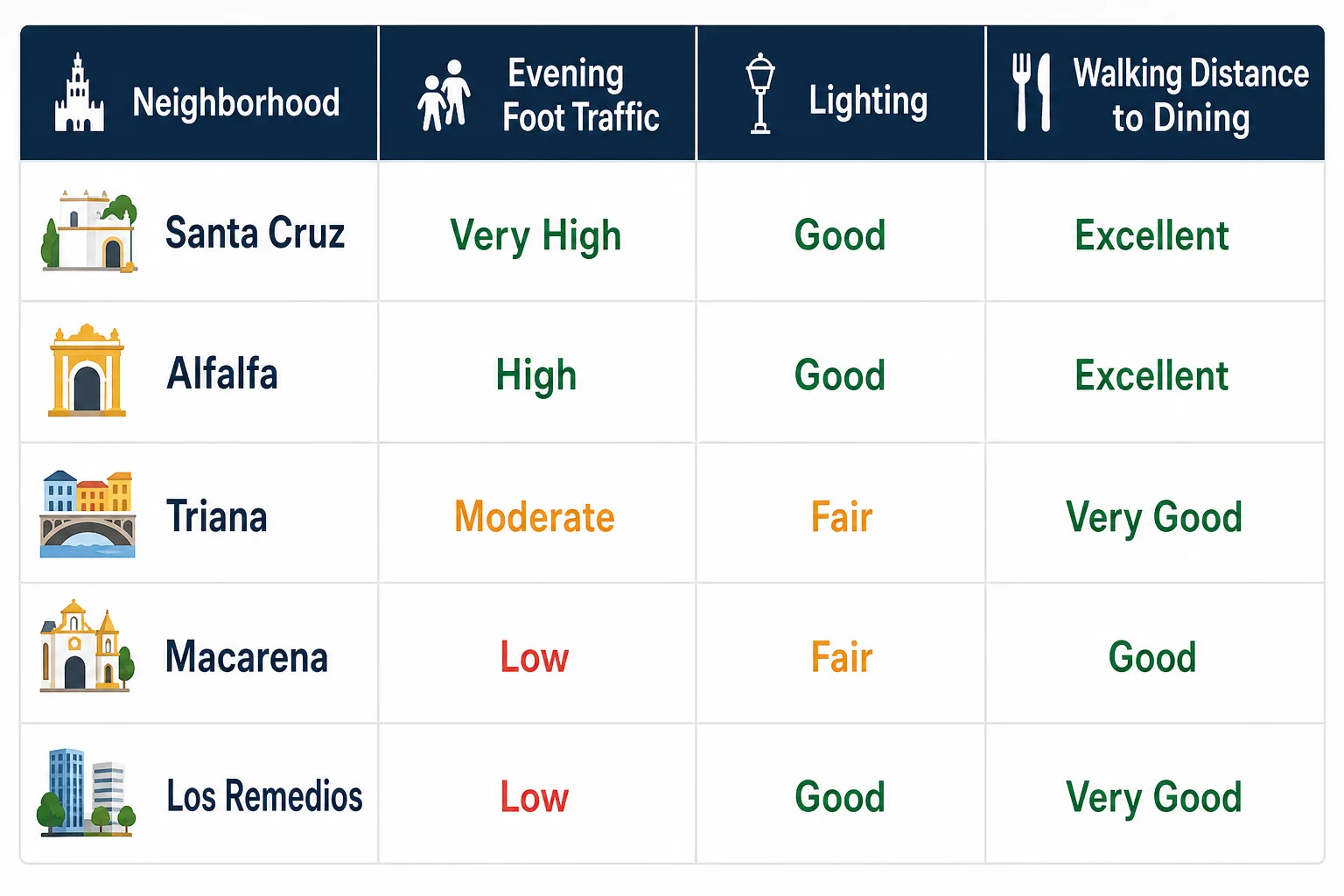 A table compares five Seville neighborhoods by evening foot traffic, lighting, and walking distance to dining categories.
At a Glance Table
| Decision variable | What Seville actually delivers | Where the fit breaks |
|---|---|---|
| Evening foot traffic | Heavy in Santa Cruz, Alfalfa, Triana until midnight or later | Sparse in residential outer rings |
| Walking distance to dinner | A core 2 km loop covers most plazas in about 30 minutes | Longer if you book in Los Remedios or Nervion |
| Lighting | Strong in tourist core and main tapas streets | Patchy in narrow side alleys off the main grid |
| Main safety risk | Pickpocketing in crowds and on transit | Not violent crime in the tourist core |
| Late transit | Tram until 1:30 a.m., metro to 11:30 p.m. weekdays | Metro does not really serve the old center |
| Price pressure | Cheapest in July and August | March and April spike hard for festivals |
| Neighborhoods to avoid after dark | Polgono Sur, Las Tres Mil Viviendas, Los Pajaritos | Not on any normal tourist route, easy to skip |
Choose Seville If
- You want to walk to dinner, not take transit to it. The core sights and tapas streets sit inside roughly a 2 km loop, so a 30-minute walk covers most of what you came for.
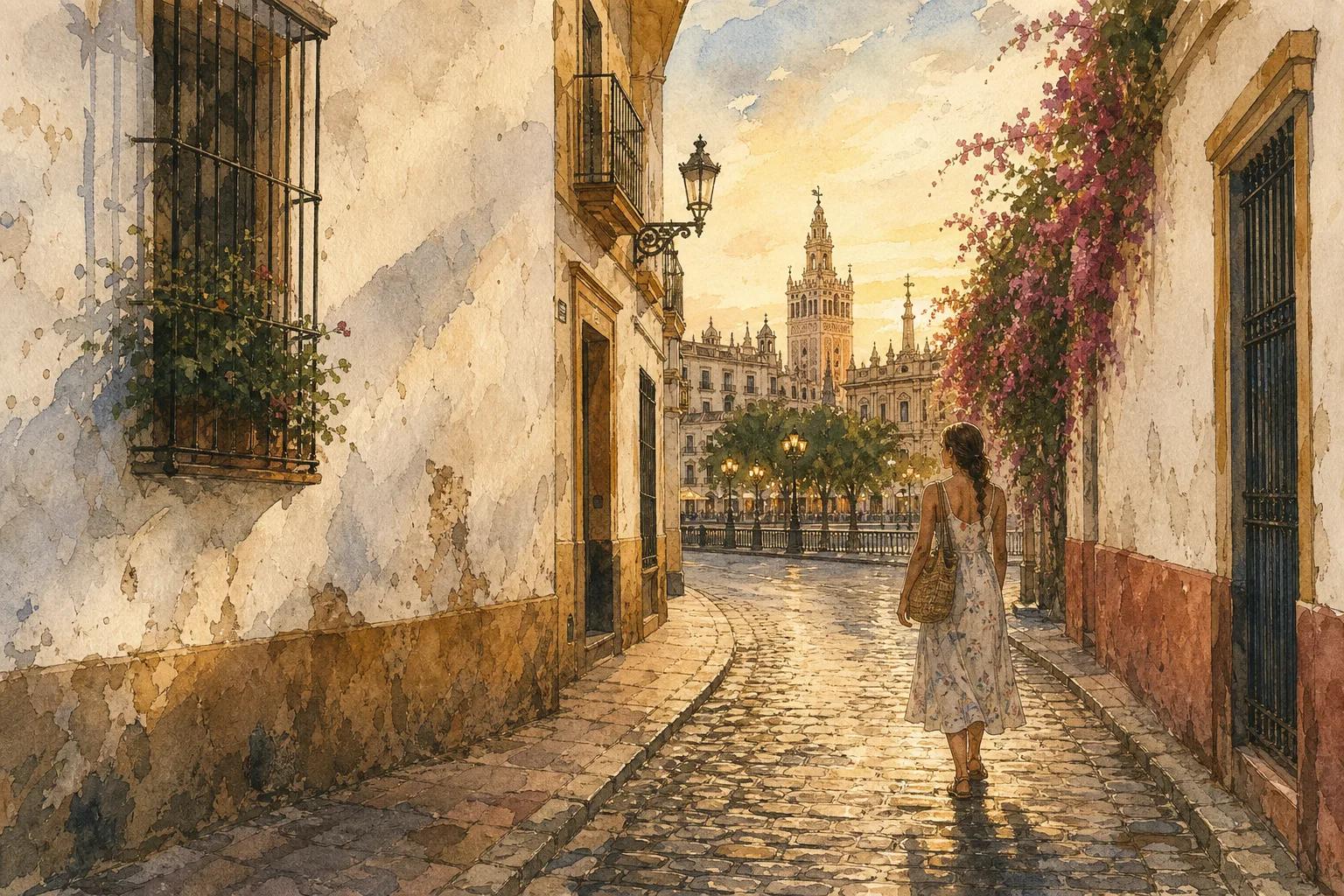
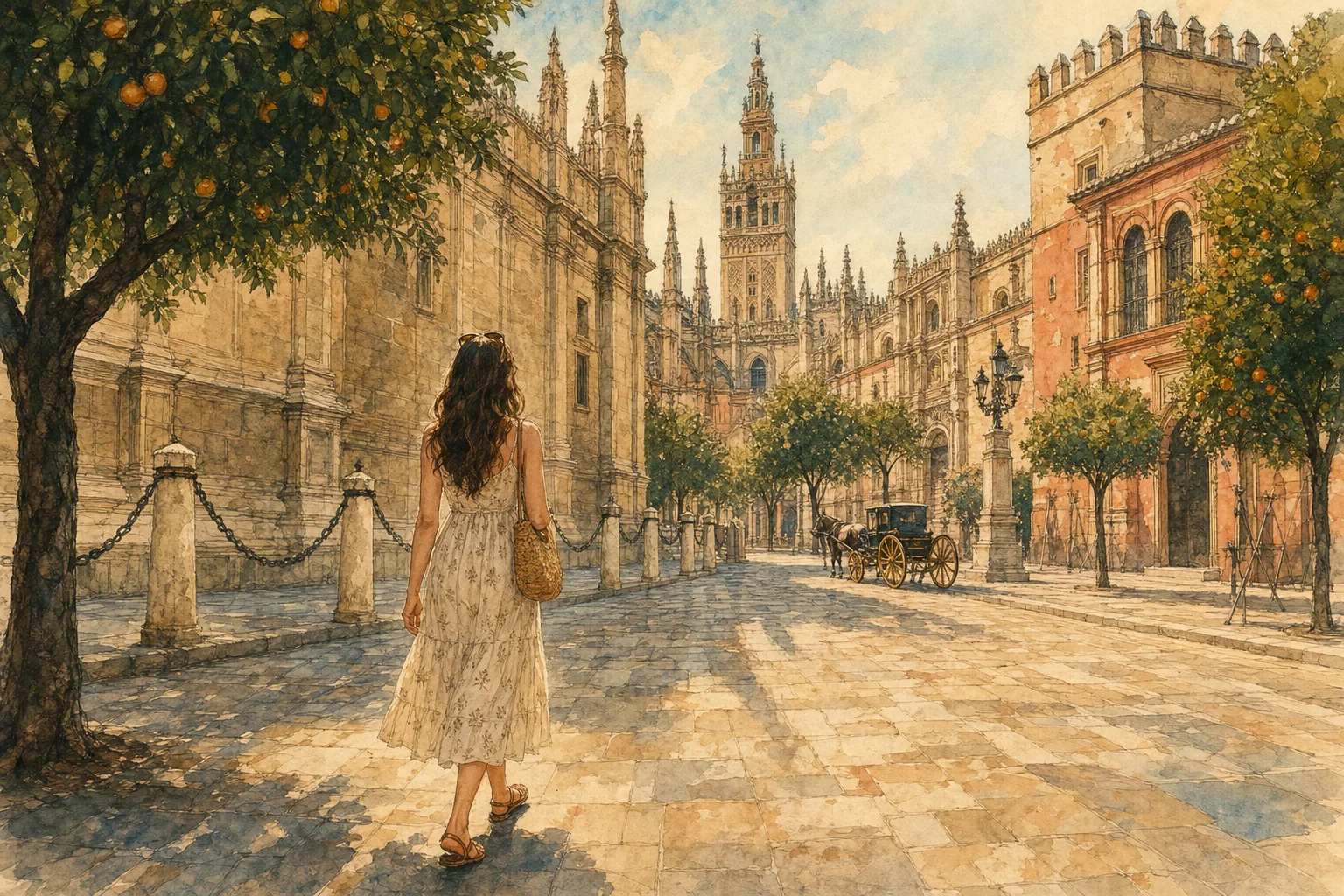
- You like evening density. Plazas around the Cathedral, Alfalfa, and Triana fill with locals and visitors after 9 p.m., which is the kind of "ambient witnesses" environment most solo women describe as comfortable.
- You are willing to pay for location. Booking inside the old town, ideally Santa Cruz or near Alfalfa, removes most of the night-walking friction in one decision.
- You enjoy a slow, atmosphere-led trip more than a checklist. Seville rewards lingering on a plaza, not racing between museums.
- You are traveling outside peak festivals. Late spring weekdays or early autumn give you the walkability without the Semana Santa and Feria de Abril crowd surge.
Choose a Different City If
- You want quiet, low-density evening streets. Seville's "safe at night" comes from crowds, not from emptiness. If crowds tire you out, this is the wrong tool.
- You are optimizing purely for price and willing to book outside the center. A cheaper room in an outer neighborhood undoes the entire evening walkability case.
- You need late, frequent metro coverage. The metro is one line, mostly suburban, and shuts at 11:30 p.m. on weekdays.
- You plan to visit in March or April without the festivals being the reason. You will pay peak rates ($368 to $426 per night territory) for a city that is harder to walk through because of the crowds.
- You want a heat-tolerant midday trip. July and August evenings are pleasant; the daytime walking case collapses.
Who Might Regret Booking Seville
The solo traveler most likely to regret Seville is the one who books on price alone and ends up in a residential area to save 30 euros a night. The walkability case is location-dependent, not city-dependent. If your hotel is a 25-minute walk or a tram ride from the tapas streets, you will end up either paying for taxis every night or skipping the evening you came for.
The second regret pattern is the traveler who expected "safe" to mean "calm." Seville at 10 p.m. is loud, packed, and social. If your nervous system reads crowds as stressful rather than reassuring, the evening walkability you wanted will feel like sensory overload instead of comfort. Pickpocketing risk is concentrated in exactly those crowds, so vigilance is part of the deal.
Who Might Regret Skipping Seville
The traveler who rules Seville out on a vague "Spain at night sounds risky" instinct often regrets it. The actual risk profile in the tourist core is petty theft, not the night-walk danger people imagine. If you have already enjoyed solo evenings in Lisbon, Bologna, or central Madrid, Seville's profile is broadly similar and arguably more walkable because the core is smaller.
The second regret pattern is the atmosphere-led traveler who picks a quieter city for the same trip and finds the evenings end at 9 p.m. If what you actually wanted was lit plazas and outdoor tables past 11 p.m., very few European cities deliver that as reliably as Seville does, and substituting a calmer destination will not give you that mood.
Key Friction Comparison
Nighttime safety. The honest read is that violent crime is not the concern in central Seville; pickpocketing in crowded tourist areas and on public transportation is. That changes how you prepare. A cross-body bag with a zipper, nothing in back pockets, and phone awareness around the Cathedral and on packed trams matters more than avoiding streets. The neighborhoods you genuinely should avoid after dark (Polgono Sur, Las Tres Mil Viviendas, Los Pajaritos) are not on any normal tourist route, so the discipline is mostly: do not let a cheap hotel deal pull you out there.
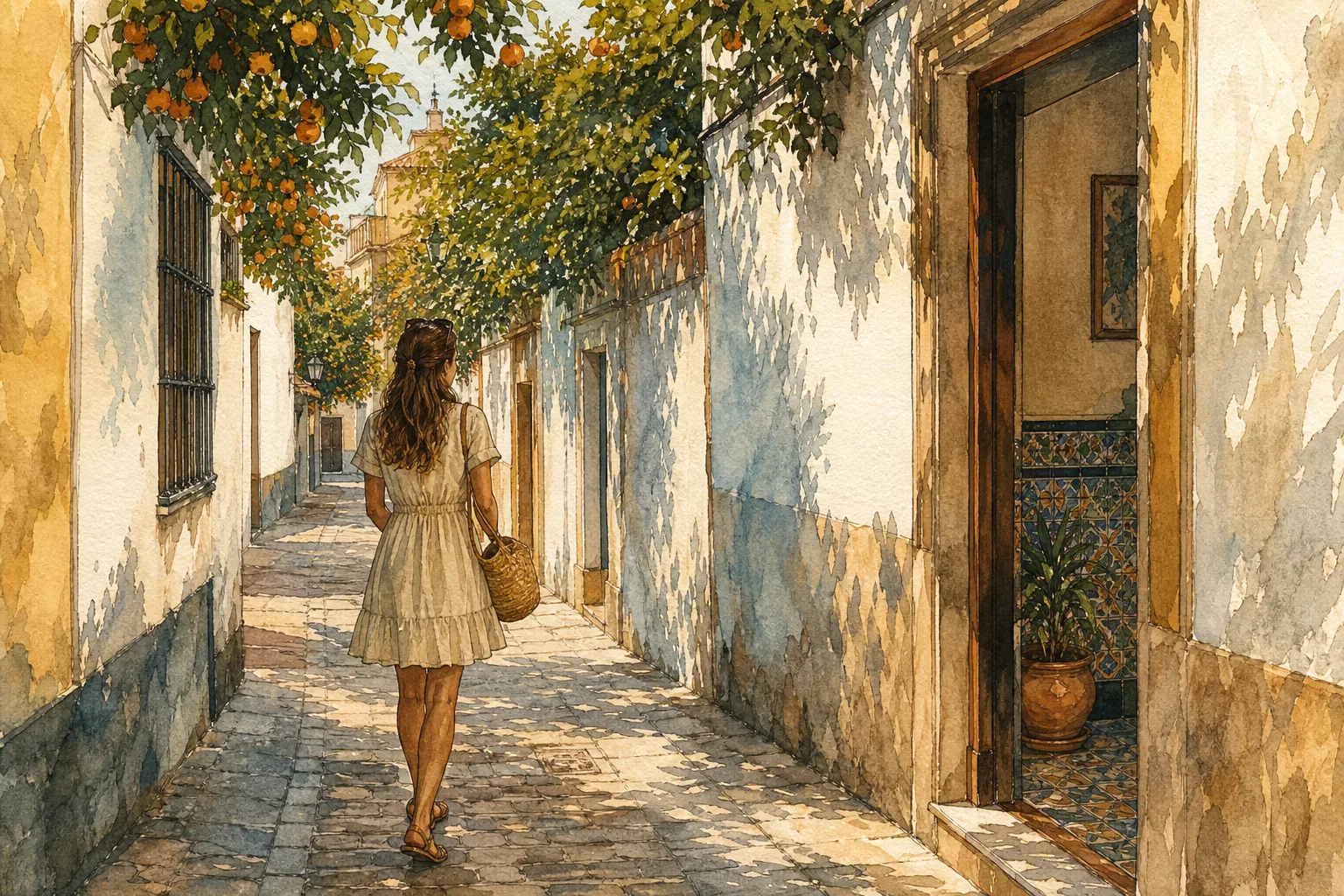
Walkability. The headline number is that a famous central loop covering historic plazas, gardens, and architecture is about 2 km and walks in roughly 30 minutes. That density is the whole reason the evening case works. Cobblestones and uneven paving are the realistic cost; if your feet are prone to giving out, plan for flat, cushioned shoes rather than fashion sandals, and expect to slow down after day two.
Lighting. Main plazas, the Cathedral surround, the Alfalfa core, and the Triana riverfront are well lit and consistently busy. Narrow side alleys off the main grid are darker and quieter, which is where solo travelers sometimes feel a sudden shift. The practical move is to navigate by the lit plaza-to-plaza spine, not by Google Maps' shortest path. Las Setas adding its Aurora light show until midnight (12:30 a.m. in summer) gives you another anchored, well-lit point in the city.
Friction reduction checklist:
- Book inside the old town, ideally Santa Cruz, Alfalfa, or near Las Setas
- Avoid arriving during Semana Santa or Feria de Abril unless the festival is the trip
- Carry a zipped cross-body bag, keep phone out of back pockets
- Walk the lit plaza-to-plaza route rather than the shortest map line
- Save Cabify in advance with a non-local number for late returns
- Note tram (until 1:30 a.m.) over metro (until 11:30 p.m. weekdays) for late nights
- Treat July and August as evening-walking months, not midday-walking months
Final Recommendation
Book Seville if you are a solo female traveler whose actual priority is walking to dinner through a city that is still awake, and you are willing to pay for a room inside the historic center. Aim for Santa Cruz or the Alfalfa area for the shortest evening walks, Triana if you want a slightly more local rhythm, and travel in late spring on non-festival weekdays or early autumn for the best balance of weather, crowds, and price.
Pick a different city if you want calm, low-density evening streets, if you plan to stay outside the center to save money, or if you cannot avoid the peak festival weeks. The verdict is not "Seville is safe" or "Seville is dangerous"; it is that Seville's evening walkability is real but conditional on neighborhood choice and timing. Get those two right and the fit is strong.
FAQ
Is it safe for a solo woman to walk in central Seville after dinner? In the tourist core (Santa Cruz, Alfalfa, around the Cathedral, and along the river toward Triana) evening foot traffic is steady well past 10 p.m., which is the main reason solo women report feeling comfortable. The realistic risk is pickpocketing in crowded spots, not violent crime. Stay out of Polgono Sur, Las Tres Mil Viviendas, and Los Pajaritos, especially after dark, and the night-walk profile is reasonable.
How late is street life actually active? Dinner often does not start until 9 to 10 p.m., so plazas and tapas streets in Santa Cruz and Triana stay busy until midnight or later. Las Setas runs its Aurora light show until midnight in winter and 12:30 a.m. in summer, which keeps that block lively too.
Do I need the metro or taxis to get around at night? For most solo evening walking, no. The single metro line mostly serves suburbs, not the dense old center, and it stops at 11:30 p.m. on weekdays. The Metro-Centro tram runs until 1:30 a.m. daily, and Cabify works with non-local phone numbers if you want a ride home after late tapas.
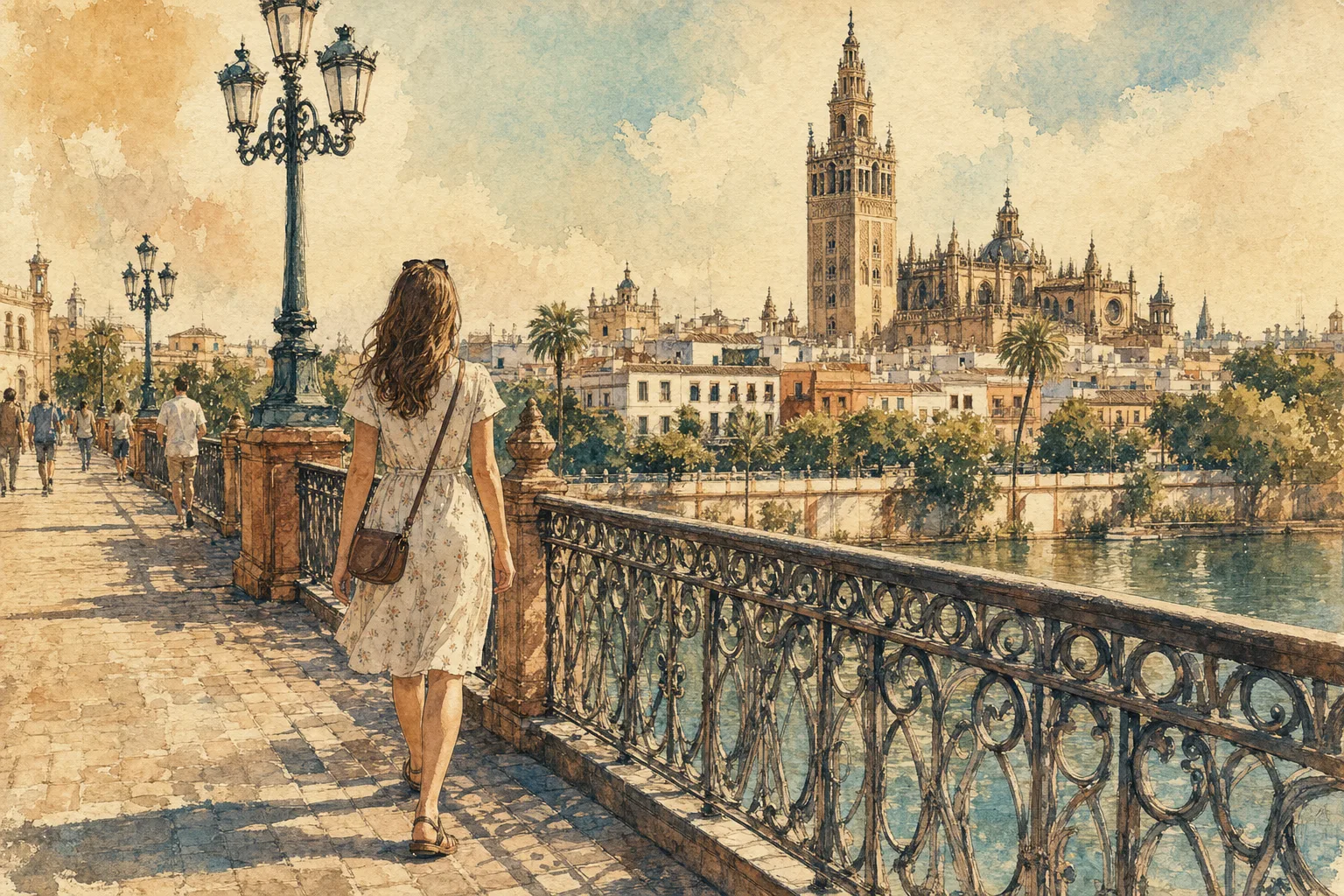
Which neighborhood should I book if evening walkability is the priority? Santa Cruz or the Alfalfa area inside the old town give you the shortest walks to dinner and the most consistent evening foot traffic. Triana is a strong alternative if you prefer a slightly more local feel and do not mind crossing the bridge at night.
When should I avoid going if I want a calmer solo trip? Skip Semana Santa and Feria de Abril unless you specifically want the festival. March and April are the most expensive months and the densest crowds. July and August are cheapest but the heat changes how late you can comfortably walk; evenings are fine, midday is not.