travel-decisions
Is Seville Worth It If You Want to Enjoy It More Comfortably?
A decision-focused guide for travelers who want Seville to feel relaxed, atmospheric, and easy on the body, not a checklist sprint.

Quick Verdict
If you want Seville to feel comfortable, atmospheric, and unhurried, it is a strong fit. The historic core is small, walkable in short loops, and built around shaded plazas, courtyards, and long meals. That setup rewards travelers who want to enjoy the city rather than conquer it.
Strong fit if you are a relaxed-pace traveler, a couple who wants easy evenings, an atmosphere-led visitor, or a low-stress planner who does not want to chase a list of sights.
Weak fit if you measure a trip by trendy nightlife districts, bargain hunting, or how many landmarks you can clear per day. Seville will still be beautiful, but you will likely feel like you paid more without getting the experience you actually wanted.
 An infographic matching traveler types like comfort-led and slow travelers to suitability ratings.
Traveler Type Table
This is not a generic pros and cons list. These are the decision variables that actually shift Seville from "great choice" to "expensive mismatch."
| Traveler type | Fit for comfort-led Seville | Why it works or does not |
|---|---|---|
| Travelers seeking comfort | Strong fit | Compact core, short walks, central hotels protect the pace. |
| Couples | Strong fit | Evenings within a 10 to 20 minute walk of each other; no transit puzzle. |
| Relaxed-pace travelers | Strong fit | The city rewards lingering in plazas and courtyards, not rushing. |
| Low-stress planners | Good fit | Few transit decisions; main sights sit within a 15 minute walking radius. |
| Bargain hunters | Weak fit | April hotel rates climb steeply; comfort hotels rarely feel cheap. |
| Trend and nightlife seekers | Weak fit | Seville's appeal is historic and slow, not club-district modern. |
| Checklist tourists | Weak fit | The city punishes overpacked days, especially in heat. |
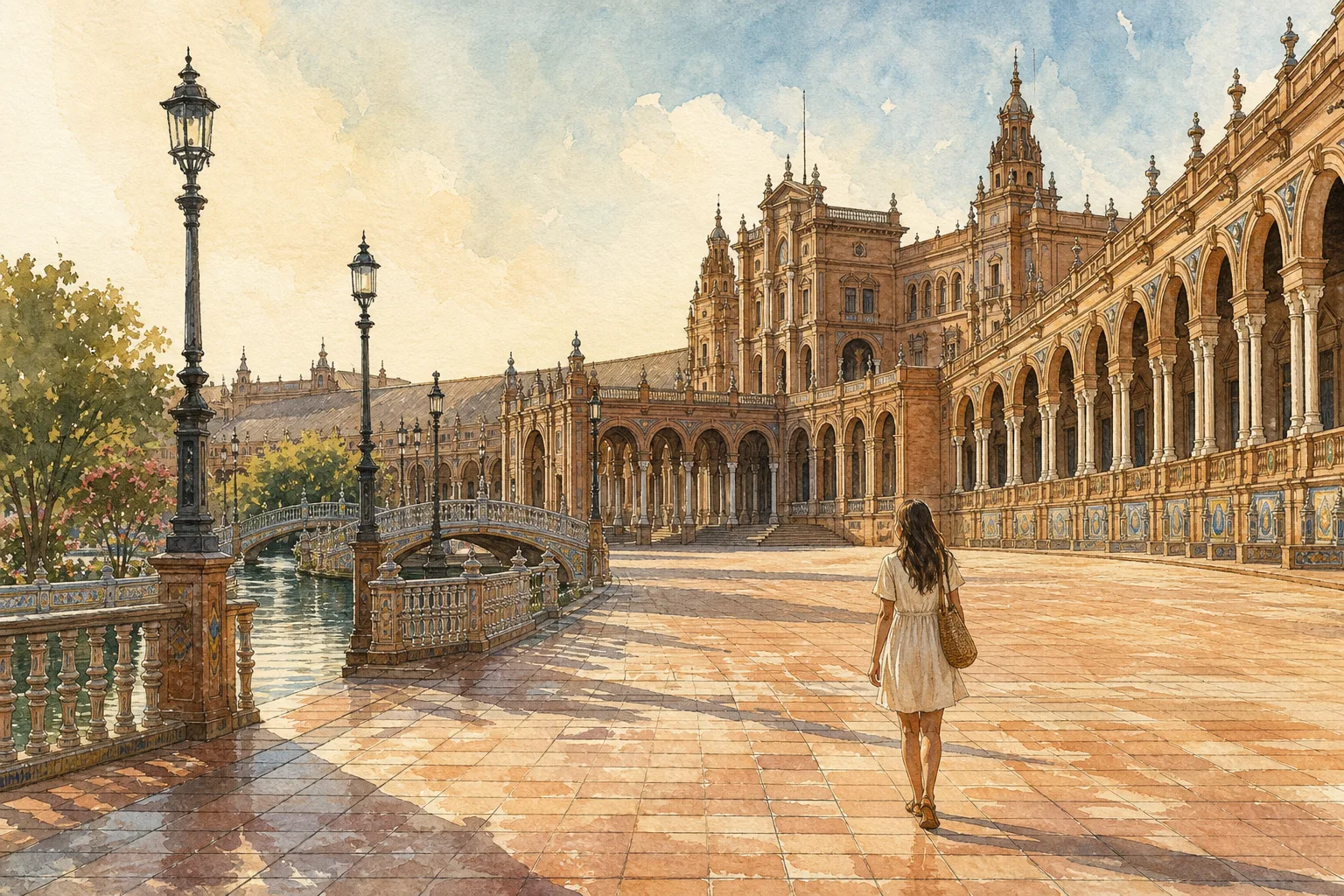
Two numbers anchor this table. The Cathedral and the Royal Alcazar sit less than 50 meters apart, about a 2 minute walk across Plaza del Triunfo. From the Royal Alcazar to Plaza de Espana is roughly 1.5 km, a 17 minute walk or a 7 minute taxi for 4 to 6 euros. That density is exactly what makes a comfort-led trip viable here.
Best for First-Time Visitors Who Want Comfort
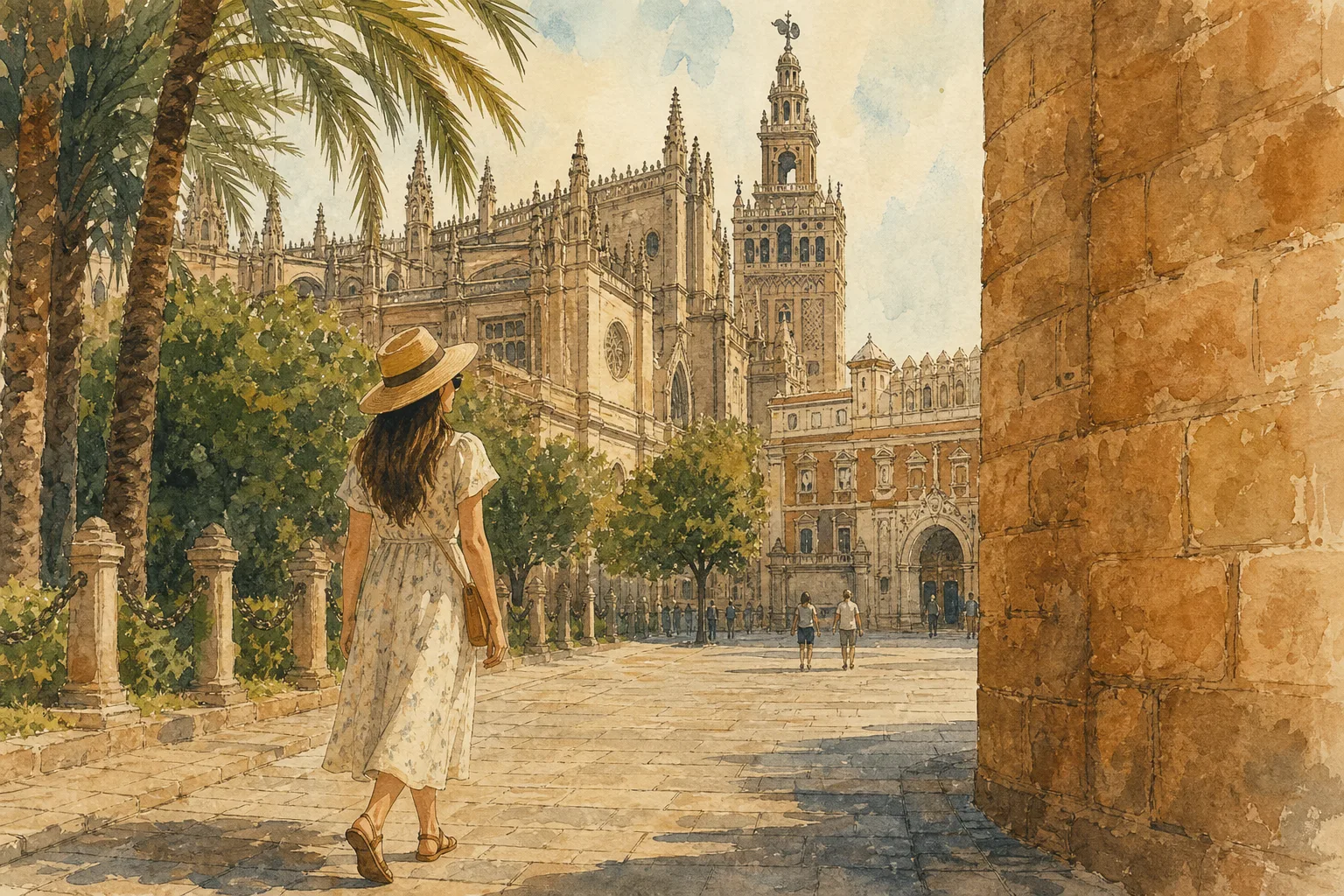
First-time visitors often arrive with a long list. Seville is forgiving of that only if you are willing to compress your list. The good news for comfort-led first-timers is that the must-see anchors cluster tightly. You can see the Cathedral, the Alcazar, and the surrounding Santa Cruz lanes in slow half-day loops without any transit planning.
If this is your first time and you want comfort:
- Pick a hotel within a 10 to 15 minute walk of Plaza Nueva or the Cathedral.
- Plan two anchor sights per day, not five.
- Use mornings and late afternoons; treat midday as rest, not lost time.
The MetroCentro tram is a short 1.4 km line that runs from Plaza Nueva directly to Avenida de la Constitucion near the Cathedral, which is useful on a hot day when even a short walk feels like too much.
Best for Couples
Couples are arguably the best-served traveler type here. The decision frame is simple: you want evenings that flow without logistics, you want shared meals that do not get rushed, and you want to walk home rather than negotiate transit at midnight.
Seville delivers that because the romantic anchors are clustered. From Plaza Nueva to the Alcazar is about a 10 to 12 minute walk. From Triana, the lively neighborhood across the river, the Cathedral area is roughly 15 to 20 minutes on foot. That puts dinner, a riverside walk, and a return to a central hotel inside one easy evening loop.
A comfort checklist for couples:
- Hotel inside the historic core, not near the train station
- At least one evening reserved for nothing but walking and dinner
- One booked sight per day maximum, the rest unstructured
- A taxi budget accepted in advance (most center trips cost 5 to 7 euros)
Best for Slow Travelers
Slow travelers, the kind who collect mood over photos, get the most out of Seville. The reason is structural. The city is built around courtyards, tiled patios, and shaded plazas that only reveal themselves if you sit. A traveler racing between landmarks will literally miss the thing the city is famous for.
If you are a slow traveler, the practical decision is not whether to go but how long to stay. Three to four nights is a more honest match than two. That gives you room to repeat a neighborhood, to sit in the same plaza twice and notice it change, and to absorb the rhythm rather than just visit it.
Best for Low-Stress Travelers
Low-stress travelers want a city that does not punish small mistakes. Seville scores well on that because the transit decisions are small and cheap when you do need them. A single bus or tram ticket on the Tussam network costs 1.40 euros. A 10 trip Bonobus voucher is 6 euros. A one day unlimited tourist pass is 5 euros, and a three day pass is 10 euros plus a refundable 1.50 euro deposit. Single metro tickets start at 1.35 euros.
Airport arrival is also low-friction. A taxi from Seville Airport to the city center takes 15 to 20 minutes and costs 25 to 28 euros. The Airport Bus EA shuttle takes about 30 minutes for 6 euros one way or 8 euros round trip. Neither requires a complicated transfer, which matters when you are arriving tired.
The honest caveat: low-stress travel here depends heavily on hotel location. A "cheap" hotel far from the core will quietly add daily decisions back into your trip, which is exactly what you were trying to avoid.
Common Mismatches
This is where most disappointment comes from. Seville is not a city that fails on its own merits. It fails when travelers expect something it never offered.
- Expecting a trendy modern city. The generic "cool district" experience is not Seville's strength. If your reference points are Berlin or Lisbon's nightlife scene, the gap will feel like wasted money.
- Expecting bargain prices. July is the cheapest month for hotels, averaging around 100 dollars a night, but April rates can reach up to 426 dollars. Travelers who book in peak spring expecting Spain-cheap pricing often feel they overpaid.
- Expecting cool weather. Comfort drops fast in midsummer. A comfort-led trip in July still works, but only if you accept a siesta-shaped day.
- Booking a hotel for price, not location. A 20 minute walk in mild weather is fine. The same walk in August heat, with a suitcase, after a delayed flight, is the thing that ruins a trip.
- Treating Seville like a checklist city. The city's payoff is qualitative. Stacking landmarks crowds out the atmosphere you were paying for.
Final Match Recommendation
Choose Seville if you want a comfort-first, atmosphere-led trip and you are willing to pay for a central hotel and a shorter sight list. The geography supports your goal: small core, short walks, cheap and rare transit needs, and a rhythm that respects slow days.
Skip or rethink Seville if you are a bargain-led traveler in April or May, a trend-led traveler looking for a modern city break, or a checklist tourist trying to clear ten sights in two days. The city will still be lovely, but you will be paying premium-season prices for an experience that does not match your decision criteria.
The most reliable comfort-led version of this trip is three to four nights, a hotel within a 10 to 15 minute walk of Plaza Nueva or the Cathedral, two anchor sights per day, and an acceptance that midday is for resting, not pushing through.
FAQ
Is Seville worth it if I mostly want to relax and not rush? Yes. The historic core is compact, the central sights sit within short walks of each other, and the city's daily rhythm built around shaded plazas and long meals rewards slowing down. It is one of the better-fit Spanish cities for a relaxed traveler.
Is Seville comfortable for couples who want a romantic but easy pace? Strong fit. Couples can base themselves near the Cathedral or Santa Cruz and reach most evening highlights on foot in 10 to 20 minutes. That removes the transit planning stress that often eats into a romantic trip.
Will I be disappointed if I expect a trendy, modern city break? Possibly. Seville rewards atmosphere and historic texture, not modern nightlife districts. Travelers who measure a city by trend zones often feel they paid for a vibe they did not actually want.
Is Seville too hot to be comfortable? It depends on the season. Spring is the most comfort-friendly window. In peak summer, a comfort-led trip still works, but only if you accept long midday breaks instead of forcing sightseeing.
How much walking should a comfort-led traveler expect? Short, frequent bursts rather than long marches. The Cathedral and the Royal Alcazar are less than 50 meters apart, and walking from Triana to the Cathedral area takes about 15 to 20 minutes, so most sightseeing happens in small loops.
Is it worth paying more for a central hotel in Seville? For a comfort-led trip, usually yes. A central hotel removes transit decisions, lets you return midday to rest, and protects the relaxed pace that made you pick Seville. A cheaper hotel far from the core often adds back the daily friction you were trying to avoid.