travel-decisions
Is Seville Worth It If You Care More About Atmosphere Than Landmarks?
A calm, decision-led read for travelers who weigh mood and wandering over monument counts. Find out if Seville fits your trip style before you book.
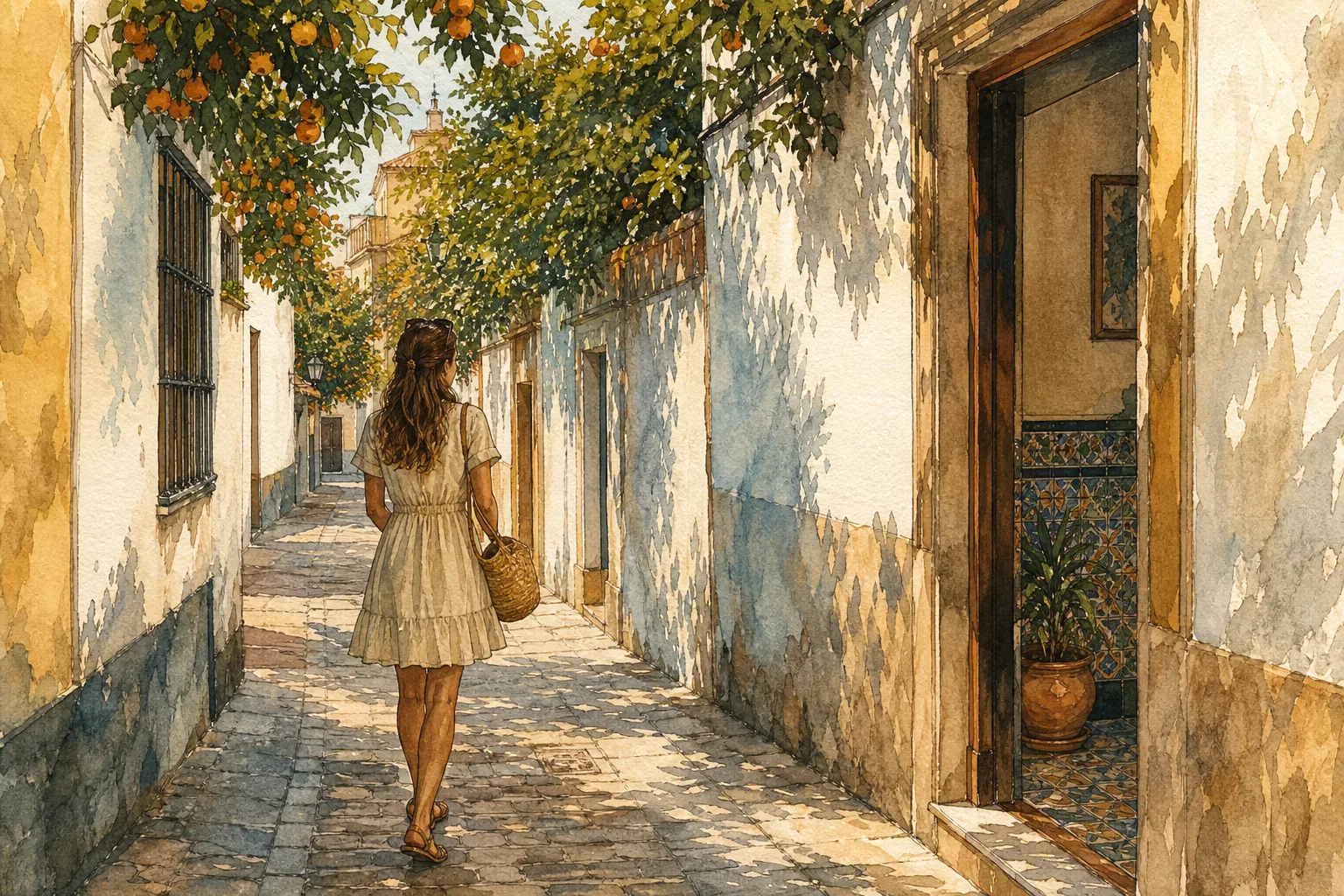
Seville is one of those cities that gets reviewed mostly through its landmarks, then quietly remembered for everything else. If you are weighing a trip and you already know you care more about mood than monuments, the usual top-ten guides will not actually answer your question. This piece does.
Quick Verdict
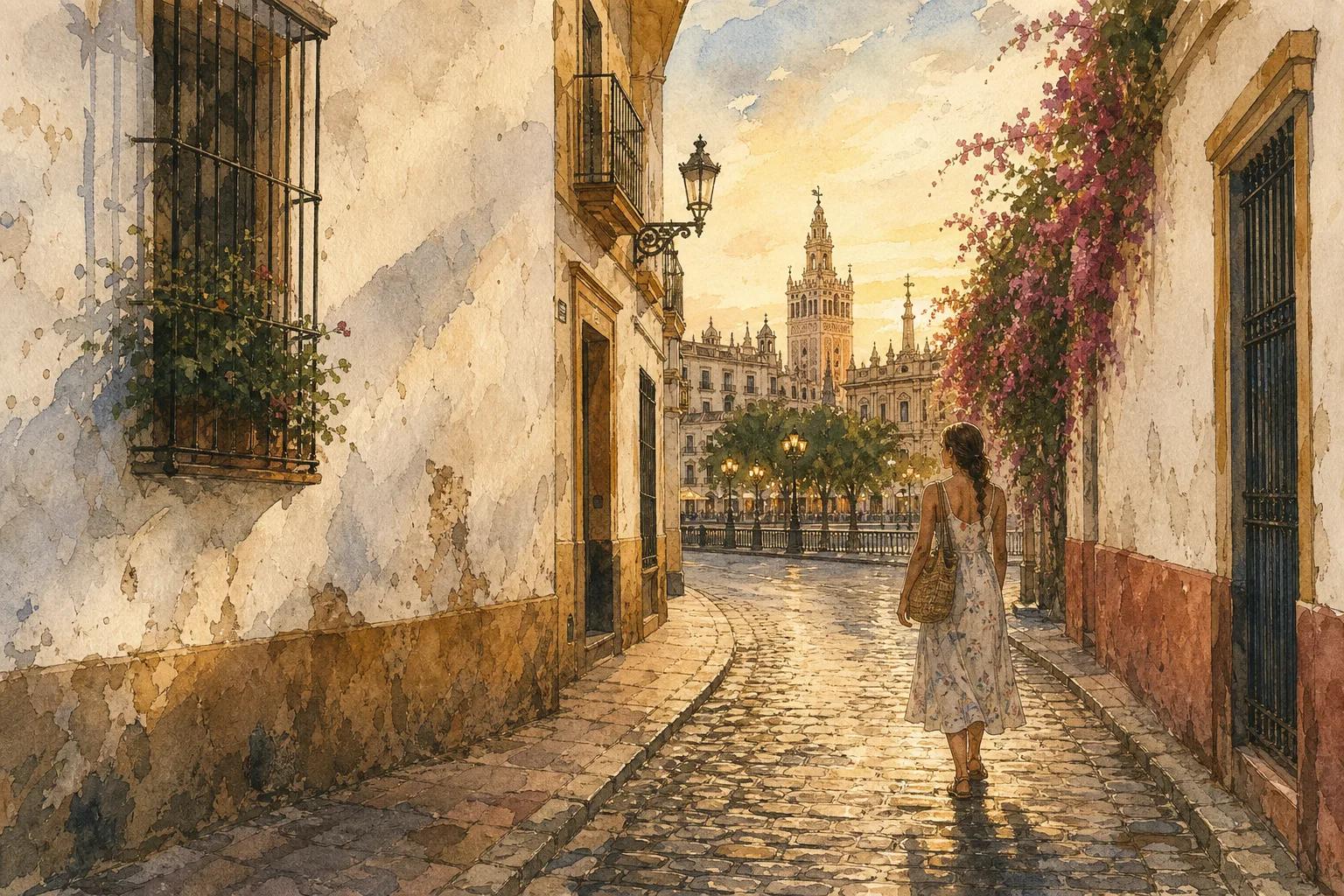
For atmosphere-first travelers, Seville is a strong fit. The historic core is compact, the streetscape rewards slow walking, and the mood shifts noticeably between morning markets, mid-afternoon shade, and the long blue hour. You can have an excellent trip here without ever queueing for the cathedral.
It is a weak fit if you measure a trip in landmarks ticked, if you need constant novelty at scale, or if you are visiting in deep summer expecting all-day outdoor wandering. August in Seville reaches around 102 degrees Fahrenheit, and the city's rhythm collapses inward during the hottest hours. That is not a mood problem; that is a planning problem you should solve before you book.
In short: choose Seville if your ideal travel memory is a specific lane, a specific light, and a specific glass of something cold. Skip it if your ideal memory is a list.
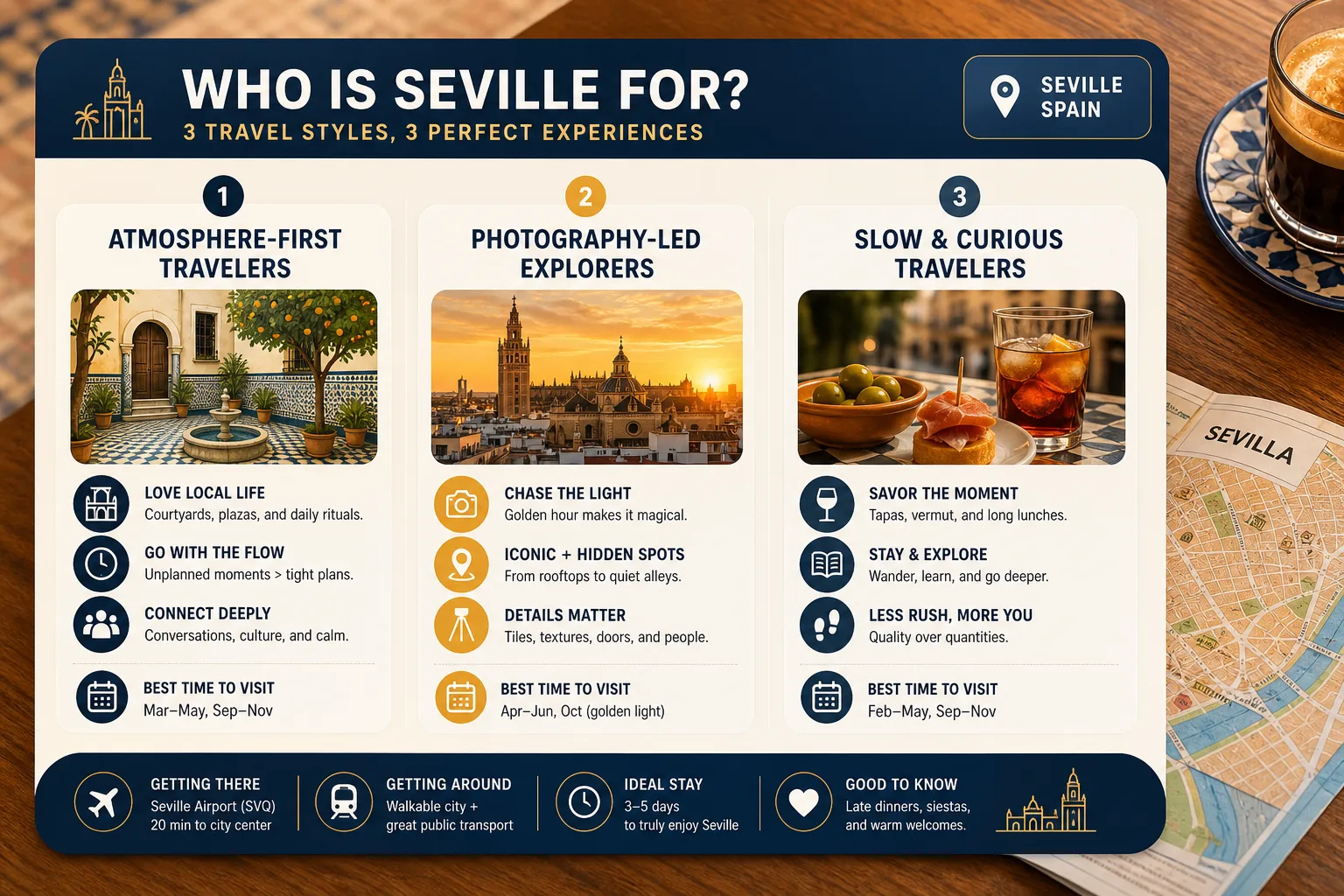 An infographic titled 'Who is Seville For?' comparing three distinct travel styles with tailored recommendations, photos, and practical travel facts.
Traveler Type Table
This is where the fit actually lives. The variables below are the ones that decide whether Seville feels like a hit or a near miss, not generic city facts.
| Variable | Atmosphere-first traveler | Photography-led traveler | Slow traveler |
|---|---|---|---|
| Core payoff | Mood per block walked | Light, texture, tiled detail | Repeatable daily rhythm |
| Best base area | Santa Cruz or Alameda de Hercules | Triana or near Las Setas | Near Mercado de Triana |
| Ideal pace | 2 to 3 stops per day | Two light windows, morning and golden hour | One neighborhood per day |
| Landmark load | Optional | Selective, for texture | Light |
| Biggest risk | Overplanning kills the mood | Midday flat light, summer haze | Hotel too far from a walkable core |
| Best season window | Late March to May, October | April, October | April to May, October |
| Wrong season | August heat | August white sky | Festival weeks if you want quiet |
A few practical anchors that matter for any of these profiles. Mercado de Triana to the Royal Alcazar is about 1.3 km on foot, which means a Triana base still puts the headline sights within an easy stroll if you want them. Alameda de Hercules sits roughly 3.1 km and about 37 minutes of walking from the broader city center, which is the right kind of distance for an atmosphere-led base: close enough to drift in, far enough to feel like its own neighborhood at night. Las Setas (the Metropol Parasol) is a 17-minute walk from the bullring and only 5 minutes from El Rinconcillo, which is useful if you want to stack a sunset view with a long tapas sit-down without a transit problem.
Best for First-Time Visitors
If this is your first Spain trip and you already suspect you are atmosphere-first, Seville is a better introduction than its reputation suggests. The historic core is walkable, the orientation curve is short, and the city does not punish you for skipping its biggest queues.
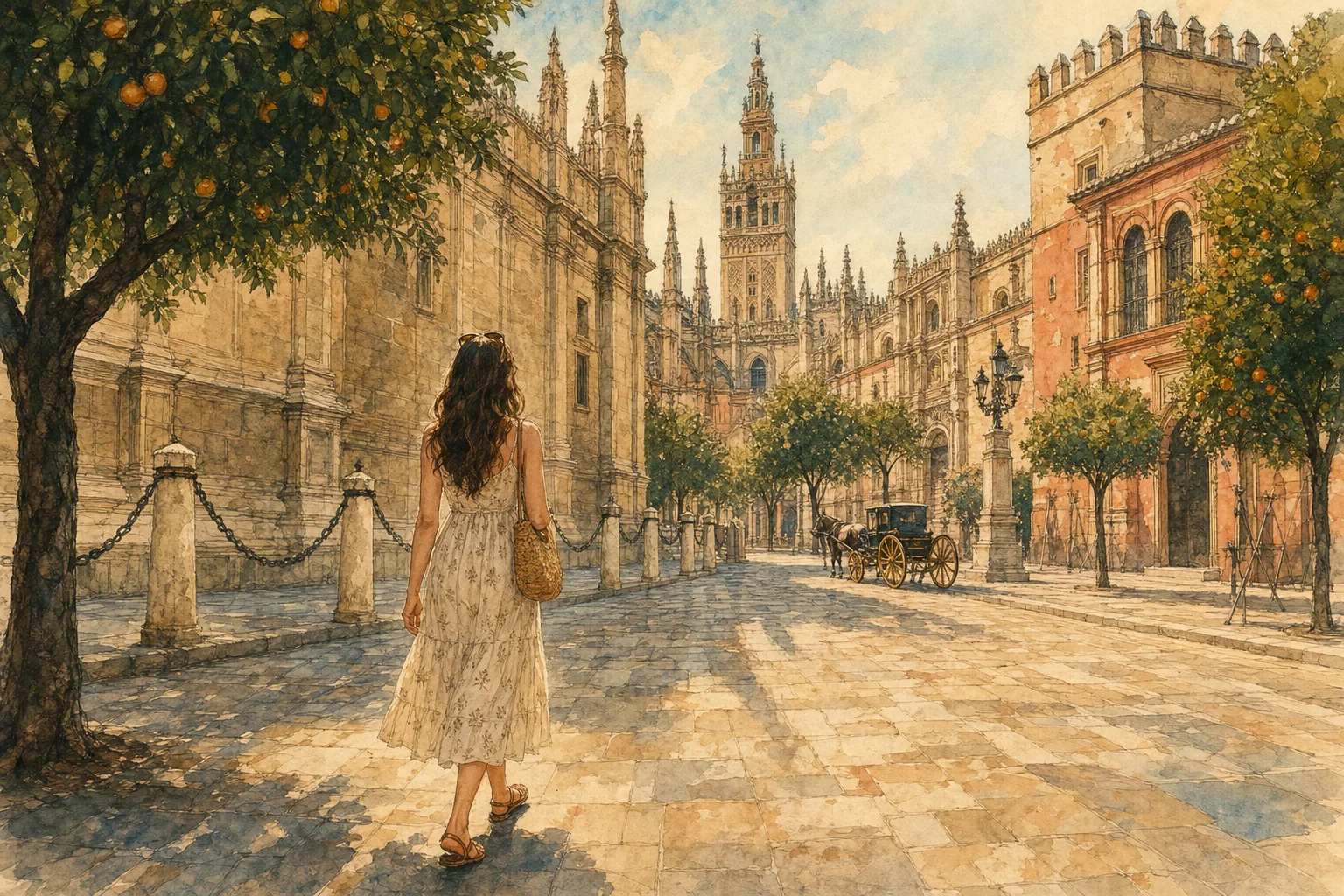
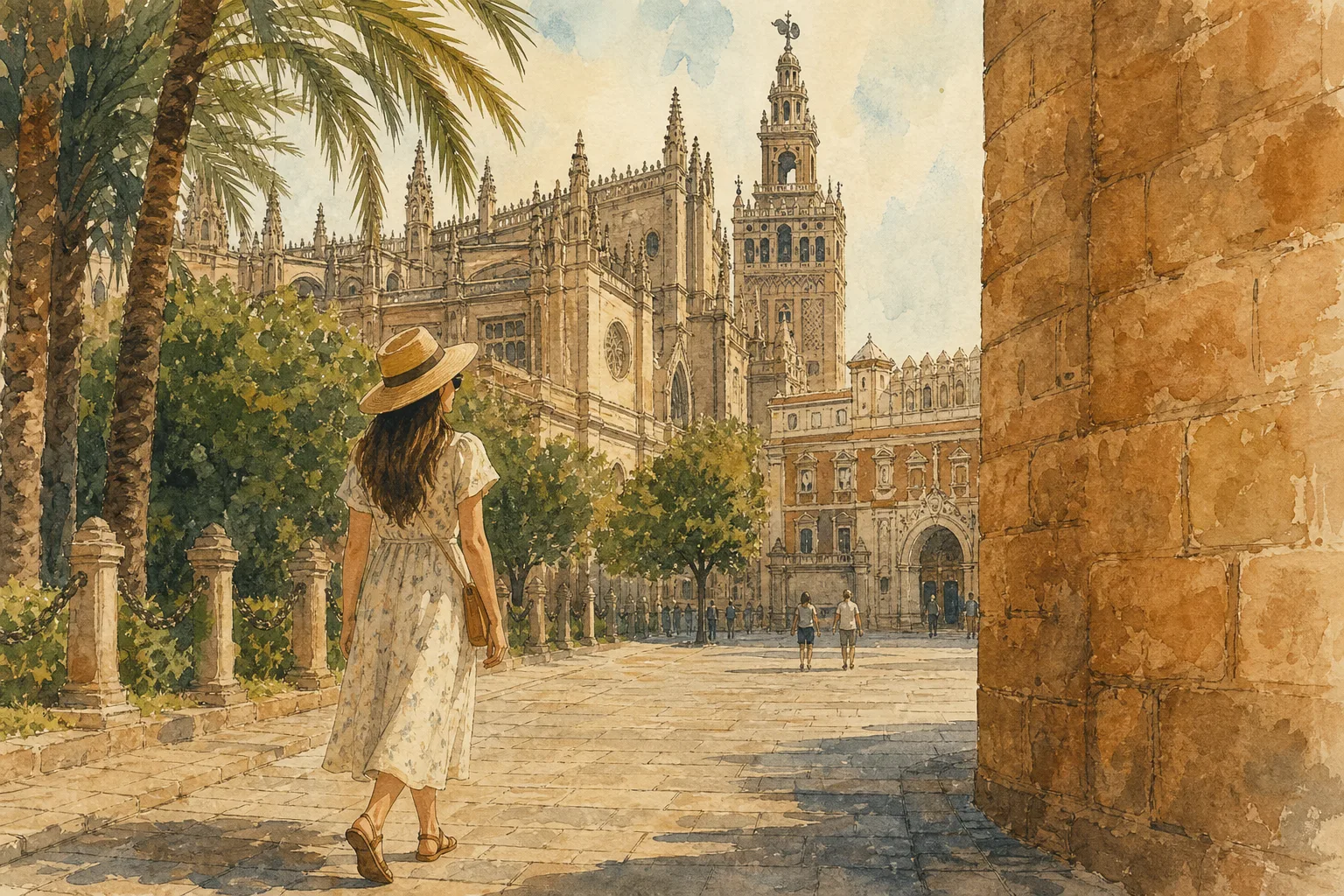
The honest first-timer move: pick two landmarks you genuinely want, not five. Most atmosphere-first travelers are happiest with the Alcazar in the morning and a long Triana evening, and treat the cathedral as a passing exterior rather than a ticketed stop. Photography-led first-timers should swap that order, starting with rooftop light at Las Setas and ending in Santa Cruz lanes. Slow travelers should resist the first-timer urge to "see everything" and instead spend day one only in the neighborhood of their hotel.
The friction to watch is expectation mismatch. If you arrive expecting Barcelona's density or Madrid's range, the first afternoon can feel underwhelming. Seville reveals itself by repetition, not by the first impression.
Best for Couples
Seville is unusually strong for couples whose shared interest is mood rather than sights. The reasons are specific.
- Walkable distances mean you can plan loosely and still end up somewhere good.
- The day naturally splits into halves, with a long shaded gap that suits a slow lunch or a hotel pause.
- Evening light lasts a long time in spring, which makes unrushed dinners feel like the main event.
For atmosphere-first couples, base in Santa Cruz or just north of it and walk to dinner. For photography-led couples, Triana gives you the river, the bridges, and the tile facades within one short loop. For slow-traveling couples, pick one market, one rooftop, one bar per day and stop there.
Where couples get this wrong is overplanning. If both of you are landmark-anxious, you will burn the trip's best asset, which is the unstructured evening, on logistics. Decide before you arrive that two of your nights have no plan after 7 p.m.
Best for Slow Travelers
Slow travel is arguably Seville's natural mode. The city is small enough that you do not need to keep moving, and varied enough that staying put still produces new texture.
A workable slow-travel template:
- Day 1: One neighborhood only. Walk it twice, once in morning light, once at dusk.
- Day 2: One market in the morning, one shaded sit-down in the afternoon, one new lane after dark.
- Day 3: One selective landmark (Alcazar gardens are the usual pick for atmosphere-first slow travelers), then nothing else scheduled.
- Day 4 and beyond: Repeat the rhythm in a different neighborhood.
Triana is the easiest base for this pattern because Mercado de Triana is built into the daily loop and the walk back across the river at night is its own small event. Atmosphere-first slow travelers tend to prefer Alameda de Hercules for the evening density of low-key bars. Photography-led slow travelers usually rotate between the two.
The risk for slow travelers is hotel location. A cheap room 25 minutes' walk from any real street life will quietly erode the mood you came for. Pay the location premium or pick a smaller, better-placed room.
Best for Niche Interests
Informal Flamenco and Live Music
If you are searching for a Seville flamenco bars neighborhood rather than a polished dinner show, start with Triana and keep Alameda de Hercules for a looser live-music evening. The fit is strongest for travelers willing to leave room in the night, listen from a small venue, and treat the performance as part of the neighborhood rhythm rather than a scheduled spectacle.
Tapas and Local Wine Bars
Seville tapas bar-hopping works best as a slow evening, not a race through a checklist of famous counters. Triana gives you a compact route around the market and nearby streets, while Alameda de Hercules suits travelers who want to alternate small plates, local wine, and unplanned pauses without returning to the landmark core.
Ceramics and Artisan Shops
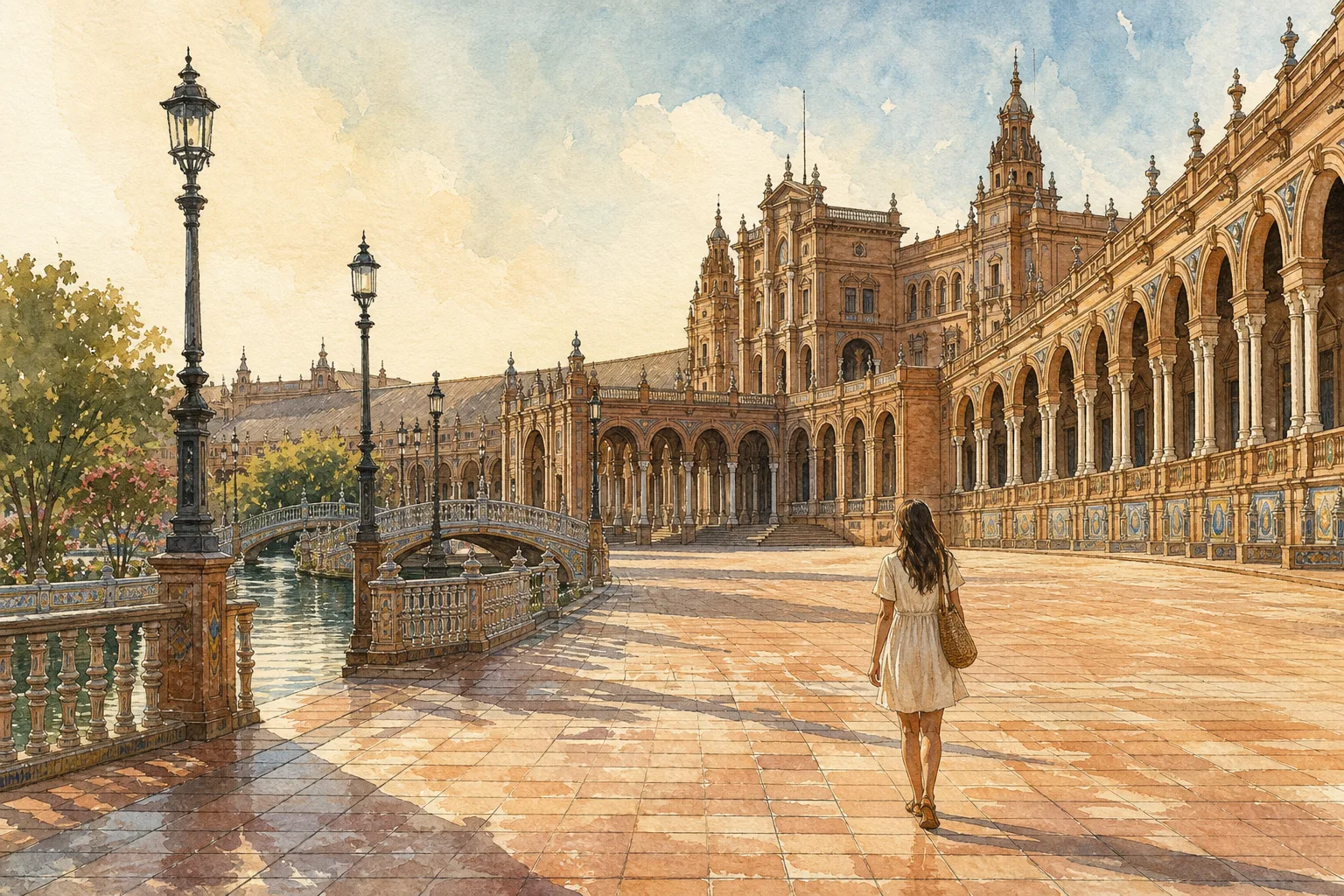
For craft-led wandering, Triana makes the clearest case because its tile facades and ceramics tradition connect the objects in the shops to the streets around them. A Seville artisan shops afternoon here is less about souvenir volume than noticing glaze, pattern, and workshop-scale pieces before walking back across the river.
Best for Low-Stress Travelers
Even though this article is aimed at atmosphere-led travelers, low-stress logistics matter, because stress kills mood faster than any other variable.
Seville is forgiving on the practical side:
- Airport in: The EA Shuttle Bus runs 6.85 euros for a single ticket, about 30 minutes to Santa Justa and 45 minutes to Plaza de Armas. A fixed-price taxi is around 30 euros and 15 to 20 minutes.
- City transit: A single Tussam bus ticket is 1.40 euros. A rechargeable Tarjeta Multiviaje card has a 1.50-euro deposit and brings fares down to roughly 0.69 to 0.76 euros per trip. One-day bus cards cost 5 euros and three-day cards cost 10 euros, each with a 1.50-euro refundable deposit.
- Tram and metro: The MetroCentro tram (Line T1) is 1.20 euros per single ticket, with an extension to Santa Justa planned for 2026. Metro Line 1 is 1.35 euros per single ticket; Line 3 began construction in February 2023 and is expected to finish in 2030.
For atmosphere-first travelers, the low-stress version of Seville is mostly: arrive by shuttle or taxi, base inside the walkable core, and use the bus or tram only for occasional reach. You will not need a complicated transit plan.
The low-stress checklist for an atmosphere-led trip:
- Base within 15 minutes' walk of either Santa Cruz, Triana, or Alameda de Hercules.
- No more than one ticketed landmark per day.
- At least two evenings with no plan after sunset.
- A travel month that is not August.
- A hotel booked on a Sunday rather than a Thursday when possible (Sunday bookings average about 215 dollars per night versus 339 dollars on Thursdays).
Common Mismatches
Seville disappoints a specific kind of traveler in a specific way. Naming the pattern is the easiest way to avoid being it.
- The landmark counter. If your trip success is measured by sights per day, Seville's pace will feel thin compared to Madrid or Rome. The city's value compounds over days, not hours.
- The peak-summer optimist. August highs around 102 degrees Fahrenheit are not a backdrop, they are a daily constraint. Atmosphere-first plans that assume all-day outdoor wandering simply do not work in midsummer.
- The price-spike misreader. April is the most expensive month for Seville hotels, averaging around 336 to 426 dollars per night, largely because of festival season. July is the cheapest at about 100 dollars, but the heat is already heavy. If you book April expecting a quiet mood trip, the room rate alone signals you have picked the wrong week.
- The over-planner. Atmosphere-first travel here is killed by minute-by-minute itineraries. If your draft plan has lunch reservations every day, you are pre-spending the city's best asset.
- The wrong-base booker. Cheap hotels far from a walkable core look like value and behave like friction. The cost-vs-emotional-payoff math almost always favors a smaller, better-placed room.
If you see yourself clearly in two or more of these patterns, the honest read is that you are not really atmosphere-first for this trip, and Seville may not be the right pick right now.
Final Match Recommendation
Choose Seville if the following are true: your travel memories are organized by mood, not by monuments; you can travel between late March and May, or in October; you are willing to base inside the walkable core even if the room is smaller; and you are comfortable with a trip where some days have almost no plan.
Skip Seville, or at least postpone it, if: you are traveling in August or in a packed festival week with a tight budget; you measure trip value in landmarks per day; you need constant scale and novelty; or you are pairing Seville with so many other cities that you will only be on the ground for one full day.
For atmosphere-first, photography-led, and slow travelers who actually match the brief, the verdict is straightforward. Seville is one of the highest mood-per-effort cities in Western Europe, and the practical friction (airport, transit, walking distances) is mild enough that almost nothing stands between you and the version of the trip you are picturing. That is the part the landmark-first reviews tend to miss.
FAQ
Is Seville worth visiting if I do not care about cathedrals and palaces? Yes, with one caveat. Seville's strongest payoff is its street-level mood: tiled patios, orange-tree lanes, river light, late tapas. The cathedral and Alcazar are remarkable, but the city still rewards a traveler who skips half the landmark queue and walks Santa Cruz, Triana, and Alameda de Hercules at golden hour.
How many days do I need if my goal is atmosphere, not sightseeing? Three full days is the calm sweet spot. Two days forces you to choose between mood and monuments. Four or more days lets you adopt a neighborhood rhythm: one morning market, one slow afternoon, one long dinner, repeated. Anything shorter and the atmosphere-first plan starts to feel like a transit problem.
When is the wrong time to visit Seville for a mood-led trip? August. Daytime highs reach around 102 degrees Fahrenheit and the city visibly empties between roughly 2 and 7 p.m. If your fantasy is unhurried wandering, midsummer turns that into early-morning and after-dark only. Late March through May, and October, are the calmer windows for atmosphere-first travel.
Do I need a car or complicated transit for an atmosphere-first Seville trip? No. The historic core is walkable, and the EA Shuttle Bus from the airport is 6.85 euros to either Santa Justa or Plaza de Armas. A fixed taxi from the airport runs about 30 euros. Inside the city, a single Tussam bus ticket is 1.40 euros and the MetroCentro tram is 1.20 euros, which is more than enough for a mood-led pace.
Will Seville disappoint me if I already loved Barcelona or Madrid? Only if you expect the same kind of energy. Seville is smaller, slower, and more inward. If you liked Barcelona for buzz or Madrid for breadth, Seville may feel quiet. If what you actually liked was a specific neighborhood mood inside those cities, Seville often delivers more of that, more consistently, in a smaller footprint.