travel-decisions
Is Seoul Worth It If You Care More About Atmosphere Than Landmarks?
A traveler-fit breakdown of whether Seoul rewards atmosphere-first, photography-led, and slow travelers, or whether landmark-focused travelers should book Kyoto or Rome instead.
By the Trip Persona Editorial Team. Published September 4, 2026, last updated September 4, 2026. This article contains no sponsored placements or affiliate links; recommendations are based on independent research.
Quick Verdict
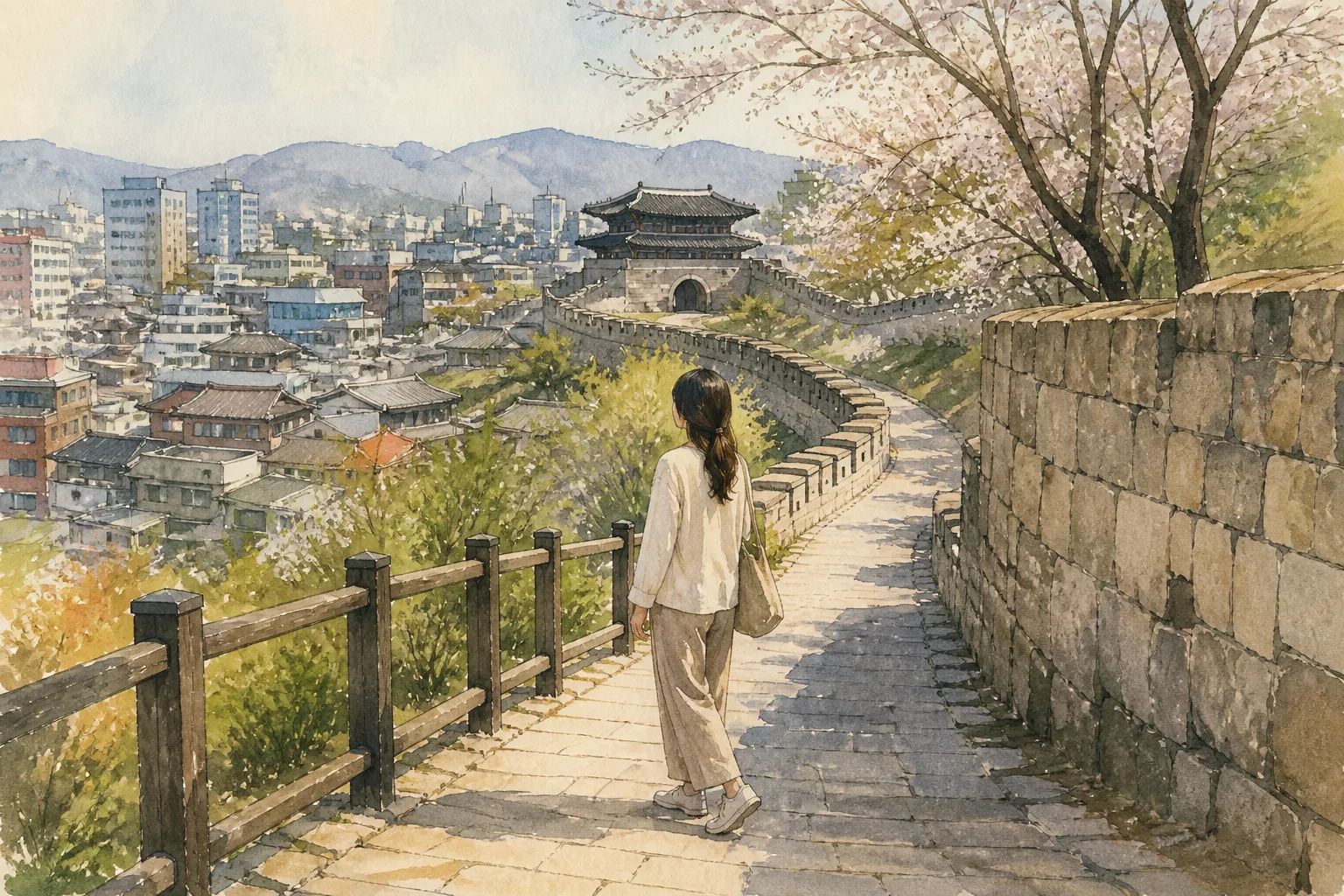
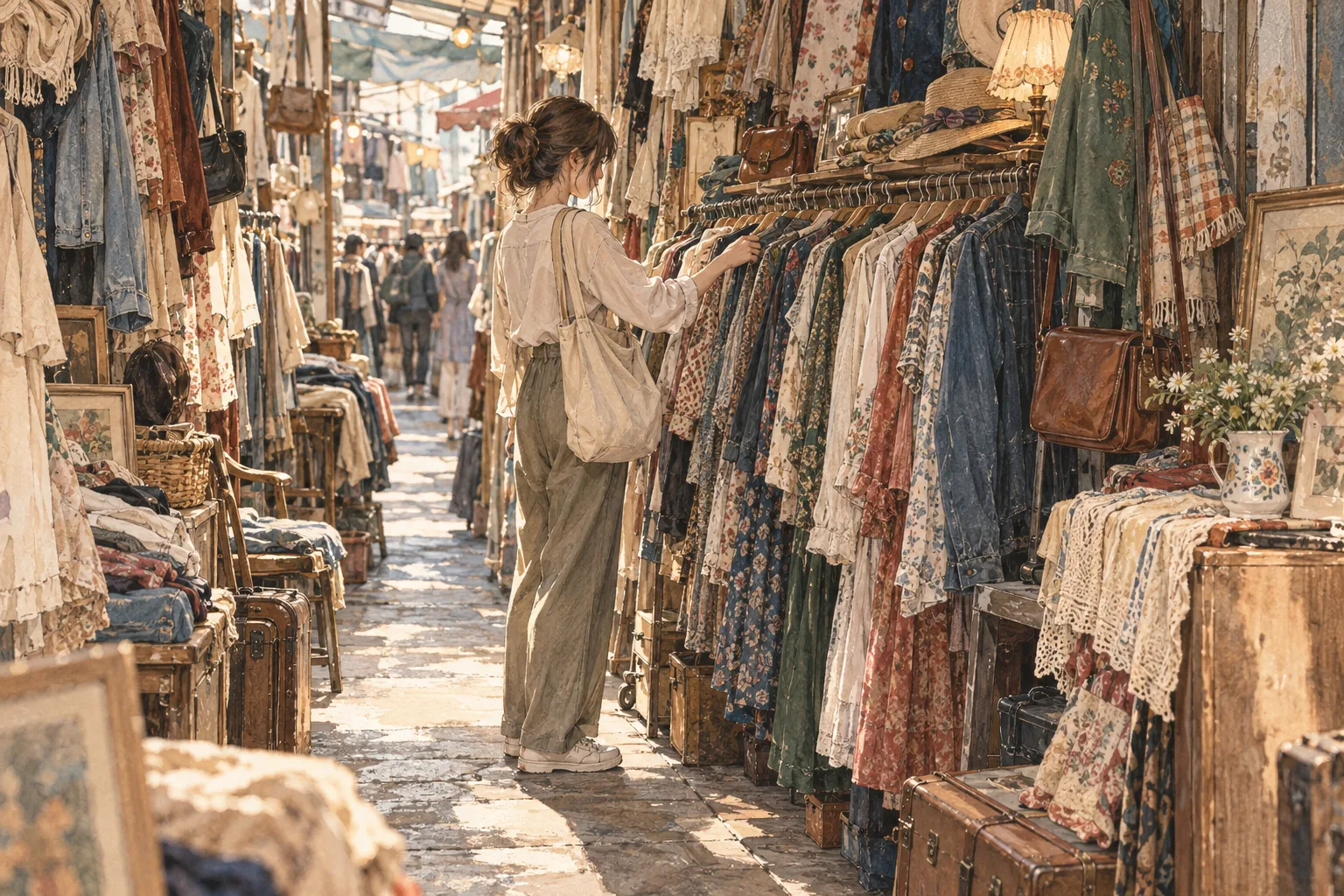
Seoul is a strong fit if you travel for mood, not for a monument list. The city's real strength for atmosphere-first travelers is its neighborhood density: small, distinct districts sit close enough together that wandering between them replaces the need for a packed sightseeing schedule. Photography-led and slow travelers tend to leave satisfied because the payoff comes from unplanned streets, not ticketed attractions.
Seoul is a weak fit if landmarks are the actual draw. If your mental image of the trip is Gyeongbokgung, N Seoul Tower, and a handful of palace photos, Seoul can feel thin outside those stops. The city's grand landmarks are fewer and more spread out than in cities built around monument-dense, single-era architecture, like Kyoto's temple district or Rome's historic core. Choose Seoul for its neighborhoods, and the trip works. Choose it expecting a landmark-dense capital, and book Kyoto or Rome instead.
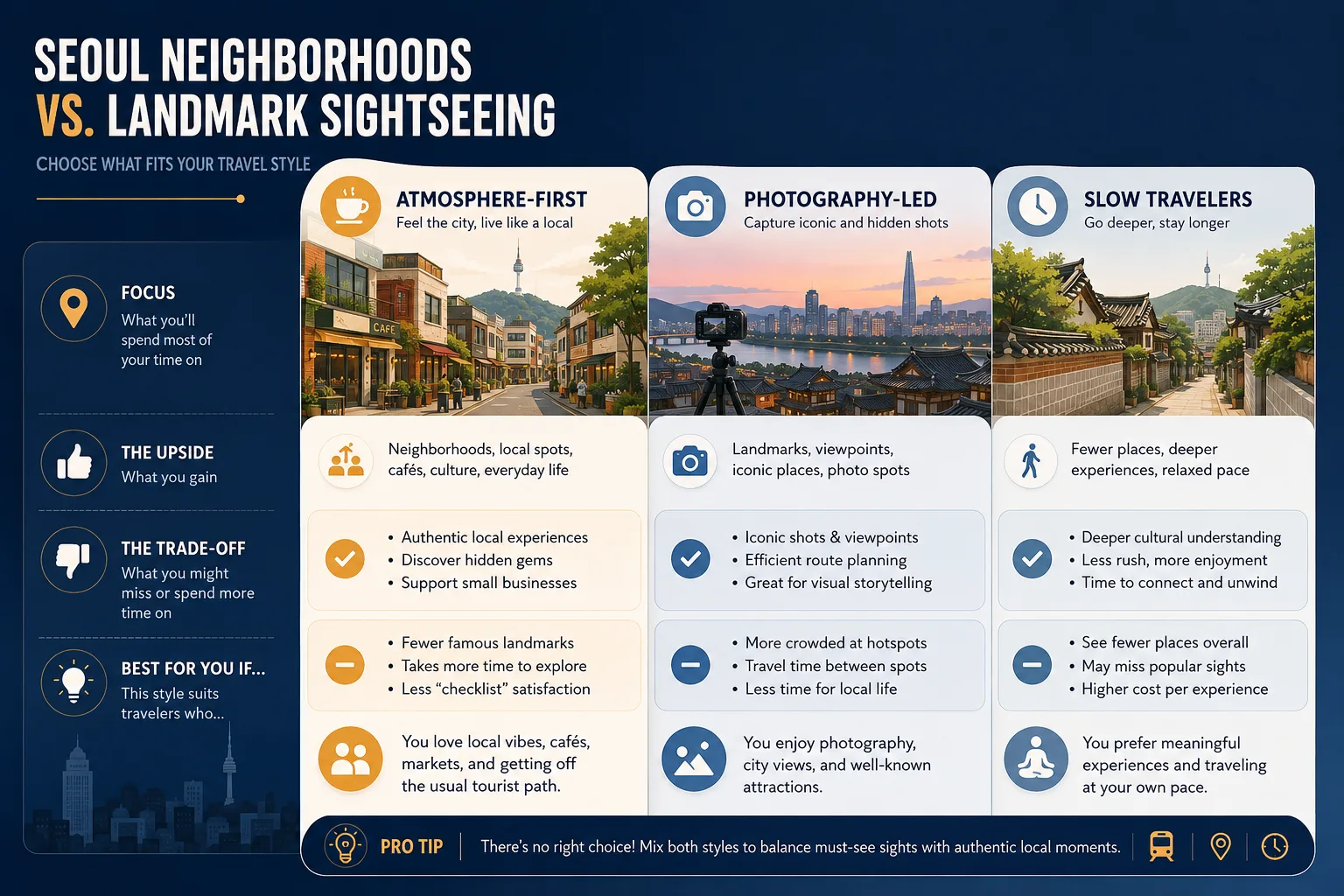 Three traveler types, three different reasons Seoul does or doesn't fit.
Traveler Type Table
The real decision variable here isn't age or trip length. It's what you're optimizing for on the street: motion, a frame, or unstructured time. Seoul serves these three differently, and the tradeoffs are concrete enough to plan around.
| Traveler type | What they optimize for | Where Seoul delivers | Where it falls short |
|---|---|---|---|
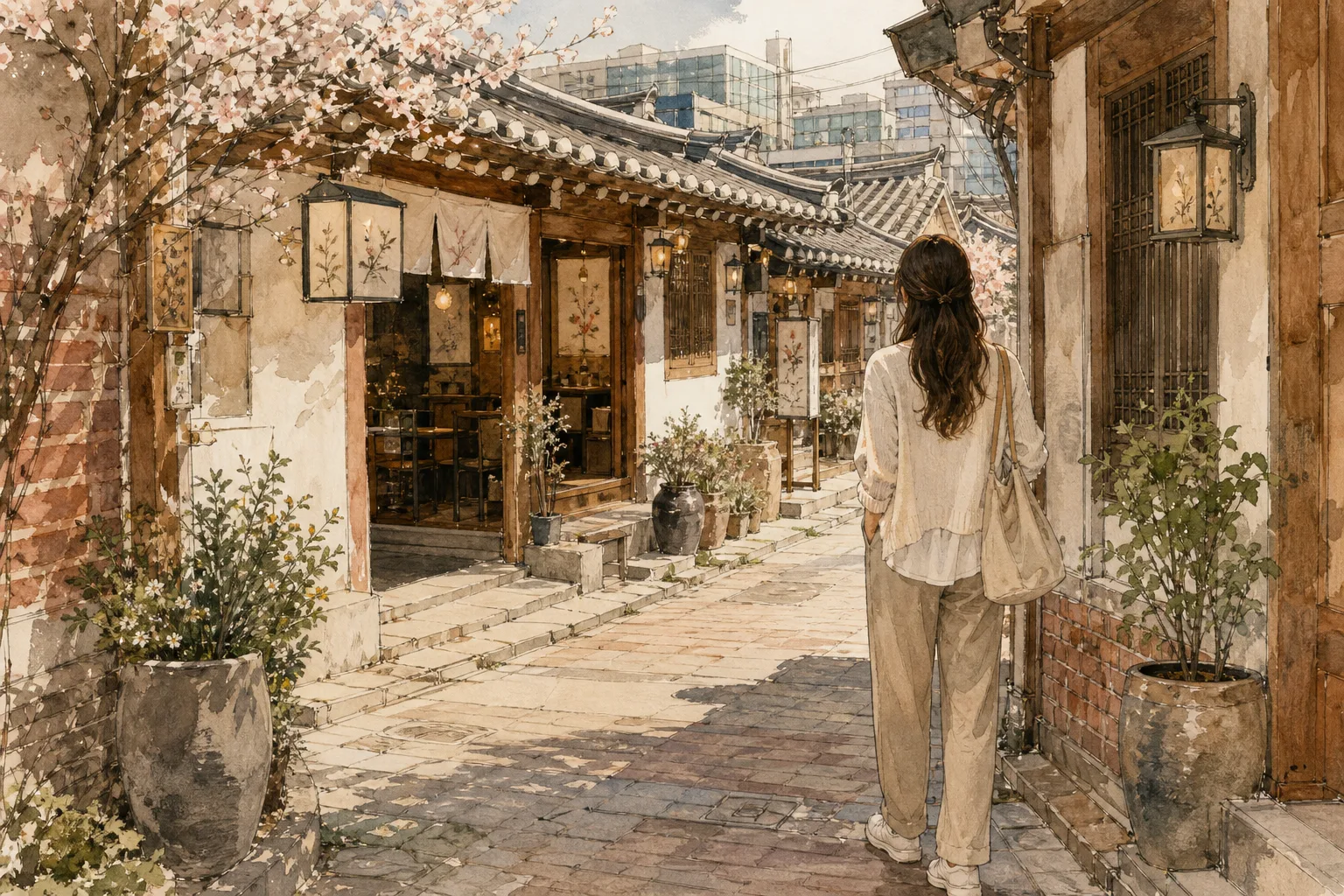
| Atmosphere-first | Mood and place-feel over sights | Ikseon-dong, Seongsu-dong, Yeonnam-dong offer layered, walkable texture | Requires giving up a landmark itinerary; no single "wow" monument moment |
| Photography-led | Frame-worthy scenes, light, texture | Hanok rooflines in Bukchon, industrial-cafe contrast in Seongsu, park light in Gyeongui Line Forest Park | Bukchon's Red Zone has a strict 5 PM to 10 AM tourist curfew, so early evening shots there are off-limits |
| Slow traveler | Unhurried time, low itinerary pressure | Compact distances (Insadong to Ikseon-dong is a flat 550-meter, 6 to 10 minute walk) support wandering without transit stress | Slower pace covers fewer landmarks per day, which frustrates anyone tracking a checklist |
The tradeoff across all three types is the same: Seoul rewards depth in a few neighborhoods over breadth across the city. If that tradeoff doesn't appeal to you, the fit weakens fast, and a landmark-dense city like Kyoto or Rome will serve you better than trying to force Seoul into that shape.
Best for First-Time Visitors
First-time visitors split into two groups here, and the split matters more than trip length. Atmosphere-first first-timers do well because Seoul's neighborhood contrasts, hanok lanes next to third-wave cafes, park paths next to concept stores, are legible even without prior context. You don't need background knowledge of Korean history to feel the difference between Bukchon and Seongsu.
Photography-led first-timers should expect a learning curve around local navigation. Google Maps walking and driving directions do not function reliably in South Korea, so getting between neighborhoods for the right light at the right time means using Naver Map or KakaoMap instead. Plan that app switch before you land, not after you're lost outside a shot you wanted.
Slow-traveler first-timers benefit the most from Seoul's compact geography. Short, flat walks between adjacent districts mean a first visit can cover real ground without a rigid schedule. The tradeoff is that a first-timer expecting a landmark-dense capital city will likely misjudge how much time to allocate to sightseeing versus wandering, and would have been better served by a city built for that expectation.
Best for Couples
For couples who are atmosphere-first, Seoul's neighborhood pairs work well as half-day loops: walk Ikseon-dong, cross the Cheonggyecheon Stream toward Euljiro 3-ga (a 10 to 15 minute walk), and let the evening happen without a reservation-driven plan. Ikseon-dong is fully commercialized with no resident-driven quiet hours, so it stays comfortable to wander through at any hour.
Photography-led couples get more mileage from planning one or two anchor scenes per day rather than chasing every backdrop. Seongsu-dong, home to Olive Young's largest Korean store, works well for this because the neighborhood mixes shopping, cafes, and architecture within a small radius, so you're not shuttling across the city between shots.
Slow-traveler couples should treat a Seoul trip as a small number of neighborhoods explored well, not a citywide tour. This is where the atmosphere-first approach pays off most for couples: less transit time between stops means more actual time together in a place, not on a subway platform.
Best for Slow Travelers
Slow travelers are the clearest match for this version of Seoul. The city's compact, walkable clusters mean a slow traveler can spend a full day in one or two neighborhoods without feeling like they're missing the city. Distances like the 550-meter walk from Insadong to Ikseon-dong make it easy to drift between areas on foot instead of planning transit connections.
For photography-led slow travelers, this pace also solves the timing problem that rushed itineraries create. You get to wait for good light instead of shooting whatever's available on a tight schedule. Seoul Forest, reachable via a 1-minute walk from Seoul Forest Station (Suin-Bundang Line, Exits 3 or 4), is a good example of a spot that rewards unhurried time rather than a quick stop.
The one caution for slow travelers is Bukchon. Its Red Zone curfew, 5 PM to 10 AM, with a 100,000 KRW fine for violators, means the neighborhood isn't available for late-afternoon or evening wandering the way other districts are. Build that constraint into the day rather than discovering it on site.
Best for Low-Stress Travelers
Low-stress travelers benefit from Seoul's public transit system more than any other traveler type on this list. A T-money card covers subway rides at 1,550 KRW and bus rides at 1,500 KRW, and over 440 ticket machines at more than 220 stations accept international debit or credit cards directly. That removes a common source of arrival-day stress: figuring out local payment before you can move around the city.
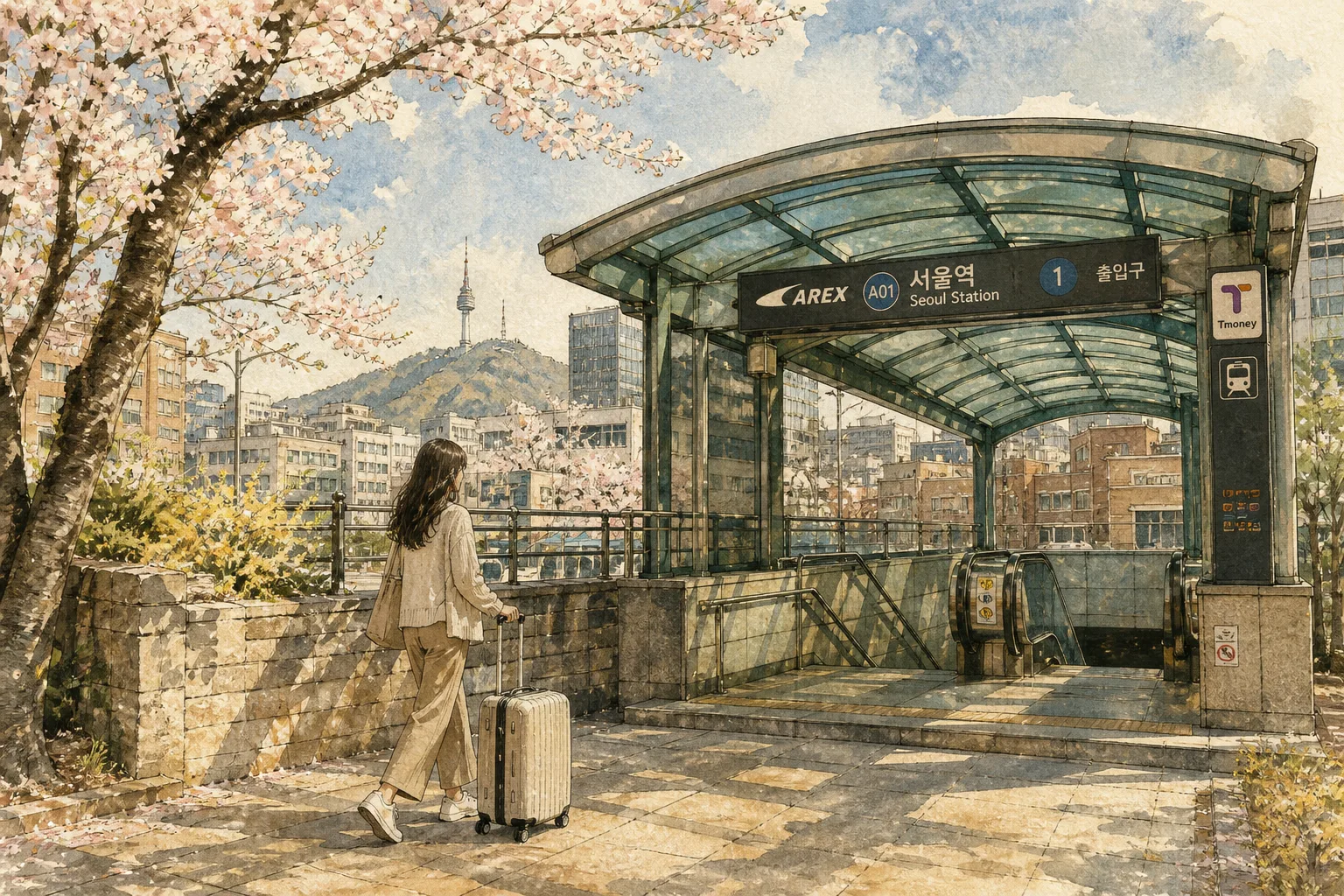
Airport access adds to this. Hongik University Station, which sits at Exit 3 next to Gyeongui Line Forest Park's entrance, also offers a direct, transfer-free ride to Incheon International Airport on the AREX Airport Railroad. That combination, a scenic neighborhood exit doubling as a low-friction airport link, is unusual and specifically helps low-stress travelers avoid a stressful first or last transit day.
The friction point to plan around is navigation software, not transit itself. Because Google Maps directions aren't reliable locally, low-stress travelers should install Naver Map or KakaoMap before arrival rather than relying on a familiar app under pressure.
Common Mismatches
The most common disappointment comes from travelers who expect Seoul to feel like a landmark-dense capital and instead get a mood-led, neighborhood-driven city. If your reference point is a city built around a handful of unmissable monuments, Seoul's spread-out, lower-key attractions can read as underwhelming rather than atmospheric. This is the traveler who should book Kyoto instead: Kyoto packs a dense cluster of major temples and shrines into a compact, walkable core, so a landmark checklist actually works there. Rome is the same kind of fit for ancient-monument travelers, with major sites clustered within a few subway stops of each other.
A second mismatch shows up with overplanners. Travelers who build an hour-by-hour itinerary tend to treat neighborhoods like checkboxes, rushing through Ikseon-dong or Seongsu-dong in twenty minutes each. That approach collapses the exact quality, unhurried, textured wandering, that makes these areas worth visiting in the first place, and it often leaves the traveler feeling like the trip didn't deliver.
A third, narrower mismatch involves photography-led travelers who don't check local rules in advance. Showing up to Bukchon's Red Zone outside the 10 AM to 5 PM window, or attempting to bring a large tour bus into the restricted 2.3-kilometer stretch, results in fines, 100,000 KRW and 300,000 KRW respectively, rather than the shot they came for. These are avoidable disappointments, not inherent flaws in the city.
Final Match Recommendation
Choose Seoul if your travel style prioritizes neighborhood mood, photographic texture, or unhurried wandering over a landmark checklist. Atmosphere-first, photography-led, and slow travelers all have a clear, specific path through the city that plays to Seoul's actual strengths: compact districts, walkable connections, and low-cost, reliable transit for the moments when you do need to cover distance.
Do not choose Seoul if you're coming for a small number of grand monuments and expect the rest of the trip to be built around them. Book Kyoto if you want temple-and-shrine density in a walkable core, or Rome if ancient monuments clustered a few subway stops apart is what you're after. Seoul can include palace and tower stops, but travelers who treat them as the main event tend to under-rate everything else the city offers, and end up happier somewhere else entirely.
Quick self-check before booking:
- I'm more excited by a well-lit street than a famous building
- I'm comfortable using a local map app (Naver Map or KakaoMap) instead of Google Maps
- I'd rather spend a full day in two neighborhoods than rush through five landmarks
- I can plan around a scheduled curfew (Bukchon's Red Zone) without it derailing my day
- My trip budget doesn't depend on a long list of paid landmark entries
If you checked most of these, Seoul is a strong match. If you checked none, Kyoto or Rome will likely serve you better than forcing Seoul into a landmark-first shape.
FAQ
Is Seoul worth visiting if I don't care about landmarks like Gyeongbokgung or N Seoul Tower?
Yes, if you build the trip around neighborhoods instead of a landmark list. Seoul's strongest asset for atmosphere-first travelers is its density of small, distinct districts within walking or short-transit range of each other, not its monuments. If landmarks are the only thing pulling you there, book Kyoto or Rome instead.
Which Seoul neighborhoods are best for atmosphere over sightseeing?
Ikseon-dong, Seongsu-dong, and Yeonnam-dong reward wandering more than checklist sightseeing. Ikseon-dong is fully commercialized with no quiet-hour restrictions, so it stays lively at any hour. Seongsu-dong mixes industrial-era buildings with cafes and design shops, and Yeonnam-dong opens directly onto Gyeongui Line Forest Park from Hongik University Station Exit 3.
Do I need a detailed itinerary to enjoy Seoul this way?
No. Overplanning works against this travel style. A loose district-by-district plan with two or three anchor neighborhoods per day leaves room for the wandering that atmosphere-first travel depends on. Heavy hour-by-hour scheduling recreates the landmark-rush pace you're trying to avoid.
Is Seoul expensive for a slow, atmosphere-led trip compared to a landmark-focused one?
It can cost less per day, not more. Landmark-first trips mean paid entry tickets, transit across the whole city, and tour bookings. An atmosphere-first trip leans on walking, a T-money transit card at 1,550 KRW per subway ride, and free public spaces like parks and streets. Daily spend is often lower as a result.
If I want landmarks, is Seoul still an option, or should I pick a different city entirely?
Pick a different city if landmarks are the main point of the trip. Kyoto packs a dense cluster of major temples and shrines into a compact, walkable core, and Rome delivers ancient monuments within a few subway stops of each other. Seoul's landmarks exist but sit farther apart and play a smaller role in the city's identity, so it under-delivers against that specific expectation.
What's the biggest mistake atmosphere-first travelers make in Seoul?
Treating neighborhoods like landmarks and rushing through them on a schedule. The value of a place like Bukchon or Seongsu comes from unhurried time in it, not a 20-minute photo stop before the next item on a list. Rushing collapses the exact experience that makes this travel style worth choosing.