travel-decisions
Is Madrid Good for Travelers Who Want Quiet Nights?
A calm, decision-led look at whether Madrid fits travelers who value rest, quiet hotel surroundings, and low-stress evenings over nightlife.
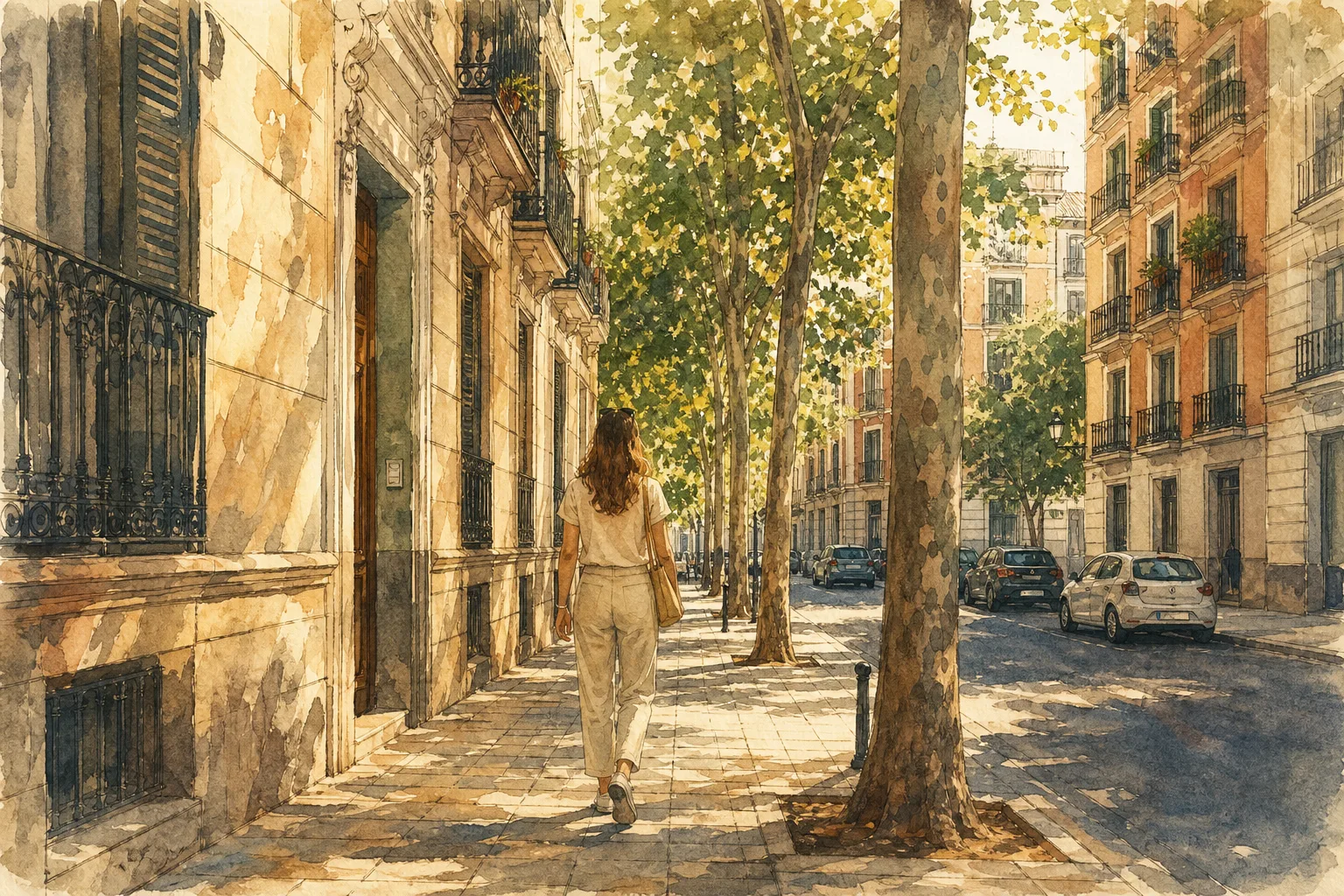
Madrid has a reputation as a late, loud city, and that reputation is mostly earned in a few specific neighborhoods. The honest question is not whether Madrid is loud, but whether a quiet-night traveler can carve out a calm version of it without fighting the city's rhythm.
Quick Verdict
Madrid is a strong fit for quiet-night travelers who pick the right neighborhood and accept that the city eats late. It is a weak fit for travelers who want a sleepy historic center, expect 8 PM dinners as the local norm, or assume any "central" hotel will be peaceful.
Choose Madrid if you are willing to base yourself outside Sol, Gran Via, Malasana, Chueca, La Latina, and Lavapies. Skip it if you need to be in the historic core and also need silence by 10 PM.
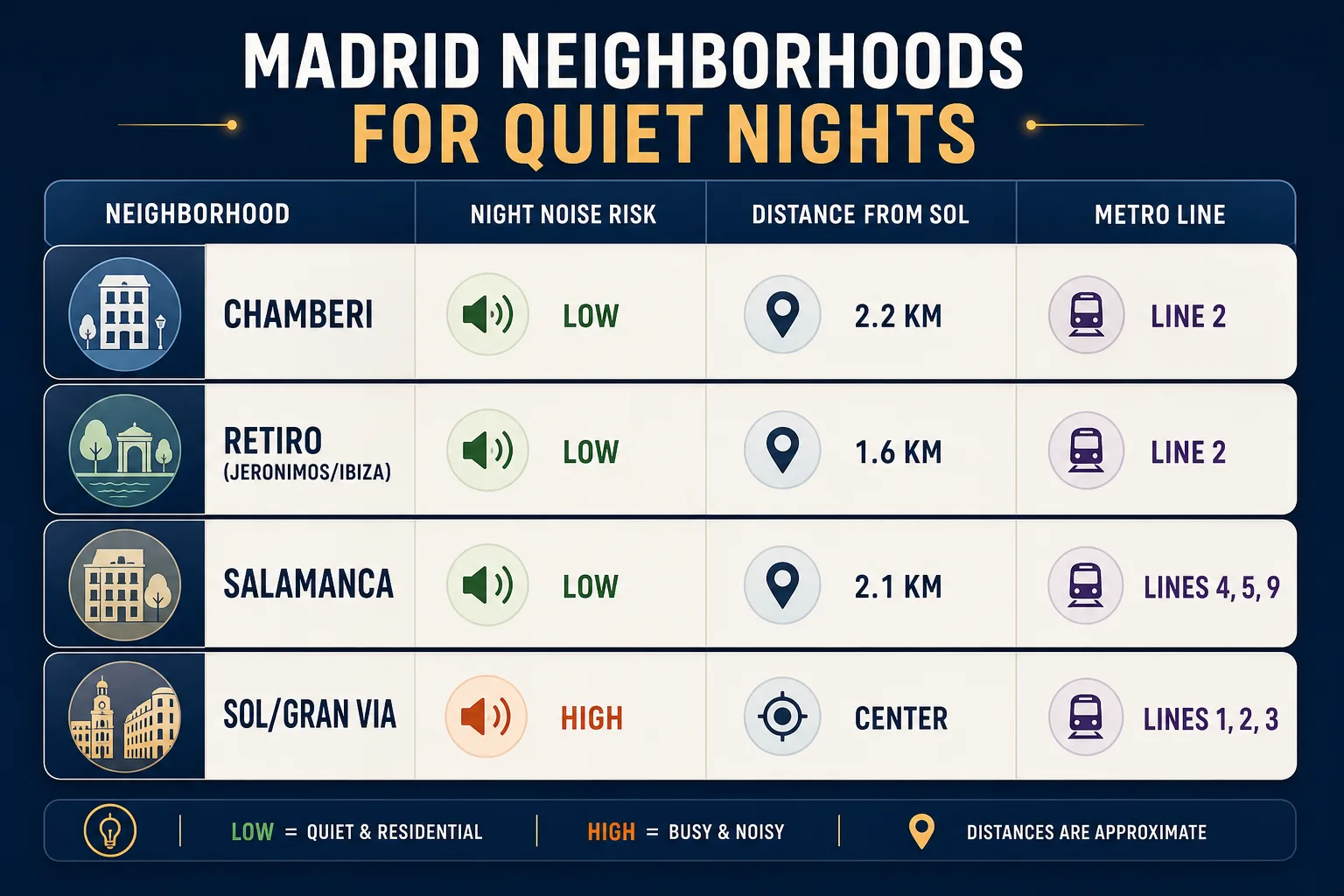 An infographic table comparing night noise levels, distance from Sol, and metro access for several Madrid neighborhoods.
Traveler Type Table
The decision is almost entirely about where you sleep, not which city. The same Madrid trip can feel restful or chaotic depending on the block.
| Neighborhood | Night noise risk | Distance from Puerta del Sol | Access |
|---|---|---|---|
| Chamberi | Low | About 2.2 km north | 9 min on Metro Line 2 from Quevedo, or 25 min walk |
| Jeronimos / Ibiza (Retiro) | Low | About 1.7 to 2.47 km east | 4 min on Metro Line 2, or 20 to 25 min walk |
| Salamanca | Low to medium | About 2 to 2.5 km northeast | 5 to 10 min on Metro Line 2 or 4, or 25 to 30 min walk |
| Sol / Gran Via / Malasana / Chueca / La Latina / Lavapies | High | Central | Walkable, but continuous foot traffic past midnight |
Tradeoffs to weigh:
- A 9-minute metro ride is the price of a quiet bedroom.
- The metro closes at 1:30 AM, so a calm-evening trip is unaffected.
- Madrid's residential noise rules cap indoor bedroom noise at 25 decibels from 11 PM to 7 AM (8 AM on holidays), but this only protects you if your hotel is in a residential building, not above a bar.
Best for First-Time Visitors Who Want a Calm Pace
A first-time visitor who also wants quiet nights gets more out of Madrid than expected, provided the base is residential. Chamberi puts you a 25-minute walk or one short metro ride from the Prado and Royal Palace, and you can do landmark days at your own pace and still hear birds, not bachelorette parties, at 1 AM.
What this traveler should avoid: the marketing instinct to book "in the heart of the city." In Madrid, the heart is loud on purpose. A quiet first trip looks like a residential base, early metro mornings to landmarks, and a long lunch instead of a late dinner.
Best for Couples Who Want Calm Evenings
Couples who value a quiet hotel, a long shared dinner, and an unhurried morning are well served by Jeronimos and the Ibiza side of Retiro. You wake up next to Retiro Park (a 2026 PAMCA-protected quiet zone), can walk the park before breakfast, and are 4 minutes by Metro Line 2 from Sol if you want to see it without sleeping in it.
A couple-focused evening here looks like a 7:30 PM aperitivo near the Paseo del Prado, a sit-down dinner by 8:30 or 9, and a walk home through residential streets that empty out by 11. You do not have to push to 11 PM dinner unless you want to.
Best for Slow Travelers
Slow travelers, the readers who collect mood over checklists, get a quietly rewarding version of Madrid in Chamberi or northern Salamanca. The official 2026 Noise Action Plan (PAMCA) expanded protected quiet zones from 8 to 24, including Retiro Park, Casa de Campo, and Dehesa de la Villa. That is real infrastructure for a slow trip: actual parks you are allowed to linger in without ambient bar noise.
A week-long stay in Chamberi gives you a neighborhood market, a regular cafe, and the option to take a 9-minute metro ride to the center only on the days you want it. Slow travel here is about the residential block, not the landmark count.
Best for Low-Stress Travelers
For low-stress planners, Madrid's logistics actually help. The Metro runs from 6 AM to 1:30 AM with trains every 15 minutes after midnight, the night bus network ("Buhos") covers 28 lines from 11:55 PM to 5:50 AM out of Plaza de Cibeles every 15 minutes most nights (25 minutes in August), and a flat 33 euro taxi fare covers the airport to anywhere inside the M-30 ring.
A 10-trip Metrobus ticket is 6.10 euros plus a one-time 2.50 euro Multi Card fee, and a single Metro ticket is 1.50 euros, so transit is not a cost worry either.
Low-stress checklist for Madrid:
- Hotel is in Chamberi, Jeronimos, Ibiza, or quieter northern Salamanca
- Hotel building is residential, not above a bar or club
- Hotel is within 500 meters of a Metro Line 2 station
- You have planned at least one early-dinner option (7 to 8 PM) per day
- You have noted the night bus stop nearest your hotel as a backup
Common Mismatches
Three reader patterns predictably regret Madrid:
- The "central is always better" planner. Booking on Gran Via because the photos look central means sleeping above 24-hour foot traffic and accepting that bedroom noise will exceed the 25 decibel residential limit you assumed protected you.
- The early-dinner enforcer. If a 6 PM dinner is non-negotiable and the idea of a city that eats at 10 PM is irritating rather than charming, the friction shows up every single evening.
- The shoulder-season optimizer who books September or October. These are the most expensive and crowded months (September averaging around 264 dollars per night), which raises both cost and ambient daytime stress. July averages around 141 dollars per night and is calmer, with heat as the tradeoff.
The disappointment risk is not Madrid itself. It is booking Madrid as if it were a quieter city and being surprised when it is not.
Final Match Recommendation
Choose Madrid for quiet nights if you are comfortable sleeping in Chamberi, Jeronimos, Ibiza, or residential Salamanca, taking a short metro ride or a calm walk to landmarks, and shifting dinner one hour later than you might at home. The infrastructure (late metro, night buses, protected quiet zones, residential noise law) genuinely supports a calm trip.
Skip Madrid for quiet nights if you insist on a Sol or Gran Via hotel, refuse to ride the metro, or expect the historic core to be silent. In that case, a smaller Spanish city or a residential stay outside the center of a busier capital will give you less friction.
For most quiet-night travelers, the answer is yes, with one rule: pick the neighborhood first, then the hotel, then everything else.
FAQ
Is Madrid actually loud at night, or is that overstated? It depends entirely on the neighborhood. Sol, Gran Via, Chueca, Malasana, La Latina, and Lavapies see continuous pedestrian foot traffic well past midnight, while residential areas like Chamberi, Jeronimos, and parts of Salamanca are calm by 11 PM.
Which Madrid neighborhood is best if I want to sleep by 11 PM? Chamberi is the most consistent quiet pick: about 2.2 km north of Puerta del Sol, residential, and reachable in a 9-minute ride on Metro Line 2 from Quevedo. Jeronimos near Retiro Park is the second-best option.
Will Madrid's late dinner culture force me to stay out late? Local dinner service typically starts between 9 PM and 11 PM, but many restaurants open earlier for tourists, and hotel breakfast or a 7 PM tapas stop is enough to avoid the late slot if you prefer an early night.
Can I get back to my hotel easily after a calm evening out? Yes. The Madrid Metro runs until 1:30 AM, and 28 night bus lines run from 11:55 PM to 5:50 AM out of Plaza de Cibeles every 15 minutes most nights. A flat 33 euro taxi covers any trip from the airport inside the M-30 ring.
When is the best month to visit Madrid for quiet nights? July offers the lowest hotel rates (around 141 dollars per night average) and thinner business-traveler crowds, though heat is a factor. September and October are the most expensive and busiest, so avoid those if calm pacing matters more than mild weather.