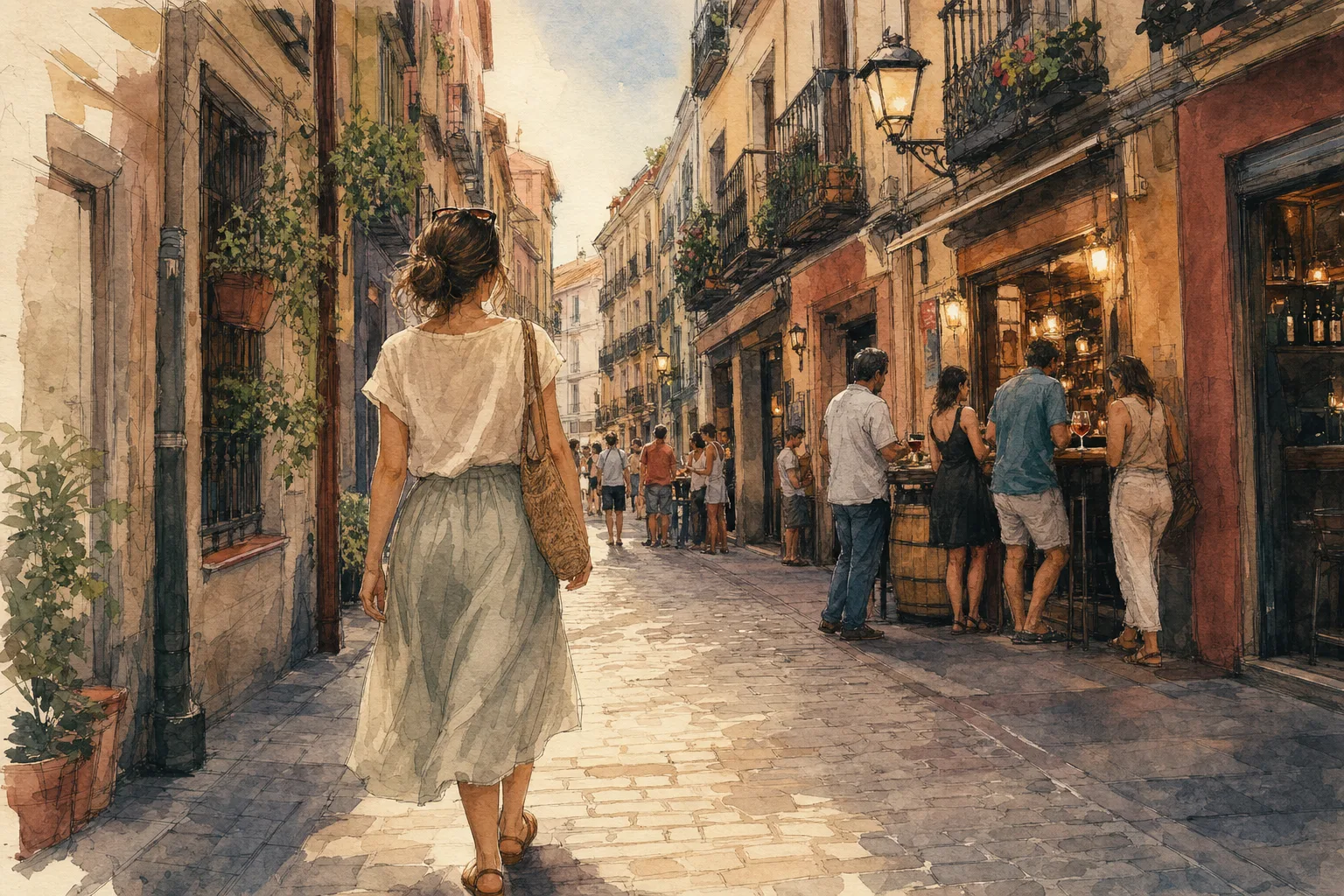
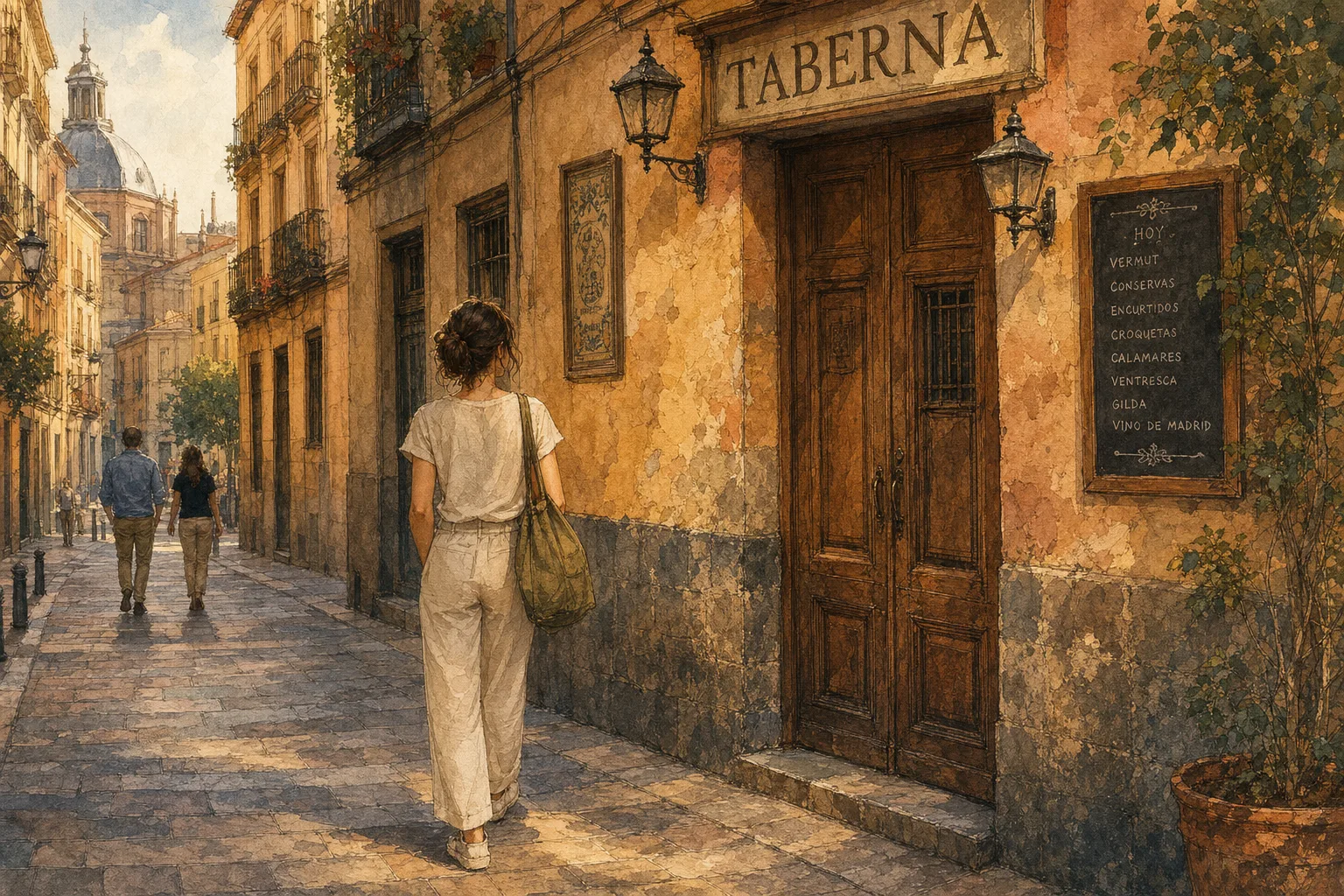
travel-decisions
Is Madrid a Good First Trip for Travelers Who Want Easy Logistics?
A decision-led look at whether Madrid fits first-time visitors who want easy arrivals, simple transit, and low daily navigation stress.
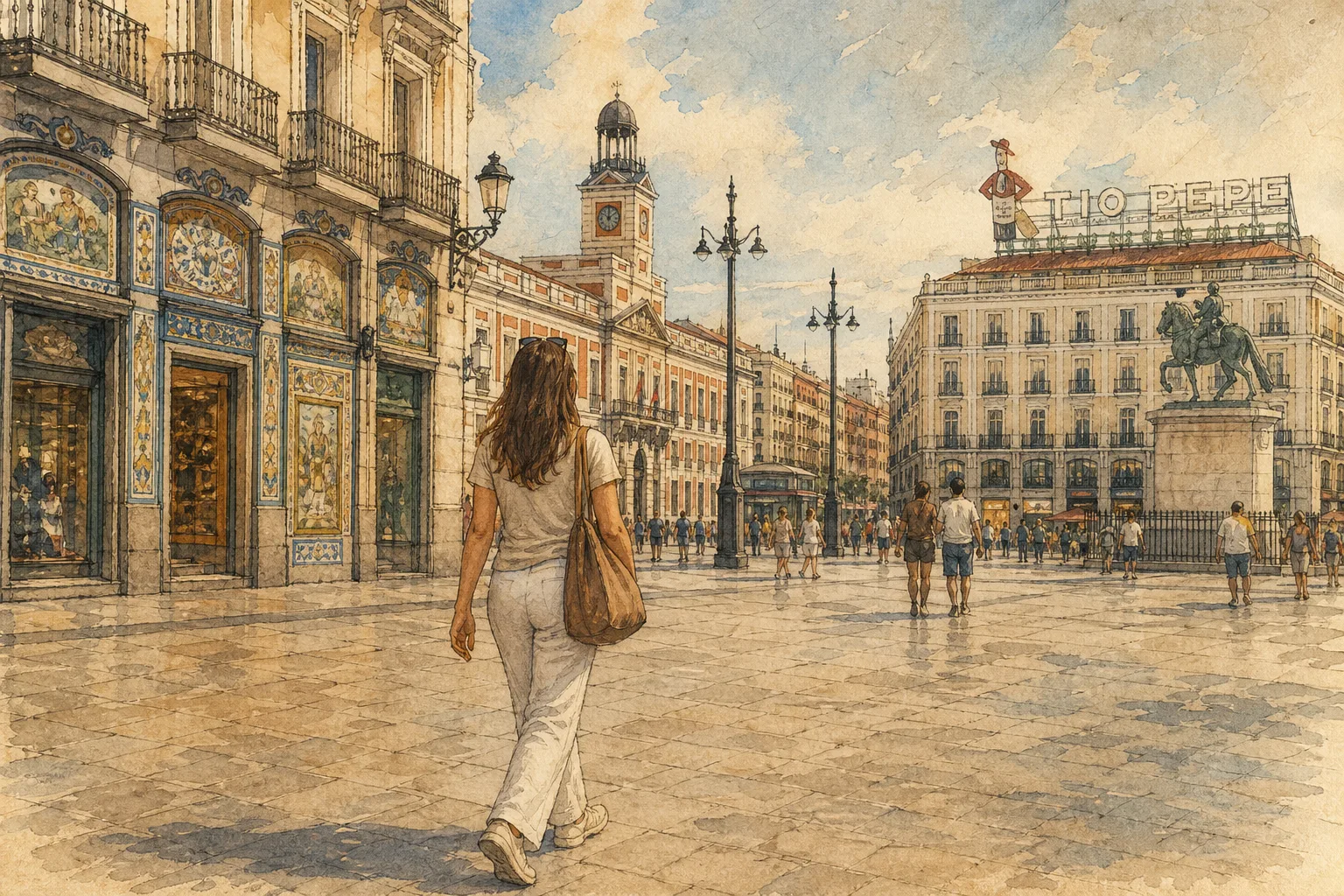
Madrid is one of the clearest "easy first Europe trip" cases because the city removes friction in the order first-timers actually feel it: airport exit, hotel arrival, daily walking radius, and late-evening return. You do not need to decode a huge train map before dinner, and you usually do not need to gamble on whether the center is too spread out to handle on foot. Madrid works because its airport connection and central grid are both legible on day one.
That makes it almost the inverse of cities that trade logistics for atmosphere. Travelers who want dense medieval texture sometimes underrate how much energy they burn on transfers, stairs, or badly placed hotels elsewhere. Madrid asks for a different compromise: accept a working-capital feel in exchange for a trip that is mechanically simple nearly from touchdown to checkout.
Quick Verdict
Madrid is a strong first trip for travelers who want easy logistics, and a weaker fit for travelers who want a dense, old-town atmosphere as the headline reason to go.
The case for it is concrete. The airport sits on a direct metro line into the center. The central tourist triangle (Sol, Plaza Mayor, the Prado, El Retiro) fits inside a roughly thirty-minute walking radius. Most central hotels sit within a ten-minute walk of a metro station, and signage is consistent. If your stress on a first trip comes from transfers, luggage, and "where am I" moments more than from the destination itself, Madrid removes most of those friction points by design.
Choose Madrid as a first trip if you want a real European capital where arrival and daily navigation are mechanically simple, you are okay with a city that feels modern and businesslike alongside its history, and you value a hotel you can walk back to from dinner.
Skip Madrid as a first trip if your mental image of "first time in Europe" is narrow medieval streets, canals, or a compact fairytale old town. Madrid will work, but it will not match that picture, and the easy logistics will not compensate for the expectation gap.
 A comparison chart comparing traveler types and easy-logistics fit for a first trip to Madrid.
Traveler Type Table
This is the practical fit, not a brochure summary. The variables that actually matter on a first trip are how hard the airport is, how much you walk versus transit, how easy it is to stay central, and how much daily decision fatigue the city imposes.
| Traveler type | Madrid fit | Why it works (or does not) |
|---|---|---|
| First-time visitor | Strong | Direct metro from the airport, compact central core, English-friendly signage, low transfer count. |
| Low-stress planner | Strong | Most decisions (where to stay, how to get in, how to get around) have one obvious right answer. |
| Couple (relaxed pace) | Strong | Walkable evenings, dense dining options, El Retiro, no logistics arguments. |
| Slow traveler | Medium | Madrid rewards lingering but is not a "tiny town" vibe; the texture is urban, not village. |
| Atmosphere-first traveler | Medium to weak | Madrid has mood, but it is capital-city mood, not Tuscan or Provencal mood. |
| Older or mobility-aware traveler | Medium to strong | Flatter than Lisbon or Porto, metro is well-mapped, but central streets still mean some walking. |
| Family with strollers | Medium | El Retiro and wide avenues help; some old streets and metro stairs do not. |
The headline reads: Madrid is engineered well for first-timers and low-stress planners. It does not pretend to be a postcard. That tradeoff is the whole article.
Best for First-Time Visitors
For a first international trip, the questions that quietly ruin a week are: How do I get out of the airport? How do I get to my hotel without a transfer? Will I get lost trying to find dinner the first night?
Madrid answers all three cleanly. Metro Line 8 (Pink) runs from Madrid-Barajas (T1-T2-T3 and T4) to Nuevos Ministerios in central Madrid in 15 to 20 minutes. The single fare to the center is roughly 5 euros once you add the 3 euro airport supplement to the Tarjeta Multi (the rechargeable, non-personalized card you have to buy for 2.50 euros). If you would rather skip the stairs, the Airport Express Bus 203 runs 24/7 to Atocha in 30 to 40 minutes for 5 euros flat, and Cercanas commuter lines C1 and C10 connect Terminal 4 to Atocha and Chamartn in about 30 minutes between 6 AM and midnight.
Once in the center, the geography is forgiving. Puerta del Sol to Plaza Mayor is about a 6-minute walk. Plaza Mayor to Mercado San Miguel is about 5 minutes. Puerta de Alcal at the edge of El Retiro to the Royal Palace is roughly a 30-minute walk straight across the heart of the city. That is your first trip, on foot, in a single afternoon.
For a first-timer, the meaningful win is that Madrid does not punish small mistakes. Missing a turn does not strand you. Getting on the wrong metro adds a few minutes, not an hour.
Best for Couples
For couples, the logistics that matter are different. The friction is usually disagreement about pace, the walk back from dinner, and whether one person is quietly exhausted by 9 PM.
Madrid handles this gracefully. The center is dense enough that a couple can split a day (museum and shopping, or park and tapas) and meet up for dinner at Mercado San Miguel or in La Latina without a transit plan. The Metro runs until 1:30 AM, so a late dinner does not become a taxi negotiation. Hotels in Sol, Opera, Huertas, or Las Letras put you inside a walkable triangle, which means the evening is not a logistics problem.
The honest caveat: Madrid is not a romantic-by-postcard city in the way Venice, Bruges, or Lucca are. The romance here is the rhythm (long dinners, late evenings, terraces) not the backdrop. Couples who want the backdrop as the headline should weight that.
Best for Slow Travelers
Slow travelers collect mood, not checklist items. Madrid can deliver this, but the texture is urban-residential, not small-town.
What works: long mornings in El Retiro, an unhurried afternoon at the Prado or the Reina Sofia, an early evening vermouth in La Latina, dinner after 9 PM. The shoulder seasons of April to May and mid-September through October sit in the 15 to 25 degree range with manageable crowds, which is the right window for this style. July and August are cheapest for hotels but hot, and September is generally the most expensive month, with prices ranging from 264 to 484 dollars a night.
What does not work: if your version of slow travel needs cobblestone alleys, a single tiny piazza, or a village rhythm where you recognize the same three faces by day three. Madrid is too big for that. A slow traveler who wants that texture should pair Madrid with a smaller second base (Segovia, Toledo, or Cordoba) reached easily from Atocha for southern routes or Chamartn for northern ones.
Best for Low-Stress Travelers
This is the traveler Madrid is genuinely built for.
The mechanical reasons stack up:
- One direct metro line from the airport, no mandatory transfer.
- A flat 5 euro airport bus alternative running 24 hours.
- A central tourist triangle you can cross on foot in 30 minutes.
- Most central areas within a 10-minute walk of a metro station, with service from 6 AM to 1:30 AM.
- A 10-trip Zone A ticket for 7.30 euros if you do not want to think about per-ride pricing.
- Atocha and Chamartn cover almost every day trip cleanly: Toledo and Barcelona to the south from Atocha, Segovia and Bilbao to the north from Chamartn.
The low-stress checklist for a Madrid first trip looks like this:
- Hotel inside the Sol / Opera / Huertas / Las Letras zone, within 10 minutes of a metro stop.
- Tarjeta Multi card bought on arrival (2.50 euros) and loaded with at least one airport supplement.
- One museum reservation pre-booked, not three.
- One day trip booked (Toledo or Segovia), not two.
- Dinner reservations only for the nights you actually care about; otherwise walk in.
If you can check those boxes, the trip mostly runs itself.
Common Mismatches
Madrid's mismatch is usually not that the city is hard. It is that travelers use "easy" as a substitute for "the vibe I actually want."
- The "easy should also feel storybook" traveler. Someone who really wants Florence, Prague, or Porto may arrive in Madrid and feel the city is too modern, too broad, or too capital-like even while acknowledging the logistics are excellent. That gap is real.
- The "I only compared flights and hotel prices" traveler. They choose Madrid because the mechanics look easy, without asking whether they wanted a beach, canals, or a denser old-town backdrop. Logistics solve stress, not aesthetic mismatch.
The traveler who wants a beach-and-city combo will be hours from the coast. For that, Barcelona, Valencia, or Lisbon fit better.
The traveler who picked Madrid only because flights were cheap, without checking the vibe, often spends day two wondering why it does not feel like the European trip they pictured. That is not Madrid's fault. It is an angle mismatch.
The other concrete mistake is hotel location. A first-timer who books on price alone ends up in a neighborhood that is technically central on a map but requires a transfer or a long walk with luggage. The easy-logistics advantage of Madrid evaporates the moment your hotel is not actually well-placed.
Final Match Recommendation
Pick Madrid as a first trip if the friction points you fear most are arrival complexity, daily navigation, hotel location risk, and decision fatigue. Madrid neutralizes all four with infrastructure, not with luck. The verdict is strong fit if you value mechanical ease and a real working capital, and weak fit if you specifically want a small old-town atmosphere as the trip's headline reason.
A practical recommendation: three to four nights in central Madrid, one easy day trip to Toledo from Atocha, shoulder-season dates (April to May or mid-September to October) for the 15 to 25 degree weather and saner hotel pricing, and a hotel chosen for walking-distance-to-metro rather than nightly rate. That configuration delivers the trip Madrid is actually good at, and it removes the conditions under which first-timers regret choosing it.
If your gut still pulls toward a denser, smaller, more "old Europe" backdrop after reading this, listen to that. The easy logistics here will not change the fact that Madrid is a capital, not a village. Choose the destination that matches the picture in your head, then choose the logistics that match the destination.
FAQ
Is Madrid easier to navigate than Paris or Rome for a first trip? For raw logistics, yes. The metro is direct from the airport on Line 8, the city center is compact enough that Sol to Plaza Mayor is about a 6-minute walk, and most central neighborhoods sit within a 10-minute walk of a metro station. Paris has a larger and more crowded transit network, and Rome involves more cobblestones and fewer metro stops in the core. Madrid is not more beautiful by default, but it is mechanically simpler.
How long should a first trip to Madrid be if I want it to feel easy? Three to four full days is the sweet spot for a low-stress first trip. That gives you time for the Prado, El Retiro, a slow evening around La Latina or Huertas, and one day trip to Toledo or Segovia by train without packing the schedule. Anything under three days starts to feel rushed; anything over five and most easy-logistics travelers run out of must-sees and want to add a second city.
Where should a first-time, low-stress visitor stay in Madrid? Stay inside the triangle formed by Sol, Gran Via, and the Prado. Specifically, the areas around Sol, Opera, Huertas, and the edges of Malasaa or Las Letras keep you within walking distance of most landmarks and on direct metro lines to the airport. Avoid hotels that are technically cheap but require a transfer or a 20-minute walk with luggage; that is the single most common location mistake first-timers make here.
Is the Madrid airport easy to handle with luggage and jet lag? Yes, by European-capital standards. Metro Line 8 reaches Nuevos Ministerios in 15 to 20 minutes, the Airport Express Bus 203 runs 24/7 to Atocha in 30 to 40 minutes for 5 euros, and Cercanas commuter trains C1 and C10 connect Terminal 4 to Atocha and Chamartn in about 30 minutes. There is a 3 euro airport supplement on the metro, so the single fare into the center is roughly 5 euros. None of these options require a transfer if your hotel is well chosen.
Who should not pick Madrid as a first trip? Travelers chasing a dense medieval old-town vibe (Florence, Prague, Porto), travelers who want canals and walkable picture-postcard density (Venice, Amsterdam), and travelers who specifically want a beach-and-city combo. Madrid is a real working capital, not a fairytale set piece. If your mental image of a first European trip looks like a Tuscan alley, Madrid will feel too big and too modern, even though the logistics are easier.