travel-decisions
Is Madrid Worth It If You Care More About Atmosphere Than Landmarks?
A decision-led guide for travelers who pick cities by mood, not monument count. Honest fit verdict for Madrid, plus where it works and where it disappoints.
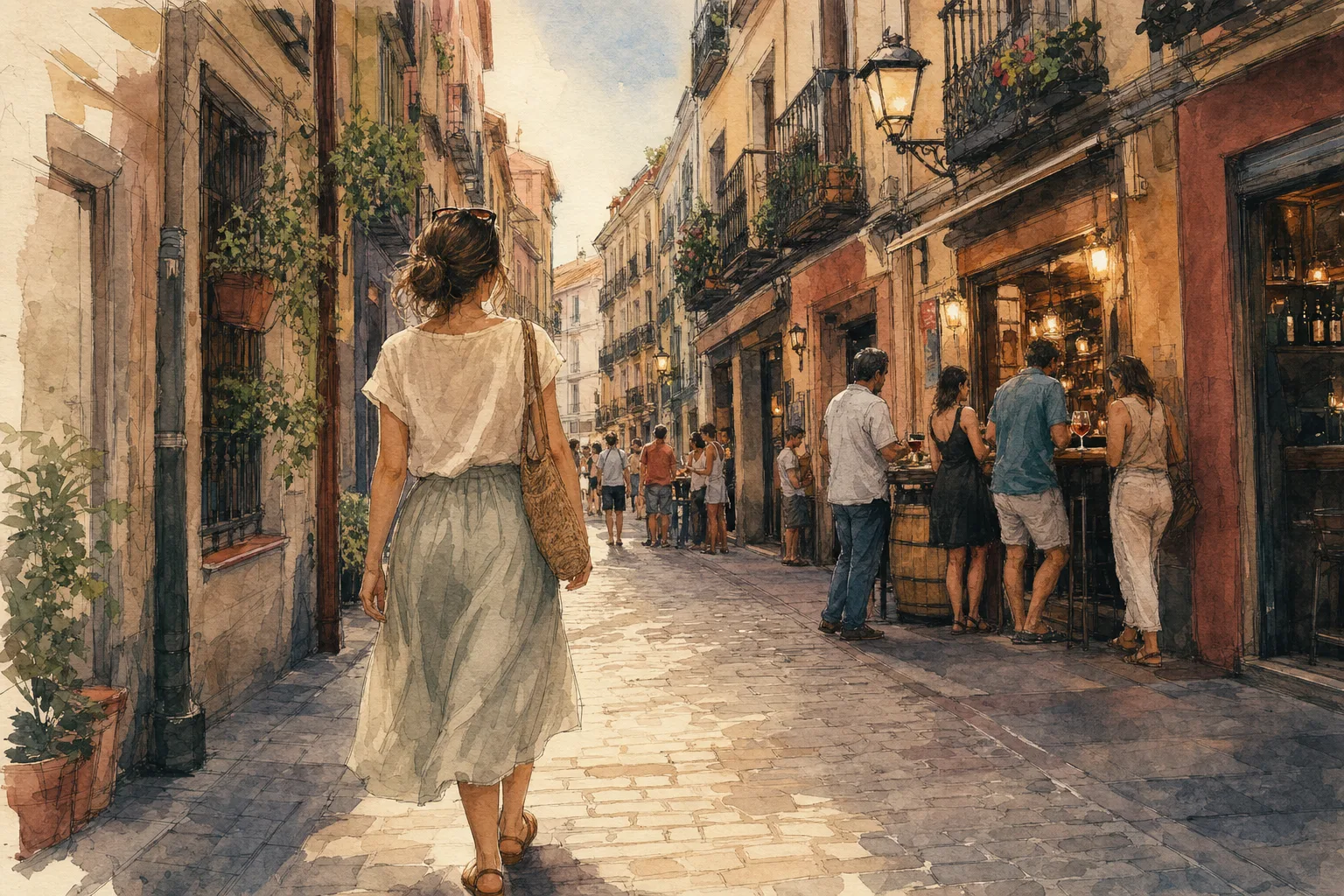
Quick Verdict
Madrid is a strong fit if you measure a city by how its streets feel at 8 p.m., and a weak fit if you measure it by how many must-see monuments you can tick off in a day.
Choose Madrid if you are an atmosphere-first, slow, or food-led traveler who is happy to spend an afternoon on one street and a night on one plaza. Skip Madrid, or at least shorten it, if you are a landmark-first traveler comparing it head-to-head with Rome, Paris, or Barcelona on monument count. The city does not lose that comparison gracefully, because it was never trying to win it.
The shortest honest summary: Madrid pays back in mood, not in icons. If that is your currency, the trip is worth it.
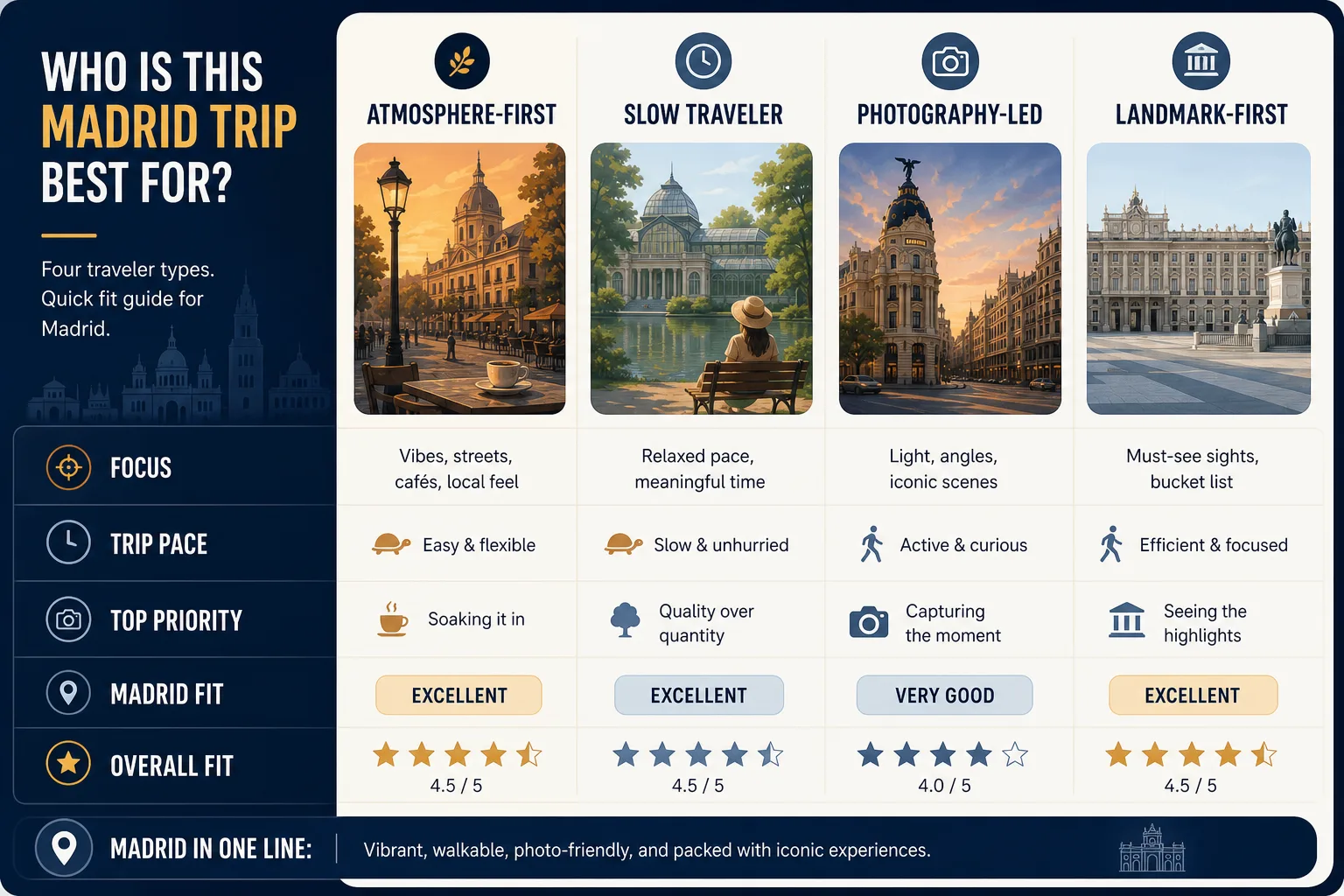 An infographic comparing how well Madrid suits atmosphere-first, slow, photography-led, and landmark-first travelers.
Traveler Type Table
The decision is less about Madrid and more about how you travel. Here is where the fit actually comes from.
| Traveler type | Fit for Madrid | Why |
|---|---|---|
| Atmosphere-first | Strong | La Latina, Malasana, and Lavapies do the heavy lifting; no entry ticket required. |
| Slow traveler | Strong | Long lunches, late dinners, and a metro running until 1:30 a.m. reward unhurried days. |
| Photography-led (street, food, light) | Strong | Markets, alleys, and plaza light at dusk are the real subjects. |
| Photography-led (single-icon shots) | Weak | No skyline or signature monument carries a frame the way the Eiffel Tower or Sagrada Familia does. |
| First-time European traveler chasing landmarks | Mixed | Fine as part of a longer trip, frustrating as a standalone "greatest hits" stop. |
| Low-stress planner | Strong | Compact core, flat-ish center, predictable transit, easy day structure. |
| Family with young kids on a tight schedule | Mixed | Late dining culture and a nightlife-leaning rhythm clash with early bedtimes. |
The pattern: if your trip is built around moments, Madrid delivers. If it is built around objects, it underdelivers for the cost.
Best for First-Time Visitors
For a first-time visitor who is honest about being atmosphere-first, Madrid works well as a three to four day base. The trick is to stop treating it like a landmark city on arrival.
A workable shape:
- Day 1: One neighborhood only. Walk Malasana in the late afternoon, eat late, sleep.
- Day 2: One market, one plaza, one long dinner street like Cava Baja, which packs over 50 tapas bars and restaurants into a 300-meter stretch.
- Day 3: One museum at most, then back to street level.
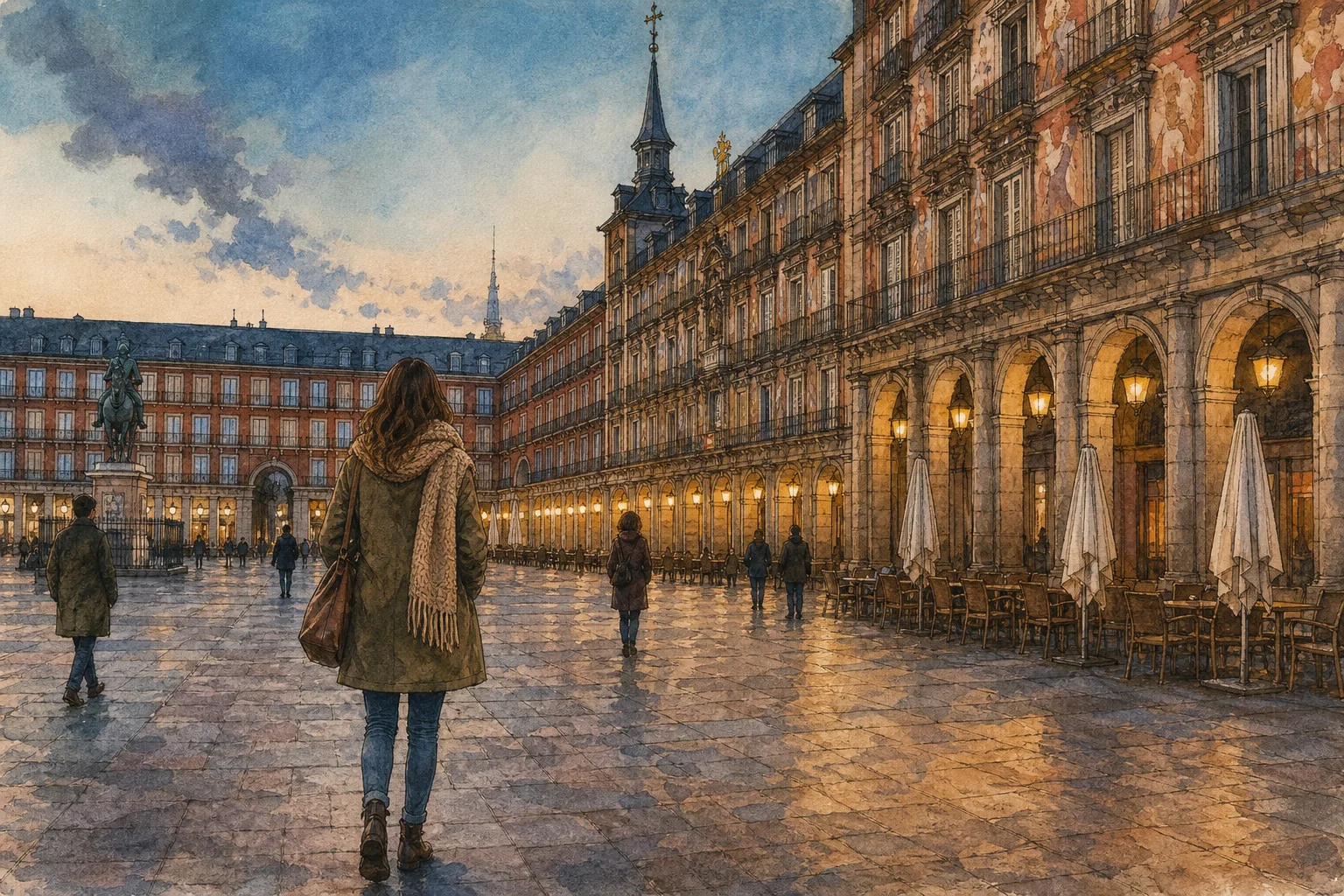
Photography-led first-timers should plan around light, not opening hours. The strongest frames in Madrid happen between roughly an hour before sunset and two hours after, when plaza light goes warm and tapas streets fill up.
Slow travelers should resist day trips on a first visit. Toledo and Segovia are real options, but they pull energy away from the thing you actually came for.
Best for Couples
For couples, Madrid's atmosphere advantage is almost entirely an evening advantage. The city is built for shared, unhurried hours after dark.
What works well:
- A hotel in Malasana or the edges of La Latina, so the main sights stay within a 10 to 15 minute walk and you never need to plan transit for dinner.
- Tapas-crawling on one street instead of booking one "destination" restaurant.
- Late walks. Madrid feels safe and populated well past midnight in central neighborhoods, and night buses cover the gap when the metro closes.
What disappoints couples:
- Expecting a romantic-view city. Madrid does not have the water, hills, or single iconic skyline that Lisbon, Paris, or Barcelona offer.
- Over-museum days. Two big museums back-to-back usually ends the evening early, which is when the city was about to start working in your favor.
Photography-led couples do well here because the subject is each other inside the scene (markets, alleys, balconies) rather than each other in front of a monument.
Best for Slow Travelers
Slow travelers are arguably Madrid's best-matched audience. The city's rhythm assumes you are not in a hurry.
Why it works:
- The metro runs from 6:00 a.m. to 1:30 a.m., so late nights do not require taxis.
- Night buses (Buhos) cover 11:45 p.m. to 6:00 a.m. and are the only 24/7 public transport, which removes the usual "we have to leave now" pressure.
- The center has a Walk Score of 100 out of 100, and 53% of the urban core has essentials within a 15-minute walk, so a day with no plan still functions.
- Lavapies rewards repeat visits, with cultural centers like La Casa Encendida and Tabacalera sitting alongside the Mercado de San Fernando.
A reasonable slow-travel posture: one neighborhood per day, one sit-down meal that lasts at least two hours, one unplanned hour after dark. Five days at this pace is more satisfying than seven days of trying to "cover" the city.
Best for Low-Stress Travelers
Low-stress travelers benefit from how legible Madrid is. The decision load per day is small.
Transit math you can plan around:
- Single metro ticket, Zone A: 1.50 to 2.00 euros, plus a 3.00 euro supplement for airport journeys.
- Daytime EMT bus: 1.50 euros, running 6:00 a.m. to 11:30 p.m.
- Cercanias commuter rail single tickets start at 1.70 euros for one or two zones.
- Tarjeta Multi reusable contactless card: 2.50 euros to buy, then load fares.
That is the entire transit decision tree for most visitors. There is no zone puzzle, no peak-pricing trap, and no need to pre-buy a city pass to feel like you are getting value.
The atmosphere-first angle also reduces stress in a less obvious way: when the plan is "wander this neighborhood after 6 p.m.", you cannot really fall behind. You arrived, you walked, you ate. Day done.
Best for Niche Interests
Vermuteria and Classic Tapas Bar Culture
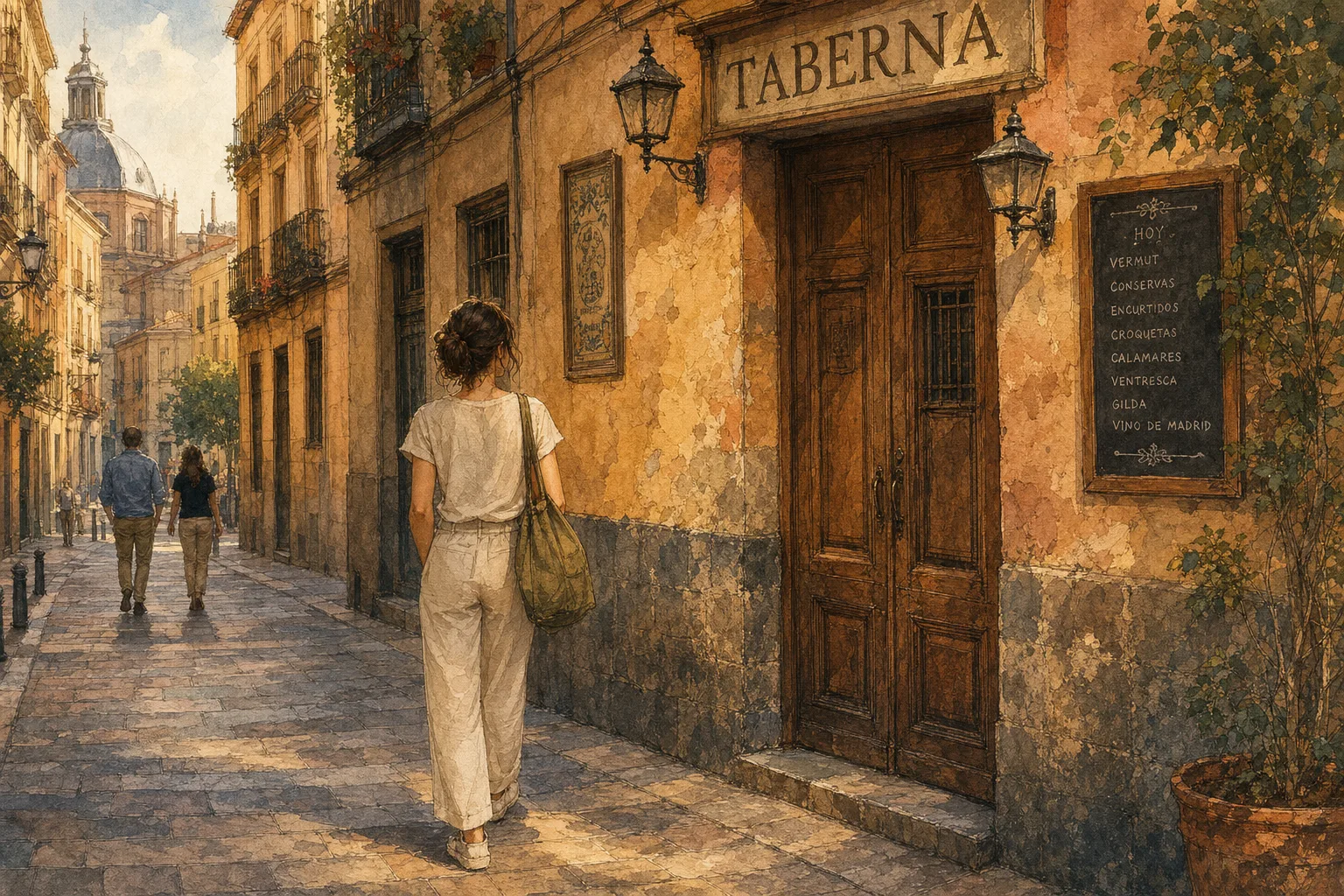
La Latina suits travelers who want Madrid vermuteria bars and classic tapas culture to shape the evening rather than fill a single meal slot. Around Cava Baja, the pleasure is in moving slowly between compact bar rooms, standing counters, and busy streets, then staying when one place feels right. This niche works best if you value repetition and local rhythm more than a reservation-led dining checklist.
Independent Boutiques and Vintage Shopping
Chueca is the stronger fit for travelers looking for a Madrid vintage shopping neighborhood with independent style rather than one large retail stop. Its side streets make it easy to alternate small boutiques and vintage shops with cafés and plaza breaks, so browsing becomes part of the neighborhood walk. Come with a loose afternoon rather than a fixed purchase list; the payoff is the mix of street life and discovery.
Common Mismatches
This is where the regret usually comes from. Madrid disappoints specific traveler patterns in predictable ways.
- Landmark-first travelers benchmarking Madrid against Rome or Paris. Madrid will lose, because it is not competing in that category.
- Short-trip travelers giving Madrid 36 hours between flights. The city is back-loaded toward evening; a 36-hour visit usually catches the wrong half of the day.
- Travelers booking in peak month without adjusting expectations. September is the peak month for hotel pricing, with average nightly rates around 264 dollars, versus 141 dollars in July and 226 dollars in August. Paying September prices for an atmosphere city, only to spend the days inside museums, is the classic cost-vs-payoff mismatch.
- Families needing early dinners and quiet streets. The neighborhoods that produce Madrid's best atmosphere are also the loudest and latest.
- Photography-led travelers chasing one signature shot. There is no single frame here that does the work the Eiffel Tower or Sagrada Familia does elsewhere.
If any two of these describe your trip, downgrade Madrid from "main stop" to "two-night stop", or swap it.
Final Match Recommendation
Choose Madrid as a main stop if:
- You judge cities by neighborhoods, not monuments.
- You are willing to eat dinner after 9 p.m. and walk after 11 p.m.
- You can give it at least three full days, ideally four.
- Your photography is about street, food, and light rather than icons.
- You will book a hotel inside the walkable core (Malasana, La Latina, edges of Sol or Chueca) rather than chasing a cheaper outer-zone rate.
Skip Madrid, or compress it to a single connecting night, if:
- Your trip is structured around a list of must-see monuments.
- You need early dinners, early nights, or a quiet base.
- You are comparing it strictly on cost-per-icon against Rome, Paris, or Barcelona.
- You only have one day and that day is mostly daytime.
For the atmosphere-first reader this article was written for, the verdict is straightforward: Madrid is worth it, the payoff is real, and the main risk is under-staying rather than over-staying.
FAQ
Is Madrid worth visiting if I skip most of the famous museums? Yes, if your trip is built around neighborhoods, food streets, and slow evenings. Madrid's strongest hours are the late afternoon and night in areas like La Latina, Malasana, and Lavapies, none of which require a museum ticket to enjoy.
How many days does an atmosphere-first traveler need in Madrid? Three full days is a comfortable minimum. Two days forces a landmark pace that fights the city's rhythm. Four to five days lets you repeat neighborhoods at different times of day, which is where Madrid actually reveals itself.
Is Madrid a good photography city without iconic monuments? It is strong for street, light, and food photography, weaker for single-frame landmark shots. The reward is in alleys, market interiors, plaza light at dusk, and balconies, not in one postcard view.
Will I regret choosing Madrid over Barcelona or Lisbon for vibe? Possibly, if you want water views, hills, or a tighter old town. Madrid's atmosphere is land-locked, urban, and late-night. If those words sound right, it wins. If you wanted a coast or a viewpoint city, it will feel flat.
Is Madrid walkable enough to wander without a plan? Yes. The urban core has a Walk Score of 100 out of 100, and a hotel in Malasana puts the main sights within a 10 to 15 minute walk, so unplanned wandering rarely strands you.