travel-decisions
Is a Jeju Cafe-Hopping Itinerary Worth the Drag of Coastal Driving and Parking Crowds?
A traveler-fit breakdown of Jeju's coastal cafe-hopping trend, weighing the aesthetic payoff against parking chaos, driving time, and crowd pressure so you can decide before you rent a car.
Quick Verdict
A Jeju cafe-hopping itinerary is worth building around if you are an aesthetic-first traveler or a foodie who treats the drive and the wait as part of the experience, not an obstacle to it. It is a weak fit if you are working a tight schedule, traveling with anyone who gets carsick or restless in stop-and-go coastal traffic, or trying to keep costs predictable.
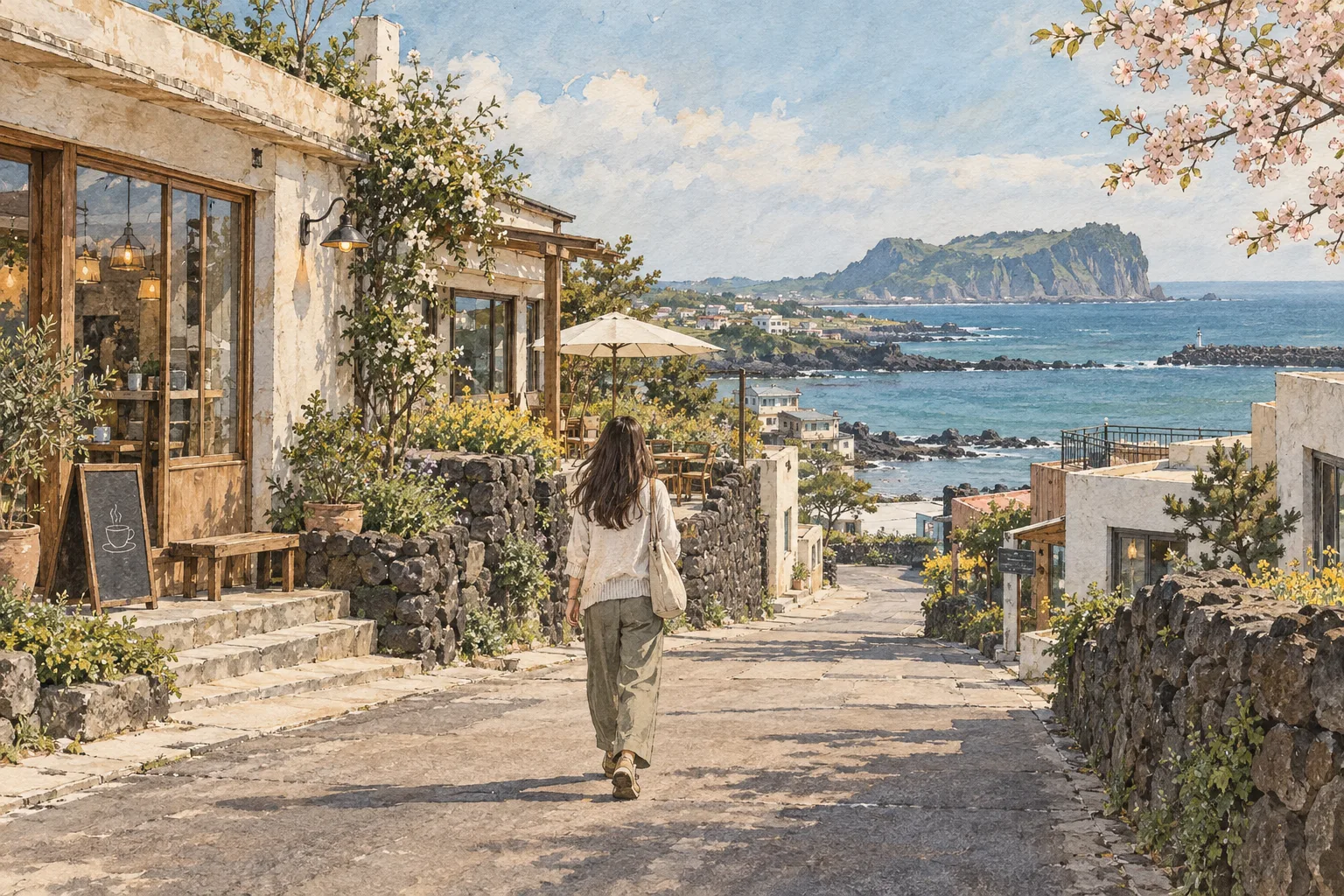
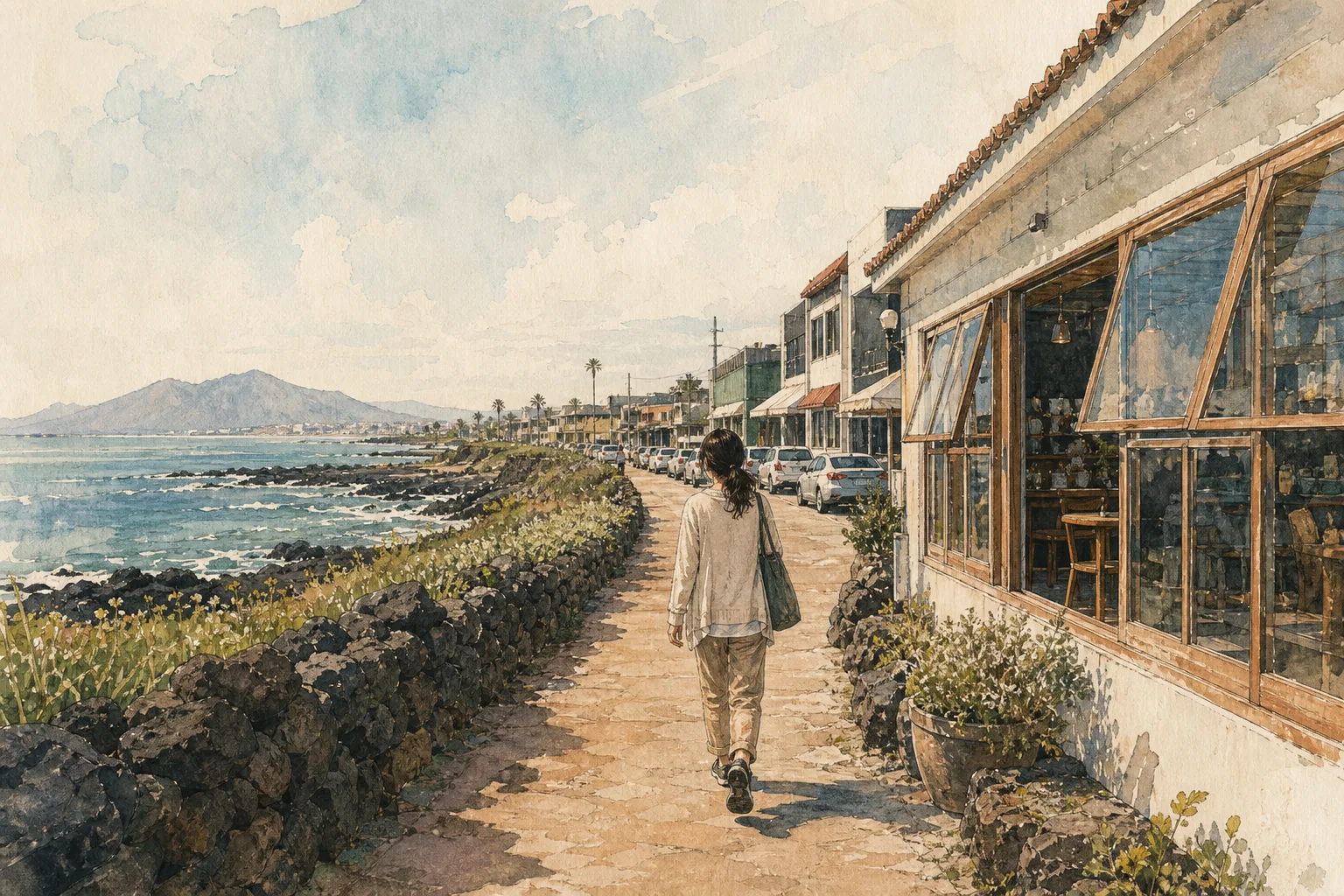
The honest tradeoff: every cafe on the Aewol coastal strip delivers a strong visual and a decent espresso, but between them sits a parking lot that may not take your card, a 10 to 15 minute walk if you park near the highway instead, and a seating wait that peaks exactly during the hours most itineraries schedule lunch. Strong fit if your trip has slack in the schedule and your enjoyment comes from the coastal atmosphere itself. Weak fit if you are counting hours or need every stop to be efficient.
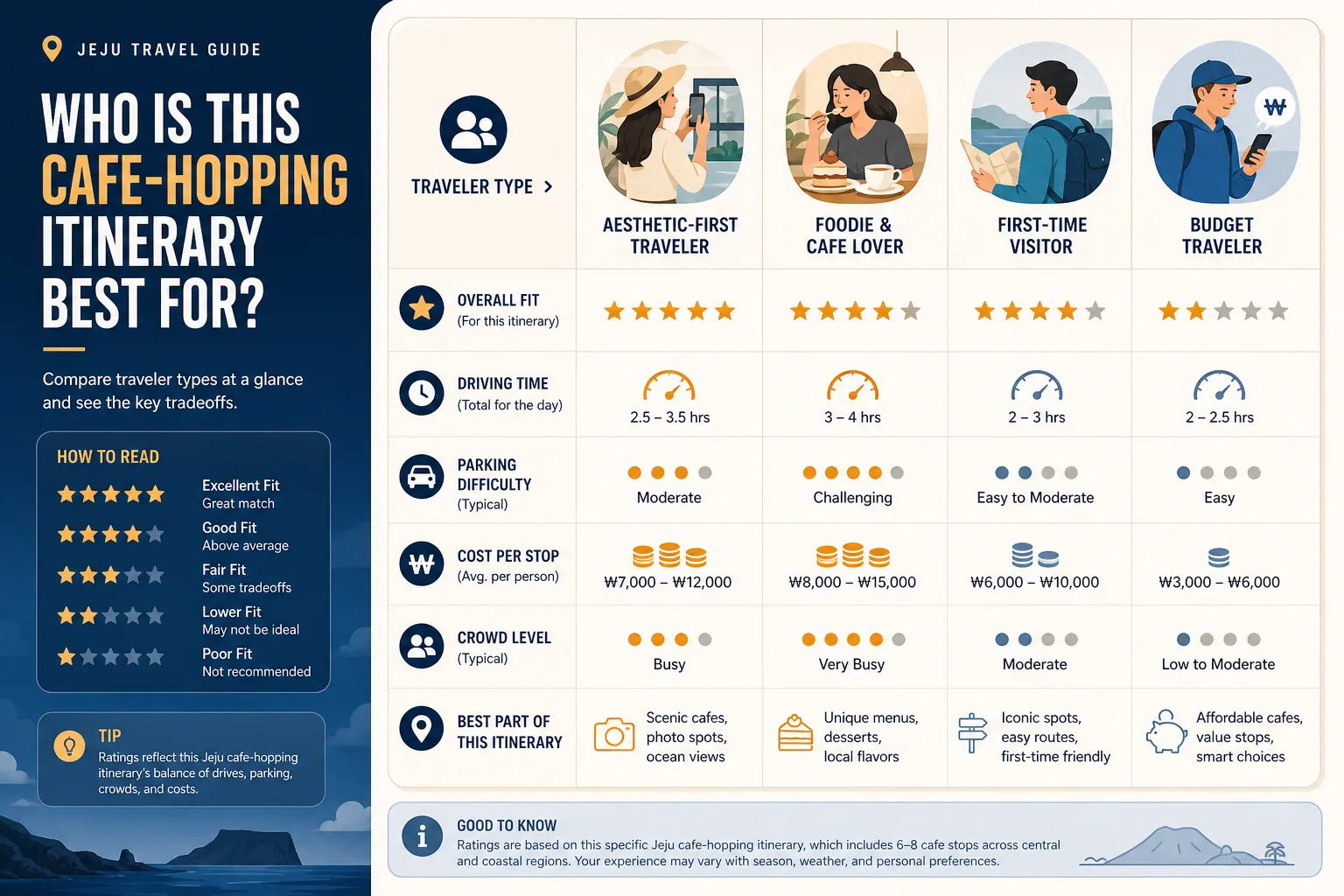 Where the fit for cafe-hopping actually comes from, by traveler type.
Traveler Type Table
The cafe-hopping trend gets sold as one uniform activity, but the actual experience splits sharply by what a traveler wants out of it. Below are the variables that decide fit, not generic Jeju facts.
| Traveler type | Real payoff | Real cost | Fit |
|---|---|---|---|
| Aesthetic traveler (style/photo-led) | Ocean-facing window seats, the Handam coastal trail as a walkable backdrop, distinct cafe interiors worth the stop | Midday parking scarcity works against golden-hour shooting; may need to arrive before 10 AM to get the shot without a crowd | Strong |
| Foodie | Real quality variation between cafes, not just Instagram staging; latte and dessert menus worth comparing | Menu prices cluster tightly (5,500 to 8,000 KRW per drink), so the differentiation is subtle, not dramatic | Moderate to strong |
| First-time visitor with a fixed 3-day plan | One memorable coastal stop fits easily into a broader itinerary | Treating cafe-hopping as a half-day anchor eats time better spent on first-visit landmarks | Weak as a centerpiece, fine as a single stop |
| Budget-conscious traveler | Cafes themselves are moderately priced | Parking fees stack, card rejection at automated gates forces cash scrambles, and the rental car itself is the biggest line item | Weak unless car costs are already budgeted elsewhere |
The pattern: cafe-hopping rewards people who are already optimizing for atmosphere and food quality, and penalizes people who are optimizing for time or cost. That is the entire decision.
Best for First-Time Visitors
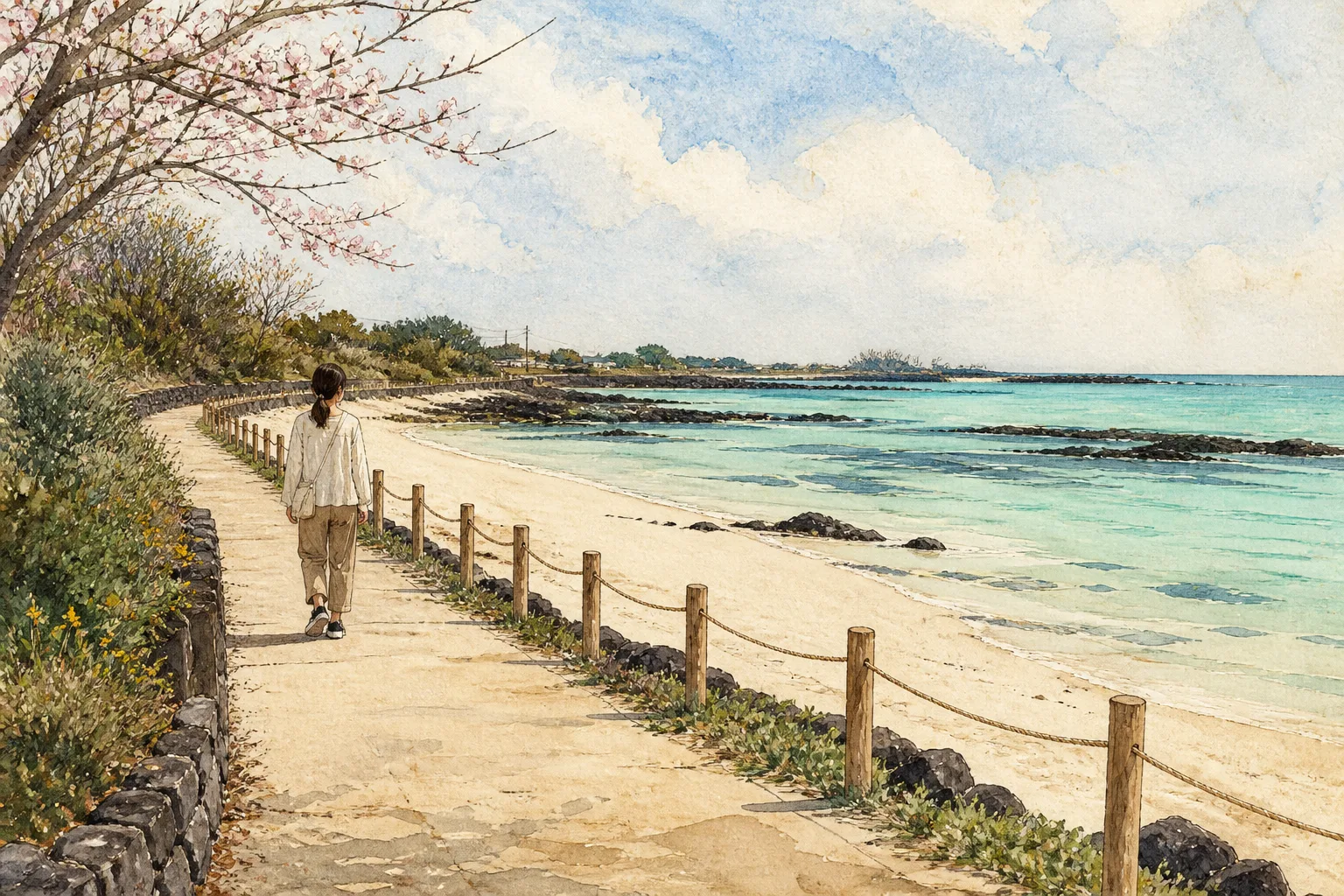
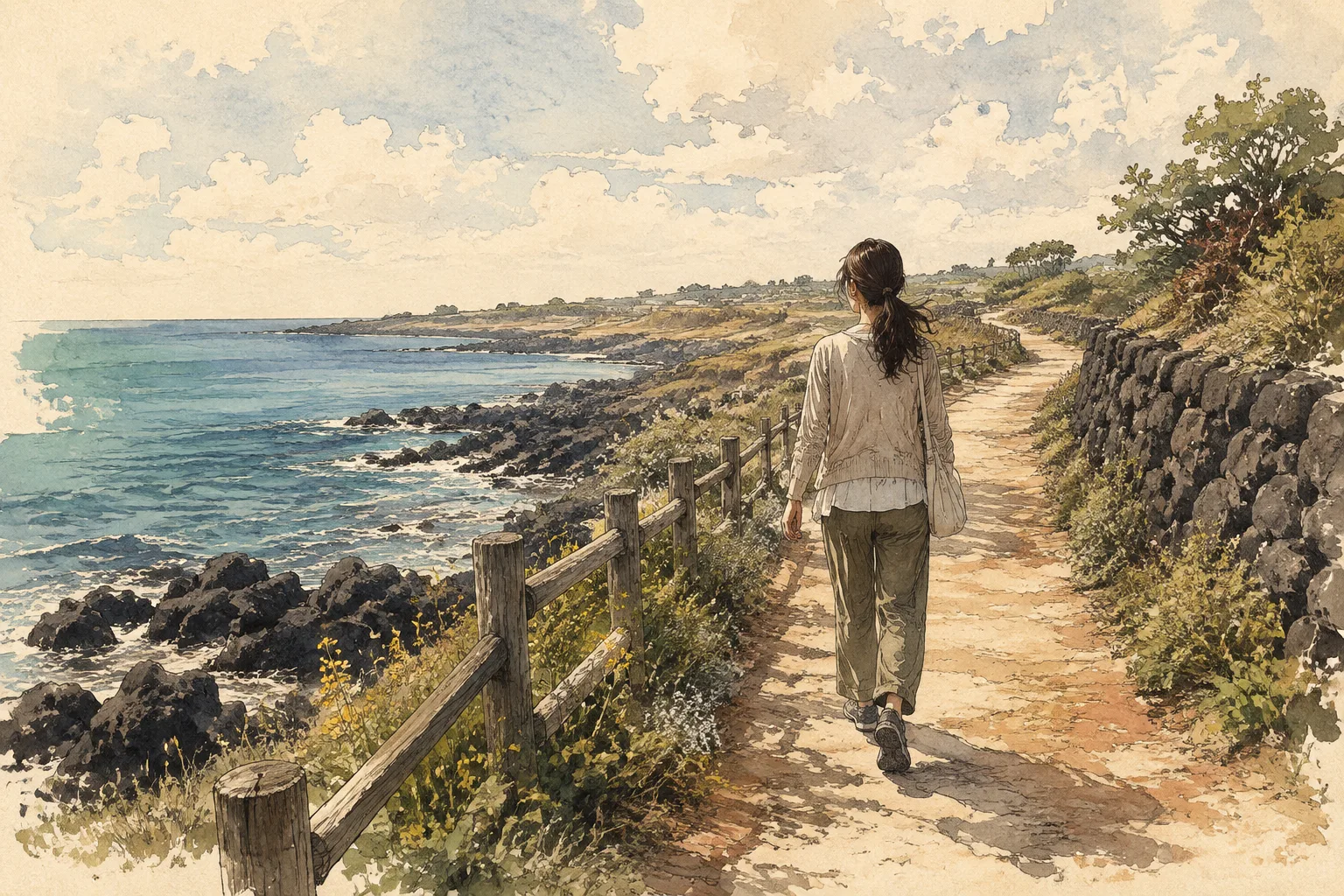
If this is your first trip to Jeju, a full cafe-hopping day competes directly with your limited time for the island's headline landmarks. The aesthetic traveler in this position should treat one or two coastal cafe stops as a break between larger destinations, not a dedicated itinerary block. Pick the cafe that also gives you the Handam Coastal Trail walk (a flat 1.2 km stretch between Aewol Port and Gwakji Beach, roughly 40 to 70 minutes end to end) so the stop does double duty as a scenic walk and a photo opportunity, rather than just a seated drink.
The foodie first-timer has a slightly better case for prioritizing it: Jeju's coastal cafe scene is genuinely distinct from what you will find in Seoul or Busan, and sampling two or three spots gives you a real comparison point rather than a single data point. Still, cap it. A first Jeju trip that spends half a day chasing cafe parking is a first Jeju trip that shortchanges everything else on the island.
Best for Couples
Couples traveling together get the strongest version of this itinerary, provided both people are on board with the pace. The aesthetic traveler benefits from having someone to trade off driving and cafe-hunting with, since one person circling for parking while the other holds a table is a common and workable division of labor here. The coastal drive itself, slow as it can be, reads as scenery rather than dead time when you are not racing a schedule.
The foodie half of a couple gets more out of this than a solo foodie would, because ordering two different drinks or desserts per stop and comparing notes is the actual point of hopping between cafes rather than committing to one. The friction point for couples is disagreement on pace: if one partner wants to linger over the view and the other wants to keep moving to the next stop before parking fills up, that tension surfaces fast on the Aewol strip specifically, where the parking window is the tightest constraint in the day.
Best for Slow Travelers
This is where cafe-hopping is closest to its ideal use case. A slow traveler who has structured the day around mood rather than checklist completion is not bothered by circling for parking or by a 10 to 15 minute walk from a bus stop, because none of that time feels wasted. The aesthetic traveler in slow-travel mode can treat the entire coastal road, not just the cafes on it, as the experience, using the Handam trail as a walking anchor between stops rather than rushing between them by car.
The foodie slow traveler benefits from not needing to hit a fixed number of cafes. Two well-chosen stops with real time to sit, order a second drink, and watch the water beat five rushed stops every time. If you are the kind of traveler who plans loosely and adjusts based on what looks good in the moment, the parking and crowd friction barely registers, because you were never trying to beat the clock in the first place.
Best for Low-Stress Travelers
This is the traveler type most likely to regret building a day around cafe-hopping. Low-stress travelers want predictability: known costs, known timing, minimal improvisation. Jeju's coastal cafe scene offers almost none of that. Parking lots that reject standard foreign cards at the automated exit gate, a fee structure that climbs in small increments the longer you stay, and a seating crunch concentrated in the exact hours most trips schedule lunch all add friction that a low-stress planner did not budget for.
If you fall into this traveler type but still want the aesthetic payoff, the fix is scheduling, not itinerary avoidance. Go before 10:30 AM, before the parking crush starts, carry a Korean transportation card or exact cash for parking machines that may not take a card at all, and treat the visit as a single fixed stop rather than an open-ended hop between three or four locations. That converts an unpredictable afternoon into a scheduled 90-minute activity, which is the version of this that actually suits a low-stress planner.
Common Mismatches
The most common disappointment pattern is the traveler who plans a 4-to-6-cafe day expecting each stop to take 20 to 30 minutes, based on how the itinerary looks mapped out in advance. In practice, parking alone can eat 15 to 20 minutes per stop during peak hours, and that is before accounting for a wait on a window seat or a 10-to-15-minute walk if the closest lot is full. A day planned for six stops routinely compresses into three, and the traveler who cannot flex that plan ends the day frustrated rather than charmed.
A second mismatch is the budget traveler who treats the cafes themselves as the cost center. The drinks are moderately priced and rarely the problem. The real cost stack is the rental car (45,000 to 150,000 KRW per day), parking fees that increase the longer each stop runs, and the friction cost of card rejection forcing a cash withdrawal mid-trip. Travelers who budgeted only for coffee are the ones who feel blindsided by the total.
A third, quieter mismatch is the traveler expecting a quiet, contemplative coastal experience matching the calm tone of the photos. On a clear weekend afternoon, the Aewol strip is closer to a busy commercial block than a peaceful shoreline. That expectation gap hits atmosphere-first travelers hardest, since atmosphere is precisely what they came for and precisely what a full parking lot and a 20-minute table wait undercuts.
Final Match Recommendation
Choose a Jeju cafe-hopping itinerary if you are an aesthetic traveler or foodie with schedule slack, ideally traveling as a couple or solo with no fixed hourly plan, and you are willing to start before 10:30 AM or accept a smaller number of stops than you originally mapped. The payoff, a genuinely distinct coastal cafe scene with real visual and culinary variation, is worth the driving and the parking search for this traveler.
Skip it, or scale it down to a single stop, if you are a first-time visitor protecting limited landmark time, a low-stress planner who wants predictable costs and timing, or anyone traveling on a tight budget who has not already priced in the rental car and parking fees on top of drink prices. For this traveler, the smarter move is one well-timed cafe stop folded into a larger coastal drive, not a dedicated cafe-hopping day.
FAQ
Do I need to rent a car to do a Jeju cafe-hopping itinerary? Effectively yes, if you want to hit more than two or three cafes in a day. Bus 202 covers the western coastal road between Jeju City and Aewol in about 1 to 1.5 hours, running every 15 to 25 minutes, but most seaside cafes sit a 10 to 15 minute walk from the nearest highway stop. That walk is fine once. Doing it for every cafe on a 5-stop list turns a photogenic morning into a logistics exercise.
How much should I budget for a half-day of Jeju cafe-hopping? Figure 5,500 to 8,000 KRW per drink, times however many stops you actually sit down at, plus parking fees that stack in 300 KRW increments after the first hour, plus a rental car at 45,000 to 150,000 KRW per day depending on season. Three cafes with drinks and two hours of combined parking runs somewhere in the 40,000 to 60,000 KRW range before the car cost.
What time should I start to avoid the worst parking and crowds? Before 11:30 AM or after 3:30 PM. Parking lots and window seats along the Aewol coast fill fast in that midday window, especially on weekends. An early start also means better light for photos and no wait for the seat you actually wanted.
Can I use Google Maps to navigate between Jeju cafes? No, not for turn-by-turn directions. Google Maps does not support turn-by-turn navigation inside Korea. Use Naver Map or KakaoMap, both of which have English-language support, before you leave your accommodation, not once you are already on the coastal road.
Is Aewol the only coastal cafe area worth visiting, or should I split my time? Aewol is the dense, well-known cluster, but Hyeopjae and Geumneung, about 14 km southwest, offer a beach-forward alternative with their own cafes and noticeably less parking pressure. If Aewol's crowd math sounds exhausting, shifting a stop or two toward Hyeopjae is a reasonable way to keep the aesthetic without the same bottleneck.