travel-decisions
Is Vienna Too Formal and Rigid for Families Traveling with High-Energy Toddlers?
Vienna has a reputation for order and quiet manners. Here is a decision-focused look at whether that reputation actually blocks families with high-energy toddlers, or just changes where you go.
Quick Verdict
Vienna's reputation as a formal, rule-bound, quiet city is real, but it applies to specific rooms, not the whole city. If your toddler is loud, fast-moving, and prone to meltdowns, Vienna is a strong fit as long as you build your days around parks, beer gardens, and step-free transit, and treat formal indoor sights as short, optional detours. Vienna is a weak fit if your plan is dense with guided museum tours, palace apartment walkthroughs, and sit-down dinners, because those specific settings really do expect quiet, contained behavior and will not flex for a toddler who cannot deliver it.
Choose Vienna if you can accept a slower, park-heavy itinerary with two or three short formal stops mixed in. Skip or postpone Vienna if your travel style is built around checking off indoor cultural landmarks back-to-back, because that itinerary shape is where the city's formality actually bites.
The practical reality: Vienna's public transport is fully step-free, kids under 6 ride free, and there are genuine free-entry, kid-built spaces like the Danube Island water playground. The friction is concentrated in a short list of venues, not distributed across the whole trip.
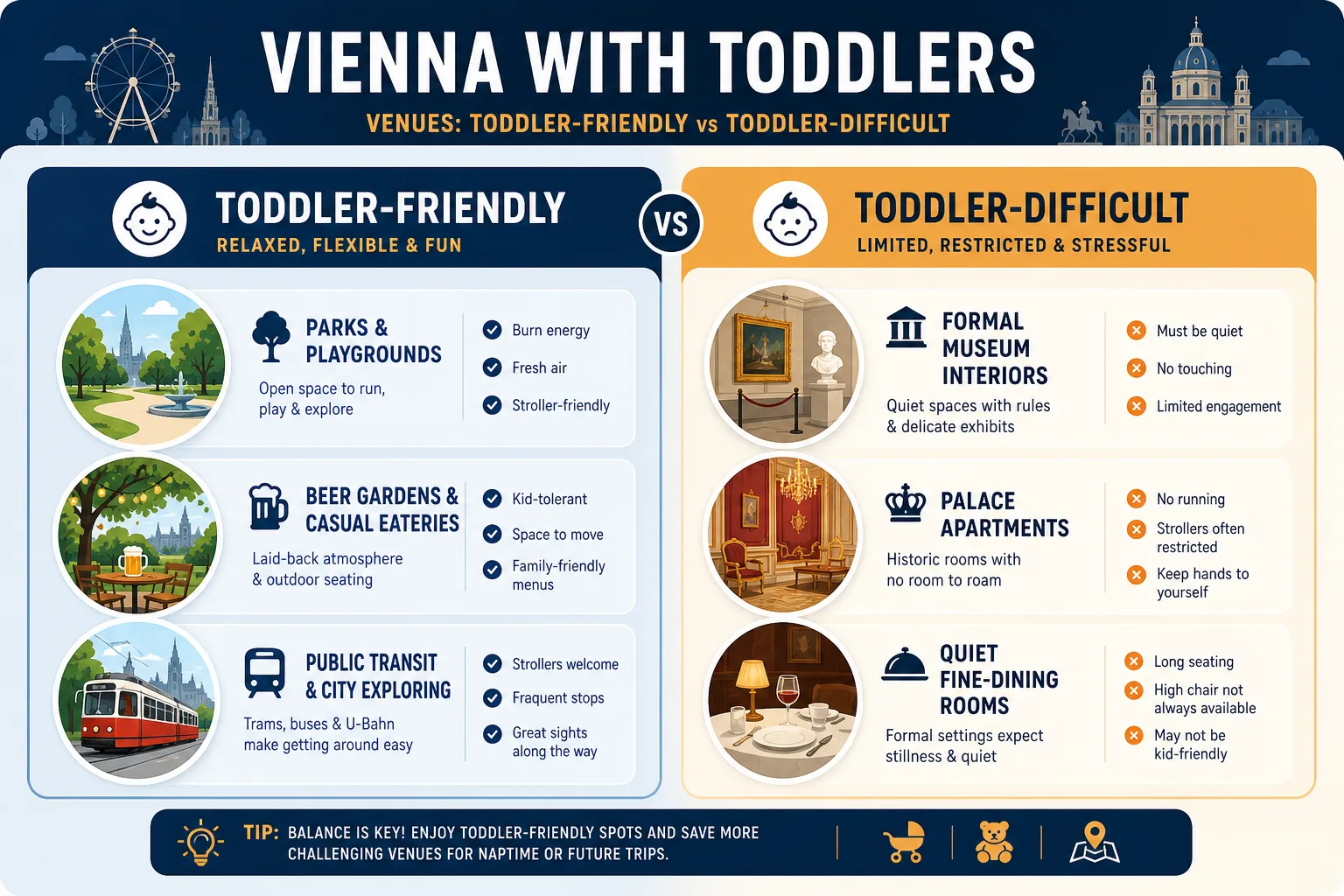 Editorial illustration: A simple two-column comparison layout with short labeled text blocks contrasting toddler-friendly Vienna venues (parks.
Traveler Type Table
The "is Vienna too formal" question is really several smaller questions about specific venues and systems. Here is where the real tradeoffs sit for families and for high-energy travelers generally.
| Decision variable | Families with high-energy toddlers | Active explorers without kids |
|---|---|---|
| Getting around the city | Every U-Bahn station has elevators or ramps, so stroller transfers never require carrying a stroller up stairs | Full network works the same way, but speed and walking pace are less of a constraint |
| Cost of transit | Kids under 6 ride free always; up to 15 ride free on Sundays, holidays, and school holidays; otherwise a half-price child ticket is 1.60 EUR in advance | Standard adult fares apply, no free-ride windows |
| Formal indoor sights | Strollers are barred from Schonbrunn Palace apartments and can be turned away from Wien Museum galleries if crowded, so plan for a cloakroom check | No stroller logistics; can move through these sights at full pace |
| Outdoor release valve | Free playgrounds like the Danube Island water playground and casual venues like Schweizerhaus beer garden absorb toddler energy without any social friction | Less relevant, but same venues work well for a relaxed afternoon |
| Dining etiquette risk | Sit-down formal restaurants carry real friction; casual beer gardens and Heurigen do not | Minimal, since pace and noise tolerance are less of an issue for adults dining alone |
| Where to base yourself | Innere Stadt (1st District) is walkable to major sights but runs 30 to 50 percent above average lodging cost; nearby districts trade a short transit ride for lower cost | Same tradeoff, but central location matters more if nightlife or landmark density is the priority |
The pattern across every row is the same: Vienna is not uniformly rigid. The rigidity is concentrated in specific rooms (palace interiors, some museum galleries, formal dining rooms) and specific expectations (quiet, orderly queuing). Everything else, especially the transit system and outdoor space, is genuinely built to handle stroller traffic and children.
Best for First-Time Visitors
Families visiting Vienna for the first time often build their itinerary the way a childless first-timer would: Schonbrunn Palace, the Hofburg, a major museum, repeat. That itinerary shape is where first-time families run into the most friction, because it stacks several formal-venue stops back to back with no outdoor break.
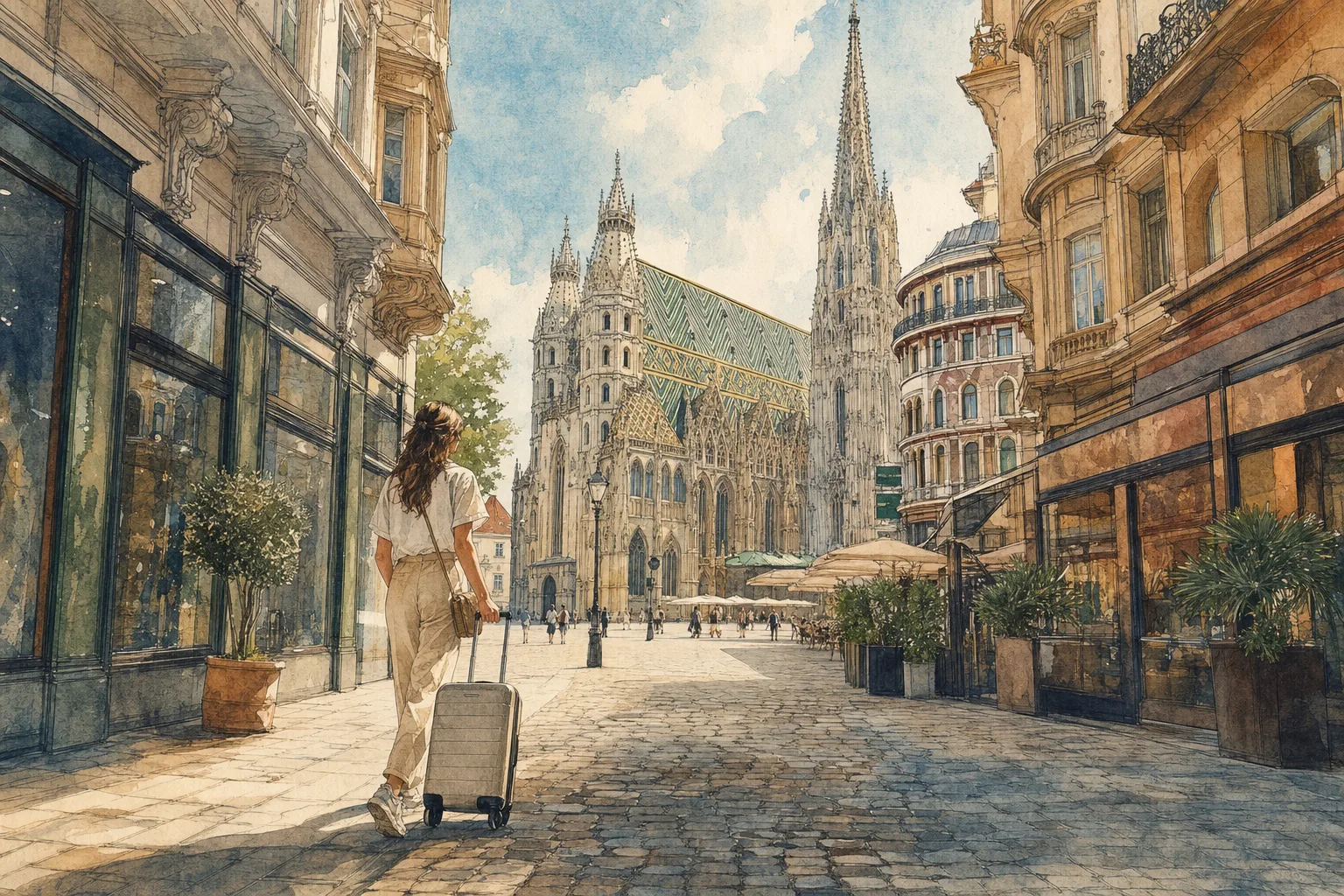
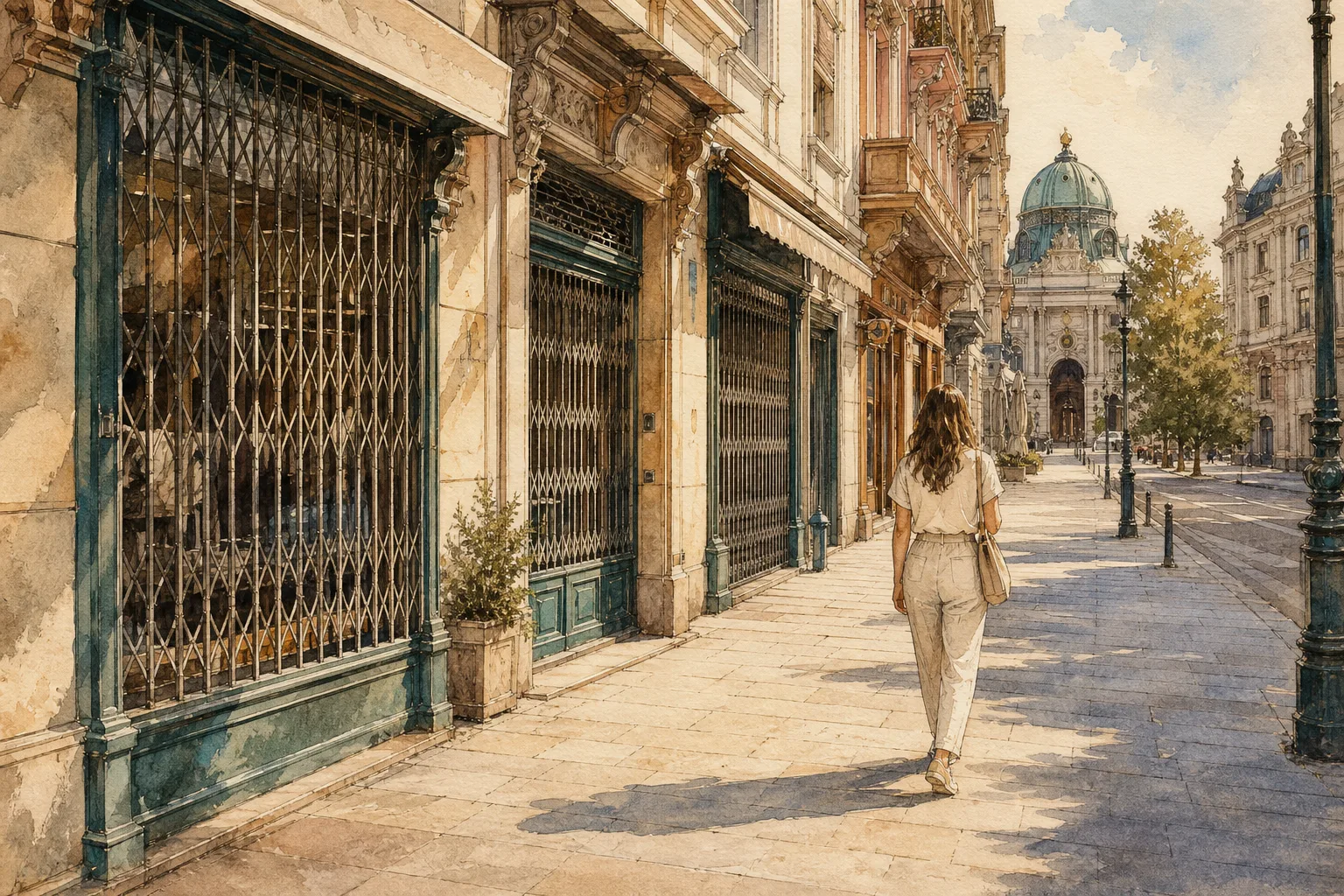
The fix is not avoiding those sights, it is sequencing them differently. A first-time family visit works better when each formal stop is short and bounded, with an outdoor stop immediately before or after. For example: walk from Stephansplatz to the Hofburg (about 10 minutes, roughly 990 meters) for a brief look at the Michaelerkuppel entrance, then head to a park rather than adding a second formal indoor stop the same morning. Active explorers without kids can chain three formal sights in a row without consequence; a family with a high-energy toddler generally cannot, and trying to force that pace is what creates the "Vienna is too rigid" impression, when the real issue is itinerary density rather than the city itself.
First-time families should also expect the Schonbrunn stroller rule to affect planning directly: the palace apartments require checking the stroller at the cloakroom, so budget extra time and decide in advance whether the toddler will nap in a carrier or need entertaining hands-free during that portion.
Best for Couples
Couples without kids, including couples who consider themselves active explorers, experience almost none of the friction described in this article. Vienna's formal venues are built for adult-paced, quiet movement through galleries and palace rooms, and the city's orderly public norms (queuing, quiet transit cars, reserved restaurant tables) match how a childless active traveler already tends to move.
The comparison matters for families deciding whether Vienna will feel harder than a typical city, because the honest answer is: for couples, Vienna is close to frictionless, and families should expect a real gap between that experience and their own. This is not a reason to avoid Vienna as a family, it is a reason to set expectations correctly. A family trip to Vienna will not feel like the same trip a childless couple takes to the same city, even staying in the same hotel. Budgeting for that gap in advance, rather than discovering it mid-trip, is what prevents the "this city is too rigid" reaction.
Best for Slow Travelers
Slow travelers who prefer to linger rather than checklist their way through a city are, somewhat counterintuitively, well matched to Vienna with a high-energy toddler. A slow-travel pace naturally builds in the outdoor breaks and shorter formal-venue visits that make Vienna workable for families in the first place.
A family that treats a day as one park visit, one casual meal, and one short formal stop, rather than three sights and a museum, is applying a slow-travel structure without necessarily identifying as slow travelers. The Danube Island water playground, directly accessible via the Donauinsel U-Bahn station and free to enter, is the kind of stop that rewards unhurried time rather than a scheduled visit window. Families who try to move at checklist speed through Vienna's formal sights, the way a fast-paced first-timer might in a city with fewer rules, are the ones most likely to hit real resistance from staff or fellow visitors expecting quiet, orderly movement through those specific rooms.
Best for Low-Stress Travelers
Travelers who prioritize an easy, low-friction trip over maximizing sights per day are a strong match for Vienna with a toddler, specifically because the low-stress version of a Vienna itinerary is also the version that avoids the city's formal friction points.
A low-stress plan for a family looks like: one loosely scheduled formal sight per day, an outdoor stop for toddler energy, and casual dining rather than reservations at quiet indoor restaurants. This removes almost every source of the "too rigid" friction, because the friction is concentrated in formal, tightly scheduled, quiet-expectation venues. Low-stress travelers who default to flexible timing and casual venues are unlikely to ever encounter the version of Vienna that feels rigid, because they are not putting themselves in the rooms where that rigidity applies.
Active explorers who prefer a packed, efficient itinerary will find Vienna equally efficient, since the same orderly systems (clear transit, predictable opening hours, step-free stations) that create structure also create reliability, which is exactly what an efficiency-focused traveler wants.
Common Mismatches
The families most likely to come away disappointed or stressed by Vienna share a specific pattern: they plan the trip as if the toddler were not present, then discover mid-trip that formal venues do not flex.
Watch for these mismatch patterns before booking:
- Planning back-to-back formal indoor sights (palace, museum, palace) with no outdoor stop between them, then being surprised when the toddler melts down in the second venue.
- Booking a quiet, sit-down dinner reservation expecting the toddler to sit still for a full meal, when a casual beer garden would have absorbed the same evening with no friction.
- Assuming the stroller goes everywhere, then being caught off guard at Schonbrunn Palace apartments or a crowded Wien Museum gallery when it has to be checked or turned away.
- Basing the whole trip in the Innere Stadt for walkability, then feeling the cost pressure (30 to 50 percent above average) without realizing nearby districts offer a short, fully step-free transit ride to the same sights.
- Reading "Vienna is formal" as a citywide mood and skipping the free, casual, high-energy spaces (playgrounds, beer gardens, the Danube Island water playground) that would have solved most of the actual problem.
Every one of these is avoidable with different planning, not with a different city. That distinction is the core of the mismatch: it is not that Vienna rejects families, it is that a plan built like a childless itinerary will run into Vienna's real formal edges, while a plan built with toddler rhythm in mind mostly will not.
Final Match Recommendation
Choose Vienna if you are willing to build the trip around your toddler's rhythm rather than the city's landmark list: short formal stops, frequent outdoor breaks, casual dining by default, and a base outside the priciest central district if budget matters. Under that plan, the city's formal reputation barely touches your actual days, and you get real advantages other cities do not offer, including fully step-free transit citywide and free entry for young children.
Do not choose Vienna right now if your travel style, or your travel companions' expectations, require dense formal itineraries: multiple guided tours, quiet fine dining, gallery-heavy museum days back to back. That specific shape of trip is where Vienna's rules are genuinely rigid and will not bend for a high-energy toddler, and no amount of planning fully solves it, because the mismatch is structural to those venues, not to the city.
The honest middle case: if you are unsure which camp you fall into, default to booking fewer formal sights than you think you want, and treat any you skip as optional rather than mandatory. Families almost universally report the opposite regret, not "we should have done more palace tours," but "we should have planned one fewer indoor stop and gone to the park instead."
FAQ
Will people stare or complain if my toddler is loud in Vienna?
In formal indoor spaces like museum galleries, palace apartment tours, and quiet sit-down restaurants, yes, you are more likely to draw looks than in a country used to louder public norms. In parks, beer gardens, playgrounds, and on public transport, no one expects silence and you will not stand out. The formality is venue-specific, not a citywide mood.
Is Vienna stroller-friendly for a toddler who refuses to walk long distances?
Yes, on the transit side. Every U-Bahn station has elevators or ramps, so you are never stuck carrying a stroller up stairs, and children under 6 ride free. The catch is indoor sightseeing: strollers are not allowed inside the Schonbrunn Palace apartments and can be turned away from Wien Museum galleries if the room is full, so plan to park the stroller at a cloakroom for those stops.
What is the single biggest mismatch families run into in Vienna?
Expecting the whole city to feel like a formal palace tour. Families who only plan museum interiors, guided palace tours, and sit-down dinners run into real friction. Families who treat those as short, contained stops between park time, beer garden meals, and playground breaks rarely have a problem.
Are Vienna's restaurants unwelcoming to young kids?
Traditional beer gardens and Heurigen-style outdoor venues are casual and tolerant of noise and movement. Formal indoor dining rooms, especially anywhere marketed as fine dining, are where the mismatch shows up: quiet, close-together tables, and a slower pace do not mix well with a toddler who wants to move. Choosing the venue type matters more than choosing Vienna or not.
Should we skip Vienna entirely if we have a very high-energy toddler?
No. Skip it only if your itinerary is built around long indoor formal experiences with no outdoor toddler release valve. If you are willing to swap one long museum block for a park or playground stop, Vienna works fine for high-energy toddlers, just with a different daily rhythm than a childless trip to the same city.