travel-decisions
Is Tokyo Worth It for Trend-Focused Travelers in Their 20s?
A practical fit check for style, cafe, and nightlife-led travelers in their 20s deciding whether Tokyo matches how they actually want to spend a trip.
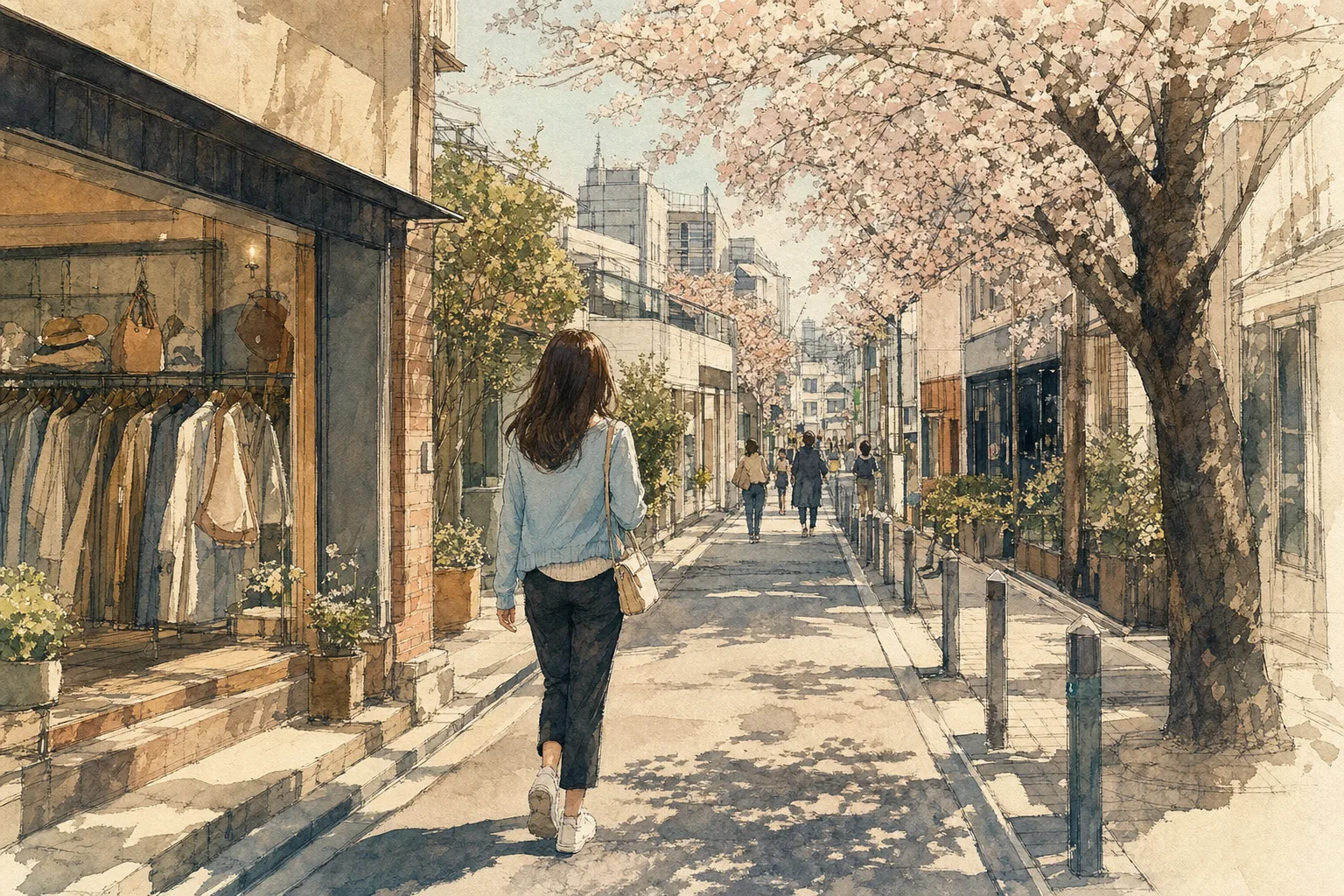
Tokyo gets sold as the default answer for anyone in their 20s who plans trips around outfits, cafes, and where the night goes after dinner. That is not always wrong. But the city is also large, expensive, and increasingly ticketed, and the gap between a feed-worthy Tokyo and an actually fun Tokyo is wider than most guides admit.
This is a fit check, not a love letter.
Quick Verdict
Tokyo is a strong fit if your trip is built around walkable style corridors, layered cafes, and bar hopping that ends before the last train, or that you are willing to budget around when it does not. It is a weak fit if you expect one compact downtown, cheap late-night transit, or a city where every trending place still takes walk-ins.
Strong fit if you:
- Care more about districts (Harajuku, Shibuya, Shimokitazawa, Koenji) than landmarks.
- Will pre-book Shibuya Sky, teamLab, and signature cafes days or weeks ahead.
- Accept that nights end around midnight or cost extra in taxi fare.
Weak fit if you:
- Want a single, walkable nightlife zone like parts of Seoul or Bangkok.
- Refuse to plan ahead and want pure walk-in spontaneity at top venues.
- Have a tight budget where 3,000 to 4,000 yen entry tickets sting.
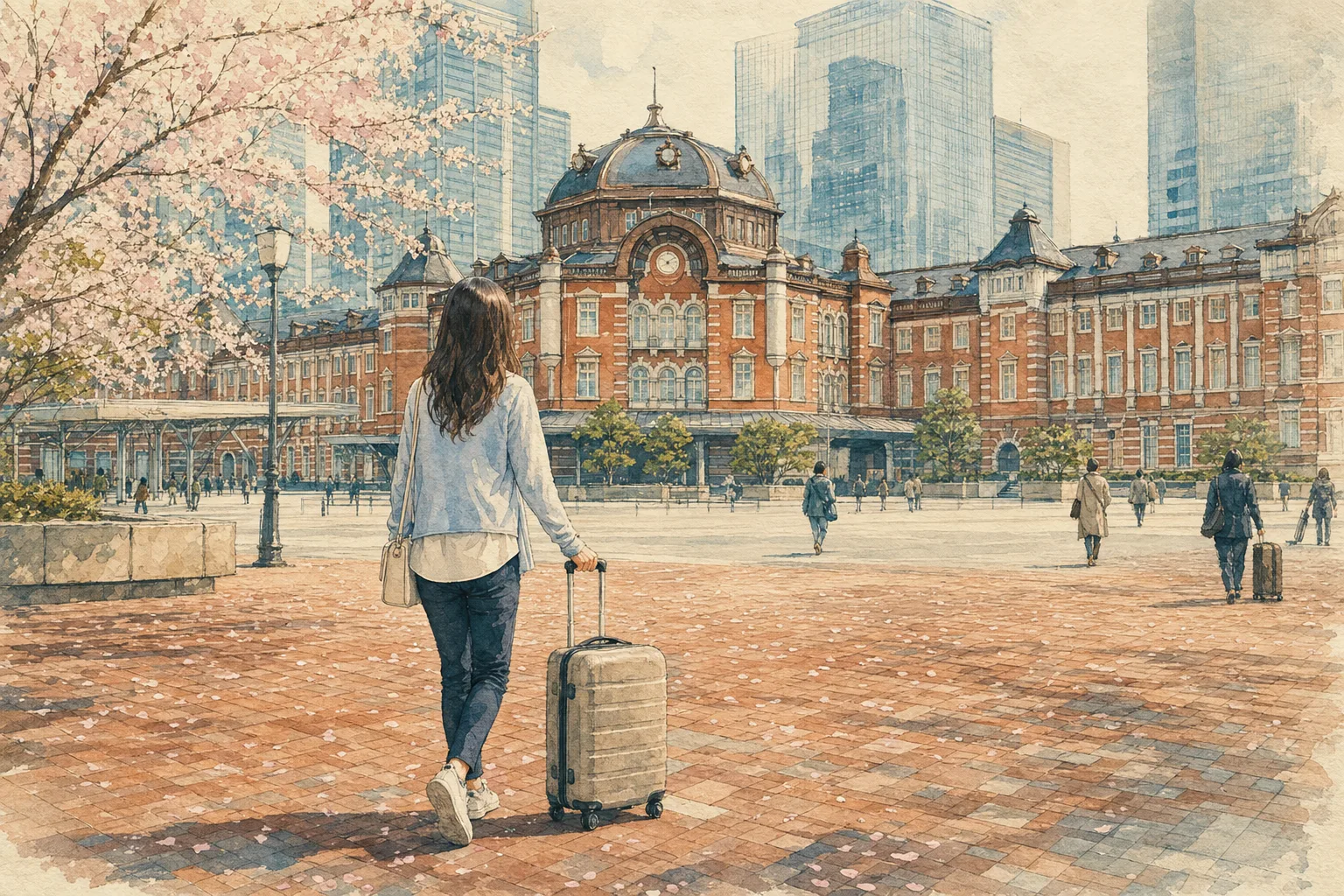
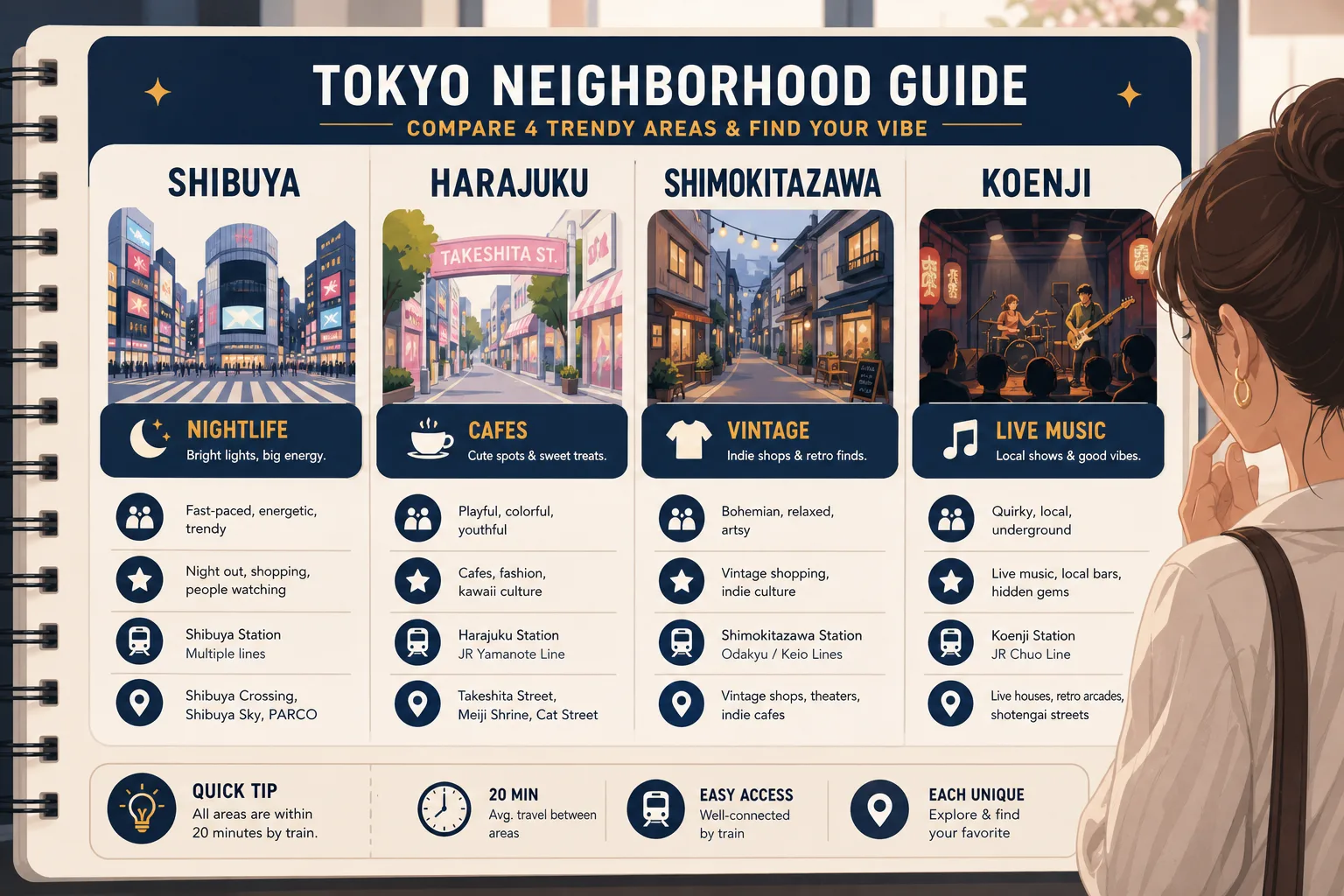 An illustrated infographic comparing Tokyo's trendy neighborhoods, Shibuya, Harajuku, Shimokitazawa, and Koenji, being viewed by a traveler.
Best for First-Time Visitors in Their 20s
For a first Tokyo trip in your 20s, the honest play is to anchor in one trend corridor instead of trying to sample every district. The Harajuku-Omotesando-Shibuya triangle does most of the heavy lifting. Cat Street, the pedestrian-only route between Shibuya and Harajuku, is roughly 1.2 to 1.6 km and takes about 20 minutes on foot, so you can string together vintage shops, cafes, and flagship stores without touching a train.
Two newer anchors matter for first-timers:
- Tokyu Plaza Harajuku "Harakado", opened April 17, 2024 at the Jingumae intersection, with a designer rooftop terrace and a basement public bathhouse.
- Shibuya Sakura Stage, opened July 25, 2024, which added a pedestrian deck over National Route 246 and a new JR Shibuya South Ticket Gate, making the Shibuya side noticeably easier to navigate.
If it is your first trip and you want the skyline shot, book Shibuya Sky early. Tickets are capped at 14 days advance booking and cost 2,700 yen before 3:00 PM or 3,400 yen from 3:00 PM onward.
Best for Couples in Their 20s
Tokyo works well for style-led couples because the day naturally splits into walking, eating, and one anchor experience. A realistic couple's day looks like Harajuku in the late morning, Cat Street into Shibuya in the afternoon, and a booked dinner or rooftop in the evening.
Where it stops working is when both people want maximum spontaneity at night. Shibuya Ward has enforced a permanent year-round ban on public street drinking in central Shibuya between 6:00 PM and 5:00 AM since October 1, 2024, so the "grab a can and wander" energy that works in some Asian cities is off the table here. Couples who plan one reserved bar or izakaya per night, plus a backup, have a much better time than couples who freestyle.
teamLab Planets or teamLab Borderless are the obvious shared-experience picks, at around 3,600 yen and 3,800 to 4,800 yen respectively. Both need booking weeks ahead, not the morning of.
Best for Slow Travelers
If your version of "trend-focused" is slow cafe hopping and one neighborhood per day, Tokyo rewards you more than fast itineraries do. Shimokitazawa is the obvious base for this mode. From Shibuya, the Keio Inokashira Line express reaches Shimokitazawa in 3 to 5 minutes for 140 yen, or about 130 yen on an IC card. That is short enough to treat as an extension of Shibuya rather than a separate trip.
Koenji is the slower, scruffier alternative: 25 minutes from Shibuya with a transfer at Shinjuku to the JR Chuo Line, around 209 yen on an IC card. Less polished, more vintage and live music, fewer English menus.
Slow travelers should also accept that any single signature cafe can eat a full afternoon. Starbucks Reserve Roastery Tokyo, for example, bars walk-ins during peak times like weekends and cherry blossom season, requiring QR code ticket registration with waits over 2 hours.
Best for Low-Stress Travelers
Trend-focused and low-stress is a real combination, and Tokyo can deliver it if you respect two things: the booking system and the train clock.
Low-stress travelers should:
- Pre-book every paid anchor (Shibuya Sky, teamLab, signature cafes) before they fly.
- Stop activities by 10:30 PM if they are far from their hotel, since last trains depart between 12:00 AM and 1:00 AM and service resumes between 4:30 AM and 5:00 AM.
- Stay within walking distance of a JR Yamanote Line or major subway station.
If you would rather take a car late at night, Japan's "Japan-style rideshare" system launched in April 2024 is dispatched via licensed taxi fleets and charges identical fares to standard taxis. That removes the app-versus-taxi guesswork but does not remove the 20 percent late-night surcharge between 10:00 PM and 5:00 AM, which pushes a 4 km Shibuya to Shinjuku ride to roughly 2,500 to 3,000 yen.
Traveler Type Table
This is where the fit actually comes from. Each district has a different center of gravity, and matching your traveler type to the right base is more useful than any "top 10" list.
| District | Best for | Vibe | Cost level | Late-night reality |
|---|---|---|---|---|
| Shibuya | Nightlife-led 20s, first-timers | Big, layered, ticketed anchors | High | Strict street-drinking ban 6 PM to 5 AM |
| Harajuku / Omotesando | Style and cafe-led, couples | Walkable boutiques, new Harakado anchor | High | Quiet after late evening |
| Shimokitazawa | Slow trend travelers, vintage shoppers | Indie, cafe-dense, lower-rise | Mid | Bars active, last train still applies |
| Koenji | Live music, deeper vintage | Scruffier, less English-friendly | Mid to low | Local izakaya scene, taxi-dependent late |
Checklist for matching your trip to this table:
- I know which one district I will sleep closest to.
- I have pre-booked at least one anchor experience.
- I have a plan for getting home after last train, or I am ending nights by 11:30 PM.
- My daily walking route does not cross more than two train lines.
Common Mismatches
Tokyo disappoints trend-focused 20s travelers in a few predictable ways. Watch for these patterns in your own plan.
- The "one viral spot per district" itinerary. You spend more time on trains than in places, and most stops feel like quick photo stops, not real visits.
- The walk-in-everywhere mindset. Shibuya Sky, teamLab, and headline cafes increasingly require advance booking or QR tickets, and showing up cold often means being turned away.
- Expecting Seoul or Bangkok-style late nights. Tokyo trains do not run 24/7, and street drinking in central Shibuya is banned year-round from 6:00 PM to 5:00 AM as of October 2024.
- Underestimating stacked costs. A day of one paid anchor (about 3,000 yen), a signature cafe, lunch, dinner, and one bar adds up quickly, especially if any late-night taxis are involved.
Avoid Tokyo as your main trend trip if you need one compact nightlife zone, cheap taxis, and walk-in spontaneity at every viral venue.
If two or more of these describe your draft itinerary, the issue is the plan, not Tokyo.
Final Match Recommendation
Tokyo is worth it for trend-focused travelers in their 20s when the trip is built around district fit and pre-booked anchors, not landmark checklists. Choose Tokyo if you genuinely care about how neighborhoods feel, if you are happy walking Cat Street more than once, and if you accept that the best nights end at or before the last train, or budget around the taxi surcharge if they do not.
Reconsider Tokyo, or pair it with a shorter stop somewhere else, if you want a single compact nightlife zone, cheap 24-hour transit, and full spontaneity at trending venues. Seoul, Bangkok, and Taipei each lean more in that direction.
For most style and cafe-led travelers in their 20s, the right answer is "yes, but only 4 to 5 days, with one clear district as a base." Trying to do all of Tokyo in one trip is the surest way to make a great-fit city feel like a wrong-fit one.
FAQ
Is Tokyo actually fun for trend-focused travelers in their 20s, or does it just photograph well? It is genuinely fun if you build the trip around walkable corridors like Harajuku to Shibuya via Cat Street and add side trips to Shimokitazawa or Koenji. It tips toward photogenic but exhausting if you only chase one viral cafe per district across the whole metro.
How late can I realistically stay out in Tokyo without a taxi blowing the budget? Last trains run between roughly 12:00 AM and 1:00 AM, with service resuming around 4:30 to 5:00 AM. After last train, taxis carry a 20 percent late-night surcharge from 10:00 PM to 5:00 AM, so a short 4 km Shibuya to Shinjuku ride lands around 2,500 to 3,000 yen.
Are trend spots like Shibuya Sky and teamLab still walk-in friendly? Not really. Shibuya Sky caps tickets at 14 days advance booking, and teamLab Borderless and teamLab Planets often sell out weeks ahead. Starbucks Reserve Roastery Tokyo also bars walk-ins during peak periods and runs on a QR ticket system with waits over 2 hours.
Can I still drink on the street around Shibuya at night? No. As of October 1, 2024, Shibuya Ward enforces a permanent year-round ban on public street drinking in central Shibuya from 6:00 PM to 5:00 AM. Plan for bars, izakaya, or convenience-store drinks consumed off the street.
How should I pick between Shibuya, Harajuku, Shimokitazawa, and Koenji if I only have a few days? If your trip is style, cafes, and nightlife heavy, base in Shibuya or Harajuku and walk Cat Street between them. Use a 3 to 5 minute, roughly 130 to 140 yen ride to Shimokitazawa for vintage and live music, and 25 minutes to Koenji if you want a quieter, less polished scene.