travel-decisions
Is Seville Good for Travelers Who Want Quiet Nights?
A decision-focused look at whether Seville fits travelers who prioritize quiet evenings, calm hotel surroundings, and low-stress nights over nightlife.
Quick Verdict
Seville is a strong fit for travelers who want quiet nights, but only if you treat the neighborhood and hotel choice as the main decision, not the city itself. The historic center has a loud reputation that is mostly earned in a handful of streets and squares; step one block off them and the city is often calmer than people expect.
Choose Seville for quiet nights if you are willing to book in a residential area like Los Remedios or Macarena, or on a pedestrian side street in the old town with soundproofed rooms. Skip it, or pick a different base, if you want to be in the middle of Triana or Alameda de Hercules, expect a vibrant tapas scene at your doorstep, and also expect early-night silence. Those two wishes do not coexist here.
Traveler Type Table
The real decision is not Seville yes or Seville no. It is which neighborhood and what kind of stay matches how you actually spend evenings. The table below compares the four bases that quiet-night travelers most often weigh.
| Base | Noise level after 10 PM | Walk to Cathedral | Best fit | Main risk |
|---|---|---|---|---|
| Los Remedios | Low, residential | About 25 to 30 minutes on foot | Quiet-night travelers, couples wanting calm | Feels removed from the old-town atmosphere |
| Macarena | Low to moderate, local life | About 20 to 25 minutes on foot | Low-stress planners on a budget | Fewer polished hotels, more apartments |
| Casco Antiguo pedestrian streets | Moderate, depends on the exact street | 5 to 15 minutes | Couples who want atmosphere without nightlife | Picking the wrong street and hearing tapas crowds until late |
| Alameda de Hercules | High on weekends, social hub after dark | About 15 to 20 minutes | Travelers who want nightlife, not quiet | Direct mismatch for early sleepers |
A few practical anchors that shape this table: walking from the Cathedral to Triana takes around 17 minutes over roughly 1.5 km, so distances across central Seville are short. A single bus ticket is 1.40 euros, a 1-day tourist transit card is 5 euros, a 3-day card is 10 euros, and a short taxi across the city is about 7 to 8 euros. Quiet-night travelers should price the taxi option in, because it makes a calm, farther-out base feel close.
Best for First-Time Visitors
First-time visitors often default to the historic center because it is close to the Cathedral, Alcazar, and the main tapas streets. For a quiet-night traveler that default is risky. The honest first-timer move is to pick a pedestrian-only street in Casco Antiguo, confirm the hotel has soundproofed windows, and avoid rooms that face a plaza or a main tapas corridor.
If this is your first trip and you also identify as a low-stress planner or a couple who wants to walk back to the hotel without a late-night negotiation, lean toward a hotel a few blocks north or east of the Cathedral rather than south toward the river bars. You still get five to fifteen minutes of walking to the major sights, and you avoid the loudest stretches.
Best for Couples
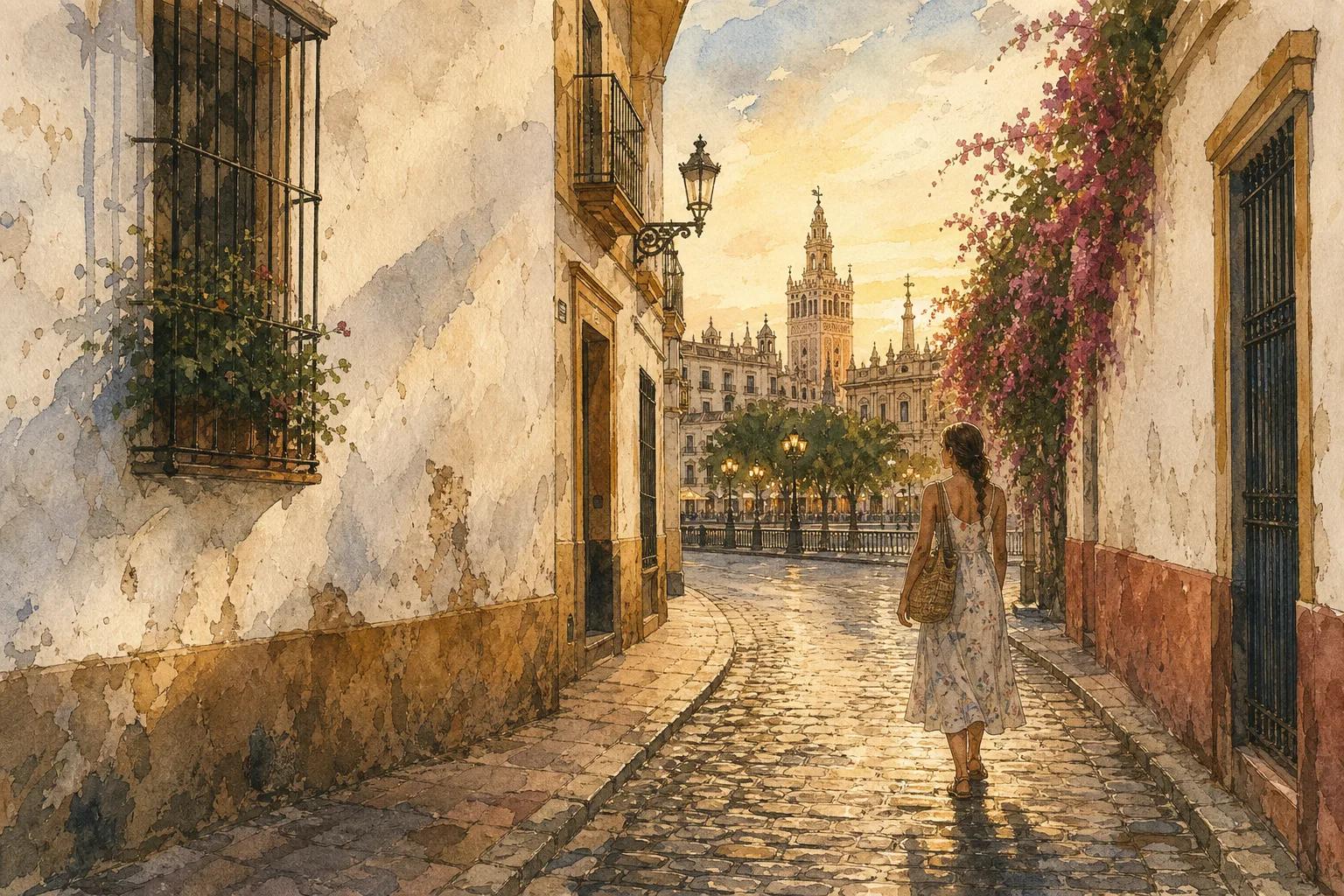
Couples are the cleanest fit for Seville's quiet-night version. The pattern that works: dinner late by Anglo standards but early by Spanish standards, a slow walk through lit streets, and a hotel where the room is genuinely silent. Couples who want that should look at boutique hotels on pedestrian streets in the historic center, or a calmer modern hotel in Los Remedios with a taxi back from dinner.
Where couples go wrong is booking a romantic-sounding rooftop hotel on a main square and being surprised that the square is alive until 1 AM. If atmosphere from the room matters more than silence, accept the tradeoff; if sleep matters more, prioritize an interior-facing or pedestrian-street room and treat the rooftop as a sunset visit, not a sleeping location.
Best for Slow Travelers
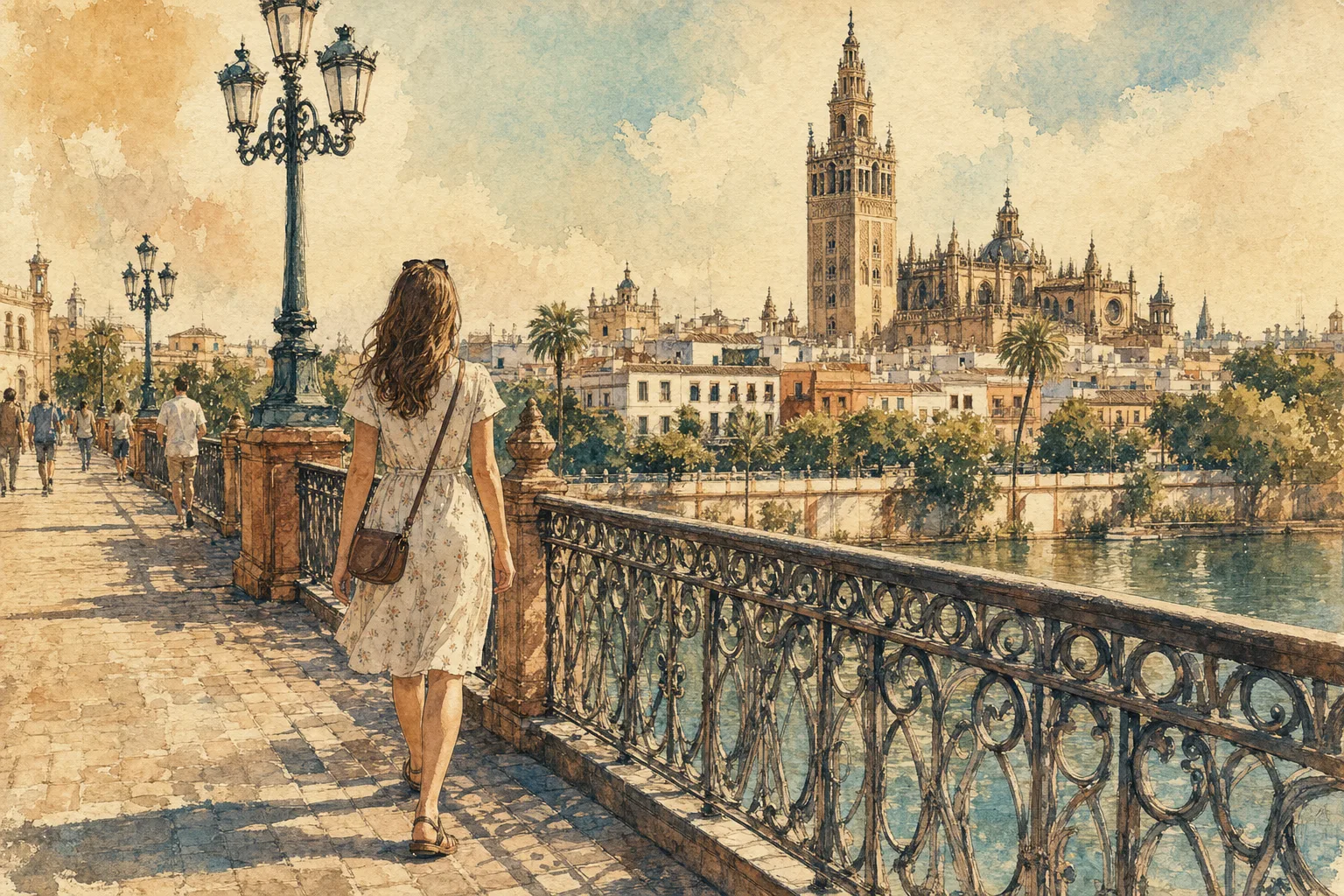
Slow travelers, the kind who collect mood over a checklist, can get a lot out of Seville without ever entering its loud version. The trick is to structure the day so that evenings end early on purpose. Long lunches, a siesta-shaped afternoon, golden-hour walks through Santa Cruz or along the river, and a light dinner before the bar scene peaks.
A Macarena base often suits slow travelers well: less touristy, more local rhythm, and budget-friendly accommodations that let you stay longer. You trade a bit of walking time to the Cathedral for a neighborhood that does not perform for visitors. For a low-stress slow trip, that trade is usually worth it.
Best for Low-Stress Travelers
Low-stress travelers should make three decisions before anything else. First, pick a residential or pedestrian-street base. Second, pre-decide your taxi budget so you are not negotiating with yourself at midnight; at around 7 to 8 euros per ride, two taxis a day is roughly the price of a tourist transit card and removes most evening friction. Third, set a soft curfew that lines up with the metro, which runs until 11 PM Sunday through Thursday and until 2 AM on Friday, Saturday, and holiday eves.
Checklist for a low-stress Seville stay:
- Hotel is on a pedestrian-only or residential street, not a main square
- Room is interior-facing or has confirmed soundproofed windows
- You have a planned taxi fallback for late returns
- Your dinner reservations are before the local peak, ideally by 8:30 PM
- You are not visiting during Holy Week or Feria de Abril unless you specifically want the noise
Common Mismatches
Seville disappoints quiet-night travelers in predictable ways. The most common is booking a hotel near Alameda de Hercules expecting a charming square and discovering it is a weekend social hub well after midnight. Another is choosing a short-term rental in the historic center for the lower price, then dealing with neighbors, street noise, or a noise meter alert because rules have tightened: since June 2023, mandatory noise meters apply in parts of the historic center, and since April 2025 homeowner associations in Andalusia can vote to ban tourist rentals outright.
The third mismatch is timing. April hotel prices in Seville commonly run between about 336 and 426 dollars per night, and March is around 368 dollars, because Holy Week and Feria de Abril dominate the calendar. Travelers who book those dates by accident pay peak prices for the loudest weeks of the year. By contrast, July is the cheapest month at roughly 99 dollars per night and August is around 145 to 153 dollars; the city is hotter, but evenings in residential neighborhoods are noticeably calmer.
Finally, some travelers misread the city's compactness as a guarantee of convenience. Distances are short, but cobblestones, narrow lanes, and warm evenings still add up, and the metro is a single line. If you assume a metro-style network exists, you will overplan and underbook taxis.
Final Match Recommendation
Choose Seville for quiet nights if you are a couple, a slow traveler, or a low-stress planner who is willing to make the neighborhood and hotel decision carefully, accept that the historic center has both calm and loud streets within the same five-minute walk, and use taxis as a normal part of the evening. In that version, Seville is genuinely restful and visually rich.
Reconsider Seville, or pick a smaller Andalusian town instead, if you want guaranteed near-silence at any hotel by default, are uncomfortable with late local dining rhythms, or are traveling during Holy Week or Feria de Abril without wanting that energy. The city does not stop being lively just because you booked a quiet room; it asks you to choose where you sleep with intent.
If arrival timing is part of the concern, also check whether Seville is a bad fit if your flight arrives late at night.
FAQ
Is Seville actually a loud city at night? Parts of it are, parts of it are not. Triana and Alameda de Hercules get genuinely social after dark, especially on weekends. Residential areas like Los Remedios and most of Macarena stay calm, and pedestrian-only streets in the historic center can be surprisingly quiet once you are off the main tapas strips.
Which Seville neighborhood is best if I want to sleep early? Los Remedios is the safest pick for early sleepers: modern, residential, and away from nightlife corridors. Macarena is a quieter, less touristy alternative with cheaper hotels. In the historic center, target a hotel on a pedestrian-only side street with soundproofed rooms rather than one facing a main square.
Will late-night transit be a problem if I avoid nightlife areas? Usually not, because Seville is compact. The single metro line runs until 11:00 PM Sunday through Thursday and until 2:00 AM on Friday, Saturday, and holiday eves. Taxis run 24/7 and a short city ride is about 7 to 8 euros, so a quiet-night traveler rarely needs to plan around last trains. An airport transfer runs about 23 to 25 euros.
Are short-term rentals quieter than hotels in Seville? Not reliably. Since June 2023, short-term rentals in parts of the historic center must have noise meters with penalties for exceeding limits, which helps. But since April 2025, homeowner associations in Andalusia can vote to ban tourist rentals in their building with a 60 percent majority, so availability and house rules are shifting. A well-reviewed hotel on a pedestrian street is the more predictable quiet option.
When is the worst time to visit if I want calm evenings? Holy Week and the Feria de Abril in spring are loud by design, and April hotel prices reflect that, often in the 336 to 426 dollar per night range, with March around 368 dollars. Summer is hotter but quieter at night in residential areas, and July is the cheapest month at around 99 dollars per night, with August around 145 to 153 dollars.
How much should I budget for evening taxis if I stay outside the center? A short ride across central Seville is roughly 7 to 8 euros. Two rides per day for a week is well under the cost of one peak-season hotel night, and it is what makes a quieter base like Los Remedios feel as convenient as a noisy old-town room.