travel-decisions
Is Seoul in January Too Brutal for Outdoor Sightseeing If You Have High Cold Sensitivity?
A friction-first look at Seoul's January cold for travelers who feel cold more intensely than most, with who should go, who should wait, and how to cut the friction.
Quick Verdict
Seoul in January is workable, not comfortable, for a cold-sensitive traveler. The short answer: go if you can structure the day around shorter outdoor stretches with regular indoor breaks, skip it if your trip only works when you are outside for hours at a stretch.
Choose January Seoul if you already know how to manage cold exposure with layering and breaks, and if your itinerary can swap outdoor time for markets, museums, and palace halls on the coldest days. Skip or reschedule if anyone in your group has a health condition that a doctor has told them to manage carefully around cold exposure, or if your group includes young children or older travelers who tire quickly and you are not able to build slack into the schedule. The weather will not change for you, so the real decision is whether your itinerary, your gear, and your pace can absorb it. This article covers general weather planning, not individual medical risk; if you have a specific health condition, that judgment belongs with your doctor, not a travel article.
Main Friction Problem
Seoul's January cold is not a minor inconvenience. Average highs in early January sit around 0.4C (32.7F) and lows around -7.9C (17.8F), and temperatures frequently fall below -10C (14F) as the month goes on. By late January the average low drops to about -8.8C (16.2F), and readings below -15C are not unusual. This is sustained, not occasional, cold.
The bigger issue for a cold-sensitive traveler is wind chill. Siberian wind pushes the felt temperature far below what the thermometer says, sometimes into the -20C range. That wind is what turns a "cold but manageable" walk into a genuinely uncomfortable one, especially for exposed skin and hands. If wind already makes cold weather feel worse for you at home, expect that effect to be stronger in Seoul.
Walking fatigue compounds this. Seoul's major attractions, palaces, markets, and neighborhood walks, are built around walking between and within sites, often with limited shelter along the way. Cold slows people down: gloved hands fumble with phones and tickets, bundled layers restrict movement, and icy or salted pavement demands more careful footing. A walking day that feels easy in spring can feel noticeably longer and more tiring in January, simply because of the extra warming stops and slower pace that cold weather tends to force.
Friction Table
| Factor | January Seoul reality | Effect on cold-sensitive travelers |
|---|---|---|
| Daytime temperature | Highs near 0.4C (32.7F), often colder late in the month | Extended outdoor time feels harder to sustain, not just less pleasant |
| Wind chill | Can push felt temperature toward -20C | Exposed skin and hands feel the cold more sharply than the raw number suggests |
| Weather pattern | Samhansaon cycle: roughly 3 cold days, then 4 milder days | Some days are more tolerable than others, but none are warm |
| Walking pace | Bundled layers and icy patches slow movement | A normal sightseeing day tends to take longer and tire the body faster |
| Indoor backup options | Palaces, markets, museums, cafes are widely available | Breaks are possible, but only if the itinerary is built around them |
| Daylight hours | Shorter winter days limit the outdoor window | Less flexibility to wait out a cold snap and still fit in sights |
Who Will Feel It Most
Families with young children tend to feel this friction earliest in the day. Small children generally need more frequent warm-up breaks than adults in cold weather, and they cannot always articulate discomfort before it becomes a problem. A child who seems fine leaving the hotel can turn uncomfortable partway through an outdoor market visit, and by the time it is obvious, the morning's plan is already disrupted. If you are traveling with a toddler, treat frequent indoor breaks as the default, not the exception, and ask the child's pediatrician about cold-weather precautions if you have any concerns specific to your child.
Older travelers often notice a similar pattern: a slower pace in cold wind and a stronger preference for shorter outdoor stretches with real recovery time indoors in between. Combined with walking fatigue on uneven or icy ground, this group may end up cutting outdoor plans short if the itinerary assumes a younger, faster pace throughout.
If anyone in your group has a health condition where a doctor has advised caution around cold or dry air, that guidance should shape the itinerary directly. This article can tell you what the weather will be like; it cannot tell you what is safe for a specific medical history. When in doubt, ask before you book, not after you land.
How to Reduce the Friction
None of this friction disappears if the calendar stays fixed on January, but it can be managed with deliberate structure. The suggestions below are editorial planning habits, not fixed rules. Adjust them to the forecast, your own cold tolerance, and the pace of the people you are traveling with.
- Treat outdoor time as something to break up regularly rather than push through in one long stretch; check in with yourself or your group every so often and head indoors before anyone feels genuinely cold, not after
- Build the day around indoor anchors (palaces with covered halls, department stores, cafes, museums) and treat outdoor walking as the connector between them, not the main event
- Check a short-range forecast once you are within a week of travel and try to schedule your more ambitious outdoor day for the milder half of the Samhansaon cycle
- Pack real cold-weather gear, not just a stylish coat: a windproof outer layer, thermal base layers, wool socks, and a hat and gloves that actually block wind
- For young children, bring a spare set of dry layers and plan more indoor stops into the day than an adult-only itinerary would need
- If you or a traveling companion has a condition affected by cold, dry air, confirm precautions with a doctor before the trip and carry any prescribed medication exactly as directed
Better Alternatives
If the friction above sounds like more effort than it is worth, the fix is usually timing, not destination. Seoul's shoulder seasons remove most of this problem while keeping the sightseeing intact.
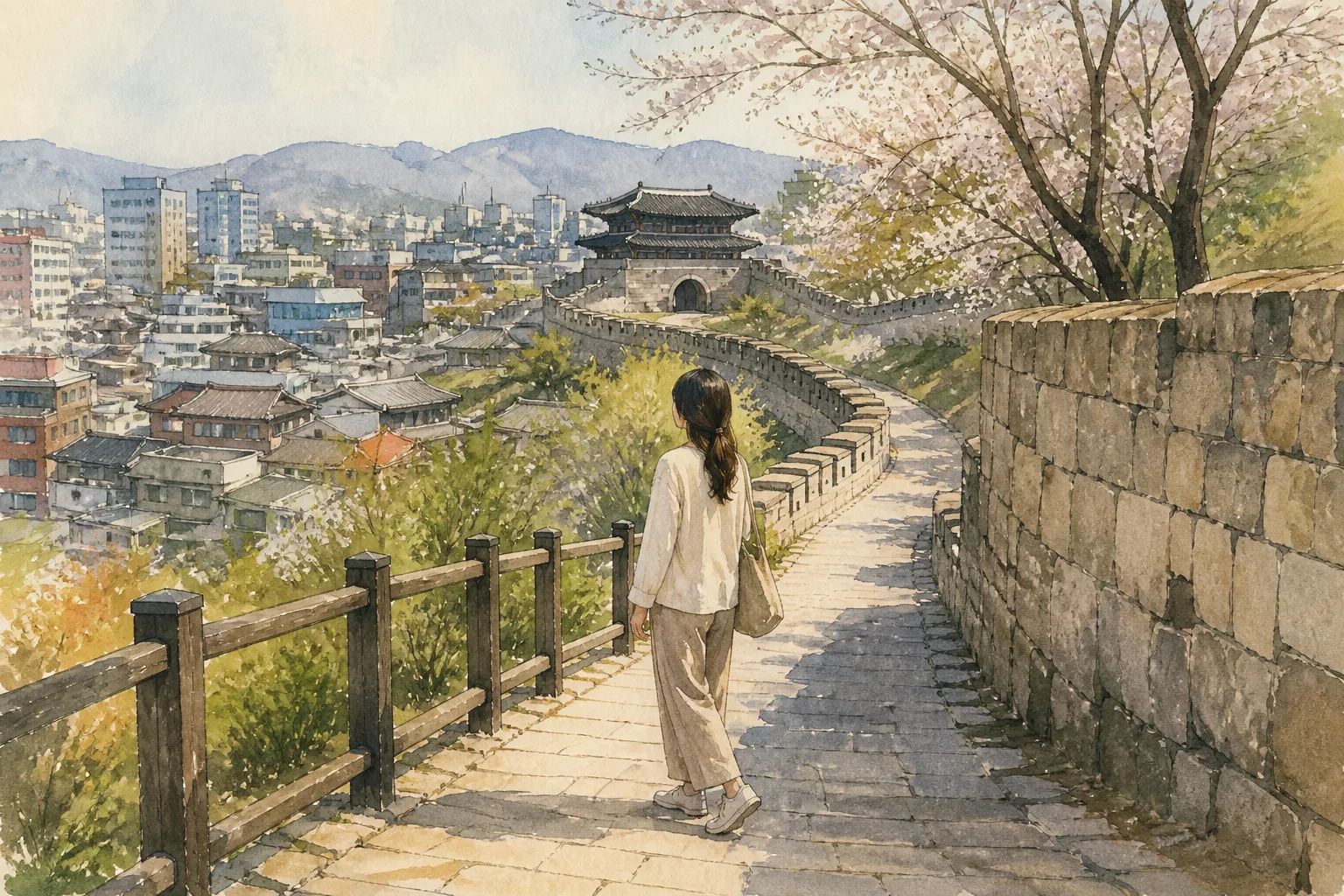
Spring, particularly late March through April during cherry blossom season, offers mild temperatures well suited to full walking days without the wind-chill factor. Autumn, especially October, offers similarly comfortable daytime temperatures with crisp air rather than biting cold. Both windows keep Seoul's outdoor attractions, palace grounds, and street markets fully enjoyable without forcing a cold-sensitive traveler into constant indoor retreats.
If January is the only month that fits your schedule, consider restructuring the trip itself rather than forcing a full outdoor itinerary. A Seoul visit weighted toward museums, shopping districts, indoor markets, and short outdoor highlights can still deliver a good trip. It is just a different trip from a spring or autumn visit built around long walks.
Decision Checklist
Use this list to think through a January Seoul trip if cold sensitivity is a real factor for your group. It is a planning aid, not a pass or fail score, so weigh each item against your own situation rather than counting boxes.
- Does anyone in the group have a health condition where a doctor has advised caution around cold or dry air? If so, has that conversation happened yet?
- Are there toddlers or older travelers in the group who will likely need more frequent indoor breaks than the rest of the group?
- Is the draft itinerary built around indoor anchors, or does it assume long unbroken outdoor blocks?
- Does everyone have windproof, layered cold-weather gear, not just a stylish coat?
- Is there flexibility in the schedule to shorten or skip outdoor plans on the coldest days without losing the trip's main purpose?
- Would the same trip work better in late March through April, or in October, instead of January?
If several of these raise real concern for your group, especially the medical-conditions question, a date shift is worth serious consideration over pushing ahead with January as planned.
FAQ
Is Seoul really that cold in January, or is it exaggerated online?
It is genuinely cold, not exaggerated. Average highs sit around 0.4C (32.7F) and lows around -7.9C (17.8F) in early January, dropping further by late January. Wind chill regularly pushes the felt temperature well below the thermometer reading, sometimes into the -20C range.
Is there a better week in January to visit if I have to go then?
Korea's winter follows a pattern called Samhansaon, roughly three colder days followed by four milder days. There is no guaranteed mild week, but checking a short-range forecast once you are within 7 to 10 days of travel can help you line up outdoor days with the milder half of that cycle.
I have asthma or another condition that cold air affects. Should I still go?
This article covers general weather planning only, not medical guidance. Cold air and low humidity are widely recognized as possible triggers for some respiratory conditions, so if cold air already affects you at home, talk to your doctor before the trip about your specific risk and any precautions, and build extra indoor time into the itinerary regardless of what they advise.
Are toddlers and older travelers more affected by Seoul's January cold?
Young children and older adults generally need more frequent warm-up breaks in cold weather than a fit younger adult, which is general cold-weather travel guidance rather than a Seoul-specific medical claim. If you are traveling with a toddler or an older relative with a known health condition, check with their doctor about cold-weather precautions before you go, and plan the day around shorter outdoor stretches either way.
Should I just avoid Seoul entirely if I have high cold sensitivity?
Not necessarily. Seoul itself is not the problem, January is. The same city in April or October removes most of the cold-sensitivity friction while keeping the sightseeing intact, so a date shift is often a better fix than cancelling the trip.