travel-decisions
Is Prague Good for Travelers Who Want Quiet Nights?
A direct fit check for travelers who want calm evenings in Prague: who should book it, who should skip it, and how to pick a quiet base without giving up walkability.
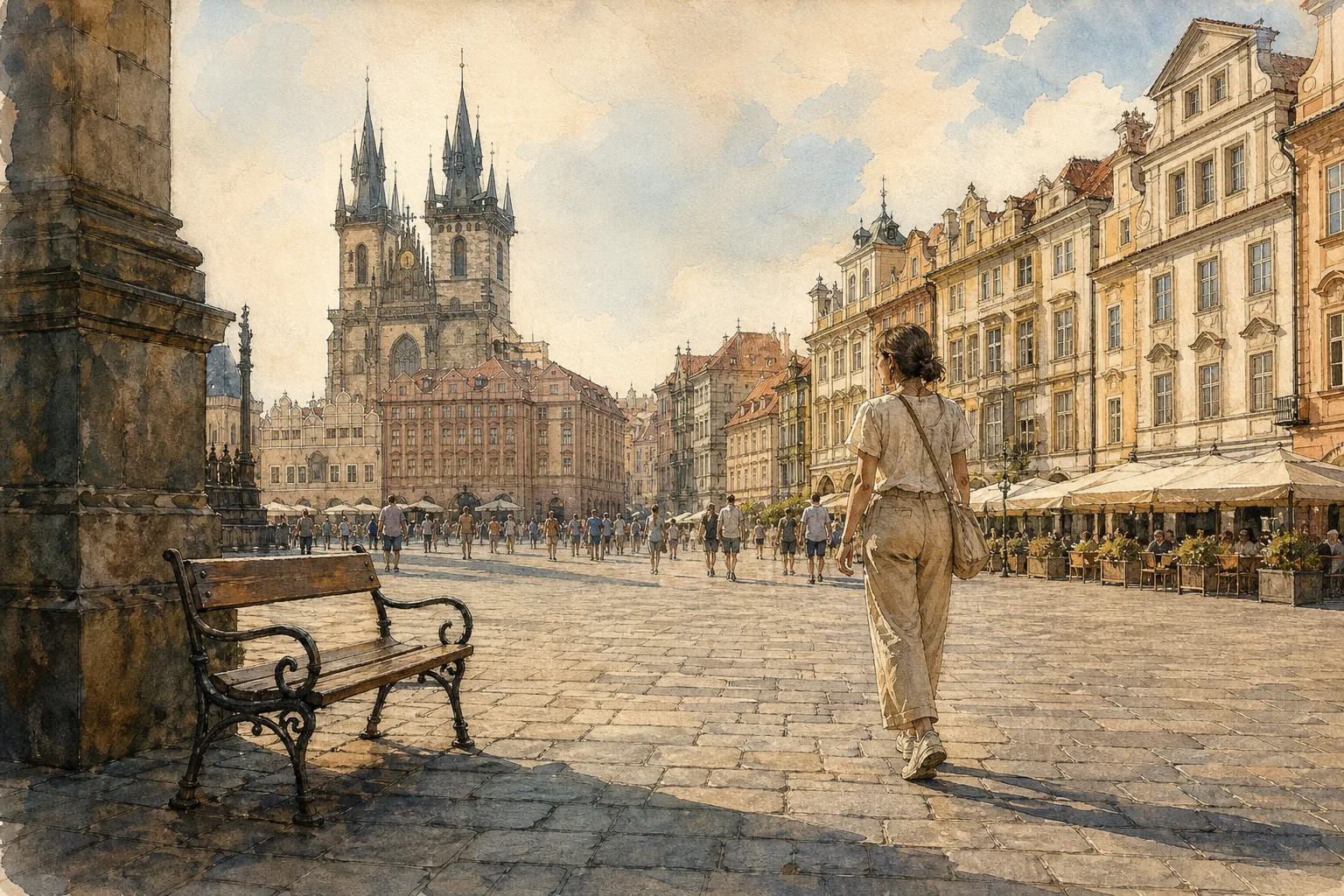
Prague is one of the easiest European cities to misread if you want quiet nights. On a map, the center looks compact enough that any well-located hotel seems interchangeable. In practice, a few blocks decide everything. One booking puts you in a courtyard that still carries bar noise after midnight. Another puts you across the river or just outside the loud pocket, where the same city suddenly feels calm, romantic, and easy to repeat.
That is why this article is really about spillover, not nightlife itself. Quiet-night travelers are not asking whether Prague has bars. They are asking whether they can keep the beauty of the historic core while sleeping outside the streets that absorb its late-night overflow. Prague can do that well, but only if you stop choosing for postcard proximity first and acoustic reality second.
Quick Verdict
Prague is a strong fit for travelers who want quiet nights, but only if the hotel location is chosen deliberately. The city's nightlife noise is not spread evenly across Prague; it is concentrated in a small number of bar-dense pockets near Old Town Square and Wenceslas Square. Outside those pockets, Prague is one of the calmer major European city breaks available, with walkable, low-traffic residential districts a short distance from the historic core.
Choose Prague for a quiet trip if you are willing to book a hotel in Lesser Town, Vinohrady, or another residential-adjacent district rather than the absolute center. Skip Prague, or at least skip booking without research, if you assume any centrally located hotel will be calm by default, or if you are traveling during peak summer weekends when the loud pockets expand and spill later into the night.
The direct verdict: this is a strong fit if your priority is a calm base with an easy walk into the historic center, and a weak fit if your priority is a hotel literally on or beside the main nightlife squares. If that second description matches you, treat this as the signal to either change your booking strategy or reconsider the city, not as a reason to hope it works out on arrival.
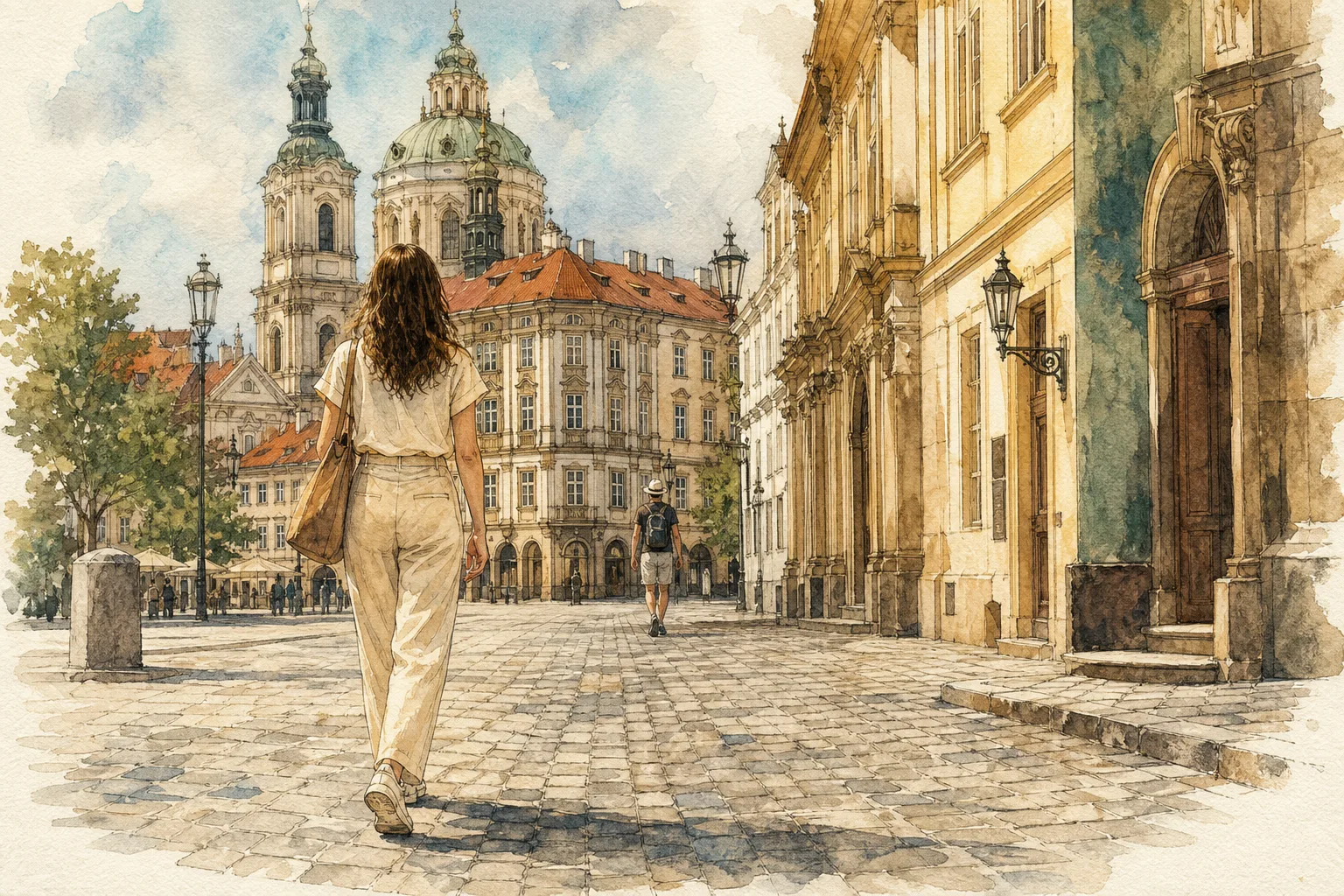
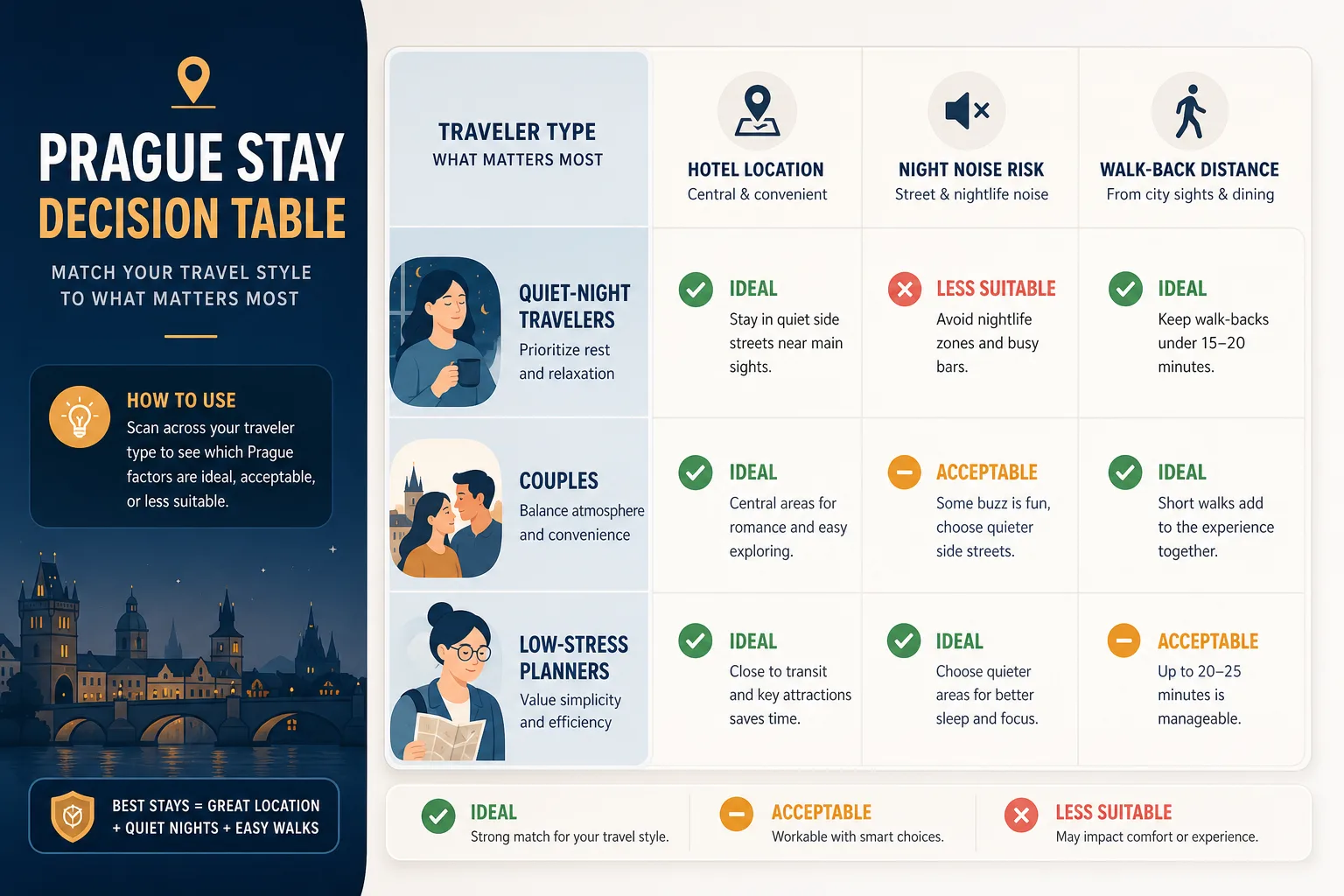 Editorial illustration: A simple decision table graphic comparing traveler types (quiet-night travelers.
Traveler Type Table
The real decision variable in Prague is not "is the city loud," it is "how far is your pillow from the loud part." Prague's historic core is small enough that a few hundred meters can be the difference between hearing bar noise through a window and hearing nothing but footsteps on cobblestones. The tradeoffs below map that distance decision against what each traveler type actually prioritizes.
| Traveler type | Main priority | Best-fit area | Realistic tradeoff |
|---|---|---|---|
| Quiet-night travelers | Uninterrupted sleep, minimal street noise | Lesser Town, Vinohrady | Slightly longer walk or one metro ride back from evening activities |
| Couples | Calm, romantic pace without bar noise | Lesser Town, quieter parts of New Town | Fewer late-night food options directly outside the hotel |
| Low-stress planners | Predictable, low-decision evenings | Vinohrady, near Namesti Miru or Jiriho z Podebrad metro stations | Need to plan the return trip rather than wander back on impulse |
The pattern across all three types is the same: the quieter the base, the more the evening return trip needs a small amount of planning. That planning cost is low in Prague specifically because transit is dense and runs late, but it is not zero, and travelers who dislike any planning at all should weigh that honestly.
Best for First-Time Visitors
First-time visitors to Prague often default to booking directly in Old Town because it looks like the obvious choice on a map. For quiet-night travelers, couples, and low-stress planners visiting for the first time, that default is the most common source of regret. A hotel a few streets off Old Town Square can back onto a courtyard that amplifies bar noise until well past midnight, especially on weekends.
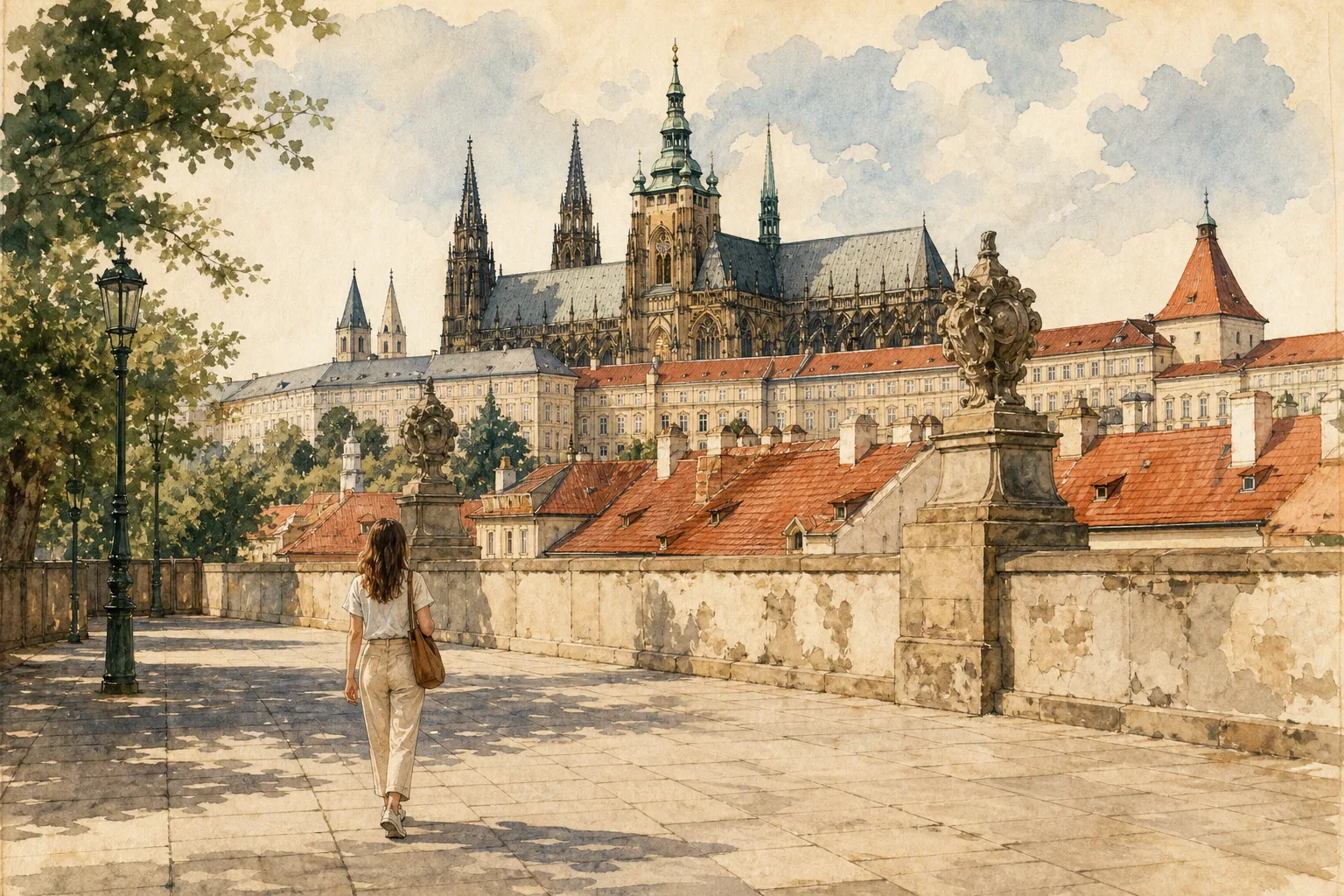
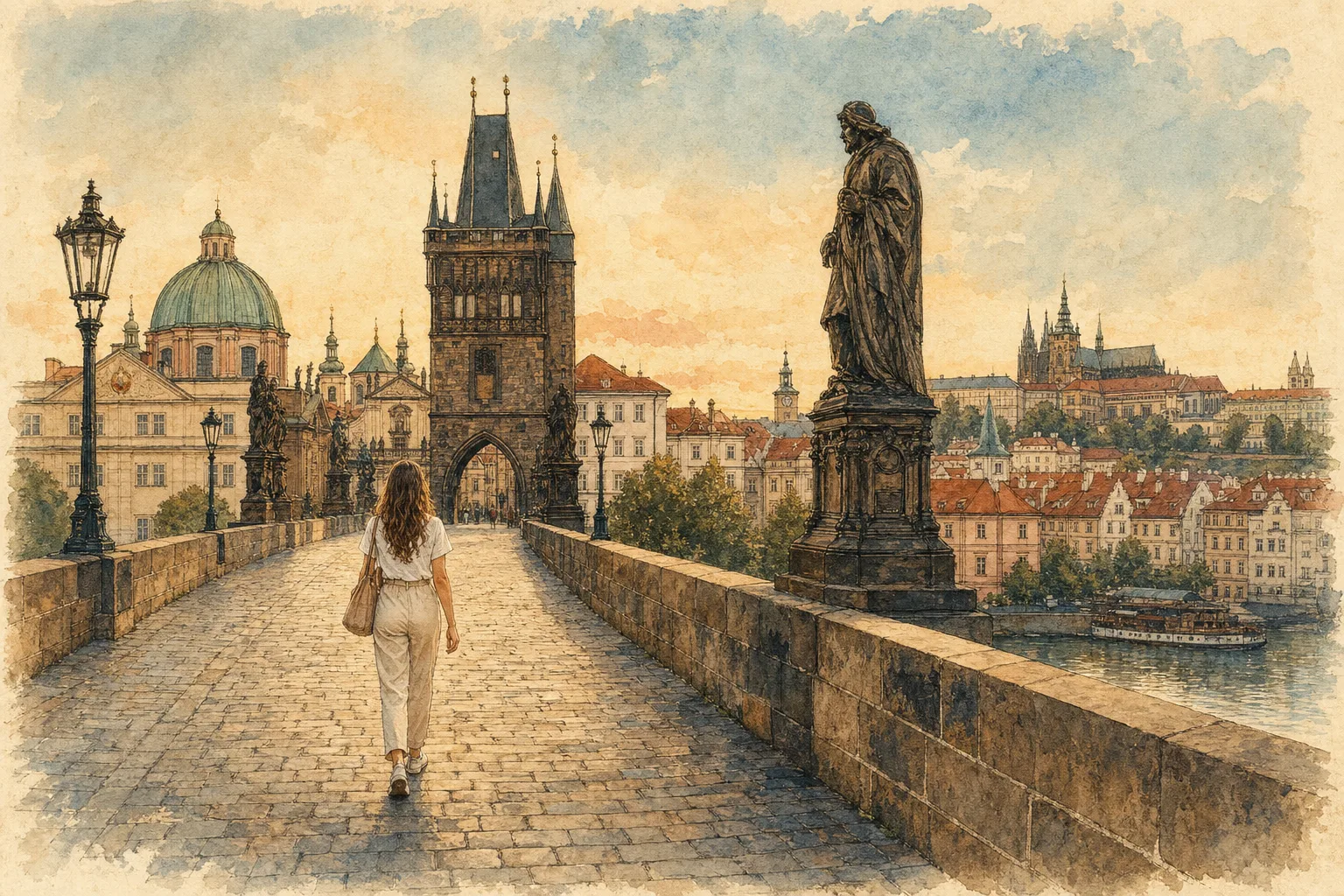
The better first-time approach is to treat the 20 to 25 minute flat walk across the 516-meter Charles Bridge as a feature, not an inconvenience. Basing in Lesser Town puts a first-timer within easy, scenic walking distance of every major sight, while sleeping on the residential side of the river where evening noise drops off sharply after dinner hours. Low-stress planners in particular benefit from this because it removes the need to research individual streets block by block; the whole district behaves consistently.
Best for Couples
Couples chasing a calm, unhurried version of Prague are one of the best-matched traveler groups for this city, provided the hotel choice matches the intent. A couple that wants candlelit dinners, slow bridge walks, and an early return rather than a late bar night should prioritize Lesser Town or the quieter stretches of New Town away from Wenceslas Square.
The mismatch risk for couples is subtler than for solo travelers: it usually is not the couple's own behavior that causes disruption, it is other guests' nightlife noise leaking into what looked like a romantic, central location on a booking site. Reading recent reviews specifically for words like "noise," "street," or "window" is a more reliable filter than star rating or map pin proximity to the sights. Couples who want a low-stress trip should also budget for the flat accommodation fee, since it applies per person, per night, regardless of hotel tier.
Best for Slow Travelers
Slow travelers, who prefer absorbing atmosphere over checking off landmarks, tend to fit Prague's quiet-night profile well, but for a different reason than couples or low-stress planners: pace. A slower traveler is naturally inclined to end the evening earlier, linger over one neighborhood rather than covering three, and treat a calm walk back as part of the experience rather than a logistics problem.
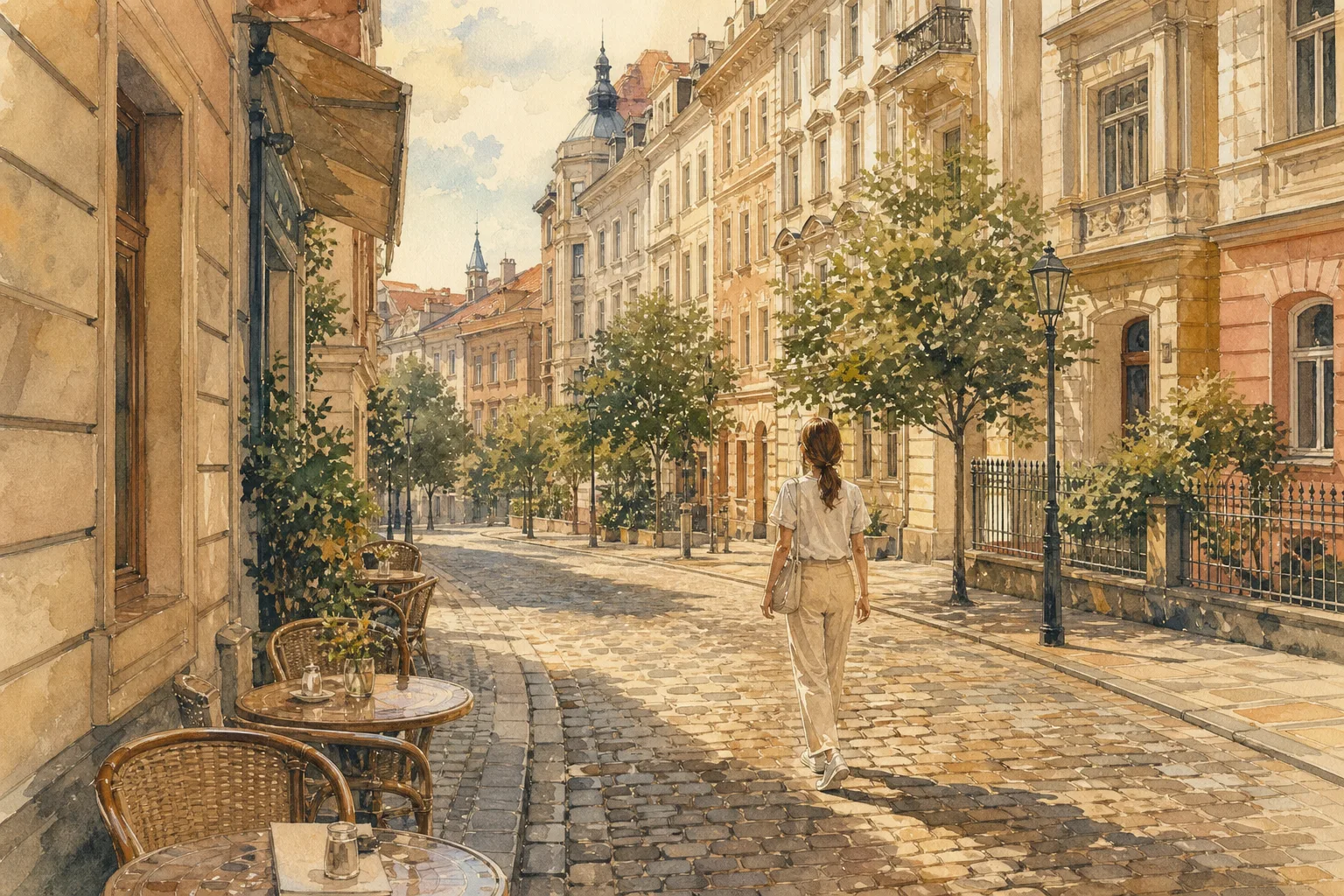
This traveler type benefits most from choosing Vinohrady over the absolute historic center. It sits about a 30-minute walk from Old Town Square, or a quick ride on metro Line A, and it offers a genuinely residential, unhurried evening atmosphere that contrasts with the more transactional, tourist-paced feel near the main squares. The shoulder seasons of April to May and September to October suit this traveler type especially well, since the sweet-spot temperature range of 14 to 22 degrees Celsius makes evening walking pleasant without the peak-summer crowd density that speeds everyone's pace up.
Best for Low-Stress Travelers
Low-stress travelers who want an easy, businesslike trip with minimal decision fatigue get a specific practical advantage in Prague: a legible, well-documented night transit system. After the metro stops at midnight, night trams numbered 90 to 99 and night buses numbered 901 to 917 take over on the same corridors, running every 30 to 60 minutes, with every night tram line converging at the central Lazarska stop for easy transfers.
That means a low-stress traveler does not need to gamble on finding a taxi or rideshare at 1 a.m.; the fallback option is scheduled, city-run, and predictable. A single fare covers 90 minutes at 40 CZK, and a 24-hour pass at 120 CZK covers unlimited night travel too, so the cost of a calm, planned return trip is close to negligible. The one hard rule this traveler type must respect is ticket validation: an unvalidated paper ticket carries a 1,200 CZK on-the-spot fine, which is a needless stress spike for a trip whose entire point is avoiding stress.
Common Mismatches
The Prague mismatch is usually not choosing the wrong district category. It is assuming all "close to Old Town" locations behave the same after dark.
- The "map-pin close is good enough" traveler. They book by distance to the sights alone, without checking the exact block or recent noise complaints. Two hotels three streets apart in central Prague can have completely different sound profiles after 10 p.m., and map view does not show that.
- The "pub crawl ban means quiet center" traveler. Prague's ban on organized, agency-led pub crawls between 10 p.m. and 6 a.m. cuts one source of street noise, but it does not silence fixed bars and clubs in the loud pockets. On peak summer weekends, Old Town can still run late regardless of the crawl rule.
A third mismatch is the traveler who wants both a quiet hotel and a room directly on or facing Old Town Square or Wenceslas Square. Those two things are close to mutually exclusive in Prague; a room with that view is, by definition, a room with exposure to the loudest evening foot traffic in the city.
If none of the fixes above feel workable for you, that is a real signal, not a failure to plan hard enough. A traveler who cannot tolerate any walk-back planning, who wants a central-square view room, and who is traveling on a peak summer weekend is stacking three friction points that do not resolve with a better hotel search. For that specific combination, Prague is a weak match, and it is worth naming the better alternatives directly rather than forcing the fit.
A Quieter Alternative, If Prague Is Not It
For travelers who read the sections above and recognize themselves as the mismatch case, the honest next step is not "try harder to find a quiet Prague hotel," it is to consider a city with a smaller nightlife footprint by design. Cesky Krumlov and Salzburg are the two closest substitutes for what quiet-night travelers are actually chasing in Prague.
Cesky Krumlov offers a similarly cobblestoned, river-wrapped historic core, but at a fraction of Prague's size and without a comparable bar-dense central square, so evenings are quiet almost everywhere by default rather than by careful hotel selection. The tradeoff is that it is a small town, not a capital city: fewer museums, less nightlife even if you wanted some, and a shorter list of things to do across a multi-day stay.
Salzburg offers a similar tradeoff from a different angle: a compact, walkable historic center with hillside and riverside calm within minutes of the main sights, and a nightlife scene that is smaller and less central than Prague's. It works well for couples and low-stress planners who still want a real city with restaurants, concerts, and museums, just without Prague's concentrated late-night bar districts. Neither city replaces Prague's scale or its transit sophistication, but both remove the specific mismatch risk that causes quiet-focused travelers to regret a Prague booking.
Final Match Recommendation
Choose Prague for a quiet-nights trip if you are a couple, a low-stress planner, or a slow traveler willing to base in Lesser Town, Vinohrady, or another residential-adjacent district, and treat the walk or short transit ride back as a normal, plannable part of the evening rather than friction to be avoided entirely.
Do not choose a central, view-first hotel booking in Prague if your top priority is silence after 10 p.m.; that combination consistently produces the disappointment pattern described above, no matter how well-reviewed the hotel is on other criteria. If quiet is the single non-negotiable factor in your trip, let it override proximity to the main squares when you book, and treat the short walk-back as the actual price of that quiet. If you have already decided that even that tradeoff is unacceptable, Cesky Krumlov or Salzburg will serve you better than any hotel search inside Prague's center.
FAQ
Is Prague too loud at night for a quiet trip overall? Not city-wide. Prague's nightlife noise is concentrated in specific pockets, mainly around Old Town Square, Wenceslas Square, and a handful of bar-dense streets near them. Outside those pockets, residential and hotel-heavy neighborhoods are genuinely quiet at night. The risk is not Prague itself, it is booking a hotel inside the loud pocket without realizing it.
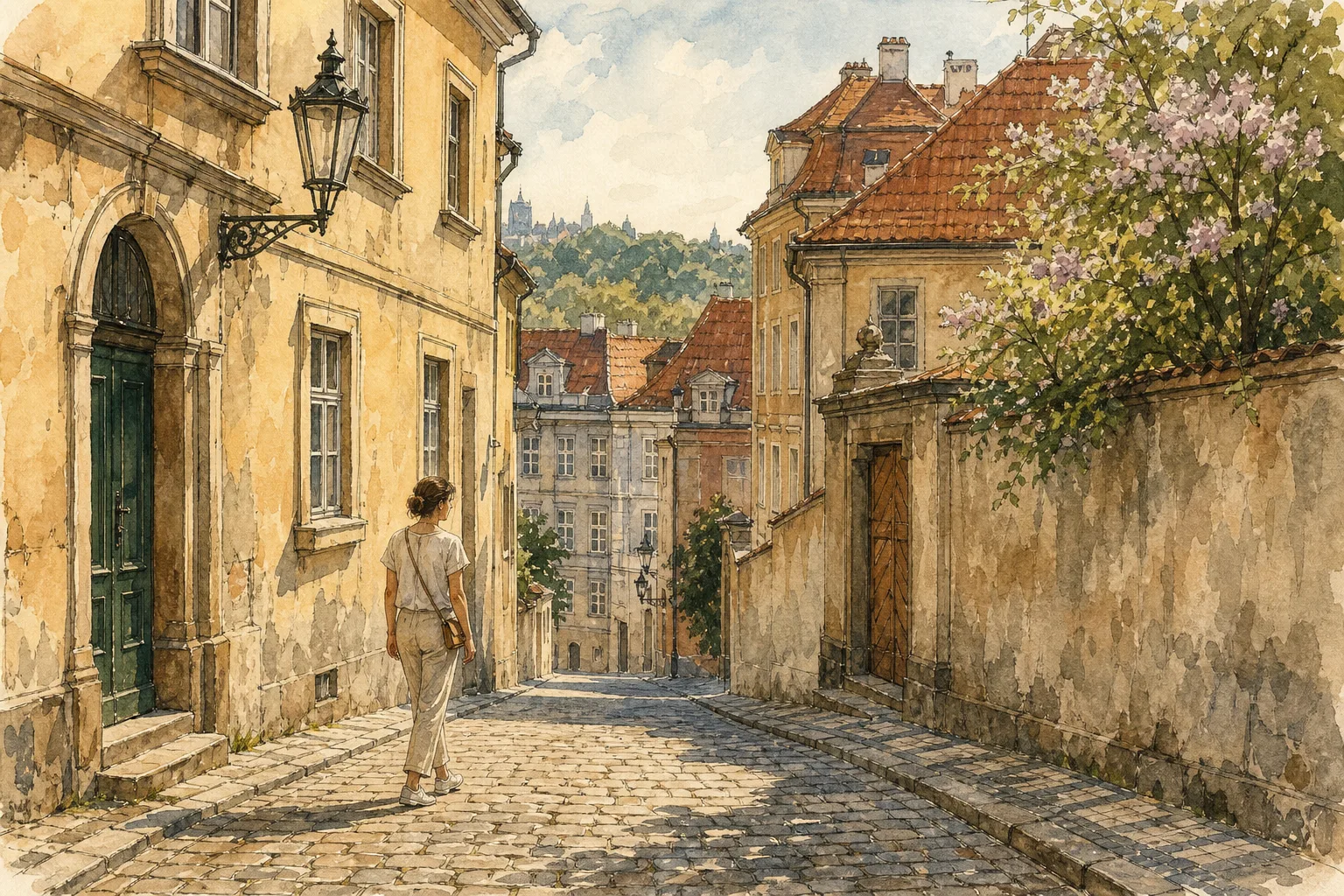
Which Prague neighborhood is quietest for a low-stress stay? Lesser Town (Mala Strana) and Vinohrady are the two most reliable choices. Lesser Town gives a calm, low-traffic base within a flat 20 to 25 minute walk of Old Town Square across Charles Bridge. Vinohrady is a residential district about 30 minutes on foot, or a short metro ride on Line A, and trades a slightly longer commute for a distinctly quieter, more local evening atmosphere.
Do I need a car or late-night taxi to get home safely and quietly? No, and in most cases you should avoid relying on one. Prague's metro runs daily until midnight, and after that, night trams and night buses cover the same routes at 30 to 60 minute intervals, with all night tram lines meeting at the central Lazarska stop for transfers. A planned night-transit walk-back is usually calmer and more predictable than waiting for a taxi.
Will hotel prices push me into a noisier area to save money? Not necessarily. Mid-range 3-star and 4-star hotels in Prague average roughly 80 to 160 euros a night across the city, including in quieter districts, so a calm location is not automatically a premium purchase. The bigger budget factor to plan for is the flat 50 CZK per person, per night accommodation fee added to every paid stay.
If Prague turns out to be the wrong fit, what is a similar but quieter alternative? If your top priority is a low-key European old-town atmosphere with less nightlife density than Prague's center, Cesky Krumlov or Salzburg are closer matches. Both offer compact historic cores and river or hillside walks without a comparable bar-dense square at their center, at the cost of fewer big-city sights and shorter stay-worthy itineraries than Prague.
Is Prague a good match for a couple who wants a slow, low-key trip rather than a bar-hopping one? Yes, this is one of Prague's strongest matches. The compact old core, the flat walk across Charles Bridge, and the shoulder-season sweet spot from April to May and September to October all favor a slower pace over a checklist pace. The mismatch only shows up for couples who assume every part of the city center will feel equally calm after dark.