travel-decisions
Is Busan Too Tiring for Low-Walking Travelers?
A direct look at Busan's stairs, hills, and transit friction, and whether the city fits travelers who cannot handle heavy walking days.
Quick Verdict
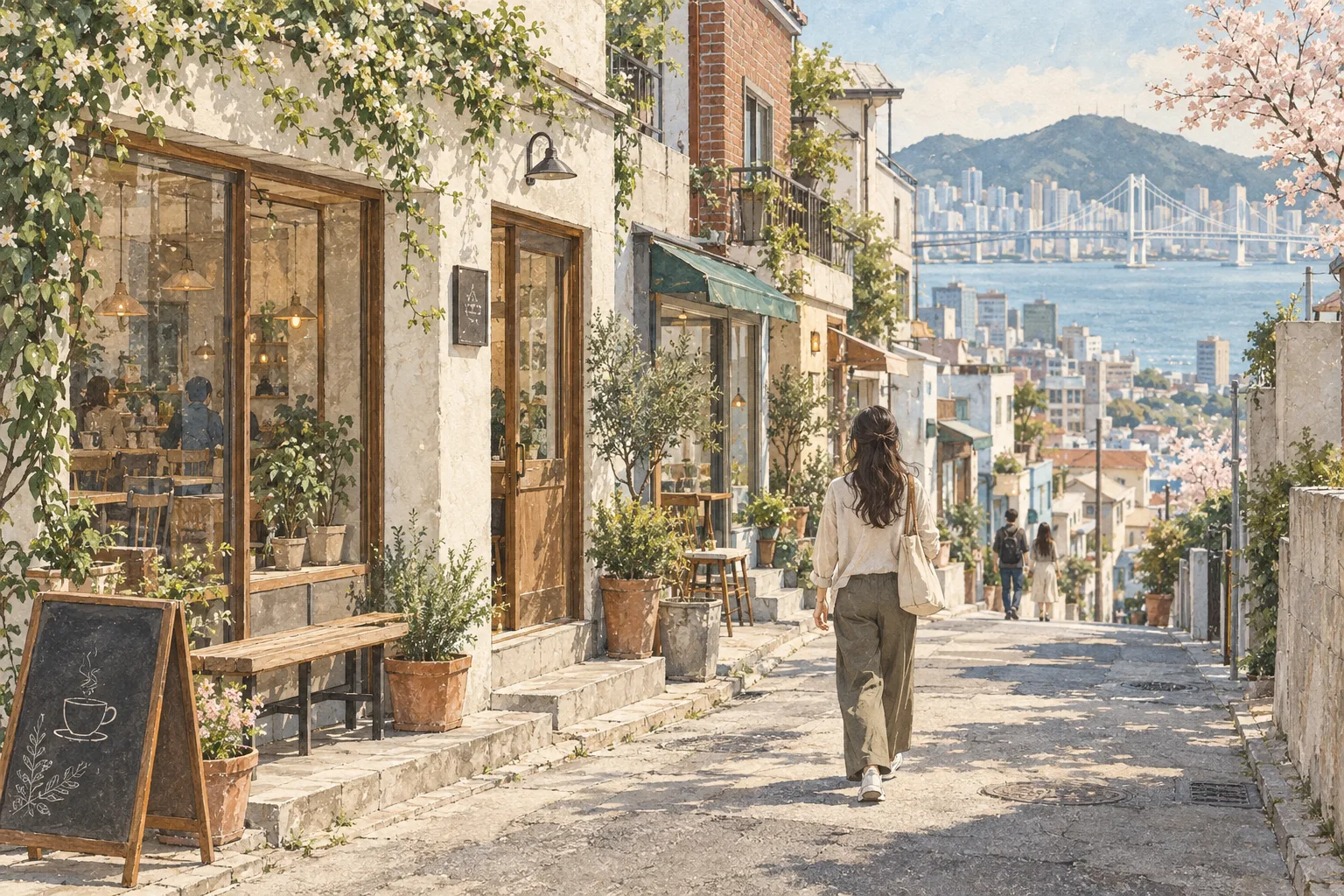
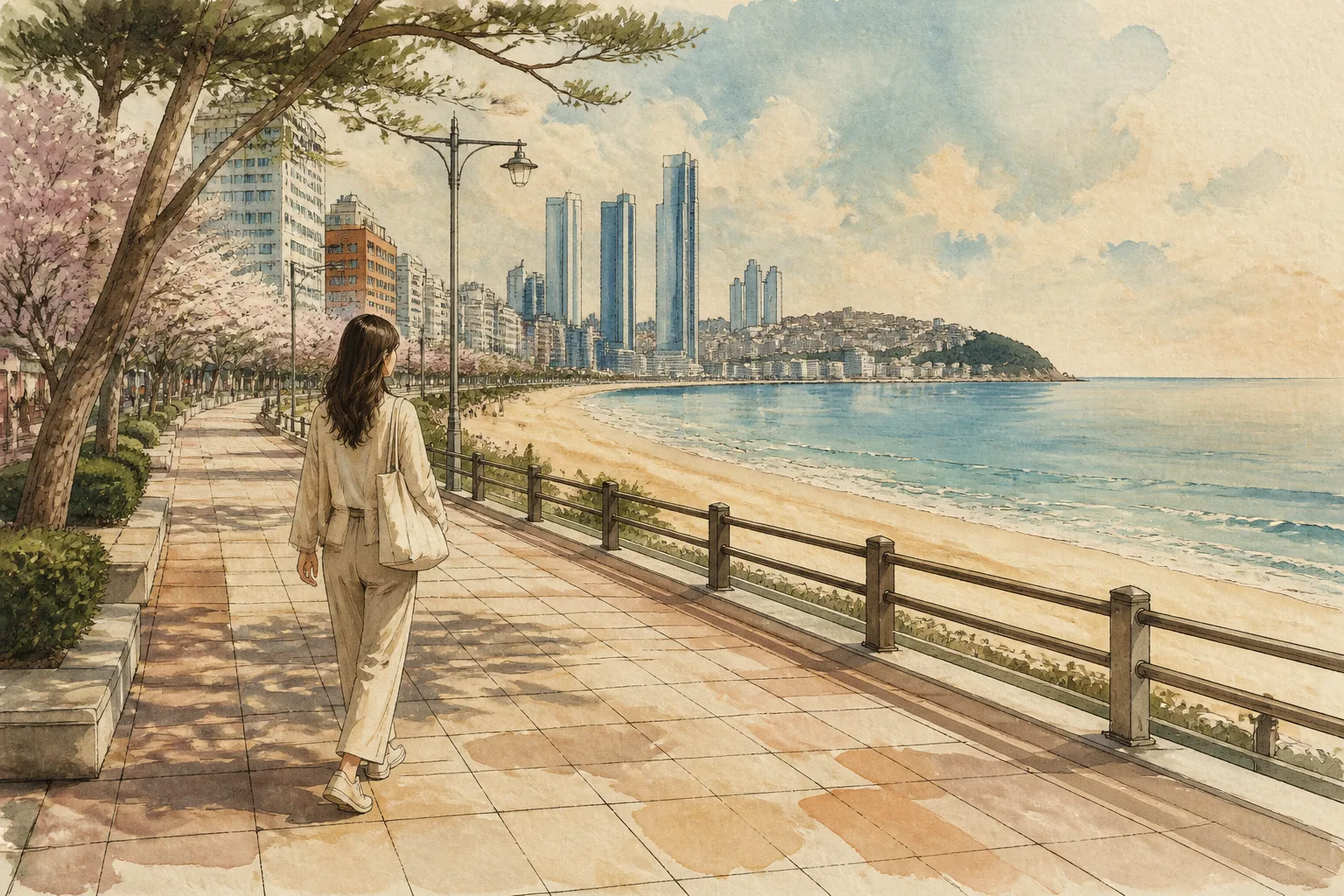
Busan is not one city for walking purposes. It is two: a flat, manageable coastal and downtown Busan, and a hillside, staircase-heavy Busan that shows up in almost every top-10 list.
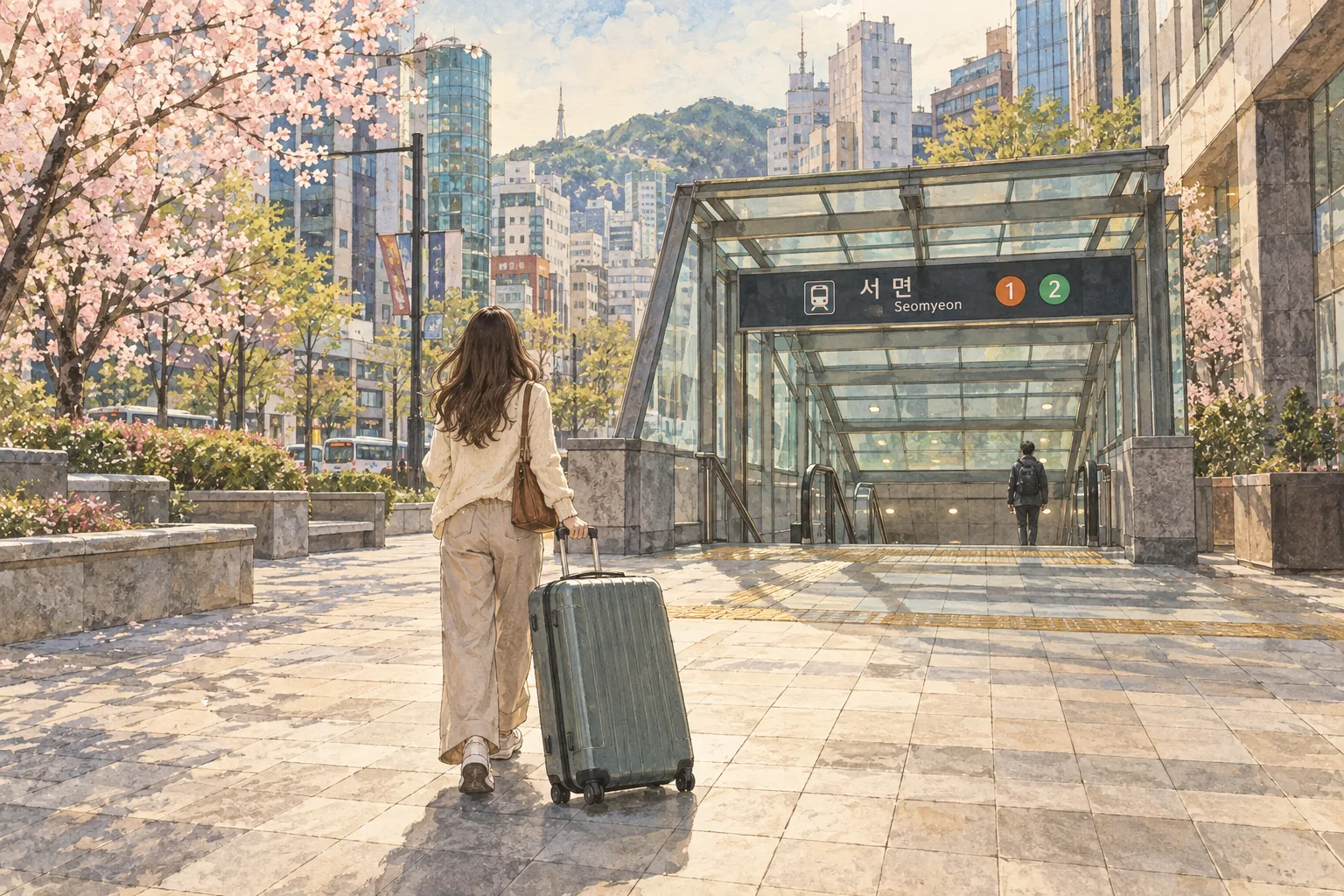
Choose Busan if you are a low-walking traveler who is willing to build your itinerary around the flat zones (Haeundae, Gwangalli, Seomyeon) and treat the famous hillside sights as optional rather than mandatory. The city is genuinely workable at a slow pace if you plan for it.
Do not choose Busan, or at least rethink the itinerary, if your trip plan currently includes Gamcheon Culture Village's back alleys, the full descent to Haedong Yonggungsa Temple, and a packed multi-district day, all without a taxi budget. Stacked together, those three things create exactly the kind of day that wears out a low-stamina traveler by early afternoon.
Direct fit verdict: strong fit if you accept a taxi-supported, flat-zone-first itinerary; weak fit if you insist on covering every major sight on foot in a tight timeframe.
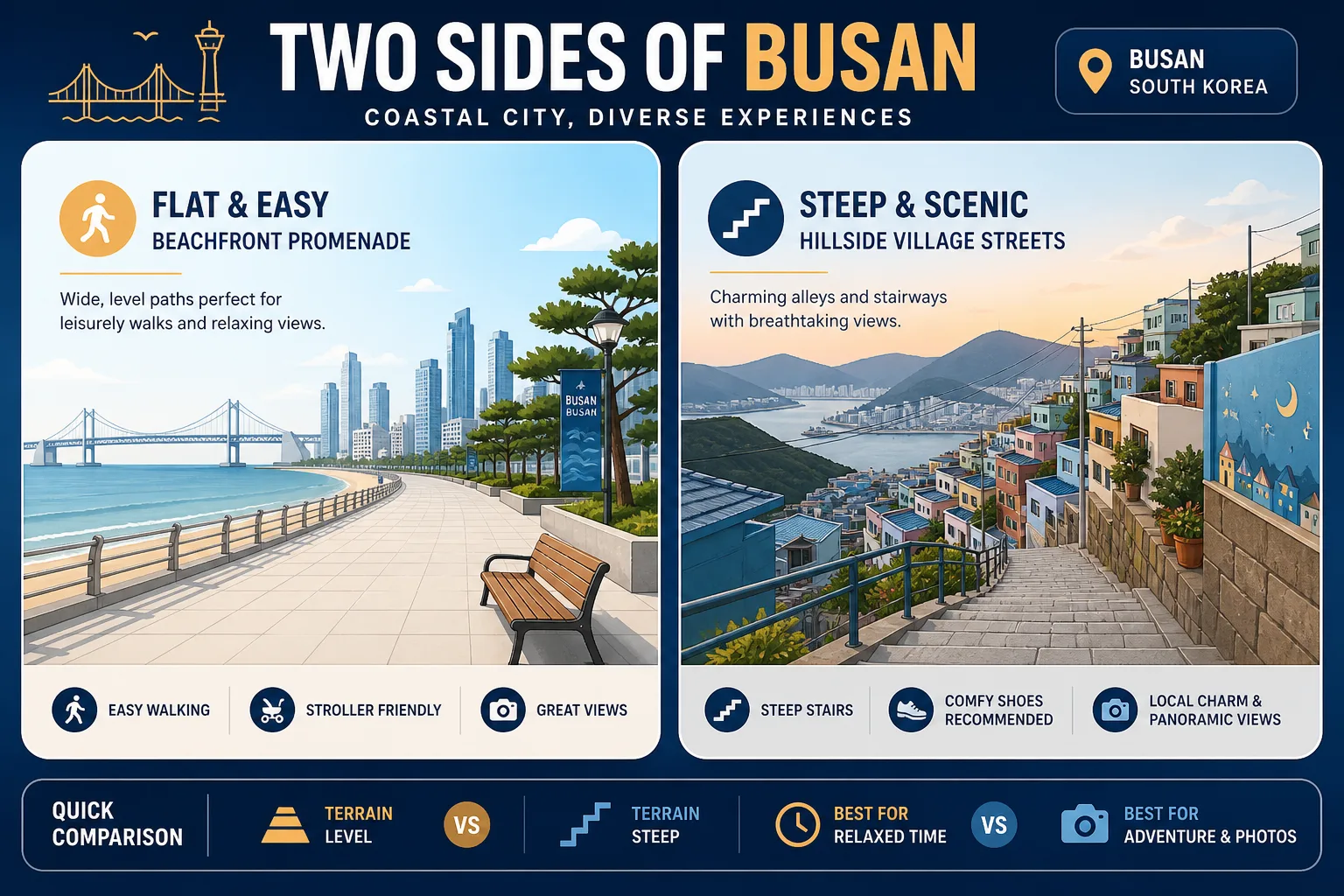 Editorial illustration: A simple side-by-side layout illustrating two contrasting Busan travel scenes: one labeled area showing a flat.
Main Friction Problem
The core problem is not that Busan is hilly in a vague, unpleasant way. It is that specific, well-known attractions require specific physical actions that cannot be substituted or shortcut, and travel content rarely says so plainly.
Walking fatigue builds differently in Busan than in a flat city grid. Distances on a map look short, but a 12-minute walk that is entirely uphill, as is the case reaching Haedong Yonggungsa Temple from the nearest bus stop, costs far more energy than 12 flat minutes. From OSIRIA Station on the Donghae Line, that same approach stretches to a demanding 30-minute walk. A low-stamina traveler who budgets "12 minutes" based on a map estimate will be caught off guard.
Stairs or bridges are not incidental in Busan's most photographed spots. Gamcheon Culture Village's "Stairs to See Stars" is 148 narrow steps, and the site's own guidance advises against strollers or wheelchairs in the side alleys because of steep slopes. Haedong Yonggungsa Temple's main grounds sit behind 108 steep stone steps with no elevator or escalator alternative. These are not worst-case detours; they are the standard route.
Crowd pressure compounds the physical problem. Narrow stairways and alleyways in Gamcheon fill with tour groups and photo lines, which means a low-walking traveler is often stuck queuing on a staircase rather than resting when needed. Crowding turns a manageable but slow descent into a stop-start bottleneck.
Transit stress is a mixed picture. Busan's subway stations generally do have elevators from street level to the platform, which is better than many older metro systems. But those elevators are frequently positioned far from the ticket gates, so the "accessible route" through a station can involve more walking than the direct route, not less.
Friction Table
The honest way to plan Busan is to separate what is actually flat and manageable from what requires stairs, hills, or crowd tolerance, and decide upfront how much of the second category you are willing to accept.
| Decision variable | Low-effort reality | High-effort reality | What it means for you |
|---|---|---|---|
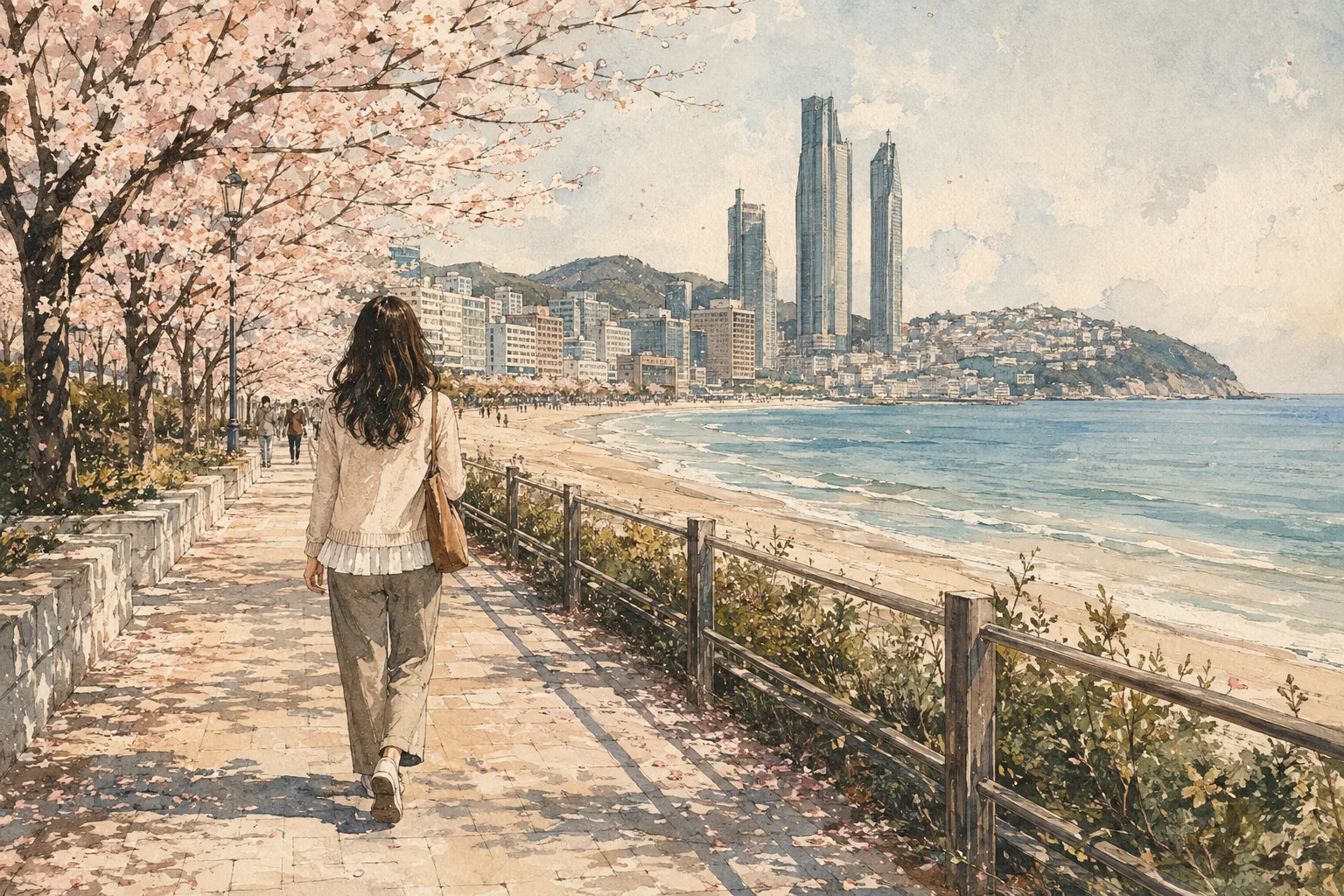
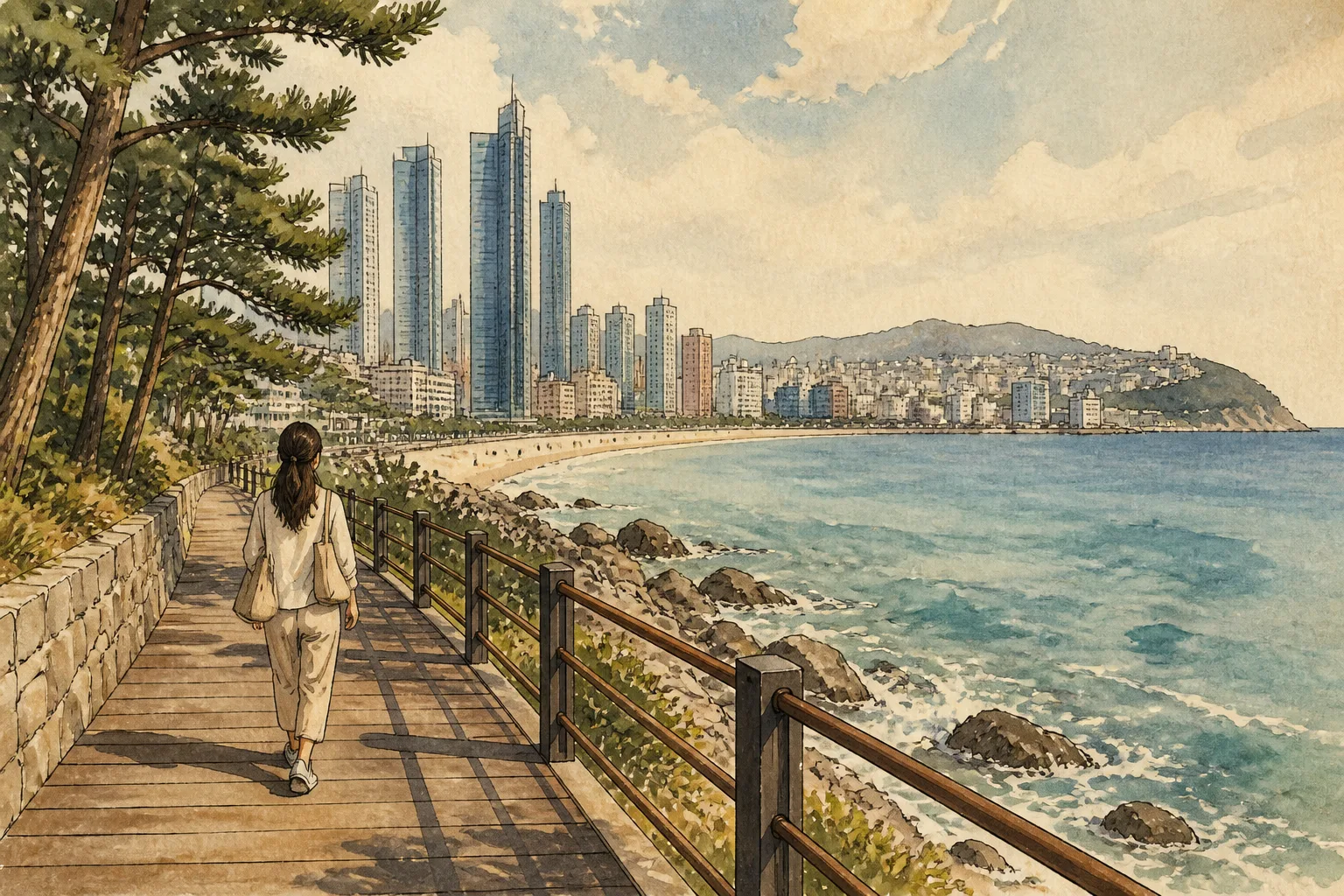
| Haeundae Beach and boardwalk | Flat, wide sidewalks with braille blocks, easy strolling | None significant | Safe default for a rest day or an easy morning |
| Haeundae Beach Train | Runs 4.8 km on flat ground, accessible to manual wheelchairs | Electric wheelchairs strictly prohibited | Good low-effort scenic option if you use a manual chair or none |
| Haeundae Sky Capsule | Short 2 km scenic ride | Manual wheelchairs must be folded to fit; electric wheelchairs banned entirely; priced 50,000 to 60,000 depending on group size | Worth it only if folding a mobility aid is realistic for you |
| Gamcheon Culture Village | Main viewpoints reachable by shuttle and main road | 148-step "Stairs to See Stars"; side alleys unsafe for strollers or wheelchairs due to steep slopes | Plan to see it from designated viewpoints, not by wandering every alley |
| Haedong Yonggungsa Temple | Parking area and outer approach | 108 steep steps to the main grounds, no elevator; 12 to 30 minute uphill walk depending on transit stop used | Treat as a half-day, taxi-supported outing, not a quick stop |
| Choryang-dong hillside area | Free inclined elevator now replaces the old 168 Stairs Monorail (demolished June 2023) | Surrounding streets still steep | Improved, but check current elevator hours before relying on it |
| Subway travel | Elevators exist street-to-platform at most stations | Elevators often far from ticket gates, adding walking distance | Budget extra time inside stations, not just between them |
| Bus travel | "Bus-Best Friend Day" every Tuesday offers boarding assistance on low-floor buses | Assistance is not guaranteed on other days | Taxis are more reliable day-to-day for low-stamina travelers |
| Taxis and ride-hailing | Base fares around 3,800 to 4,800; Kakao T, k.ride, and Uber run in English | Cost adds up if used constantly across a full day | Budget taxis as a planned line item, not a last resort |
| Hotel base | Seomyeon is flat and budget-friendly (around 65,000 at Toyoko Inn) | Haeundae-gu is flatter near the beach but averages $146 a night | Pick based on whether flat terrain or flat cost matters more to you |
Who Will Feel It Most
Not every low-walking traveler experiences Busan the same way, and the difference usually comes down to how rigidly the itinerary is planned before arrival.
Travelers who feel the friction hardest are the ones who booked Busan off a generic "top things to do" list without separating flat sights from hillside sights. If your plan has Gamcheon Culture Village, Haedong Yonggungsa Temple, and a Nampo-dong market walk all on one day, you have unintentionally scheduled three separate high-effort activities back to back. That is the scenario that produces real exhaustion, not the city itself.
Older travelers managing joint pain or general fatigue will notice the stair-heavy sites first, since there is no partial version of the 108-step temple descent or the 148-step village stairway. Slow travelers who prefer to linger rather than rush are actually better positioned than fast-paced sightseers, because a slower pace naturally leaves room to skip a site rather than push through it out of obligation.
Travelers relying on a wheelchair, manual or electric, face the sharpest edges: electric wheelchairs are barred from both the Haeundae Beach Train and the Sky Capsule, and the Gamcheon side alleys are explicitly flagged as unsuitable. For this group, the flat zones (Haeundae boardwalk, Gwangalli, much of Seomyeon) should be treated as the core itinerary, not a fallback.
How to Reduce the Friction
None of Busan's friction points require avoiding the city entirely. Most can be planned around with a few concrete adjustments.
- Cluster your day by elevation, not by neighborhood name. Pair a flat morning (Haeundae boardwalk) with a rest block before attempting any single hillside or stair-heavy site in the afternoon, rather than stacking two hilly sites in one day.
- Treat Haedong Yonggungsa Temple as a there-and-back outing with a taxi at both ends, not a walk-in stop on a longer loop. The 108 steps down mean 108 steps back up, and there is no way around that.
- At Gamcheon Culture Village, decide in advance whether you are viewing from the main road and lookout points or committing to the full alley walk including the 148-step stairway. Committing halfway, then turning back, wastes the most energy.
- Budget taxis as a fixed daily cost, not an emergency option. With base fares around 3,800 to 4,800 and English-language apps like Kakao T and Uber available, a taxi between neighborhoods is often the difference between finishing the day comfortably or not.
- Inside subway stations, add buffer time for the walk between the elevator and the ticket gates. It is a real distance, not a rounding error, on days when every extra minute of walking counts.
- If you use a wheelchair, check whether it is manual or electric before booking the Haeundae Beach Train or Sky Capsule, since electric chairs are excluded from both regardless of ticket type.
- Use Tuesdays deliberately if buses fit your plan: the "Bus-Best Friend Day" campaign brings boarding assistance to low-floor buses, which is not guaranteed on other days.
Better Alternatives
If, after this, Busan's stair-heavy signature sights feel like more risk than the trip is worth, there are two honest ways to adjust rather than cancel the trip outright.
The first is to redesign the Busan trip itself around its flat half. Base yourself in Haeundae-gu or Seomyeon, treat the Haeundae boardwalk, Gwangalli waterfront, and central Seomyeon streets as your core itinerary, and downgrade Gamcheon and Haedong Yonggungsa Temple to optional half-day add-ons taken only if you feel strong that day. This keeps the destination but removes the pressure to complete a checklist.
The second is to reconsider the destination choice altogether if a low-effort, low-decision-fatigue trip matters more than seeing Busan specifically. A flatter coastal or resort-style destination with fewer must-see hillside landmarks will produce less day-to-day friction than any itinerary built around Busan's hills, no matter how well it is planned. This is a reasonable choice, not a failure, if your priority is genuinely a calm, low-stress pace over checking off a specific city's landmarks.
Either path is legitimate. The mistake to avoid is picking Busan for its skyline-and-temple reputation and then discovering the stairs are not negotiable once you are standing in front of them.
Decision Checklist
Before booking, walk through this list honestly. If more than one or two items are unresolved, adjust the itinerary now rather than on the ground in Busan.
- Have you accepted that Haedong Yonggungsa Temple's 108 steps have no elevator alternative, and decided whether that site stays on the itinerary?
- Have you decided whether you will walk Gamcheon's full alley network (148-step stairway included) or view it from the main road and lookout points only?
- Have you set a daily taxi budget, given base fares of roughly 3,800 to 4,800 per ride?
- If you use a wheelchair, have you confirmed it is compatible with the Haeundae Beach Train (manual only) or Sky Capsule (manual, must fold) before planning around either?
- Have you chosen a hotel base (Haeundae-gu for beachfront flatness at a higher price, or Seomyeon for flat, budget-friendly convenience) that matches your actual walking limit rather than the most photogenic option?
- Have you avoided scheduling two hillside or stair-heavy sites on the same day?
- Have you built in buffer time inside subway stations for the walk between elevators and ticket gates?
- Have you checked whether your travel day is a Tuesday, when bus boarding assistance is more reliably available?
FAQ
Is Busan walkable for someone with limited stamina? Parts of it, yes. Haeundae Beach and the surrounding boardwalk are flat and wide, and downtown Seomyeon is largely level. But hillside areas like Gamcheon Culture Village and coastal sites like Haedong Yonggungsa Temple involve serious stairs and inclines that are not optional shortcuts.
Can I skip the stairs at Haedong Yonggungsa Temple? No. Reaching the main temple grounds requires descending 108 steep stone steps, and there is no elevator or escalator alternative. If stairs are a hard limit for you, this specific site is not a safe choice, even though many guides treat it as a must-see.
Are Busan subway stations easy to navigate with mobility limits? Most stations have elevators from street to platform, which is a genuine plus. The catch is that elevators are often placed far from the ticket gates, so the walking distance inside the station can be longer than expected even when an elevator exists.
What is the easiest base to stay in for a low-effort Busan trip? Haeundae-gu suits travelers who want flat beach walking within a short distance of the hotel, though it runs about $146 a night on average. Seomyeon is flatter overall and much cheaper, with budget options like Toyoko Inn averaging around 65,000 won, making it a strong pick if flexible taxi use covers the gaps.
Should I use taxis instead of walking between Busan attractions? Yes, and it is not an extravagance here. Metered taxi base fares start around 3,800 to 4,800 won, and Kakao T, k.ride, and Uber all run in English. For a low-walking traveler, budgeting for short taxi hops between neighborhoods is often what makes the whole trip workable.