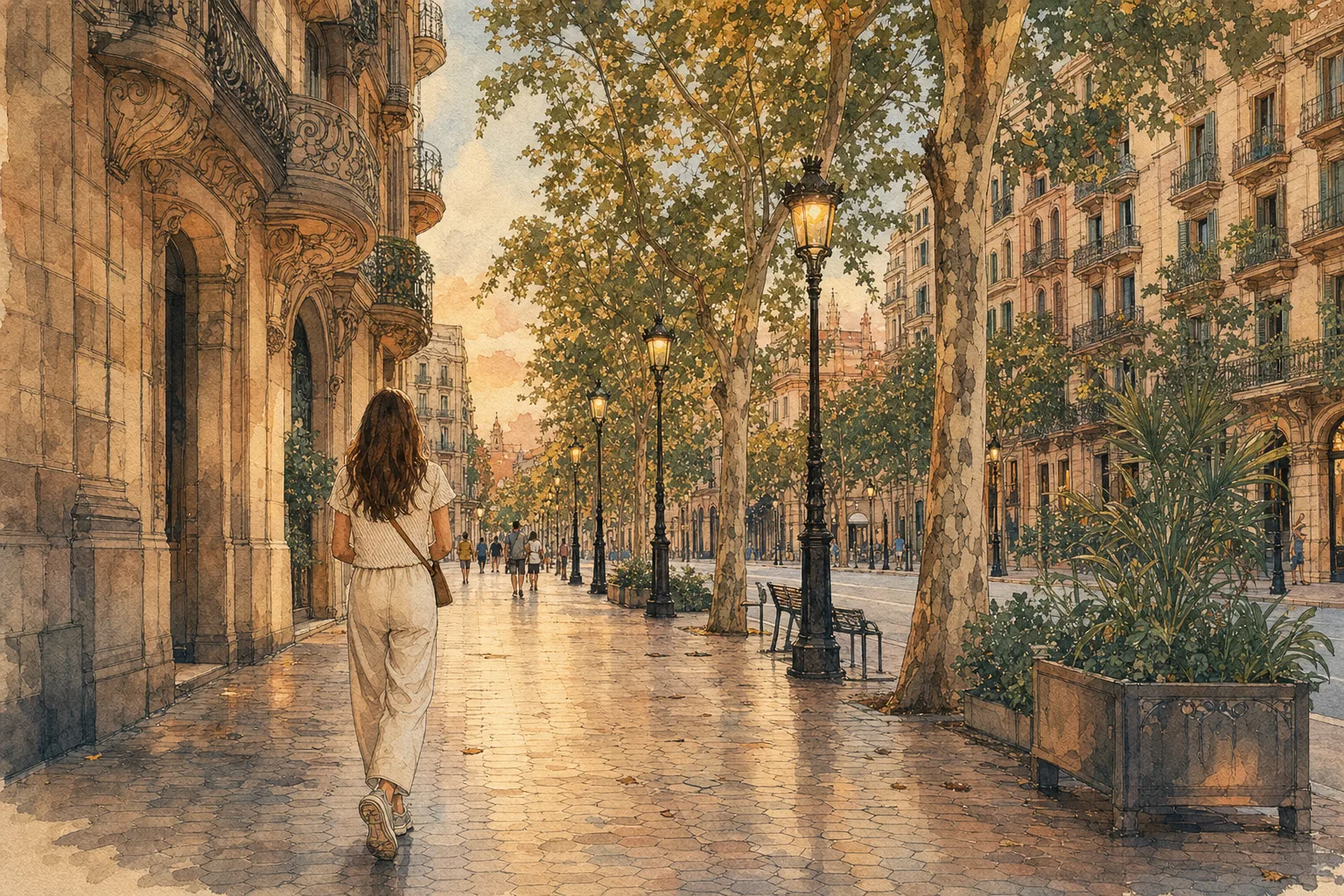
travel-decisions
Is Barcelona Worth It If You Care More About Atmosphere Than Landmarks?
A decision-focused guide for travelers who value mood, wandering, and place-feel over checking Barcelona's famous sights off a list.
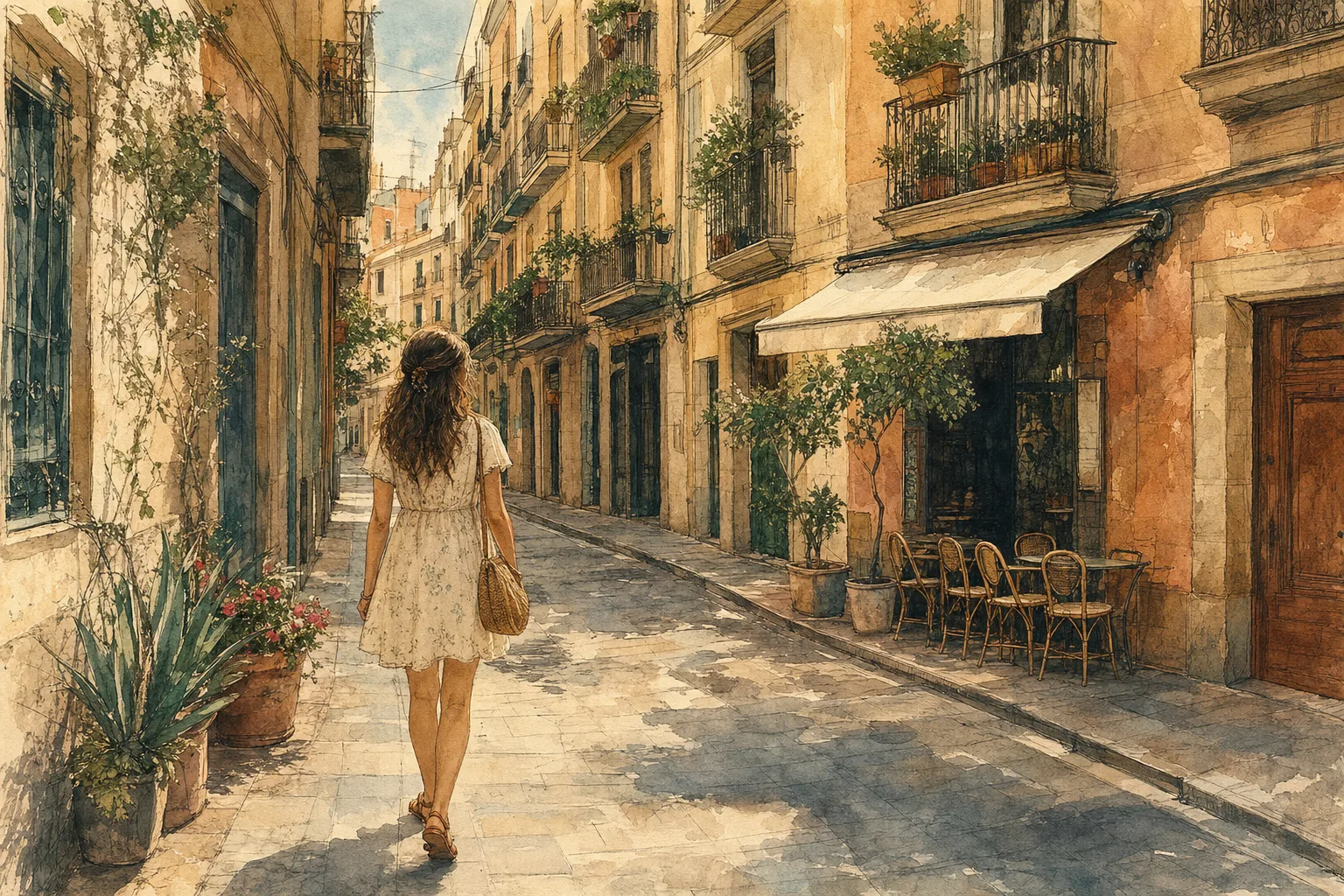
By Trip Persona Editorial Team. Last updated July 17, 2026.
An atmosphere-first Barcelona trip succeeds or fails on one distinction: do you want a city that feels beautiful while you are moving through it, or do you want famous things that prove why you came? Barcelona can absolutely deliver the first version. The problem is that it markets the second one louder. If you book the trip around the postcard icons, the atmosphere gets squeezed into whatever time is left after tickets, queues, and cross-city transfers.
That makes this a decision about friction, not taste. A traveler who cares about mood over monuments is really asking whether Barcelona lets them spend most of the day inside neighborhoods that feel good without constantly being pulled back toward obligation landmarks. The answer is yes, but only if you choose districts and trip length that protect the city from its own headline attractions.
Quick Verdict
Barcelona is a strong fit if you measure a trip by mood, street rhythm, and the way an evening feels, rather than by how many landmarks you ticked off. The city's atmosphere is dense, walkable, and concentrated in neighborhoods like Gracia, El Born, and Poble Sec, where you can spend a full afternoon doing almost nothing and still feel like the trip is working.
It is a weak fit if you secretly need landmark proof to feel like a trip counted. Barcelona's most famous sights are spread across the city, they carry queues and timed tickets, and the friction of reaching them can crowd out the atmosphere you actually came for. If you would feel guilty skipping Sagrada Familia, this article is not pushing you to skip it. It is helping you decide whether the atmosphere-first version of Barcelona is what you really want.
Strong fit if: you plan in half-days, you repeat cafes, you would rather walk a neighborhood twice than visit two new ones. Weak fit if: you book by attraction count, you feel anxious without a daily plan, you travel mainly to photograph famous architecture head-on.
If you fall on the weak-fit side, Seville, Valencia, or Lisbon will likely give you a better atmosphere-to-effort ratio than Barcelona. More on why in the final section.
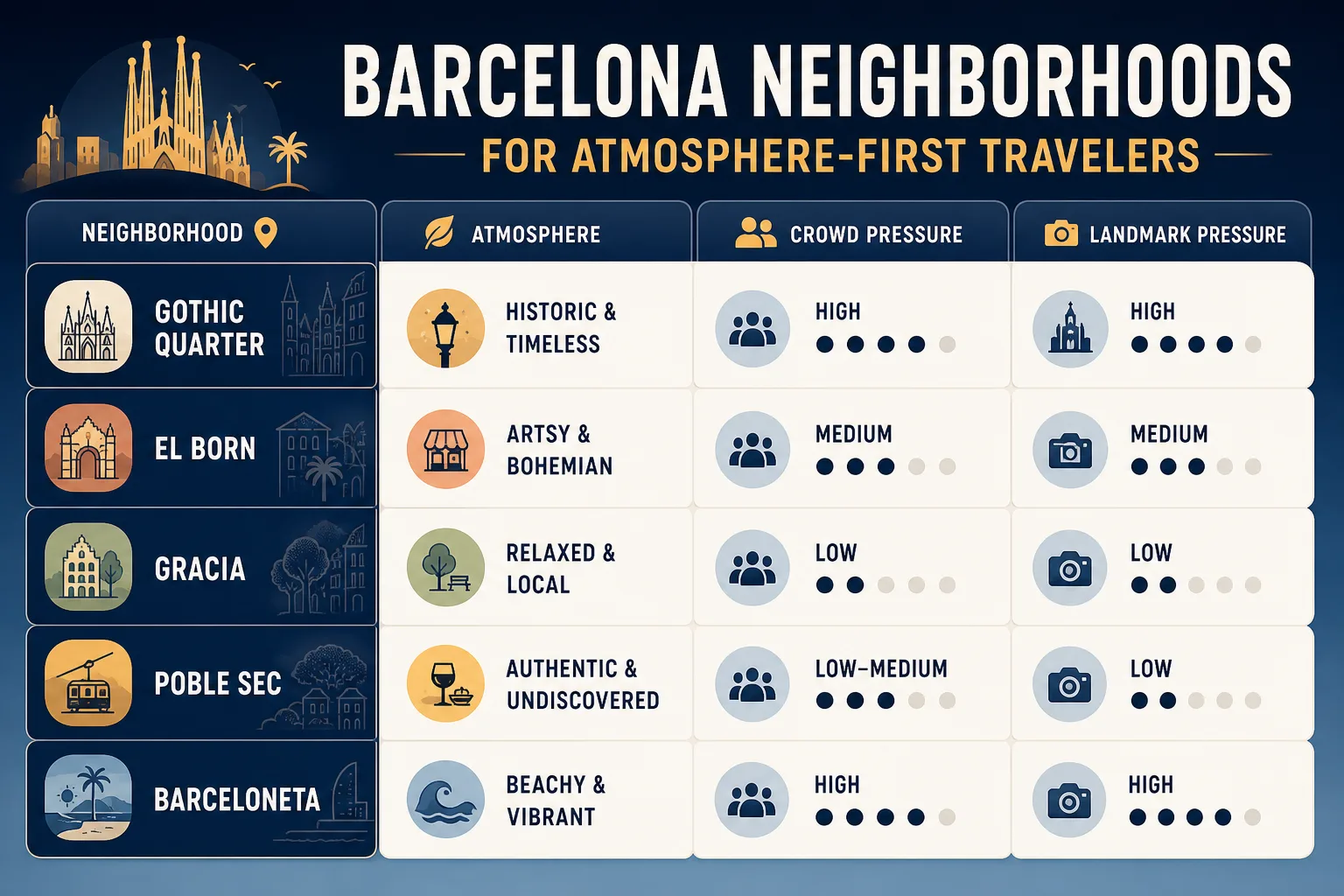 An infographic comparing five Barcelona neighborhoods by atmosphere, crowd pressure, and landmark pressure.
Traveler Type Table
The decision is less about Barcelona as a whole and more about which Barcelona you book. Use this to match your traveler type to a base neighborhood and a daily rhythm.
| Traveler type | Best base neighborhood | Daily rhythm that works | Main friction to manage |
|---|---|---|---|
| Atmosphere-first | Gracia or Poble Sec | One neighborhood per half-day, long evenings | Crowds in the Gothic Quarter |
| Photography-led | El Born or Gracia | Early-morning walks, golden-hour returns | Landmark queues eating shooting time |
| Slow traveler | Gracia | Repeat cafes, no more than one landmark per day | Overplanning by day two |
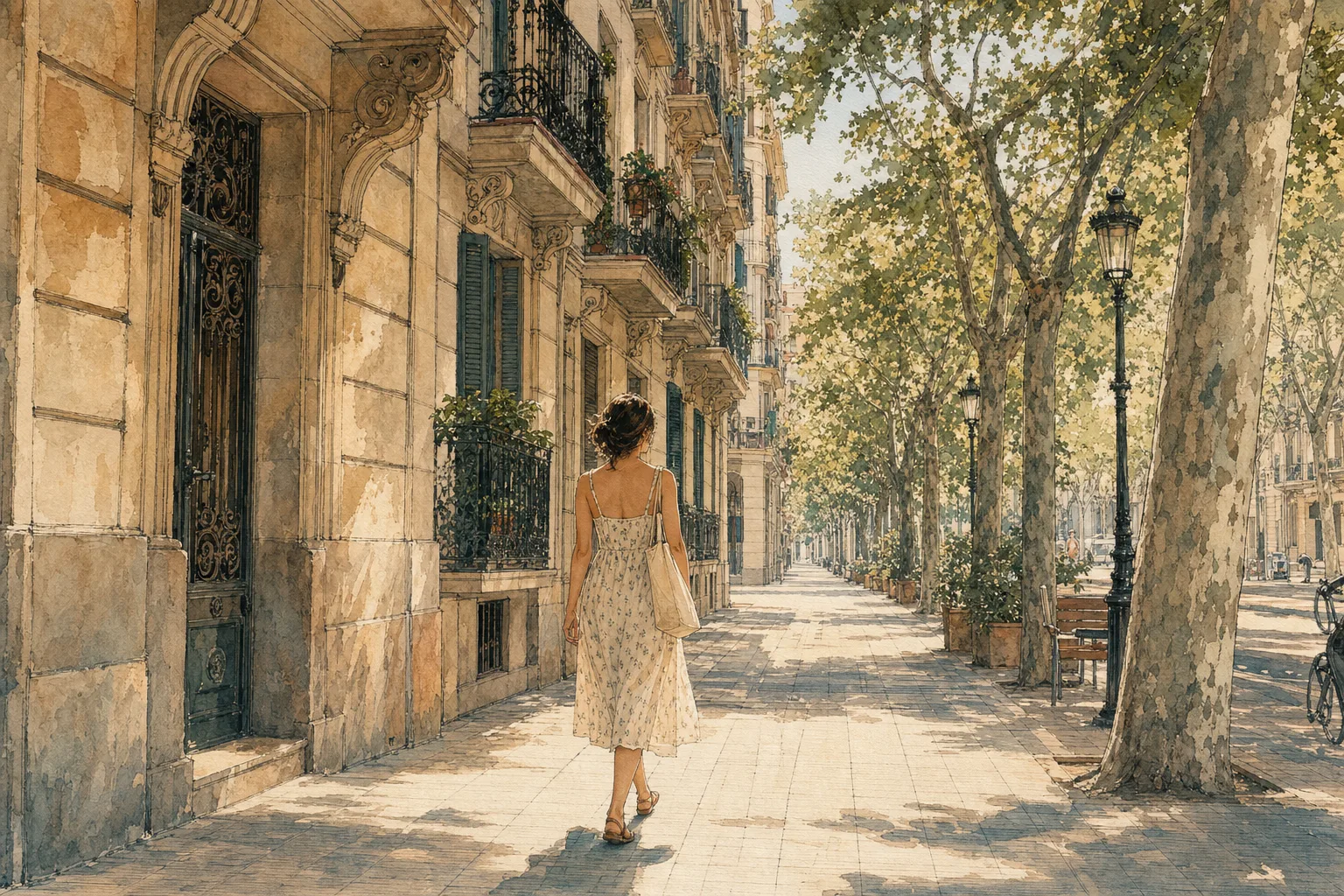
Three things worth knowing before you pick a base. Gracia has less traffic and a quieter atmosphere than other central areas, and in August it hosts the Festa Major de Gracia, which is the city at its most lived-in. Poble Sec, especially along Carrer de Blai, is known for local tapas bars and a vibrant evening scene that feels less tourist-shaped than the old city. El Born sits right next to the Gothic Quarter, with negligible walking distance between them, so you get old-city atmosphere without committing to the most saturated streets.
A quick atmosphere-versus-landmark check by neighborhood:
- Gothic Quarter: high atmosphere on paper, high tourist traffic in practice, best visited early or late.
- El Born: dense, walkable, strong evening mood, an easy 15 to 20 minute walk to Barceloneta beach.
- Gracia: quieter, more local, best for slow travelers and repeat visitors.
- Poble Sec: authentic evening feel, low landmark pressure, strong tapas culture along Carrer de Blai.
- Barceloneta: lively, beach-adjacent, can feel saturated in peak season.
Best for First-Time Visitors
First-time visitors are the hardest group to advise here, because landmark pressure is highest on a first trip. The honest read: Barcelona rewards a first-time atmosphere-first visitor more than most major European cities, because the mood is not hidden behind a museum door. It is on the street, in the cafe, in the way a plaza fills at 9 pm.
If you are an atmosphere-first first-timer, give yourself permission to pick one or two landmarks, not five. Treat them as anchors, not as the trip. A photography-led first-timer should plan around light, not opening hours, which usually means early-morning Gothic Quarter and golden-hour Gracia rooftops rather than mid-day landmark queues. A slow traveler on a first trip should resist the urge to cover the city, and instead pick one neighborhood to know well.
The mismatch to avoid on a first visit is treating Barcelona like a checklist city. It will punish that approach with heat, walking fatigue, and crowd friction, and you will leave thinking the city was overrated, when really you booked the wrong version of it.
Best for Couples
Couples are often the best-fit group for atmosphere-first Barcelona, because the city's strongest hours are the ones couples already optimize for: late afternoon, dinner, and the slow walk after.
- Atmosphere-first couples should base in El Born or Gracia, eat late, and keep one evening fully unplanned.
- Photography-led couples should pick a neighborhood with strong evening light (Gracia, Poble Sec) and accept that the iconic landmark shots will be busier than the feed suggests.
- Slow-traveling couples should book four nights, not three, and repeat at least one restaurant. The second visit is usually where Barcelona starts feeling like yours.
The friction couples most often hit is overplanning the daytime and underplanning the evening. Barcelona's atmosphere is disproportionately an evening product. If you spend your energy on midday landmarks, you will be too tired for the part of the day that actually delivers.
Best for Slow Travelers
This is the group Barcelona quietly serves best, and the group most likely to come home calling it a favorite.
A slow traveler should ignore the standard three-day itinerary. Pick one base, ideally Gracia, and treat the rest of the city as occasional day trips from your own neighborhood. Use the metro lightly. It runs every 2 to 4 minutes at peak with a maximum five-minute wait, and operates from 5 am until midnight on weeknights, until 2 am on Friday and holiday eves, and continuously all night on Saturdays, which means evenings out are genuinely low-stress.
For atmosphere-first slow travelers, the rule is one intentional thing per day, plus unstructured time. For photography-led slow travelers, return to the same street at three different hours instead of visiting three different streets once. For slow travelers who also value cost control, this style of trip is cheaper, because you are not stacking ticketed attractions.
The main risk is boredom guilt on day three, the quiet voice that says you should be doing more. Ignore it. That is the day Barcelona usually starts working.
Best for Niche Interests
Atmosphere-first travel becomes easier to plan when the mood is attached to something you already enjoy. In Barcelona, a few niche interests can give an unstructured afternoon just enough direction without turning it into another checklist.
Natural Wine Bars and Vermuteria Culture
Travelers curious about Barcelona natural wine bars can use El Born as a loose evening anchor, moving through its compact streets without committing to a formal tasting itinerary. The neighborhood's vermuteria culture also suits a slower rhythm: stop for vermouth before dinner, then stay nearby rather than crossing the city for the next reservation.
Independent Design Shops and Concept Stores
Barcelona independent design shops are a good fit for travelers who notice materials, displays, and small creative details more than major monuments. El Born has the stronger browsing rhythm, while the Gothic Quarter works best early in the day, when its narrow streets and small storefronts are easier to appreciate before crowd pressure builds.
Specialty Coffee
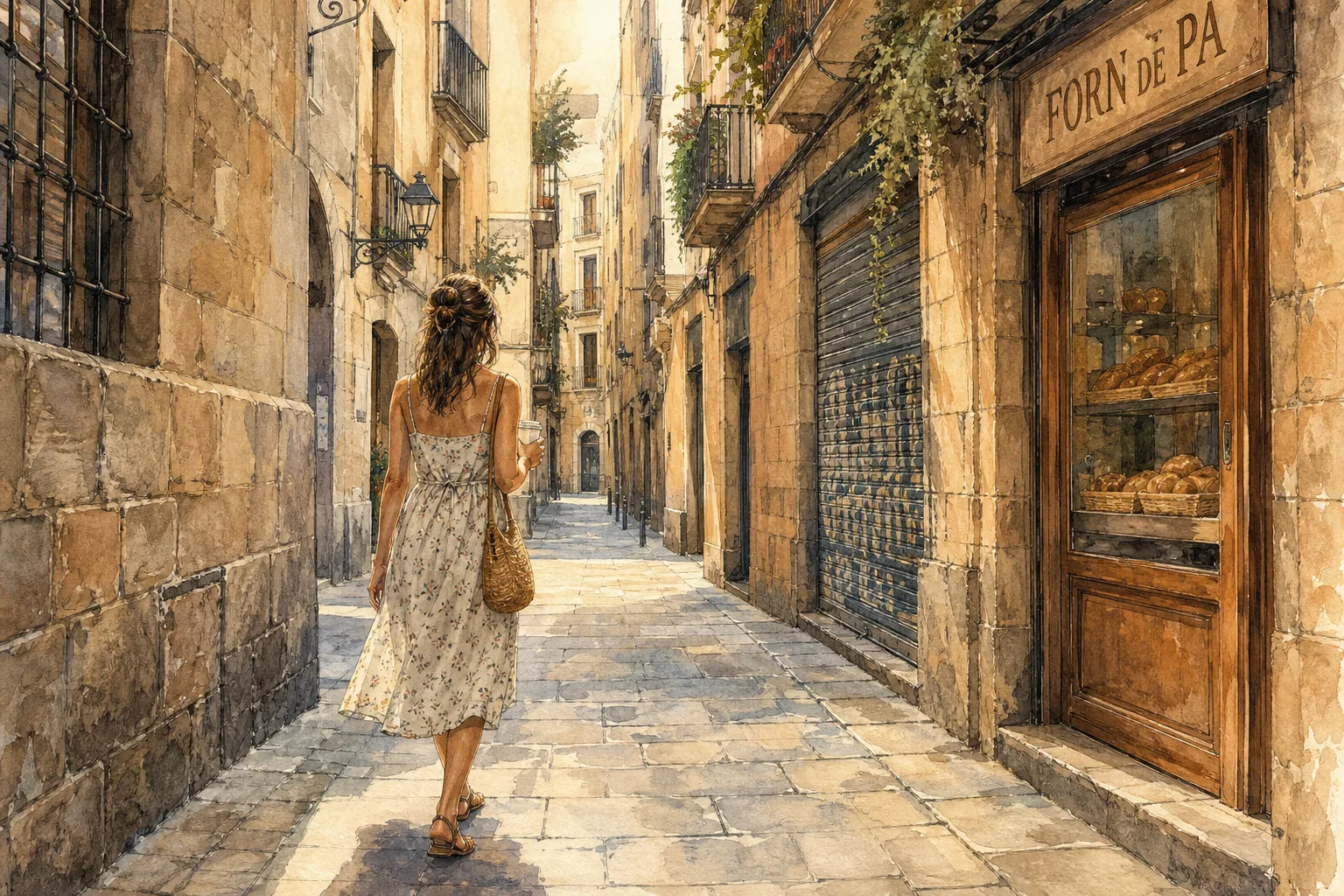
Barcelona specialty coffee gives a morning wander a natural starting point without dictating the rest of the day. Begin around El Born, then drift toward the Gothic Quarter while the lanes are still relatively quiet; the point is less to collect cafes than to let one good stop set the pace for the neighborhood.
Best for Low-Stress Travelers
Low-stress travelers can absolutely enjoy Barcelona, but only if they pre-decide the friction points instead of discovering them on the ground.
Arrival is the first one. From Barcelona-El Prat Airport (BCN), the Aerobus reaches Placa de Catalunya in about 35 minutes, departing every 5 to 15 minutes, with a one-way ticket at 10.25 euros and a return at 16.50 euros. The L9 Sud metro line also connects the airport, takes roughly 30 to 40 minutes with a transfer, and costs around 5.15 euros one-way. If you are buying a Hola Barcelona Travel Card anyway, the airport metro is included. For 2026, that card is 16.83 euros for 48 hours (17.77 online), 24.48 euros for 72 hours (25.94 online), and 38.20 euros for 120 hours (41.42 online). For a low-stress traveler, prepaying the card and using L9 Sud is usually the calmer decision because it removes one ticket purchase on arrival.
Pre-arrival low-stress checklist:
- Hotel within a 10-minute walk of dinner options
- Hola Barcelona Travel Card bought online before landing
- At most one ticketed landmark booked per day
- One unplanned afternoon held open per three nights
- Return Aerobus or L9 timing confirmed the night before departure
The friction to manage is expectation mismatch. If you arrived expecting calm Mediterranean ease and booked a hotel on La Rambla, you will be stressed by 4 pm on day one. Location choice does more for stress than itinerary discipline.
Common Mismatches
The atmosphere-first mismatch in Barcelona is usually not "too many tourists" in the abstract. It is booking the trip around the wrong proof of value.
- The "I love atmosphere, but I still need landmark proof" traveler. They tell themselves they are coming for the vibe, then stack six paid sights into three days so they will not feel they "missed Barcelona." By day two, the trip is all timed entry, heat, and transit fatigue. For this traveler, Seville often works better because the old-quarter atmosphere is denser and less dependent on cross-city movement.
- The "atmosphere will happen anywhere" traveler. They book a cheaper room far from Gracia, El Born, or Poble Sec, spend the trip commuting back toward mood, and conclude Barcelona had no emotional payoff. The city did. They just slept outside the part that delivers it.
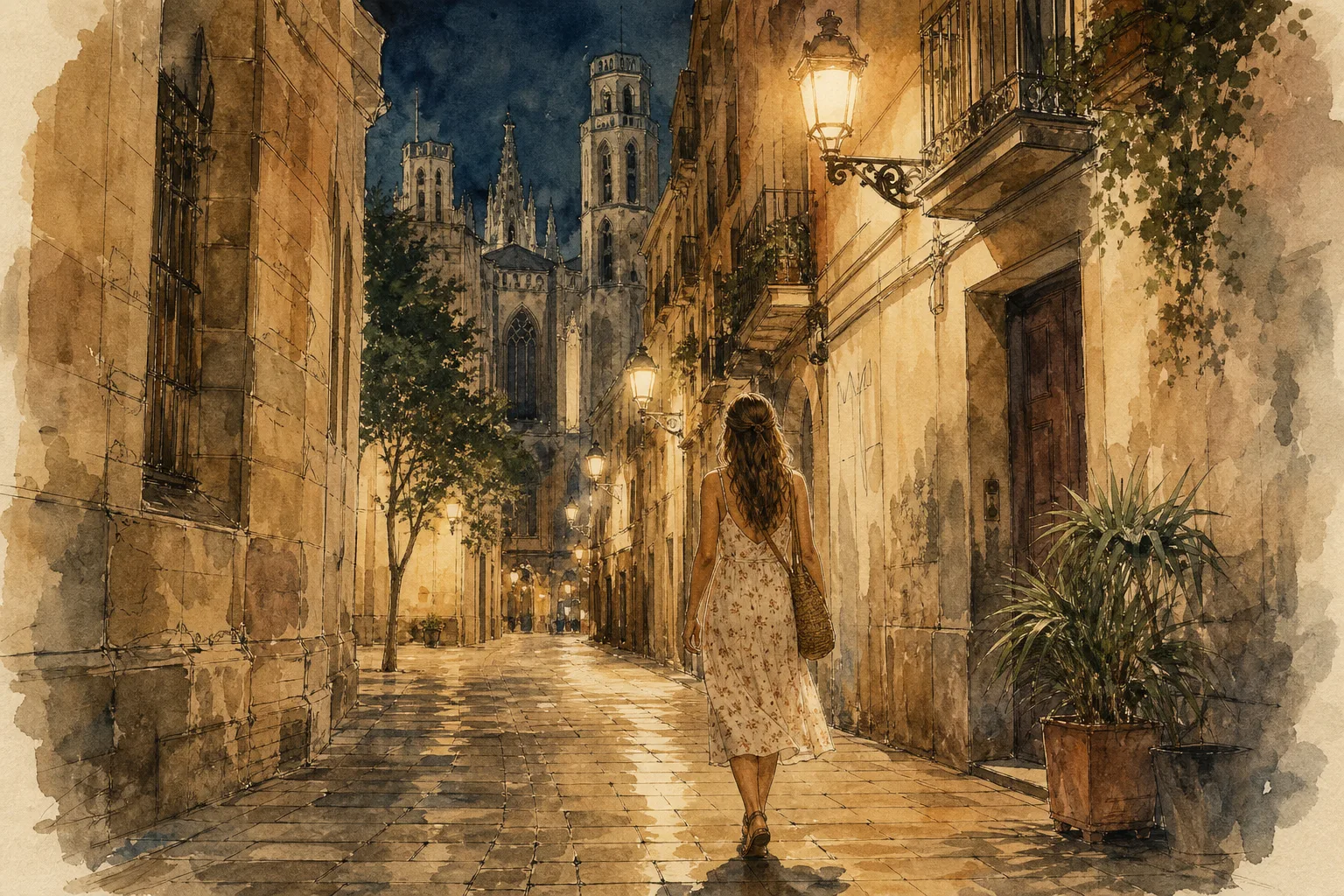
- The Gothic Quarter assumption. They expected the most atmospheric neighborhood and instead met the most tourist-trafficked one in peak hours. Atmosphere-first travelers should treat the Gothic Quarter as an early-morning or late-evening visit, not a midday wander.
- The two-night trip. Two nights forces optimization, which kills the atmosphere-first version of the trip. With only two nights, Valencia delivers a similar Mediterranean-tapas mood with less ground to cover and less pressure to see the famous things.
- The peak-summer Barceloneta booking. Beach-adjacent and lively is great in theory and loud in practice during peak season. If beach plus calm is the goal, Lisbon's coastal neighborhoods or Valencia's Cabanyal will read better than Barceloneta in August.
If you see yourself in two or more of these, the issue is not whether Barcelona is worth it. The issue is that you are about to book the landmark-first version of the trip while telling yourself it is the atmosphere-first one.
Final Match Recommendation
Book Barcelona if you are willing to design the trip around evenings, neighborhoods, and repetition rather than around a sight list. Stay three to four nights minimum. Base in Gracia, El Born, or Poble Sec, in that order of preference for atmosphere-first travelers. Pick at most two landmarks, treat them as anchors, and let the rest of the time stay unstructured.
Skip Barcelona, or push it to a different trip, if you only have two nights, if your travel companion needs landmark proof to feel the trip counted, or if peak summer heat plus crowds will erode your patience before the city's best hours start. In those cases, three specific alternatives are worth considering:
- Seville. Best for landmark-fatigued travelers who still want a dense, walkable old quarter. The atmosphere is concentrated in a smaller footprint, evenings are the main event, and you can drop the famous-sight checklist with less guilt.
- Valencia. Best for low-stress and budget-led travelers who want the Mediterranean-tapas feel without Barcelona's crowd pressure. Shorter distances, lower prices, and a beach neighborhood (Cabanyal) that stays human-scale in summer.
- Lisbon. Best for slow travelers and photography-led travelers who want hill, tile, and light without a single mandatory landmark hanging over the trip.
The honest verdict: Barcelona is one of the few major European cities where the atmosphere-first version is the better trip, not the consolation prize. If that is your travel style, the answer to the title question is yes, with the caveat that you have to book it on purpose. If it is not, Seville, Valencia, or Lisbon will reward you more for the same week off.
FAQ
Is Barcelona worth visiting if I skip Sagrada Familia and Park Guell? Yes, if your trip is built around neighborhood time, evening tapas streets, and slow walks. Barcelona's atmosphere lives mostly in Gracia, El Born, and Poble Sec, none of which require ticketed landmarks. You will not feel like you missed the city if you trade two landmark days for two unstructured neighborhood days.
How many days do I need in Barcelona for an atmosphere-first trip? Three to four nights is the sweet spot. Two nights forces you back into landmark mode because you start optimizing. Four nights lets you repeat a cafe, revisit a street at a different hour, and let the city settle, which is the entire point if mood matters more than monuments.
Which Barcelona neighborhood should I stay in if I want mood over sights? Gracia if you want a quieter, more local rhythm and do not mind a short metro ride into the old city. El Born if you want to walk everywhere and like dense, lived-in streets. Poble Sec if evening tapas along Carrer de Blai and a less tourist-heavy feel matter most. The Gothic Quarter looks atmospheric but can feel saturated in peak season.
If Barcelona is the wrong fit for me, where should I go instead? Seville if you want a denser, smaller old quarter and a gentler landmark load. Valencia if you want the same Mediterranean and tapas mood at a calmer pace and lower cost, especially on a short trip. Lisbon if you want strong atmosphere and photography light without any single mandatory sight. All three reward atmosphere-first travel with less friction than Barcelona in peak season.
Is Barcelona too crowded to enjoy if I want a slow, moody trip? It can be, but the crowding is concentrated. The Gothic Quarter, La Rambla, and the Sagrada Familia area carry most of the pressure. If you base yourself in Gracia or Poble Sec and treat the old city as an early-morning or late-evening visit, the crowd problem mostly disappears.
Is Barcelona worth the cost if I am not chasing landmarks? Often yes, because the atmosphere-led version of Barcelona is cheaper than the landmark-led version. You skip ticket stacks, skip-the-line fees, and tour costs. Your spending shifts to cafes, neighborhood meals, and transit, which gives a stronger emotional payoff per euro for this traveler type.