where-to-stay
Where to Stay in Barcelona on a First Trip If You Want Low Walking Stress
A decision-led base guide for first-time Barcelona visitors who want easy Gaudi access, manageable transit, and a forgiving daily walking load. Compares Eixample, Gothic Quarter, and other key neighborhoods by terrain and metro coverage.

Barcelona's main sights are not in one place. Sagrada Familia is in the Eixample grid, Park Guell is on a hill north of the center, the Gothic Quarter is a separate dense cluster near the water, and Montjuic is another hill entirely. No single hotel location puts all of these within easy walking distance. The decision, then, is not "which neighborhood is central" but "which neighborhood keeps the most friction off the hardest days."
Quick Answer
For most first-time visitors who want low walking stress, the best base is Eixample, ideally near Passeig de Gracia station (served by metro lines L2, L3, and L4).
- Choose this approach if you tire easily, want easy metro access to Sagrada Familia and the Gothic Quarter, and prefer wide flat pavements over cobblestone lanes.
- Consider Gothic Quarter or El Born instead if the medieval atmosphere is the main reason you are coming, and you are prepared to accept more uneven footing in exchange for it.
The single most useful move: book within a 5 minute walk of Passeig de Gracia metro station, not just within "Eixample" as a general area.
 How four central Barcelona neighborhoods compare on walking effort, terrain, and metro coverage for first-time visitors.
Hotel Location Risk Summary
Barcelona's specific friction for low-walking travelers is different from most European cities:
- The top sights are geographically spread. Sagrada Familia to the Gothic Quarter is about 2 kilometers. Gothic Quarter to Park Guell is 4 kilometers and uphill. A base that cuts the distance to one area adds it for another.
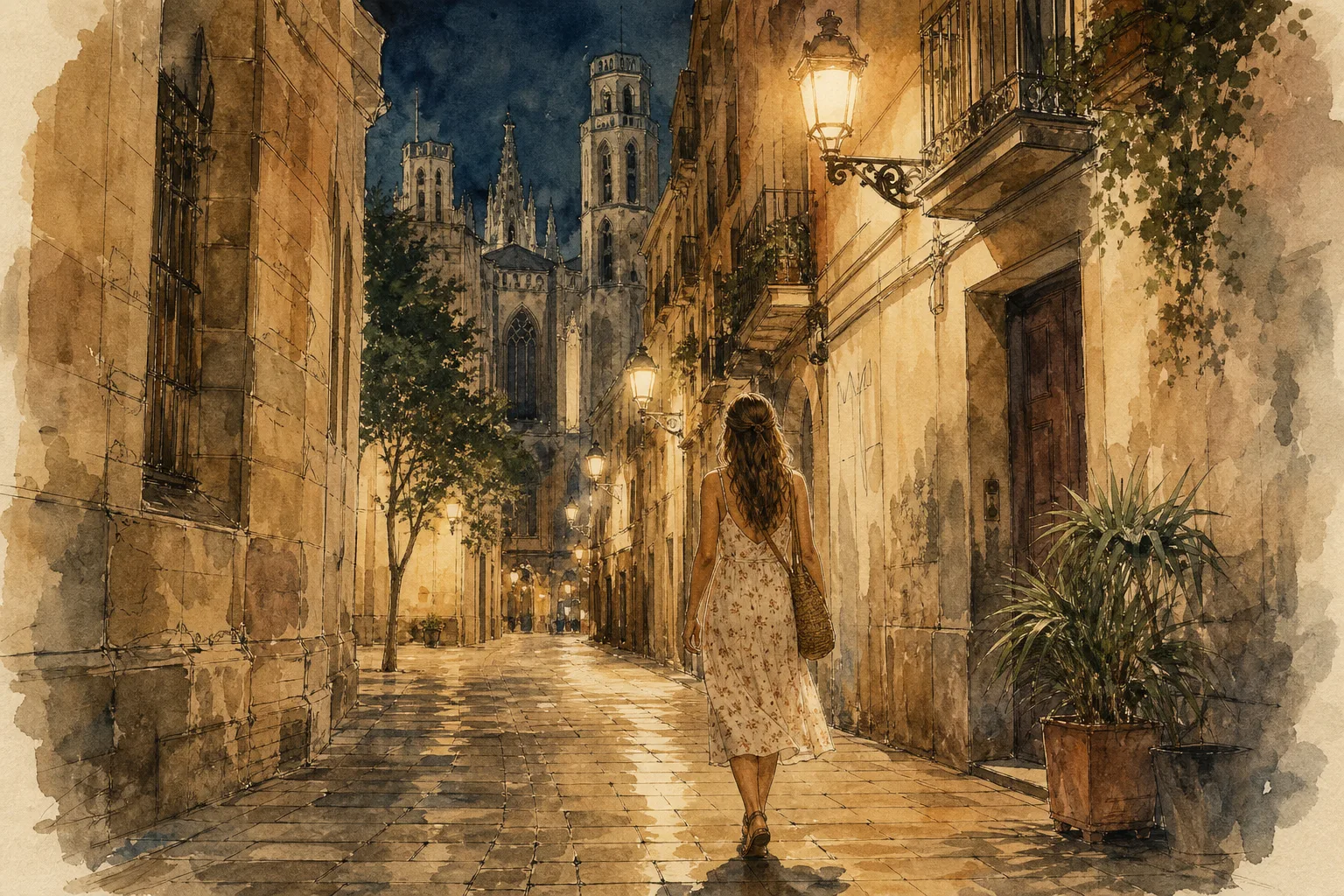
- Cobblestones in the Gothic Quarter and El Born compound fatigue. Narrow medieval lanes with uneven stone are harder to navigate than smooth grid streets, even for short distances.
- Park Guell and Montjuic both end with real hills. Park Guell's lower free access zone and upper ticketed terrace involve an uphill approach regardless of where you start. Montjuic requires a cable car, funicular, or bus to skip the climb.
- Metro elevator coverage is around 94 percent across the network, but not every transfer point has smooth access. Check your specific station before assuming barrier-free travel.
- August heat amplifies all other friction. Outdoor walks that are manageable in May become significantly harder at 30 to 33 C in peak summer.
If two or more of these apply to your trip, choose a metro-adjacent Eixample base and plan transit routes before each day rather than navigating on foot between neighborhoods.
Best Areas at a Glance
| Area | Metro access | Walking effort | Terrain | Best for |
|---|---|---|---|---|
| Eixample (near Passeig de Gracia) | L2, L3, L4 at one station | Very low | Flat grid, wide pavements | Maximum metro coverage, Gaudi access |
| Gothic Quarter | L3 (Liceu, Jaume I) | Low to moderate | Narrow cobbled lanes | Medieval atmosphere, walk to El Born |
| El Born / Sant Pere | L4 (Barceloneta, Jaume I) | Low | Mix of smooth and cobbled | Beach proximity, design area |
| Gracia | L3 (Diagonal, Fontana) | Moderate | Slight uphill toward Park Guell | Local feel, more daily walking |
| Barceloneta / Port | L4 (Barceloneta) | Moderate | Flat beach area but distant from Gaudi | Beach-first travelers |
The pattern: Eixample trades atmosphere for practicality and wins on transit access. Gothic Quarter trades practicality for immersion and is best for travelers who want to live inside the medieval lanes regardless of friction.
Best Area by Traveler Type
First-time visitors who want Gaudi plus old town
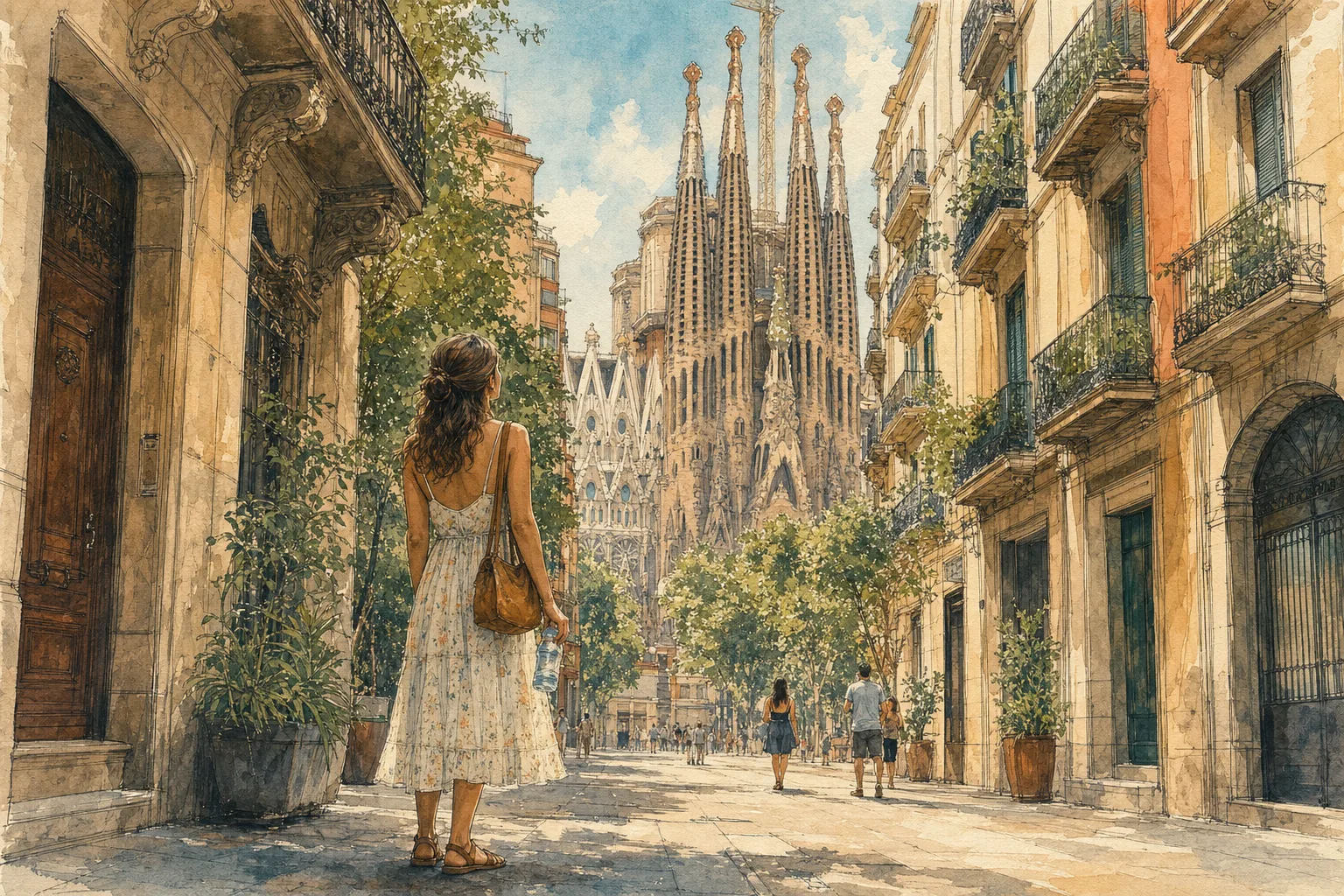
Pick Eixample near Passeig de Gracia. You can walk to Sagrada Familia in 20 to 25 minutes on flat grid streets, take the L3 to the Gothic Quarter area in 5 minutes, and access Park Guell by metro with a final uphill walk or optional bus. This is the most flexible base.
Low-stamina or low-walking travelers
Pick Eixample and plan transit-first days. The flat Eixample grid is the most forgiving surface in Barcelona. Pair it with a hotel that has an elevator, check that your specific metro station has accessible exits, and use taxis or ride-hailing for the Park Guell approach if the hill is a concern.
Older travelers or travelers with mobility considerations
Pick Eixample near Passeig de Gracia or Diagonal, and verify elevator access at your specific station. As of 2026, around 94 percent of Barcelona metro stations have elevators, with full coverage targeted between 2027 and 2030. The Sagrada Familia station and Passeig de Gracia station both have accessible exits, but confirm for your specific hotel vicinity.
Families with children or strollers
Pick Eixample or El Born. Eixample's wide sidewalks are the most stroller-friendly surface in Barcelona. El Born is compact and manageable if you are based near Barceloneta, with easy beach access. Avoid booking in the Gothic Quarter if strollers or small children are in the group: the cobbled, narrow lanes are genuinely difficult.
Areas to Be Careful With
These neighborhoods appear frequently in Barcelona travel content but add friction for low-walking first-timers.
- Gothic Quarter south end (near Drassanes). The northern Gothic Quarter near the Cathedral is manageable. The southern blocks toward Drassanes have persistent petty crime reports and narrow, gloomy lanes. If you stay here, research your specific street rather than booking by neighborhood name.
- Gracia. Charming, local-feeling, and popular in lifestyle travel content. But it sits above the Eixample grid and is a 20 to 25 minute walk or bus from Sagrada Familia. Fine for travelers who want a neighborhood base, not ideal for maximizing first-timer sightseeing efficiency.
- Barceloneta. Great if a beach base is the priority, but Sagrada Familia is a 35 to 40 minute metro ride, and the beach atmosphere comes with crowd density in summer that adds its own fatigue.
- Any "Eixample" hotel that is actually near Passeig de Gracia but on a north-south street past Avinguda Diagonal. Upper Eixample adds real distance from the Gothic Quarter without equivalent benefits.
Budget vs Convenience Tradeoff
Barcelona is one of the most expensive cities in Spain for accommodation. The tradeoff between convenience and cost is real:
- Eixample near Passeig de Gracia: Premium pricing, especially in modernist buildings and design hotels. But the metro coverage and flat terrain mean fewer taxi rides as a supplement.
- Gothic Quarter: Mix of boutique hotels and mid-range options. Often cheaper than Eixample near Passeig de Gracia for comparable rooms, but the cobblestone fatigue is real, especially over multiple days.
- El Born: Good mid-range options with beach proximity. The metro is slightly less convenient than Eixample for Gaudi sites specifically.
- Further from center: Any hotel outside the Eixample-Gothic Quarter-El Born triangle that looks affordable on price comparison sites will add 30 to 45 minutes of daily transit, effectively trading money for time and energy.
A useful frame: a taxi from a poorly-placed hotel to Sagrada Familia costs 8 to 15 euros each way. Over four days with two Gaudi-heavy visits, that is 32 to 60 euros in avoidable taxis. A better-placed hotel often justifies the difference.
Hotel Location Checklist
Before you book, run the specific hotel address through this list:
- Is the hotel within a 5 minute walk of a metro station with elevator access?
- Does that station connect to L3 (for Sagrada Familia and Park Guell area)?
- Is the street in front of the hotel smooth or cobbled?
- Is the hotel's immediate neighborhood safe to walk after dark?
- Can I reach the Gothic Quarter and Sagrada Familia with at most one metro change?
- How far is the nearest taxi rank or reliable ride-hailing pickup point?
- Is there a timed-entry booking system for Sagrada Familia that I have already used, so I am not locked out on arrival?
- Is the hotel in the cooler half of its building or does it face west in a city where August afternoons reach 30 to 33 C?
If you check fewer than six of these, the hotel may look well-located but will likely add friction on your hardest sightseeing days.
Final Recommendation
For a first Barcelona trip where minimizing walking stress is the priority, book in Eixample near Passeig de Gracia station if the three-metro-line access matters, or in El Born if you want a base closer to the beach and the medieval quarter with a slightly less crowded feel.
- Choose Eixample if your trip centers on Gaudi sites, you want maximum metro flexibility, and wide flat pavements matter to you.
- Choose Gothic Quarter if the medieval atmosphere is the primary reason for the trip and you accept that cobblestones are part of the experience.
- Avoid booking a hotel in Gracia, upper Eixample, or Barceloneta for a museum-and-sights first trip where daily walking load is a concern.
The mistake to avoid: choosing a neighborhood because it photographs well and then discovering on day two that every Gaudi visit starts with a 30 minute walk before the sightseeing begins.
Deciding whether Barcelona is even the right fit versus Madrid? See Barcelona vs Madrid for travelers who hate long walking days before locking in your destination.
FAQ
Is the Gothic Quarter a good base for minimizing walking? It depends. The Gothic Quarter puts you within 10 to 15 minutes of the Cathedral, Las Ramblas, and El Born on foot. The problem is terrain: narrow, uneven cobblestone lanes compound fatigue even on short distances. For low-stamina travelers, Eixample is a better base because wider pavements and a flat grid reduce cumulative friction, even though individual distances to Gaudi sites are similar.
Which Barcelona metro lines matter most for a first-time visitor? L2 and L3 are the most useful for typical sightseeing. L3 connects Passeig de Gracia to Sagrada Familia and the Park Guell area. L2 connects to El Born and Barceloneta beach. Passeig de Gracia station serves L2, L3, and L4 together, making it the most connected single point in the city.
Can I walk from a hotel in Eixample to Sagrada Familia? Yes. From most Eixample hotels near Passeig de Gracia, Sagrada Familia is roughly 20 to 25 minutes on foot along flat grid streets. The walk to Park Guell is longer (40 to 60 minutes) and ends uphill, so most low-walking travelers use the metro and a short final walk or bus for Park Guell.
How long does it take to get from Barcelona El Prat Airport to the center? The Aerobus express coach runs every 5 to 10 minutes and takes about 35 minutes to Placa Catalunya, costing around 6.75 euros per adult. A taxi to Eixample typically costs 30 to 40 euros and takes 25 to 40 minutes depending on traffic. For travelers with heavy luggage on arrival day, the taxi often makes more sense.
Is August a bad time to visit Barcelona for low-walking travelers? August is the hardest month. Temperatures regularly reach 28 to 33 C, humidity is high near the coast, and peak crowds hit Sagrada Familia and Park Guell. Late April to June or September to mid-October are significantly more comfortable for low-stamina travelers.