travel-decisions
Will Osaka Feel Too Expensive If You Care More About Experience Than Luxury?
A friction-first look at whether Osaka pushes experience-led travelers into budget regret, with concrete numbers on hotels, transit, street food, and 2025-2026 tax changes.
Quick Verdict
Osaka is a strong fit if you measure a trip by neighborhoods walked, food eaten, and atmosphere absorbed, and a weak fit if your idea of value is a polished hotel lobby and a tightly produced sightseeing schedule.
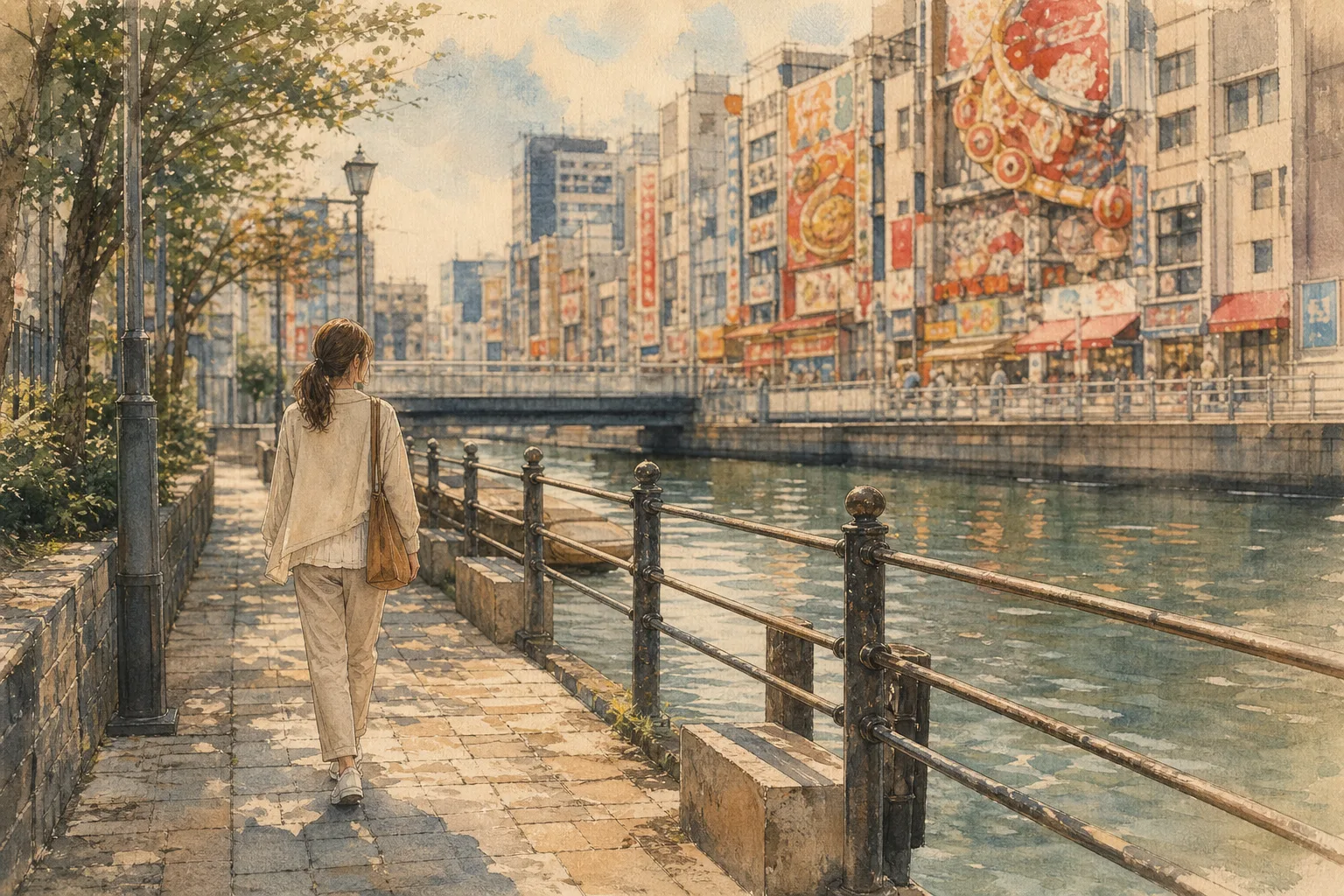
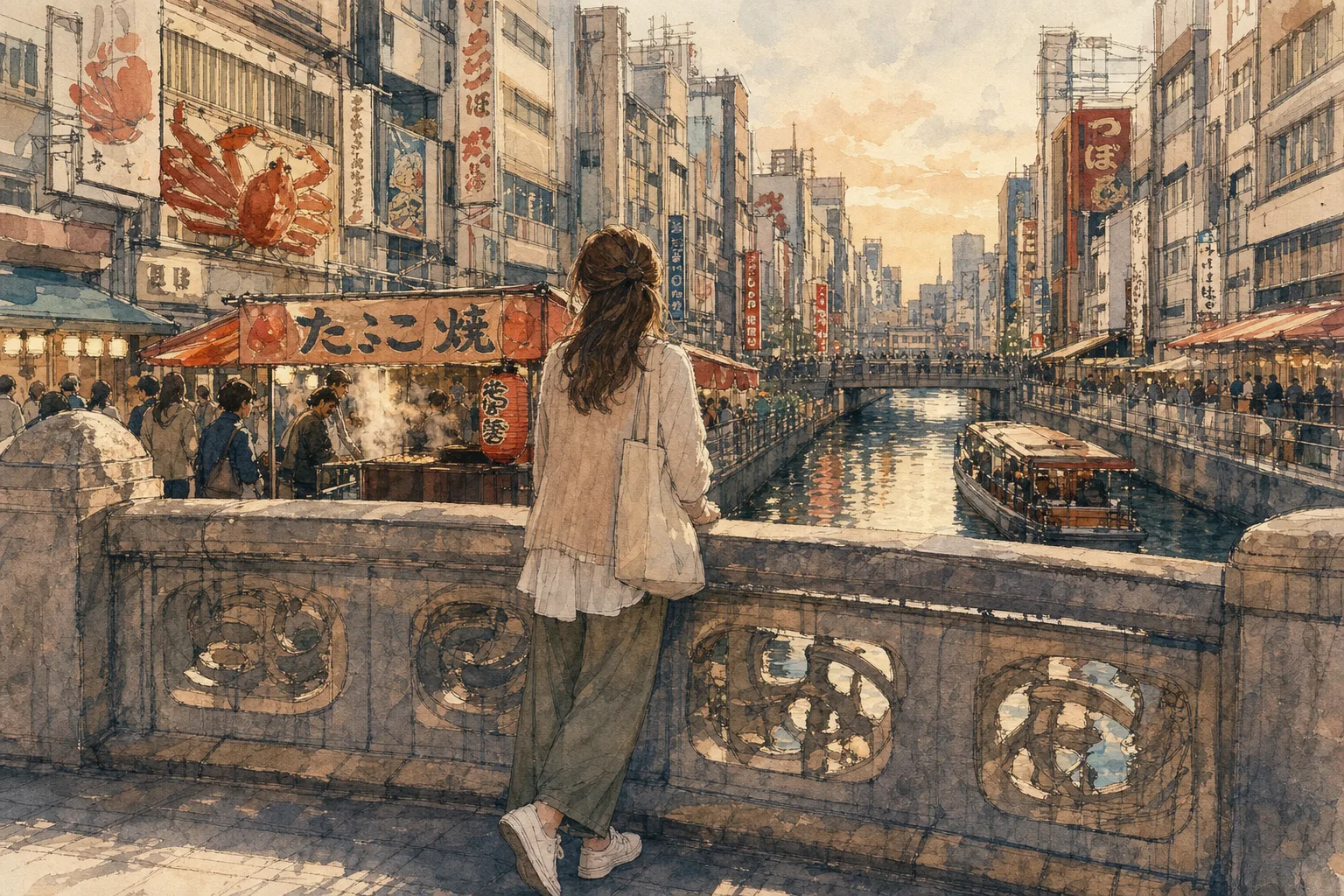
For experience-led travelers who want to spend mid-range but not luxury, Osaka usually delivers better experience-per-yen than Tokyo or Kyoto. Daily expenses, accommodation, and dining run roughly 15 to 30 percent cheaper than Tokyo, and the city's signature payoffs (Dotonbori, Shinsekai, Namba alleys, takoyaki stalls, standing bars) are inherently street-level rather than ticket-gated.
Skip Osaka, or at least shorten the stay, if you want hushed ryokan-style atmosphere, refined temple aesthetics, or hotels where the room itself is part of the experience. Kyoto and Kanazawa do that better at any price.
The Real Friction: Where Osaka Quietly Gets Expensive
The mistake experience-led travelers make in Osaka is assuming that because the food is cheap, the whole trip will be. Osaka's friction is not the headline cost. It is the stacking cost.
Four pressure points decide whether you leave feeling smart or slightly burned:
Budget pressure stacks from the wrong direction. Takoyaki at 450 to 700 yen for 6 to 8 balls and kushikatsu skewers at 150 to 300 yen each will not break you. What does is the hotel, the long-haul transit getting in and out, and the new layered taxes that arrive room by room and ticket by ticket.
Expectation mismatch is the silent killer. People arrive expecting Kyoto-style charm and find a loud, commercial, neon city built around eating and shopping. If you wanted serenity, you will resent paying anything. If you wanted energy, you will feel you got more than you paid for.
Hotel value is bimodal. Budget accommodations (hostels and capsule hotels) sit at 2,850 to 5,000 yen per night. Mid-range business hotels jump to 10,000 to 20,000 yen. There is not much in between that feels distinct, and the mid-range tier is where most experience-led travelers waste money on a generic room they barely use.
Crowd-linked price inflation hits during cherry blossom season, Golden Week, and the Osaka Expo overflow. Hotels that quote 12,000 yen in February quote 24,000 yen in early April, and the accommodation tax tier bumps up with them.
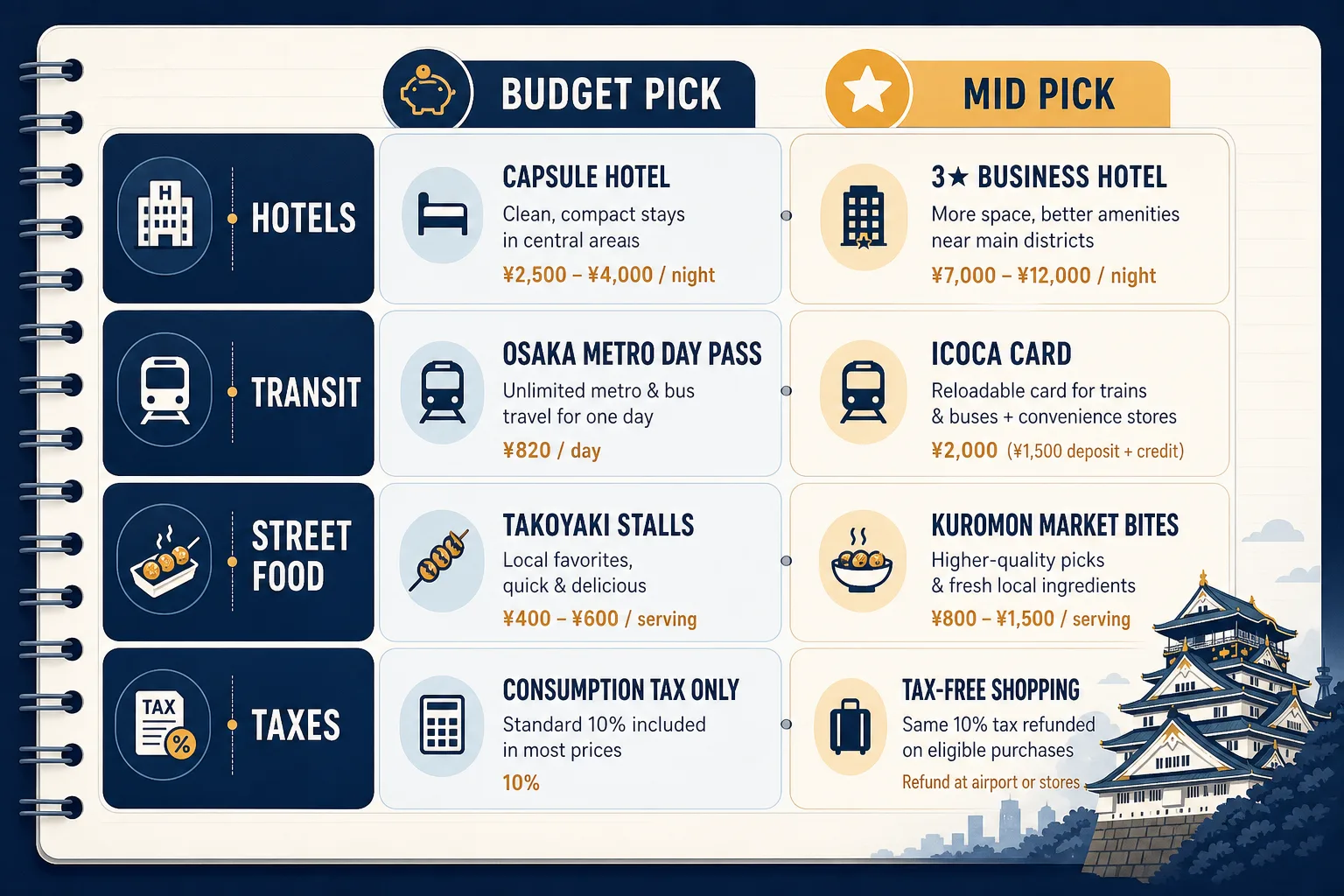
Friction Table: Where the Yen Actually Goes
| Category | Budget pick | Mid pick (experience-led) | Where it bites |
|---|---|---|---|
| Hotel | Hostel or capsule, 2,850 to 5,000 yen, tax-free under 5,000 yen | Business hotel near Namba or Shinsaibashi, 10,000 to 20,000 yen plus 200 to 400 yen nightly accommodation tax | Mid tier feels like overpaying for a room you only sleep in |
| Subway (Namba to Umeda) | Walk parts of the city center, 12 minutes Namba to Shinsaibashi | Midosuji Line direct, 8 to 10 minutes, 240 yen | Day pass only pays off above roughly 4 rides |
| Street food meal | Takoyaki 450 to 700 yen, kushikatsu 150 to 300 yen per stick | Same, plus one sit-down izakaya at 2,500 to 4,000 yen | Standing and eating at the stall is expected etiquette; walking while eating (tabearuki) is considered rude |
| Outbound flight tax | 1,000 yen per person (before July 1, 2026) | 3,000 yen per person (from July 1, 2026) | Easy to forget when comparing flight prices across dates |
| Tax-free shopping | Immediate register discount (until Oct 31, 2026) | Refund-on-departure at airport (from Nov 1, 2026) | After the change, budget extra airport time if you shop |
The pattern is clear. Osaka rewards travelers who spend on food and street experience and underspend on the room. It punishes travelers who do the reverse.
Who Will Feel the Cost Most
You will feel Osaka as expensive if:
- You book a mid-range hotel in a quiet area and then taxi or train into Namba every night. You are paying twice: for the room and for the transit back to where the trip actually is.
- You arrive expecting Kyoto aesthetics. Osaka will feel like you paid Kyoto prices for a city that does not match.
- You visit during cherry blossom peak (late March to April) without locking hotels months ahead. The accommodation tax also tiers up as your room price rises.
- You buy attraction passes by reflex. If your day is mostly walking and eating, a pass is dead weight.
You will feel Osaka as a bargain if:
- You sleep cheap, eat constantly, and stay walking distance from Namba, Shinsaibashi, or Umeda.
- You treat the city itself as the attraction and ration paid sights to one or two genuinely wanted ones.
- You travel as a couple and split one mid-range room while eating across many cheap counters, which is where Osaka's structure quietly subsidizes you.
How to Reduce the Friction
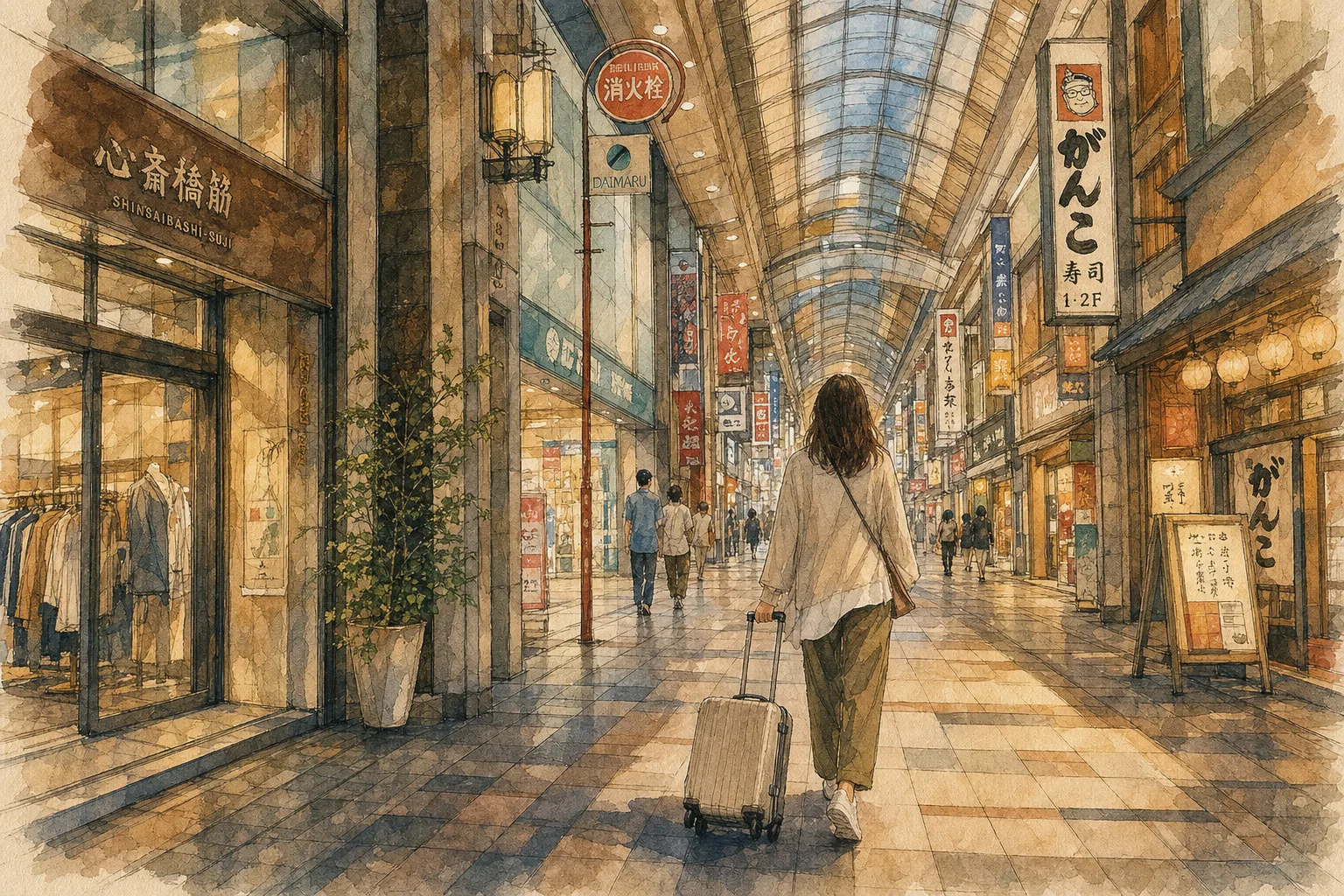
Pick a hotel by walking radius, not by price tier. A 4,500 yen capsule near Namba beats a 14,000 yen business hotel two stations out, for an experience-led trip. The 4,500 yen room is also under the accommodation tax threshold. Walking Namba to Shinsaibashi takes about 12 minutes (900 meters to 1.1 km). Namba to Shinsekai is 20 to 25 minutes on foot. If your hotel is inside that core, you barely need the subway.
Use the subway only when it actually saves real time. The Midosuji Line Umeda to Namba is 8 to 10 minutes for 240 yen, which is worth it. Namba to Shinsaibashi by subway is 1 minute for 180 to 220 yen, which is not, because you spend longer entering and exiting the station than walking would take.
Pre-decide your one paid attraction. Osaka Castle, the Aquarium, Universal Studios, or the Umeda Sky Building. Pick one, not three. The rest of the budget belongs in food.
Eat at the stall, not while walking. Beyond the etiquette point, standing at the counter usually means you order a second thing. That is how a 700 yen takoyaki snack becomes a 1,800 yen dinner without you noticing.
Time the tax changes. If your trip is before July 1, 2026, your outbound flight tax is still 1,000 yen per person, not 3,000. If you shop heavily and travel before November 1, 2026, you still get tax-free at the register rather than the new departure-refund process.
Better Alternatives If Osaka Does Not Fit
If the Quick Verdict pushed you toward the wrong-fit column, the cleaner moves are:
- Kyoto if you want atmosphere, temples, and the room itself as part of the experience. Slightly more expensive per night, much higher payoff if quiet aesthetic is what you wanted.
- Fukuoka if you wanted Osaka's food-and-streets energy at lower prices and smaller crowds, with easier access to Kyushu hot springs.
- Tokyo (Shimokitazawa, Yanaka, Shibuya backstreets) if your real interest was neighborhood texture rather than Osaka specifically. You pay 15 to 30 percent more per day but get a much wider experience surface.
- A split trip of two nights Osaka, three nights Kyoto. The Shinkansen and JR connections make this the most common solution for travelers who could not honestly pick one.
Decision Checklist
Run this before booking:
- My trip dates are outside cherry blossom peak, or I have already locked hotels.
- My hotel is within a 15-minute walk of Namba, Shinsaibashi, or Umeda.
- My hotel is either under 5,000 yen per night (tax-free) or I have accepted the 200 to 500 yen nightly accommodation tax.
- I have picked at most two paid attractions for the whole trip.
- I have checked whether my outbound flight is before or after July 1, 2026 (the 3,000 yen flight tax kicks in).
- If I plan to shop, I know whether my trip is before or after November 1, 2026 (tax-free system change).
- I am genuinely interested in food and street atmosphere, not expecting Kyoto-style quiet.
- I have budgeted at least 3,000 to 5,000 yen per day for food alone, because that is where the trip actually lives.
If you ticked six or more, Osaka will almost certainly feel like good value. Three or fewer, and you are likely booking the wrong city.
FAQ
Is Osaka cheaper than Tokyo for the same trip style? Yes, in most cost categories. Daily expenses, accommodation, and dining run roughly 15 to 30 percent cheaper than Tokyo. The gap is largest on mid-range business hotels and casual dining, smaller on attractions and trains.
Do I need to budget for new tourist taxes in 2026? Two changes matter. Osaka's nightly accommodation tax (effective September 1, 2025) adds 200 to 500 yen per night depending on room price, with rooms under 5,000 yen exempt. Japan's International Tourist Tax on outbound tickets rises from 1,000 to 3,000 yen per person on July 1, 2026. The previously discussed foreigner-only Osaka entry fee was officially canceled in August 2025.
Will tax-free shopping still work the same way? Until October 31, 2026, yes. Starting November 1, 2026, Japan shifts to a refund-on-departure system, so you pay tax at the register and reclaim it at the airport or port. If you shop heavily, factor in extra time and paperwork at departure.
Is the Osaka Amazing Pass worth it for experience-led travelers? Only if you actually use it. The free attraction list skews toward observation decks, museums, and rides. If your trip is mostly walking neighborhoods, eating, and bar-hopping, single-ride subway fares of 180 to 240 yen will almost always be cheaper than the pass.
Can I do Osaka well on a strict budget without it feeling cheap? Yes, because the headline Osaka experiences (Dotonbori at night, Shinsekai, takoyaki and kushikatsu, Nakazakicho cafes) are inherently street-level and low-cost. Budget regret in Osaka usually comes from hotel location mistakes, not from food or transit.