travel-decisions
Is Osaka a Bad Fit If Your Flight Arrives Late at Night?
A late-night flight into Kansai Airport does not rule out Osaka, but it changes what you need from your first night. Here is how to decide if the fit still works.
Strong Opening
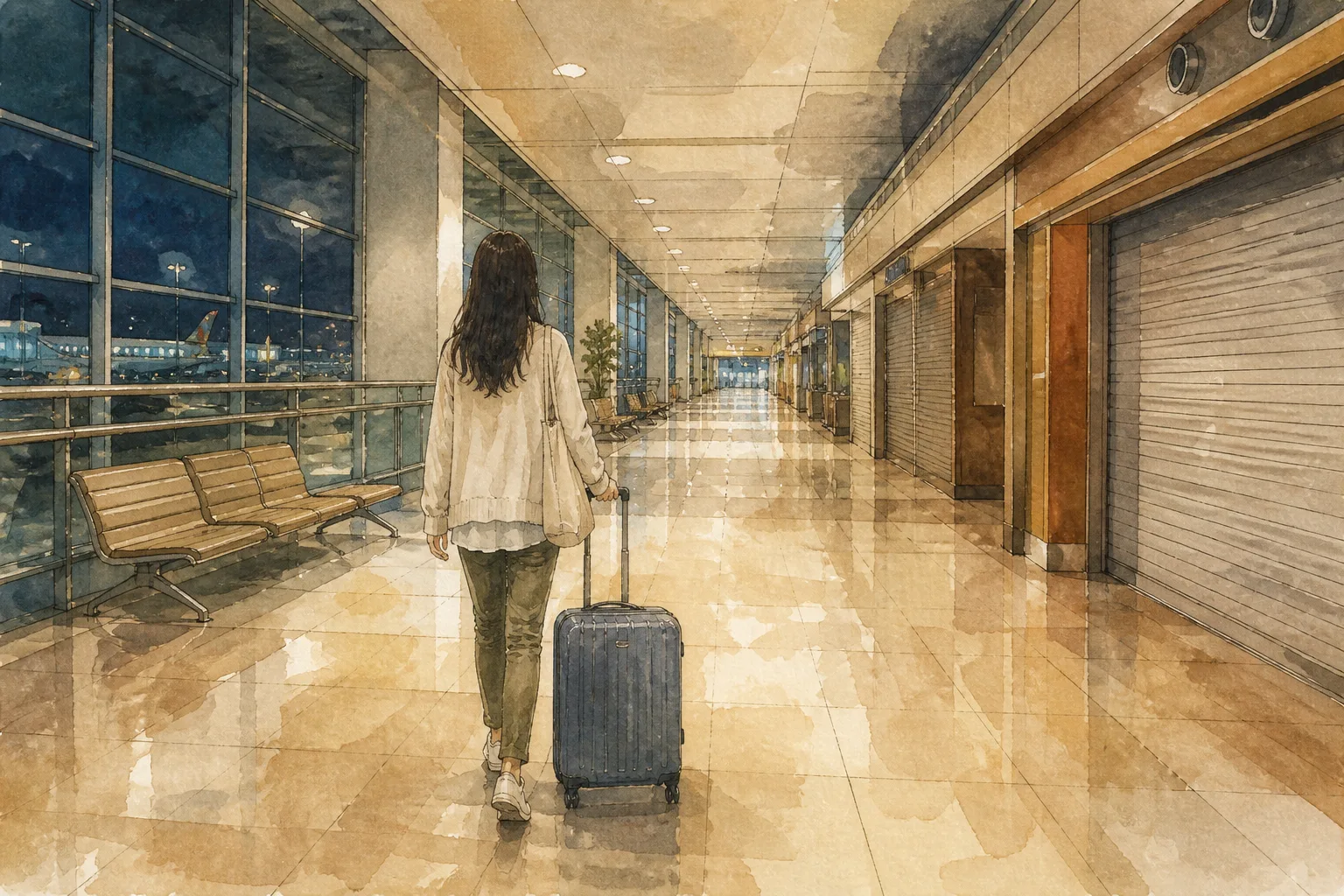
A flight that lands at Kansai International Airport after 11pm does not disqualify Osaka as a destination. It does change the math on your first night, and if you ignore that math, you can end up on a train platform with no more trains, standing in a taxi line with no idea what it will cost, or checking into a hotel you picked for its name recognition instead of its distance from anything useful at midnight.
The mistake most travelers make is not choosing Osaka. It is booking the flight first and figuring out the airport transfer later. By the time you are dealing with it, you are tired, jet-lagged, and negotiating with a taxi meter instead of making a calm decision from your couch weeks earlier.
This is a decision problem with a clean answer, not a reason to avoid the city.
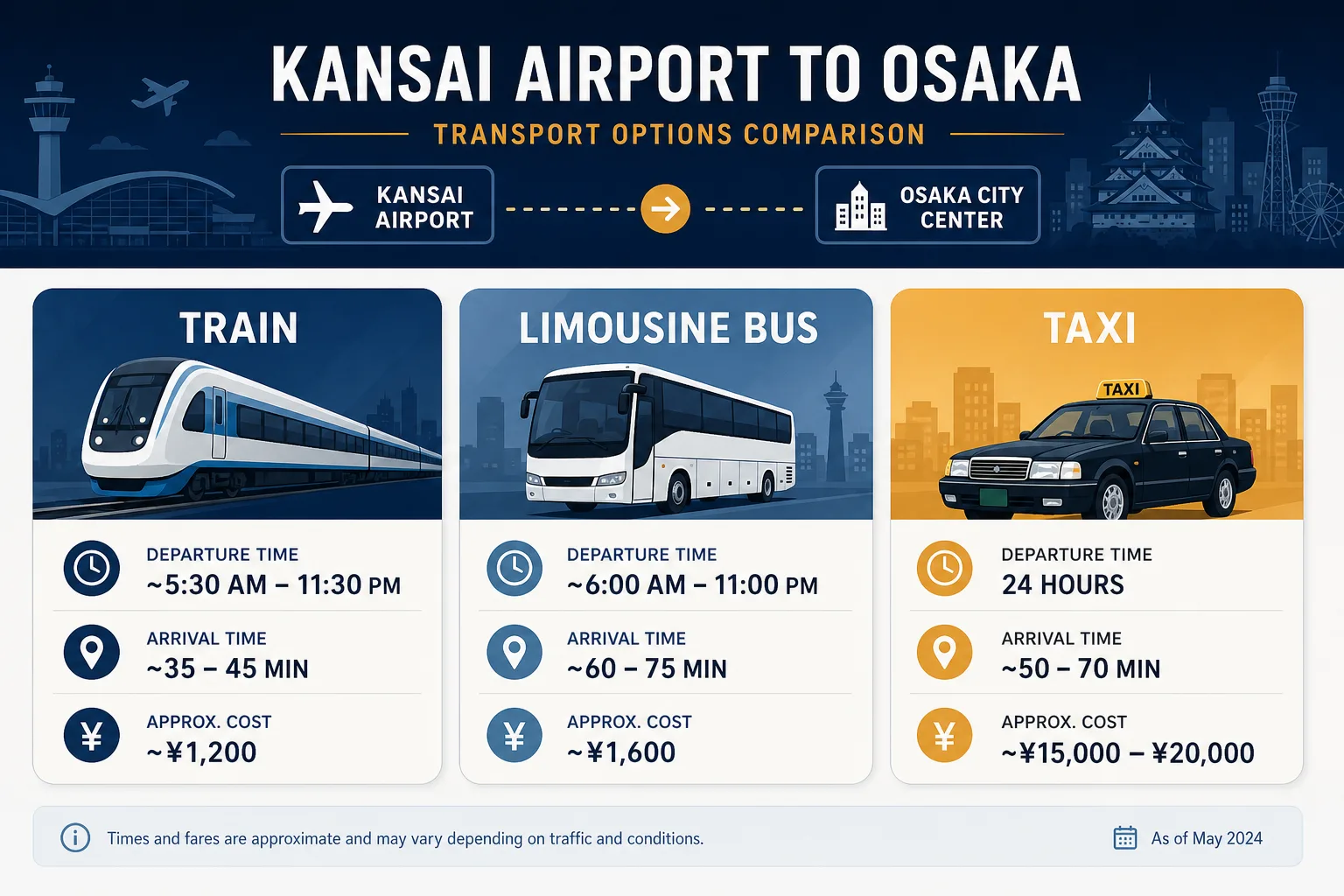 Editorial illustration: A simple flat comparison layout resembling a decision table.
Quick Verdict
Osaka is a fine choice for a late-night arrival if you plan the transfer in advance and you are the kind of traveler who would rather solve a logistics problem once than improvise one at midnight. It is a bad fit if you assume you can wing it, or if you are already anxious about foreign transit systems and adding a tired, after-dark, unfamiliar transfer on top of that is more stress than the trip is worth.
Choose Osaka with a late arrival if:
- You are comfortable booking transit or a hotel in advance and sticking to the plan
- You are willing to either pay more for a taxi/late bus or accept a slower, less central first night
- You can tolerate a plain, functional first evening in exchange for a smoother rest of the trip
Reconsider, or add a buffer night, if:
- You want your first hours in a new country to feel easy, not transactional
- You are traveling with kids, heavy luggage, or someone with mobility limits
- Your itinerary has an early commitment the next morning that a rough first night would jeopardize
Who Will Probably Love It
Late-arrival Osaka trips work well for travelers who treat the first night as infrastructure, not experience. If you already accept that night one of any long-haul trip is going to be about showering, sleeping, and resetting rather than sightseeing, a midnight arrival barely registers as a loss.
This also suits people who default to booking things ahead of time anyway: a hotel near the airport for the first night, a specific late train or bus, a taxi budget set in your head before you land. If that is already how you travel, the late flight is just one more line item, not a crisis.
Budget-conscious travelers who are willing to trade convenience for a cheaper flight also tend to do fine here, because the extra transit cost or an airport-adjacent hotel night is usually still less than the fare difference for an earlier arrival.
Who Might Regret It
The traveler who struggles here is the one who books the cheap late flight, assumes "I will just get a taxi" without checking the cost, and only realizes at the airport that a metered taxi to Umeda or Namba runs 15,000 to 20,000 JPY plus tolls, with a 10 to 20 percent surcharge for the late hour. That is not a small surprise on a budget trip.
There is a second regret pattern: booking a hotel in central Osaka for the first night without checking the last-train cutoff, then landing to discover the JR Haruka stopped running at 22:16 and the last Nankai Rapi:t left at 23:00. Now the only way into the city is the last Nankai Airport Express at 23:55, a late-night limousine bus with a surcharge, or a taxi you did not budget for.
Families, travelers with mobility issues, and anyone who gets anxious navigating stations in an unfamiliar language should also think twice about pairing a late arrival with a central hotel. Fatigue plus a multi-step transfer plus a foreign transit system is a stack of friction that a first night rarely needs.
Mistake / Consequence Table
| Decision variable | If you get it right | If you get it wrong |
|---|---|---|
| Booking the flight without checking last-train times | You know upfront whether you need a hotel change or a taxi budget | You discover at the gate that trains are already finished |
| Hotel location for night one | Airport-area hotel removes the transfer decision entirely | Central hotel booked without checking transit means an expensive, late scramble |
| Taxi as a backup plan | You budget 15,000 to 20,000 JPY plus tolls and a night surcharge in advance | You are shocked by the fare and stressed about cash or card acceptance at 1am |
| Limousine bus as a backup plan | You know the late departures (00:02 and 00:15) carry a 900 JPY adult surcharge over the standard 1,800 JPY fare | You assume the bus fare is fixed and are confused by the extra charge |
| Luggage and terminal logistics | You know Terminal 2 to Terminal 1/Aeroplaza is a 7 to 9 minute shuttle ride, so you plan the extra time | You miss a connecting bus or train because you did not account for the shuttle transfer |
Hidden Friction Points
Late arrival risk. The core problem is not Osaka, it is the gap between when trains stop and when your flight lands. The last direct JR Kansai Airport Rapid Service to Osaka Station leaves at 23:09, the last Haruka Express leaves at 22:16, and the last Nankai Rapi:t leaves at 23:00. If your flight is scheduled to land after any of these, plan your onward transit around the trains that are actually still running, not the ones you assumed would be.
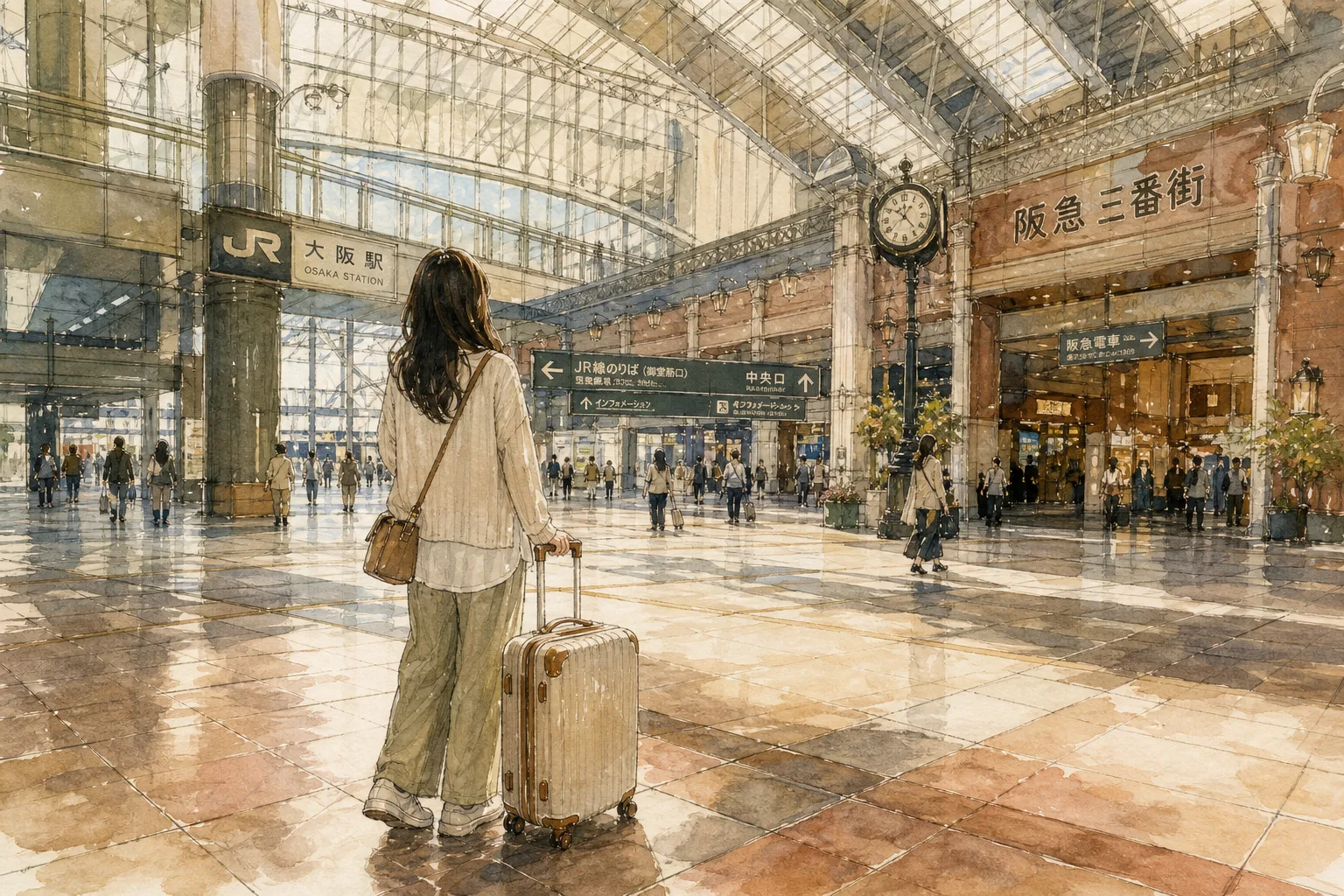
Airport transfer stress. Kansai Airport's Terminal 2 is not attached to the main terminal building. If your flight arrives at Terminal 2, budget 7 to 9 minutes for the free shuttle bus to Aeroplaza and Terminal 1 before you even start toward a train, bus, or taxi. That is easy to forget when you are tired and just want to leave.
Hotel location risk. A hotel that looks well-located on a map can still be a bad choice for a late arrival if it requires a transfer you can no longer make. The safer move for a genuinely late flight is a hotel inside or very near the airport itself, saving the central location for the second night once you are rested and moving in daylight.
First-night fatigue. Long-haul travel plus a late local arrival plus an unfamiliar transit system is a lot to ask of anyone. Even travelers who are normally comfortable with public transit make worse decisions at 1am after twelve hours of travel. The goal for night one is not efficiency, it is minimizing decisions.
How to Make It Easier
- Check your flight's scheduled and typical actual arrival time against the last train times before you book anything else. If you are landing near or after 23:00, assume you will not make the last direct train.
- If your flight lands late, book a hotel inside or immediately next to the airport for the first night. Hotel Nikko Kansai Airport sits inside the Aeroplaza building, a 3 to 5 minute walk from the Terminal 1 arrival lobby, which removes the transfer decision entirely.
- If you would rather push into the city the same night, decide in advance between the last Nankai Airport Express (23:55 departure, arriving Namba around 00:40) and a taxi, and know the taxi will run 15,000 to 20,000 JPY plus tolls with a night surcharge before you get in one.
- If you land after all trains have stopped and do not want an airport hotel, know the late-night limousine bus to Osaka Station departs at 00:02 and 00:15, but carries a 900 JPY adult surcharge over the normal 1,800 JPY fare. Have exact cash or a working card ready.
- Eat before you leave the terminal if you can. Aeroplaza has 24-hour options including Nakau and Sukiya, so you are not relying on finding something open in the city after midnight.
- Move your central-Osaka plans to day two. Treat the arrival night as a reset, not the start of the trip.
Better Alternatives
If a late arrival genuinely conflicts with how you like to travel, you have reasonable alternatives that do not mean giving up on Osaka.
Shift the flight, not the destination. Look for a routing that lands before 22:00. Even an hour earlier can move you from "no trains left" to "last train, tight but doable," which removes most of the friction described above.
Split the first two nights differently. Book one night at an airport-area hotel, then move to your central Osaka hotel on day two. This costs one extra hotel booking but converts a stressful midnight transfer into a calm, daylight one.
Consider Kyoto or Kobe as your first-night base instead. If your itinerary already includes either city, arriving in Osaka and immediately connecting onward is sometimes no worse than heading into central Osaka, since both are reachable by similar late transit options. This only helps if you were already planning to visit them.
If none of this appeals, treat it as a signal. A traveler who wants every part of a trip, including the airport transfer, to feel smooth and low-stress from the first minute may be better served by choosing a flight that lands earlier in the day, regardless of destination. That is not an Osaka problem, it is a trip-shape problem.
Self-Checklist
Use this before you finalize flights or hotels:
- I have checked my flight's scheduled arrival time against the last train departures from KIX (Haruka 22:16, Rapi:t 23:00, JR Rapid Service 23:09, Nankai Airport Express 23:55).
- I know which terminal my flight arrives at, and if it is Terminal 2, I have added 7 to 9 minutes for the shuttle to Aeroplaza/Terminal 1.
- I have decided in advance whether I am taking a train, the late-night limousine bus, a taxi, or staying near the airport, rather than deciding on arrival.
- If taking a taxi, I have budgeted 15,000 to 20,000 JPY plus tolls and accepted the late-night surcharge.
- If taking the late-night limousine bus, I know it costs more than the daytime fare and have the extra amount ready.
- My first-night hotel choice matches my actual transit plan, not just its location on a map.
- I have a backup food plan for arrival, since most city restaurants will be closed by the time I land.
- I have not scheduled anything time-sensitive for the morning after a very late arrival.
FAQ
Is it a mistake to book a flight that lands at Kansai Airport after 11pm? Not automatically, but it removes your easiest options. The last JR Haruka Express leaves KIX at 22:16 and the last Nankai Rapi:t leaves at 23:00, so anything landing close to or after those times pushes you toward the Nankai Airport Express, a late-night limousine bus, or a taxi. Plan your transit choice before you book, not after you land.
Can I still get to central Osaka if I land after midnight? Yes, but not by train. All scheduled train services from KIX are finished by around 00:40. Your remaining options are a taxi, which runs roughly 15,000 to 20,000 JPY plus tolls and a late-night surcharge, or staying near the airport overnight and moving into the city the next morning.
Should I book a hotel near Kansai Airport instead of in Osaka city for a late arrival? If your flight lands after the last direct train, yes. An airport-area hotel removes the transfer decision entirely and lets you start the next day fresh instead of arriving in the city center near or after midnight.
Does a late-night arrival ruin the rest of an Osaka trip? Usually not, as long as you treat the first night as a logistics problem to solve in advance rather than something to figure out at the gate. The main risk is a rough, expensive, or disorienting first few hours, not the trip itself.
Is Osaka a bad city choice overall for someone who dislikes complicated transit? No. Osaka's core is generally easier to navigate than Tokyo's, with a more compact central area. The late-arrival problem is specific to the airport-to-city gap, not a sign that Osaka itself is a poor fit for low-stress travelers.