travel-decisions
Is Busan a Bad Fit If Your Flight Arrives Late at Night?
A late arrival into Busan is not automatically a disaster, but it can wreck your first night if you get the airport, transit, and hotel decisions wrong. Here is how to judge your own risk before you book.
Strong Opening
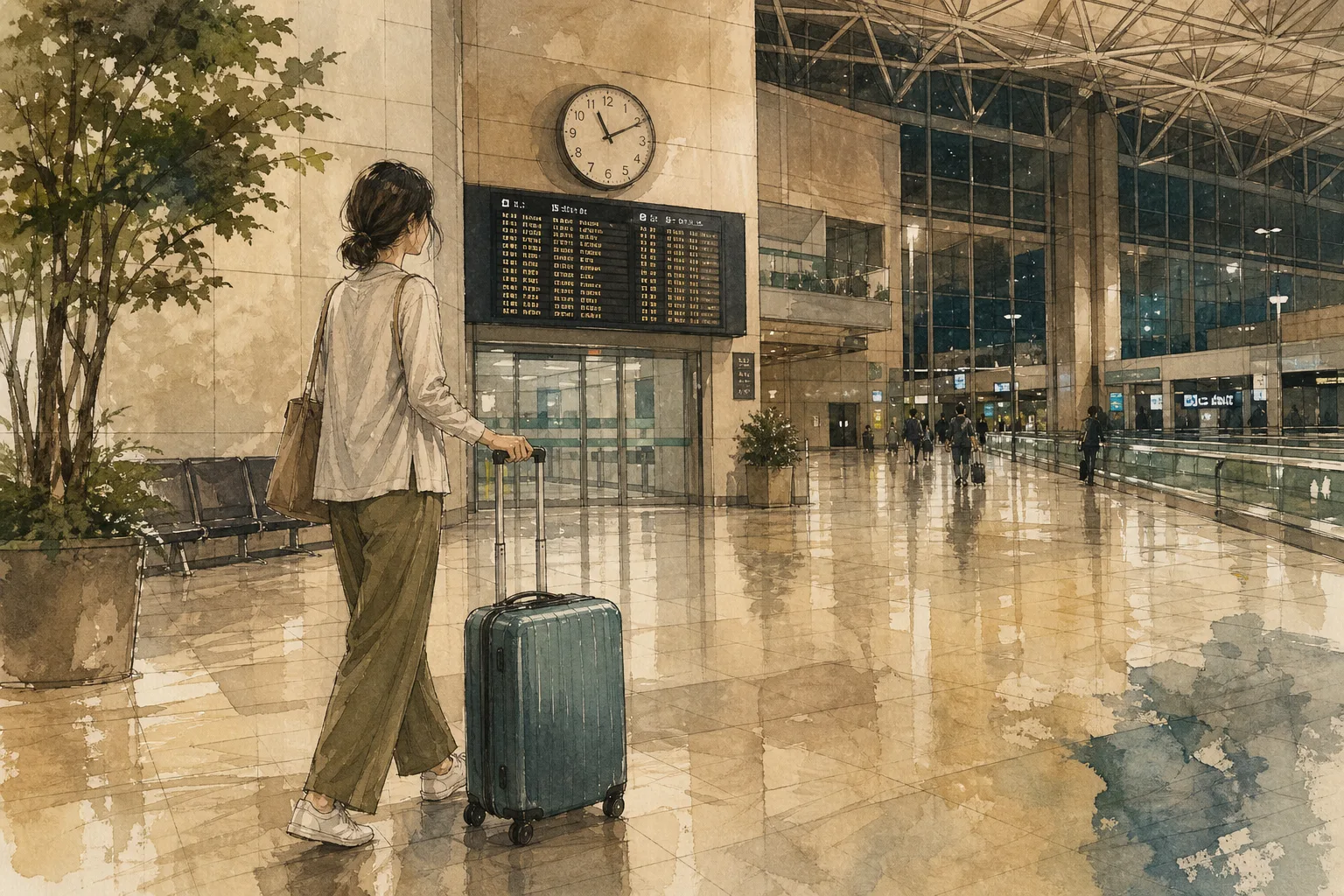
A flight that lands in Busan at 11:40 PM is not the same trip as one that lands at 4:40 PM. The city does not stop functioning, but a specific set of options quietly close in the hour before and after midnight, and if you booked your hotel and transit plan around a daytime arrival, you can find that out the hard way, standing in an arrivals hall with a suitcase and no clear way to get where you are staying.
This is not a question of whether Busan is a good city. It is a question of whether a late landing plus your specific hotel choice plus your tolerance for a rough first night adds up to a workable plan or a stressful one. Those are three separate decisions, and most of the regret stories come from treating them as one.
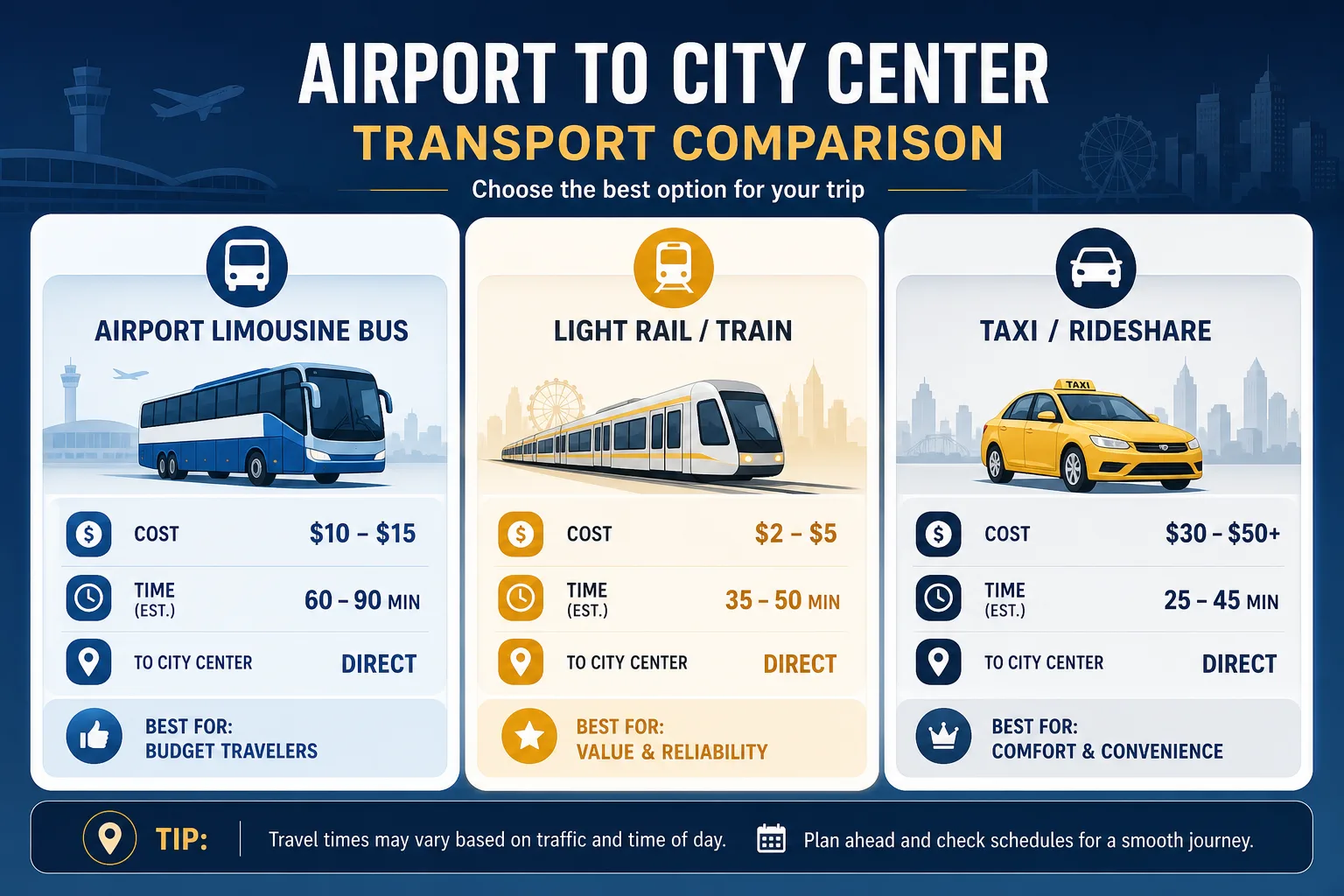 Editorial illustration: A simple flat-lay style comparison graphic on a table surface showing three labeled cards for airport limousine bus.
Quick Verdict
If your flight lands before roughly 11:00 PM and you have booked a hotel near a metro line, Busan is a fine fit for a late arrival. The transit window is tight but workable, and a normal first night is realistic.
If your flight lands after midnight, or you booked a hotel in Haeundae or the old downtown without checking transit cutoffs, Busan becomes a much harder fit for that specific night, even though the rest of your trip will likely be fine.
Who should choose a late-arrival Busan itinerary as planned:
- Travelers landing by 11:00 PM who can still catch a bus or the last light rail train
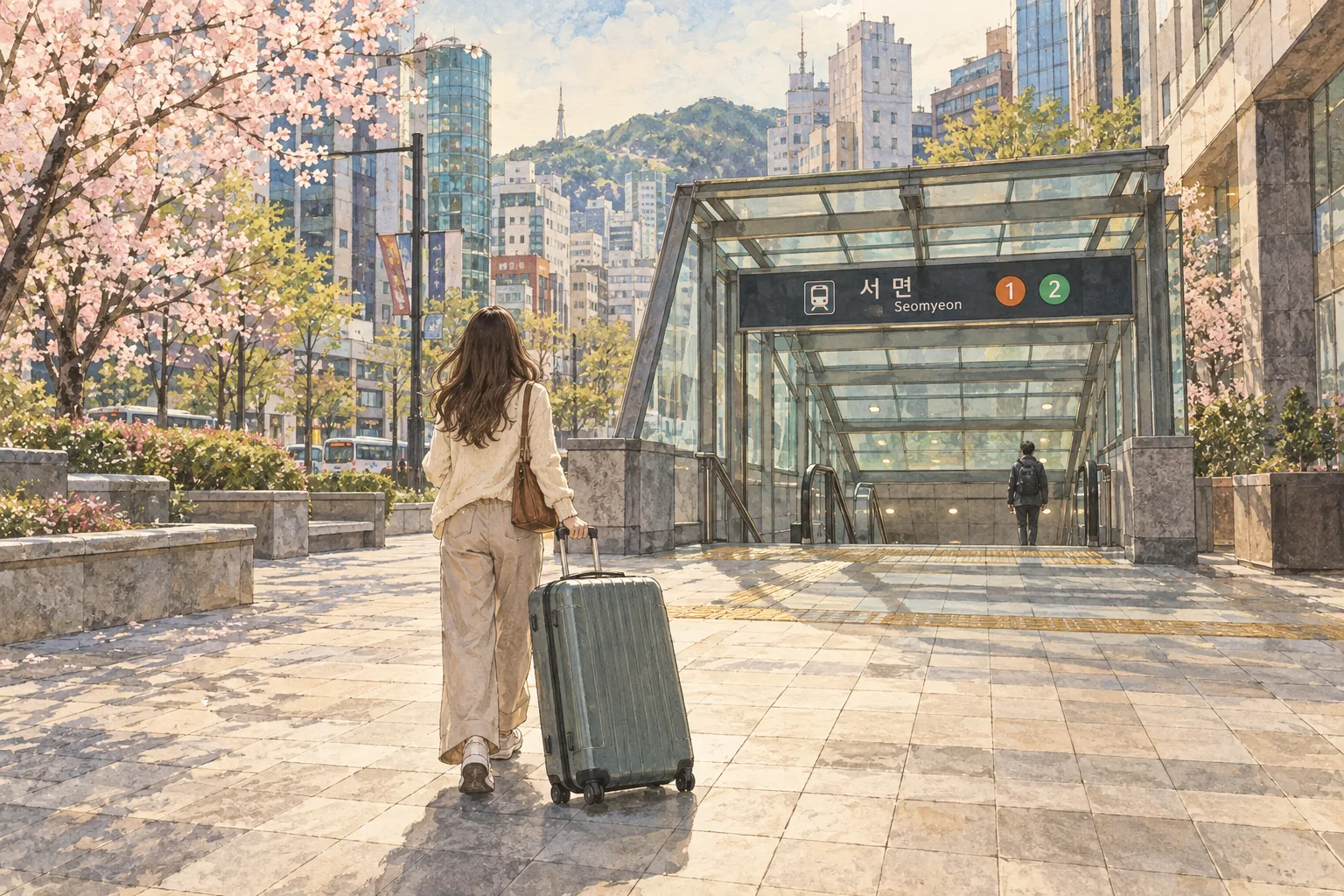
- Travelers who already booked a hotel near Sasang Station, Seomyeon, or another point directly on Metro Line 2
- Low-stress planners willing to pay a taxi premium once, rather than gamble on transit timing
Who should not choose it without changes:
- Travelers landing after midnight with a hotel booked far from the airport and no taxi budget set aside
- First-time visitors who assumed Korean airports run on the same 24-hour rhythm as their home hub
- Anyone hoping to reach Haeundae or Gwangalli the same night on a tight budget, since that route gets expensive fast after the last bus
Who Will Probably Love It
Late arrival into Busan works well for travelers who plan the landing as its own small logistics project rather than an afterthought. If you check the last train time, price out a taxi in advance, and pick a hotel with transit access in mind, a midnight-ish arrival is genuinely manageable. Busan's Metro Line 2 corridor and the light rail into Sasang give you real, affordable options right up until close to midnight.
This also suits value-sensitive travelers who are comfortable trading one expensive taxi ride for a much cheaper hotel located near transit. Paying roughly 13,000 KRW for a nine-minute taxi to a Sasang-gu hotel that costs 35,000 to 80,000 KRW a night is a reasonable tradeoff most budgets can absorb once.
It also suits travelers who are fine treating the first night as separate from the "real" trip. If your mental model is "night one is just about getting horizontal safely, the itinerary starts tomorrow," a late Busan arrival will not feel like a loss.
Who Might Regret It
The regret pattern is consistent: someone books a hotel in a scenic, photogenic area, like Haeundae Beach or Nampo-dong, based on what looks good for the daytime trip, without checking what happens if the flight lands late. Then a delay pushes the arrival past the last bus or last train, and the only way to that hotel is a taxi ride of 38,000 to 55,000 KRW or more, taken alone, at night, in an unfamiliar city, after a long flight.
A second common regret pattern is trusting a layover or arrival time that is close to midnight without a backup plan, then discovering that Gimhae Airport itself is not a fallback. The terminal closes from 11:00 PM to 5:00 AM and does not allow overnight stays, so "I will just wait it out at the gate" is not an option if your plan falls through.
A third pattern is underestimating first-night fatigue. Even travelers who successfully catch the last light rail train at 11:54 PM often arrive at their hotel well after midnight once transfers and walking are added in, and then face an early alarm the next morning for a plan built around a full first day. The specific disappointment is less about Busan itself and more about starting the trip already worn down.
Mistake / Consequence Table
| Decision variable | If you get it right | If you get it wrong |
|---|---|---|
| Flight lands before 11:00 PM vs after midnight | Buses and light rail may still be running; low-cost transit is possible | Taxi is your only option, at a 20 to 30 percent late-night surcharge |
| Hotel location chosen with transit in mind | Sasang-gu or a Metro Line 2 stop keeps costs and travel time low | Haeundae or old downtown means a 38,000 to 55,000 KRW taxi ride alone at night |
| Backup plan if the flight is delayed | A pre-booked airport-area hotel absorbs the delay with minimal cost | No backup means scrambling for transport after the terminal itself closes at 11 PM |
| Payment method for late-night transport | Kakao T app installed and set up before landing | Standing in the taxi line with no working app, since Uber and Lyft are not supported |
| First-night expectations | Treated as a transition night, plans start the next day | Full itinerary planned for day one, arriving exhausted and behind schedule |
Hidden Friction Points
Late arrival risk. The core friction is not Busan being hard to navigate, it is the narrow window between "transit is running" and "transit has stopped" landing right on top of typical long-haul or connecting flight arrival times. The last light rail train from the airport leaves at approximately 11:54 PM, and the last Metro Line 2 eastbound connection at Sasang Station leaves around 11:44 PM. A flight that lands at 11:15 PM can still miss both if immigration and baggage claim take even 30 to 40 minutes.
Airport transfer stress. Gimhae is a joint military-civilian airport, which also means photography of the runway and surrounding exterior areas is restricted by law, something jet-lagged travelers sometimes trip over without realizing it is a legal issue rather than a preference. More practically, the airport limousine buses stop early: the Haeundae and Gijang line's last departure is 9:40 PM, and the Seomyeon and Bujeon line does not run overnight either. If you assumed an airport bus would be waiting for a midnight flight, it will not be.
Hotel location risk. A hotel that looks perfectly located for a daytime Busan itinerary can be the wrong choice for a midnight arrival, because "close to the beach" and "close to a working transit option after 11 PM" are not the same thing. This is the single biggest lever in the whole decision, because it is the one you control weeks in advance, before the flight even happens.
First-night fatigue. Even a successful late-night transfer costs you sleep, decision-making energy, and often the first morning of your trip. Travelers who do not budget for this tend to start day two tired and behind, which compounds into a rougher trip overall, not because Busan is difficult, but because the first 12 hours were.
How to Make It Easier
- Install and set up the Kakao T app before you fly, since standard Uber and Lyft are not supported in South Korea and you do not want to be creating an account for the first time at midnight with low phone battery.
- If your flight is scheduled to land after 11:00 PM, book your first night in Sasang-gu or another spot directly on Metro Line 2, not in Haeundae or Nampo-dong. You can move to your scenic hotel the next morning.
- Budget for one late-night taxi surcharge (20 percent from 11 PM to midnight and 2 AM to 4 AM, 30 percent from midnight to 2 AM) as a fixed cost of a late arrival, rather than hoping to avoid it.
- If there is any chance of a delay pushing you past the airport's 11 PM to 5 AM closure window, confirm your hotel booking is fully refundable-flexible and that the property has 24-hour check-in, since Gimhae Airport itself is not a place you can wait it out.
- Pack a light layer for the terminal-to-taxi transition; even mild spring nights in Busan cool down enough that standing outside waiting for a car is more comfortable with a cardigan or jacket at hand.
- Write down your hotel address in Korean characters before you land, since typing it into a translation app with shaky Wi-Fi at midnight is avoidable friction.
Better Alternatives
If a genuinely late arrival is unavoidable and none of the above feels manageable, consider shifting the plan rather than forcing Busan to fit a bad landing time.
- Adjust the flight, not the city. If you have any flexibility, a flight landing by early evening removes almost all of this friction and keeps every transit and hotel option open. This is usually cheaper in stress than any workaround.
- Split the first night from the itinerary. Book one night near Sasang Station or the airport specifically as a landing buffer, then move to your main hotel the next day. This keeps Busan itself unchanged while removing the late-night risk entirely.
- Choose a different first-night city if your itinerary allows it. If Busan is one stop on a longer Korea trip and your flight timing is fixed and late, consider landing in Seoul first, where 24-hour transit and hotel density are more forgiving, then taking a daytime train or flight to Busan.
- If Busan must be night one and the hotel is already booked far from the airport, treat the taxi cost as a one-time fixed expense and pre-book it through a hotel concierge or airport taxi counter rather than negotiating on arrival.
Self-Checklist
Use this before you finalize flights or hotel bookings, not after you land.
- I know my scheduled arrival time in Busan and have added 30 to 45 minutes for immigration and baggage claim.
- I have checked whether that adjusted time falls before or after the last light rail train (around 11:54 PM) and last relevant bus departures.
- My first-night hotel is either on Metro Line 2 or within a short, affordable taxi ride if I land after transit cutoffs.
- I have the Kakao T app installed and a payment method loaded, since Uber and Lyft do not work here.
- I have budgeted for a possible late-night taxi surcharge as a real line item, not an afterthought.
- My hotel booking allows late or 24-hour check-in in case of flight delay.
- I understand Gimhae Airport closes from 11 PM to 5 AM and is not a place to wait out a delayed connection.
- I have written my hotel address in Korean characters or saved it offline in a translation app.
- I am mentally treating my first night as a transition night, with day one of the "real" itinerary starting the next morning.
FAQ
Is it a mistake to book a flight that lands in Busan after midnight? Not automatically, but it removes your cheapest transit options. Gimhae Airport closes to overnight stays from 11 PM to 5 AM, the last light rail train leaves around 11:54 PM, and both airport limousine buses stop running well before midnight. If you land after roughly 11:30 PM, a taxi becomes your only realistic option, and it will carry a late-night surcharge.
Can I sleep at Gimhae Airport if my connecting plans fall through? No. Gimhae International Airport closes from 11:00 PM to 5:00 AM and passengers are not permitted to stay or sleep inside the terminal overnight. If your arrival or layover pushes into that window, you need a confirmed hotel or transport plan, not a backup plan of waiting it out at the gate.
What is the safest and cheapest way to get into the city after the last train? Use the Kakao T app to call a taxi, since Uber and Lyft are not supported in South Korea. A taxi to Seomyeon runs about 22,000 to 25,000 KRW with late-night surcharges, and to Haeundae about 38,000 to 55,000 KRW. Booking a hotel near Sasang Station cuts this dramatically, since a taxi there from the airport is roughly 13,000 KRW and takes about nine minutes.
Should I just book a hotel near the airport instead of downtown Busan? For a very late landing, yes, this is often the lower-stress choice. Sasang-gu is about 4 km from the airport, reachable by an 8-minute light rail ride or a short taxi, and well-reviewed rooms there typically run 35,000 to 80,000 KRW a night. You lose some downtown atmosphere for one night, but you gain a fast, cheap, low-stress landing.
Does a late arrival ruin the rest of a Busan trip? Rarely, if you plan the first night separately from the rest of the trip. The damage from a late arrival is usually contained to fatigue and lost time on day one. If you treat the first night as a transition night near the airport rather than trying to reach Haeundae or the old downtown immediately, the rest of the itinerary is unaffected.