travel-decisions
Does Venice Work for Atmosphere-First Travelers in Their 20s?
A decision guide for travelers in their 20s choosing Venice for mood and wandering over sightseeing. Where the atmosphere actually pays off, where it does not, and how to avoid the hotel mistakes that kill the vibe.
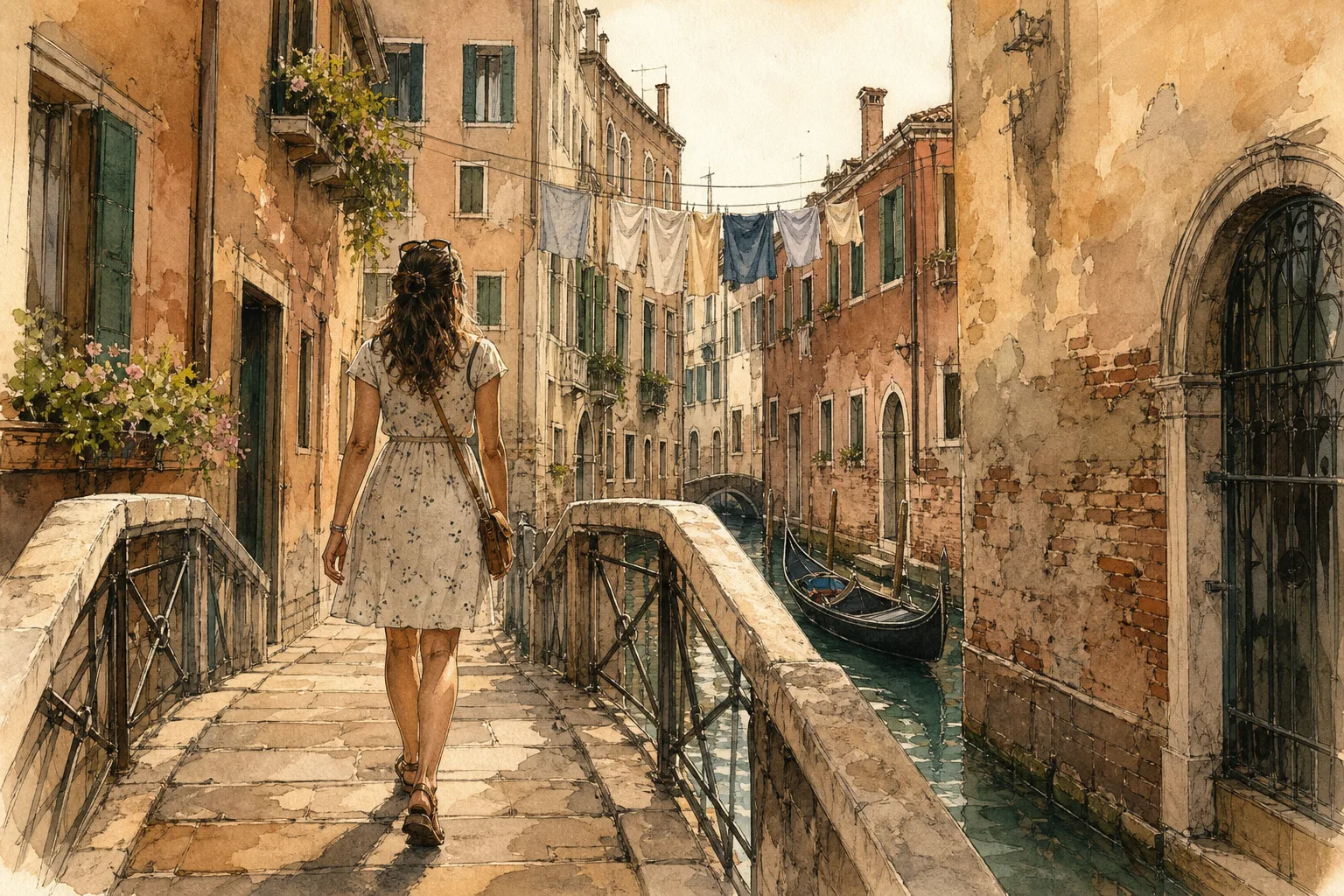
Venice can be excellent for travelers in their 20s, but only for a specific version of your 20s. If your trip identity is built around mood, late-evening wandering, and finding places that feel cinematic without needing a full itinerary, Venice can land hard. If your version of travel is nightlife, constant group energy, or squeezing maximum output out of every hour, the same city can feel overpriced and strangely restrictive.
That is why age alone is not the decision variable here. Lifestyle is. Venice works for younger travelers when atmosphere is the event, not the backdrop between bigger plans.
Quick Verdict
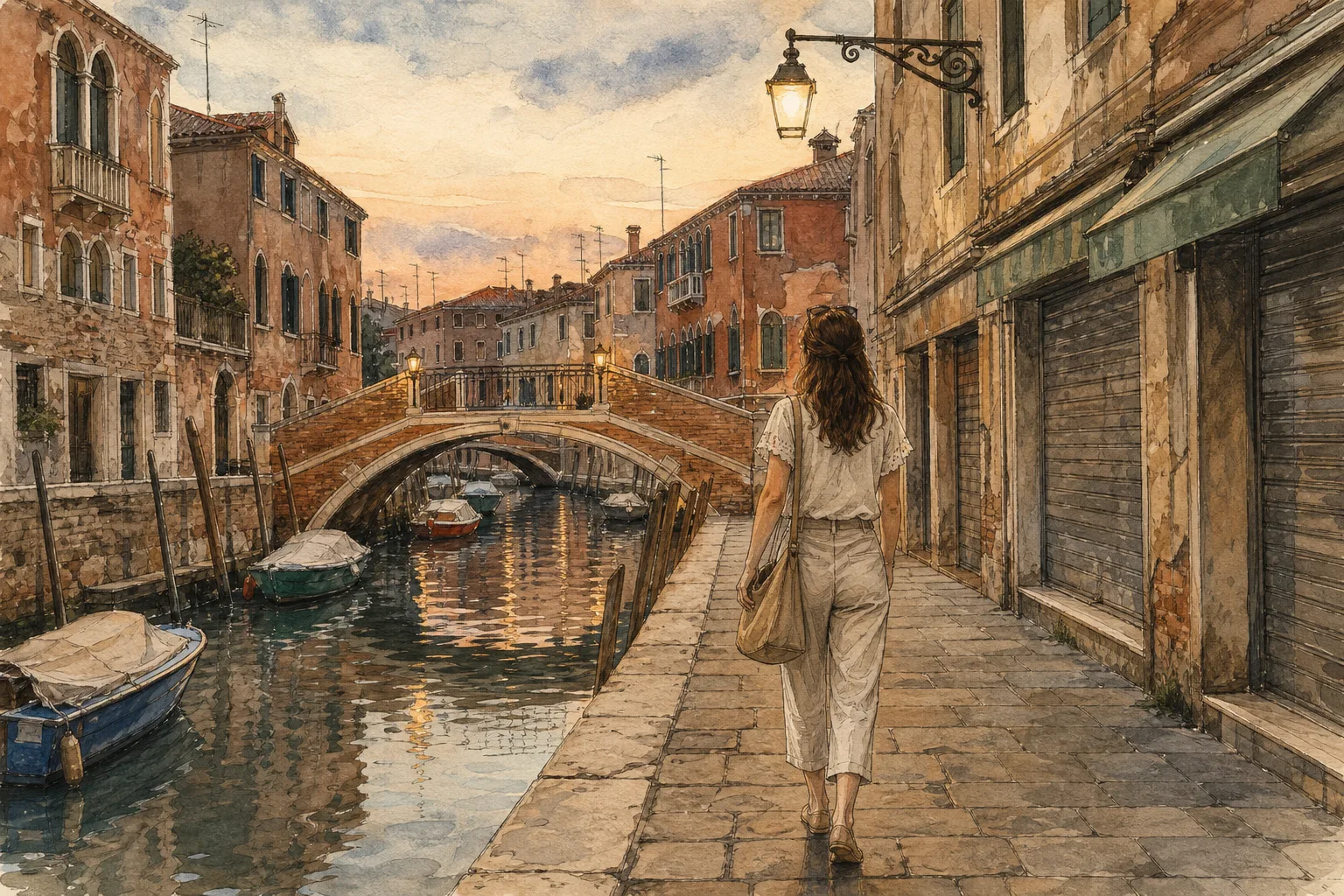
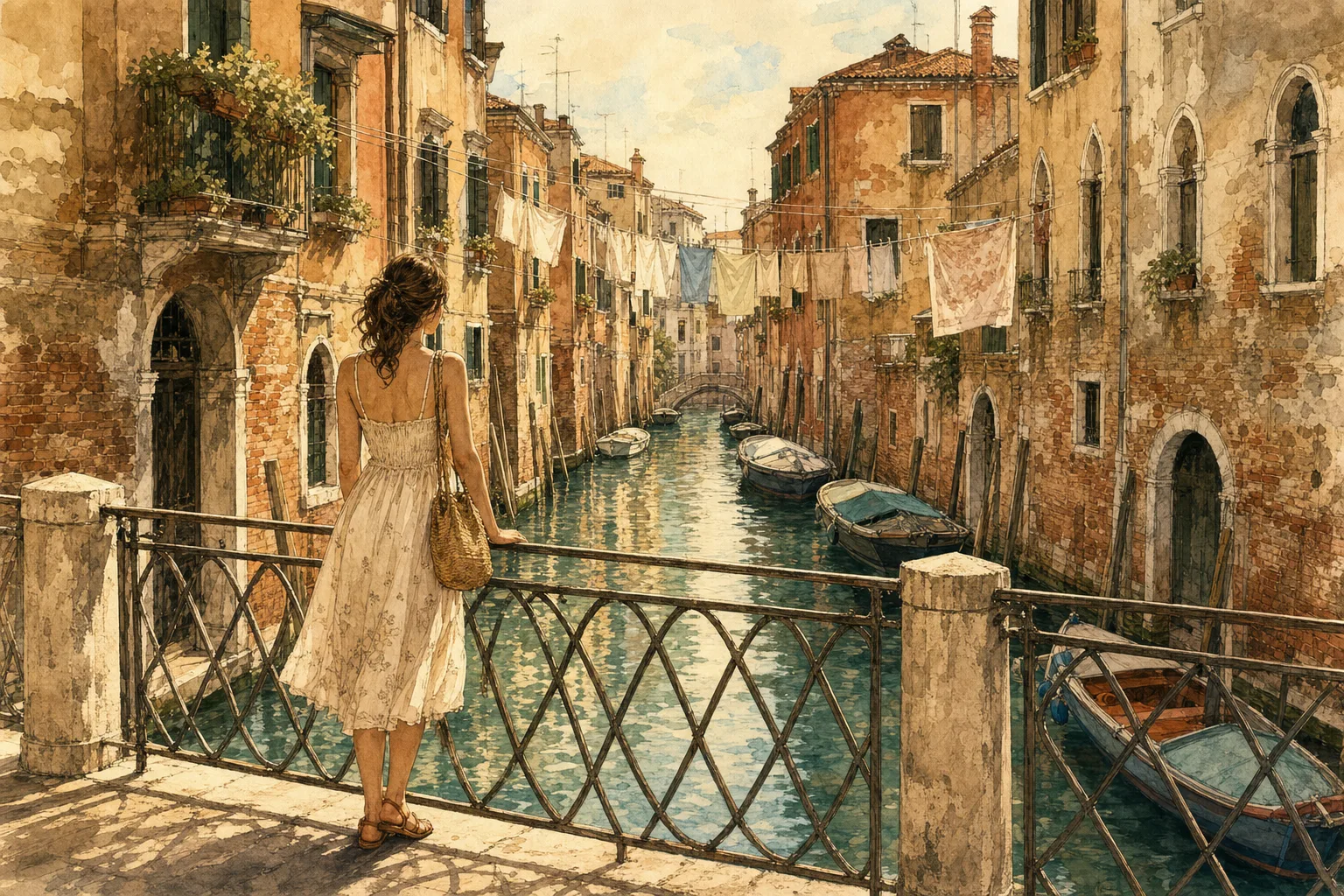
Venice is a strong fit for atmosphere-first travelers in their 20s, but only under specific conditions. If you sleep inside Venice itself (not Mestre, not Giudecca by default), stay at least two nights, and treat early mornings and the hours after 6 PM as your main travel window, the city delivers exactly what its reputation promises: quiet canals, half-lit bridges, cicchetti bars that fill with locals, and the strange feeling of a city that has no cars.
It is a weak fit if you are trying to do Venice in a single day, if you book near Rialto or directly behind San Marco for "convenience," or if your real travel priority is nightlife, big group energy, or efficient sightseeing. The atmosphere is real. It just does not survive the midday day-tripper window or a bad hotel choice.
Strong fit if: you value wandering over checklists, you can pay a small overnight premium, and you are willing to plan around crowd timing. Weak fit if: you want maximum sights per hour, you are price-sensitive on accommodation, or you expect nightlife to be the trip's center.
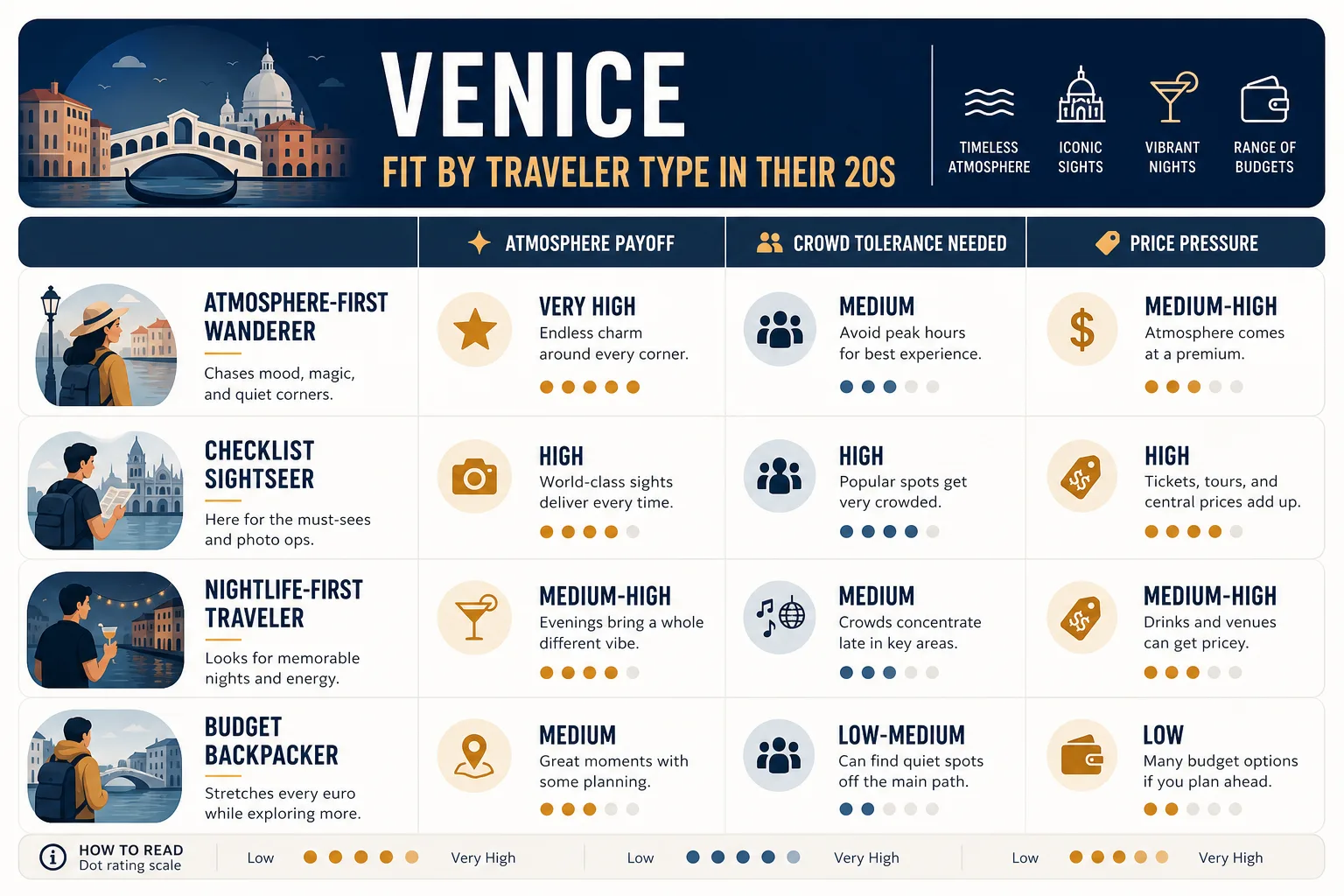 An infographic matrix assessing Venice's suitability for four traveler types in their 20s based on atmosphere, crowd tolerance, and cost.
Best for First-Time Visitors
If this is your first time in Venice and you identify as atmosphere-first, the city actually rewards you more than it rewards a checklist traveler. You do not need to "see" Venice in any particular order. The mood is the product.
What works for first-timers in their 20s:
- Pick one sestiere as a base (Cannaregio or Dorsoduro are the usual sweet spots) and walk it without Google Maps for at least one afternoon.
- Skip the rushed Doge's Palace and Basilica combo unless you genuinely want them. Atmosphere-first travelers usually get more from a slow bacaro crawl than from a 45-minute interior tour.
- Use the Rolling Venice Card if you are aged 6 to 29: it costs 6 euros and drops a 72-hour ACTV transit pass from 45 to 27 euros. That is the single most useful first-timer purchase for your demographic.
The mood-over-checklist frame is the unlock. Venice punishes a packed itinerary and rewards an unstructured evening.
Best for Couples
Venice is one of the easier European cities to recommend to a couple in their 20s, because the atmosphere does most of the work. You do not have to "plan a romantic night." The city defaults to it after the crowds clear.
What couples should actually prioritize:
- An overnight in a small Cannaregio or Dorsoduro guesthouse rather than a chain near the train station.
- One slow dinner at a sit-down spot and one bacaro-hopping evening with spritzes and cicchetti. The contrast is the point.
- A vaporetto ride at night, not at noon. A single 75-minute tourist ticket costs 9.50 euros, and the experience is completely different after dark.
What couples should skip: the gondola-at-peak-hour photo loop. If you want a gondola, take it at sunset or skip it without guilt.
Best for Slow Travelers
If your normal travel style is three nights minimum, one neighborhood, no rush, Venice is almost custom-built for you. The city is small enough that three or four days lets you actually recognize bartenders, repeat a favorite bridge, and notice which campo is quiet at which hour.
Slow travelers in their 20s tend to get the best price-to-mood ratio because:
- You amortize the overnight premium across more nights.
- You can eat cheaply at bacari (1.50 to 3.00 euros per cicchetto, spritz under 4 euros) and save the splurge for one or two meals.
- You avoid the worst day-tripper hours by simply being somewhere else when the cruise crowds arrive.
If you can only give Venice one night, you are not a slow traveler here, and the fit drops noticeably.
Best for Low-Stress Travelers
This is the section where Venice gets complicated. The atmosphere is calming. The logistics around it are not.
Things that genuinely raise stress for a 20s traveler:
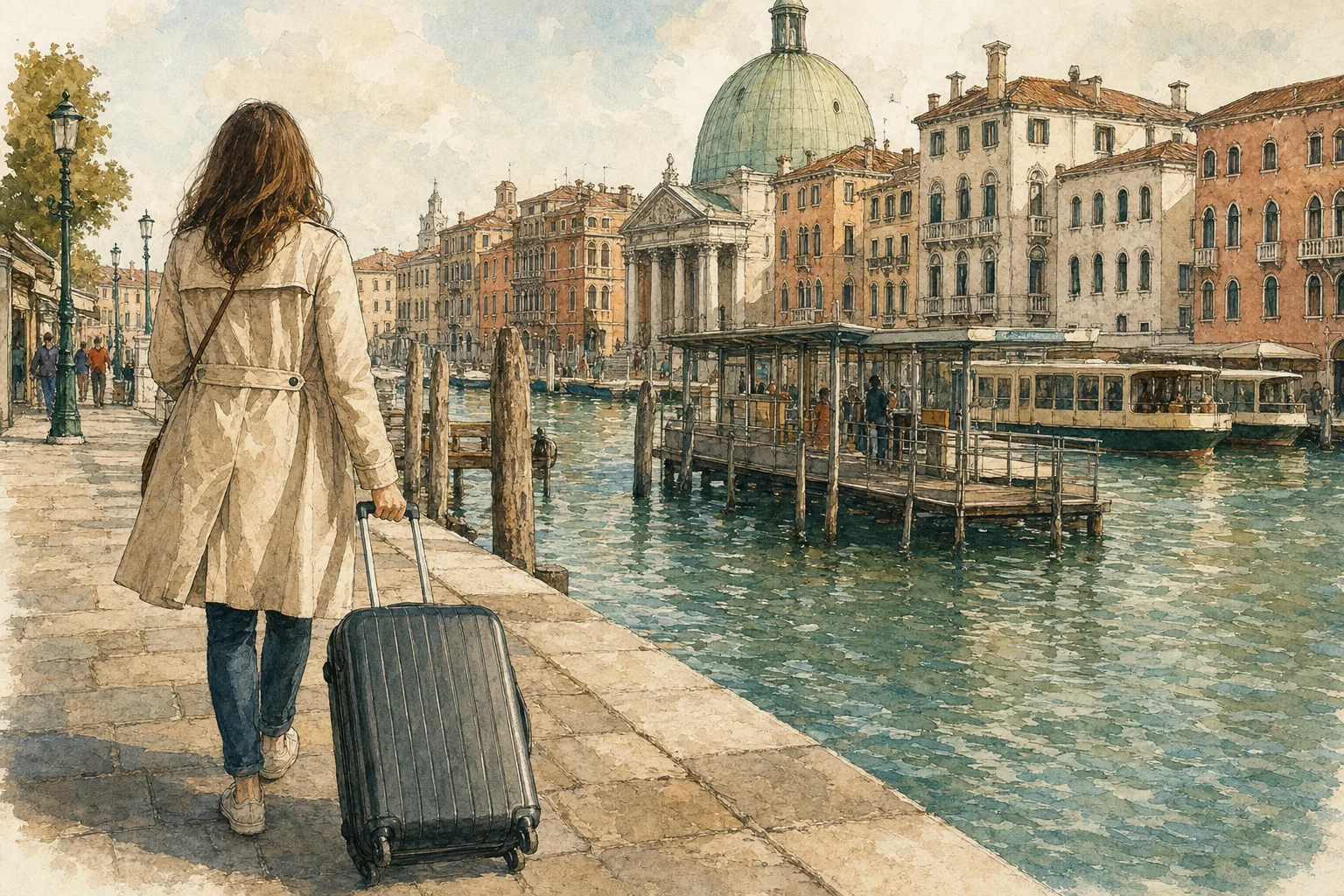
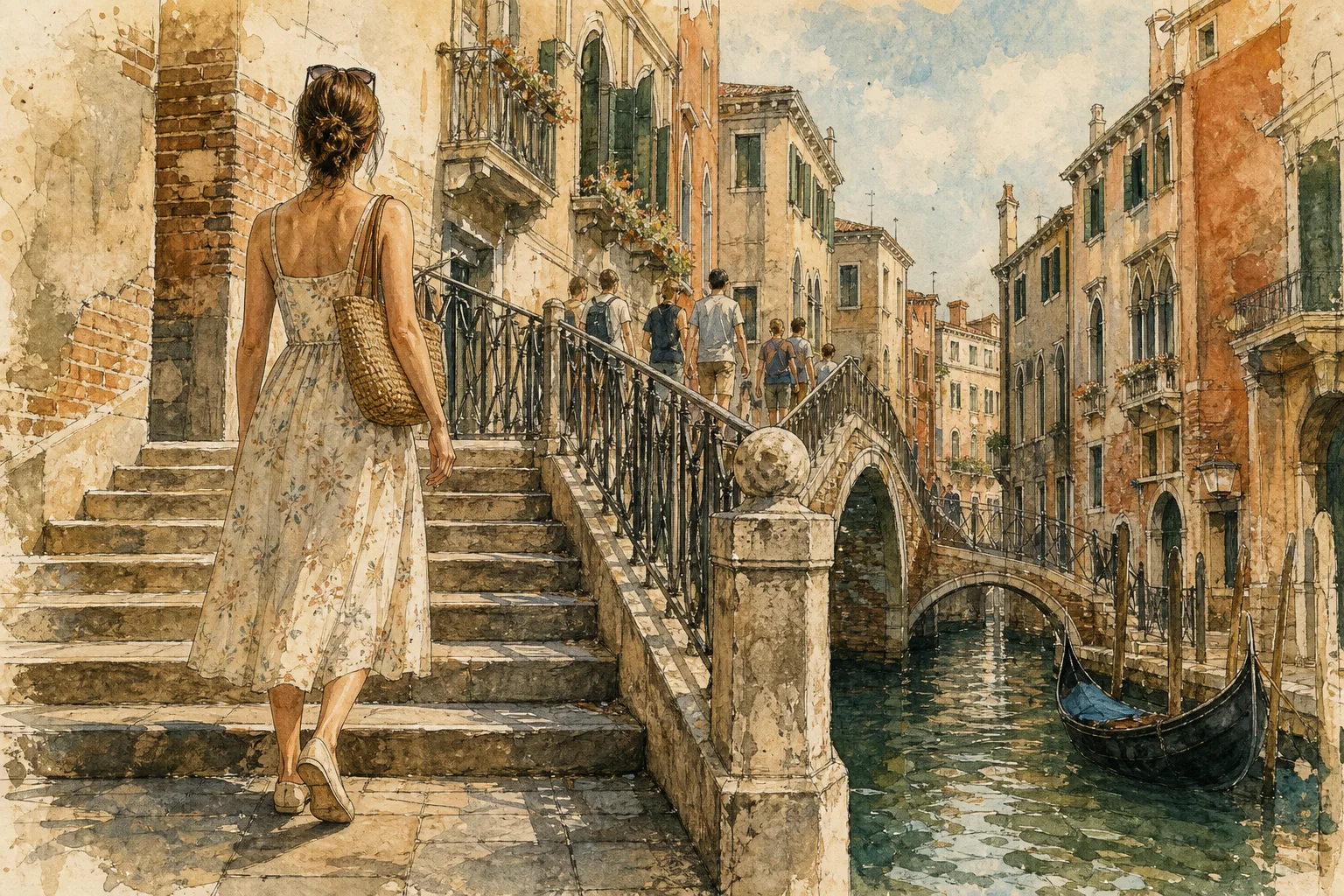
- Luggage on bridges. There are no taxis to your hotel door. Pack light or expect a workout.
- The vaporetto pricing structure if you do not buy a multi-day pass.
- Navigation. Maps lag. Streets dead-end at canals. This is charming on day two and frustrating on hour one.
- The new 2026 day-tripper fee window (April 3 to July 26, 8:30 AM to 4:00 PM on 60 peak days). Overnight guests are exempt but still need to register at cda.ve.it for a free QR code.
If you are low-stress by preference, the fix is structural: stay overnight, buy the transit pass on arrival, and accept that one wrong turn is part of the experience.
Traveler Type Table
This is where the fit actually gets decided. The question is not "is Venice good." It is "is Venice good for the specific way you travel."
Instead of soft ratings, the table below states the exact condition each traveler type has to meet for Venice to work, and what specifically goes wrong if they do not.
| Traveler type in their 20s | What it takes to get the payoff | Daily food cost if done right | Failure mode if the condition is missed | Verdict |
|---|---|---|---|---|
| Atmosphere-first wanderer | 2+ nights in Cannaregio/Dorsoduro; walk 7-9 AM and after 6 PM | 15-25 euros on bacari | Sees only the 10 AM-4 PM day-tripper window | Strong fit |
| Mood-over-checklist traveler | Same as above, with no fixed sightseeing list | 15-25 euros | Books a packed itinerary and feels rushed | Strong fit |
| First-time visitor weighing the hype | Must commit to 2 overnights, not a day trip | 20-30 euros | Day-trips it and concludes Venice is a theme park | Conditional fit |
| Checklist sightseer | Accepts 25+ euros/day on museums and a 9.50-euro vaporetto each leg | 35-50 euros | Pays peak prices and still fights crowds at every sight | Weak fit |
| Nightlife-first traveler | No realistic condition; city closes early | n/a | Reads quiet evenings as boring | Weak fit |
| Budget backpacker | Cannaregio hostel + Rolling Venice Card (29 and under) | 12-18 euros | Books summer last-minute and pays a peak premium | Conditional fit |
The clearest pattern: the strong-fit rows all share two non-negotiable conditions (overnight inside Venice, a non-tourist-strip sestiere). The weak-fit rows fail on a fixed structural mismatch, not on budget or timing you can fix.
Common Mismatches
The mismatch here is usually not that Venice was fake. It is that the traveler brought the wrong 20s trip style to a city that pays off in a narrower way.
- The single-day visitor. You arrive at 11 AM, walk the Rialto-to-San Marco corridor with the densest day-tripper traffic, eat an overpriced pasta, and leave by 5 PM. You will conclude Venice is a theme park. You will be right about what you saw and wrong about the city.
- The wrong-hotel booker. Booked next to the train station or directly behind San Marco because it looked "central." Both areas empty out into tourist sterility at night. The atmosphere is two sestieri away.
- The Giudecca surprise. Generator Venice and a few cheaper hotels sit on Giudecca, which requires a 10-minute vaporetto to San Marco. Fine if you wanted that. A disappointment if you assumed everything was walkable.
- The nightlife-expecting traveler. Venice closes early. The energy is aperitivo and late wandering, not clubs. If you wanted Berlin or Barcelona, you will read the quiet as boring.
- The peak-summer day-tripper. Roughly 70 percent of Venice's 30 million annual visitors are day-trippers, concentrated between the train station, Rialto, and San Marco between roughly 10 AM and 4 PM. The atmosphere does not survive that window in those zones.
If you recognize yourself in any of these, the fix is usually a different hotel or a different schedule, not a different city.
Where to Go Instead
If you read the mismatch section and recognized yourself, the honest move is to swap the city, not force the trip. The table below maps the two mismatch cases that no hotel or schedule fixes (nightlife-first and efficient-sightseeing-first) to better Italian bases, with the specific reason each beats Venice for that traveler.
| If your real priority is | Better Italian base | Why it beats Venice for you | What you give up |
|---|---|---|---|
| Nightlife, late energy, group fun | Milan | Navigli canal bars and clubs run past 2 AM; flat, walkable, late metro | The car-free canal atmosphere and quiet |
| Food-first with relaxed evenings | Bologna | University-town aperitivo, cheaper sit-down meals, no day-tripper surge | Venice's water-city singularity |
| Atmosphere but smaller and cheaper | Verona | Walkable medieval center, real evening passeggiata, far lower hotel prices | The canals; Verona is a river-and-piazza city, not a lagoon |
A practical pairing note: Venice, Verona, and Milan sit on the same Trenitalia line (Venice to Verona is about 70 minutes, Verona to Milan about 80 minutes). If you are torn, you can give Venice two atmosphere-first nights and add a nightlife or food night in Milan or Bologna rather than choosing one city for everything.
Final Match Recommendation
Choose Venice if:
- You travel for mood and willingly trade itinerary density for slow hours.
- You will stay at least two nights inside Venice proper, ideally in Cannaregio, Dorsoduro, or quieter Castello.
- You are comfortable structuring your day around early mornings and post-6 PM evenings.
- You are okay spending more on the bed and less on the meals (bacari are cheap; hotels are not).
Skip Venice (or downgrade it to a day stop) if:
- You are doing a fast multi-city Italy loop and cannot give it two nights.
- Nightlife or efficient sightseeing is the actual reason you are traveling.
- You are unwilling to register for the free overnight QR code or buy a transit pass and would rather not deal with the logistics layer at all.
For atmosphere-first travelers in their 20s who can meet the overnight condition, this is one of the higher-confidence "yes" recommendations in Italy. The hype is real. The execution is on you.
FAQ
Is Venice worth it for atmosphere lovers in their 20s, or is it overhyped? Worth it if you stay overnight in a quieter sestiere and plan around crowd hours. Overhyped if you only see the San Marco to Rialto strip in midday.
How much does the atmosphere actually cost on a 20s budget? Less than the reputation suggests at bar level. A Dorsoduro spritz is 2.50 to 3.50 euros, cicchetti at Al Timon are 1.50 to 3.00 euros per bite, and wine at Bacareto Da Lele starts under 2 euros. The premium is in hotels and tourist-strip restaurants.
Do I need to worry about the new day-tripper entry fee? Only if you are not sleeping in Venice. Between April 3 and July 26, 2026, day-trippers pay 5 or 10 euros depending on booking timing, on 60 peak days from 8:30 AM to 4:00 PM. Overnight guests are exempt but must register at cda.ve.it for a free QR code.
Where should I avoid booking a hotel if I care about atmosphere? The immediate Rialto strip, the blocks directly behind San Marco, and Giudecca unless you want separation. Cannaregio and Dorsoduro are the safer choices for mood-first travelers.
Is Venice a good fit if I mostly want nightlife? No. Venice is aperitivo and slow late evenings, not clubs. If nightlife is the trip's center, pick a different base.
How many nights should I plan? Two minimum, three is the sweet spot for atmosphere-first travelers. One night does not give the city enough quiet hours to deliver what you came for.