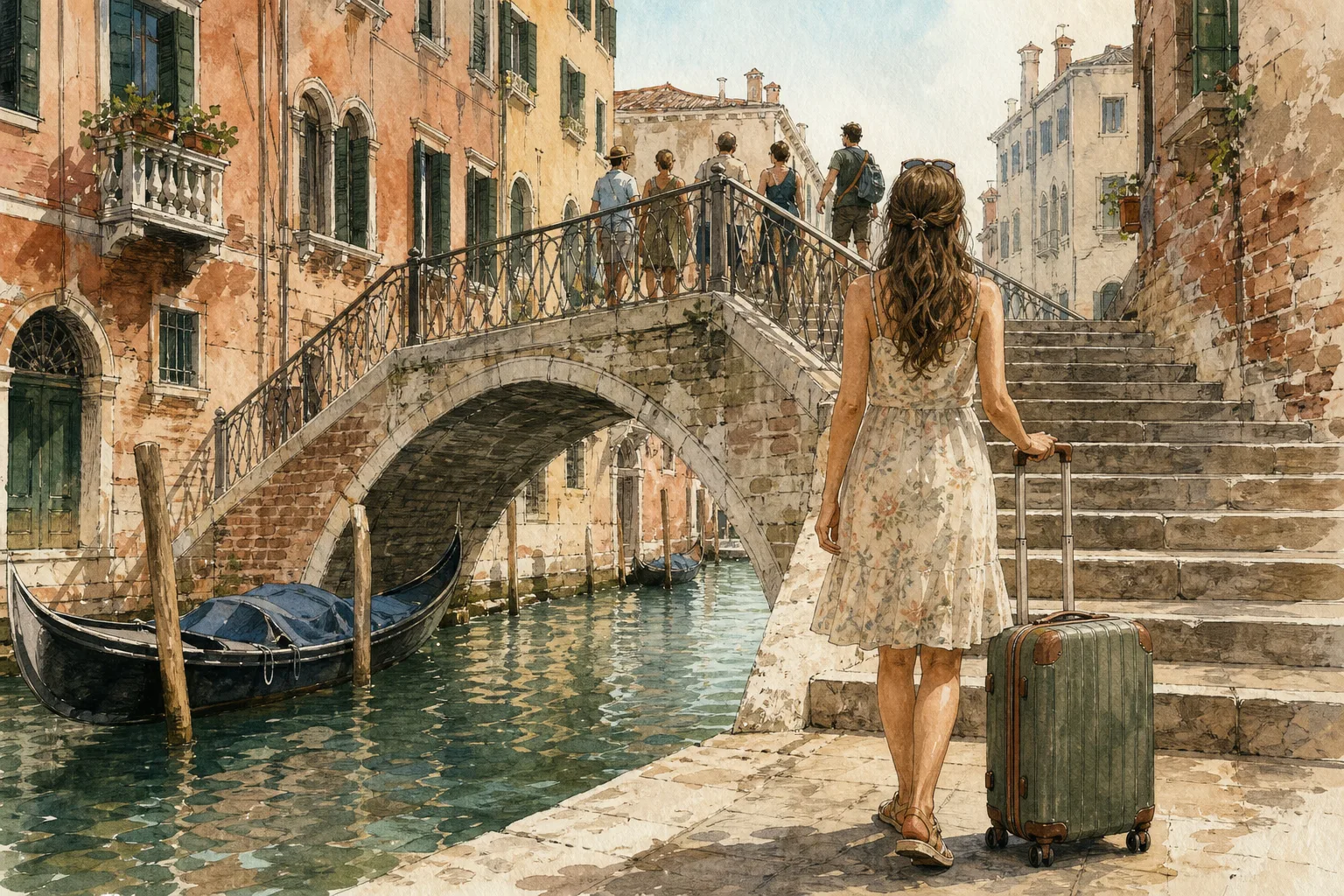
travel-decisions
Is Venice Worth It for Slow Travelers Who Want Atmosphere More Than Big Sightseeing Days?
A decision-led answer for travelers who care about Venice's mood, canals, and quiet evenings more than a checklist of major sights.
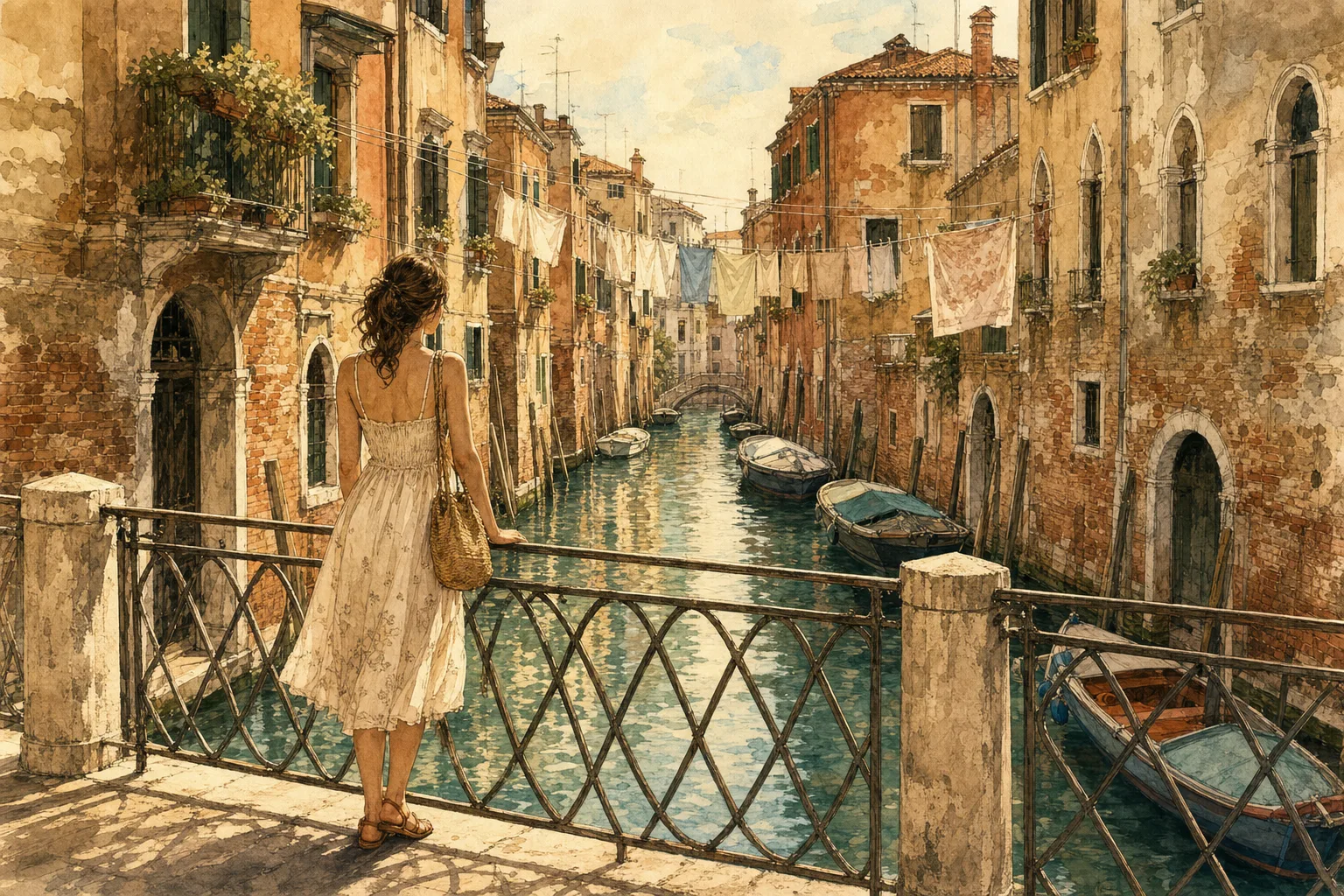
Venice has a reputation problem. People who arrive expecting a checklist day of Doge's Palace, St. Mark's Basilica, a gondola ride, and Murano often leave overstimulated and underwhelmed. People who arrive planning to walk, sit, drink a one or two euro glass of wine in a Cannaregio bacaro, and watch the light change on the water tend to leave wanting more time.
This article is for the second group, and for anyone trying to figure out whether they are actually that group.
Quick Verdict
Strong fit if you want canals, footbridges, slow dinners, and evenings without an itinerary; if you can stay 3 or more nights; and if you can ignore the pressure to see everything.
Weak fit if you have only one day, if your enjoyment depends on entering every famous interior, or if walking 15 to 25 minutes at a stretch over uneven stone bridges sounds exhausting rather than charming.
Venice is one of the few cities where doing less is genuinely the better trip for this persona. The product is the place itself, not the attractions inside it.
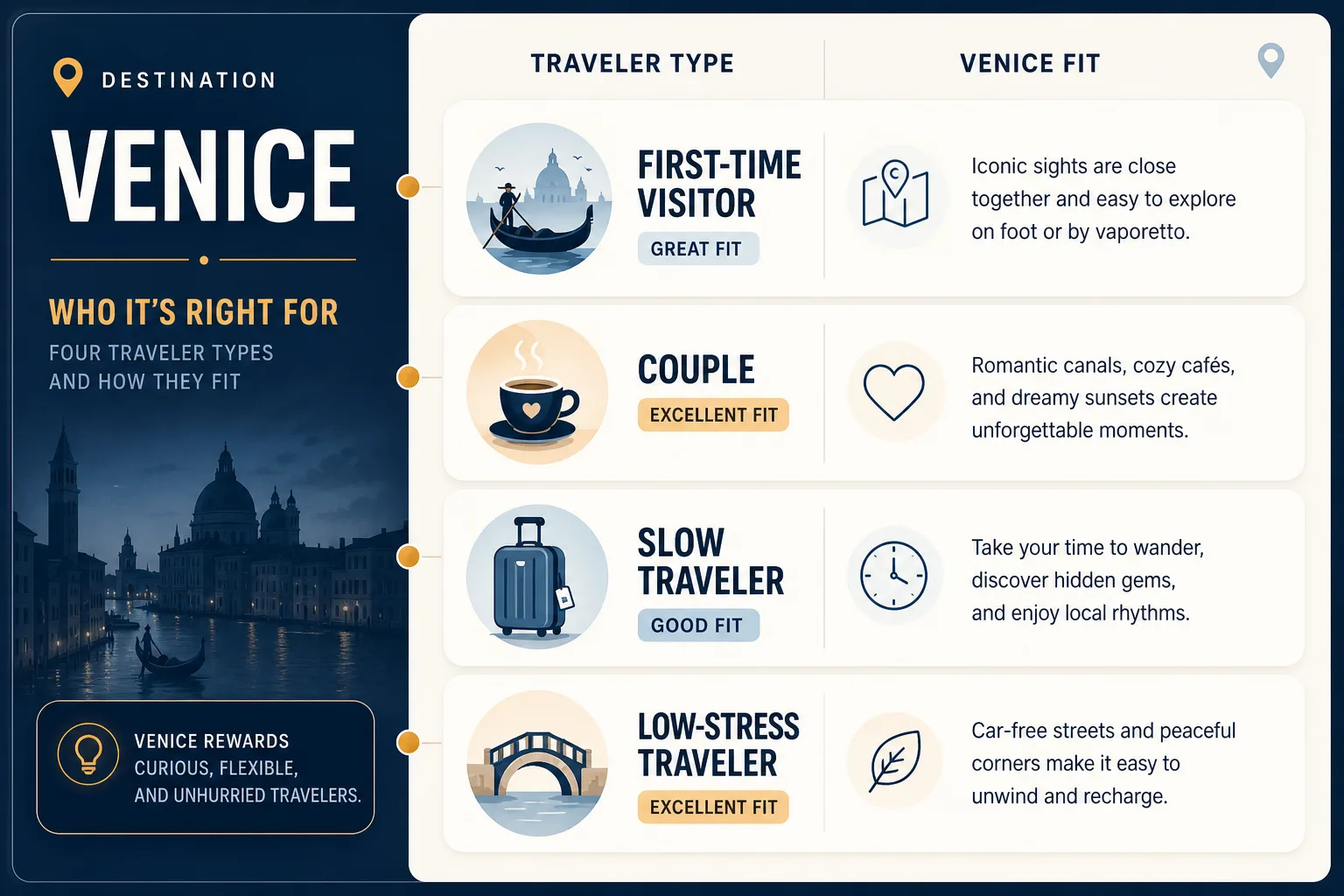 An infographic showing how Venice fits different traveler types like slow travelers and couples.
Best for First-Time Visitors
First-time visitors usually feel obligated to do the headline sights, which puts them in direct conflict with the slow, atmosphere-first approach. That tension is the single biggest source of disappointment in Venice.
If this is your first trip, the realistic compromise is one focused half-morning for the major landmarks and the rest of the trip spent walking. A workable San Marco morning looks like this:
- 7:30 to 8:30 AM: coffee in your sestiere, walk to Piazza San Marco while it is nearly empty.
- 8:30 to 9:30 AM: enter St. Mark's Basilica close to opening (a small pre-booked entry slot avoids the standby line, which builds quickly after 10 AM).
- 9:30 to 11:00 AM: Doge's Palace with a timed-entry ticket; skip the Secret Itineraries tour on a first visit unless you specifically want it.
- 11:00 AM onward: leave the San Marco corridor before lunch; this is when day-trippers peak.
The walk from Venezia Santa Lucia train station to San Marco is only about 2 km but realistically takes 25 to 60 minutes depending on crowds, which tells you most of what you need to know about pacing here. First-timers who treat Venice as a slow city rather than a sightseeing city tend to come back. First-timers who treat it as a checklist tend to say they did not get it.
Best for Couples
Couples are arguably the best-matched traveler type for atmosphere-first Venice. The reasons are practical, not romantic:
- Two people split easily into small calli and bacari that do not work for groups.
- Long, unhurried dinners are the default rhythm.
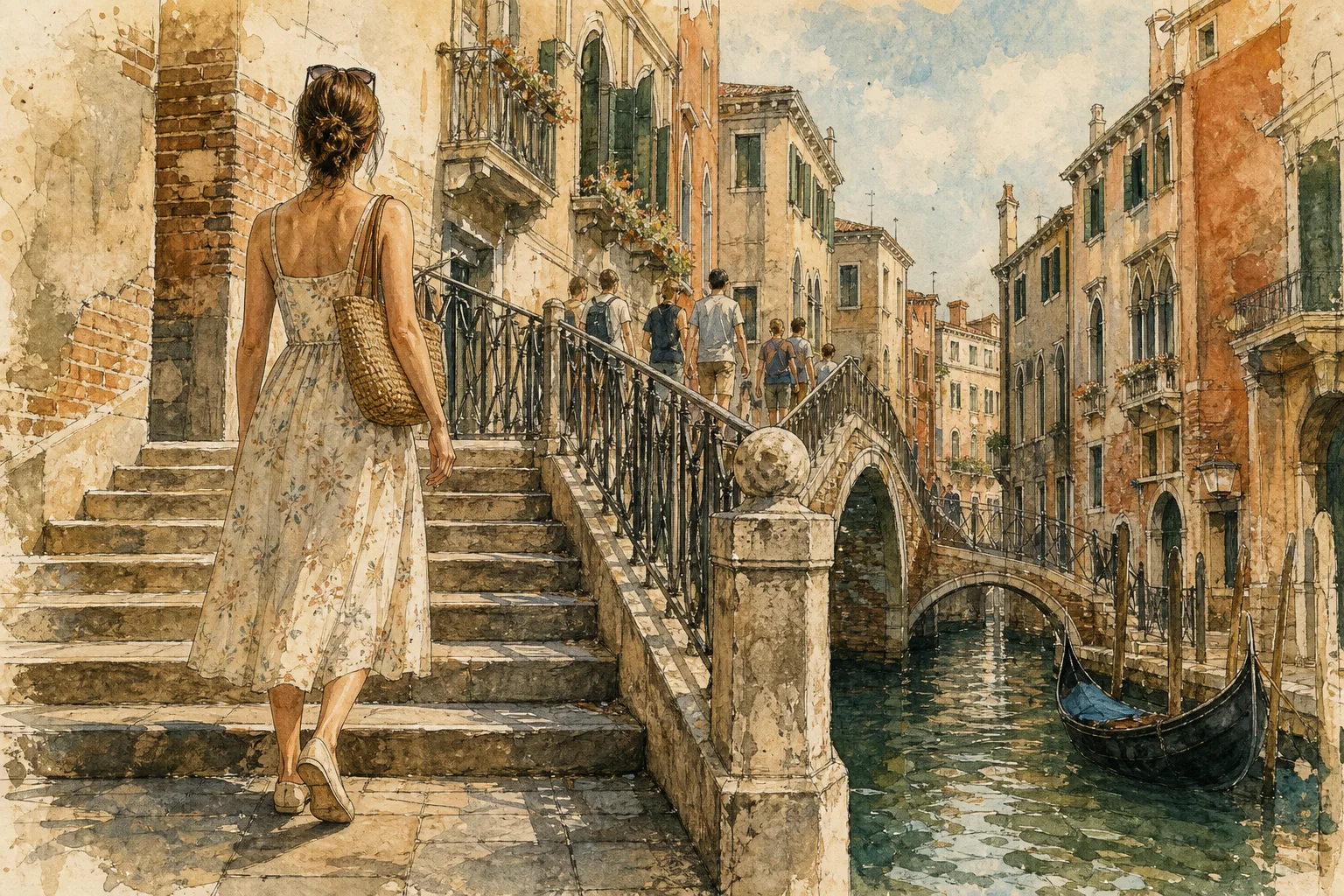
- The walking pace naturally invites pausing on bridges and in campos.
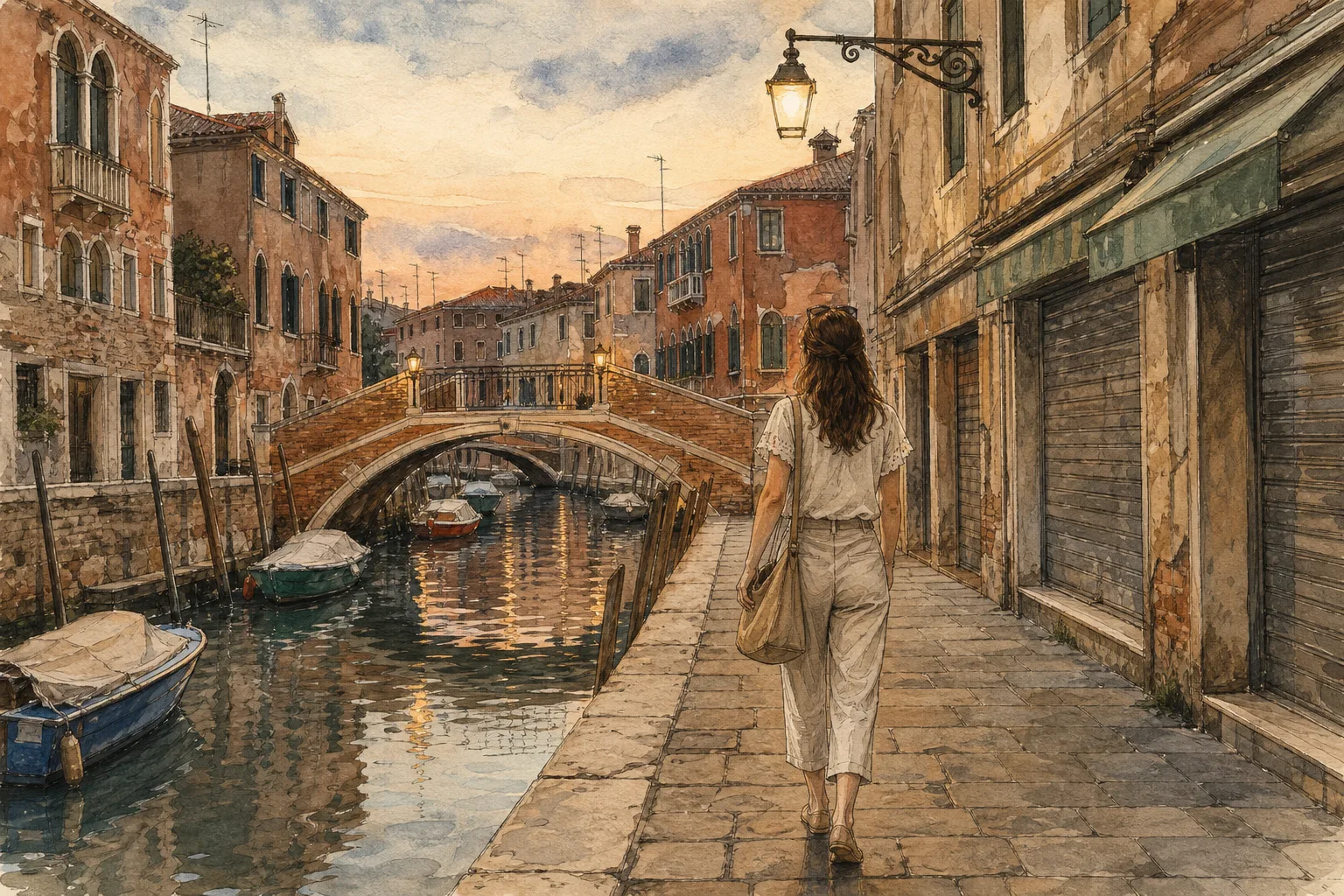
- Evening light between roughly 7 and 9 PM in summer is the city at its best, and it requires no booking.
Couples who want a quiet trip should base themselves in Cannaregio or Dorsoduro rather than near San Marco. Both are residential, both have strong evening food scenes, and both are 15 to 30 minutes on foot from the main sights when you want them. Concrete examples of bacari worth a stop: Al Timon and Vino Vero along the Fondamenta degli Ormesini in Cannaregio, and Cantine del Vino gia Schiavi near the Zattere in Dorsoduro.
Best for Slow Travelers
This is the core fit. Slow travelers who measure a trip by mood, not by attractions seen, get more out of Venice per day than almost any other Italian city of comparable size.
Concretely, a slow day in Venice can look like:
- Coffee in your neighborhood campo before 9 AM.
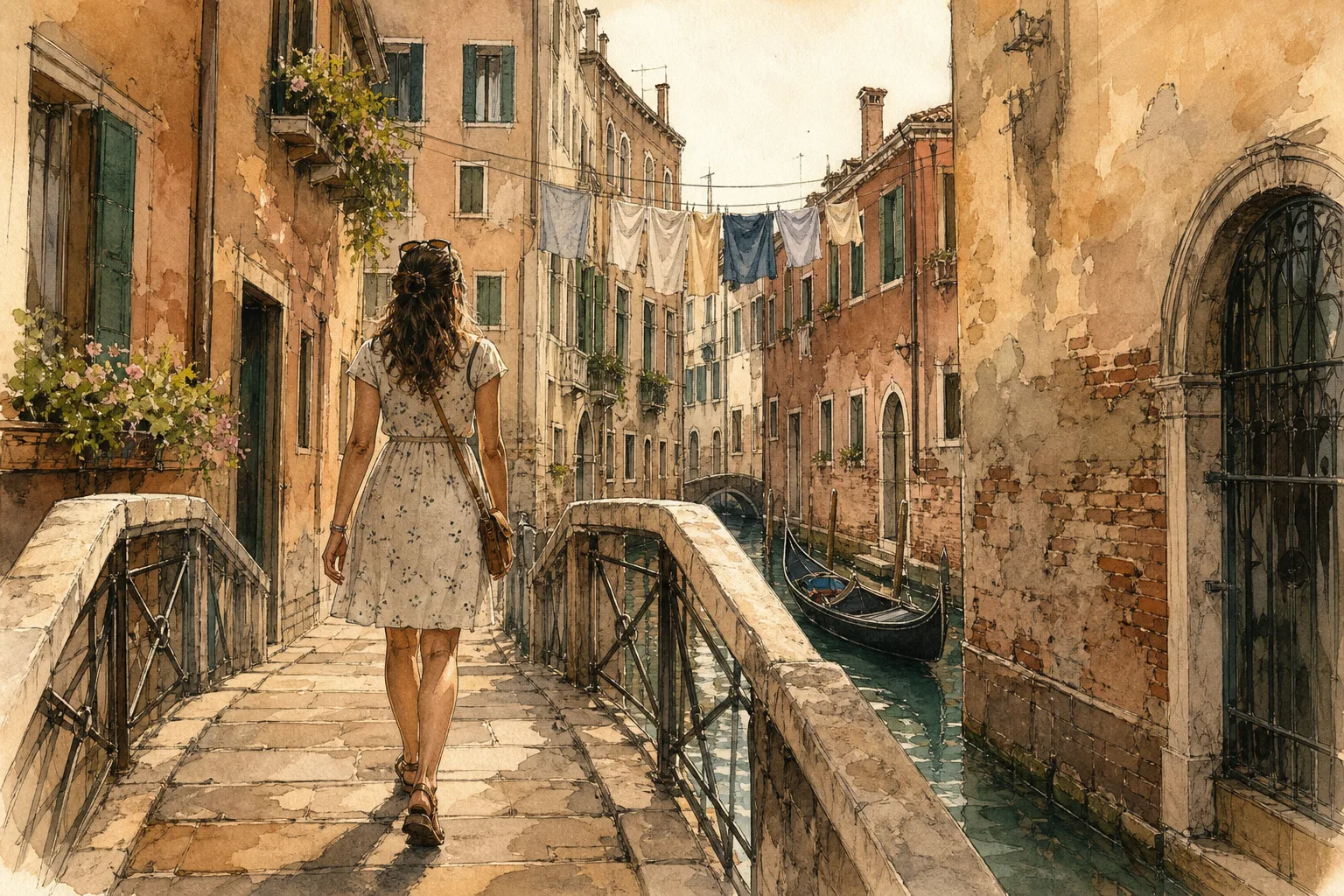
- A two to three hour aimless walk through Castello or northern Cannaregio.
- Lunch at a bacaro with cicchetti and a 1 to 2 euro glass of wine.
- A long rest at the hotel during the 12 to 4 PM crowd peak.
- An evening walk along the Fondamenta della Misericordia or the Zattere.
- A late dinner ending around 10 PM, when streets are nearly empty.
Nothing on that list requires a ticket, a reservation, or a queue. That is the point.
Best for Low-Stress Travelers
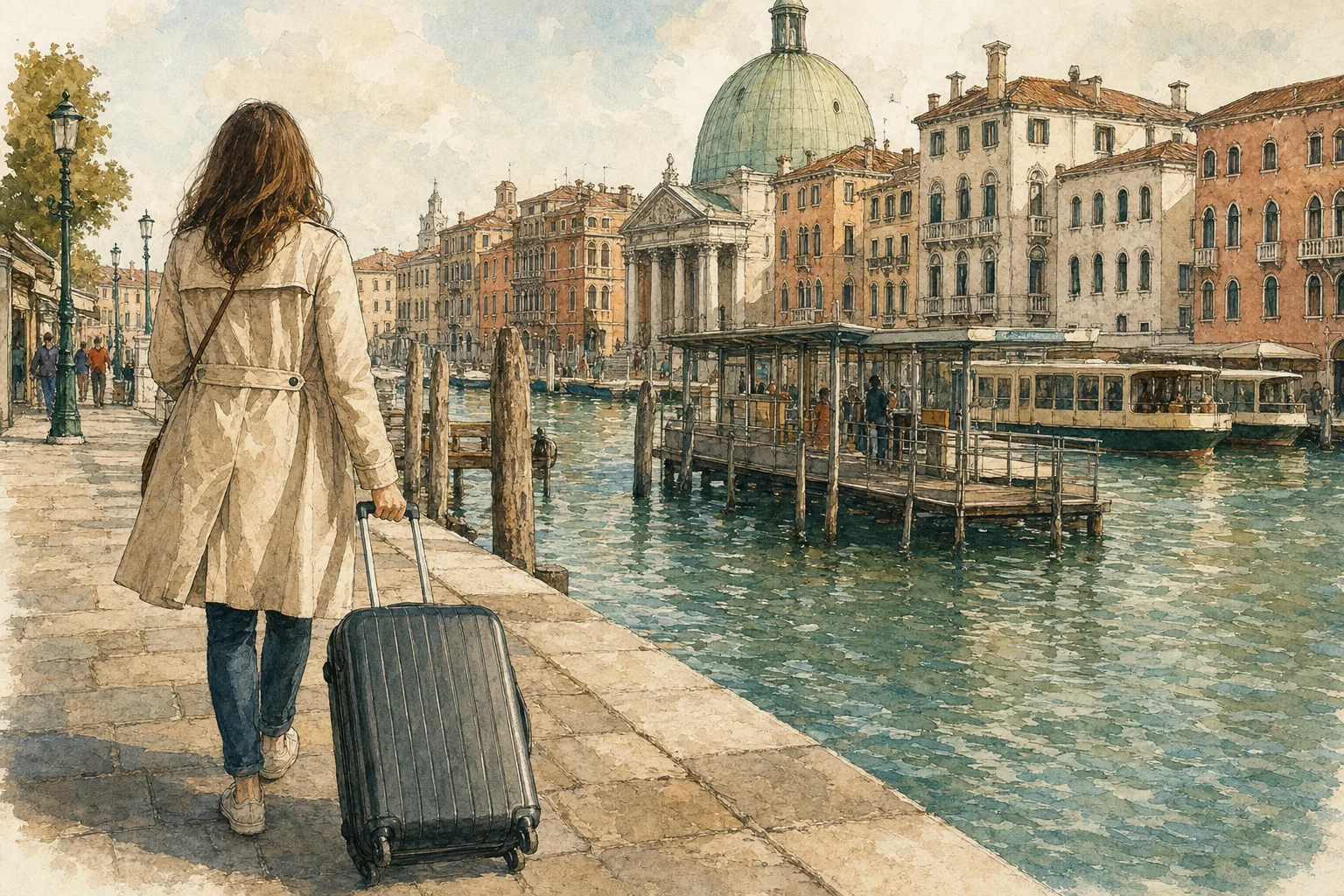
Low-stress travelers need to make one decision well: hotel location. Venice punishes bad hotel choices more than most cities because there are no taxis, no metro, and luggage on bridges is genuinely difficult.
A well-placed hotel in Cannaregio, Castello, or Dorsoduro removes most stress. A cheap hotel on the mainland in Mestre adds a 10 to 15 minute train ride every time you want to be in the city, which compounds quickly over three days.
Other low-stress moves:
- Register for the free overnight QR code at cda.ve.it before arrival.
- Skip the vaporetto pass unless you will use boats more than twice per day. A single ticket is 9.50 euro for 75 minutes; the 24-hour pass at 25 euro only pays off above three rides.
- Avoid guided day tours that promise to show you Venice in a day. Groups are capped at 25 people, banned from loudspeakers, and not allowed to stop on bridges, which makes already-rushed tours feel worse.
Traveler Type Table
| Traveler type | Fit for atmosphere-first Venice | Decision-changing detail |
|---|---|---|
| First-time visitor expecting major sights | Mixed | Book San Marco entries for 8:30 to 11:00 AM, then leave the corridor; treat the rest of the trip as slow travel |
| Couple, 3 to 4 nights in Cannaregio or Dorsoduro | Strong | 15 to 30 minute walk to San Marco, residential evenings, bacari open until late |
| Solo slow traveler | Strong | Castello east of San Marco and northern Cannaregio are genuinely quiet from 5 PM onward |
| Low-stress traveler in a well-located hotel | Strong | Luggage handling once at check-in, then no transit decisions for the rest of the trip |
| Low-stress traveler choosing Mestre to save money | Weak | Two train transfers per day breaks evening rhythm; saved cost rarely offsets it |
| Mobility-limited traveler | Weak to mixed | Bridges with stairs are unavoidable on most routes; see the alternatives section below |
| One-day day-tripper on a peak access-fee date | Very weak | 5 to 10 euro fee between 8:30 AM and 4:00 PM, sees only the crowded core, misses the evening payoff |
| Family with young kids and stroller | Weak to mixed | Bridge stairs make stroller days hard; better with a baby carrier |
Common Mismatches
The travelers most likely to regret choosing Venice for atmosphere reasons:
- The hidden checklist traveler. Says they want to wander but secretly feels the trip is wasted without entering the Basilica. Resolve this honestly before booking.
- The single-day visitor. One day in Venice on a peak access-fee date, between 8:30 AM and 4 PM, is the worst possible version of the city: crowded, hot, expensive, and missing the evening payoff.
- The save-money-in-Mestre traveler. The 10 to 15 minute train rides break the slow-travel rhythm; you end up doing fewer evening walks because you have to get back.
- The strict-budget foodie. Venice has excellent cheap eating at bacari (1 to 2 euro wines, a few euros per cicchetto), but mid-range sit-down dinners on tourist routes are often poor value. Mismatched expectations here cause real frustration.
- The see-all-the-islands planner. Murano, Burano, and Torcello are worthwhile, but trying to do all three plus central Venice in two days is a sightseeing trip, not a slow trip.
Accessibility and Mobility Notes
Venice is harder than most European cities for travelers with limited mobility, but not impossible if you plan around bridges rather than against them.
- The city of Venice publishes barrier-free itineraries that mark routes using public bridges fitted with stair lifts; the San Marco, Rialto, and Accademia areas all have at least one mapped route that avoids stair-only bridges.
- Vaporetto stops near San Zaccaria, Rialto, and Ferrovia are accessible, and using the No. 1 or No. 2 line lets you skip several bridge crossings entirely.
- Look for hotels advertising step-free access from a vaporetto stop, not just step-free rooms. Properties along the Riva degli Schiavoni and parts of the Zattere tend to qualify; properties deep in Cannaregio or Castello often do not.
- Use the luggage drop at Venezia Santa Lucia station rather than wheeling cases over multiple bridges to a hotel. Even one bridge with stairs and a heavy bag is enough to start a trip badly.
If two or more of these are dealbreakers, the next section is for you.
Better Alternatives if Venice Is the Wrong Fit
If you recognize yourself in the mismatch list, three Italian options often serve the same underlying desire better:
- Florence for travelers who actually want interiors and major art. Walking distances in the historic center are shorter, the ground is flatter, and the Uffizi and Accademia reward the kind of person who would feel cheated skipping interiors in Venice.
- Bologna for relaxed food-led slow travel. Covered porticoes make rainy days pleasant, distances are walkable, there are no bridges, and the food scene rewards the same long-dinner rhythm without the crowd pressure of central Venice.
- Lake Garda or the Cinque Terre for slow waterfront stays. Both let you build a trip around mornings on the water, late dinners, and minimal sightseeing pressure. Cinque Terre rewards travelers who can walk between villages; Lake Garda is easier for travelers who want a single base.
None of these replicates Venice's canal-and-bridge atmosphere. They do replicate the slow-travel rhythm with fewer friction points.
Final Match Recommendation
Choose Venice if:
- You can give it at least 3 nights.
- You will stay inside the historic center, not in Mestre.
- You are comfortable walking 15 to 30 minutes at a stretch over bridges.
- You accept that the middle of the day in the San Marco corridor will be crowded and that the fix is to be elsewhere then.
- You measure trip quality by evenings, food, and light, not by interiors visited.
Pick Florence, Bologna, or a lake or coastal base instead if:
- You have only one day and your dates fall on a peak access-fee day.
- Walking on uneven stone and stairs is a real physical problem and the mapped barrier-free routes still feel limiting.
- You will feel cheated leaving without doing the major interiors but also do not want to deal with queues.
For the slow, atmosphere-first traveler the title describes, Venice fits unusually well, and most of the friction points are predictable. Almost all of them are solved by two decisions: stay 3 nights minimum, and pick the right sestiere.
FAQ
Is Venice worth it if I skip most of the famous sights? Yes, for atmosphere-first travelers it often improves the trip. The canals, bridges, residential sestieri, and evening light are the actual product. Skipping Doge's Palace and the Basilica interiors frees up the middle of the day, which is when crowds and heat are worst.
How many nights make sense for a slow, mood-led Venice trip? Three to four nights is the sweet spot. One night is too short to enjoy the early morning and late evening windows, which are when Venice feels quiet. Three or four nights let you have at least two unscheduled days for wandering Cannaregio, Castello, and Dorsoduro without any agenda.
Do I need a vaporetto pass if I plan to walk most of the time? Often no. A single ticket is 9.50 euro and valid for 75 minutes, while a 24-hour pass is 25 euro, 48 hours is 35 euro, and 72 hours is 45 euro. If you are walking and plan only one or two boat rides per day, pay-as-you-go is usually cheaper. Travelers aged 6 to 29 should look at the 3-day Rolling Venice pass at 27 euro plus a 6 euro card fee.
Will the Venice Access Fee affect me as an overnight slow traveler? No. The 5 to 10 euro day-tripper fee applies only on 60 designated peak days between April 3 and July 26, from 8:30 AM to 4:00 PM, and overnight guests are exempt. You still need to register online at cda.ve.it to get a free QR code, so do that before arrival to avoid the 50 to 300 euro fines.
If Venice is a weak fit for my style, where should I go instead? Florence suits travelers who want major interiors and art with shorter, flatter walking. Bologna fits relaxed food-led trips with easy porticoed strolls and no bridges. Lake Garda or the Cinque Terre suit slow waterfront stays with less crowd pressure than central Venice.
Is Venice a bad fit for travelers who hate crowds? Not necessarily. Crowds concentrate around San Marco, Rialto, and the route between them, mostly between roughly 10 AM and 4 PM. If you base yourself in Cannaregio or Castello and use the early morning and post-dinner hours, much of the city is genuinely quiet.