travel-decisions
Is Venice Too Tiring for Low-Walking Travelers?
A direct look at whether Venice's bridges, stairs, and crowds make it a bad fit for low-walking, older, or slow travelers, and what actually reduces the fatigue.
Quick Verdict
Venice is a weak fit for anyone who cannot manage repeated bridge steps, uneven stone paving, and unavoidable crowd density over multiple hours a day. There is no version of central Venice that removes bridges and stairs from your route. If stair climbing, standing in queues, or walking on cobblestones for more than 20 minutes at a time already causes pain or exhaustion, this city will make that worse, not better.
Venice can still work for a low-stamina traveler who is willing to plan around the friction rather than ignore it: shorter days, a hotel within one or two bridges of a vaporetto stop, and a mindset built around one neighborhood a day instead of a checklist. It does not work for a traveler who wants to "see everything" in two days, use public transit like a subway, or avoid all queues during midday high season.
Choose Venice if: you can walk 20 to 30 minutes at a comfortable pace, climb a few bridge steps without needing to stop, and you are willing to slow your itinerary down to match the city's terrain.
Skip or heavily modify Venice if: you use a wheelchair, walker, or cane for most walking, tire after short distances, or you are traveling on a tight schedule that assumes fast movement between sights.
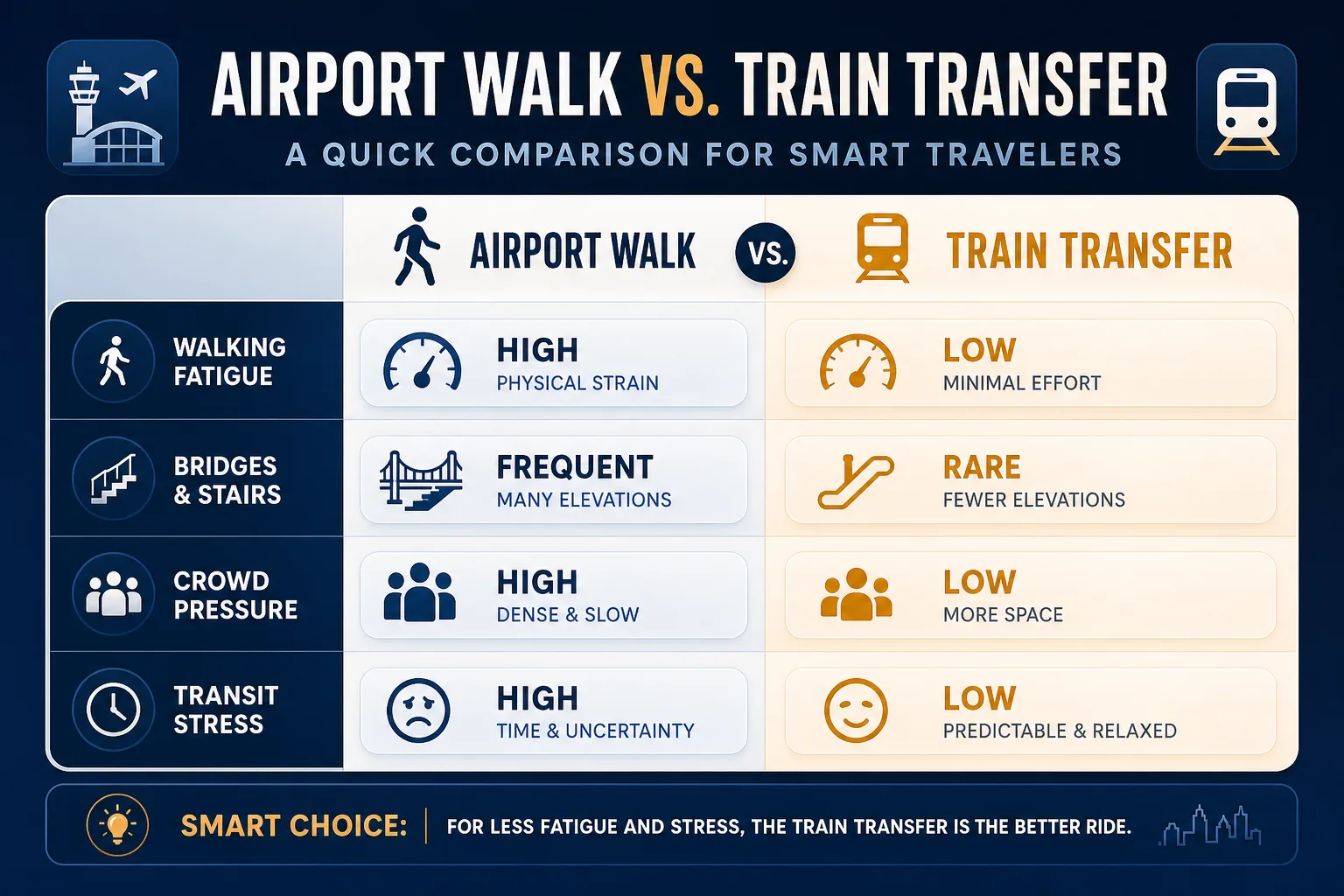 Editorial illustration: A clean simple comparison chart layout with labeled rows for walking fatigue.
Main Friction Problem
Venice's difficulty for low-walking travelers is not about distance on a map. It is about what that distance is made of. The historic center has no cars, no flat main streets, and very limited step-free routes, which means every friction point compounds instead of canceling out.
Walking fatigue builds faster here than in most European cities because the surface itself is the problem, not just the length of the walk. Stone paving is uneven, narrow calli force single-file walking, and there is rarely a bench or flat rest stop between one landmark and the next.
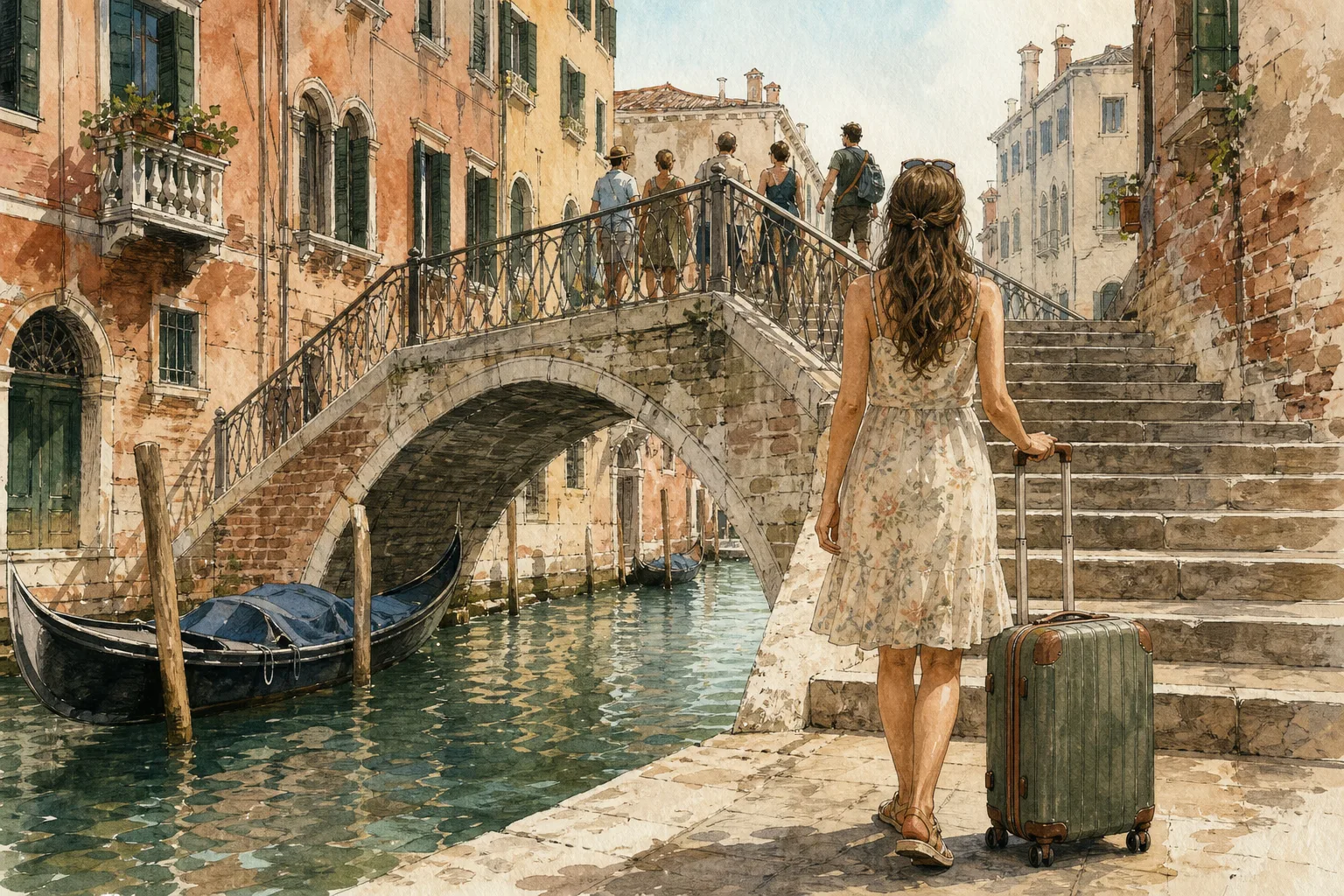
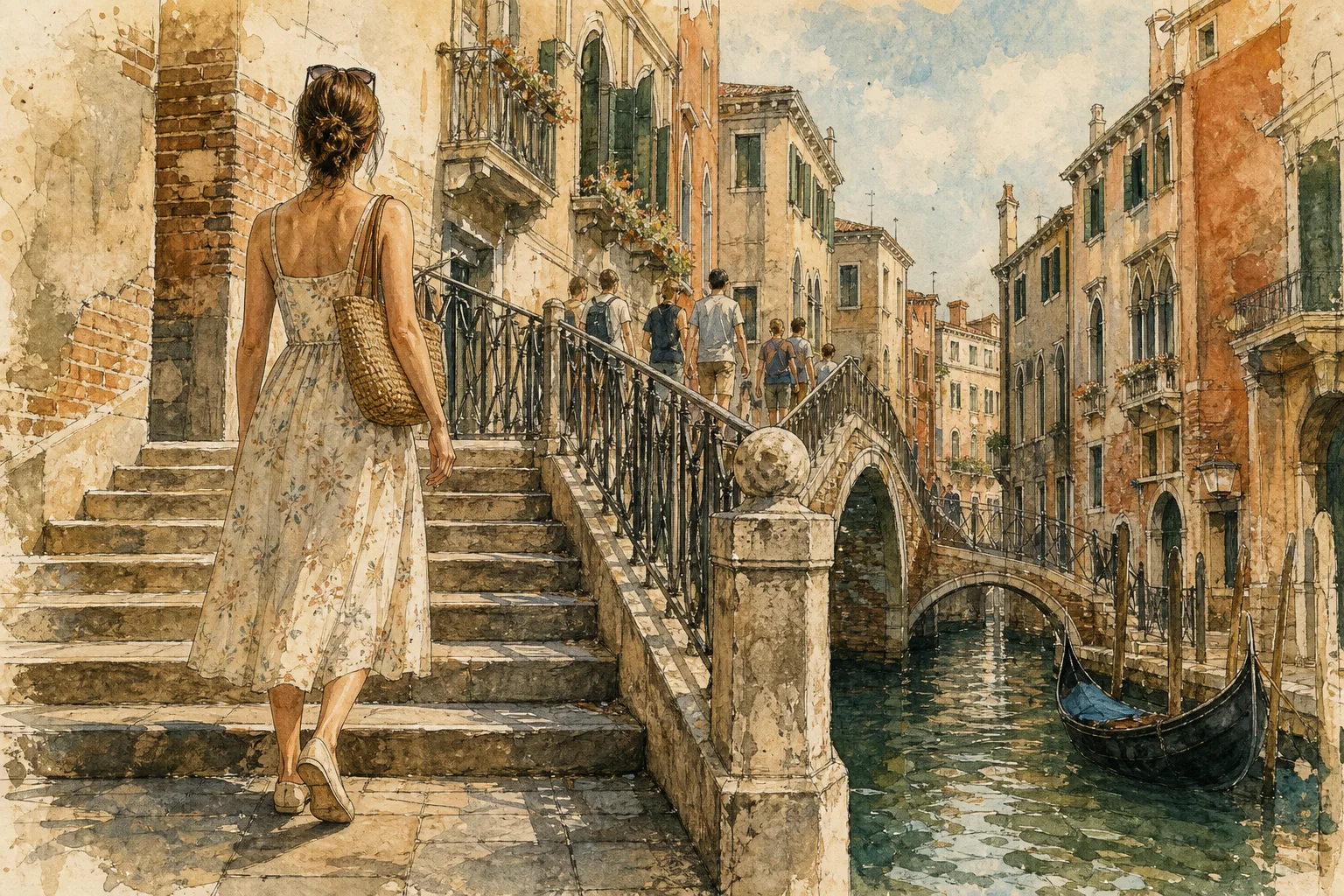
Stairs or bridges are the most literal obstacle. Venice has roughly 400 bridges connecting its islands, and the vast majority have stepped approaches on both sides. A route that looks like a 10-minute walk on a map can mean climbing and descending stairs six or more times.
Crowd pressure turns manageable terrain into stressful terrain. On a narrow bridge or calle, a slow pace is not just uncomfortable, it becomes a bottleneck other tourists push against, which adds real psychological stress on top of physical fatigue.
Transit stress comes from the fact that Venice has no metro and no buses in the historic center. The vaporetto (water bus) is the only mechanized option, and it does not go everywhere. Getting from a vaporetto stop to your actual destination almost always means walking the bridge-and-stair gauntlet again.
The honest reduction strategy is not to eliminate these frictions, since you cannot, but to shrink their frequency and stack them less aggressively across a single day.
Friction Table
| Friction point | Why it happens in Venice | Impact on low-walking travelers | Realistic mitigation |
|---|---|---|---|
| Walking fatigue | Uneven stone paving, no flat shortcuts, narrow streets force constant micro-adjustments | High: tires the body faster than equivalent flat-city distances | Cap daily sightseeing to one sestiere (district), plan seated rest stops every 45 minutes |
| Stairs or bridges | Roughly 400 bridges, nearly all stepped, connecting every part of the city | High: repeated stair climbing is unavoidable, not occasional | Choose a hotel that minimizes bridge crossings to key sights; ask specifically about step count, not just distance |
| Crowd pressure | Narrow calli and bridges create physical bottlenecks, worst around St Mark's Square and Rialto midday | Medium to high: forces a faster pace than comfortable, adds stress | Visit core landmarks before 9am or after 5pm; treat midday as rest time, not sightseeing time |
| Transit stress | No metro or bus network; vaporetto only covers canals and outer edges | Medium: reduces distance but adds boarding, queuing, and walk-to-stop friction | Buy a multi-day vaporetto pass to avoid per-ride ticket lines; pick lodging near a stop, not just near a sight |
Who Will Feel It Most
Not every low-walking traveler experiences Venice the same way, and the difference usually comes down to how much buffer you build into a day, not raw ability.
Travelers who will struggle most are those managing chronic joint pain, using a cane or walker for stability rather than just support, or recovering from recent surgery. For this group, bridge steps are not an inconvenience, they are a repeated risk of pain flare-ups or falls, and Venice offers no reliable way around that inside the historic center.
Older travelers without a mobility aid but with reduced stamina face a different version of the same problem: they can physically manage stairs, but the cumulative effect of dozens of them across a full day leads to exhaustion by early afternoon, often compounded by heat in peak summer months.
Slow travelers who simply prefer an unhurried pace, without an underlying physical limitation, tend to feel Venice's friction the least, because their itinerary style already matches the city's rhythm. The mismatch for this group is usually crowd pressure rather than physical terrain, since a leisurely pace on a jammed bridge still creates stress even without fatigue.
Families with strollers sit in a similar category to wheelchair users for bridge friction, since strollers cannot simply be carried up stairs the way a light daypack can.
How to Reduce the Friction
None of these frictions disappear completely, but each one has a specific, concrete way to cut its severity.
For walking fatigue: Build itineraries around a single neighborhood per day instead of crossing the city. Schedule a seated break, at a cafe or a campo bench, every 45 minutes rather than pushing through to the next sight.
For stairs or bridges: Ask your hotel directly how many bridges and how many total steps separate the property from the nearest vaporetto stop before booking, not after arrival. A hotel two minutes closer on a map can mean two fewer bridges in practice.
For crowd pressure: Shift your schedule earlier or later than standard tourist hours. Visiting St Mark's Square at 8am versus 1pm is not a minor difference, it is the difference between open space and shoulder-to-shoulder movement.
For transit stress: Buy a multi-day vaporetto pass on arrival so you are never standing in a ticket line while tired. Treat the vaporetto as a way to cover distance between neighborhoods, not as a way to reach a specific doorstep, since the last stretch is almost always on foot.
A practical planning checklist for combining these:
- Limit each day to one primary sestiere plus a short vaporetto ride, not multiple districts
- Confirm hotel-to-vaporetto bridge count before booking
- Block a seated rest every 45 to 60 minutes into your actual schedule, not as an afterthought
- Target major landmarks before 9am or after 5pm
- Buy a multi-day transit pass on day one to remove daily ticket-line friction
- Pack minimal luggage weight, since every extra kilogram compounds on every bridge
Better Alternatives
If the friction table above describes more discomfort than you are willing to accept, Venice is not the only way to get an Italian canal-city or historic-center experience, and forcing the trip usually produces regret rather than a good story.
Bologna offers a historic Italian center with porticoes, covered walkways that shelter you from both sun and rain, and a much flatter core than Venice's bridge network. It trades gondola romance for genuinely easier daily walking.
Lake Como towns like Bellagio give you water views and a slower pace without Venice's bridge density, though some lakeside paths still involve steps and slopes worth checking in advance.
A Venice day trip instead of a multi-night stay is a realistic middle path. If the appeal is seeing St Mark's Square and the Grand Canal once, a single well-timed day (arriving early, leaving before evening crowds return) limits your total friction exposure without requiring you to abandon Venice entirely.
Verona or Padua as a base, with Venice as an optional half-day add-on, lets you experience the region with far more step-free hotel options and shorter walking distances for daily life, while still keeping Venice reachable by train.
The decision is not "Venice or nothing." It is choosing how much bridge-and-stair exposure matches what your body can handle on a given trip.
Decision Checklist
Use this before you commit to booking Venice as a primary destination rather than a day trip:
- I can climb a flight of stairs (10 to 15 steps) without needing to stop or rest partway
- I can walk on uneven, cobblestone-like surfaces for 20 to 30 minutes without significant discomfort
- I am willing to limit each day to one neighborhood instead of covering multiple sights
- I am comfortable asking a hotel directly about bridge count and step count before booking
- I can tolerate crowd density in narrow spaces, or I am willing to shift my schedule to avoid peak hours
- I am not relying on a wheelchair, walker, or stroller for most of my daily movement
- My trip schedule has slack for slower days rather than a fixed multi-sight itinerary
If you checked most of these, Venice is manageable with the mitigations above. If you checked fewer than half, a day-trip version of Venice or one of the alternatives above will likely serve you better than a multi-night stay.
FAQ
Is Venice wheelchair or walker accessible? Partially. Venice has an official assisted-mobility route network that avoids the steepest bridges, but it is longer and still includes some ramps with real gradient. If you use a wheelchair or walker, plan the specific route in advance rather than assuming any hotel-to-sight walk is flat.
How much walking does a typical day in Venice actually require? Even a light sightseeing day usually means 5 to 8 kilometers of walking on uneven stone, plus 10 to 20 bridge crossings. There is no way to fully avoid this inside the historic center, since vaporetti only cover the Grand Canal and outer edges.
Are water taxis or vaporetti a real substitute for walking? They reduce distance but not friction entirely. Vaporetto stops are often still several bridges from your hotel or destination, and boarding involves steps, a moving platform, and crowd queuing at peak hours, which itself can be tiring for a low-stamina traveler.
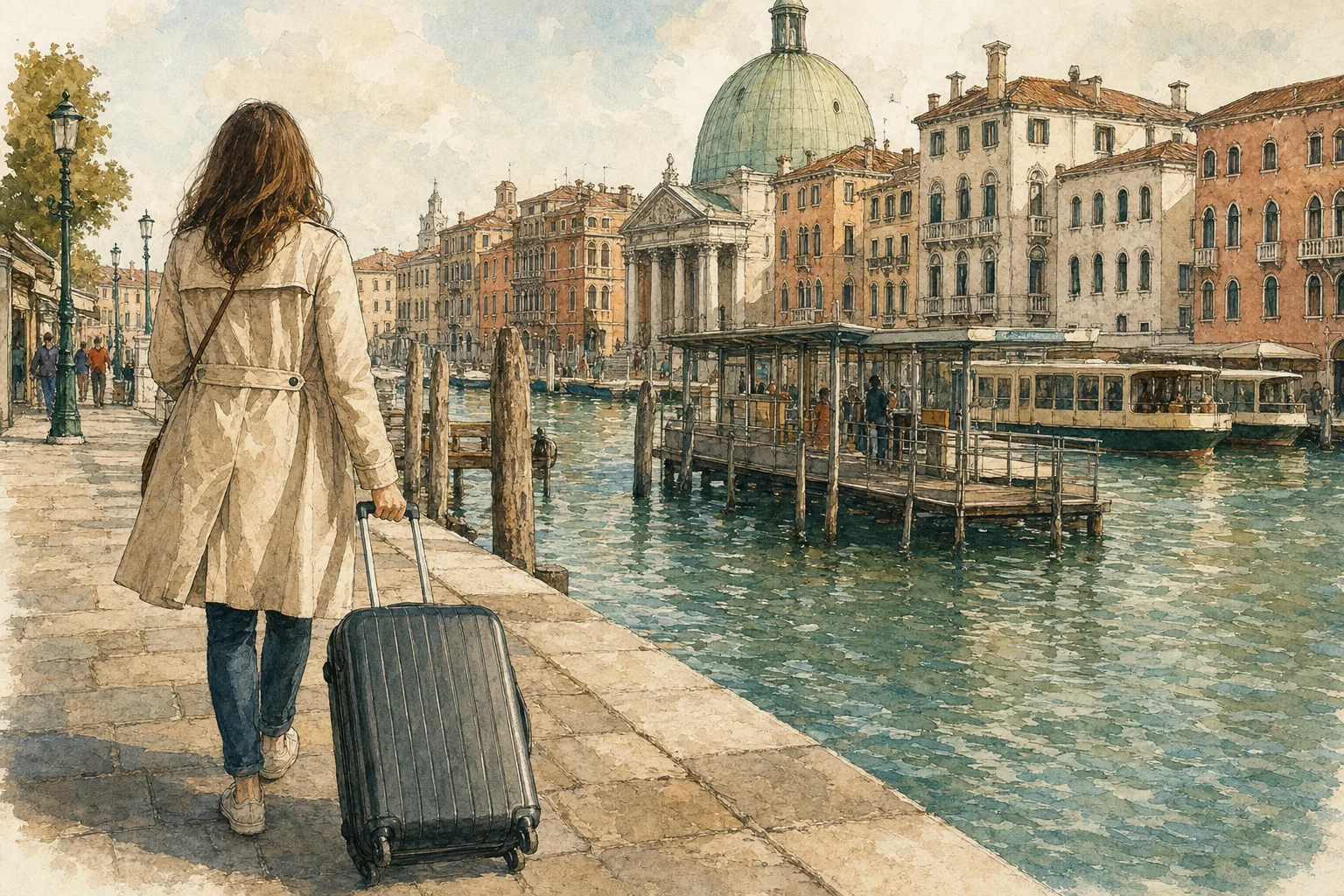
What is the single biggest mistake low-walking travelers make in Venice? Booking a hotel based on price or photos instead of walking distance from the nearest vaporetto stop. A hotel that looks central on a map can still mean four bridge crossings with luggage, which sets a painful tone for the whole stay.
Is off-season Venice meaningfully easier on the body than summer? Yes, mainly through crowd reduction, not through terrain. Late autumn and winter mean shorter queues and more room to set your own pace on bridges, though acqua alta flooding in some winter months adds its own mobility complication.