travel-decisions
Is Winter a Good Time for Venice If You Want Atmosphere Without Peak Crowds?
A decision guide for atmosphere-first travelers weighing Venice in winter: the friction of cold and short days against quieter calli, lower hotel rates, and moody canal light.
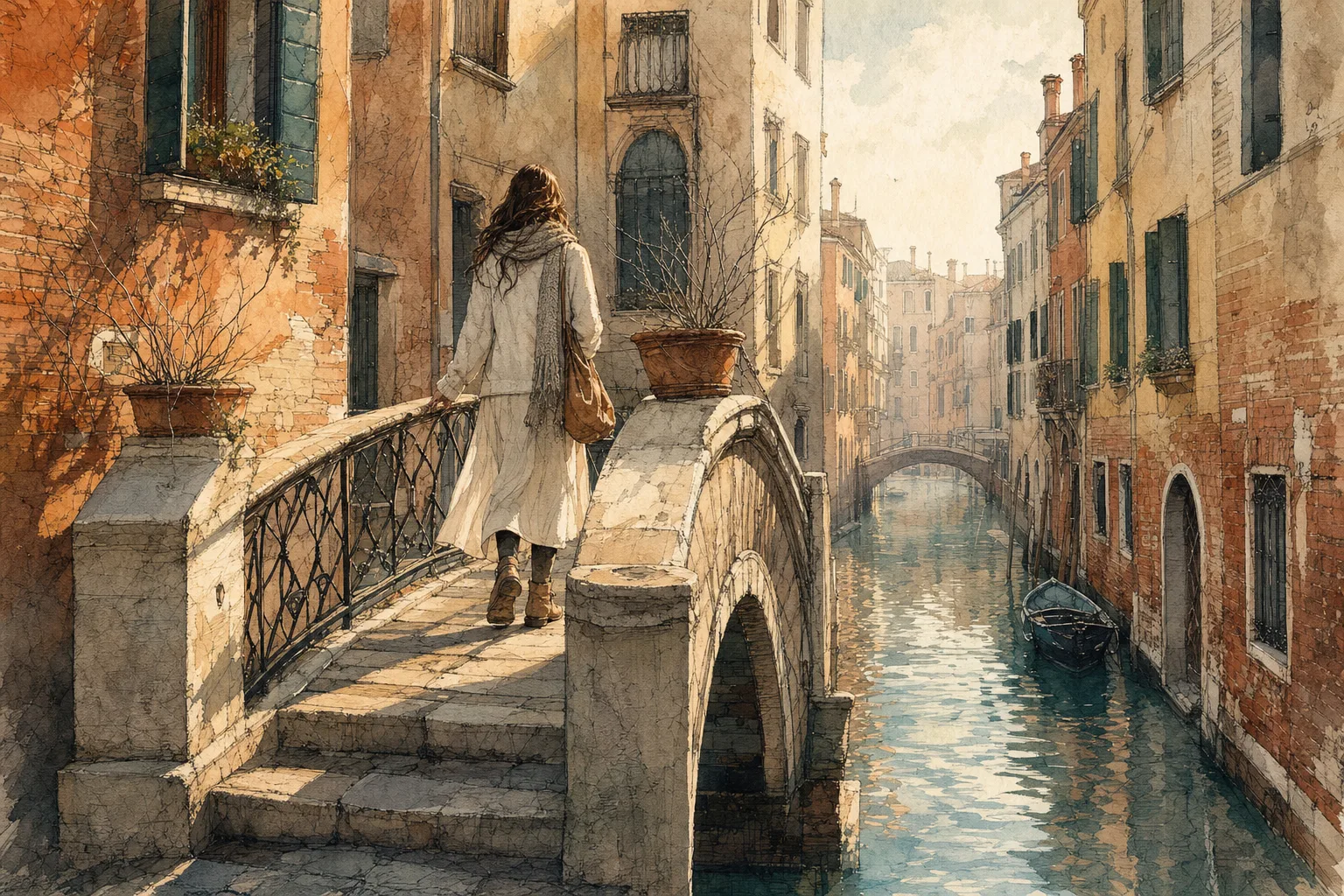
Venice in winter is one of those trips where the marketing photos and the lived reality usually match, but only if you accept what you are trading away. This guide is for travelers who care more about empty bridges and canal reflections than about long sightseeing days and outdoor aperitivo weather.
Quick Verdict
Go in winter if: you want quiet calli, soft low-angle light, hotel rates 30 to 50 percent below peak, and you are happy with one major sight per day plus long walks. Best fit for slow travelers, photographers, and anyone who finds summer Venice unbearable.
Skip winter if: you need predictable dry weather, full daylight for packed itineraries, lively outdoor squares at night, or you are traveling with anyone who struggles with cold, damp air or with hauling luggage up and down arched bridges in rain.
The sharpest sweet spot is mid-January through early February, outside Carnevale: the quietest crowds, the lowest prices, and the most atmospheric light of the year. Early December is a close second if you want some holiday warmth in shop windows.
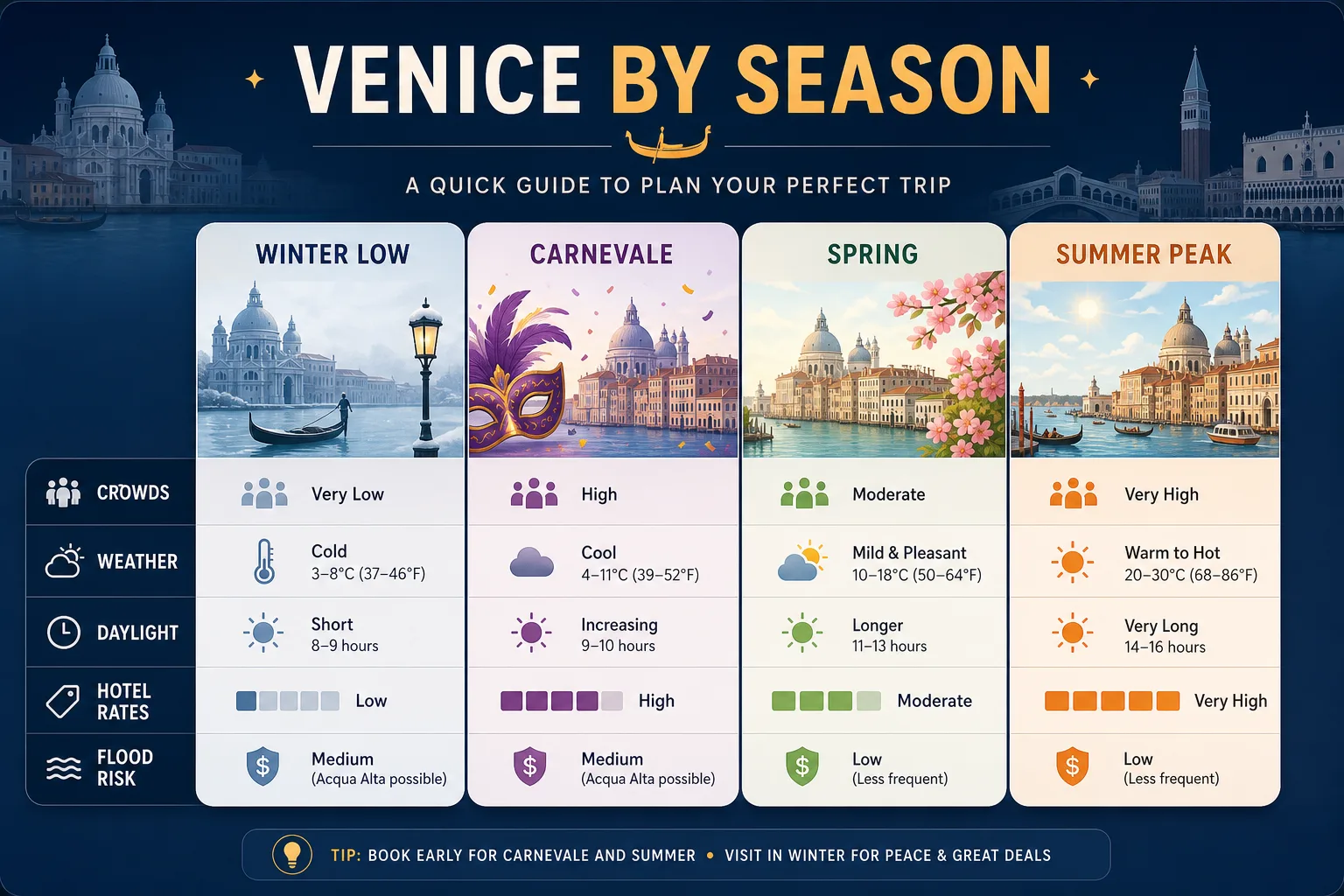 An infographic comparing Venice travel conditions across winter, Carnevale, spring, and summer seasons based on crowds, weather, daylight, hotel rates, and flood risk.
The Main Friction: Cold, Wet, and Dark, Not Snowy and Magical
The honest friction with winter Venice is not danger or shutdown. It is sustained low-grade discomfort that can erode a short trip.
Winter daily highs sit around 5 C to 9 C (41 F to 48 F) with nighttime lows of 1 C to 3 C (33 F to 37 F). The cold itself is mild by northern European standards, but the lagoon humidity makes it feel sharper, especially on vaporetto decks and at uncovered train platforms (Venezia Santa Lucia's lobby is enclosed, but the platforms themselves are not).
Then there is rain: 10 to 11 rainy days per month on average. Not constant downpours, but enough that any 4-day trip will likely include at least one wet half-day. Combine that with sunset as early as 4:27 PM in early December, and you have only about 9 hours of daylight, some of which you will lose to weather.
The quiet, which is the whole point for many readers, also cuts the other way. Many restaurants in residential sestieri close by 9:30 PM in deep winter. Outdoor cafe seating is gone. If you wanted bustle and late nights, you came to the wrong season.
Friction Table: Venice by Window
Use this to decide which winter window, not just whether to go.
| Window | Crowds | Weather feel | Daylight | Hotel rates vs peak | Watchouts |
|---|---|---|---|---|---|
| Early December | Low, festive | Cold, damp, possible fog | ~9 hours | 30 to 50 percent lower | Some shops still in transition to holiday hours |
| Christmas to Jan 6 | Moderate spike | Cold, often clear | ~9 hours | Near-peak around holidays | Rates and crowds jump for the holiday week |
| Mid-January to early February (pre-Carnevale) | Lowest of the year | Coldest, driest patches possible | ~9.5 to 10 hours | Lowest of the year | Some smaller venues take annual breaks |
| Carnevale (typically two weeks before Lent) | Peak-level | Cold, often wet | ~10 hours | Peak or above | Costumed crowds in San Marco rival August |
| Late February to mid-March | Low to moderate | Warming, still wet | ~11 hours | 20 to 35 percent lower | Shoulder season unpredictability |
For context on cost: typical winter low-season rates run roughly 60 to 120 euro for budget (1 to 2 star), 100 to 180 euro for mid-range (3 star), and 200 to 400+ euro for luxury (4 to 5 star), but Carnevale and Easter erase that discount completely. Staying in Cannaregio runs 15 to 25 percent below San Marco, and Dorsoduro 10 to 20 percent below, which compounds the seasonal savings.
Who Will Feel It Most
Winter Venice rewards and punishes specific traveler types sharply.
Strong fit:
- Atmosphere-first travelers who came for fog on the lagoon, lit windows at 5 PM, and the sound of their own footsteps on stone.
- Slow travelers planning 4+ nights with one anchor activity per day and long unstructured walks.
- Photographers who want low sun angles, reflections in wet pavement, and uncrowded foregrounds.
- Returning visitors who already did the headline sights in better weather and want a different mood.
Poor fit:
- First-time visitors on a 2-day trip trying to see San Marco, the Doge's Palace, the Accademia, and Murano. The daylight math does not work.
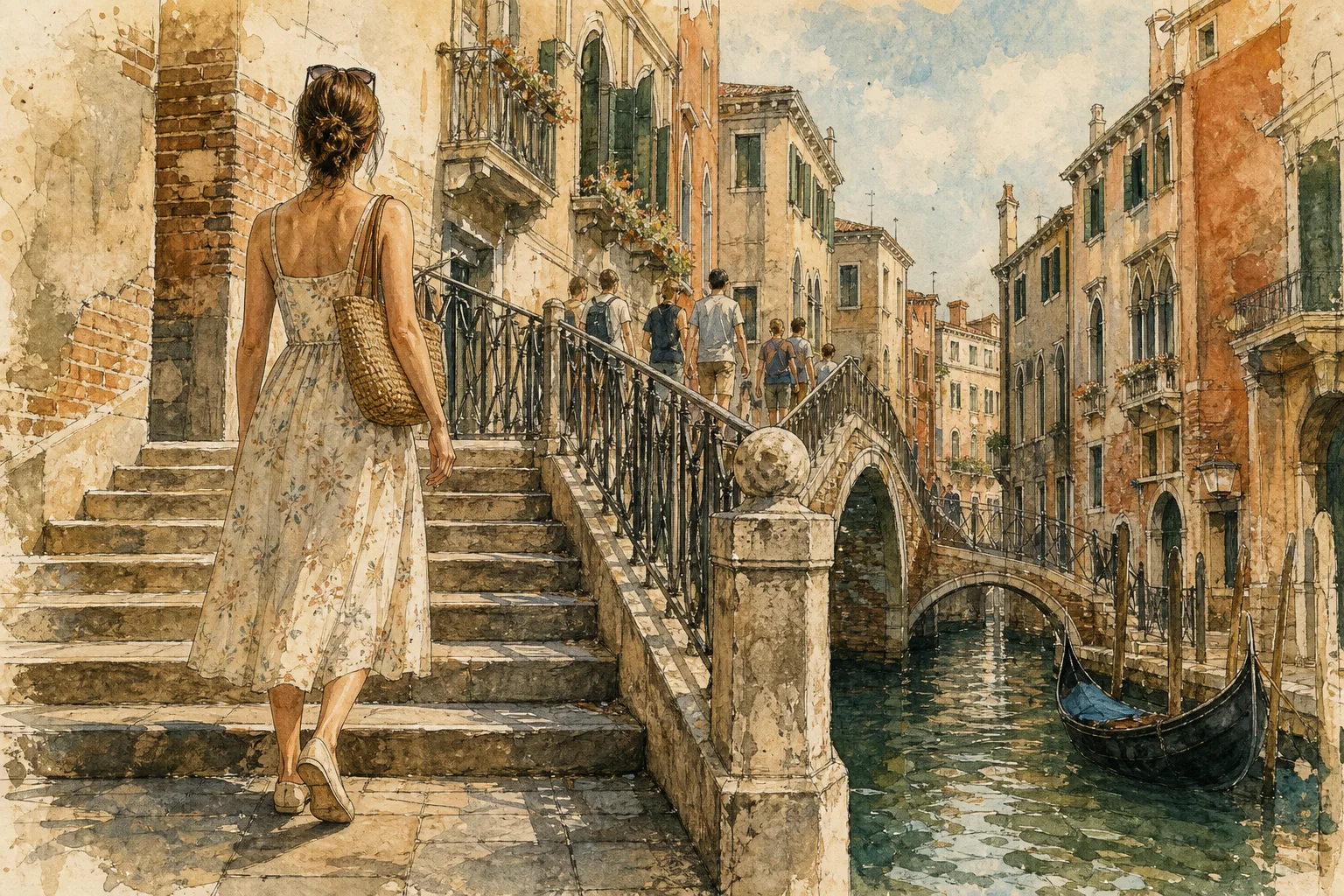
- Travelers with mobility concerns or heavy luggage. Venice has no continuous flat roads; you will climb arched bridges, and wet stone is slick.
- Anyone needing reliable outdoor evening life. Winter nights in residential sestieri are genuinely quiet.
- Travelers who get cold-miserable fast. Damp 6 C feels colder than dry 0 C, and you will be outside more than you expect.
How to Reduce the Friction
You can engineer most of winter's downsides down to manageable levels with a few specific choices.
For cold and damp:
- Waterproof boots with grip, not fashion boots. Bridges and fondamenta get slick.
- Layered wool, not a single heavy coat. You will move between cold canals and hot, crowded churches and cafes constantly.
- Book accommodations with strong, reliable heating and ask explicitly; some historic buildings under-heat.
For short daylight:
- Front-load outdoor walks to the 10 AM to 3 PM window.
- Reserve one indoor anchor (museum, scuola, church complex) for late afternoon when light dies.
- Treat 4:30 PM to 7 PM as golden cafe and bacaro hours, not sightseeing hours.
For flood risk:
- Check the Comune di Venezia tide forecast each morning.
- Stay above ground floor where possible.
- Avoid booking the lowest-elevation areas around San Marco for sleep; consider Cannaregio or Dorsoduro instead.
For the quiet-night tradeoff:
- Lean into early dinners (7:30 PM is normal).
- Pick neighborhoods with active local bacari clusters: around Rialto market, Cannaregio's Fondamenta della Misericordia, and Dorsoduro near Campo Santa Margherita.
For transit friction:
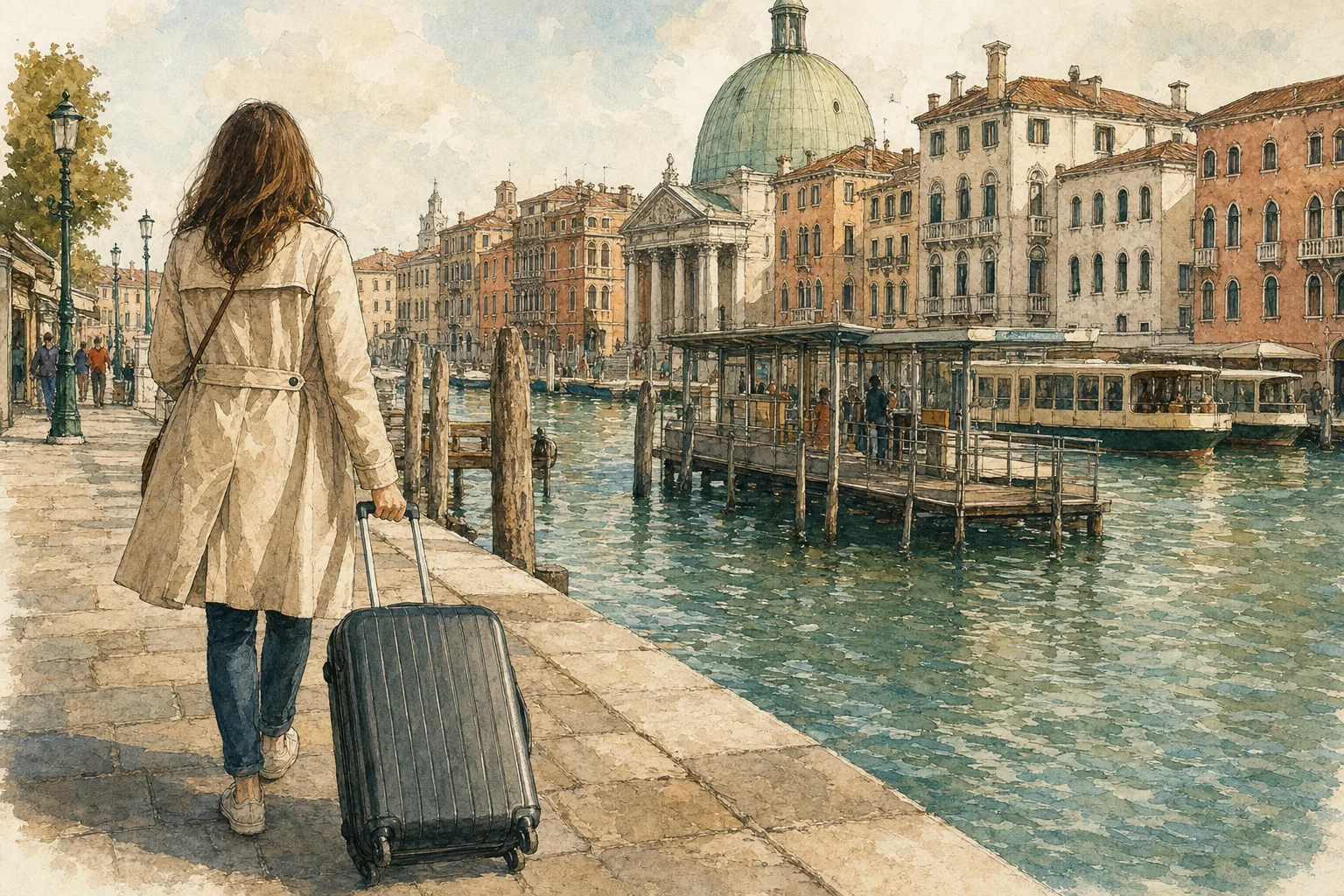
- Walking Santa Lucia to Rialto is about 20 minutes over 1 km, and to San Marco roughly 25 to 35 minutes straight through, both involving bridge climbs. With luggage in winter rain, the vaporetto at 10 euro per single trip, valid 75 minutes, is worth it once.
Better Alternatives If Winter Is Not Your Fit
If reading the friction list made you wince, consider redirecting rather than forcing winter.
- Want quiet without cold? Target early November or mid-March to early April outside Easter. Shoulder rates, longer days, lighter crowds than summer though more than January.
- Want light and lively evenings? Late April to mid-June balances long days with crowds that are heavy but not yet August-level oppressive.
- Want guaranteed dry weather and warmth? September after the first week is the classic answer, though crowds remain high.
- Want winter mood but warmer? A Mediterranean winter city like Seville or Palermo delivers atmospheric old quarters with milder temperatures, though without the lagoon-specific magic.
- Want Carnevale specifically? Treat it as a separate trip type with peak pricing and crowds, and book 4 to 6 months out.
Decision Checklist Before You Book Winter Venice
Run through this list honestly. If you cannot tick most of the top group, reconsider the season.
- I am okay with rain on at least one day of a 4-day trip.
- I am comfortable in 5 to 9 C daytime weather with damp wind.
- I have, or will buy, waterproof boots with grip.
- I am planning one anchor sight per day, not four.
- My dates avoid Christmas week, New Year, and Carnevale (unless I want those specifically).
- I have checked sunset times for my exact dates and adjusted expectations.
- My accommodation has confirmed reliable heating.
- I am staying in Cannaregio, Dorsoduro, or Castello, not deep in San Marco low ground.
- I have a backup indoor plan for any high-tide morning.
- No one in my group has serious mobility limits with stairs and bridges.
If you ticked 8 or more, winter is likely a strong fit. 5 to 7, lean shoulder season. Fewer than 5, choose another window.
FAQ
Is winter actually less crowded in Venice, or is that a myth? Outside of Carnevale, Christmas week, and New Year, winter is genuinely quieter. Weekday mornings in January between roughly 9 AM and 11 AM, and late afternoons after sunset, can feel close to empty in residential neighborhoods like Cannaregio and Castello. San Marco still draws day-trippers in the middle of the day, but density is a fraction of summer levels.
How likely is acqua alta to ruin my trip? Flooding events are most common from late October through January, but the MOSE floodgate system is activated when forecasts hit 130 cm or higher above sea level, which has sharply reduced full-square flooding in San Marco. Expect possible localized puddling on low calli rather than guaranteed disruption. Pack waterproof boots and check tide forecasts the morning of.
Will short daylight hurt the trip if I want to see art and architecture? Sunset can fall as early as 4:27 PM in early December, leaving roughly 9 hours of usable daylight. That is enough for one major museum or church cluster plus a long walk, but not for the back-to-back sightseeing some travelers attempt in June. Plan one anchor per day and treat the long evenings as part of the atmosphere, not lost time.
Is Carnevale a good compromise or should I avoid it? Carnevale (typically the two weeks before Lent in February) brings crowds and price spikes that erase the winter discount, with hotel rates jumping into peak territory. If you want winter light and quiet calli, target mid-January or the first half of December outside the holiday week. If you want costumes and spectacle and accept summer-level density, Carnevale is its own trip.
Should I stay near the train station to avoid hauling luggage over bridges? Cannaregio near the station is a reasonable choice in winter for exactly this reason, and rates run 15 to 25 percent below San Marco. But the real luggage fix is taking the vaporetto once on arrival and once on departure at 10 euro per ride; that single decision removes most bridge fatigue for the whole trip.