travel-decisions
Is Osaka Worth It in Autumn If You Want Foliage Without Kyoto-Level Crowds?
A decision-focused look at whether Osaka delivers real autumn foliage with lighter crowds than Kyoto, including who it fits, who should skip, and how to plan around the friction.
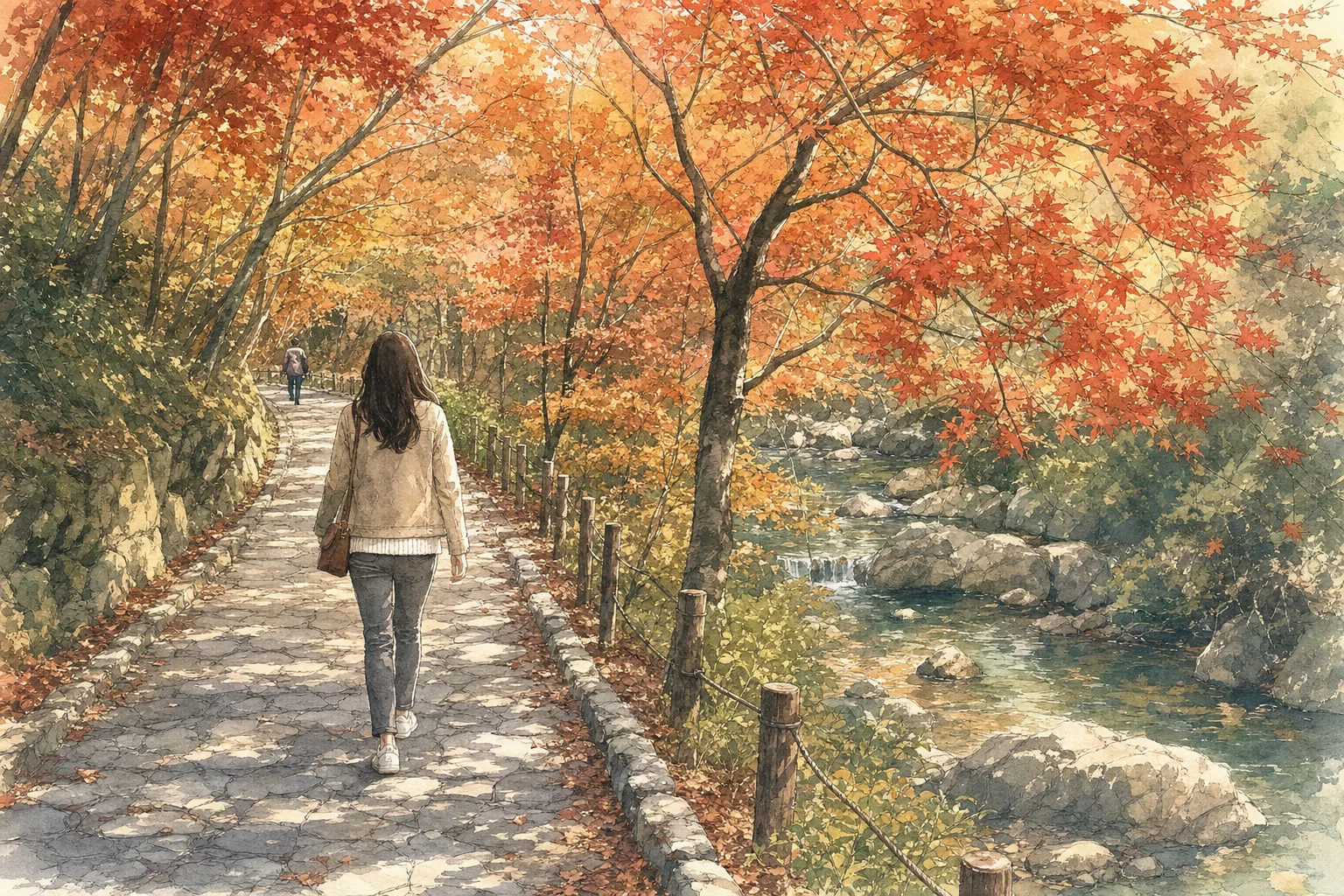
Osaka in autumn is not Kyoto-with-fewer-people. It is a different shape of trip: city food and nightlife as the base, with foliage living in parks on the city edges. Whether that trade works depends on what you actually want from the leaves.
Quick Verdict
Choose an Osaka-based autumn trip if you want strong food, easy city walking, and one or two real foliage day trips without the queue pressure of Kyoto's headline temples. Minoo Park and Katsuo-ji can give you maple density in late November, and central Osaka stays usable in the evenings.
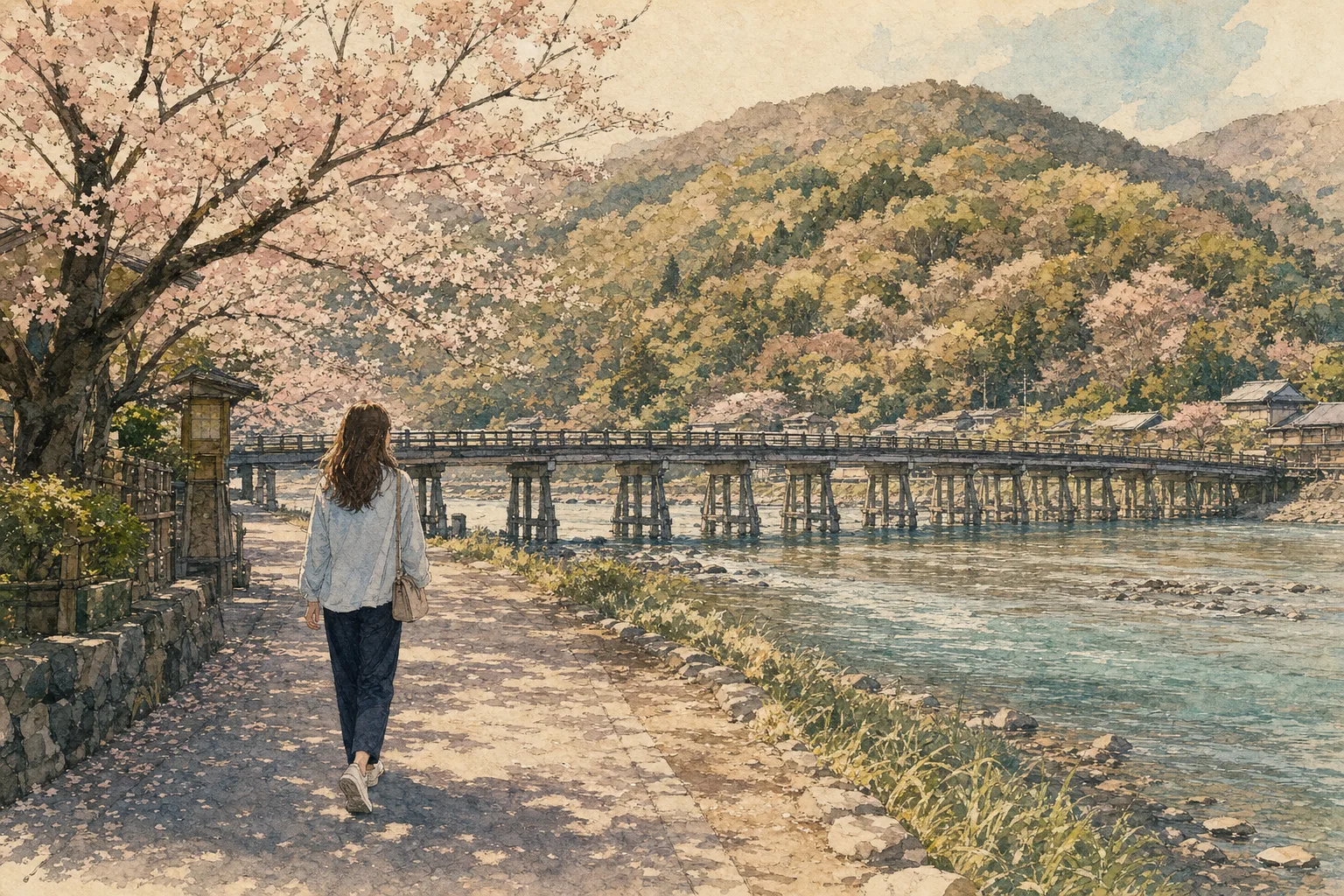
Skip an Osaka-based autumn trip if your mental image of Japanese autumn is specifically a wooden temple framed by maples, with moss and a stone path. That picture is overwhelmingly a Kyoto picture, and trying to recreate it inside Osaka city will feel like a near-miss. In that case, base in Kyoto (or split) and accept the crowds as part of the cost.
Osaka's foliage window generally runs from mid-November to early December, with peak color often in late November. Mountain-edge areas like Minoo and Hoshida start turning a little earlier, from mid-November.
The Main Friction: Three Things People Misjudge
The Osaka-in-autumn decision usually fails for one of three reasons, and they are predictable.
Crowd expectation mismatch. People hear "Osaka is less crowded than Kyoto in autumn" and assume that means quiet. Autumn is still a high tourism season in Osaka, and the foliage hotspots concentrate visitors into small areas (a single waterfall trail, a single temple approach). Less crowded than Arashiyama at peak is a low bar.
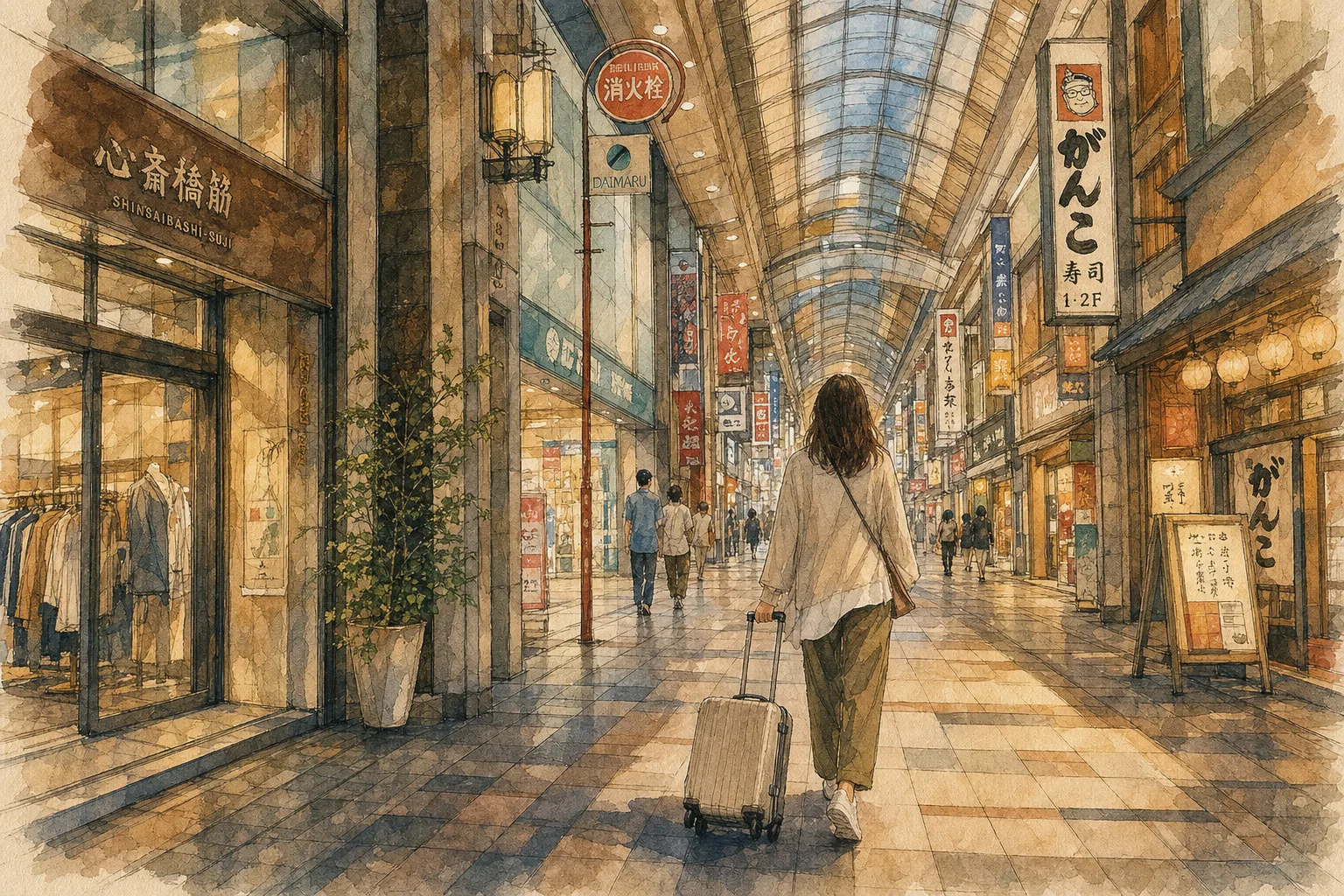
Expectation mismatch on scenery. Osaka's identity is urban: castle, river, neon, food streets. The famous "Japanese autumn" aesthetic is heavily Kyoto-coded. Coming to Osaka and expecting maple-framed temple corridors inside the city will disappoint. The foliage is real, but it is in parks, not in temple districts.
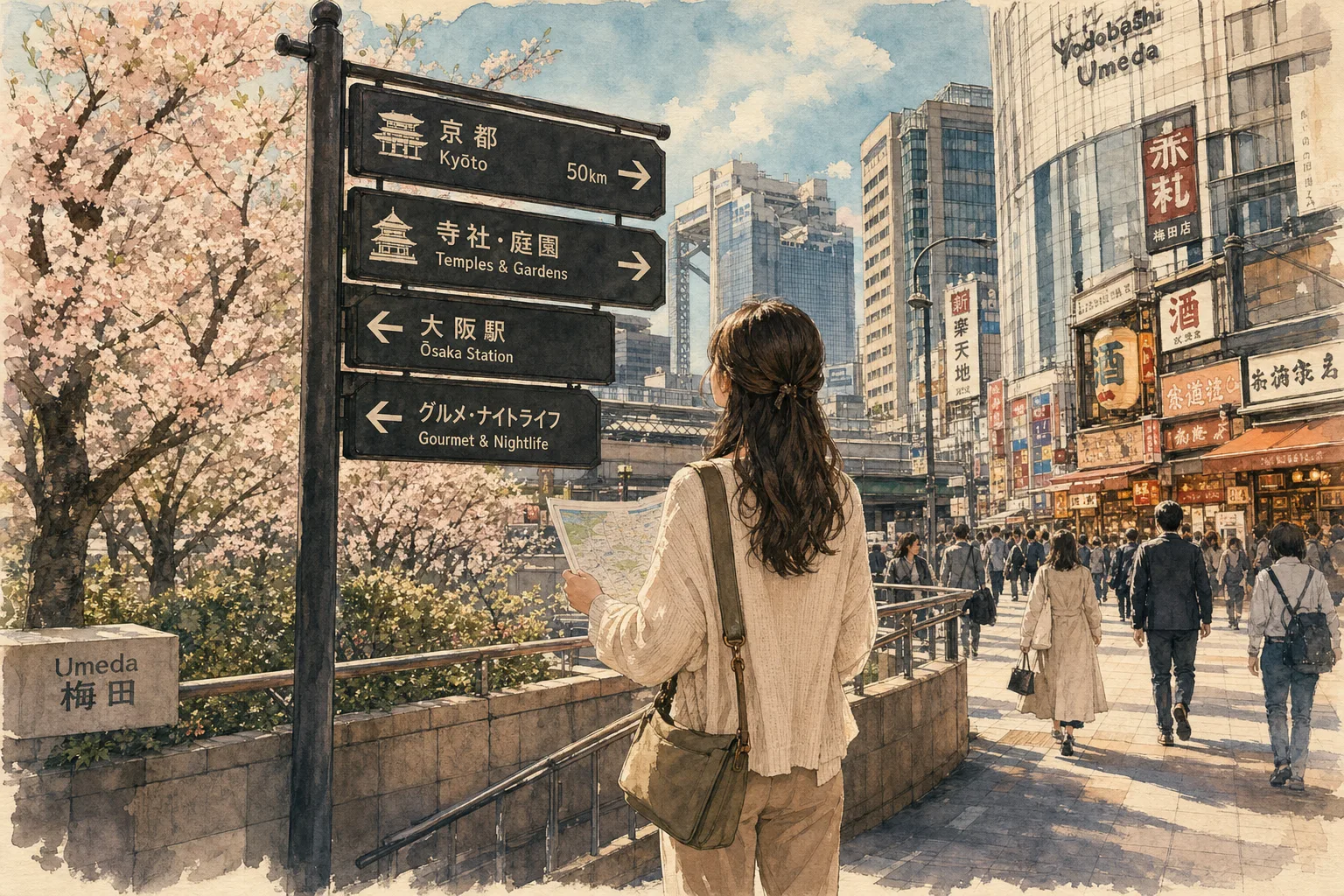
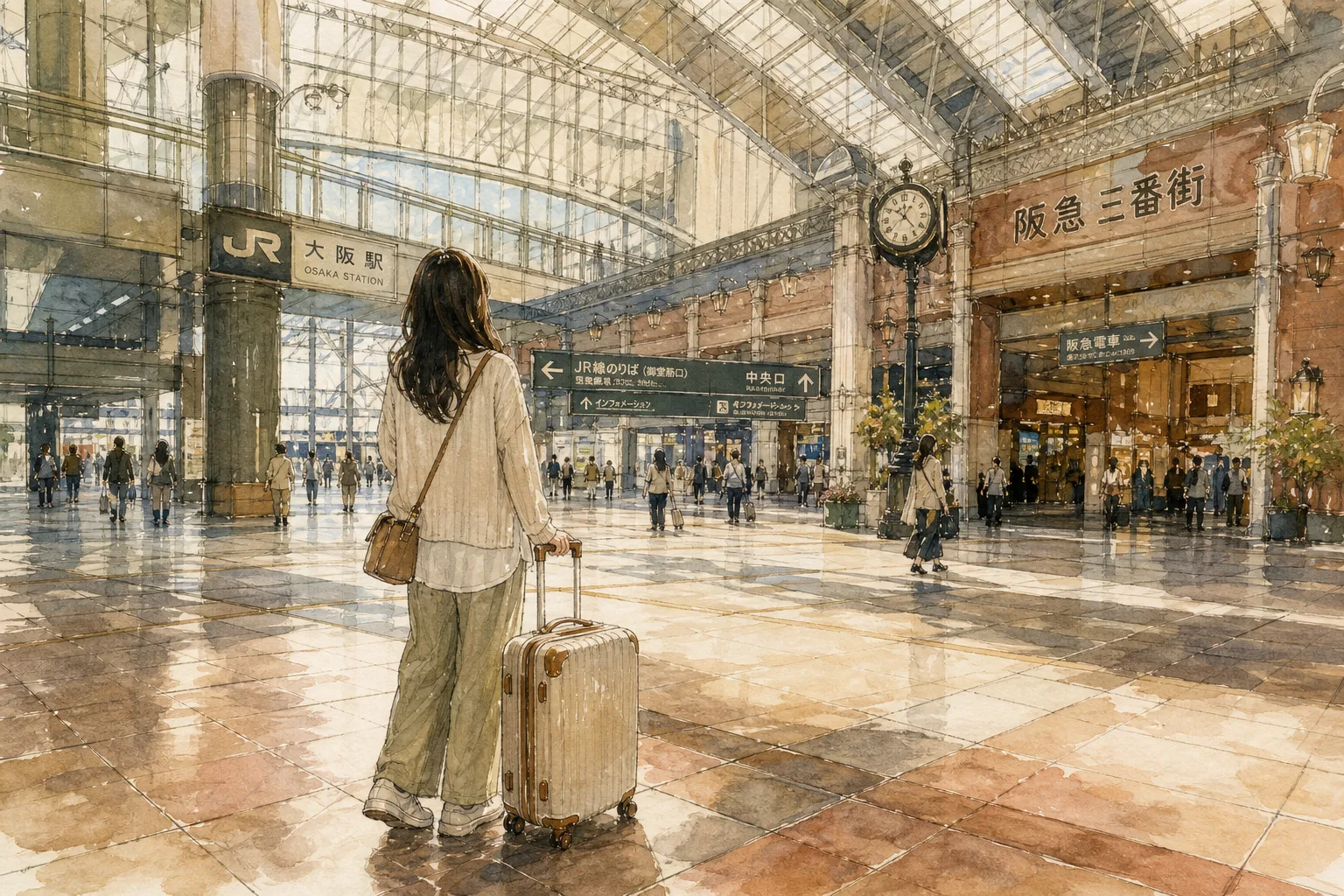
Transit and station friction. Foliage in Osaka means you leave the JR loop. Minoo is on Hankyu, not JR, so a Japan Rail Pass does not cover it (around 270 yen one-way, about 25 minutes from Umeda). Katsuo-ji requires a bus from Senri-Chuo that normally runs about hourly, with extra service in peak foliage season. None of this is hard, but none of it is "tap your IC card on JR and go."
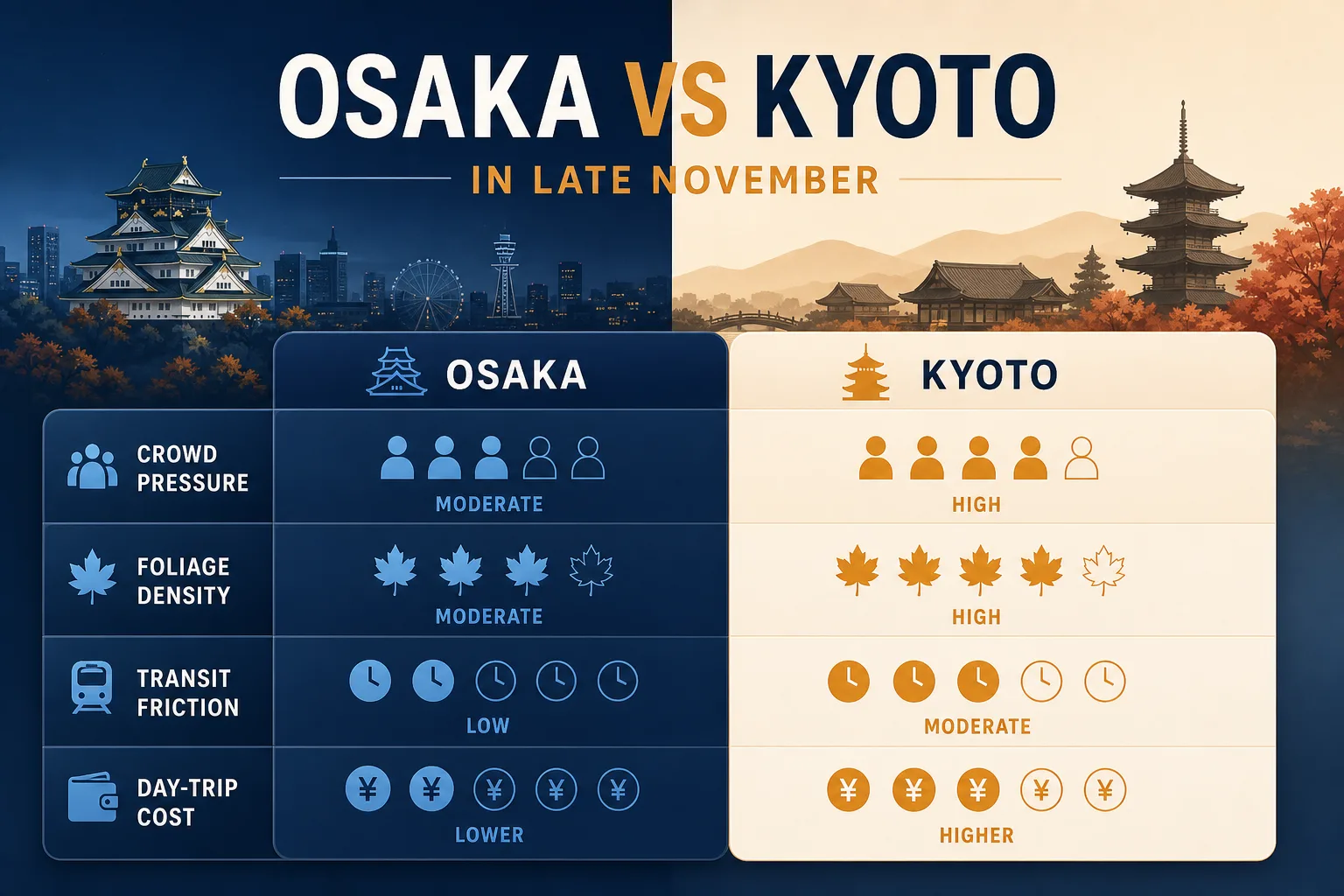
Friction Table: Osaka vs Kyoto in Late November
| Decision variable | Osaka (city base) | Kyoto (city base) |
|---|---|---|
| Crowd pressure at top foliage spots | Moderate. Weekday mornings at Minoo or Katsuo-ji are workable. | High to severe. Tofuku-ji, Arashiyama, Eikan-do queue from morning. |
| Foliage density inside the city core | Low. Osaka Castle Park has color but is not a maple destination. | High. Many temple gardens are inside or near the city core. |
| Transit friction to reach foliage | Real. Hankyu line to Minoo, bus to Katsuo-ji, not JR-covered. | Lower for famous spots, but buses to Arashiyama are crushed. |
| Cost of a foliage day trip | Low. Around 270 yen each way to Minoo, 500 yen at Katsuo-ji. | Mid. Multiple temple admissions stack up across a day. |
| Evening payoff | Strong. Dotonbori, Namba, food streets active after dark. | Quieter. Many gardens close, food scene less concentrated. |
| Best fit traveler | Food-led, city-led, one or two nature day trips. | Temple-led, photo-led, willing to absorb crowds. |
A short rule of thumb: Osaka wins the evenings, Kyoto wins the postcard frame, and the parks around northern Osaka quietly win late mornings on weekdays.
Who Will Feel the Mismatch Most
Some travelers consistently regret picking Osaka for autumn, and it is usually predictable from how they describe the trip before they go.
- Photographers chasing the classic temple-plus-maple composition. The supply of that shot in Osaka is thin. They will end up commuting to Kyoto anyway and resenting the hotel choice.
- First-time Japan visitors who imagined "autumn in Japan" as one specific Kyoto-shaped image. Osaka will feel correct as a city but wrong as a season.
- Travelers who dislike transfers and want everything inside one train pass. The Hankyu access to Minoo and the bus to Katsuo-ji add small friction that adds up over a tired afternoon.
Travelers who tend to be happy with Osaka in autumn:
- Crowd-averse visitors who treat foliage as one nice element among food, neighborhoods, and walking, not the whole point.
- Repeat Japan visitors who have already done Kyoto and want a different angle on autumn.
- People who prefer a park walk with maples and a suspension bridge (Hoshida Park's Hoshi no Buranko, a 280-meter span 50 meters above the valley) over another temple queue.
How to Reduce the Friction
You can fix most of the Osaka-autumn pain points before you book.
Against crowds. Treat weekday mornings as non-negotiable for Minoo Waterfall, Katsuo-ji, and Hoshida. The Minoo trail to the waterfall is a paved 3 km, about a 45-minute walk; arriving by mid-morning on a weekday is very different from arriving at 1pm on a Saturday. Katsuo-ji also runs evening illuminations on weekends and public holidays in November (last entry around 8pm, closing 8:30pm), which is a legitimate way to dodge the daytime peak if you are okay with night photography.
Against expectation mismatch. Decide in advance which kind of autumn you want. If the answer is "park-and-trail autumn," Osaka is fine. If the answer is "temple-and-moss autumn," plan at least one full Kyoto day and stop trying to find it in Osaka.
Against transit friction. Pre-load an IC card for non-JR lines, because Minoo runs on Hankyu and is not Japan Rail Pass eligible. For Katsuo-ji, check the bus timetable from Senri-Chuo on the day you go: normal frequency is about once an hour, but additional buses often run every 15 to 20 minutes during peak autumn season. That single check prevents a 50-minute wait at a suburban bus stop.
Against itinerary collapse. Do not put Osaka Castle and a foliage park on the same day if you also want a real dinner. Castle Park is free to enter; the Main Tower itself is 1,200 yen for adults. Treat the castle as a half-day urban anchor, not as a foliage day.
Better Alternatives If Osaka Is Not the Right Base
If the friction table above makes Osaka look like a forced fit, three alternatives are usually cleaner.
- Kyoto base, accept the crowds. If the foliage is the trip, base in Kyoto, pick two temples on weekday mornings, and skip Arashiyama on weekends entirely. The crowd cost is real but the scenery delivers.
- Split base: Osaka for nights, Kyoto for mornings. Stay in Osaka near a JR station, take early trains to Kyoto for foliage, return for dinner. This works if your hotel is genuinely near Shin-Osaka or Osaka Station, not buried in a backstreet.
- Shift the window. Early December still has color in lower-elevation Osaka spots and Kyoto, with noticeably thinner crowds than the late-November peak. You trade some foliage density for room to breathe. Mid-November is the reverse trade: thinner color but easier days.
Decision Checklist
Run through these before locking the booking.
- My target dates fall between mid-November and early December.
- I have at least one weekday morning available for a foliage park visit.
- I am okay using a non-JR line (Hankyu) and a local bus to reach the best spots.
- My mental image of "autumn in Japan" does not require a Kyoto temple frame.
- If it does, I have built in at least one full Kyoto day, not a rushed afternoon.
- My hotel is close enough to a major station that an early start is realistic.
- I have accepted that "less crowded than Kyoto" still means real autumn-season tourism.
- I have a backup plan for rain (covered arcades, food districts, Osaka Castle Main Tower).
If you can tick most of these, Osaka in autumn is a defensible base. If you are ticking fewer than half, the trip is fighting itself, and a Kyoto-leaning plan will give you fewer regrets.
FAQ
When does Osaka's autumn foliage actually peak? The season generally runs from mid-November to early December, with peak color most often around late November. Mountain-edge spots like Minoo Park and Hoshida Park can start turning from mid-November, slightly ahead of the city core.
Is Osaka really less crowded than Kyoto in autumn? Downtown Osaka has fewer foliage tourists than central Kyoto because the headline foliage temples are in Kyoto. However, autumn is still a high tourism season in Osaka overall, and weekend afternoons at Minoo or Katsuo-ji can feel busy. Weekday mornings remain the realistic way to avoid pressure.
Can I see good foliage without leaving the Osaka city area? Osaka Castle Park gives you ginkgo and some maple color in a free, open setting, but it is not a dense foliage destination. For real maple density you need to ride about 25 minutes out toward Minoo or take the bus route up to Katsuo-ji.
Is Osaka enough on its own, or do I still need a Kyoto day trip? If you want famous temple-and-maple photo scenes, you will likely still want one Kyoto day, ideally a weekday and ideally not Arashiyama at midday. If you mainly want walkable autumn parks plus food and city life, an Osaka-base trip with Minoo and Katsuo-ji can stand alone.
Does the Japan Rail Pass cover the trip to Minoo Park? No. Access from Umeda uses Hankyu Railway, which is not covered by the Japan Rail Pass. The one-way fare is about 270 yen and the ride takes roughly 25 minutes.