travel-decisions
Is Kyoto a Good First Trip for Travelers Who Want Easy Logistics?
A calm, decision-focused read on whether Kyoto fits first-time visitors who want easy logistics, with traveler-type fit, friction risks, and a final match call.
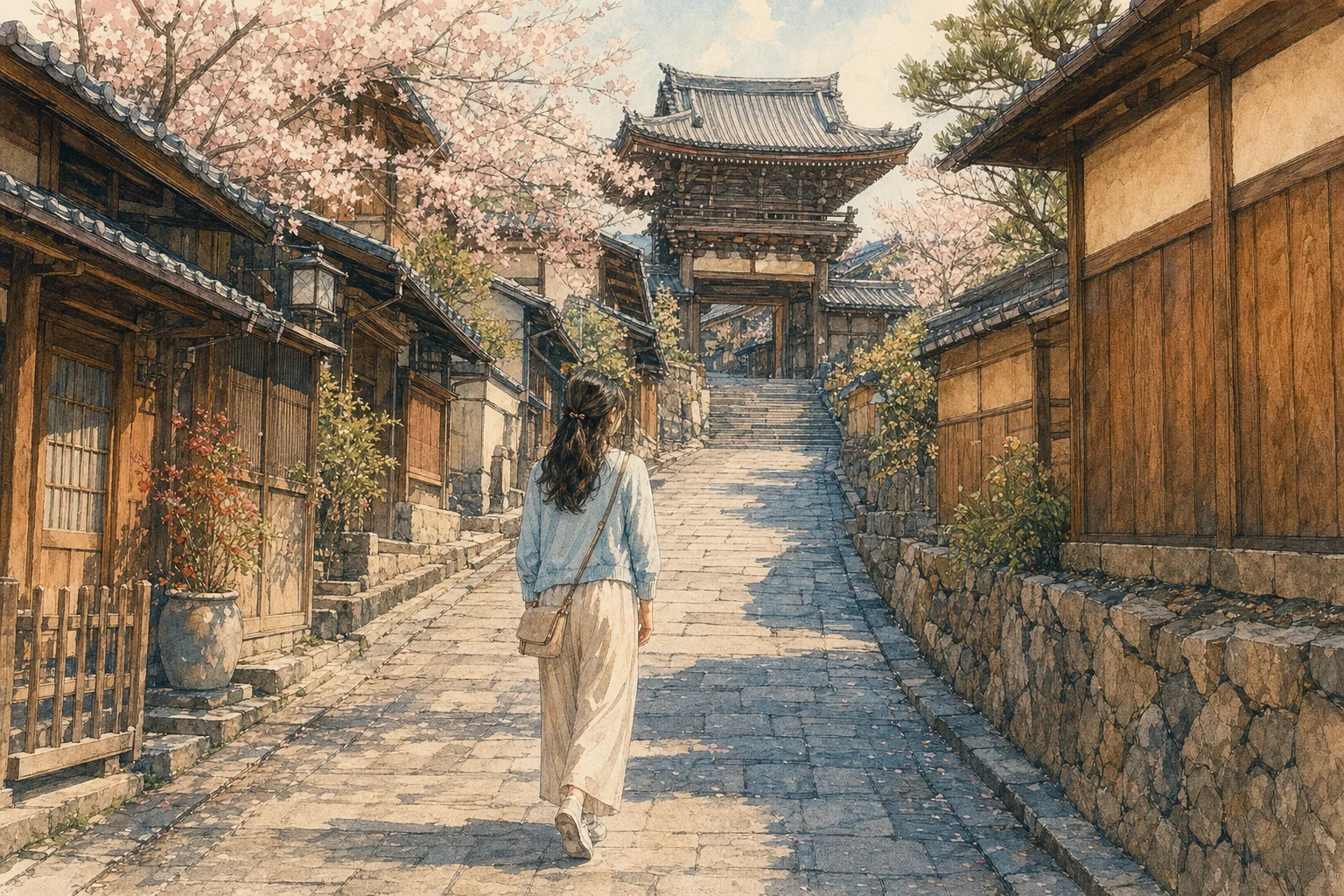
Kyoto is easy for first-timers only if you define "easy" the way the city does. This is not a place where every famous sight sits on the same subway spine or where you improvise your way from landmark to landmark. Kyoto is simpler than it first looks, but its simplicity comes from committing to one base, one zone per day, and a bus-heavy rhythm that rewards patience more than spontaneity.
That makes Kyoto a very different logistics question from Tokyo or Osaka. Travelers who want rail everywhere and constant fallback options often misread Kyoto as harder than it is, while travelers who assume a famous historic city must be compact and walkable often misread it as easier than it is. The real decision is whether you can accept a slower, more staged transit pattern in exchange for a calmer trip.
Quick Verdict
Kyoto is a strong first trip if your definition of easy logistics is short, predictable days from one fixed base, and a weak fit if you imagine hopping freely between famous sights without thinking about the bus.
Choose Kyoto for your first trip when you want a single hotel for the whole stay, two or three calm neighborhoods instead of a packed checklist, and a city where the main daily decision is which temple loop to walk, not which transfer to make. Pick somewhere else, or at least pair Kyoto with a slower itinerary, if you are arriving jet-lagged and hoping to wing it, if you cannot tolerate crowded buses in peak hours, or if you expect every temple to be a short walk from the station.
The core trade-off is simple. Kyoto's transit is workable but bus-heavy, its hotel geography genuinely matters, and its sights are spread across three corners of the city. Get those three calls right on paper and the trip feels effortless. Get them wrong and the city feels like constant transfers.
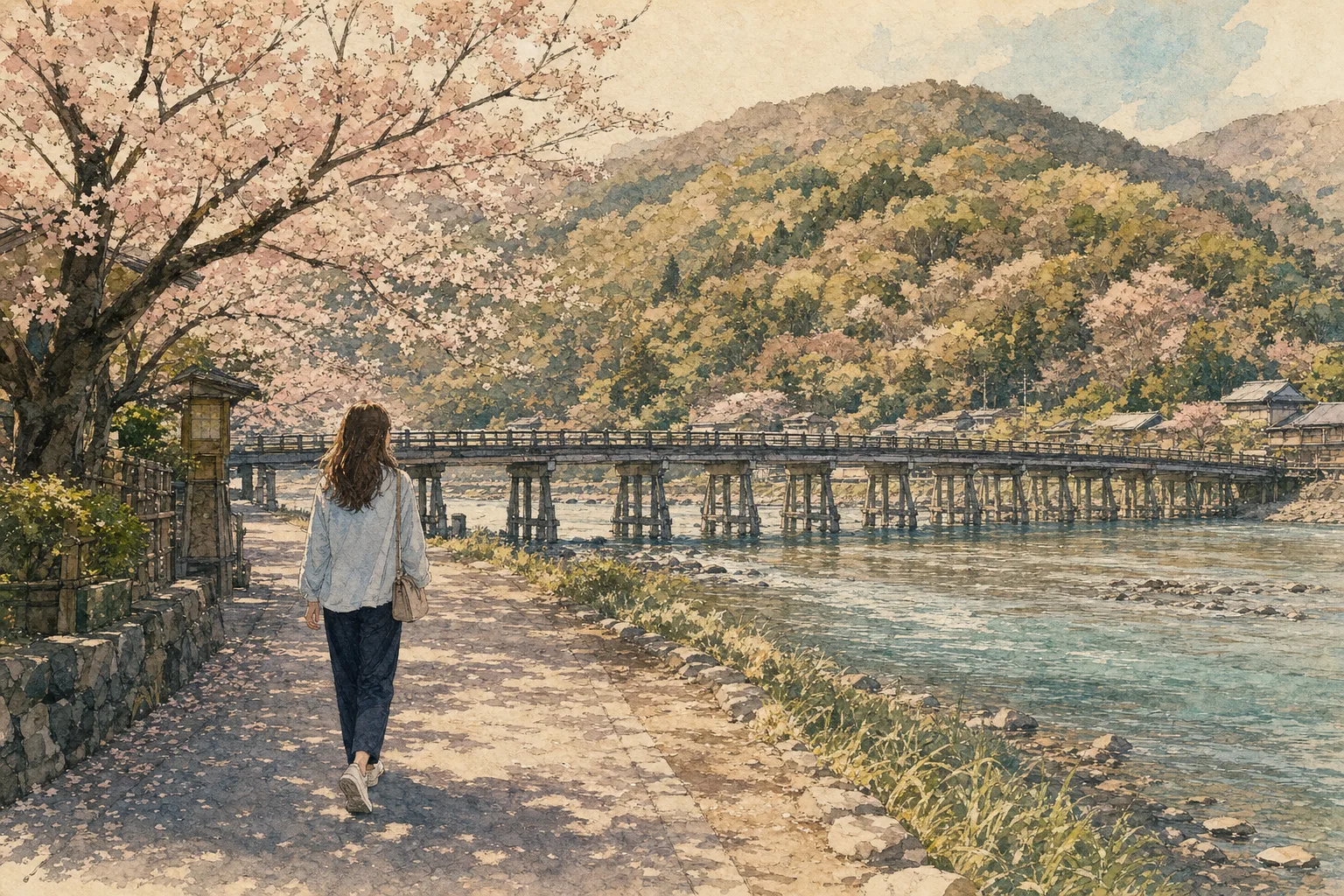
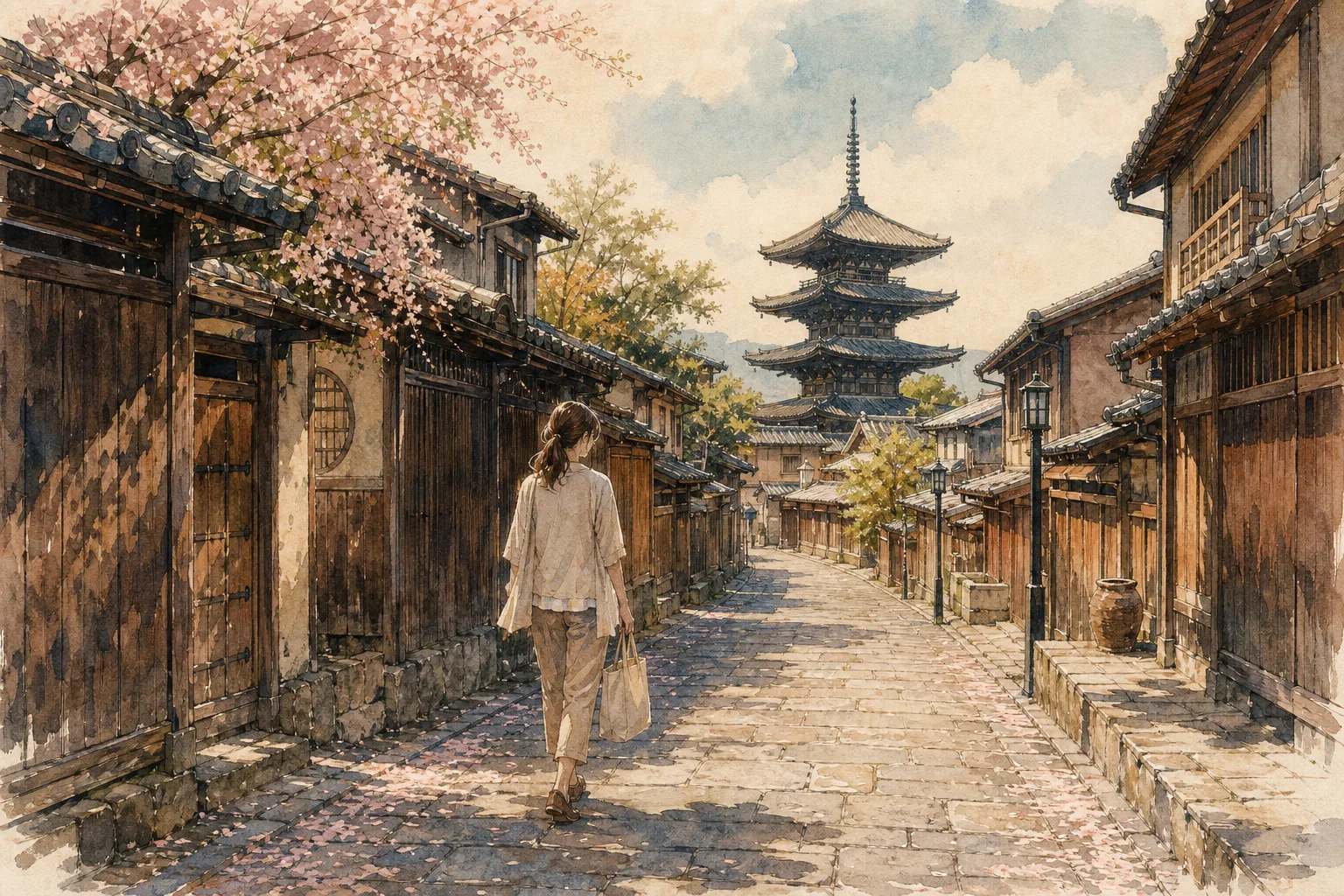
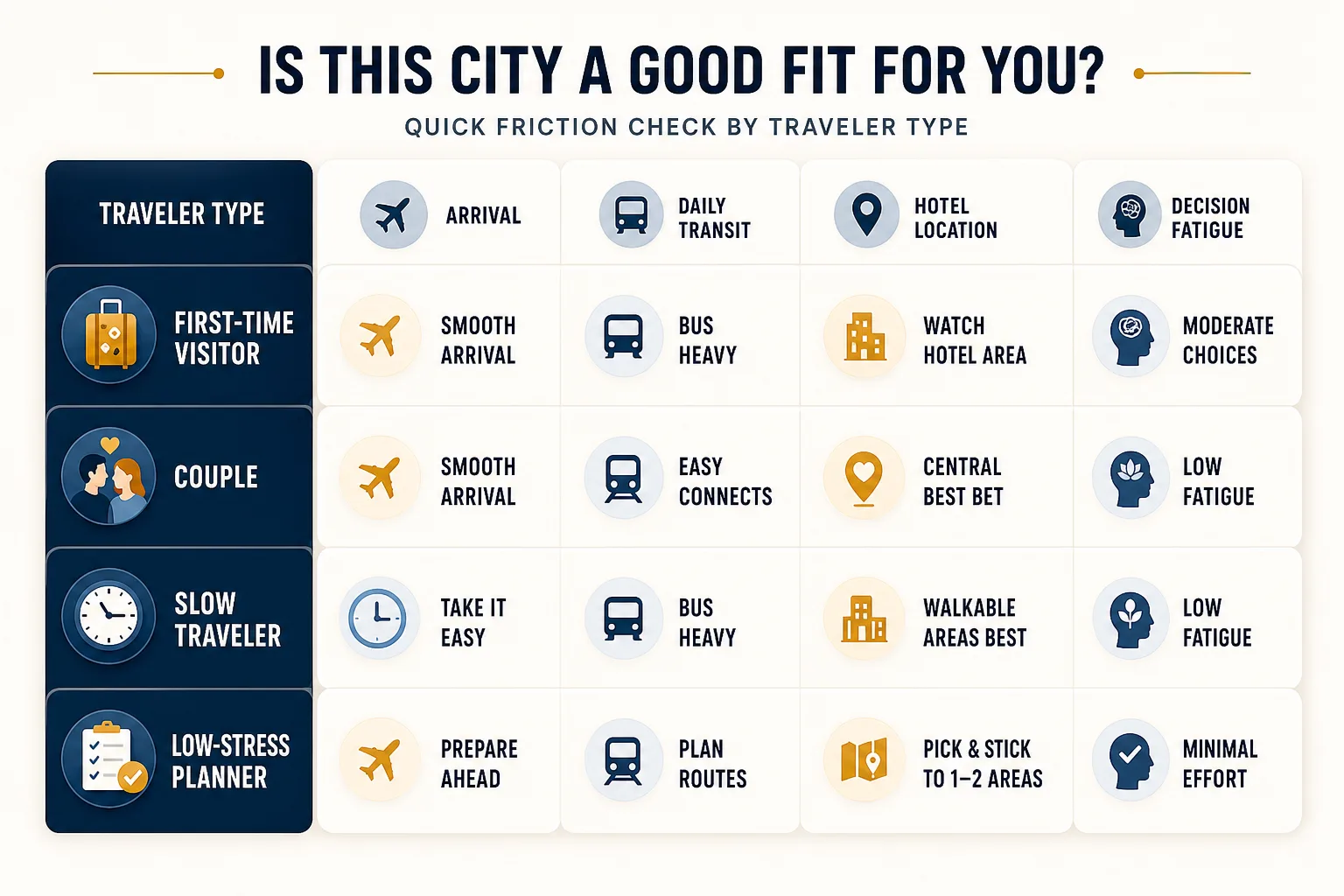 Editorial illustration: A clean comparison-card layout for a travel decision article.
Traveler Type Table
This is the part most first-time guides skip. Kyoto's fit changes sharply depending on who you are and where you sleep, not just how many days you have.
| Traveler type | Arrival ease | Daily navigation | Hotel location risk | Overall Kyoto fit |
|---|---|---|---|---|
| First-time visitor, station base | High. Shinkansen and airport buses drop you at Kyoto Station. | Medium. Expect 25 to 40 minutes to Gion or Kiyomizu-dera by bus or subway. | Low if you stay near Kyoto Station. | Strong fit |
| Couple, atmosphere-led | Medium. Extra transfer if you base in Gion or Higashiyama. | Medium. Short walks between Gion, Pontocho, Nishiki, but 30 to 40 minutes back to the station. | Medium. Peak-season prices and crowds in Gion. | Strong fit with the right base |
| Slow traveler, 4 plus nights | High. One arrival, no internal moves. | High. You can walk one zone per day and keep most transfer legs under 30 minutes. | Low. Any well-located base works. | Strong fit |
| Low-stress planner, tight schedule | High at the station, lower in outer districts. | Medium. Buses crowd 7 to 9 AM and 5 to 7 PM, with temple-bound legs often taking 20 to 35 minutes each way. | High. A cheap outer hotel ruins the day. | Conditional fit |
| Free-roamer expecting walkable city | High. | Low. Arashiyama sits on the western edge, far from Gion, and many headline sights are 30-plus minutes apart. | Medium. | Weak fit |
Two patterns drop out of that grid. First, the Kyoto Station area trades atmosphere for unmatched transport links, which is exactly the deal a low-stress first-timer wants. Second, the further your base sits from a subway line, the more your day depends on buses that get crowded in rush hours.
Best for First-Time Visitors
First-time visitors who want easy logistics should treat Kyoto as a hub-and-spoke trip, not a wandering one. Base near Kyoto Station, take one neighborhood per day, and accept that the city bus is your main tool.
A clean first-timer week looks like this. Day one, walk the eastern loop from Yasaka Shrine in Gion up to Kiyomizu-dera, a route that itself takes about 20 to 30 minutes of slow walking and absorbs a full morning with stops. Day two, ride the train out to Arashiyama on the western edge and stay there until late afternoon rather than darting back. Day three, do central Kyoto on foot, since Pontocho Alley to Nishiki Market is under a 10 minute walk and rewards a slow lunch.
The mistake first-timers make is not picking the wrong sights, it is layering three zones into one day. Kyoto Station to Gion is roughly 30 to 40 minutes by bus or subway, not a walk, and stitching Arashiyama onto the same afternoon turns a calm trip into a transfer trip.
Best for Couples
Couples get the strongest version of Kyoto when they prioritize mood over coverage. The eastern Higashiyama corridor, the lanes around Yasaka Shrine and Kiyomizu-dera, Pontocho in the evening, and a quiet ryokan-style stay are exactly what the city does best.
The logistics call for couples is different from a solo first-timer. The atmosphere premium of staying in Gion or Higashiyama is usually worth the extra distance to the station, because couples rarely do early morning Shinkansen day trips. The trade-off is real, though. Gion and Higashiyama are expensive and crowded in peak times, and mid-range hotels in Kyoto typically run 20,000 to 35,000 yen per night, with luxury options starting around 60,000 yen and climbing past 200,000 yen in cherry-blossom season.
A two-base trip almost never pays off for couples on a first visit. Moving luggage mid-trip eats half a day and breaks the calm the city offers.
Best for Slow Travelers
Slow travelers, the readers who collect mood instead of sights, are the cleanest fit Kyoto has. Four nights or more, one base, and one neighborhood per day removes almost every friction point on the list.
The reason is structural. Kyoto's sights cluster into three loose zones: the eastern Higashiyama and Gion corridor, the central Nishiki and Pontocho area, and the western Arashiyama district. A slow traveler can give each zone a full day, mix in a half-day for Fushimi Inari or a tea ceremony, and never feel rushed. That same itinerary, compressed into 48 hours, becomes a bus-and-transfer marathon.
If your travel style is to sit in one cafe for an hour, walk the same lane twice, and call that a successful day, Kyoto's first-trip logistics essentially solve themselves.
Best for Low-Stress Travelers
Low-stress planners are the group this article is really for, and the answer is conditional yes. Kyoto can be very calm, but only if three decisions are pre-made.
- Pick a base near Kyoto Station or on a subway line, not a cheap hotel deep in a bus-only district.
- Buy the Kyoto City Bus and Subway One-Day Pass at 1,100 yen for the heaviest sightseeing day, since it covers unlimited rides on all subway and most bus lines for a calendar day and quietly removes the price decision from every bus ride.
- Anchor mornings before 9 AM or after 10 AM, and avoid the 5 to 7 PM bus window when you are tired.
Budget-led low-stress travelers have a real option in capsule hotels at 4,000 to 6,000 yen per night or hostels at 3,150 to 5,250 yen per night, but only if those properties sit near the station. A 3,500 yen bed that costs 40 minutes of bus time twice a day is not a low-stress choice, it is a money trade dressed as one.
A simple pre-trip checklist for low-stress travelers:
- Hotel is within a 10 minute walk of Kyoto Station or a subway stop
- Itinerary uses one neighborhood per day, not one famous sight per hour
- Day-pass purchased on the heaviest sightseeing day
- No mid-trip hotel change
- At least one unscheduled afternoon
Common Mismatches
Kyoto's first-trip mismatch is usually not language, signage, or safety. It is assuming the city behaves like a rail-first city when it really behaves like a zone-by-zone city.
- The "cheap hotel, same Kyoto" traveler. They book an outer-district hotel to save money, then spend the saving back in bus time, extra transfers, and daily decision fatigue. Kyoto is forgiving about simple itineraries, not about remote bases.
- The "historic city means walkable city" traveler. They expect to drift between Gion, Arashiyama, and Fushimi Inari the way they might in a smaller old town. The map looks manageable; the real transfer pattern is not.
The third mismatch is the over-planner who tries to combine Arashiyama on the western edge with Fushimi Inari in the south and Gion in the east on the same day. The map looks compact. The bus reality is not. Arashiyama is specifically described as peaceful and scenic precisely because it sits far from the main sights, and treating it as a quick add-on burns the calm it offers.
If you recognize yourself in any of those three patterns, the fix is not skipping Kyoto. It is staying longer, staying closer in, and cutting one zone from the plan.
Final Match Recommendation
Kyoto is a strong first trip for travelers who want easy logistics on one specific condition: that they let the city set the pace.
Choose Kyoto first if you want a single base near Kyoto Station or on a subway line, three or four calm days, one neighborhood per day, and a willingness to use the bus without resenting it. Choose Kyoto first if you are a couple who would rather have one atmospheric Higashiyama base than two cheaper but worse-located hotels. Choose Kyoto first if you are a slow traveler who already plans in days, not hours.
Do not pick Kyoto as your first trip, or at least do not pick it as a tight three-day stop, if you need everything within walking distance of your hotel, if crowded buses in peak hours will end your day, or if you are arriving severely jet-lagged with a packed itinerary. In those cases, either extend the stay to absorb the slower transit, or pair Kyoto with a longer Tokyo or Osaka base where the subway carries more of the load. Tokyo works better when you want dense rail coverage, late operating hours, and multiple neighborhoods that connect cleanly by subway without the bus becoming your default. Osaka works better when you still want Kansai food-and-street energy but prefer a flatter grid, faster station-to-neighborhood hops, and simpler nighttime movement after dinner.
The honest summary is this. Kyoto's logistics are not hard, they are bus-shaped. Travelers who design the trip around that one fact get a famously calm first visit. Travelers who design around the map alone do not.
FAQ
Is Kyoto easy to navigate for first-time visitors who do not speak Japanese? Mostly yes for the core sightseeing loop. Station signage, ticket machines, and major bus stops carry English, and the main tourist routes are well marked. The friction is not language, it is the bus network. Many famous temples are reached by city bus rather than subway, and buses get crowded in peak hours. If you treat the bus as your default and the subway as a bonus, the city stops feeling complicated.
Should a first-time visitor stay near Kyoto Station or in Gion for easier logistics? If your top priority is easy arrival, day trips, and not getting lost, the Kyoto Station area wins. It has the strongest transport links into and out of the city, which matters most on day one and the morning you leave. Gion and Higashiyama feel more like old Kyoto and put you closer to Kiyomizu-dera and Yasaka Shrine, but they sit roughly 30 to 40 minutes by bus or subway from the station and cost more during peak times.
How many days in Kyoto make sense for a low-stress first trip? Three full days is the comfortable floor for a calm pace. That gives one day for an eastern loop around Gion, Yasaka Shrine, and Kiyomizu-dera, one day for Arashiyama on the western edge, and one flexible day for central Kyoto, Nishiki Market, and Pontocho. Two days forces hard cuts and more bus time. Four days lets you slow down, which suits couples and slow travelers especially well.
Is the Kyoto bus system too stressful for a first trip? It is busy, not difficult. A single bus ride is a flat 230 yen, and the Kyoto City Bus and Subway One-Day Pass at 1,100 yen covers unlimited rides on all subway and most bus lines for a calendar day, with small discounts at over 60 attractions. The real friction is timing. Buses crowd hardest during the 7 to 9 AM and 5 to 7 PM windows, so starting early or shifting to subway segments keeps the day calm.
Is Kyoto a bad first trip if I get tired easily or hate constant decisions? Not bad, but only if you stage it deliberately. Pick one hotel near Kyoto Station or one quiet base in Higashiyama, and do not switch mid-trip. Plan one neighborhood per day, not one famous sight per hour. Kyoto punishes travelers who try to stitch Arashiyama, Fushimi Inari, and Gion into a single afternoon, and it rewards travelers who let each day stay inside one zone.