city-matchups
Barcelona vs Seville: Which Fits Travelers Who Want Atmosphere Without Big-City Logistics?
A decision-led comparison of Barcelona and Seville for travelers who want Spanish atmosphere without the scale, transit stress, and pickpocket pressure of a big city.
If you want Spanish atmosphere but the words "metro transfer" and "watch your bag" already make you tired, this is the comparison that matters. Barcelona and Seville both deliver the postcard, but they ask very different things of you to get there.
Quick Verdict
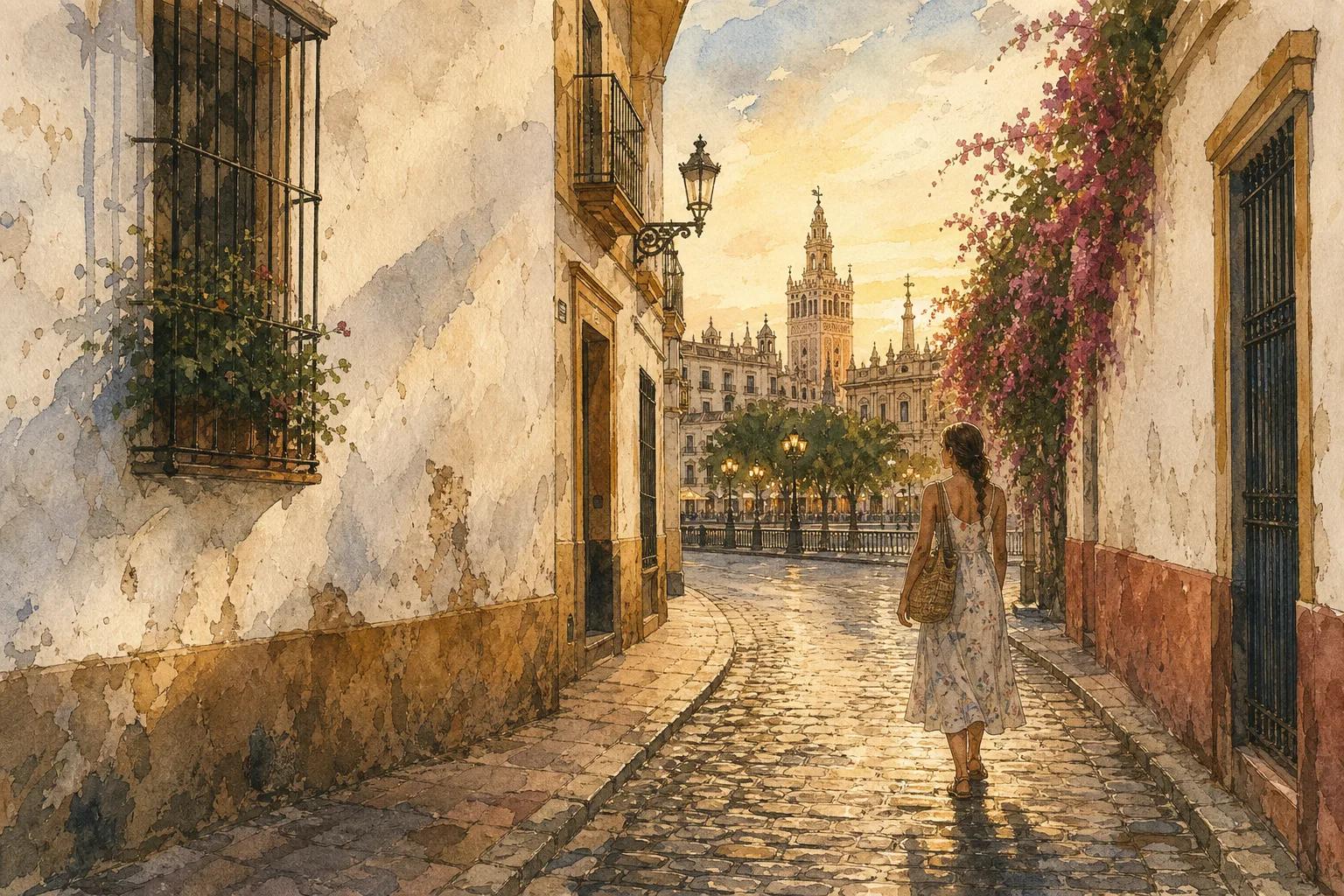
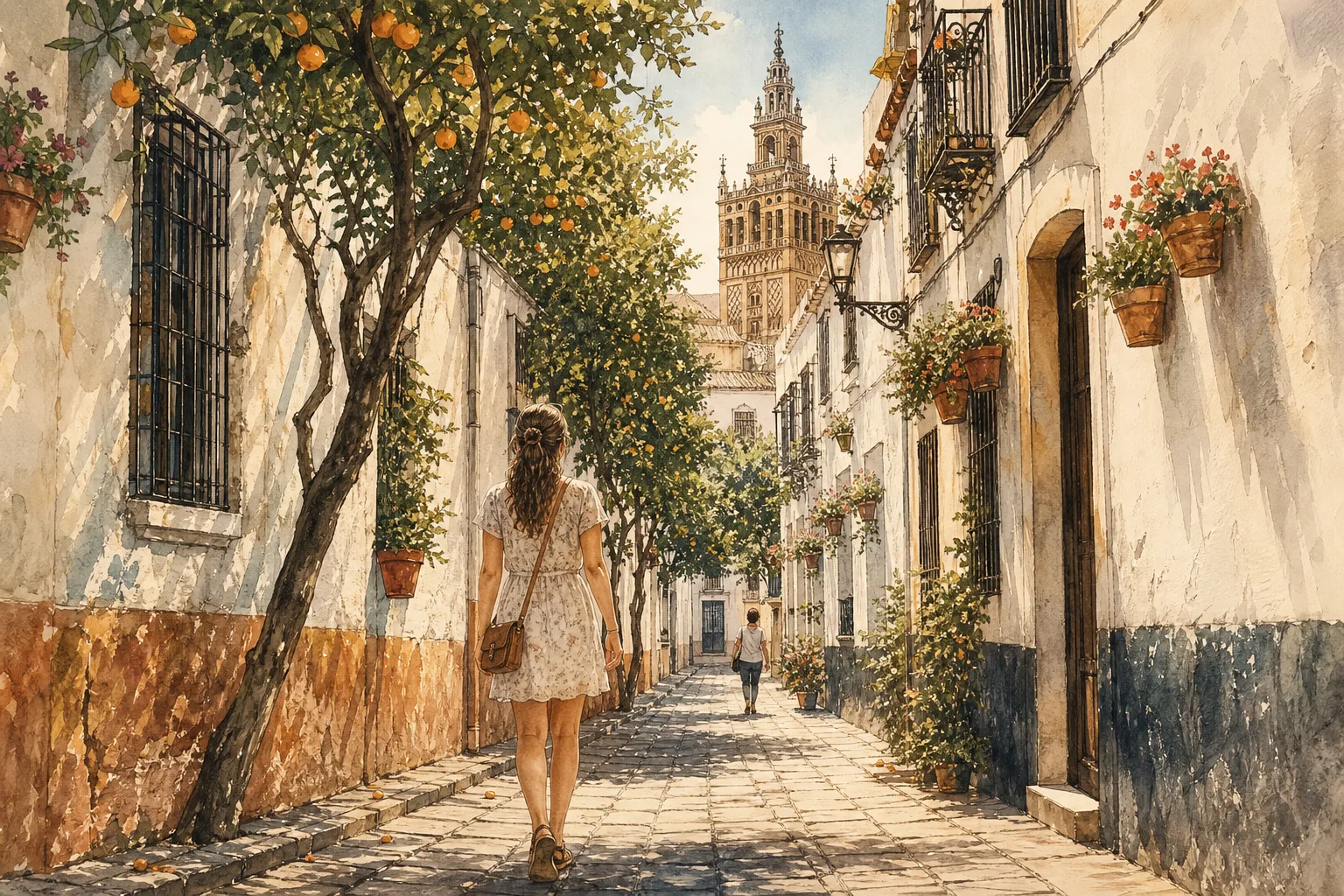
Pick Seville. For a traveler who wants Spanish atmosphere without big-city logistics, Seville is the cleaner answer. It is roughly a quarter the size of Barcelona, the historic core is genuinely walkable end to end, pickpocket pressure is meaningfully lower, and the mood, orange trees, tile, flamenco drifting out of doorways, lands without requiring a metro map.
Choose Seville if you are a first-time Spain visitor, an atmosphere-led traveler, or anyone who measures a good day by how few logistics decisions they had to make.
Do not choose Seville if you want Gaudi architecture, beach mornings, a major contemporary food scene, or a city that feels alive at 1am on a Tuesday. Those are Barcelona's wins, and they are real, but they come with the city scale you said you wanted to avoid.
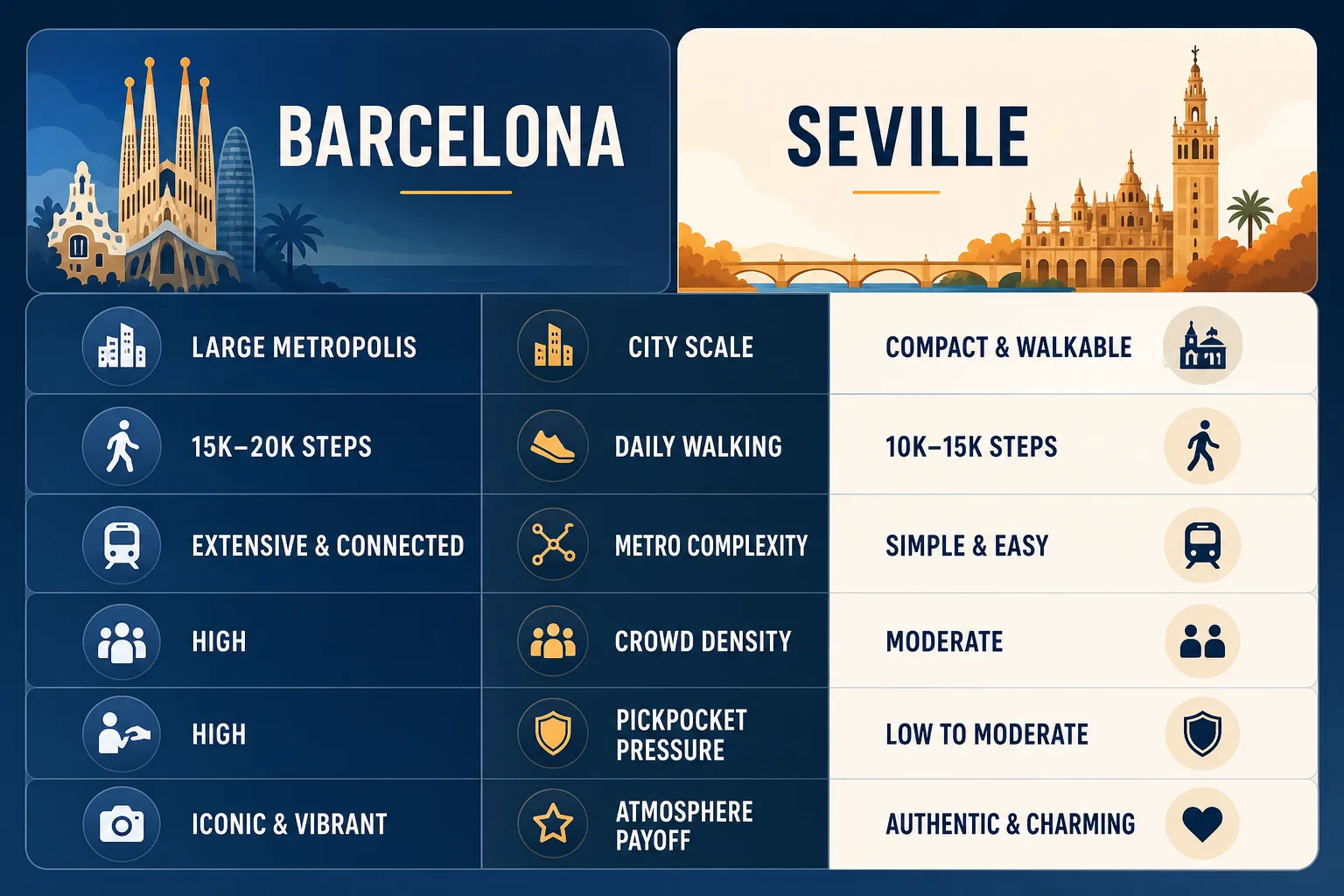 Infographic comparing travel logistics and atmosphere between Barcelona and Seville.
At a Glance Table
This is the tradeoff in one screen. Read it as decision variables, not trivia.
| Decision variable | Barcelona | Seville |
|---|---|---|
| City scale | Large metro, 1.6M | Mid-size, 690K |
| Walkable core | Possible but tiring | Yes, end to end |
| Metro complexity | Real, multi-line transfers | Often unnecessary |
| Pickpocket pressure | High in tourist zones | Low to moderate |
| Crowd density at top sights | Heavy, timed-entry required | Heavy but contained |
| Atmosphere payoff per effort | High, after effort | High, almost immediate |
| Beach access | Yes, in city | No, day trip only |
| Signature draw | Gaudi, Modernisme, sea | Alcazar, flamenco, tapas culture |
| Best season | May, June, September | March to mid-June, October |
| Nightlife | Late and intense | Late and social, calmer |
If your eye keeps returning to the right column, you already have your answer.
Choose Barcelona If
Barcelona is the right call when the city's specific assets outweigh the logistics tax. Choose it if:
- You came for Gaudi specifically. Sagrada Familia, Park Guell, and Casa Batllo are not substitutable.
- You want a beach in your daily rhythm without a separate trip.
- You are a culture-and-food traveler who wants a serious contemporary restaurant scene, not just regional classics.
- You are comfortable with metros, timed tickets, and managing your bag in crowds.
- You are traveling for 5 plus nights, so you can absorb the learning curve.
The logistics are not a trick. They are the price of access to a denser, more international city.
Choose Seville If
Seville is the right call when atmosphere and ease are doing most of the work. Choose it if:
- This is your first trip to Spain and you want the mood to land on day one.
- You want to walk everywhere and rarely touch public transit.
- You are nervous about pickpockets and crowd pressure.
- You travel slow: long lunches, evening strolls, one sight a day.
- You want a base for easy day trips to Cordoba, Cadiz, or Jerez.
- You are 3 to 4 nights in town and want zero wasted hours on transit.
Seville does not ask you to earn the atmosphere. It hands it to you the moment you step into the old town.
Who Might Regret Barcelona
The regret pattern in Barcelona is consistent and worth naming directly.
- Travelers who underestimated walking distances between neighborhoods and ended each day footsore.
- First timers who got pickpocketed on the L3 metro or near Sagrada Familia and spent half a day cancelling cards.
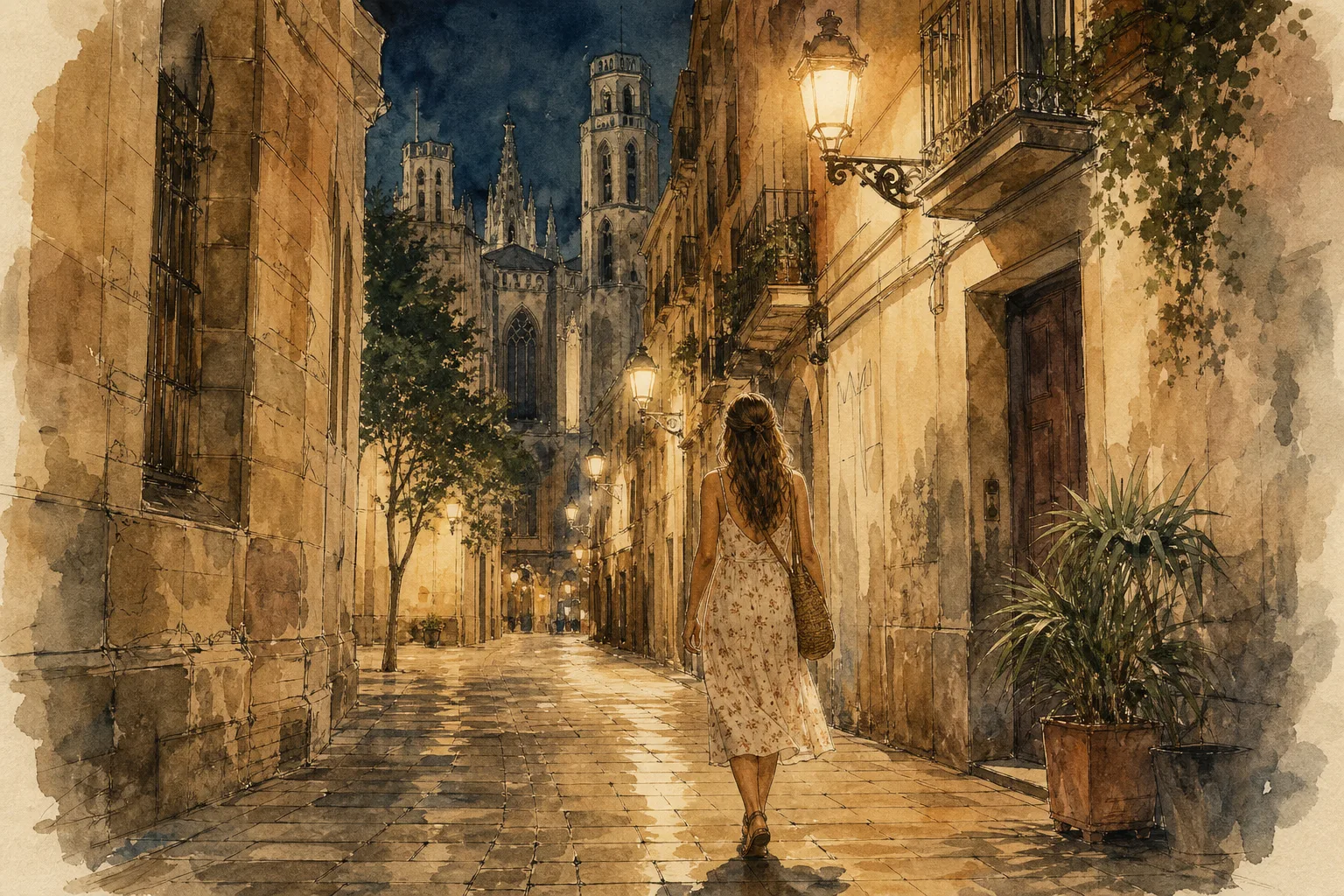
- Atmosphere-first travelers who found the Gothic Quarter so crowded mid-afternoon that the mood evaporated.
- Anyone hoping for "small Spain charm." Barcelona is a major European capital that happens to be in Spain. It does not act small.
- Short-trip travelers (2 to 3 nights) who spent more time on logistics than on the city itself.
If any two of those describe you, Barcelona will feel like work.
Who Might Regret Seville
Seville's regret pattern is different but equally real.
- Travelers who came in July or August and lost daytime hours to 42C heat.
- Landmark hunters who finished the Alcazar and Cathedral by day two and felt unsure what to do next.
- Travelers expecting a major modern food scene rather than excellent traditional Andalusian tapas.
- Beach lovers who assumed Seville was coastal. It is not.
- Anyone who wanted Gaudi or a big contemporary art circuit. Wrong city.
Seville rewards slow. If your travel style is "see as much as possible," it can feel thin.
Key Friction Comparison
This is where the recommendation earns its keep. Here is how each friction point you flagged actually plays out.
City scale. Barcelona's tourist footprint stretches from Sagrada Familia in the Eixample down to the port, roughly 4km as the crow flies and more on foot. Seville's main interest zone, from Plaza de Espana through Santa Cruz to the Cathedral and across to Triana, fits inside a 2km box. You feel that difference in your legs every evening.
Transit complexity. Barcelona has 12 metro lines plus suburban rail. You will use them, and you will transfer. Seville has one and a half metro lines that most visitors never touch. In Seville, "transit" usually means walking or a short taxi.
Crowd density. Both cities draw heavy crowds at signature sights. The difference is what happens between sights. In Barcelona, La Rambla and the Gothic Quarter stay packed for hours. In Seville, you can walk five minutes from the Cathedral and find a quiet plaza with three locals and a cat.
Safety, specifically pickpockets. Barcelona has a documented, persistent pickpocket problem on the metro, at major landmarks, and on busy pedestrian streets. It is manageable, but it is real and it raises ambient stress. Seville has petty theft like any tourist city but at a noticeably lower intensity. Solo travelers report feeling calmer there, day and night.
Quick friction checklist for the recommended city, Seville:
- Book a hotel inside the old town (Santa Cruz, Alfalfa, or Arenal) so transit is irrelevant.
- Buy Alcazar and Cathedral tickets in advance for early entry.
- Plan 1 sight per morning, tapas and shade midday, atmosphere walks after 7pm.
- Avoid mid-July to late August unless heat does not bother you.
- Reserve one evening for a small-venue flamenco show, not a tourist hall.
Final Recommendation
For the traveler in this brief, someone who wants Spanish atmosphere without the scale, transit complexity, crowd grind, and pickpocket vigilance of a big city, the answer is Seville. The atmosphere payoff per unit of effort is higher, the logistics tax is lower, and the regret patterns are smaller and easier to avoid.
Choose Barcelona only if a specific asset, Gaudi, the beach, the contemporary food scene, is non-negotiable for your trip. In that case you are accepting the logistics knowingly, which is a fine decision. What is not fine is choosing Barcelona because it is the famous one and then being surprised that a city of 1.6 million behaves like a city of 1.6 million.
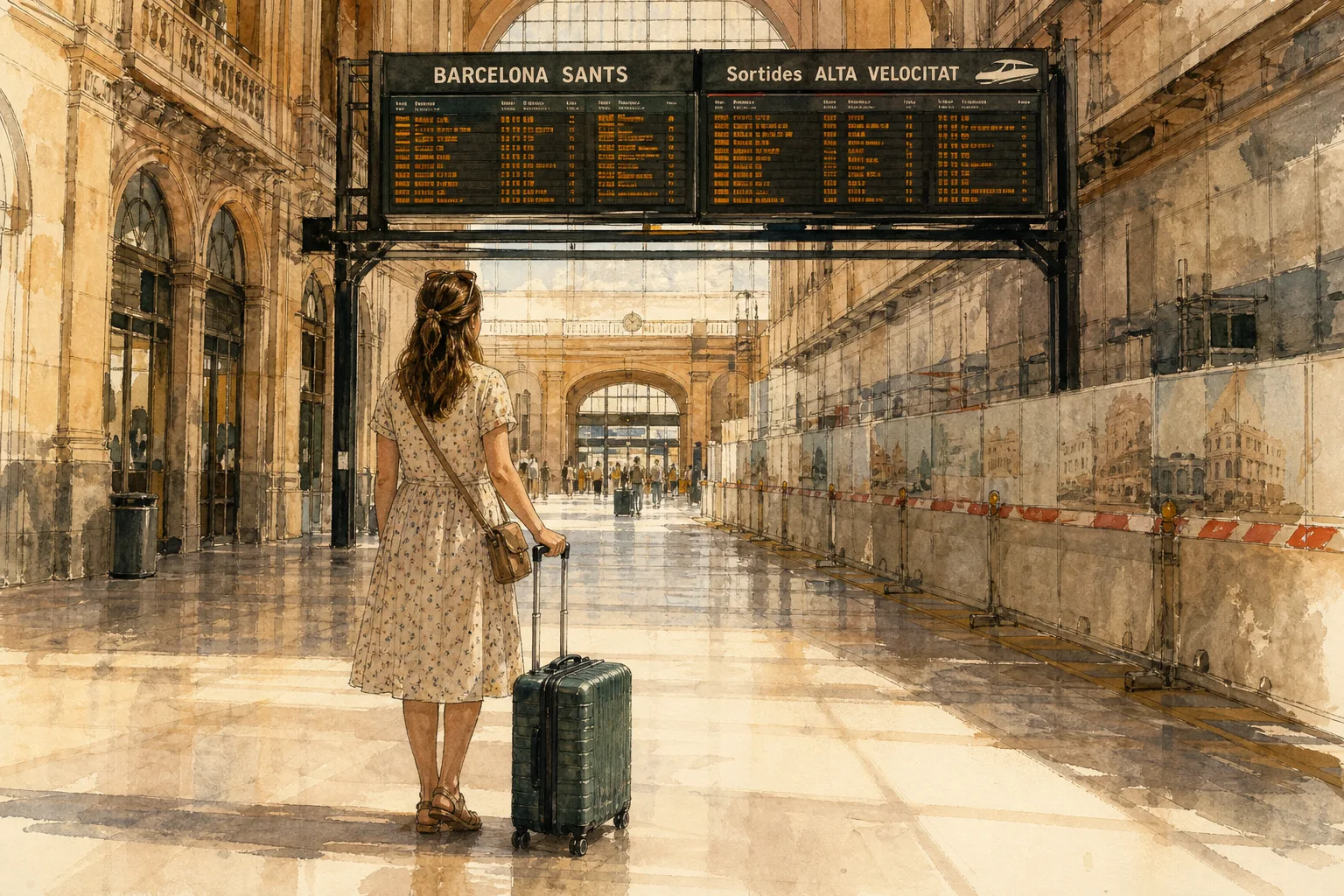
If you can give yourself 3 to 4 nights, fly into Seville, base in the old town, and let the city work on you slowly. If you want both, fly into Seville, take the high-speed train to Barcelona, and fly home from there. Do the easier city first while your energy is fresh for the harder one.
FAQ
If I only want atmosphere and low logistics, which city wins outright? Seville. It is smaller, more walkable, has lower pickpocket pressure, and concentrates its mood into a compact old town you can cover on foot.
Is Barcelona really that hard to navigate as a first timer? It is not hard, but it is a real metro city. Expect longer walking days, more transfers, denser tourist crowds in the Gothic Quarter and along La Rambla, and a noticeably higher pickpocket risk on the L3 metro line and around Sagrada Familia.
Does Seville feel boring after a few days? It can if your trip is landmark-driven. Seville rewards slow days, tapas crawls, evening strolls, and day trips to Cordoba or Cadiz. Three to four nights is usually the sweet spot.
Which city is safer for a solo traveler at night? Both are generally safe in tourist zones, but Seville feels calmer. The center stays lively but not chaotic, and you rarely need transit after dark because most things are walkable.
What about summer heat in Seville? July and August are genuinely punishing, often above 40C. If you cannot shift dates, target late April through mid June, or October. Barcelona stays milder thanks to the coast.
Can I do both cities in one trip without the logistics getting heavy? Yes, but pick one as your base. Fly into one, fly out of the other, and connect by high-speed train. Avoid bouncing back and forth.